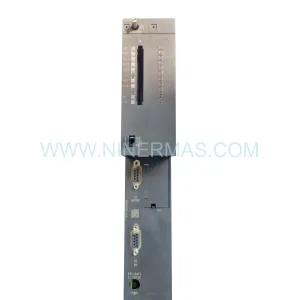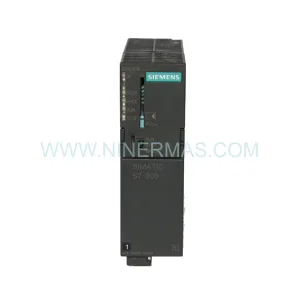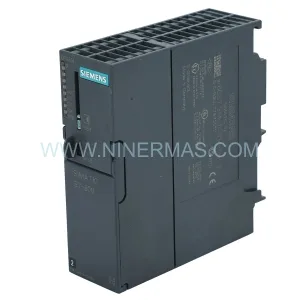
Original Industrial Spare Part
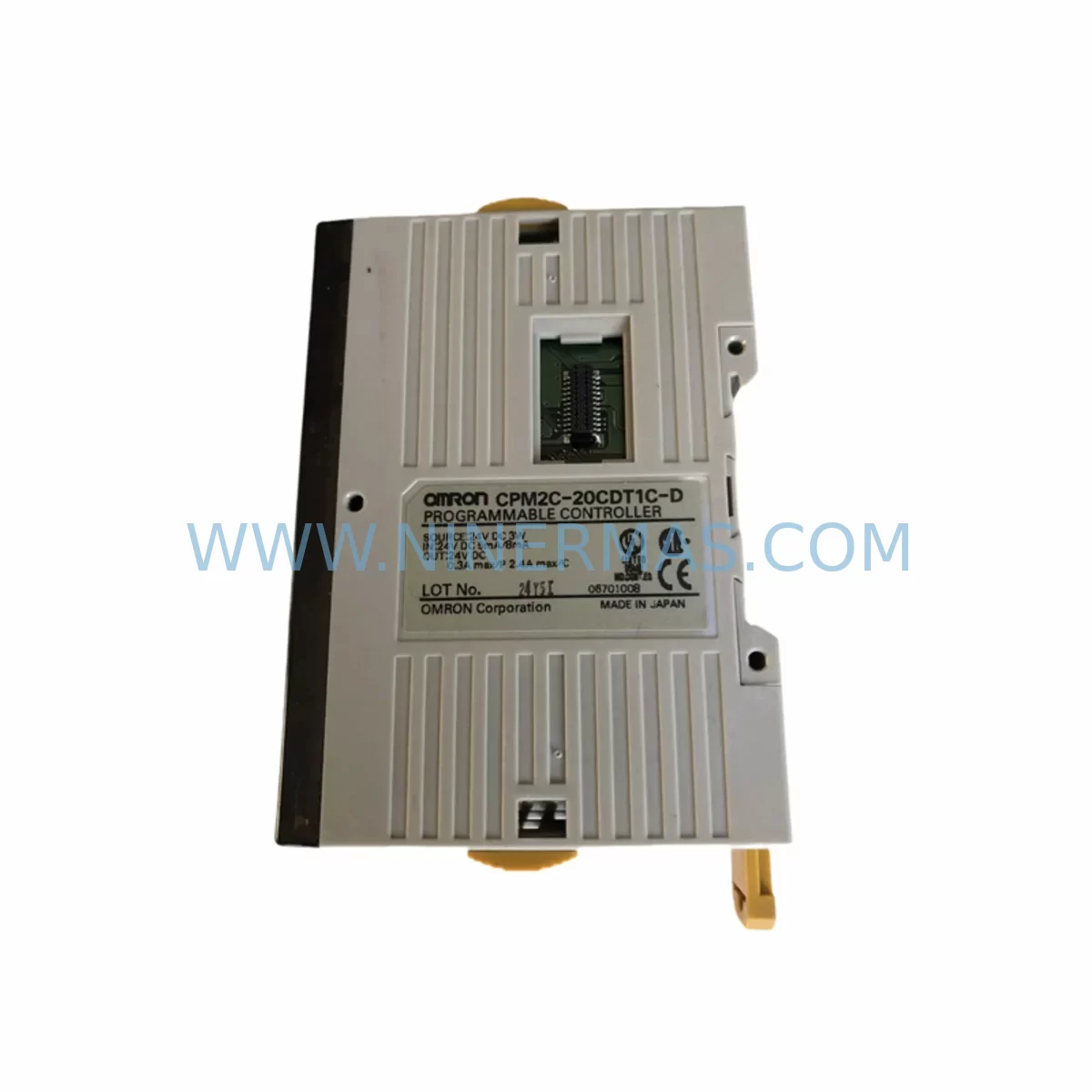
OMRON CPM2C-20CDT1C-D Retrofit-Compatible PLC CPU for Legacy Systems
Verify the part, confirm the platform family, and move straight into quotation with the right commercial details.
RFQ Ready
- SKUCPM2C-20CDT1C-D
- CategoryPLC & Industrial Automation Modules
- BrandOmron
- SupportAvailability, lead time, condition, and shipping coordination
How Buyers Usually Use This Page
- Confirm the exact part number and platform family before sending the quote request.
- Use direct email when quantity, condition, and destination are already defined internally.
- Switch to the broader brand or category archive when you need alternates nearby.
Series Navigation
Move through the most common platform families behind this part.
Product RFQ
Send this part directly for quotation.
Include quantity, required condition, destination country, and target delivery timing. Current reference: OMRON CPM2C-20CDT1C-D Retrofit-Compatible PLC CPU for Legacy Systems with SKU CPM2C-20CDT1C-D.
OMRON CPM2C-20CDT1C-D Retrofit-Compatible PLC CPU for Legacy Systems
The OMRON CPM2C-20CDT1C-D is a compact, ruggedized PLC CPU module engineered for demanding industrial environments where legacy control systems must remain operational or be upgraded with minimal disruption. As a direct retrofit-compatible replacement within the OMRON CPM2C series, this unit supports engineers and maintenance teams undertaking legacy system modernization, discontinued spare parts sourcing, and control cabinet upgrades across process and discrete manufacturing facilities.
Designed to slot into existing CPM2C-series backplane configurations, the CPM2C-20CDT1C-D provides 20 I/O points (12 DC inputs / 8 transistor outputs, NPN sink type) with onboard high-speed counter and pulse output capability. Its compact DIN-rail form factor and compatibility with the CPM2C expansion I/O bus make it a preferred choice for engineers who need to restore or extend legacy control logic without redesigning the entire control panel.
Upgrade Compatibility Table
| Parameter | CPM2C-20CDT1C-D (This Unit) | Retrofit Notes |
|---|---|---|
| I/O Points | 20 (12 IN / 8 OUT) | Verify I/O count matches legacy program addressing |
| Output Type | Transistor NPN (Sink) | Confirm load polarity; replace if legacy used relay output |
| Power Supply | 24 VDC | Confirm panel PSU capacity; CPM2C-MAD11 or CPM2C-32EDT may share rail |
| Communication | RS-232C / Peripheral port | Compatible with CX-Programmer via CS1W-CN226 or CS1W-CN626 cable |
| Expansion Bus | CPM2C I/O expansion connector | Supports CPM2C-32EDT, CPM2C-MAD11, CPM2C-SRT21 expansion units |
| Program Memory | 4K steps | Verify existing ladder logic fits within memory; upload via CX-Programmer |
| Installation | DIN rail / direct panel mount | Confirm rail spacing and cabinet depth before installation |
| Replacement Path | CPM1A, CPM2A, CPM2C variants | I/O remapping may be required for CPM1A-to-CPM2C migration |
| Debugging Interface | CX-Programmer (v9.x+) | Use CS1W-CN226 peripheral cable for online monitoring |
| Warranty | 12 Months | Covers manufacturing defects; pre-shipment functional test included |
Retrofit Planning for Existing Automation Systems
When planning a retrofit around the CPM2C-20CDT1C-D, the first step is a thorough audit of the existing control cabinet. Engineers should document all terminal wiring assignments against the original I/O allocation table, paying close attention to input commons, output load types, and any shared 24 VDC supply rails. If the legacy system used a CPM2C-32EDT expansion unit for additional digital I/O, this module remains fully compatible and can be retained on the expansion bus without rewiring.
For installations that include analog signal conditioning, the CPM2C-MAD11 analog I/O expansion unit integrates directly with the CPM2C-20CDT1C-D via the side expansion connector, supporting 4–20 mA and 0–10 V signal ranges. This is particularly relevant in process control applications where legacy 4–20 mA transmitters — pressure, temperature, or flow — must be preserved during the upgrade cycle.
Communication continuity is a critical concern in any legacy PLC migration. The CPM2C-20CDT1C-D supports RS-232C host link communication, enabling integration with existing SCADA systems, HMI panels, and data logging terminals that rely on OMRON’s Host Link (FINS) protocol. If the existing HMI — such as an OMRON NT-series or NS-series panel — communicates via the peripheral port, the CS1W-CN226 or CS1W-CN626 programming cable provides the necessary interface for both program upload and online monitoring during commissioning.
In systems where the CPM2C-SRT21 CompoBus/S slave unit was used for distributed I/O across a production line, the CPM2C-20CDT1C-D can serve as the master CPU, maintaining the existing CompoBus/S network topology without requiring rewiring of remote I/O nodes. This significantly reduces retrofit complexity in multi-station assembly or conveyor control applications.
For facilities migrating from older CPM1A or CPM2A controllers, the program logic can typically be exported from CX-Programmer and re-imported with minor address remapping. Engineers should verify that timer and counter preset values, data memory (DM) allocations, and high-speed counter interrupt routines are correctly mapped to the CPM2C address space before going live. A staged commissioning approach — running the new CPU in parallel with the legacy unit during a planned maintenance window — is strongly recommended to validate output behavior before full cutover.
Where signal isolation is required between legacy field devices and the new CPU, DIN-rail-mounted signal isolators or relay interface modules should be inserted at the terminal block level. This protects the CPM2C-20CDT1C-D’s transistor outputs from inductive load spikes generated by solenoid valves, motor starters, or legacy relay coils that may not have built-in flyback suppression.
Downtime Control During System Migration
Minimizing unplanned downtime is the primary operational constraint in any legacy PLC replacement project. For the CPM2C-20CDT1C-D, a structured migration plan should begin with a full program backup from the existing CPU using CX-Programmer, saved to a verified project file with version control. This backup serves as the rollback baseline if commissioning issues arise.
Prior to physical swap-out, the replacement CPM2C-20CDT1C-D should be bench-tested with the backed-up program loaded, I/O forced to simulate field conditions, and all output states verified against the original control narrative. NINERMAS ships each unit with a pre-shipment functional test report, confirming that the CPU executes scan cycles correctly, communication ports respond to host link polling, and all I/O points activate within specification.
During the physical installation, terminal wiring should be transferred one section at a time — input commons first, then output groups — with each section verified against the wiring diagram before powering up. If the cabinet includes a CPM2C-32EDT expansion unit or CPM2C-MAD11 analog module, these should be reconnected to the expansion bus before the CPU is powered, as hot-insertion of expansion units is not supported on the CPM2C platform.
Once the system is powered and the program is running, online monitoring via CX-Programmer allows real-time verification of I/O status, timer/counter values, and communication link health. Any discrepancies in output behavior should be traced to address mapping differences before resuming production. For facilities with strict uptime requirements, scheduling the cutover during a planned shift changeover or weekend maintenance window — with a maximum target of 2–4 hours for a standard CPM2C cabinet — is achievable with proper pre-staging.
NINERMAS maintains in-stock inventory of the CPM2C-20CDT1C-D to support emergency replacement scenarios, with same-day dispatch available for confirmed orders. Our 12-month warranty covers the replacement unit from the date of shipment, providing assurance for both planned retrofit projects and urgent breakdown recoveries.
Retrofit Support FAQ
Q1: Is the CPM2C-20CDT1C-D a direct drop-in replacement for other CPM2C CPU variants?
The CPM2C-20CDT1C-D is directly compatible with other 20-point CPM2C CPU variants sharing the same I/O count and transistor output type. Replacement of relay-output variants (e.g., CPM2C-20CDTC-D) requires verification of output load compatibility, as transistor outputs cannot directly drive AC loads. Program files are fully transferable between CPM2C CPU variants via CX-Programmer without modification in most cases.
Q2: What programming cable and software are required for commissioning?
CX-Programmer (version 9.x or later) is the standard programming environment. Connection to the CPM2C-20CDT1C-D peripheral port requires a CS1W-CN226 (USB-to-peripheral) or CS1W-CN626 (RS-232C-to-peripheral) cable. Online monitoring, program upload/download, and forced I/O operations are all supported through this interface.
Q3: Does NINERMAS provide pre-shipment testing for this unit?
Yes. Every CPM2C-20CDT1C-D dispatched by NINERMAS undergoes a pre-shipment functional test covering CPU scan cycle execution, I/O point activation, communication port response, and power-on self-diagnostics. A test record is available upon request. All units are covered by a 12-month warranty from the date of shipment.
Q4: Can this unit be used with existing CPM2C expansion modules already installed in the cabinet?
Yes. The CPM2C-20CDT1C-D is fully compatible with the CPM2C expansion I/O bus, supporting connection of CPM2C-32EDT digital expansion units, CPM2C-MAD11 analog I/O units, and CPM2C-SRT21 CompoBus/S slave units. The maximum expansion configuration (up to 3 expansion units) is unchanged from other CPM2C CPU variants, allowing existing expansion hardware to be retained without modification.
| Product Series | Legacy |
|---|---|
| Country of Origin | JP |
Catalog Continuation
More Omron modules in the catalog.
Use the brand lane to compare nearby part numbers, platform-adjacent modules, and other inquiry-ready listings before sending your final RFQ.
Catalog Continuation
Alternative parts within PLC & Industrial Automation Modules.
Stay inside the same system family when you need substitutes, adjacent modules, or a broader shortlist for procurement review.
SKU: SCE906A2-002-01 SCE906A200201
Pacific Scientific SCE906A2-002-01 Retrofit Servo Amplifier
SKU: EPC500 3183062451
Alfa Laval EPC500 3183062451 Service-Ready Spare Part