A mill can change its manufacturing software supplier without changing a single input card in the control room. Yet acquisition announcements often arrive in maintenance inboxes as a much broader question: does this change who supports our installed control system? That is the useful question to ask about Valmet’s latest MES agreement, provided software ownership and hardware support are kept separate.
In its October 27, 2026 announcement, Valmet said it had agreed to acquire Tieto’s manufacturing execution system business, including TIPS MES and related Order-to-Cash solutions serving pulp, paper and other fibre-based industries. Closing is expected in the second quarter of 2027, subject to customary conditions. This is an agreement, not a completed transfer. The announcement also describes continued support for existing customers.
For maintenance and procurement teams, the practical implication is a support-boundary review. The announcement is not evidence that a particular DCS board has become obsolete, that an installed interface must change immediately, or that a spare part now carries a different warranty. Those decisions require their own documentation.
Start with the incident, not the organisation chart
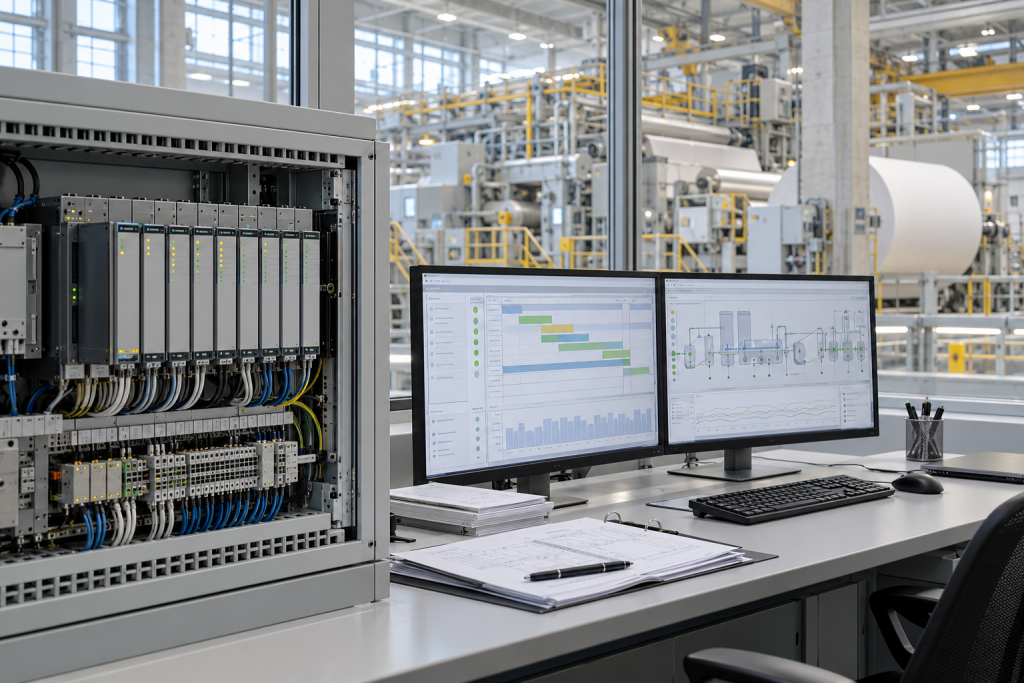
Consider a hypothetical paper machine that continues running but stops passing completed production quantities to the planning layer. Operators can still see field status. The immediate recovery question is whether the missing information originates in a physical input, controller calculation, communications interface, middleware service or MES transaction. Sending the same fault report to a newly named corporate owner does not answer that question.
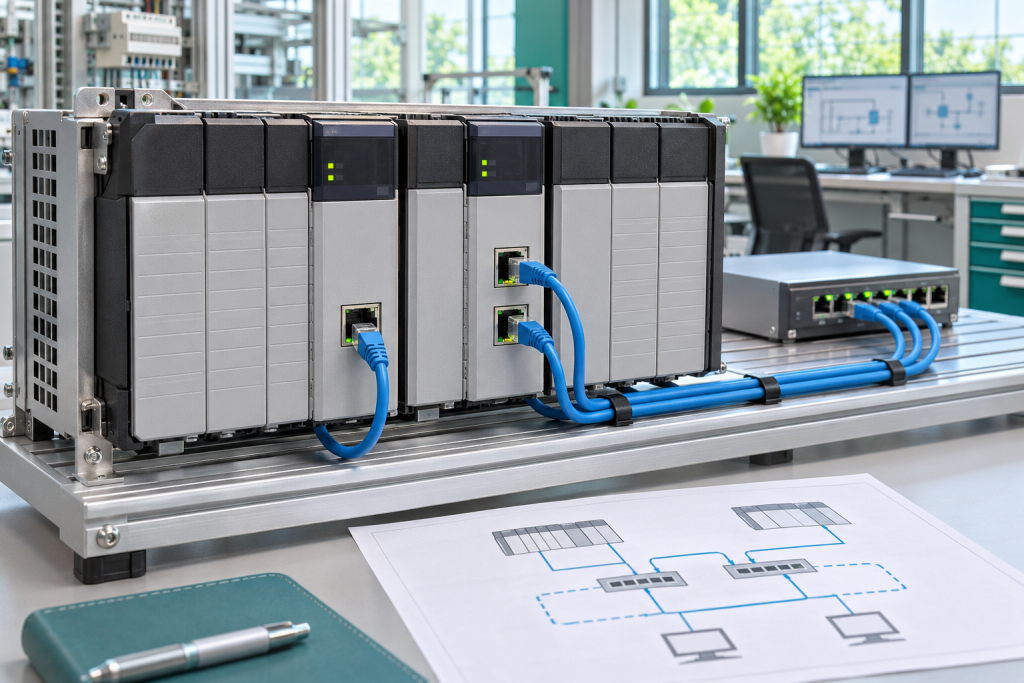
Build a small ownership map around actual failure symptoms. For each boundary, identify the responsible team, contract reference, diagnostic evidence and escalation route. Record who can authorise a restart or restore a configuration. A commercial contact can coordinate assistance, but should not silently become the technical acceptance authority for every system layer.
The map should survive personnel changes. Store it with the site’s recovery documentation rather than in one engineer’s email. Include a date and a named reviewer, because support relationships can change while the plant’s wiring remains unchanged.
Keep the hardware baseline independent
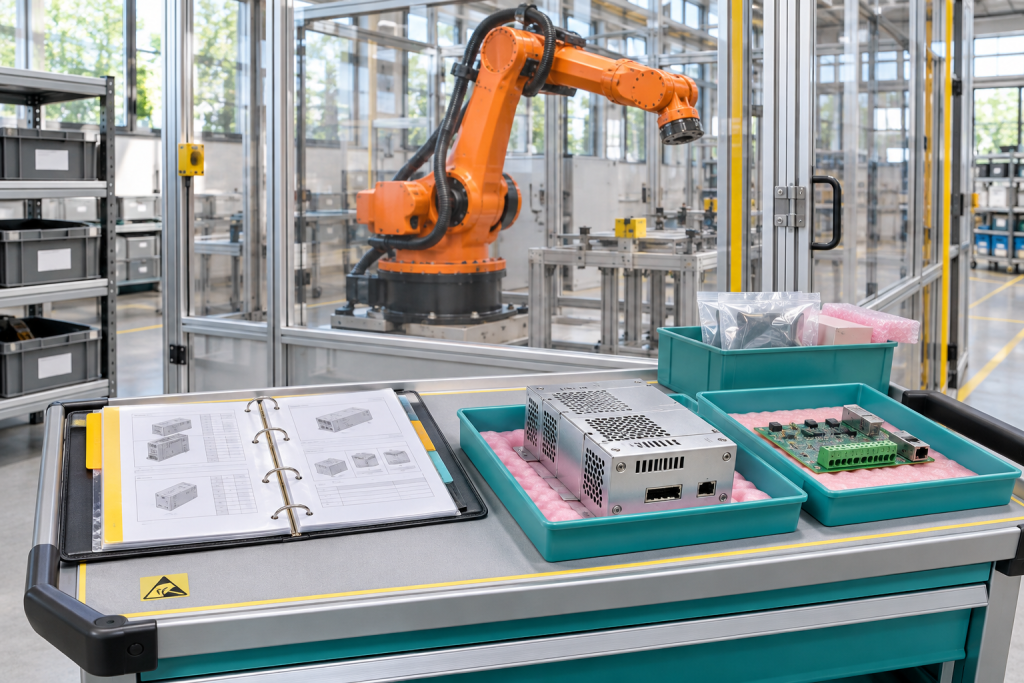
A reliable baseline starts at the installed label: full part number, revision, rack position, terminal arrangement and assigned function. Add configuration references and a photograph that can be read without opening the cabinet during a fault. Describe environmental and condition requirements separately from brand ownership.
For a plant documenting an existing DI8P installation, an enquiry for a Valmet DI8P D201126L input module should preserve that identity and request evidence for the offered unit. A catalog description alone does not establish compatibility with the plant’s revision or prove an approved retrofit path. Nor does a software acquisition announcement provide that approval.
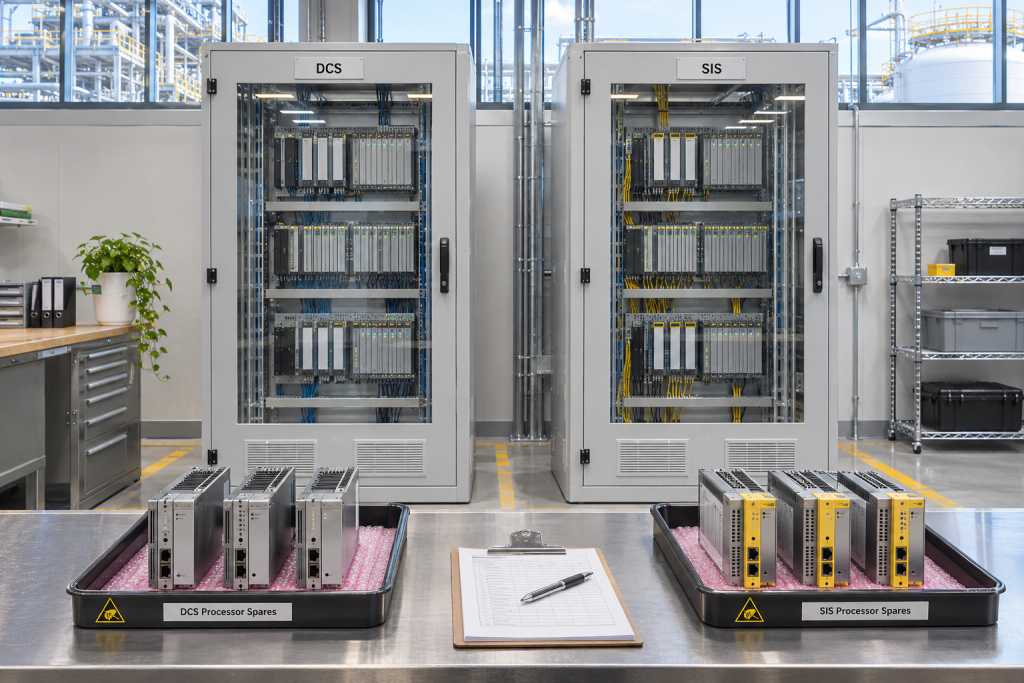
The same discipline applies higher in the I/O architecture. An installed Metso IOP371 I/O processor belongs in a different technical review from an MES application contract. Its listing can support an identified sourcing request, but these two products are not presented here as an approved pair, a migration package or hardware required by TIPS.
Ask what changes before asking what to buy
Use the period before an expected transaction close to reduce uncertainty, not to create an emergency purchase. Ask the current support organisation whether account contacts, ticket routes, software entitlements or contract administration are expected to change. Request written answers applicable to your contract. Keep current escalation details until replacement arrangements are confirmed.
Then ask your own engineering team whether there is an approved integration project. A proposed MES upgrade can create genuine work at interfaces, but it does not automatically require replacement of functioning field hardware. Separate mandatory technical changes from optional improvement work and from procurement preferences.
A useful budget has three lines: maintaining the current physical system, preserving application support, and implementing an authorised interface change. Combining them into one vague modernisation allowance makes it difficult to explain why a spare was purchased or why a software dependency was overlooked.
Define evidence for a recovery rehearsal
Choose a representative transaction and trace it across the boundary. Document what an operator should see, what the controller records and what the production application receives. Agree how missing or delayed transactions are reconciled. This is a planning exercise, not permission to interrupt a running machine or manipulate production records.
Where a controlled test is justified, use an approved environment and preserve the baseline. Capture timestamps, configuration versions, responsible owners and acceptance results. Distinguish successful data transport from correct business interpretation: a message arriving is not proof that quantities, identifiers and status transitions retain their meaning.
The resulting record helps both purchasing and support. Buyers can distinguish a hardware shortage from a service dependency, while technicians can escalate a fault with evidence instead of a broad suspicion that the acquisition changed everything.
Questions from maintenance and purchasing
Has Valmet already completed the Tieto MES acquisition?
The October 27 announcement describes a signed agreement with closing expected in the second quarter of 2027, subject to conditions. Do not describe the transaction as completed on that evidence. Check subsequent official communications before changing contractual assumptions.
Does this announcement establish an EOL date for our DCS cards?
No. It is not a model-specific hardware lifecycle notice. An EOL or last-order decision needs the applicable manufacturer’s notice, exact product scope and relevant dates, rather than an inference from a software transaction.
Should we buy extra boards immediately?
Base stock decisions on the installed population, failure consequences, existing recoverable stock and verified sourcing conditions. The news is a reason to review responsibilities, not evidence of an immediate shortage or a reason to assume all legacy hardware requires replacement.
What should accompany an enquiry for an older Valmet or Metso part?
Send the full label, revision evidence, quantity, required condition, installed role and destination. State any documented restrictions. Keep requests for application support separate so a hardware quotation is not mistaken for a complete recovery or integration commitment.
For a focused spare enquiry, share your installed DI8P or IOP371 identification and acceptance requirements with NINERMAS. We can assess the sourcing request without treating corporate news as a substitute for engineering evidence.
Image: AI-generated editorial illustration, not an exact product photograph or installation reference.
© 2026 NINERMAS. All rights reserved. Official Website: https://ninermas.com Inquiry: sale@ninermas.com | WhatsApp/Tel: +86 187 5021 5667
Next Step
Move the research into a cleaner RFQ.
Send the part number, quantity, condition expectation, destination, and timing details so the sourcing team can reply with better availability and lead-time context.