Original Industrial Spare Part
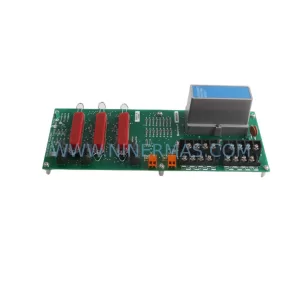
YOKOGAWA NFAF135-S50 Retrofit-Compatible Analog Output Module
Verify the part, confirm the platform family, and move straight into quotation with the right commercial details.
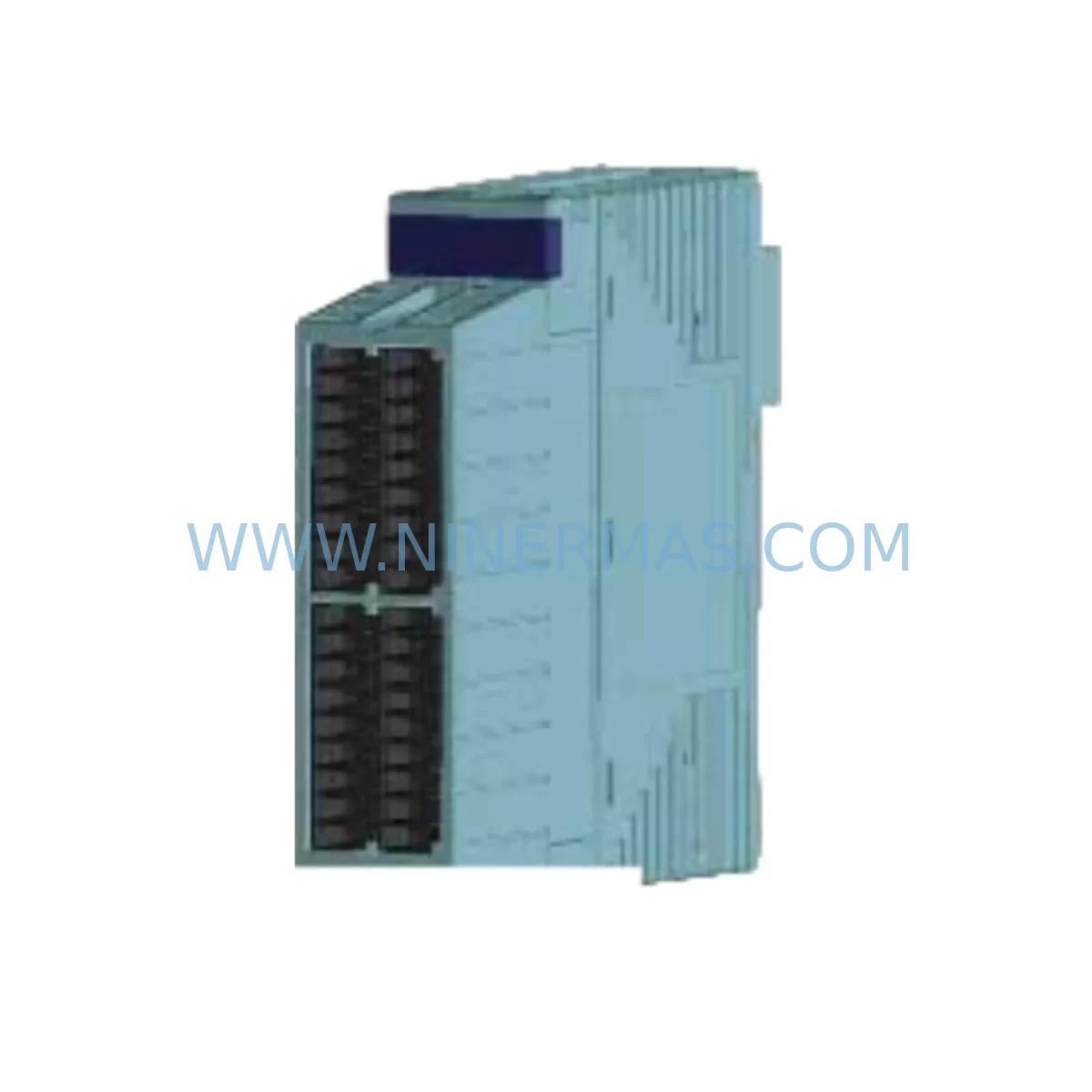
RFQ Ready
- SKUNFAF135-S50
- CategoryDCS Distributed Control Systems
- BrandYokogawa
- SupportAvailability, lead time, condition, and shipping coordination
How Buyers Usually Use This Page
- Confirm the exact part number and platform family before sending the quote request.
- Use direct email when quantity, condition, and destination are already defined internally.
- Switch to the broader brand or category archive when you need alternates nearby.
Series Navigation
Move through the most common platform families behind this part.
Product RFQ
Send this part directly for quotation.
Include quantity, required condition, destination country, and target delivery timing. Current reference: YOKOGAWA NFAF135-S50 Retrofit-Compatible Analog Output Module with SKU NFAF135-S50.
YOKOGAWA NFAF135-S50 Retrofit-Compatible Analog Output Module: Legacy System Compatibility & Smooth Upgrade
The YOKOGAWA NFAF135-S50 is a field-proven analog output module designed for use within the YOKOGAWA CENTUM control platform. As aging distributed control systems (DCS) reach end-of-life and original spare parts become increasingly scarce, the NFAF135-S50 has become a critical component in retrofit projects, legacy panel upgrades, and production line modernization programs across the process industries. Whether you are managing a refinery, chemical plant, power generation facility, or water treatment station, this module provides the signal conditioning and output accuracy required to maintain process continuity while transitioning away from obsolete hardware.
NINERMAS maintains verified inventory of the NFAF135-S50 with full functional testing prior to shipment, a 12-month warranty, and technical support for integration into both original CENTUM VP environments and hybrid retrofit architectures.
Upgrade Compatibility Table
| Parameter | NFAF135-S50 Specification | Retrofit Notes |
|---|---|---|
| Module Type | Analog Output (AO) | Direct replacement for legacy CENTUM AO positions |
| Output Channels | 16-channel analog output | Verify channel mapping against existing I/O list before swap |
| Output Signal | 4–20 mA DC | Confirm field loop resistance and power supply headroom |
| Communication Interface | CENTUM VP backplane bus | Confirm backplane slot compatibility; check node address assignment |
| Installation Format | Card-slot insertion, CENTUM rack | Measure physical slot clearance; confirm rack generation (CS3000 vs VP) |
| Power Supply Requirement | Supplied via backplane | Verify power budget on the NFCP010 or equivalent power supply module |
| Firmware / Configuration | Compatible with CENTUM VP Engineering Environment | Re-download function block parameters after module swap |
| HMI Integration | Supports existing CENTUM VP HIS graphics | No HMI screen rebuild required for like-for-like replacement |
| Commissioning | Loop calibration via CENTUM VP builder | Perform loop check and zero/span verification on all 16 channels |
| Warranty | 12 Months | Covered from date of shipment; includes functional test certificate |
Retrofit Planning for Existing Automation Systems
Replacing the NFAF135-S50 in an operating plant requires careful pre-engineering to avoid unplanned shutdowns and control disruptions. The first step is to pull the current I/O assignment list from the CENTUM VP engineering station and confirm which function blocks reference the module’s output channels. In many legacy installations, the NFAF135-S50 shares a rack with companion modules such as the NFAI135 analog input module, the NFBI135 digital input module, and the NFBO135 digital output module — all of which must remain undisturbed during the swap to protect adjacent control loops.
Power capacity is a frequent oversight in retrofit planning. Before installing the replacement module, engineers should audit the rack’s NFCP010 power supply module to confirm it can support the full card complement without exceeding its rated output. If the existing power supply is already near capacity — a common situation in older CENTUM CS3000 cabinets that have been expanded over the years — a parallel power supply or a dedicated power rail for the new module may be required.
Terminal wiring is another critical checkpoint. The NFAF135-S50 uses a dedicated field terminal board that connects to the module via a cable assembly. Technicians should photograph and document all field wiring before disconnection, paying particular attention to loop-powered versus externally powered transmitter configurations. In plants where the original wiring documentation is incomplete or outdated, a point-by-point continuity check against the current P&ID is strongly recommended before the new module is energized.
For sites migrating from older CENTUM CS3000 hardware to CENTUM VP, the NFAF135-S50 retrofit often coincides with a broader platform upgrade that may also involve replacing the NFCP701 communication module, updating the LFCP701 field control unit, and reconfiguring the Vnet/IP network topology. In these cases, the module address and node configuration must be re-entered in the CENTUM VP builder, and all associated function block parameters — including output range, alarm limits, and manual/auto transfer logic — must be verified against the original control narrative before the loop is returned to automatic mode.
Where the retrofit scope extends to the human-machine interface, existing CENTUM VP HIS operator stations typically do not require screen rebuilds for a like-for-like module replacement, provided the tag names and I/O addresses remain unchanged. However, if the project involves I/O consolidation or channel remapping — for example, combining two legacy 8-channel modules into a single 16-channel NFAF135-S50 — the HMI graphics, alarm summary pages, and historian tag configurations will need to be updated accordingly. Signal isolators such as the Yokogawa MTL or equivalent DIN-rail mounted barriers may also be required if the new module’s output impedance characteristics differ from the original installation.
Programming cable access is required during commissioning. Ensure that the CENTUM VP engineering workstation is connected to the control network and that the relevant FCS (Field Control Station) is in a state that permits online download. For critical loops — such as reactor temperature control, compressor surge control, or boiler drum level — coordinate with the operations team to place the loop in manual mode and confirm a safe fallback condition before initiating the module swap.
Downtime Control During System Migration
Minimizing production impact during an NFAF135-S50 replacement requires a structured hot-swap or planned-outage strategy. For non-critical loops, a rolling replacement approach is often feasible: place individual loops in manual mode, swap the module, restore the function block configuration via online download, perform a loop check, and return to automatic — all within a single shift window. This approach keeps the majority of the control system live and limits exposure to a small subset of outputs at any given time.
For critical process loops where even brief manual operation carries risk, a pre-staged replacement strategy is preferred. In this model, the replacement NFAF135-S50 is pre-configured offline using a spare CENTUM VP engineering environment, with all function block parameters, output ranges, and alarm setpoints loaded and verified before the module reaches the field. The actual swap is then reduced to a physical card exchange and a brief online verification, typically achievable within a 15–30 minute maintenance window.
Protecting the original program logic is essential. Before any hardware change, a full backup of the FCS database — including all function blocks, sequence tables, and communication definitions — should be exported from the CENTUM VP engineering station and stored on an isolated backup medium. This ensures that in the event of an unexpected issue during commissioning, the system can be restored to its pre-retrofit state without data loss.
Field control continuity is further protected by confirming that all upstream and downstream interlocks associated with the affected outputs are in a safe state before the swap begins. Safety instrumented system (SIS) interfaces, emergency shutdown (ESD) logic, and any cross-system communications via OPC or Modbus TCP should be reviewed with the safety and process engineering teams as part of the pre-job risk assessment.
Retrofit Support FAQ
Q1: Is the NFAF135-S50 a direct drop-in replacement for the same module in a CENTUM CS3000 system?
The NFAF135-S50 is designed for the CENTUM VP platform. When retrofitting from CS3000, physical slot dimensions are generally compatible, but the backplane communication protocol and function block structure differ. A configuration migration using the CENTUM VP engineering environment is required, and all I/O assignments must be re-verified. NINERMAS can provide pre-shipment configuration support upon request.
Q2: What commissioning steps are required after installing the replacement module?
After physical installation, reconnect the field terminal board and verify wiring continuity. Download the function block configuration from the CENTUM VP engineering station, perform a zero and span calibration on all active output channels, confirm alarm limit settings, and conduct a full loop check against the P&ID. Return each loop to automatic mode only after the output signal has been verified at the field device.
Q3: Does NINERMAS provide a functional test certificate with the NFAF135-S50?
Yes. Every NFAF135-S50 unit shipped by NINERMAS undergoes a pre-shipment functional test covering output accuracy, channel isolation, and communication interface integrity. A test certificate is included with each shipment. The module is covered by a 12-month warranty from the date of shipment.
Q4: What is the typical lead time and stock availability?
NINERMAS maintains stock of the NFAF135-S50 to support urgent retrofit and breakdown replacement requirements. Standard orders are processed within 1–3 business days. For large-quantity or project-based procurement, contact our sales team at sale@ninermas.com or +0086 187 5021 5667 to confirm availability and arrange expedited shipment.
| Product Series | CENTUM VP |
|---|---|
| Country of Origin | JP |
Catalog Continuation
More Yokogawa modules in the catalog.
Use the brand lane to compare nearby part numbers, platform-adjacent modules, and other inquiry-ready listings before sending your final RFQ.
SKU: ASS9881 DE-02
Yokogawa ASS9881 DE-02 Spare Part for Industrial Maintenance
SKU: NFDV551-P11 S2
Yokogawa NFDV551-P11 S2 Safety-Reliable Digital Output Module
Catalog Continuation
Alternative parts within DCS Distributed Control Systems.
Stay inside the same system family when you need substitutes, adjacent modules, or a broader shortlist for procurement review.
SKU: TK850V007 3BSC950192R1
ABB TK850V007 3BSC950192R1 Service-Ready Spare Part for Industrial Maintenance
SKU: CC-TAID11 51306731-175
Honeywell CC-TAID11 51306731-175 Service-Ready Spare Part
SKU: K2LCN-4 51401551-400
Honeywell K2LCN-4 51401551-400 Ruggedized Module Spare
SKU: MC-TAOX52 51304335-275
Honeywell MC-TAOX52 51304335-275 Service-Ready Spare Part