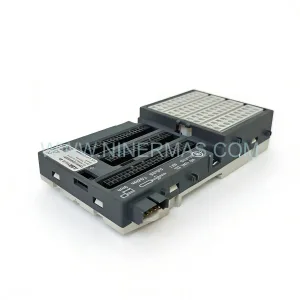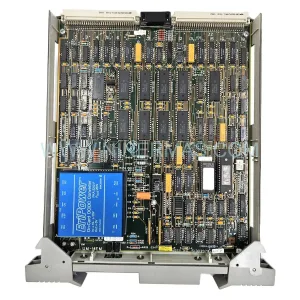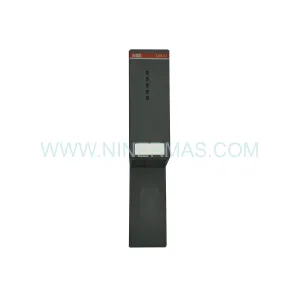
Original Industrial Spare Part
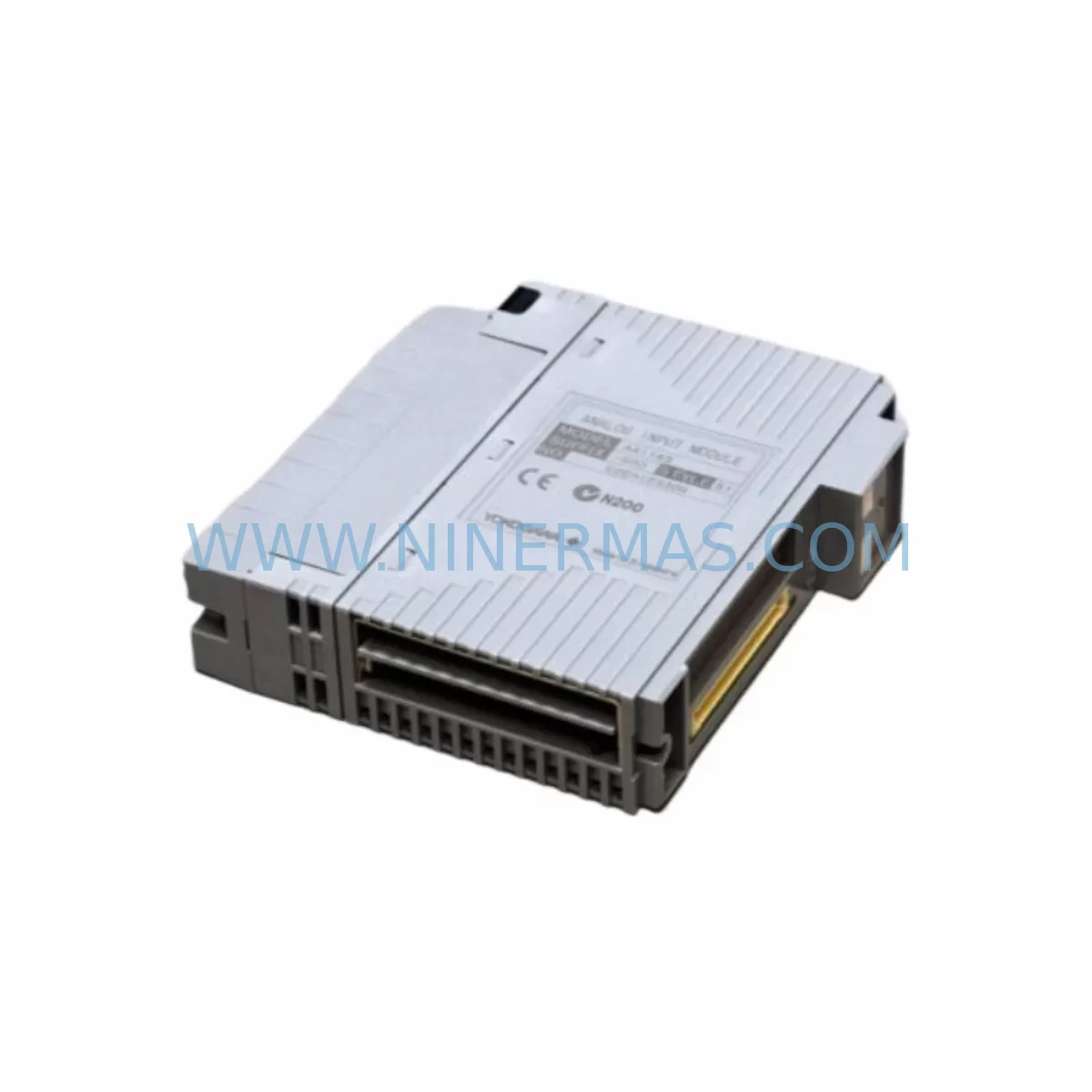
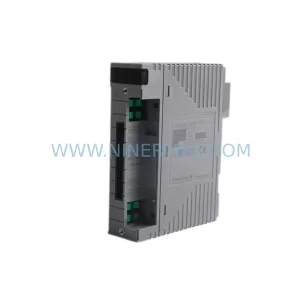
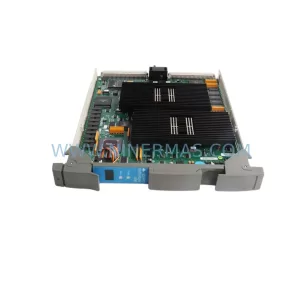
YOKOGAWA AAI143-S00 S1 Retrofit-Compatible Analog I/O
Verify the part, confirm the platform family, and move straight into quotation with the right commercial details.
RFQ Ready
- SKUAAI143-S00 S1
- CategoryDCS Distributed Control Systems
- BrandYokogawa
- SupportAvailability, lead time, condition, and shipping coordination
How Buyers Usually Use This Page
- Confirm the exact part number and platform family before sending the quote request.
- Use direct email when quantity, condition, and destination are already defined internally.
- Switch to the broader brand or category archive when you need alternates nearby.
Series Navigation
Move through the most common platform families behind this part.
Product RFQ
Send this part directly for quotation.
Include quantity, required condition, destination country, and target delivery timing. Current reference: YOKOGAWA AAI143-S00 S1 Retrofit-Compatible Analog I/O with SKU AAI143-S00 S1.
YOKOGAWA AAI143-S00 S1 Retrofit-Compatible Analog I/O Module for Legacy Systems
The YOKOGAWA AAI143-S00 S1 is a high-density analog input/output module engineered for seamless integration into existing CENTUM VP and ProSafe-RS distributed control system (DCS) architectures. As industrial facilities face the growing challenge of maintaining aging automation infrastructure, the AAI143-S00 S1 serves as a proven retrofit solution — enabling engineers to extend the operational life of legacy control systems without the cost and risk of a full platform migration.
Whether you are replacing a failed module in a running production line, upgrading a control cabinet that has reached end-of-life component availability, or migrating from an older CENTUM CS 3000 platform to CENTUM VP, the AAI143-S00 S1 provides the electrical compatibility, signal accuracy, and mechanical form factor required for a controlled, low-risk changeover. NINERMAS maintains verified stock of this module with full pre-shipment functional testing and a 12-month warranty on every unit.
Upgrade Compatibility Table
| Parameter | Detail |
|---|---|
| Module SKU | AAI143-S00 S1 |
| Brand / Series | Yokogawa / CENTUM VP |
| Module Type | Analog Input/Output (Mixed AI/AO) |
| Compatible Platform | CENTUM VP, ProSafe-RS, CENTUM CS 3000 (via adapter) |
| Backplane Interface | Yokogawa standard node bus — compatible with ANB10D, ANB11D node units |
| Signal Range | 4–20 mA / 1–5 V DC (field-selectable per channel) |
| Channel Configuration | 16 AI + 8 AO (typical for S00 suffix) |
| Installation Form Factor | Standard Yokogawa I/O module slot — no bracket modification required |
| Communication Compatibility | Vnet/IP, Ethernet/IP node-level communication via FCS controller |
| Replacement Recommendation | Direct replacement for AAI141, AAI135 in same rack slot |
| Commissioning Note | Module address must be re-confirmed in CENTUM VP Builder after slot insertion |
| Warranty | 12 Months — covers functional failure under normal operating conditions |
Retrofit Planning for Existing Automation Systems
A successful retrofit begins well before the module arrives on site. When planning the replacement of an AAI143-S00 S1 — or any analog I/O module in a CENTUM VP field control station (FCS) — engineers must account for the full signal chain from field instrument to controller logic.
Start by auditing the power supply capacity of the existing control cabinet. The AAI143-S00 S1 draws regulated 24 V DC from the node unit power bus. If the cabinet is already running near capacity — particularly in systems where an AIP588 or AIP578 I/O power supply module is shared across multiple node units — adding or replacing a high-channel-count analog module may require a power budget review before proceeding.
Terminal wiring is the next critical checkpoint. The AAI143-S00 S1 uses Yokogawa’s standard marshalling terminal block system. In legacy installations, field cables are often landed on TB series terminal blocks or third-party DIN rail terminal assemblies. Verify that existing cable labels, wire gauges, and shield grounding arrangements match the new module’s terminal assignment drawing before disconnecting any field wiring. Mislabeled or undocumented field wiring is one of the most common causes of extended commissioning time during analog module replacement.
Backplane slot assignment must be confirmed in the CENTUM VP System Builder (or CENTUM CS 3000 System View for older installations). The module address — defined by its physical slot position within the ANB10D or ANB11D node unit — must match the I/O assignment configured in the FCS database. If the replacement module is installed in a different slot than the original, the FCS tag database must be updated and the controller re-downloaded before the module will communicate correctly.
For facilities running CENTUM CS 3000 and migrating toward CENTUM VP, the AAI143-S00 S1 can serve as a bridging component during phased migration. In this scenario, the existing ACF11 or ACF12 field communication units may need to be evaluated for compatibility with the new node architecture. Similarly, if the migration involves introducing Vnet/IP communication in place of legacy V-net coaxial bus, the AFS10D or AFS20D field communication server may need to be added to the cabinet layout.
HMI screen updates are frequently overlooked during module-level retrofits. If the AAI143-S00 S1 replacement changes any tag names, engineering unit ranges, or alarm setpoints, the corresponding CENTUM VP HIS (Human Interface Station) faceplates and trend displays must be updated to reflect the new configuration. Failure to synchronize HMI data with the updated FCS database can result in operators seeing stale or incorrect process values after the retrofit is complete.
For systems that include ProSafe-RS safety instrumented system (SIS) integration, confirm that the analog I/O signals routed through the AAI143-S00 S1 are not part of any safety function loop before isolating the module. Safety-related analog inputs — such as those feeding into a SSC60D or SSC57D safety controller — must be bypassed or placed in manual override through the SIS logic before the field module is removed.
Finally, if the retrofit involves expanding I/O capacity rather than a like-for-like replacement, confirm that the existing rack has available slots and that the node unit’s I/O bus has sufficient bandwidth for the additional module. In dense installations, a ANR10D remote node unit may be required to extend the I/O count without modifying the primary cabinet layout.
Downtime Control During System Migration
Minimizing unplanned downtime is the primary concern for any analog I/O module replacement in a live production environment. The AAI143-S00 S1 supports Yokogawa’s standard hot-standby and online replacement procedures when the FCS is configured for redundant I/O operation. In non-redundant configurations, the replacement window must be carefully planned to coincide with a scheduled maintenance shutdown or a process hold period.
Before removing the existing module, export and archive the current FCS database from CENTUM VP Builder. This backup preserves the complete tag configuration, alarm settings, and I/O mapping — ensuring that if the replacement module requires a re-download, the original logic can be restored without manual re-entry. Store the backup on a dedicated engineering workstation and, if possible, on removable media kept in the control room.
During the physical swap, keep field instruments in their last known state where process conditions allow. For critical loops — such as flow control or pressure regulation — place the relevant PID controllers in manual mode from the HIS before isolating the module. This prevents the FCS from issuing erratic output signals to final control elements (such as control valves or variable frequency drives) during the brief period when the analog output channels are offline.
After the new AAI143-S00 S1 is seated and the node unit has recognized the module, perform a channel-by-channel signal verification using a calibrated loop calibrator before returning any loops to automatic control. Verify that the 4–20 mA signal from each field transmitter reads correctly at the FCS tag, and that each analog output channel drives the correct milliamp value to its corresponding field device. Document the as-found and as-left readings for each channel as part of the commissioning record.
For facilities with strict change management requirements, the entire replacement procedure — from pre-work documentation through post-commissioning verification — should be captured in a Management of Change (MOC) record. NINERMAS can provide module datasheets, wiring diagrams, and functional test certificates to support your MOC documentation package.
Retrofit Support FAQ
Q1: Is the AAI143-S00 S1 a direct drop-in replacement for the AAI141 or AAI135 modules?
The AAI143-S00 S1 is mechanically and electrically compatible with the same Yokogawa node unit slot used by the AAI141 and AAI135. However, the channel count and I/O mix (AI vs. AO) differ between these part numbers. Before substituting, confirm that the replacement module’s channel configuration matches the tag assignments in your FCS database. A CENTUM VP Builder I/O assignment review is recommended prior to installation.
Q2: What pre-shipment testing does NINERMAS perform on the AAI143-S00 S1?
Every AAI143-S00 S1 unit shipped by NINERMAS undergoes functional verification on a live Yokogawa test bench prior to dispatch. Testing includes power-on self-diagnostics, channel-level signal injection across the full 4–20 mA range, and communication handshake verification with the node unit. A test certificate is available upon request and can be included with the shipment documentation.
Q3: How long does it typically take to commission the AAI143-S00 S1 after physical installation?
For a like-for-like replacement in an existing CENTUM VP system with a current FCS database backup, commissioning typically takes 1–3 hours including signal verification. If the replacement involves a slot change, tag remapping, or HMI update, allow an additional 2–4 hours depending on the number of affected loops. Having a qualified Yokogawa-trained DCS engineer on site will significantly reduce commissioning time.
Q4: What does the 12-month warranty cover, and what is the RMA process?
NINERMAS’s 12-month warranty covers functional failure of the AAI143-S00 S1 under normal operating conditions — including power supply within specification, ambient temperature within the module’s rated range, and installation per Yokogawa’s published guidelines. Physical damage, incorrect installation, or operation outside rated parameters are excluded. To initiate a warranty claim, contact NINERMAS with the module serial number, purchase order reference, and a description of the fault. Replacement units are dispatched within 3–5 business days upon warranty confirmation.
| Product Series | CENTUM VP |
|---|---|
| Country of Origin | JP |
Catalog Continuation
More Yokogawa modules in the catalog.
Use the brand lane to compare nearby part numbers, platform-adjacent modules, and other inquiry-ready listings before sending your final RFQ.
Catalog Continuation
Alternative parts within DCS Distributed Control Systems.
Stay inside the same system family when you need substitutes, adjacent modules, or a broader shortlist for procurement review.
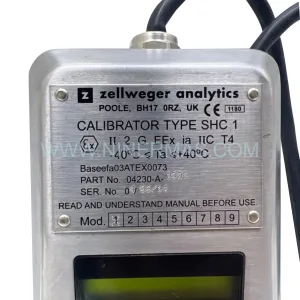
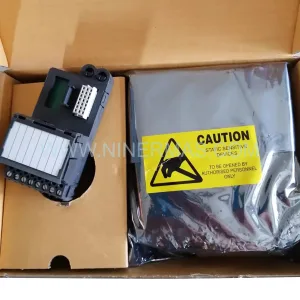
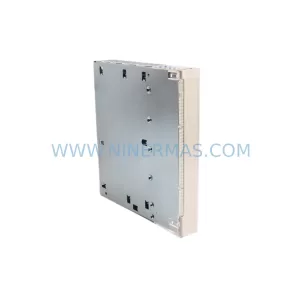
SKU: PM632 3BSE005831R1
ABB PM632 3BSE005831R1 Retrofit-Compatible Processor for Legacy Systems
SKU: High Performance Communication Controller
Honeywell 51401635-150 Service-Ready Spare for C300