Description
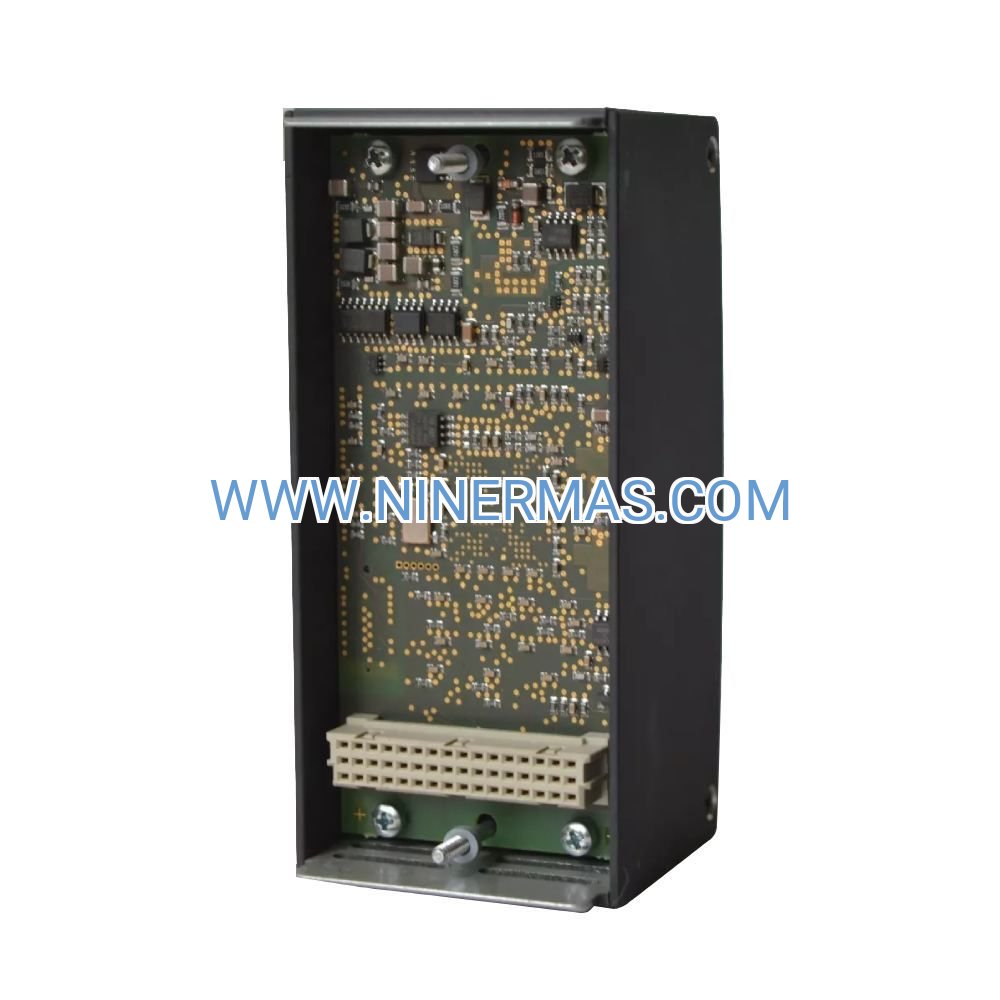
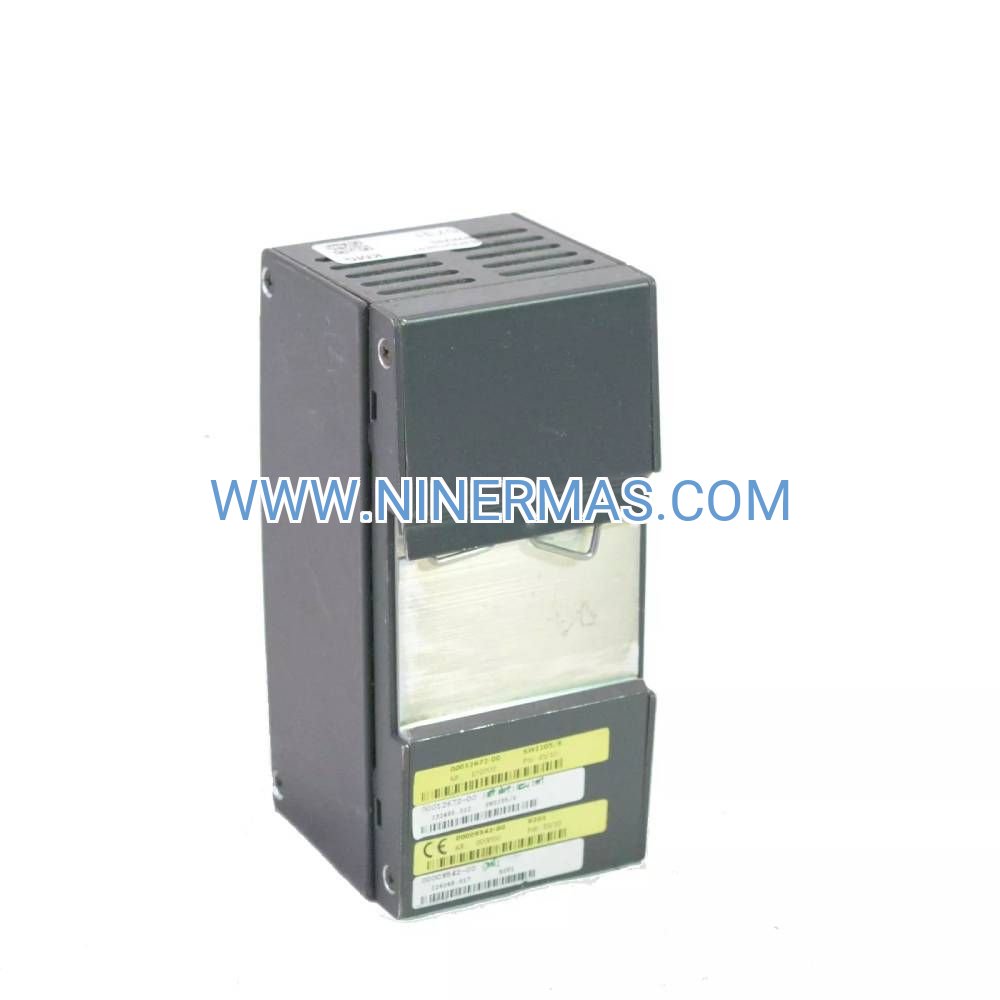
Woodward 9905-367 DSLC (Industrial-Grade Generator Paralleling Controller)
The Woodward 9905-367 Digital Synchronizer Load Control represents a proven solution for automated generator coordination in demanding power environments. This microprocessor-based controller manages synchronization timing, proportional load distribution, and reactive power control across multi-unit generator installations—delivering the precision and reliability required for continuous industrial operations, marine propulsion systems, and critical infrastructure applications.
Designed for system integrators and facility engineers managing parallel generation assets, the DSLC module eliminates manual synchronization procedures while maintaining tight load balance tolerances. Its universal voltage input architecture and extended temperature rating make it suitable for deployment in substations, engine rooms, remote telecom sites, and mobile power units where environmental conditions challenge conventional electronics.
With field-proven performance in thousands of installations worldwide, the 9905-367 combines straightforward commissioning workflows with advanced control algorithms—enabling both standalone operation and networked multi-controller configurations through industry-standard Modbus communication.
Key Capabilities & Technical Advantages
→ Precision Synchronization Engine: Phase-angle matching algorithms achieve breaker closure within adjustable slip-frequency windows (0.5-30 sec), minimizing mechanical stress on generator coupling systems and preventing voltage transients during paralleling events.
✓ Active Load Distribution: Continuous kW and kVAR regulation maintains ±1% load-sharing accuracy across all online units, preventing single-generator overload and optimizing fuel efficiency through balanced capacity utilization.
→ Multi-Mode Reactive Control: Selectable VAR/power factor control strategies adapt to grid-connected, island, or droop-controlled operation—supporting both utility-interactive and standalone microgrid configurations.
✓ Integrated Protection Logic: Real-time monitoring of reverse power, load unbalance, sync failure, and breaker status triggers programmable alarms and automatic corrective sequences, reducing operator intervention during fault conditions.
→ Universal Power Compatibility: Auto-sensing 100-690 VAC voltage inputs and 18-32 VDC/85-264 VAC control power options eliminate the need for external transformers or power supplies in most installations.
✓ Industrial-Hardened Construction: IP54-rated front panel and -40°C to +70°C operational range ensure reliable performance in outdoor enclosures, marine environments, and high-vibration engine-mounted applications.
Typical Application Scenarios
Industrial Cogeneration Facilities:
Coordinate multiple gas turbines or reciprocating engines in combined heat and power plants. The DSLC manages automatic startup sequencing, soft-loading to prevent thermal shock, and seamless load transfer during maintenance outages—maintaining process steam delivery and electrical export commitments without grid disturbances.
Marine Vessel Power Systems:
Enable dynamic paralleling of shipboard diesel generators with shore power connections or shaft-driven alternators. Automatic synchronization and load sharing prevent blackout conditions during propulsion mode transitions, while reverse power protection safeguards against motoring failures in split-bus configurations.
Mission-Critical Data Centers:
Orchestrate N+1 redundant generator arrays for Tier III/IV uptime requirements. The module's fast sync response and precise load balancing ensure utility-to-generator transfers complete within IT equipment ride-through windows, while Modbus integration feeds real-time status to DCIM monitoring platforms.
Remote Telecom & Mining Sites:
Manage hybrid diesel-solar microgrids in off-grid locations. The DSLC's droop control modes enable stable frequency regulation when coordinating conventional generators with inverter-based renewable sources, reducing fuel consumption during high-insolation periods.
Rental Power & Temporary Installations:
Simplify deployment of trailer-mounted generator sets for event power, construction sites, or emergency response. Pre-configured settings and plug-and-play CT connections accelerate commissioning, while rugged construction withstands frequent transport and outdoor exposure.
Technical Parameters & Selection Guide
| Parameter | Specification | Notes |
|---|---|---|
| Voltage Sensing Range | 100-690 VAC, 50/60 Hz | Auto-detection, no jumper configuration |
| Control Power Input | 18-32 VDC or 85-264 VAC | Universal input, reverse polarity protected |
| Load Sharing Accuracy | ±1% of rated capacity | With matched CT ratios and calibration |
| Sync Closure Window | 0.5-30 seconds (adjustable) | Programmable slip frequency limits |
| Communication Interface | RS-485 Modbus RTU | Up to 32 devices per network segment |
| Discrete I/O | 8 digital inputs, 6 relay outputs | Expandable via optional I/O modules |
| Operating Temperature | -40°C to +70°C | Convection-cooled, no forced ventilation |
| Enclosure Rating | IP54 front, IP20 rear terminals | NEMA 12 equivalent for panel mounting |
| Dimensions (H×W×D) | 144 × 144 × 165 mm | Standard DIN 96×96 panel cutout |
| Certifications | CE, UL508, DNV-GL marine | Meets IEC 61000-6-2/4 EMC standards |
Selection Criteria: Verify generator voltage and frequency ratings fall within the 100-690 VAC sensing range. For systems exceeding 32 paralleled units, consider networked multi-controller architectures with master/follower coordination. Applications requiring DNP3 or IEC 61850 protocols need optional Ethernet gateway modules. Confirm available panel depth accommodates the 165mm module depth plus terminal wiring clearance.
Extended Functions & Integration Options
SCADA & Remote Monitoring: Modbus register mapping provides access to 200+ data points including real-time kW/kVAR measurements, breaker status, alarm history, and setpoint values. Compatible with industry-standard HMI platforms (Wonderware, Ignition, FactoryTalk) and cloud-based IoT gateways for mobile diagnostics.
Custom Control Logic: User-programmable logic functions enable application-specific sequencing—such as priority-based generator dispatch, time-of-day load shedding, or demand-response curtailment integration with utility signals.
Redundant Communication: Dual RS-485 ports support ring or star network topologies with automatic failover, ensuring continued monitoring during single-point communication failures in distributed generation facilities.
Retrofit Compatibility: Direct replacement for legacy Woodward 2301A and 505E controllers in existing installations, utilizing similar CT connections and discrete I/O wiring to minimize upgrade downtime.
Delivery Timeline & Service Assurance
Standard Lead Time: In-stock units ship within 1-2 business days via DHL/FedEx Express. Typical delivery to North America, Europe, and Asia-Pacific regions: 3-7 business days from order confirmation.
Custom Configuration: Factory pre-programmed units with customer-specific setpoints and I/O mapping available with 5-7 business day lead time—reducing on-site commissioning duration.
Warranty Coverage: 12-month manufacturer warranty against defects in materials and workmanship. Warranty includes firmware updates and technical support access via phone and email.
Technical Documentation: Each shipment includes installation manual, Modbus register map, quick-start commissioning guide, and CAD drawings (DXF/PDF formats). Wiring diagrams and application notes available for download from product support portal.
Post-Sales Support: Application engineering assistance for system design review, CT sizing verification, and network architecture planning. Remote commissioning support available via TeamViewer or similar platforms.
Frequently Asked Questions
Q: Can the 9905-367 DSLC module synchronize generators with different power ratings in the same paralleling system?
A: Yes—the controller supports proportional load sharing based on generator nameplate capacity. During commissioning, input each unit's kW and kVAR ratings into the DSLC configuration. The load-sharing algorithm then distributes load proportionally, preventing smaller generators from overloading while larger units remain underutilized.
Q: What current transformer ratios are compatible with this synchronizer module?
A: The DSLC accepts standard 5A or 1A secondary CTs with ratios from 50:5 to 6000:5. For optimal load-sharing accuracy, use CTs with 0.3% accuracy class and match ratios across all paralleled generators. The module's auto-scaling feature accommodates mixed CT ratios when proportional sharing is configured.
Q: How does the unit handle frequency drift during island mode operation without grid reference?
A: In isochronous island mode, one DSLC operates as the grid-forming master, maintaining fixed frequency while other units follow in droop mode. The master's internal oscillator provides the frequency reference, with ±0.01 Hz stability over the operating temperature range. For improved accuracy, optional GPS time-sync modules are available.
Q: Is the controller suitable for coordinating diesel generators with solar inverters in hybrid microgrids?
A: The DSLC can parallel with grid-forming inverters that support droop control or virtual synchronous machine modes. Configure the diesel generators for droop operation and set the DSLC's reactive power control to voltage droop mode. Note that grid-following inverters require a separate master controller to establish voltage and frequency references.
Q: What diagnostic capabilities are available for troubleshooting synchronization failures?
A: The front-panel LCD displays real-time voltage magnitude, frequency differential, and phase angle error during sync attempts. Event logs capture the last 100 alarm conditions with timestamps. Via Modbus, you can monitor sync permissive status bits, breaker auxiliary contact states, and voltage/frequency measurements to isolate wiring errors or sensor failures.
Q: Can I retrofit this module into an existing system currently using manual synchronizers?
A: Yes—the DSLC's discrete outputs can drive existing motorized synchroscopes or sync-check relays during a phased migration. Wire the DSLC's breaker close output in parallel with manual controls, allowing operators to verify automatic sync performance before removing manual equipment. Panel cutout dimensions match most legacy synchronizer bezels.
Ready to Optimize Your Generator Paralleling System?
Contact our power systems specialists to discuss your specific application requirements, receive CT sizing recommendations, and obtain project-specific pricing for multi-unit orders. Technical datasheets, Modbus register maps, and AutoCAD panel layout drawings available upon request.
© 2026 NINERMAS COMPANY LIMITED. All rights reserved.
Original Source: https://ninermas.com
Contact: sale@ninermas.com | +0086 187 5021 5667

Contact Info
-
Address:22 / F, South Wo Hang building, 148 Wing Lok Street, Sheung Wan, Western District, Hong Kong
-
Phone:+8618750215667
-
Email: