Description
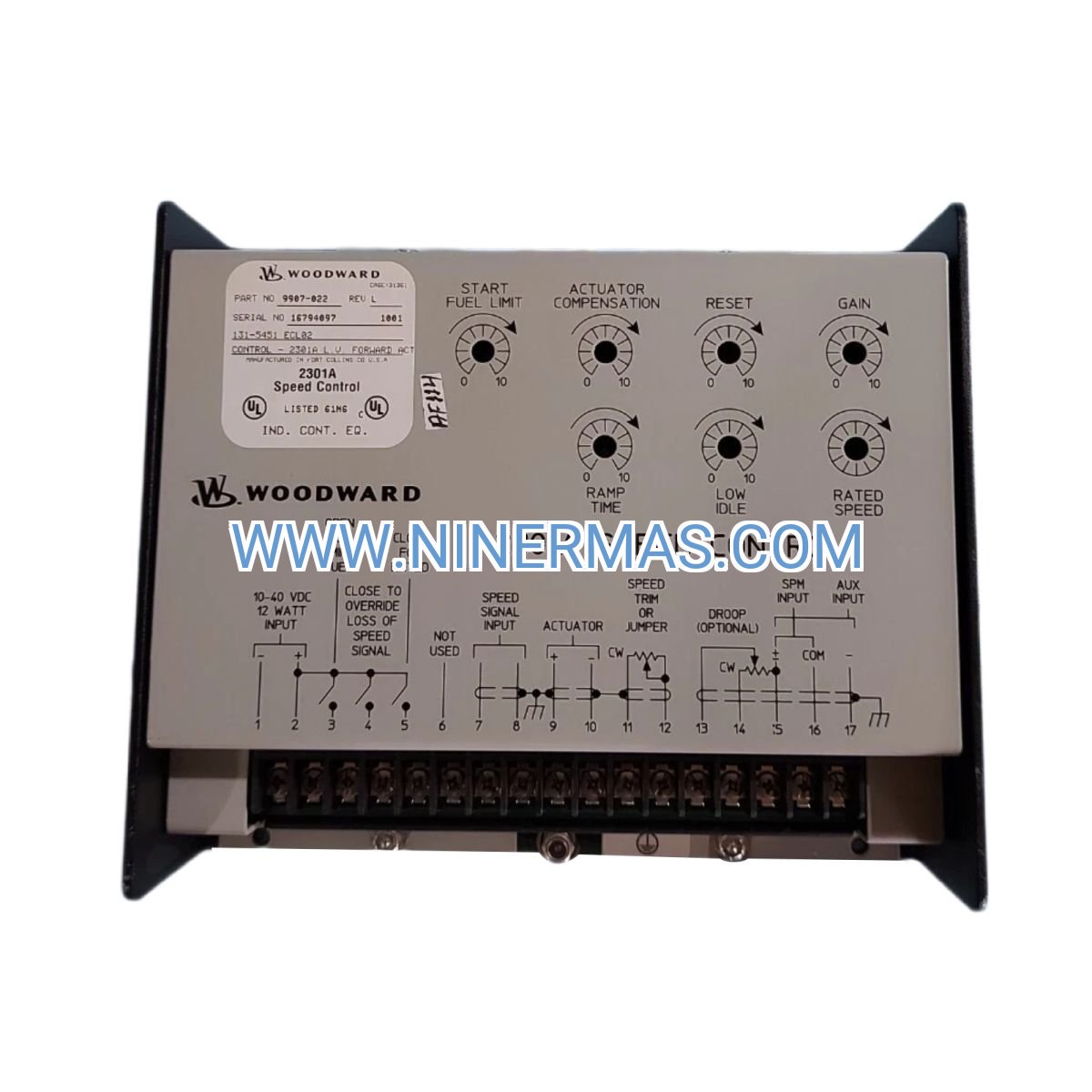
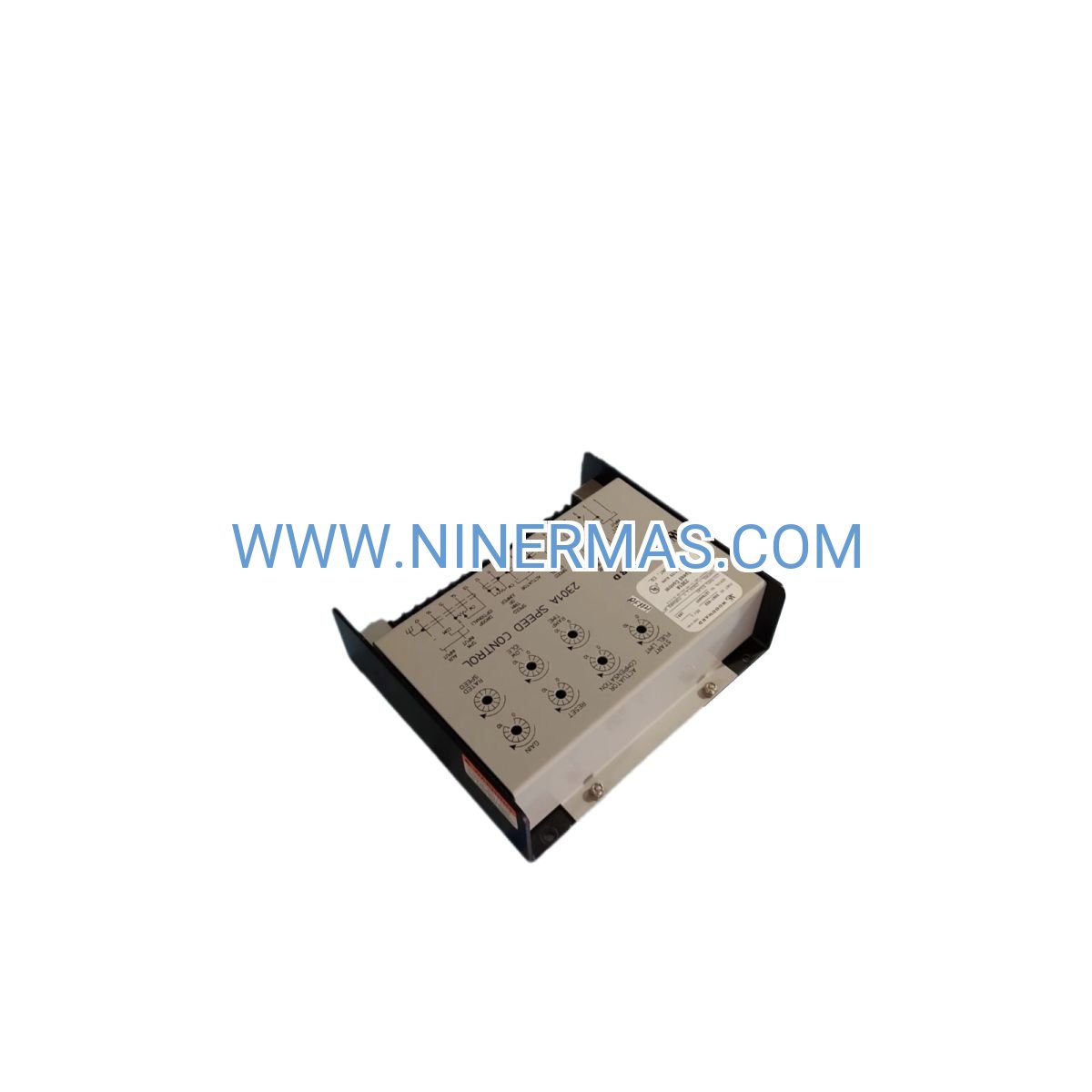
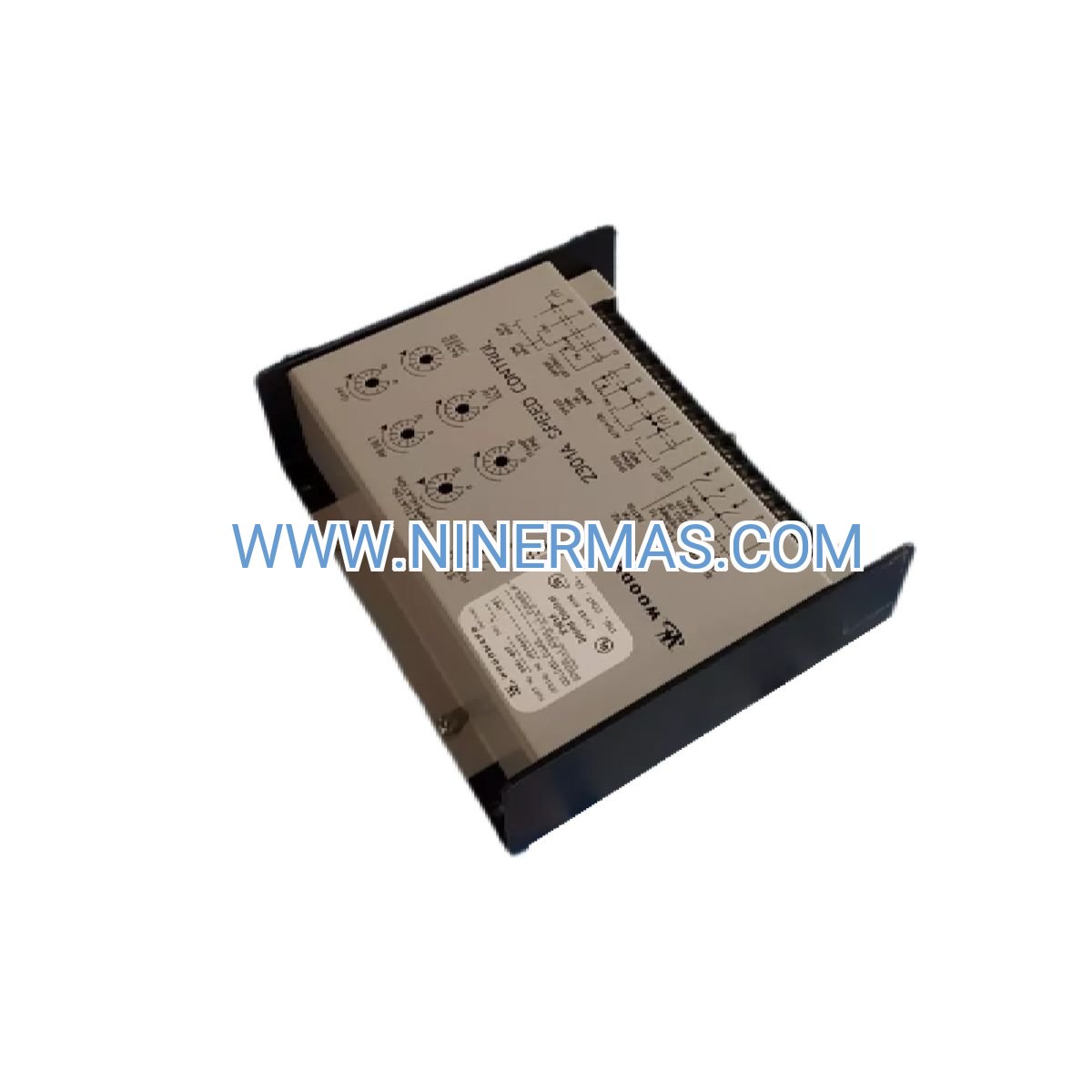
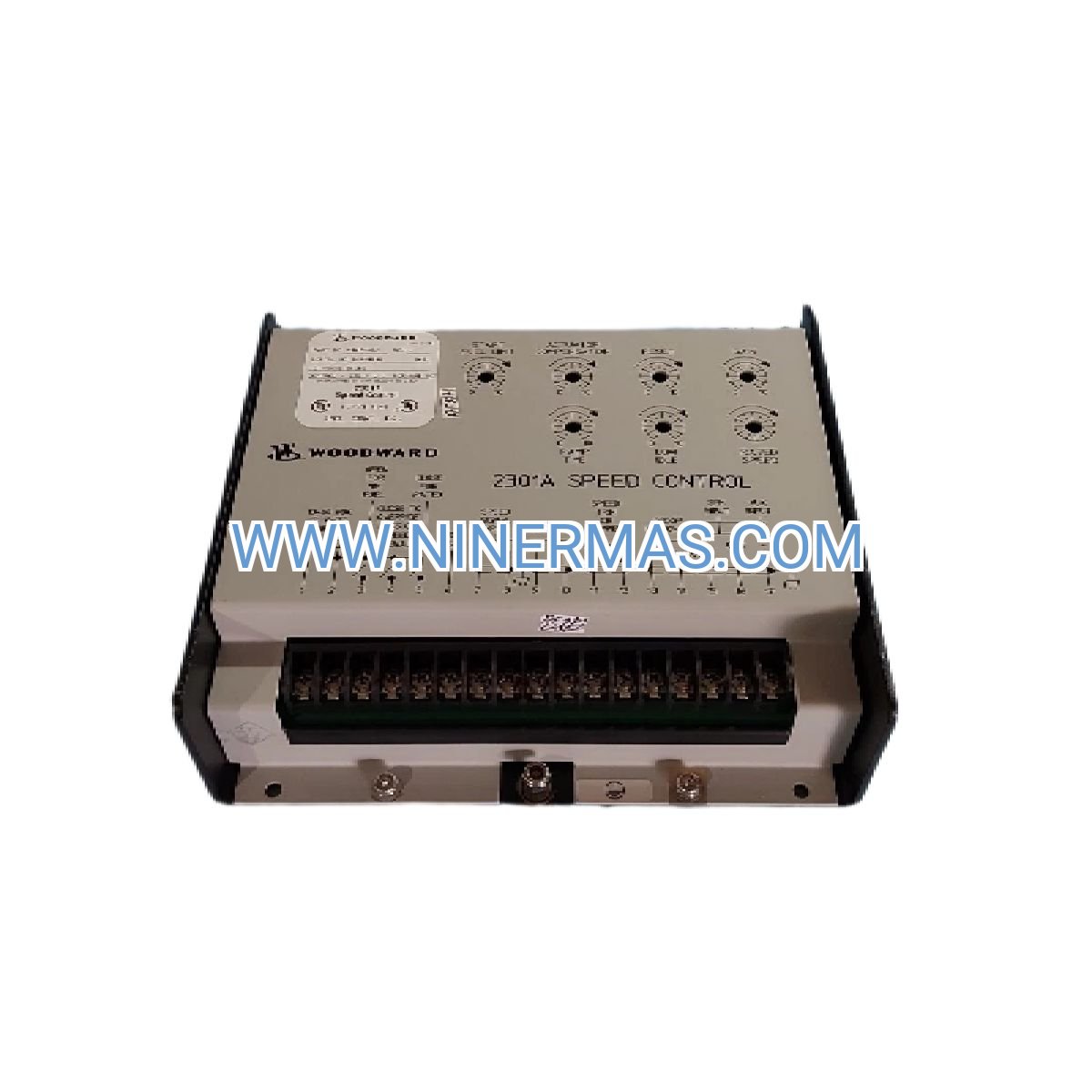
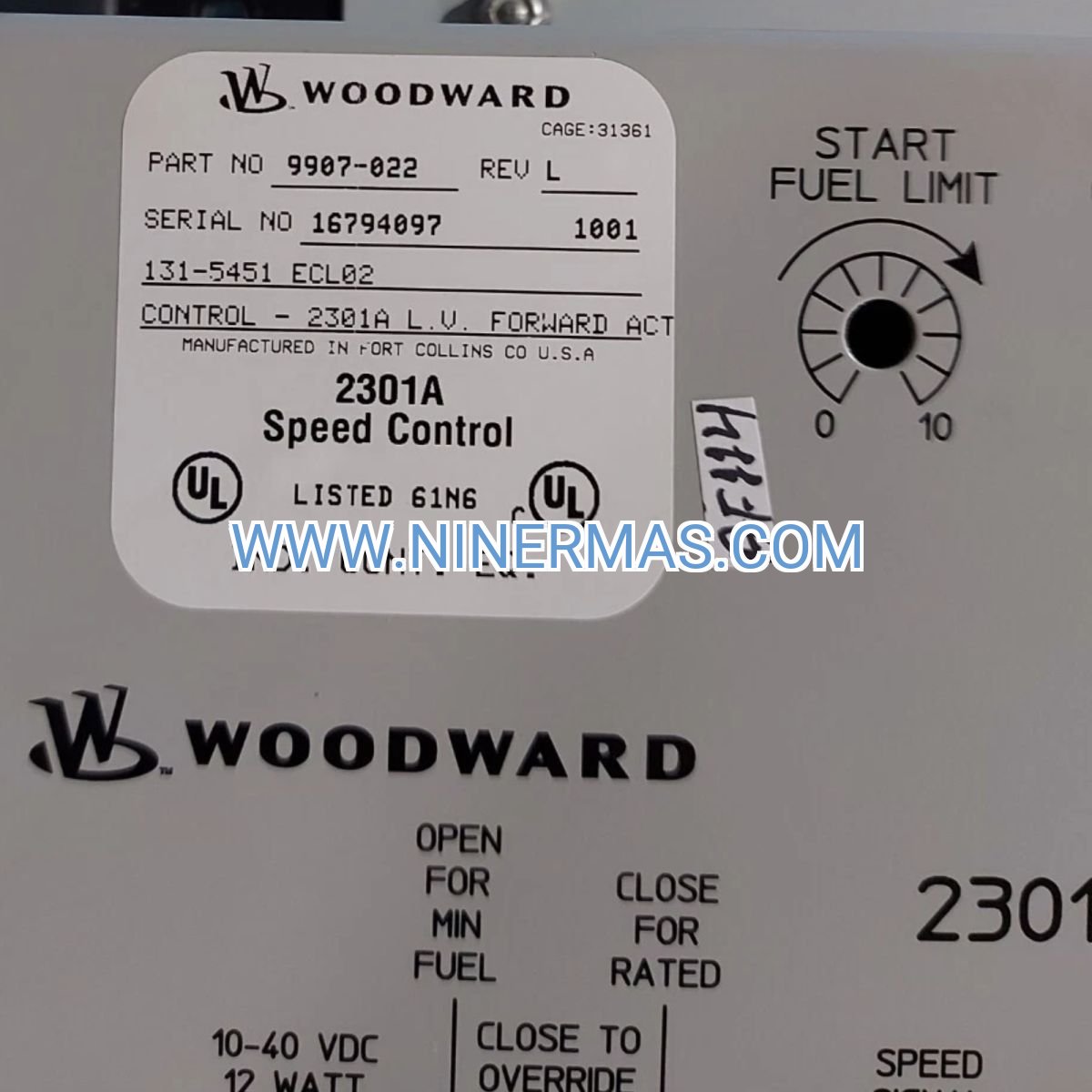
2301A Load Sharing Governor (Industrial-Grade Speed Control)
The Woodward 9907-022 represents a proven solution for coordinated speed regulation and proportional load distribution across paralleled power generation assets. Engineered for diesel engines, natural gas prime movers, and compact steam turbines, this analog controller delivers field-tested reliability in mission-critical installations where frequency stability and balanced loading directly impact operational continuity.
Designed for facilities requiring uninterrupted power—hospitals, manufacturing plants, telecom hubs, and offshore platforms—the 2301A addresses the core challenge of maintaining synchronized operation while preventing single-unit overload. Its dual-mode architecture supports both standalone isochronous governing and droop-compensated load sharing, adapting to evolving system demands without hardware reconfiguration.
With adjustable gain parameters and field-tunable stability controls, this module integrates into existing actuator frameworks while providing the precision needed for regulatory compliance and equipment protection. Whether managing emergency standby arrays or continuous prime power systems, the 2301A delivers measurable improvements in fuel efficiency, generator longevity, and grid stability.
Core Capabilities & Business Value
→ Proportional Load Distribution
Maintains ±1% load sharing accuracy across 2-8 paralleled units, eliminating hotspots and extending generator service intervals by 15-20% through balanced wear patterns.
→ Dual Operating Modes
Seamlessly transitions between isochronous (standalone) and droop (parallel) configurations via internal settings, reducing commissioning time and enabling flexible system expansion.
→ Wide Actuator Compatibility
Drives proportional actuators with 4-20mA or 0-200mA outputs, supporting Woodward EPG series, hydraulic servos, and third-party stepper drives without interface modules.
→ Field-Adjustable Tuning
Onboard potentiometers for speed setpoint, gain, and stability allow on-site optimization for specific engine dynamics, eliminating factory return delays during commissioning.
→ Industrial Environmental Rating
-40°C to +70°C operating range with conformal-coated PCBs ensures reliable performance in desert heat, arctic cold, and high-vibration marine environments.
✓ Rapid Load Response
100-500ms reaction time to step load changes minimizes frequency deviation during sudden demand shifts, protecting sensitive electronic loads from voltage sags.
Proven Application Scenarios
Multi-Generator Hospital Systems
Coordinates 3-6 emergency gensets to meet Joint Commission requirements for <10-second transfer times and <5% frequency deviation. Automatic load pickup prevents single-unit overload during utility failures, ensuring uninterrupted operation of life-support systems and surgical suites.
Data Center Prime Power Arrays
Manages continuous-duty N+1 configurations where 99.999% uptime mandates balanced loading. Droop compensation prevents circulating currents that cause nuisance breaker trips, while isochronous mode supports utility-interactive operation for demand response programs.
Oil & Gas Wellhead Compression
Governs remote gas engine-driven compressors in ATEX Zone 2 environments. Maintains pipeline pressure setpoints within ±2% despite fluctuating gas quality, reducing flaring and maximizing production revenue.
Marine Auxiliary Power Generation
Synchronizes ship service generators during dynamic positioning operations. Compensates for propulsion load transients while maintaining 60Hz ±0.5Hz stability required by navigation and communication systems.
Industrial Cogeneration Plants
Balances thermal and electrical output in combined heat and power systems. Coordinates with steam turbine bypass controls to maintain process steam pressure while optimizing electrical export to the grid.
Technical Parameters & Selection Criteria
| Parameter | Specification |
|---|---|
| Control Functions | Speed governing + load sharing (integrated) |
| Load Sharing Accuracy | ±1% of rated kW (droop mode) |
| Speed Regulation | ±0.25% (isochronous), 2-6% (droop adjustable) |
| Input Power | 18-32 VDC (24V nominal), 3W typical |
| Actuator Output | 0-200mA or 4-20mA (field selectable) |
| Speed Sensing | Magnetic pickup (passive), 50-10,000 Hz |
| Load Sensing | 0-5 VDC or 4-20mA current transformer input |
| Response Time | 100-500ms (tuning dependent) |
| Operating Temperature | -40°C to +70°C (-40°F to +158°F) |
| Humidity | 5-95% RH non-condensing |
| Vibration Resistance | 5G, 10-500 Hz (IEC 60068-2-6) |
| Mounting | DIN rail or panel (IP20 enclosure required) |
| Dimensions | 178mm × 127mm × 51mm (7" × 5" × 2") |
| Weight | 1.8 kg (4.0 lbs) |
Selection Guidelines: Choose the 2301A for systems requiring analog control with proven field reliability. For applications demanding digital communication (Modbus, CAN), remote monitoring, or integration with SCADA systems, consider the 2301D digital variant. Verify actuator current requirements match controller output capacity (200mA max). Confirm speed sensor frequency range falls within 50-10,000 Hz window.
Advanced Integration Options
Synchronizing Module Compatibility
Pairs with Woodward 2301 synchronizer accessories for automatic breaker closure and phase matching. Supports dead-bus and live-bus paralleling sequences with adjustable voltage/frequency windows.
Remote Setpoint Adjustment
Accepts 0-5 VDC external speed reference for dispatch control or automatic load scheduling. Enables utility-interactive operation with grid frequency tracking.
Redundant Control Architecture
Deploy dual 2301A controllers in master/standby configuration with automatic failover logic. Bumpless transfer maintains speed regulation during controller switchover events.
Delivery Timeline & Service Commitment
Standard Lead Time: 3-5 business days for in-stock units (Asia-Pacific region), 7-10 days for international shipments. Express courier options available for critical outages.
Warranty Coverage: 12-month comprehensive warranty covering manufacturing defects, component failures, and workmanship issues. Advance replacement available to minimize downtime.
Technical Support: Application engineering assistance for actuator sizing, tuning parameter selection, and troubleshooting. Phone/email support during commissioning phase included.
Documentation Package: Installation manual (P/N 82510), wiring diagrams, calibration procedures, and recommended spare parts list provided with each shipment.
Frequently Asked Questions
How does the 2301A prevent hunting or oscillation in speed control?
Adjustable gain and stability potentiometers allow precise tuning to match engine inertia and actuator response characteristics. Start with conservative settings (low gain, high stability) and incrementally adjust while monitoring frequency deviation under load steps.
What is the maximum number of generators that can share load using this controller?
The 2301A supports 2-8 paralleled units using standard droop compensation. Systems exceeding 8 units require cross-current compensation networks or transition to digital load sharing protocols.
Can this controller manage both speed and voltage regulation simultaneously?
The 2301A governs engine speed and fuel input only. Voltage regulation requires a separate automatic voltage regulator (AVR) controlling the generator excitation system. Both controllers operate independently.
Is the unit compatible with electronic fuel injection systems?
Yes, when paired with appropriate actuators. Electronic governors require 4-20mA or PWM input signals—verify your EFI system accepts analog control before specifying the 2301A. Some modern ECMs require CAN-based digital governors.
What maintenance intervals are recommended for optimal performance?
Inspect wiring terminations and potentiometer settings annually. Verify calibration against known speed reference every 2 years or after significant load profile changes. No internal consumable components require replacement under normal operating conditions.
How do I configure the controller for isochronous versus droop operation?
Internal jumper settings and potentiometer adjustments determine operating mode. Isochronous mode (standalone) requires zero droop setting; parallel operation uses 2-6% droop depending on system size. Consult manual section 4.3 for detailed configuration steps.
Secure Your Power System Reliability
Ensure uninterrupted operation of your critical power infrastructure with genuine Woodward control technology. Contact our application engineers to verify compatibility with your specific engine platform, discuss actuator integration requirements, or request technical documentation for your upcoming project.
Request a quote today: Provide your engine model, generator rating, and number of paralleled units for customized system recommendations and competitive pricing.
© 2026 NINERMAS COMPANY LIMITED. All rights reserved.
Original Source: https://ninermas.com
Contact: sale@ninermas.com | +0086 187 5021 5667

Contact Info
-
Address:22 / F, South Wo Hang building, 148 Wing Lok Street, Sheung Wan, Western District, Hong Kong
-
Phone:+8618750215667
-
Email: