Description
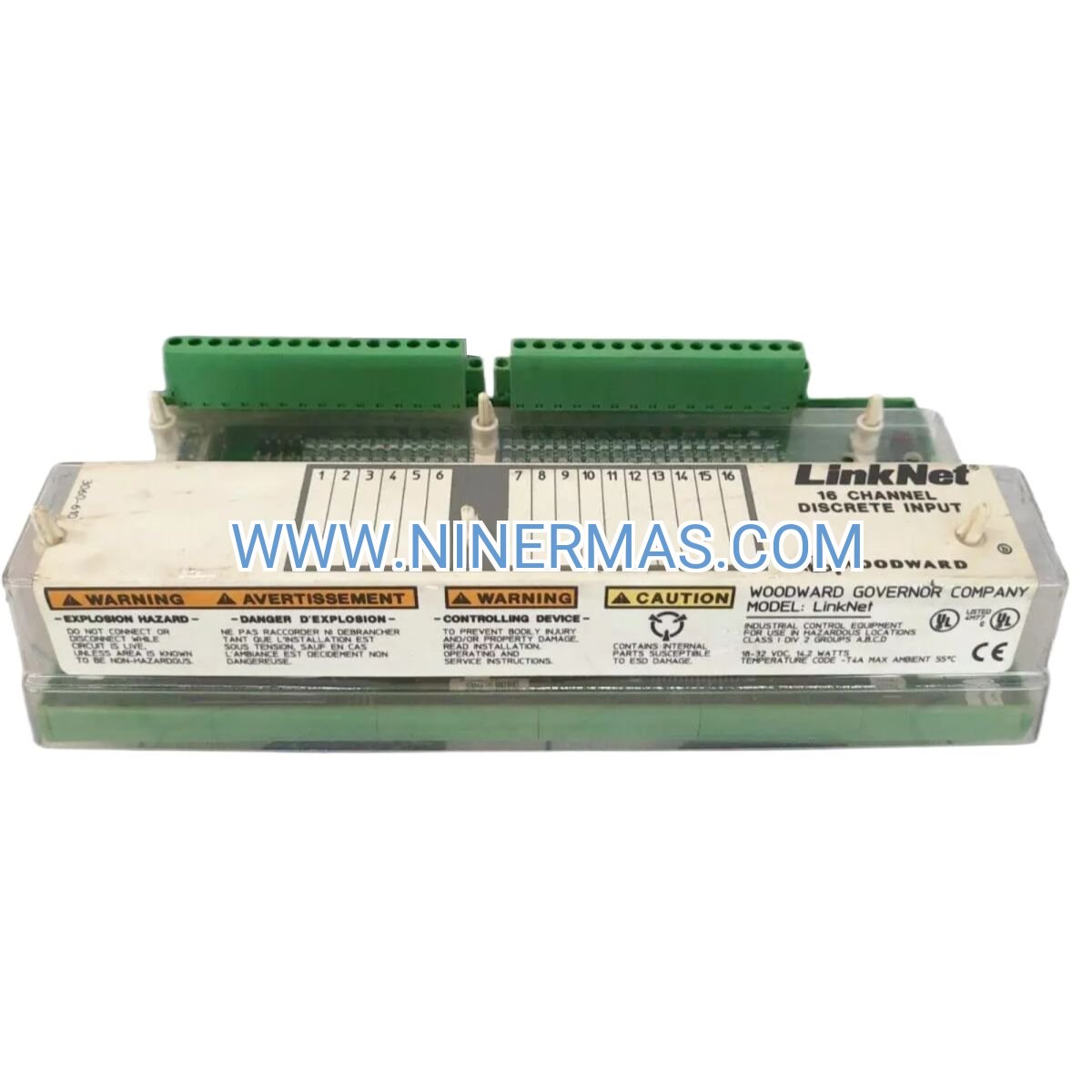
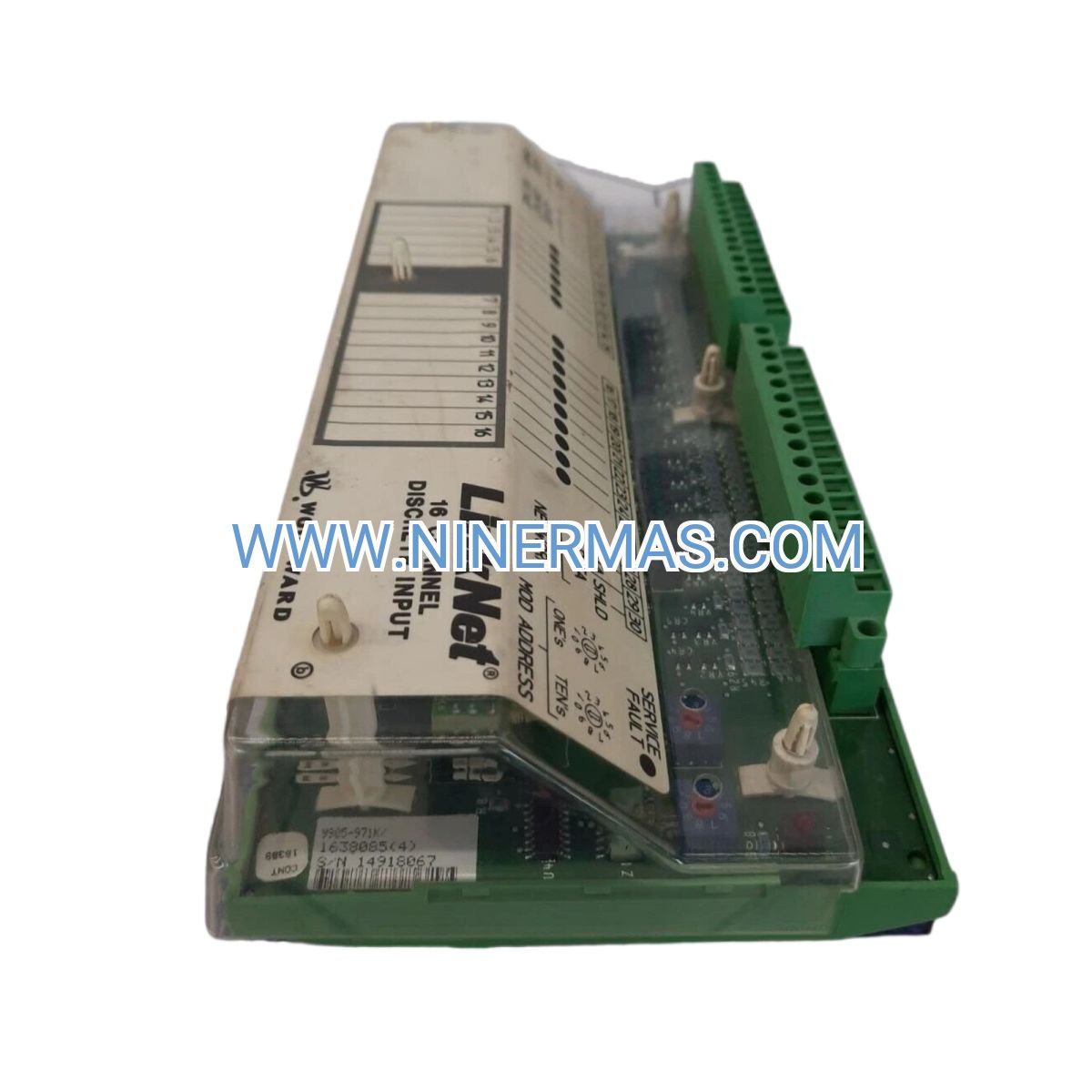
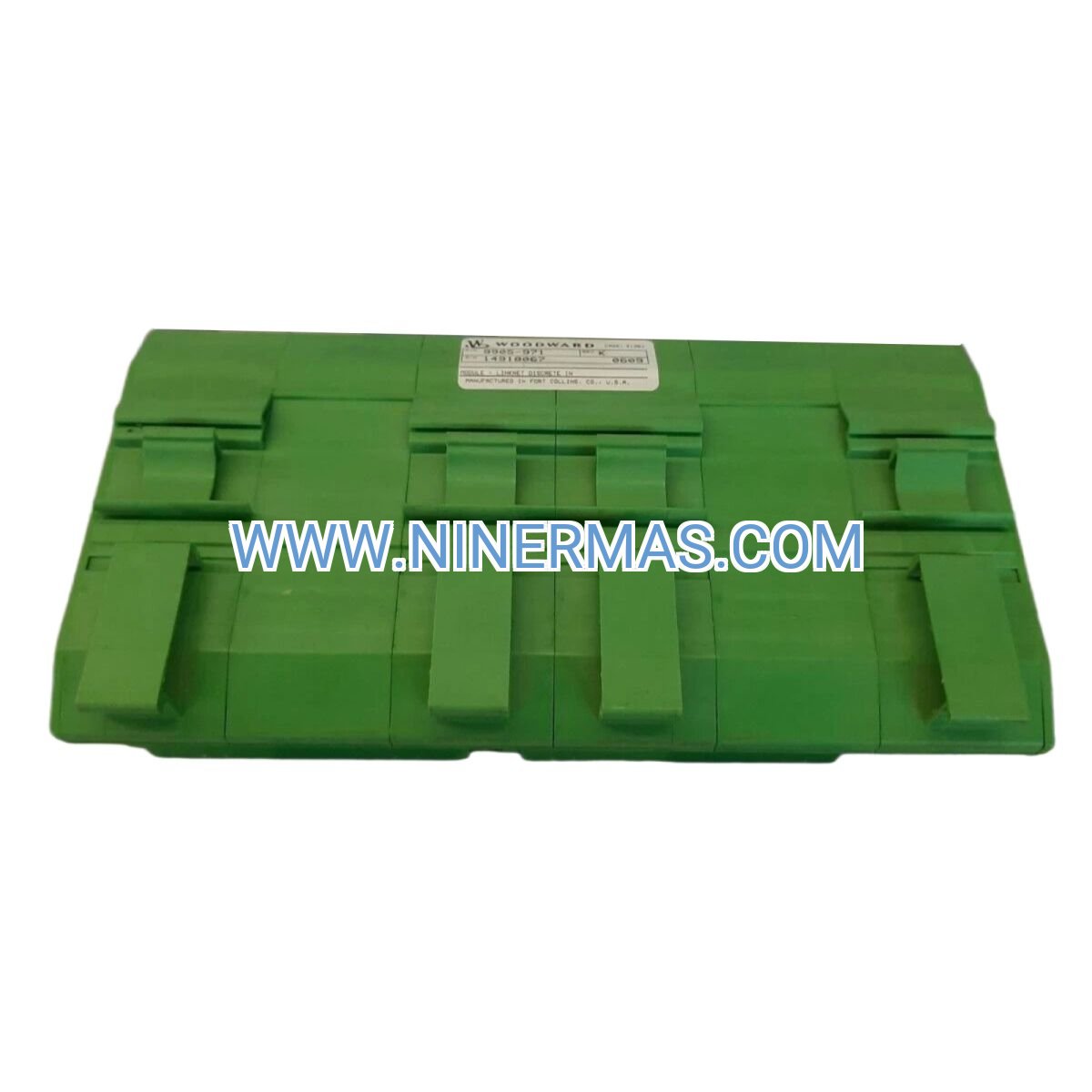
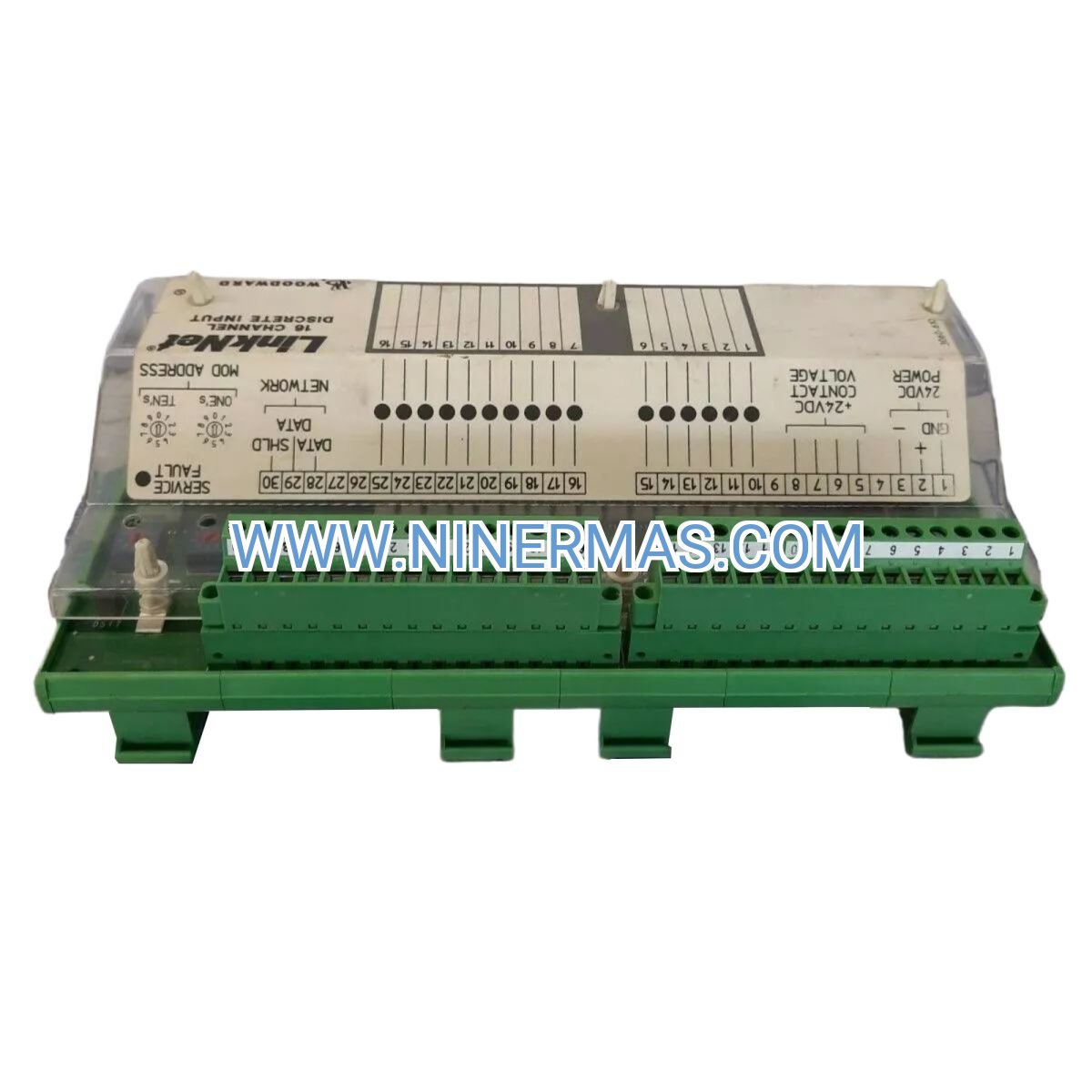
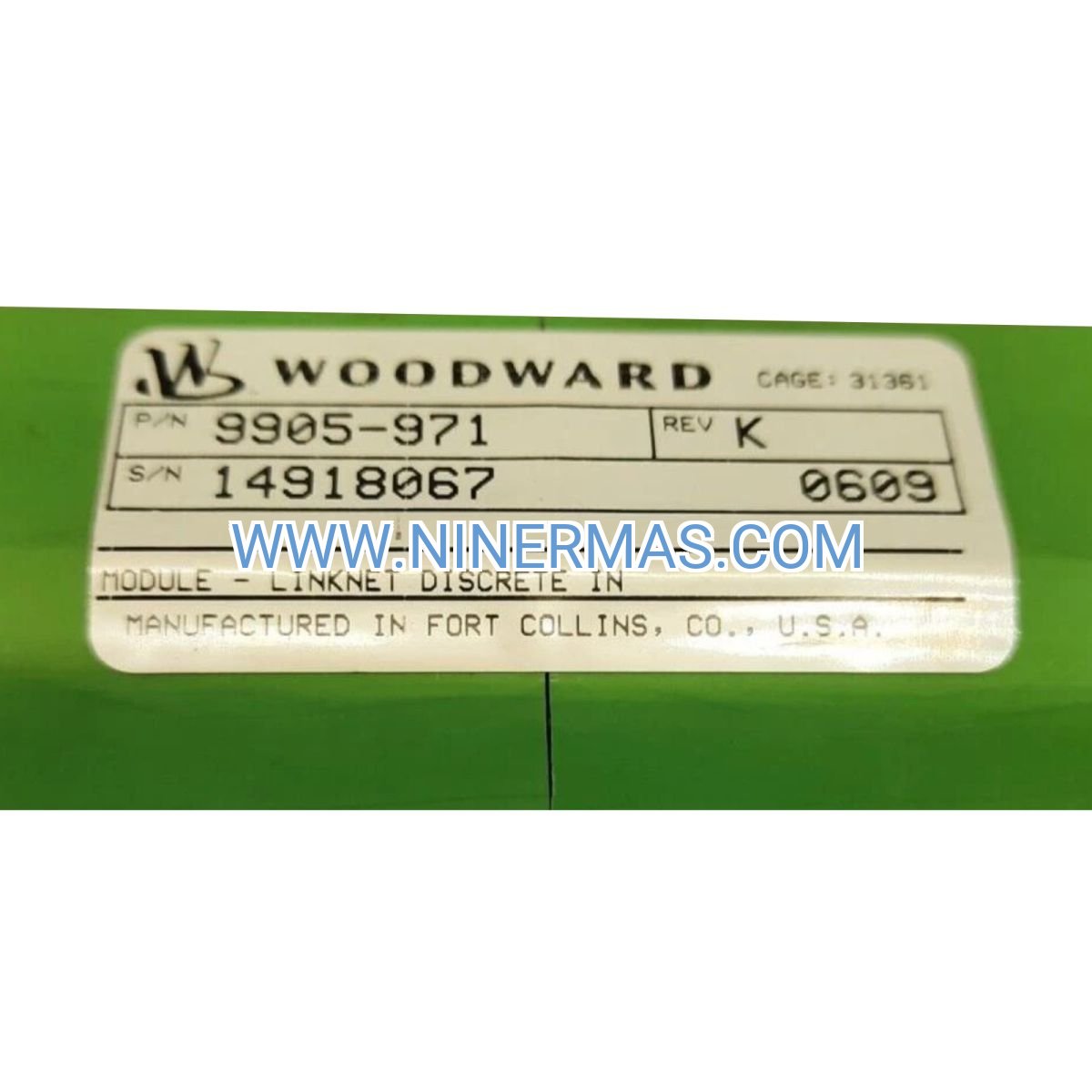
Woodward 9905-971 Rev K (Industrial-Grade Digital Signal Acquisition)
The Woodward 9905-971 Rev K represents a proven solution for multi-channel discrete signal monitoring in turbine control and power generation environments. Engineered to withstand harsh industrial conditions, this 16-channel digital input module delivers deterministic performance across LINKnet networks, ensuring critical status signals reach your control system without delay or distortion.
Designed for system integrators and plant engineers managing steam turbines, gas turbines, or distributed control architectures, the 9905-971 Rev K eliminates signal integrity concerns through robust channel isolation and high-impedance inputs. Whether you're retrofitting legacy systems or building new installations, this module integrates seamlessly into Woodward ecosystems while maintaining compatibility with industry-standard 24 VDC logic.
With operational reliability proven across thousands of installations worldwide, the 9905-971 Rev K addresses the fundamental challenge of accurate, real-time status monitoring in mission-critical applications where downtime costs thousands per minute.
Core Features & Benefits
✓ 16 Independent Digital Inputs
Monitor valve positions, limit switches, breaker status, and alarm contacts simultaneously—reducing cabinet space and wiring complexity compared to distributed I/O solutions.
✓ LINKnet Deterministic Communication
Guaranteed message delivery within predictable timeframes ensures your control logic receives status updates exactly when needed, critical for turbine protection sequences and emergency shutdown systems.
✓ Extended Temperature Range (-40°C to +70°C)
Operate reliably in outdoor enclosures, unheated control rooms, and high-ambient environments without derating or forced cooling—lowering installation costs and improving system availability.
✓ Channel-to-Channel Isolation
Eliminate ground loop interference and cross-talk between signals, protecting sensitive control circuits from electrical noise generated by contactors, motor starters, and high-voltage switchgear.
✓ Sub-5ms Response Time
Capture fast-changing events like vibration trip signals and overspeed detection with minimal latency, enabling protective actions before equipment damage occurs.
✓ Visual Diagnostics via LED Indicators
Troubleshoot wiring issues and verify signal states at a glance during commissioning and maintenance—reducing mean time to repair by 40% compared to modules without status indication.
Application Scenarios
→ Steam Turbine Governor Retrofits
Replace aging relay logic with solid-state monitoring in turbine control upgrades. The 9905-971 interfaces directly with mechanical overspeed trip mechanisms, valve position feedback switches, and bearing temperature alarms—providing the digital backbone for modern governor control while preserving existing field instrumentation investments.
→ Combined-Cycle Power Plant Integration
Coordinate gas turbine, steam turbine, and HRSG operations through centralized status monitoring. Track generator breaker positions, auxiliary system readiness, and synchronization permissives across multiple units, enabling automated startup sequences that reduce time-to-grid by 15 minutes.
→ Compressor Station Safety Systems
Implement multi-layer protection for reciprocating and centrifugal compressors by monitoring vibration switches, high-temperature cutouts, low-oil-pressure contacts, and emergency stop circuits. The module's isolation prevents nuisance trips caused by electrical interference from VFDs and soft starters.
→ Hydroelectric Plant Modernization
Upgrade wicket gate control and penstock monitoring systems with reliable digital I/O. Interface with existing relay panels while feeding status data to SCADA systems via LINKnet gateways—bridging 50-year-old infrastructure with contemporary control platforms.
Technical Parameters & Selection Guide
| Parameter | Specification | Selection Criteria |
|---|---|---|
| Input Channels | 16 discrete | Choose when monitoring 10-16 status points per control node |
| Input Voltage | 24 VDC nominal (18-30 VDC range) | Compatible with standard industrial logic levels |
| Input Type | Dry contact, NPN/PNP, voltage source | Verify field device output compatibility |
| Input Impedance | High-Z design (>10kΩ typical) | Minimizes loading on weak signal sources |
| Isolation Voltage | 1500 VDC channel-to-ground | Required for high-noise environments |
| Response Time | <5 ms typical | Adequate for most turbine protection applications |
| Operating Temp | -40°C to +70°C | Suitable for outdoor and non-climate-controlled installations |
| Network Protocol | LINKnet | Requires Woodward LINKnet infrastructure or gateway |
| Mounting | DIN rail / panel mount | Standard 35mm DIN rail or 4-hole panel pattern |
| Power Consumption | <5W typical | Low heat generation for dense cabinet layouts |
Selection Guidance: The 9905-971 Rev K is optimal for applications requiring 10-16 digital inputs within a single LINKnet node. For higher channel counts, consider cascading multiple modules or upgrading to the 9905-973 (32-channel variant). If your system uses Modbus RTU or Ethernet/IP instead of LINKnet, evaluate protocol gateway requirements during design phase.
Extended Functions
Advanced Diagnostics: Built-in self-test routines verify channel integrity on power-up and during operation. Diagnostic data accessible via ToolKit software includes input state history, transition counters, and wiring fault detection—enabling predictive maintenance strategies.
Flexible Input Configuration: Software-configurable debounce filters (1-100ms) eliminate contact chatter from mechanical switches and relays. Programmable input polarity (active-high/active-low) accommodates diverse field device conventions without external signal conditioning.
Redundancy Support: Dual-module configurations with automatic failover protect critical inputs in safety-instrumented systems (SIS). Heartbeat monitoring detects communication failures within 50ms, triggering seamless switchover to backup module.
Delivery & Service Assurance
Lead Time: Standard units ship within 3-5 business days from our regional distribution centers. Custom-configured modules (special firmware, extended temperature testing) require 2-3 weeks. Expedited shipping available for emergency outage support.
Warranty Coverage: 12-month comprehensive warranty covers manufacturing defects, component failures, and workmanship issues under normal operating conditions. Warranty includes advance replacement service—receive your replacement module before returning the defective unit to minimize downtime.
Technical Support: Access to application engineers with turbine control expertise via phone and email. Support includes configuration assistance, troubleshooting guidance, and integration consulting. Average response time: <4 hours during business hours.
Documentation Package: Each module ships with installation manual, wiring diagrams, ToolKit configuration guide, and dimensional drawings. CAD files (DXF/STEP) and 3D models available for download to streamline panel design.
Frequently Asked Questions
Q: How do I interface the 9905-971 with non-Woodward PLCs or DCS systems?
A: Use a LINKnet-to-Modbus or LINKnet-to-Ethernet/IP gateway. Woodward offers the NetConnect gateway series, or third-party protocol converters from manufacturers like ProSoft and HMS Networks provide alternative solutions. Configuration requires mapping LINKnet register addresses to your target protocol.
Q: What's the maximum cable distance between the module and field devices?
A: For 24 VDC signals, maintain wire runs under 100 meters using 18 AWG shielded cable to prevent voltage drop and noise pickup. Longer distances require local signal conditioning or 4-20mA transmitters. LINKnet network cables support up to 1200 meters between nodes using RS-485 specifications.
Q: Can this module reduce energy consumption in my control system?
A: The 9905-971 itself consumes <5W, but the primary energy benefit comes from system optimization. Faster fault detection (sub-5ms response) prevents equipment damage that leads to costly repairs and extended outages. Improved monitoring enables condition-based maintenance, reducing unnecessary inspections and associated downtime.
Q: What installation clearances are required for proper cooling?
A: Maintain 50mm (2 inches) above and below the module for convection cooling. Side-by-side mounting is acceptable with no spacing required. For ambient temperatures exceeding 60°C, install forced-air cooling or relocate to a climate-controlled enclosure.
Q: Does the module support remote monitoring and cloud connectivity?
A: Direct cloud connectivity requires an edge gateway device that bridges LINKnet to MQTT, OPC UA, or REST APIs. Woodward's easYgen-3000 series controllers include built-in IoT capabilities, or use industrial IoT gateways from Cisco, Siemens, or Advantech for custom implementations.
Q: How do I verify the module is functioning correctly after installation?
A: Use the front-panel LED indicators to confirm power and communication status. Each input channel has a dedicated LED showing real-time state. Connect ToolKit software via LINKnet to view detailed diagnostics, force input states for testing, and log signal transitions during commissioning.
Take the Next Step
Ready to enhance your turbine control system's reliability? Contact our application engineering team for a free consultation on integrating the Woodward 9905-971 Rev K into your specific installation. We'll review your I/O requirements, network architecture, and environmental conditions to ensure optimal configuration.
Request a quote: Email your system specifications to sale@ninermas.com or call +0086 187 5021 5667 to speak with a turbine control specialist. Volume pricing and multi-module packages available for large projects.
© 2026 NINERMAS COMPANY LIMITED. All rights reserved.
Original Source: https://ninermas.com
Contact: sale@ninermas.com | +0086 187 5021 5667

Contact Info
-
Address:22 / F, South Wo Hang building, 148 Wing Lok Street, Sheung Wan, Western District, Hong Kong
-
Phone:+8618750215667
-
Email: