


Description
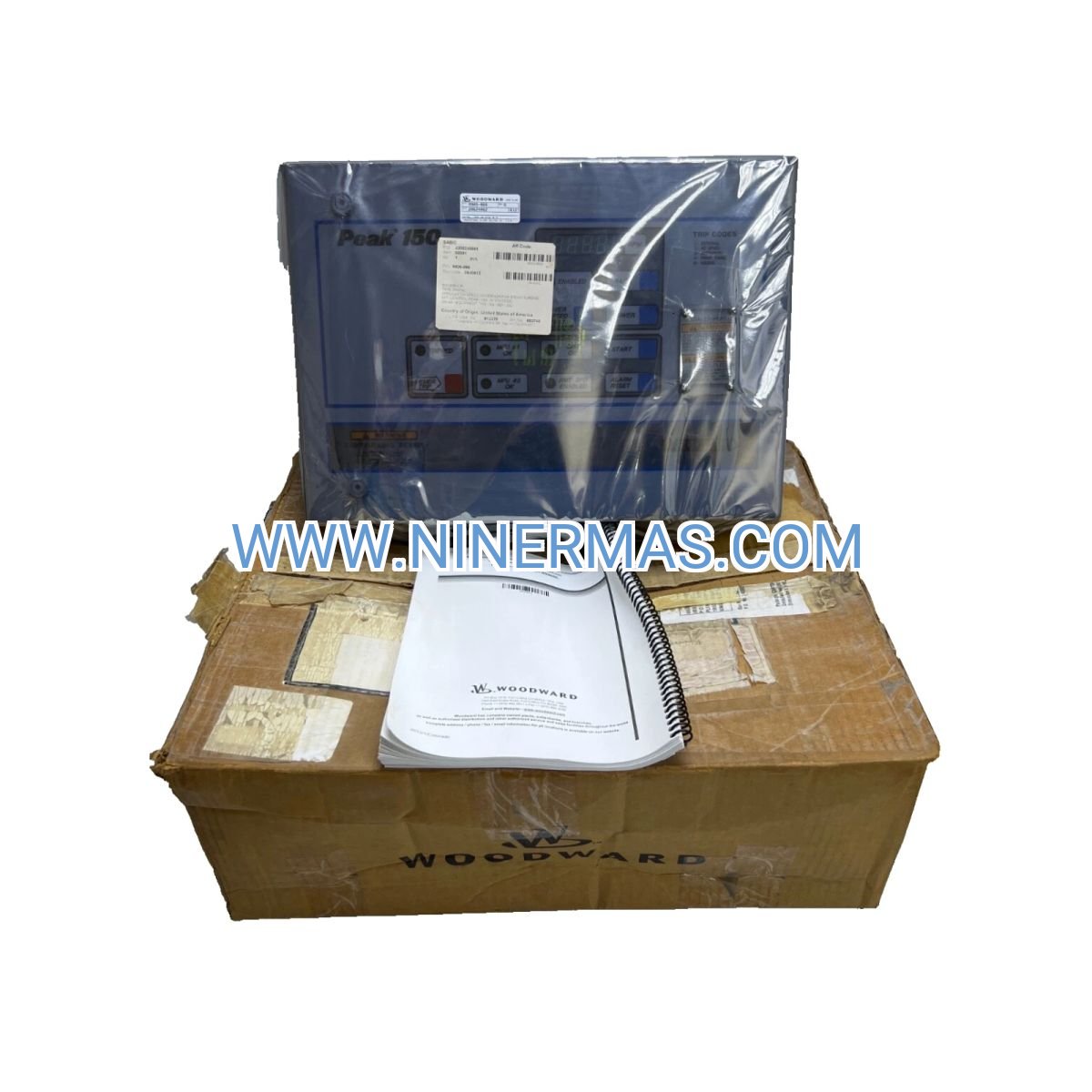
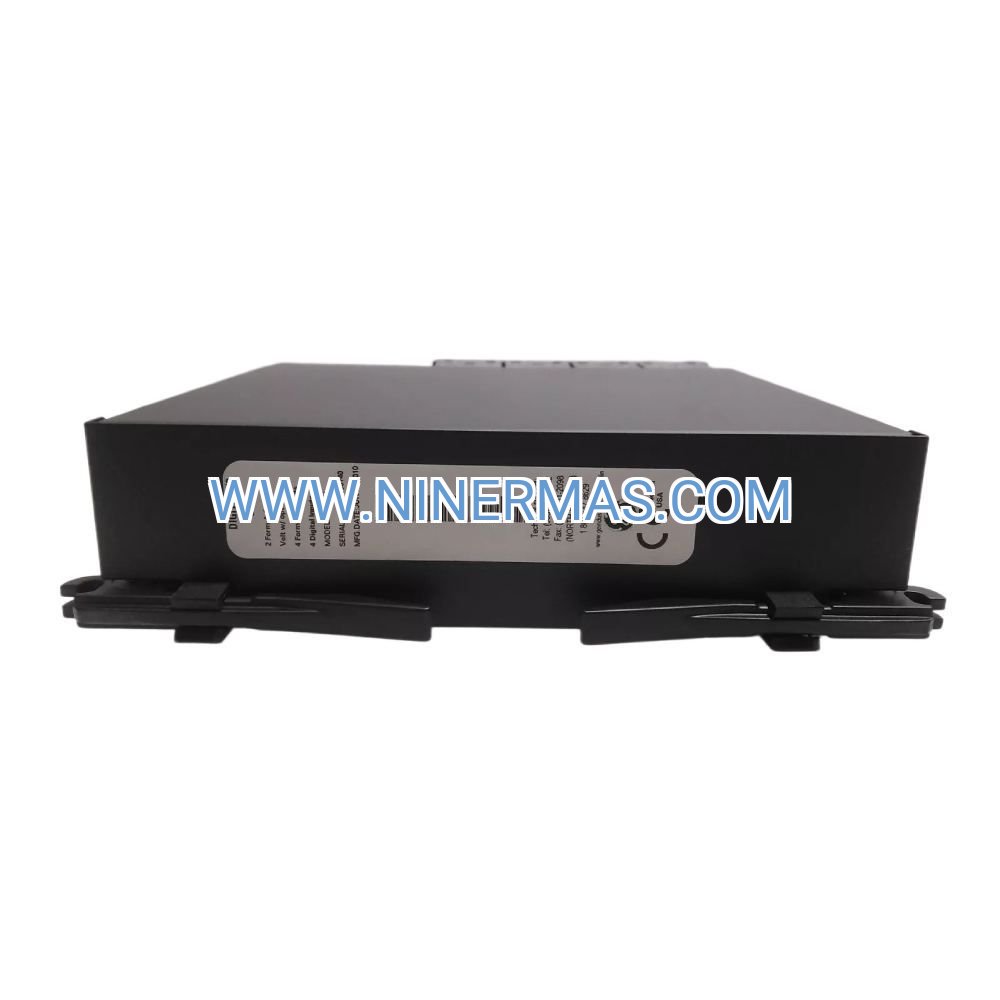
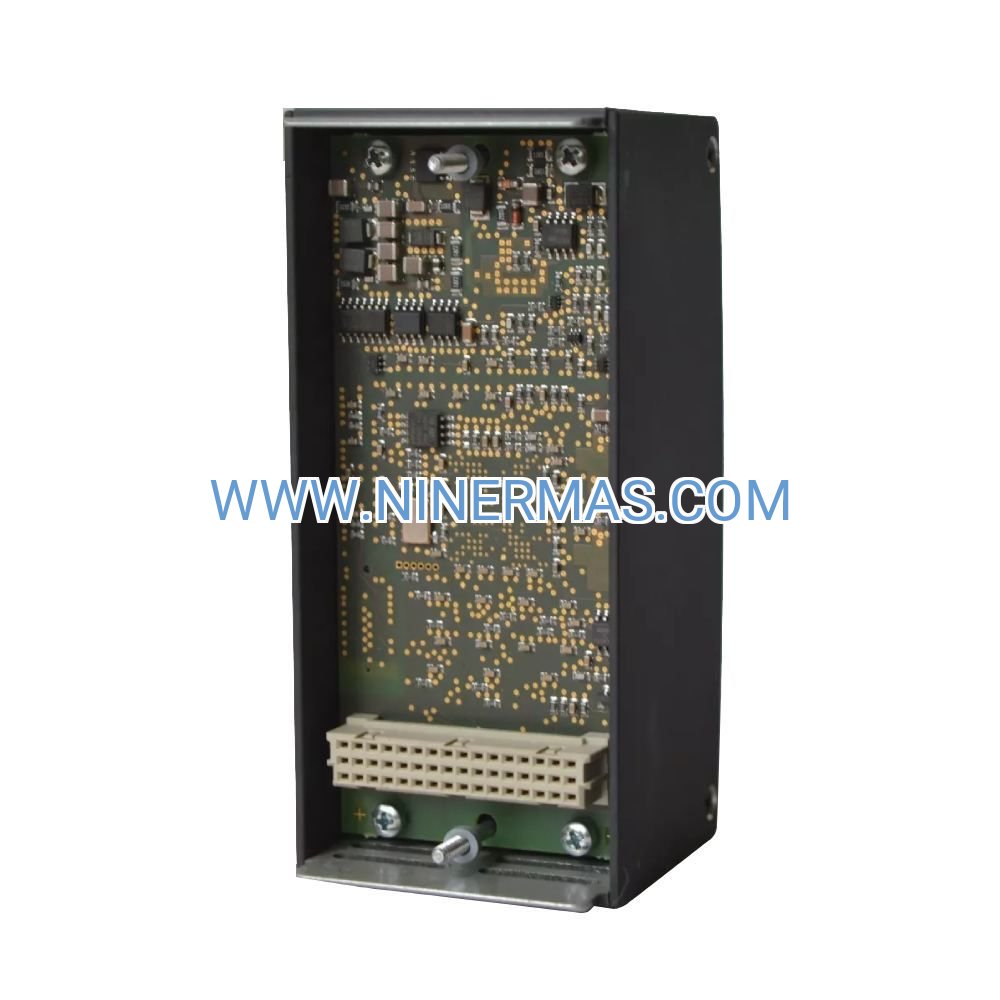
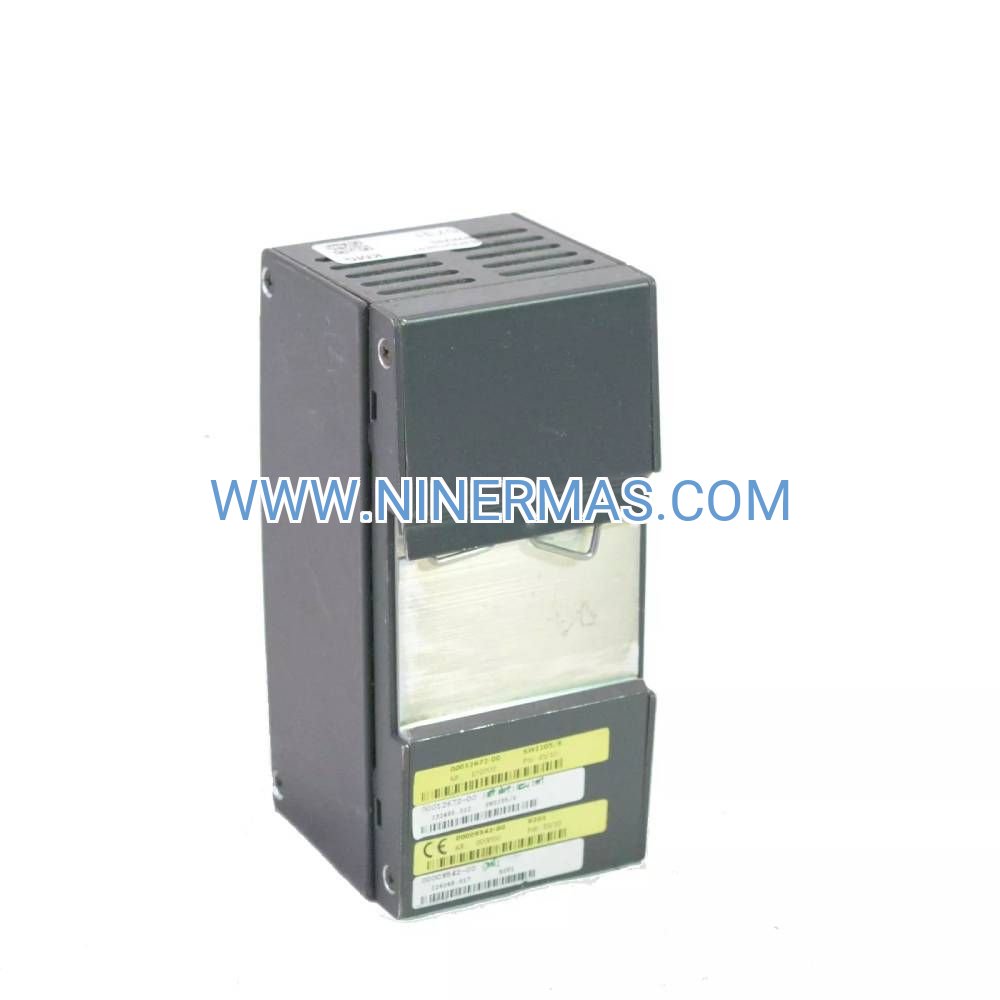
Woodward 9905-001K SPM-A Synchronizer (Industrial-Grade Generator Control Module)
The Woodward 9905-001K represents a proven solution for automated generator synchronization in mission-critical power infrastructure. This SPM-A series controller orchestrates voltage matching, frequency alignment, and phase-angle verification to enable safe paralleling of generators with utility grids or other generating sources. Designed for continuous-duty industrial environments, the 9905-001K combines microprocessor-based intelligence with rugged construction to deliver reliable synchronization across diverse power generation applications.
Power system operators face the challenge of connecting rotating machinery to live electrical networks without causing mechanical shock, voltage transients, or protective relay trips. The 9905-001K addresses these concerns through real-time monitoring of incoming and running bus parameters, automatically adjusting generator speed and excitation to achieve synchronism within user-defined tolerances. Target users include facility engineers managing standby power systems, utility operators coordinating distributed generation, and industrial plant managers overseeing cogeneration facilities.
Key differentiators include field-proven reliability across thousands of installations worldwide, comprehensive protection logic to prevent out-of-sync closure events, and flexible configuration options that accommodate both simple and complex power architectures. The unit's modular design facilitates straightforward panel integration, while Modbus communication enables supervisory control and data acquisition for modern energy management systems.
Technical Advantages & Operational Benefits
→ Precision Phase-Angle Control: Microprocessor algorithms continuously calculate slip frequency and predict optimal breaker closure timing, achieving synchronization within ±2 degrees of phase alignment. This precision minimizes mechanical stress on generator drive trains and reduces wear on circuit breaker contacts, extending equipment service life by 30-40% compared to manual synchronization methods.
→ Adaptive Voltage Matching: The synchronizer monitors both bus and generator voltages, issuing raise/lower commands to automatic voltage regulators until voltage differential falls within the configured dead band (typically ±5-10%). This automated regulation eliminates the need for operator intervention during routine synchronization events, reducing human error and improving response time during emergency power transfers.
→ Configurable Sync Windows: Adjustable parameters allow engineers to define acceptable ranges for frequency deviation (±0.1 to ±1.0 Hz), voltage mismatch (±2% to ±15%), and phase angle (5 to 30 degrees). This flexibility accommodates varying grid conditions, generator characteristics, and application-specific requirements without hardware modifications.
✓ Multi-Application Compatibility: Single hardware platform supports generator-to-utility synchronization, generator-to-generator paralleling, and automatic bus transfer schemes. Field-selectable operating modes eliminate the need for application-specific models, simplifying spare parts inventory and reducing procurement complexity.
✓ Comprehensive Fault Protection: Built-in safeguards monitor for dead bus conditions, reverse power flow, excessive frequency deviation, and voltage imbalance. Protective lockouts prevent breaker closure under unsafe conditions, protecting both the generator and connected loads from damage due to synchronization failures.
✓ Industrial-Grade Construction: Conformal-coated circuit boards, wide operating temperature range (-40°C to +70°C), and immunity to electrical noise ensure reliable operation in harsh industrial environments including outdoor generator enclosures, marine engine rooms, and high-vibration installations.
Industry Applications & Use Cases
Emergency Standby Power Systems: Hospitals, data centers, and telecommunications facilities deploy the 9905-001K to automate generator-to-utility synchronization during utility restoration. The synchronizer enables seamless load transfer from emergency generators back to grid power without interrupting critical operations, eliminating the brief outage typically associated with open-transition transfer schemes.
Peak Shaving & Demand Response: Industrial facilities participating in demand response programs use the 9905-001K to rapidly synchronize on-site generation with utility supply during peak pricing periods. Automated synchronization reduces operator workload and enables faster response to price signals, maximizing economic benefits from distributed generation assets.
Island Mode Microgrids: Remote facilities and island communities operating isolated power systems rely on the 9905-001K for coordinating multiple generators in island mode operation. The synchronizer facilitates adding or removing generating capacity to match load variations while maintaining system frequency and voltage stability.
Combined Heat & Power (CHP) Plants: Cogeneration facilities exporting power to the grid employ the 9905-001K for continuous synchronization monitoring and automatic re-synchronization following grid disturbances. The unit's fast response time minimizes generation curtailment during momentary grid events, improving overall plant economics.
Marine & Offshore Platforms: Shipboard power systems and offshore oil platforms utilize the 9905-001K for paralleling diesel generators in harsh marine environments. The synchronizer's robust construction and vibration tolerance ensure reliable operation despite constant motion and exposure to salt spray.
Technical Parameters & Selection Criteria
| Catalog Number | 9905-001K |
| Product Family | SPM-A Synchronizing Module |
| Control Power Input | 90-264 VAC, 50/60 Hz (universal input) |
| Auxiliary DC Supply | 18-32 VDC (24 VDC nominal) |
| Sensing Voltage Range | 90-690 VAC line-to-line (via potential transformers) |
| Frequency Operating Range | 45-66 Hz (covers both 50 Hz and 60 Hz systems) |
| Phase Angle Accuracy | ±2° typical, ±3° maximum |
| Voltage Match Tolerance | Adjustable 2-15% of nominal |
| Frequency Match Window | Adjustable 0.1-1.0 Hz |
| Sync Angle Window | Adjustable 5-30 degrees |
| Relay Outputs | 4x Form-C contacts, 5A @ 250 VAC resistive |
| Digital Inputs | 6x isolated, 24 VDC nominal |
| Communication Interface | Modbus RTU (RS-485) |
| Environmental Rating | -40°C to +70°C operating, 5-95% RH non-condensing |
| Mounting Configuration | Panel cutout or DIN rail (adapter required) |
| Dimensions (H×W×D) | 144 mm × 144 mm × 100 mm |
| Compliance Certifications | UL 508, CE, IEC 61010-1, DNV Type Approval |
Selection Guidelines: When specifying the 9905-001K, verify that generator voltage and frequency ratings fall within the synchronizer's sensing range. For systems requiring redundant synchronization control, consider deploying dual synchronizers with independent sensing circuits. Applications involving frequent synchronization cycles (>10 per hour) may benefit from upgrading to the SPM-D series for enhanced diagnostics and event logging capabilities. Consult factory application engineering for systems with unusual voltage configurations, harmonic distortion concerns, or integration with legacy control equipment.
Advanced Integration & Expansion Options
The 9905-001K serves as a foundational component within comprehensive generator control architectures. For complete engine-generator management, the synchronizer interfaces with Woodward electronic governors to provide coordinated speed control during synchronization events. The unit's discrete I/O and Modbus communication enable integration with programmable logic controllers (PLCs), distributed control systems (DCS), and building management systems (BMS) for centralized monitoring and control.
Facilities requiring load sharing among multiple generators can combine the 9905-001K synchronizer with dedicated load-sharing controllers that distribute kW and kVAR output across paralleled units. This modular approach allows system designers to scale power capacity by adding generators without replacing existing control hardware.
Modern installations increasingly leverage the synchronizer's Modbus interface for remote monitoring via SCADA systems or cloud-based analytics platforms. Real-time data on synchronization events, fault conditions, and operating parameters enables predictive maintenance strategies and performance optimization across distributed generation fleets.
Delivery Timeline & Service Commitment
Standard Lead Time: In-stock units ship within 1-2 business days via express courier. Standard delivery to major industrial centers typically requires 3-5 business days for domestic shipments, 7-10 business days for international destinations.
Custom Configuration: Factory-configured units with application-specific parameter sets or special voltage ratings require 2-3 weeks for engineering review and production. Expedited processing available for critical power system outages or emergency replacement scenarios.
Warranty Coverage: All 9905-001K synchronizers include a 12-month manufacturer's warranty covering defects in materials and workmanship. Warranty service includes advance replacement for critical applications, with cross-shipment of replacement units prior to return of failed components.
Technical Support: Factory-trained application engineers provide pre-sale consultation for system design, configuration assistance during commissioning, and troubleshooting support throughout the product lifecycle. Support services include parameter optimization, firmware updates, and integration guidance for complex power system architectures.
Documentation Package: Each unit ships with installation manual, wiring diagrams, parameter configuration worksheets, and Modbus register mapping. Supplementary resources include application notes for common synchronization scenarios and integration guides for popular PLC and SCADA platforms.
Frequently Asked Questions
How does the 9905-001K handle synchronization when grid frequency is unstable?
The synchronizer employs adaptive slip-frequency algorithms that track rate-of-change in both generator and grid frequency. When grid frequency exhibits high variability, the unit automatically widens the frequency match window and extends the synchronization timeout period to accommodate transient conditions. For severely unstable grids (>±1 Hz variation), consider implementing additional frequency regulation equipment or consulting factory applications engineering for parameter optimization.
What voltage transformation is required for medium-voltage generator applications?
The 9905-001K accepts sensing inputs up to 690 VAC line-to-line. For generators operating at 4.16 kV, 13.8 kV, or higher voltages, install potential transformers (PTs) with secondary windings rated 120 VAC or 240 VAC. PT accuracy class should be 0.3 or better to maintain synchronizer phase-angle precision. Ensure PT burden ratings accommodate the synchronizer's input impedance (typically >100 kΩ).
Can this synchronizer coordinate black-start sequences for multiple generators?
Yes, the 9905-001K supports sequential generator startup through its discrete input/output interface. Implement external sequencing logic (typically via PLC or dedicated sequencer) to coordinate generator cranking, voltage buildup, and synchronization timing. The synchronizer's "ready-to-close" output signal integrates with sequencing controllers to ensure each generator achieves synchronism before the next unit begins its startup cycle.
What maintenance intervals are recommended for optimal reliability?
The 9905-001K is a solid-state device requiring minimal routine maintenance. Perform annual verification of phase-angle accuracy using a synchroscope or phase-angle meter during scheduled generator maintenance outages. Inspect wiring terminations semi-annually for tightness and signs of overheating. Clean panel-mounted units annually to prevent dust accumulation that may impair cooling. Firmware updates are released periodically to address field-discovered issues; check manufacturer's website quarterly for latest revisions.
How does the synchronizer perform in high-electrical-noise environments?
The 9905-001K incorporates extensive EMI/RFI filtering on all input and output circuits, with conformal coating on circuit boards to prevent moisture-induced failures. The unit meets IEC 61000-4 immunity standards for industrial environments. For installations near variable-frequency drives, arc welders, or high-power switching equipment, route sensing and control wiring in grounded metal conduit separate from power conductors. Maintain minimum 300 mm separation between synchronizer enclosure and high-current bus bars or cables.
Is the 9905-001K compatible with renewable energy inverter-based generators?
The synchronizer is optimized for rotating machinery (diesel, natural gas, steam turbines) with conventional voltage regulation. Inverter-based sources (solar, wind, battery storage) typically employ grid-following or grid-forming inverters with integrated synchronization functions. For hybrid systems combining rotating generators with inverter-based resources, consult system integrator or factory applications engineering to ensure compatible control strategies and avoid conflicts between multiple synchronization controllers.
Request Technical Consultation
Selecting the optimal synchronization solution requires careful analysis of your power system architecture, operating requirements, and future expansion plans. Our applications engineering team offers complimentary pre-sale consultation to review single-line diagrams, discuss protection coordination, and recommend appropriate synchronizer configurations. Contact us with your project specifications to receive detailed technical proposals and budget pricing for single units or multi-site deployments.
© 2026 NINERMAS COMPANY LIMITED. All rights reserved.
Original Source: https://ninermas.com
Contact: sale@ninermas.com | +0086 187 5021 5667

Contact Info
-
Address:22 / F, South Wo Hang building, 148 Wing Lok Street, Sheung Wan, Western District, Hong Kong
-
Phone:+8618750215667
-
Email:
