Description
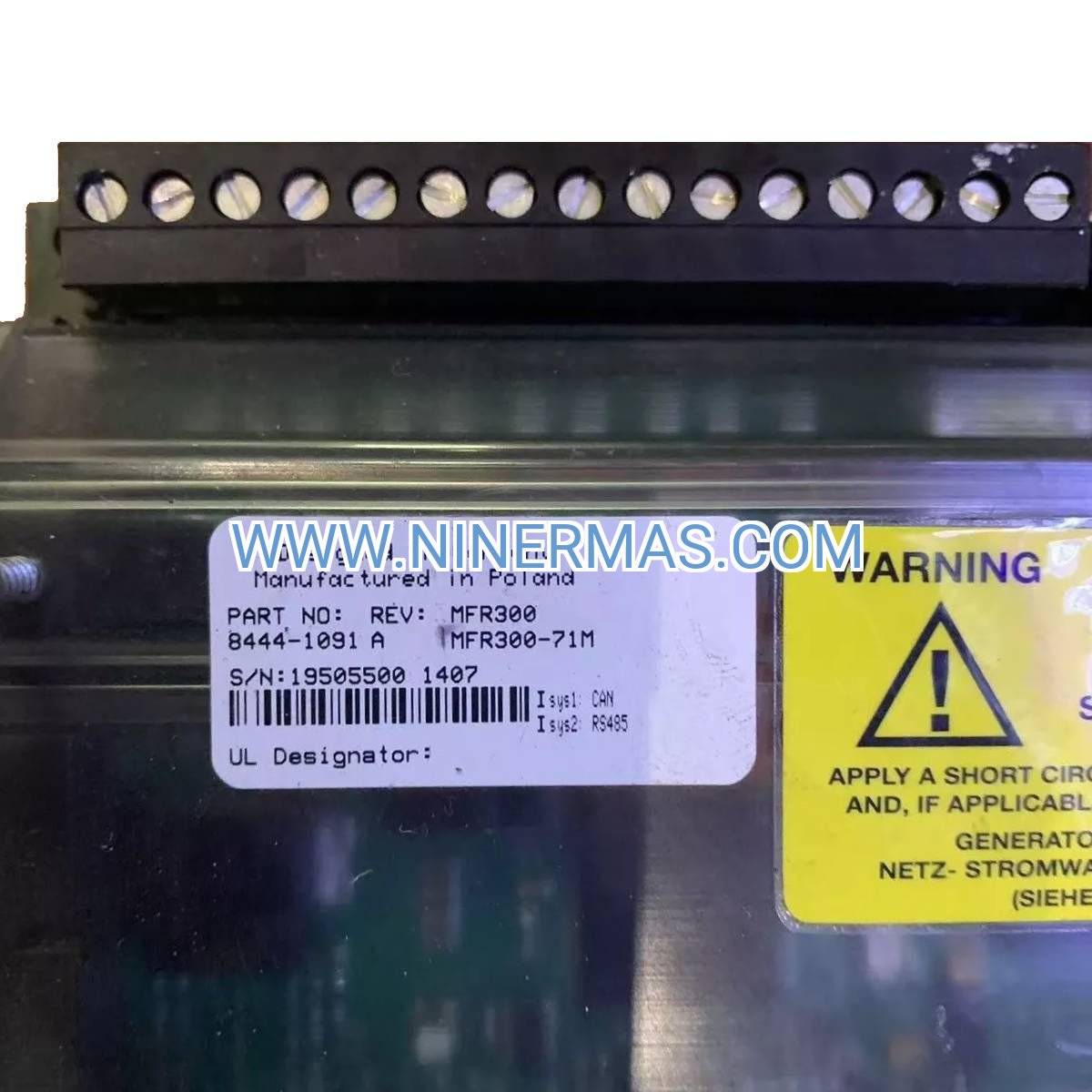
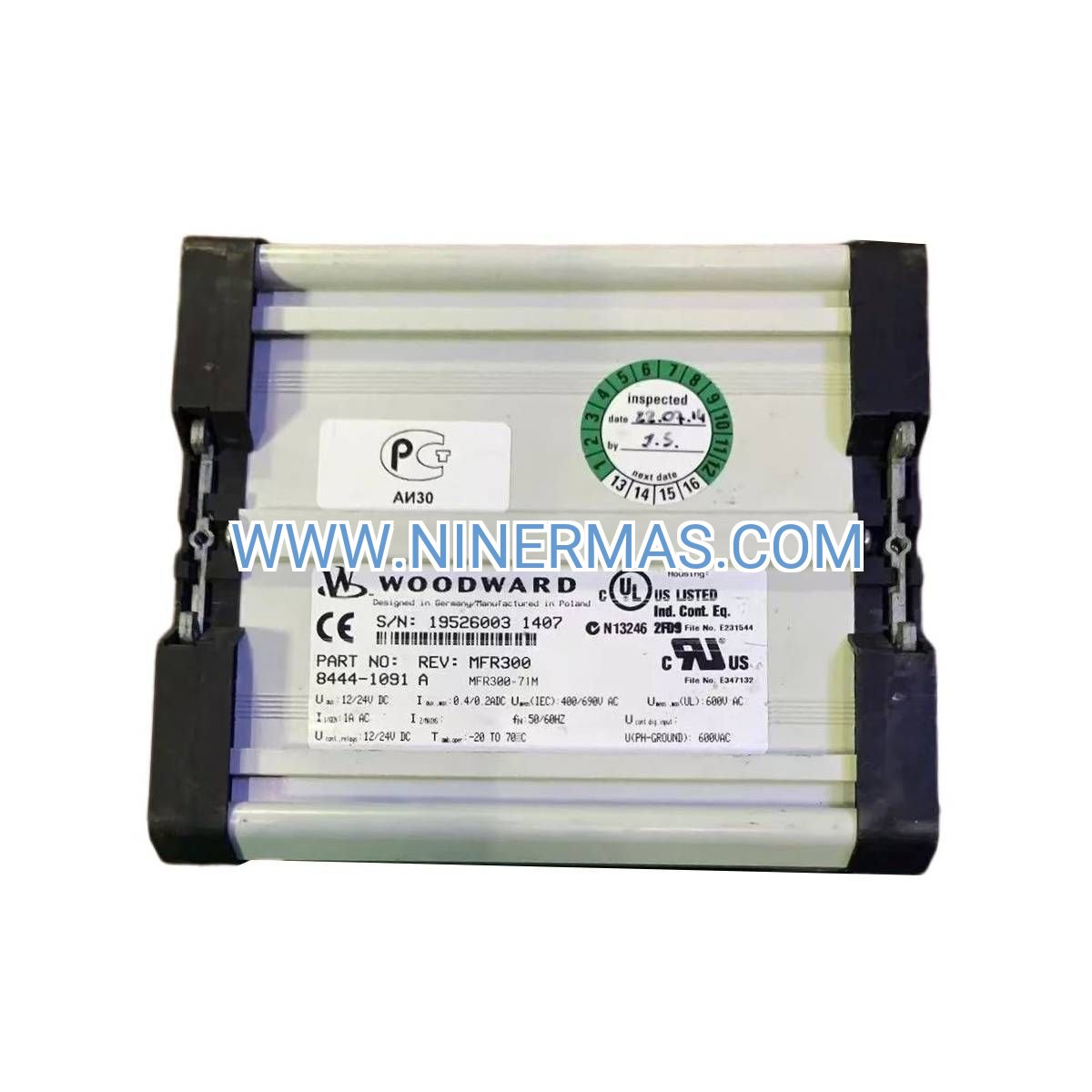
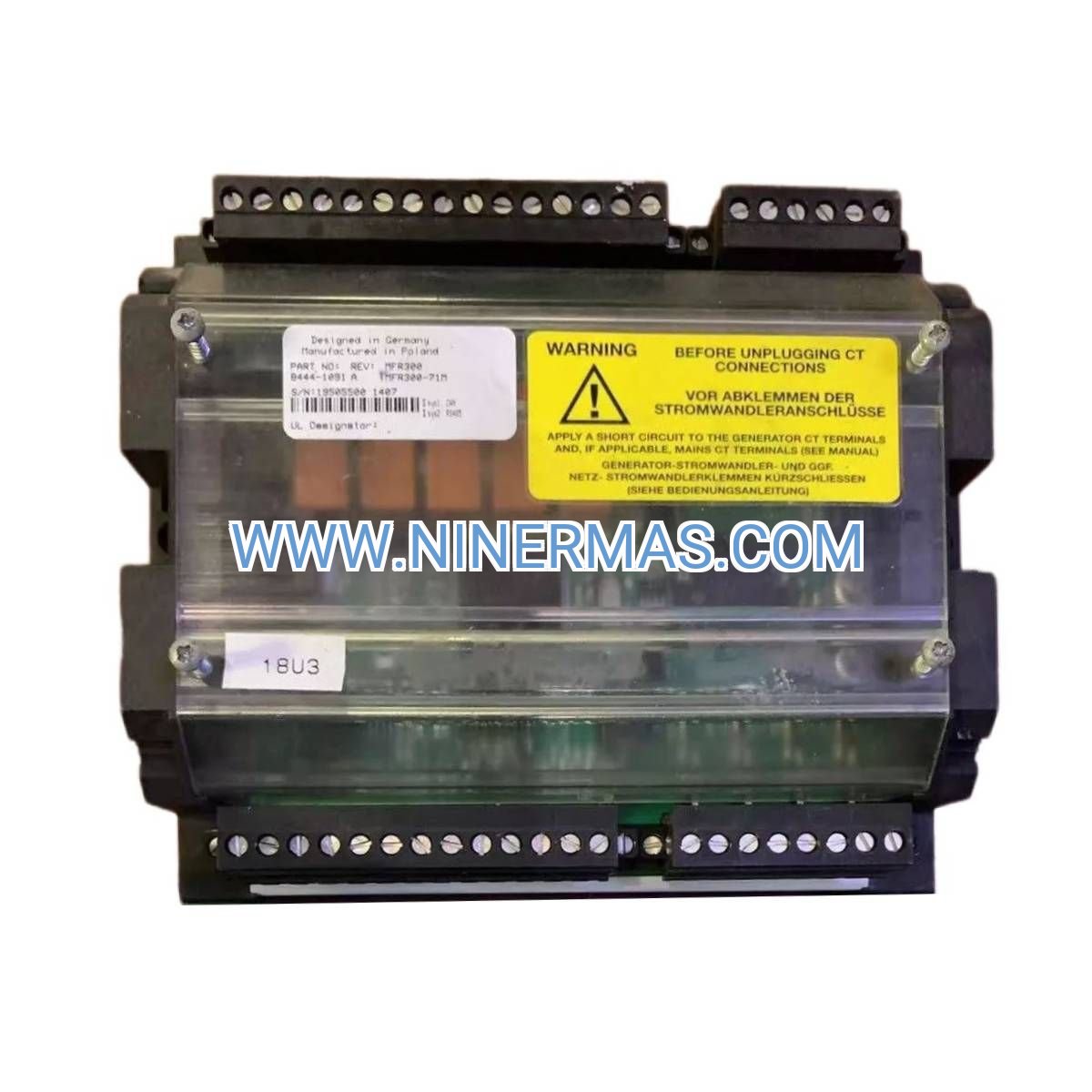
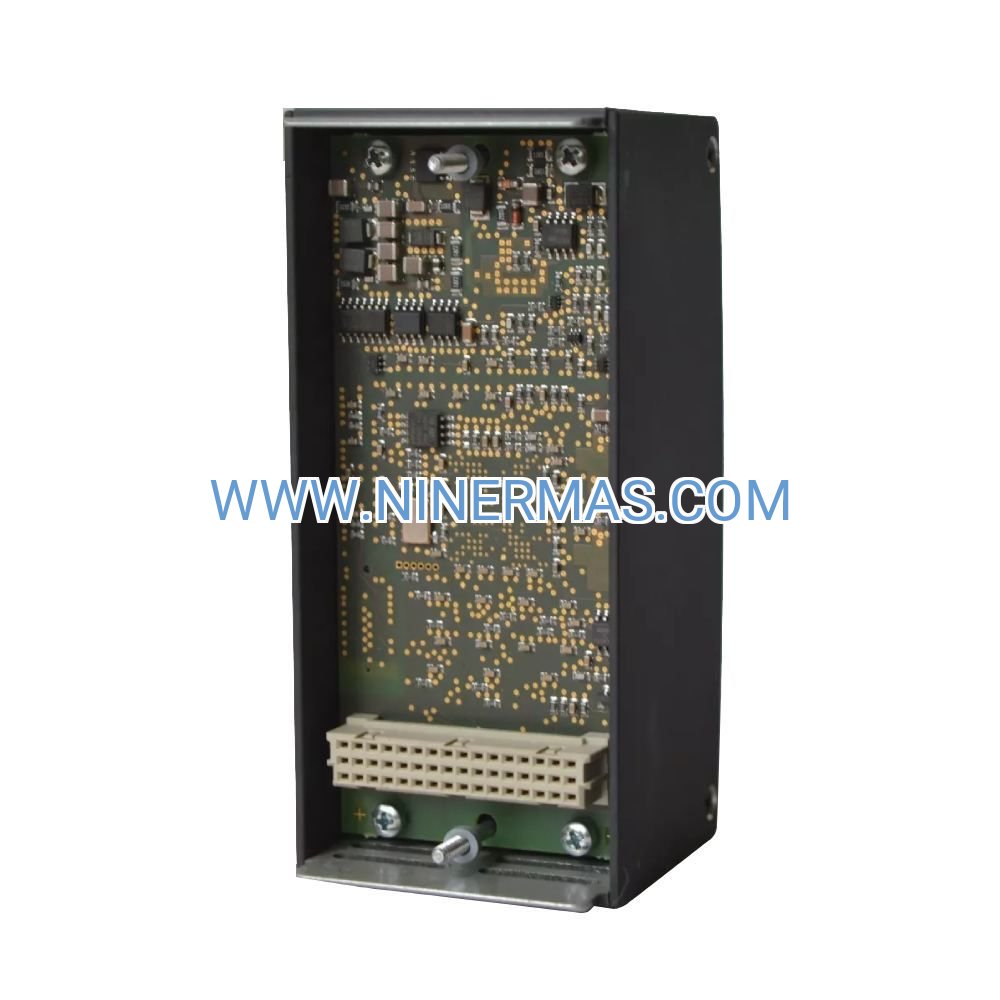
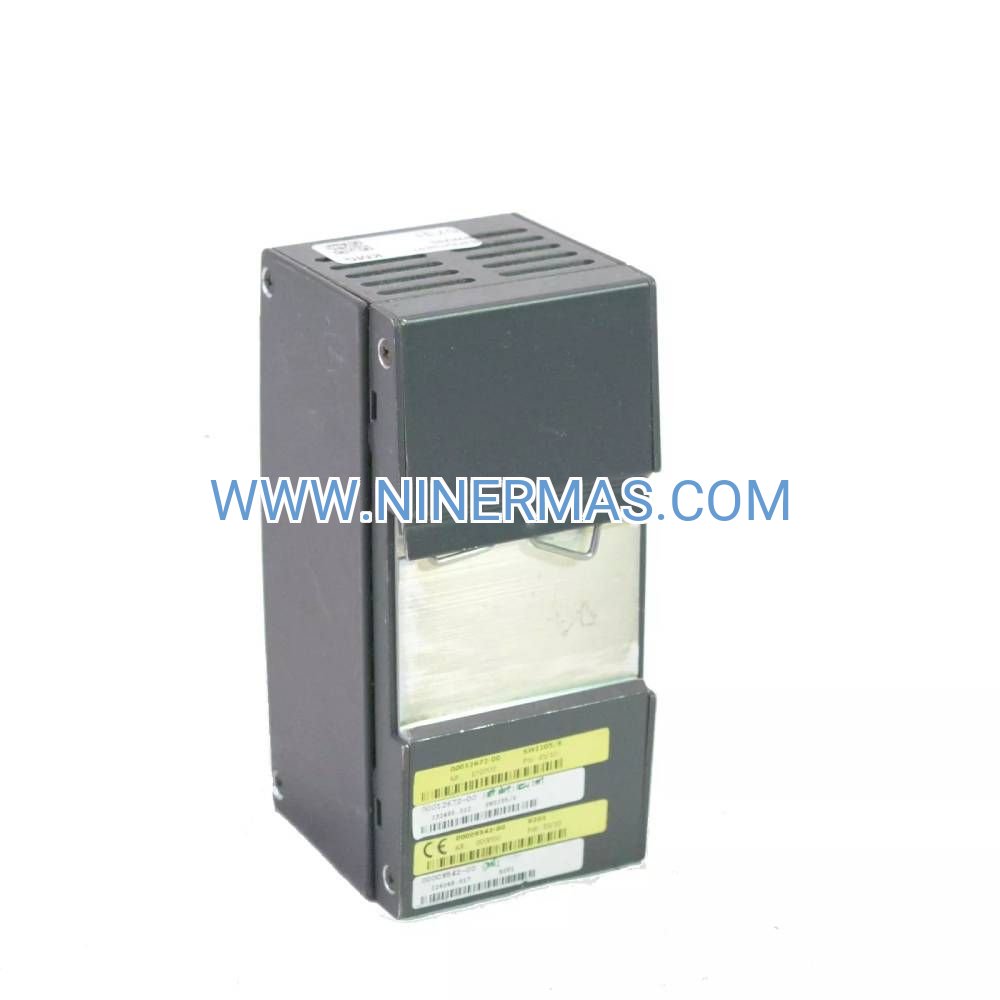
8444-1091 ProTech Overspeed Controller (Industrial-Grade TMR Architecture)
The 8444-1091 represents Woodward's flagship overspeed detection platform, purpose-built for mission-critical turbomachinery applications where equipment failure is not an option. Leveraging triple modular redundant (TMR) processing, this controller delivers continuous speed monitoring with automatic fault isolation, ensuring your rotating assets remain protected even during component-level failures. Designed for power plants, petrochemical facilities, and offshore installations, the 8444-1091 combines deterministic response times with comprehensive diagnostics to meet the most demanding safety integrity requirements.
Industrial operators face mounting pressure to maximize equipment availability while maintaining zero-tolerance safety standards. Traditional single-channel protection systems create vulnerability windows during maintenance or sensor degradation. The 8444-1091 eliminates these risks through its three-channel voting architecture, where each processing lane independently evaluates speed data and cross-verifies results in real time. This approach enables online module replacement, sensor calibration, and system testing without compromising protection coverage—a critical advantage for facilities operating under continuous production schedules.
With SIL 3 certification per IEC 61508 and proven deployment across thousands of installations worldwide, the 8444-1091 delivers the reliability foundation that safety engineers demand. Its modular construction supports phased upgrades, multi-protocol communication, and seamless integration with existing Woodward governors and control systems, making it the preferred choice for both greenfield projects and legacy system modernization.
Core Capabilities & Operational Advantages
→ Fault-Tolerant Processing: Three independent microprocessor channels execute parallel speed calculations with 2-out-of-3 voting logic, automatically bypassing failed modules while maintaining full protection authority—eliminates single-point vulnerabilities that plague conventional systems.
→ Multi-Sensor Compatibility: Accepts inputs from magnetic pickups (0.5-20 kHz), proximity probes (5 mm to 25 mm gap), Hall effect sensors, and optical encoders with programmable signal conditioning—adapts to diverse machinery configurations without external interface hardware.
→ Deterministic Shutdown Response: Executes trip commands within 10 milliseconds of setpoint breach detection, including relay actuation and valve closure initiation—critical for preventing runaway conditions in high-inertia equipment.
→ Continuous Self-Diagnostics: Monitors power supply integrity, processor health, I/O circuit continuity, and inter-channel communication at 100 ms intervals with automatic alarm generation and fault logging—reduces unplanned downtime through predictive maintenance alerts.
→ Hot-Swappable Architecture: Field-replaceable modules with automatic synchronization enable component exchange during operation without system reset or protection interruption—supports 24/7 availability requirements in baseload generation facilities.
✓ Dual-Network Connectivity: Simultaneous Modbus RTU (RS-485) and Ethernet/IP communication with configurable data broadcasting—integrates with SCADA platforms, DCS networks, and plant historians for centralized monitoring.
Industry-Specific Deployment Scenarios
Combined-Cycle Power Generation: In natural gas-fired plants, the 8444-1091 protects gas turbine generators during grid synchronization failures and sudden load rejections. When a 250 MW unit experiences breaker trip events, the controller detects acceleration beyond 103% rated speed and initiates fuel valve closure before mechanical stress reaches damaging levels, preventing blade liberation and bearing failures that could sideline the unit for months.
Upstream Oil & Gas Compression: Offshore platforms rely on the 8444-1091 to safeguard centrifugal compressor trains handling sour gas streams at pressures exceeding 1,500 psi. During anti-surge valve malfunctions or downstream blockages, the system's redundant speed monitoring prevents catastrophic overspeed events that could rupture casings in hazardous atmospheres, protecting both personnel and environmental compliance.
Petrochemical Process Units: Refineries deploy the controller on steam turbine-driven pumps and blowers where process upsets create rapid load changes. The TMR architecture ensures that sensor fouling from hydrocarbon vapors or electromagnetic interference from nearby VFDs cannot compromise protection integrity, maintaining safety margins during catalyst regeneration cycles and emergency depressurization sequences.
Marine Propulsion Systems: LNG carriers and FPSO vessels integrate the 8444-1091 into main propulsion turbine controls, where wave-induced load variations and rapid maneuvering demand instantaneous overspeed response. The system's vibration-resistant construction and wide temperature range support installation in engine rooms subject to shock loads and ambient temperatures fluctuating between -20°C and +65°C.
Industrial Cogeneration: Manufacturing facilities with captive power generation use the controller to protect back-pressure turbines that simultaneously produce electricity and process steam. During sudden steam demand changes from batch operations, the 8444-1091 prevents overspeed trips that would disrupt both power supply and thermal processes, optimizing plant efficiency.
Technical Specifications & Selection Criteria
| Parameter | Specification |
|---|---|
| Catalog Number | 8444-1091 |
| Processing Architecture | Triple Modular Redundant (TMR) with 2oo3 voting |
| Safety Integrity Level | SIL 3 per IEC 61508 / IEC 61511 |
| Speed Input Channels | 3 independent channels, each supporting dual sensors |
| Sensor Types Supported | Magnetic pickup, eddy current probe, Hall effect, optical |
| Frequency Range | 0.5 Hz to 20 kHz (30 RPM to 1,200,000 RPM equivalent) |
| Trip Response Time | ≤10 ms from setpoint breach to relay energization |
| Power Input | 18-32 VDC, 25 W maximum consumption |
| Operating Temperature | -40°C to +70°C (-40°F to +158°F) |
| Humidity Tolerance | 5% to 95% RH, non-condensing |
| Communication Protocols | Modbus RTU (RS-485), Modbus TCP, Ethernet/IP |
| Output Relays | 6 form-C contacts, 5 A @ 250 VAC resistive |
| Enclosure Rating | IP54 (NEMA 12 equivalent) for panel mounting |
| Dimensions (H×W×D) | 220 mm × 180 mm × 95 mm (8.7" × 7.1" × 3.7") |
| Weight | 2.1 kg (4.6 lbs) fully populated |
| Certifications | CE, UL 508, ATEX Zone 2, IECEx, Class I Div 2 |
Selection Guidelines: Choose the 8444-1091 for applications requiring SIL 3 protection with continuous availability. For single-turbine installations under 50 MW where SIL 2 suffices, consider the ProTech 203 series. When protecting multiple machines from a centralized location, evaluate the GS200 platform. Confirm that your existing speed sensors provide signal amplitudes within 50 mV to 30 V peak-to-peak; lower-output sensors may require preamplification. Verify that panel space accommodates the controller's depth plus 50 mm rear clearance for wiring access.
Advanced Integration & Customization Options
The 8444-1091 supports optional expansion modules for enhanced functionality. The analog output module provides 4-20 mA signals proportional to measured speed, enabling chart recorder integration and remote indication. The digital input expansion adds 16 supervised channels for monitoring auxiliary equipment status, permissive interlocks, and manual reset switches. For facilities requiring cybersecurity compliance, the secure communication module implements encrypted Modbus with certificate-based authentication per IEC 62443 standards.
Woodward's ToolKit software enables offline configuration development, allowing engineers to define trip setpoints, alarm thresholds, time delays, and voting logic before commissioning. The software includes simulation modes for validating logic sequences and testing failure scenarios. Configuration files can be version-controlled and replicated across multiple units, ensuring consistency in multi-turbine installations.
Custom firmware adaptations are available for specialized applications, including variable-frequency drive integration, multi-stage compressor protection, and coordinated shutdown sequencing with upstream/downstream equipment. Consult our application engineering team to discuss project-specific requirements.
Delivery Timeline & Service Commitments
Standard Lead Time: 3-5 business days for in-stock units shipping from our regional distribution centers in Houston, Singapore, and Rotterdam. Express same-day dispatch available for critical outage support (additional fees apply).
Custom Configurations: Factory-programmed units with customer-specific setpoints and I/O assignments ship within 10-12 business days. Expedited 5-day turnaround available upon request.
Warranty Coverage: 18-month comprehensive warranty from shipment date, covering materials, workmanship, and firmware defects. Warranty includes advance replacement service with cross-shipment of exchange units to minimize downtime.
Technical Support: Lifetime access to our global support network, staffed by certified turbine control specialists. Services include application consulting, commissioning assistance, troubleshooting diagnostics, and firmware updates. Emergency support available 24/7/365 via dedicated hotline.
Documentation Package: Each controller ships with installation manual, wiring diagrams, configuration guide, and calibration certificates. CAD drawings (DWG/PDF) and 3D STEP models available for download to support panel design and spatial planning.
Frequently Asked Questions
How does the TMR voting mechanism handle sensor discrepancies during normal operation?
The system continuously compares speed readings across all three channels. If one sensor drifts beyond the configurable tolerance band (typically ±0.5%), the controller flags a diagnostic alarm but continues operating using the two agreeing channels. This allows sensor replacement during the next planned maintenance window without forcing an immediate shutdown.
Can the 8444-1091 interface with legacy Woodward governors like the 505E or UG-8?
Yes, the controller provides discrete trip outputs and Modbus communication compatible with all current and legacy Woodward governor platforms. For older analog governors, the optional 4-20 mA output module enables speed signal sharing. Integration typically requires only parameter configuration—no custom programming.
What is the maximum cable distance between the controller and speed sensors?
Magnetic pickup sensors support cable runs up to 300 meters (1,000 feet) using shielded twisted-pair wire. Proximity probes are limited to 100 meters due to capacitance effects. For longer distances, install the optional remote sensor interface module near the machine, then use fiber optic or Ethernet links to the main controller.
Does the system require periodic proof testing to maintain SIL 3 certification?
IEC 61508 mandates functional testing at intervals determined by the calculated proof test coverage. For the 8444-1091, annual testing satisfies typical requirements. The controller's built-in test routines automate 90% of the proof test procedure, reducing testing time to under 2 hours per unit. Detailed test procedures are provided in the safety manual.
How is the controller configured for different turbine speed ranges and trip setpoints?
Configuration is performed via Woodward's GAP (Guide, Adjust, Program) software connected through the front-panel USB port or Ethernet interface. The intuitive graphical interface guides users through sensor selection, speed range definition, trip/alarm setpoint entry, and time delay configuration. No programming knowledge required—typical setup completes in 30 minutes.
What cybersecurity measures protect the controller from unauthorized access?
The 8444-1091 implements role-based access control with password-protected user levels (Operator, Technician, Engineer). Ethernet communication supports VLAN segmentation, MAC address filtering, and optional VPN tunneling. Audit logs record all configuration changes with timestamps and user identification. For critical infrastructure applications, the secure communication module adds AES-256 encryption.
Take the Next Step in Turbine Safety
Protect your critical rotating assets with proven TMR technology trusted by industry leaders worldwide. Our technical sales team is ready to discuss your specific application requirements, provide sizing calculations, and develop a customized protection strategy for your facility.
Request a detailed application review: Share your turbine specifications, operating conditions, and safety requirements to receive a comprehensive protection system proposal including wiring diagrams, bill of materials, and budget pricing.
Schedule a live demonstration: Experience the 8444-1091's configuration interface and diagnostic capabilities through a personalized web session with our application engineers.
Order now for fast delivery: In-stock units ship same-day when ordered before 3 PM CST. Volume discounts available for multi-unit projects.
© 2026 NINERMAS COMPANY LIMITED. All rights reserved.
Original Source: https://ninermas.com
Contact: sale@ninermas.com | +0086 187 5021 5667

Contact Info
-
Address:22 / F, South Wo Hang building, 148 Wing Lok Street, Sheung Wan, Western District, Hong Kong
-
Phone:+8618750215667
-
Email: