Description
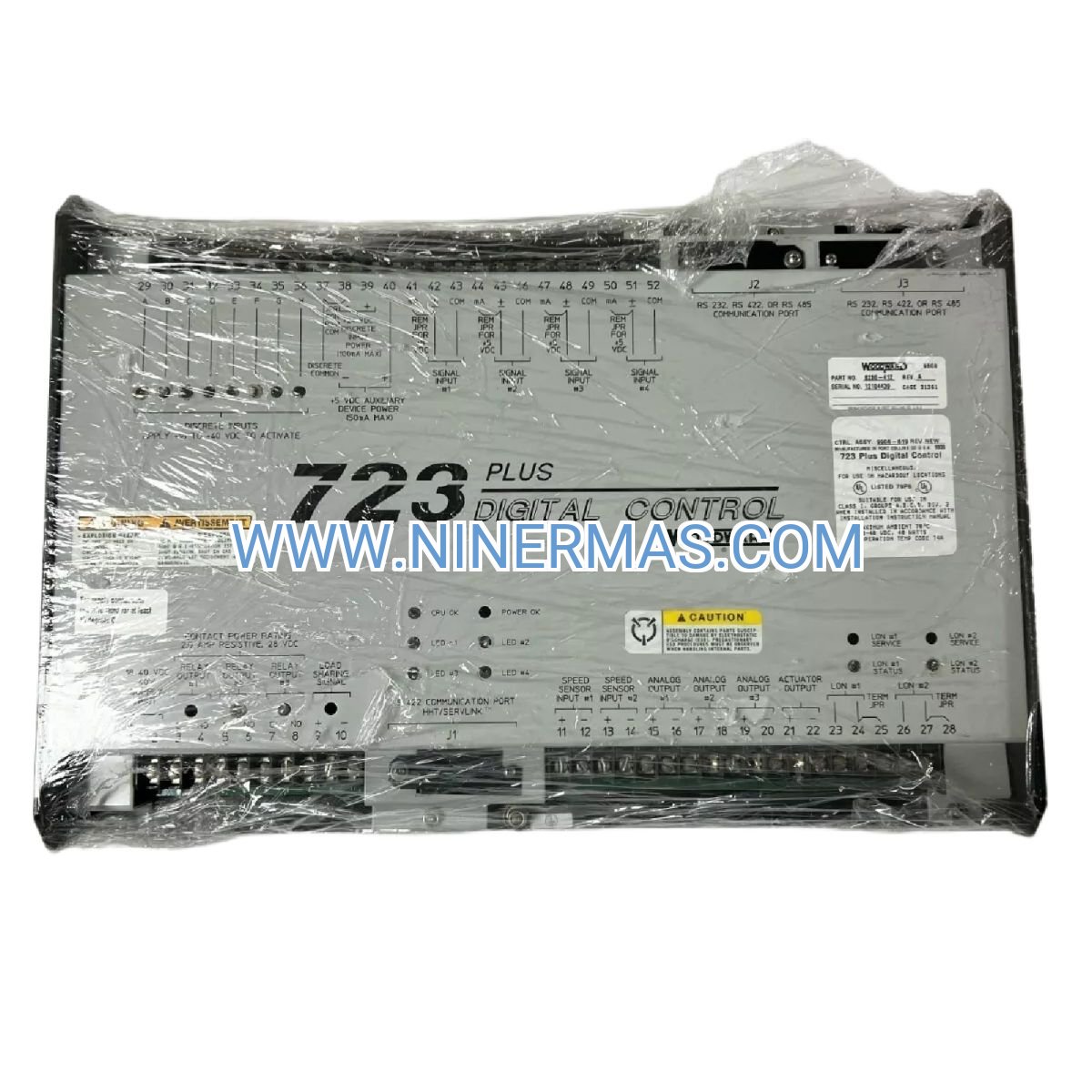
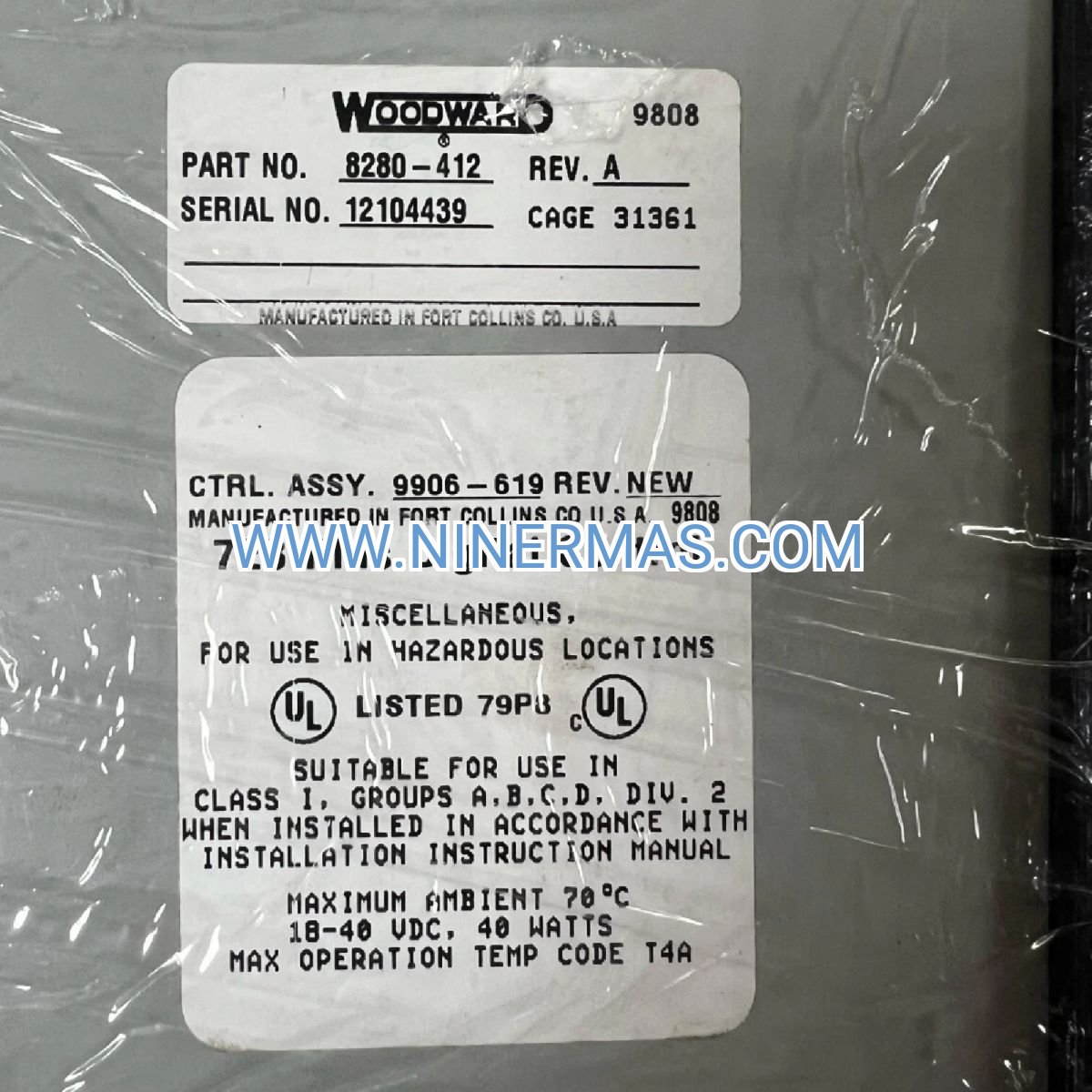
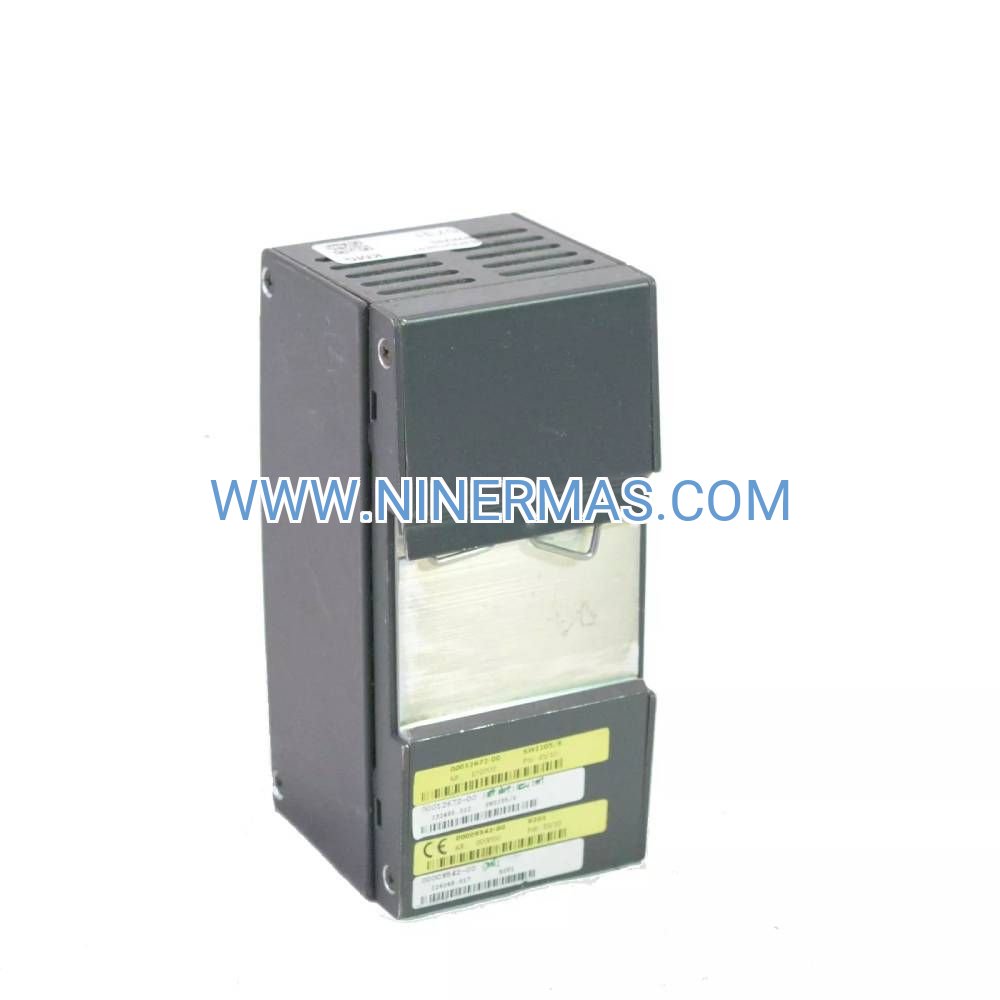
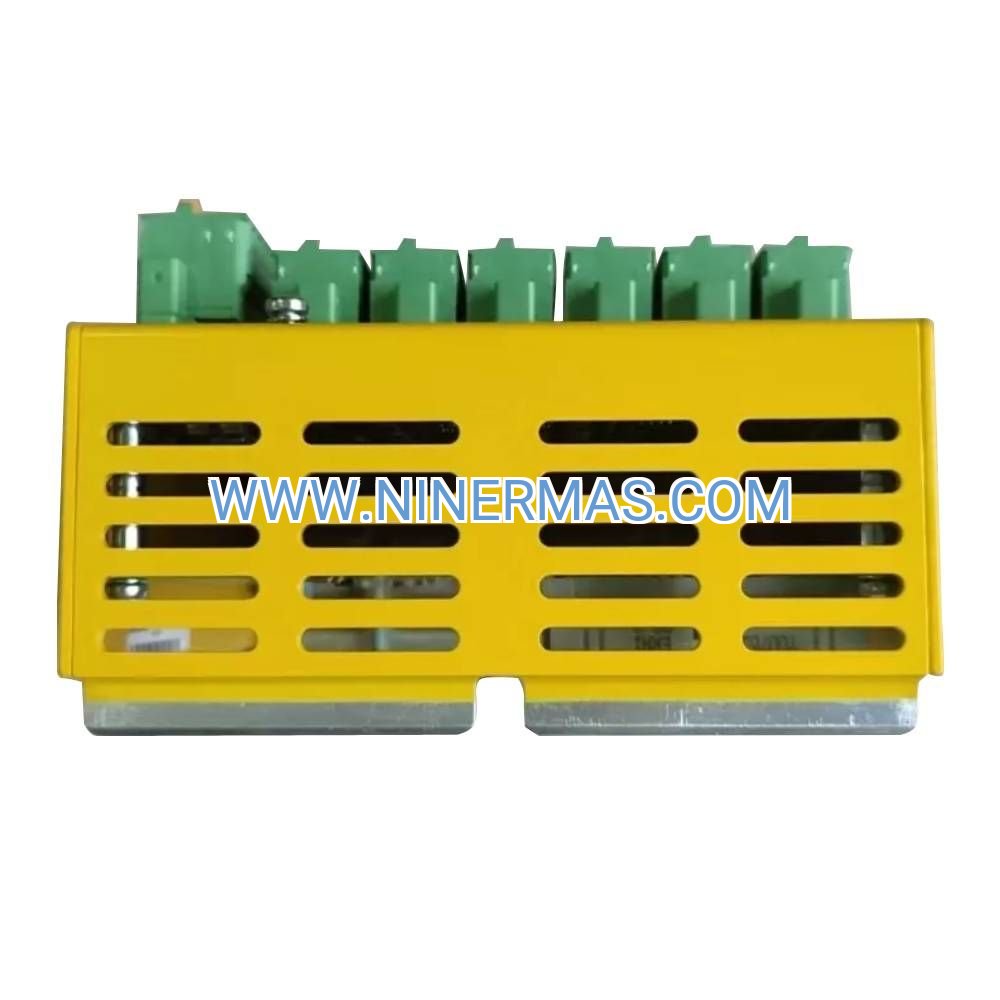
8280-412 Digital Engine Governor (Industrial-Grade Speed Control)
The Woodward 8280-412 represents a proven solution for reciprocating engine speed regulation in demanding industrial environments. Built on the 723PLUS platform, this digital governor combines microprocessor-based control algorithms with robust hardware design to deliver consistent performance across power generation, marine propulsion, and mechanical drive applications. Whether managing a single standby generator or coordinating multiple units in parallel operation, the 8280-412 provides the precision and reliability required for critical infrastructure.
Designed for system integrators and facility operators who demand measurable performance, this controller addresses common challenges in engine-driven equipment: load transient response, multi-unit synchronization, and long-term speed stability. The digital architecture eliminates mechanical wear points found in traditional governors while offering configuration flexibility that adapts to diverse engine platforms and operational requirements.
With field-proven reliability in thousands of installations worldwide, the 8280-412 serves as a cornerstone component in mission-critical power systems, marine vessels, and industrial processes where downtime carries significant operational and financial consequences.
Core Capabilities & Technical Advantages
→ Precision Speed Regulation: Digital PID control maintains engine speed within ±0.25% of setpoint during load acceptance and rejection events, ensuring stable frequency output for sensitive electrical loads and consistent mechanical drive speeds.
→ Multi-Unit Load Sharing: Integrated DSLC (Digital Synchronizer and Load Control) compatibility enables proportional load distribution across paralleled generator sets, preventing overload conditions and optimizing fuel consumption across the entire power plant.
→ Adaptive Control Response: Self-tuning algorithms continuously adjust control parameters based on engine response characteristics, compensating for fuel quality variations, ambient conditions, and component aging without manual intervention.
→ Comprehensive Diagnostics: Real-time monitoring of speed sensor signals, actuator position, and control loop performance with configurable alarm thresholds for predictive maintenance and rapid fault isolation.
→ Flexible System Integration: RS-485 Modbus RTU communication provides remote monitoring and setpoint adjustment from SCADA platforms, while analog I/O supports legacy control systems and custom instrumentation requirements.
→ Environmental Resilience: -40°C to +70°C operating range with conformal coating protection against moisture, vibration, and electrical interference common in engine room environments.
Industrial Application Scenarios
✓ Standby & Prime Power Generation: Data centers, hospitals, and manufacturing facilities rely on the 8280-412 to maintain generator frequency stability during utility outages and peak shaving operations. The controller's fast response to load steps prevents voltage sags that could disrupt IT equipment and process control systems, while load sharing capability allows multiple generators to operate in parallel for increased capacity and redundancy.
✓ Marine Main & Auxiliary Propulsion: Commercial vessels utilize the 8280-412 for main engine speed control and auxiliary generator regulation. The controller manages propeller shaft speed during maneuvering operations and coordinates multiple generators supplying shipboard electrical systems, ensuring smooth power transitions during load transfers between shore power and onboard generation.
✓ Gas Compression & Pipeline Pumping: Natural gas compressor stations and pipeline pumping facilities depend on constant-speed operation to maintain process parameters. The 8280-412 regulates reciprocating engine-driven compressors and pumps, compensating for seasonal gas composition changes and varying pipeline pressures while maintaining optimal compression ratios.
✓ Mechanical Drive Applications: Industrial processes requiring precise rotational speed control—such as cement kilns, grinding mills, and conveyor systems—benefit from the 8280-412's ability to maintain consistent mechanical output despite varying load torque and environmental conditions.
Technical Parameters & Selection Criteria
| Parameter | Specification |
| Model Designation | 8280-412 |
| Control Platform | 723PLUS Digital Speed Control |
| Speed Regulation Accuracy | ±0.25% of rated speed |
| Configurable Speed Range | 300-3000 RPM |
| Input Power Requirement | 18-32 VDC (battery or rectified AC) |
| Control Output Signal | 4-20mA, PWM, or voltage (configurable) |
| Speed Sensor Compatibility | Magnetic pickup, Hall effect, variable reluctance |
| Communication Protocol | RS-485 Modbus RTU, DSLC network |
| Operating Temperature | -40°C to +70°C |
| Mounting Configuration | Panel mount or DIN rail |
| Protection Features | Overspeed shutdown, underspeed alarm, sensor fault detection |
Selection Guidance: The 8280-412 suits applications requiring digital speed control with load sharing capability. For single-engine installations without parallel operation requirements, consider the 8280-192 model. Applications demanding integrated speed and load control with advanced power management should evaluate the 2301A series. Verify actuator compatibility (4-20mA, PWM, or voltage output) and speed sensor type (MPU, Hall effect, or VR) before ordering.
Advanced Integration & Customization
The 8280-412 supports extensive configuration options for specialized applications. Custom I/O mapping allows integration with proprietary control systems, while programmable logic functions enable automated startup sequences, load-dependent speed curves, and conditional alarm responses. For installations requiring remote monitoring, the Modbus RTU interface provides access to real-time operating parameters including speed setpoint, actual speed, actuator position, and diagnostic status codes.
Multi-unit installations benefit from DSLC networking, which coordinates up to 32 controllers for synchronized operation. The network manages load distribution, synchronization, and automatic load transfer without external synchronizing equipment, reducing system complexity and installation costs. Pre-configured templates for common engine manufacturers accelerate commissioning, while custom tuning accommodates non-standard engine dynamics and fuel systems.
Delivery Timeline & Service Commitment
Standard Lead Time: In-stock units ship within 1-3 business days via express courier with tracking. Custom-configured units require 7-14 days for programming and testing.
Warranty Coverage: 12-month manufacturer warranty against defects in materials and workmanship, covering parts and labor for factory-authorized repairs.
Technical Support: Application engineering assistance for system design, configuration guidance, and troubleshooting support via phone and email. On-site commissioning services available for complex installations.
Documentation Package: Each unit includes installation manual, configuration software, wiring diagrams, and Modbus register map for system integration.
Frequently Asked Questions
What actuator types are compatible with the 8280-412 digital speed control?
The controller outputs 4-20mA current loop, PWM (pulse-width modulation), or 0-10V voltage signals, covering most electronic fuel actuators and throttle positioners. Verify your actuator's input requirements before ordering—most modern electronic governors use 4-20mA, while some legacy systems require voltage output.
Can the 8280-412 manage both isochronous and droop speed control modes?
Yes, the controller supports isochronous (zero droop) mode for single-unit operation and adjustable droop settings (0-10%) for load sharing in parallel configurations. Droop parameters are configurable via front panel or PC software to match system requirements.
How does the load sharing function work with multiple generator sets?
When connected via DSLC network, the 8280-412 communicates with other controllers to distribute active and reactive power proportionally based on each unit's rated capacity. The system automatically adjusts individual engine speeds to balance load without external load-sharing modules.
What speed sensor signal frequency range does the controller accept?
The 8280-412 processes speed sensor signals from 100 Hz to 20 kHz, accommodating engines from 300 to 3000 RPM with various gear tooth counts. The controller auto-scales the input based on configured teeth-per-revolution and desired speed range.
Is external signal conditioning required for speed sensor inputs?
No, the controller includes integrated signal conditioning for magnetic pickup, Hall effect, and variable reluctance sensors. Direct connection to the speed sensor is supported without additional interface modules.
Does the 8280-412 support remote monitoring and control via SCADA systems?
Yes, the RS-485 Modbus RTU interface provides read/write access to operating parameters including speed setpoint, actual speed, alarm status, and diagnostic codes. Standard Modbus register mapping simplifies integration with most SCADA platforms.
Ready to Optimize Your Engine Control System?
Contact our application engineering team to discuss your specific requirements. We'll help you configure the 8280-412 for your engine platform, verify actuator compatibility, and provide integration guidance for your control architecture. Request a detailed specification sheet or schedule a technical consultation to ensure optimal system performance.
© 2026 NINERMAS COMPANY LIMITED. All rights reserved.
Original Source: https://ninermas.com
Contact: sale@ninermas.com | +0086 187 5021 5667

Contact Info
-
Address:22 / F, South Wo Hang building, 148 Wing Lok Street, Sheung Wan, Western District, Hong Kong
-
Phone:+8618750215667
-
Email: