


Description
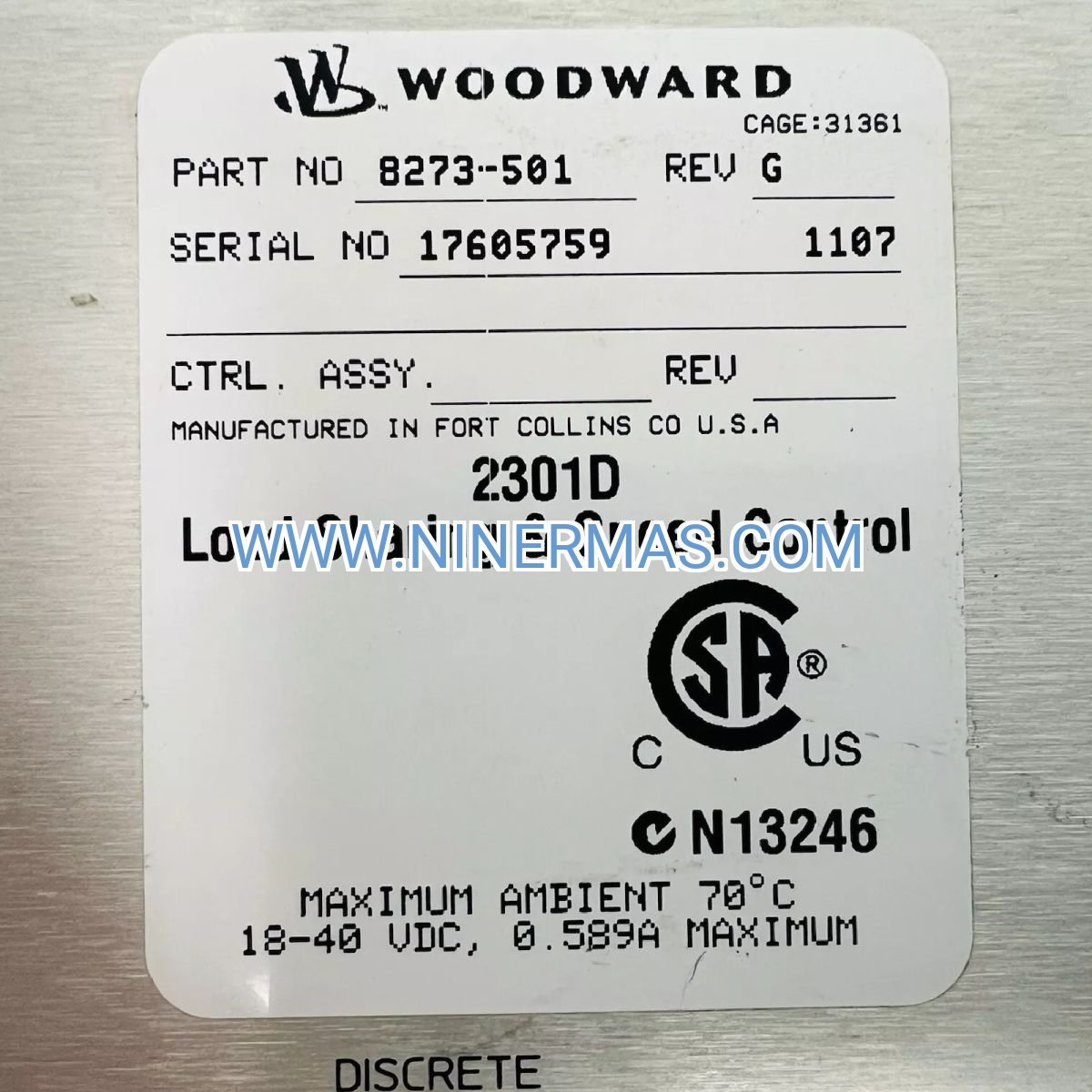
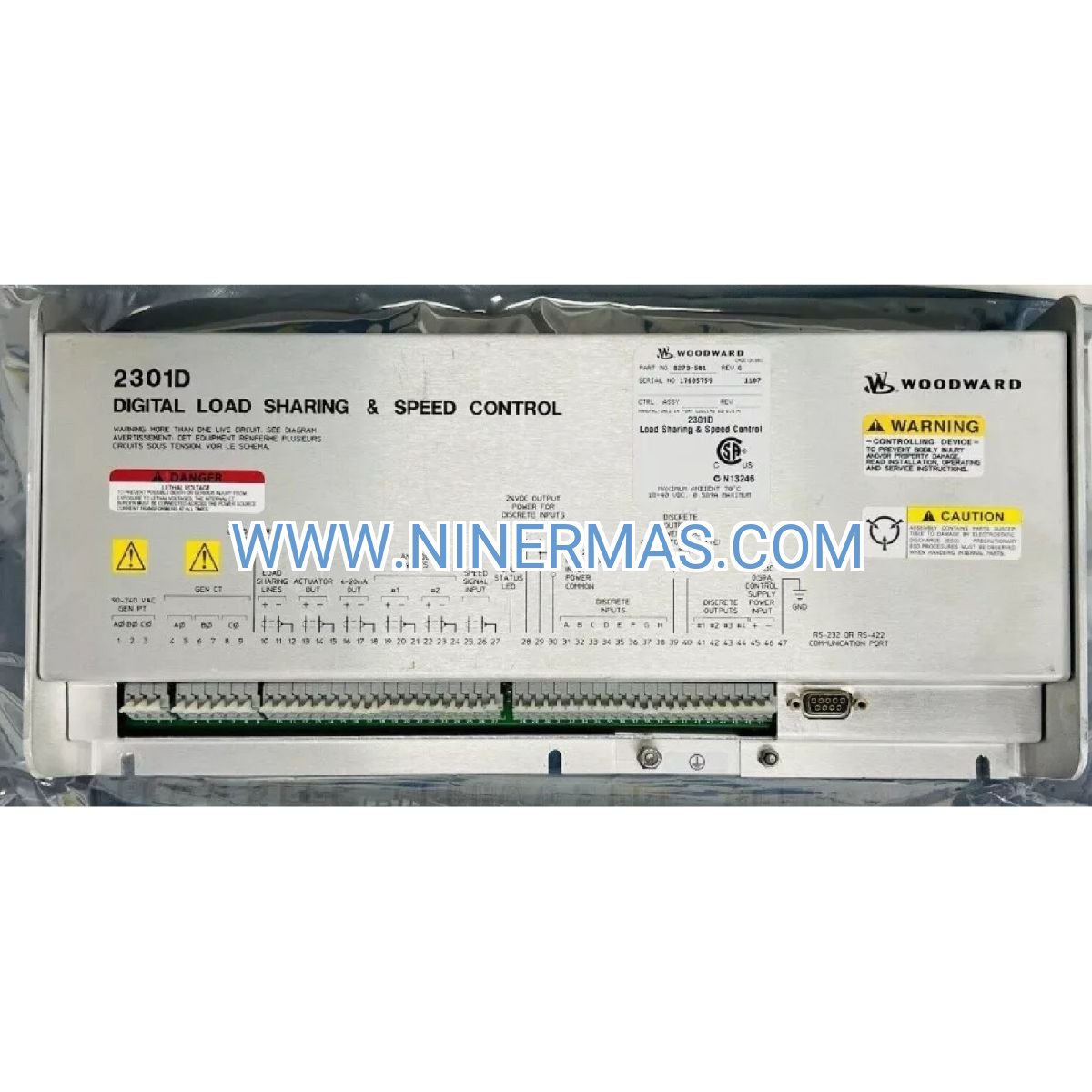
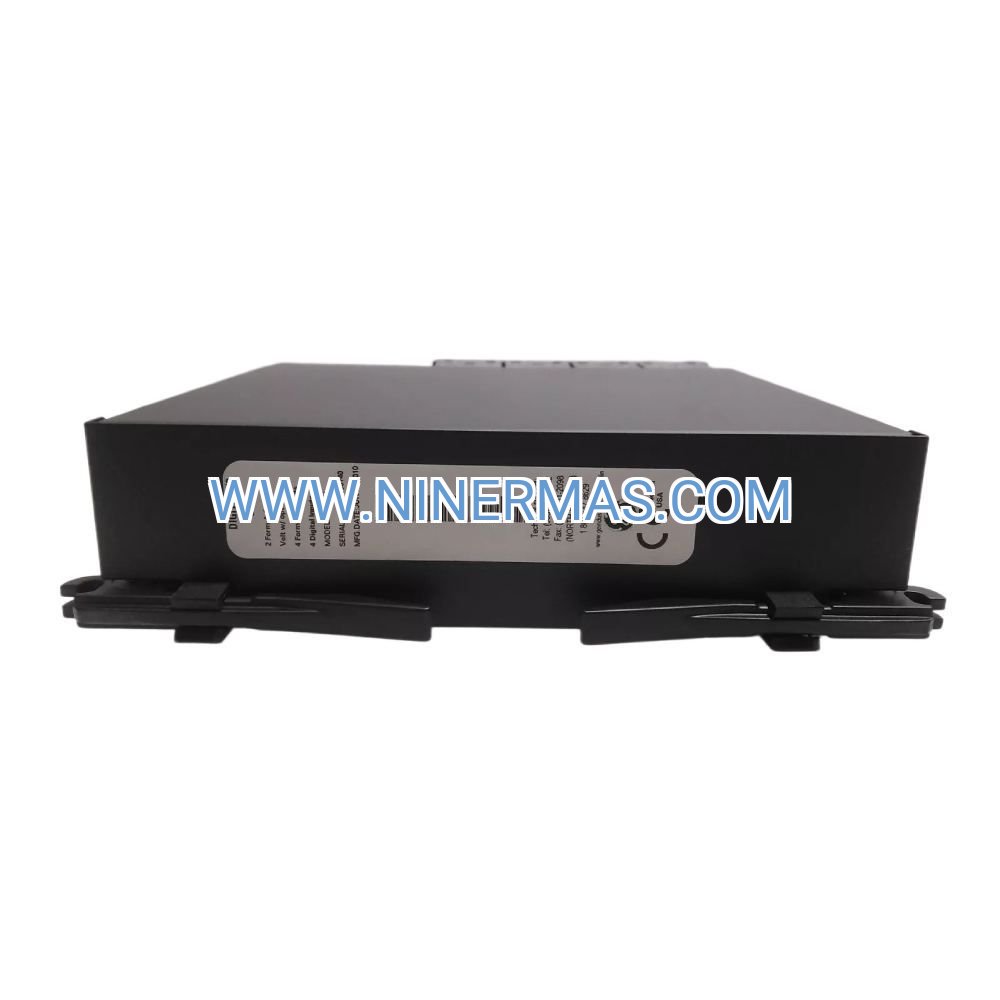
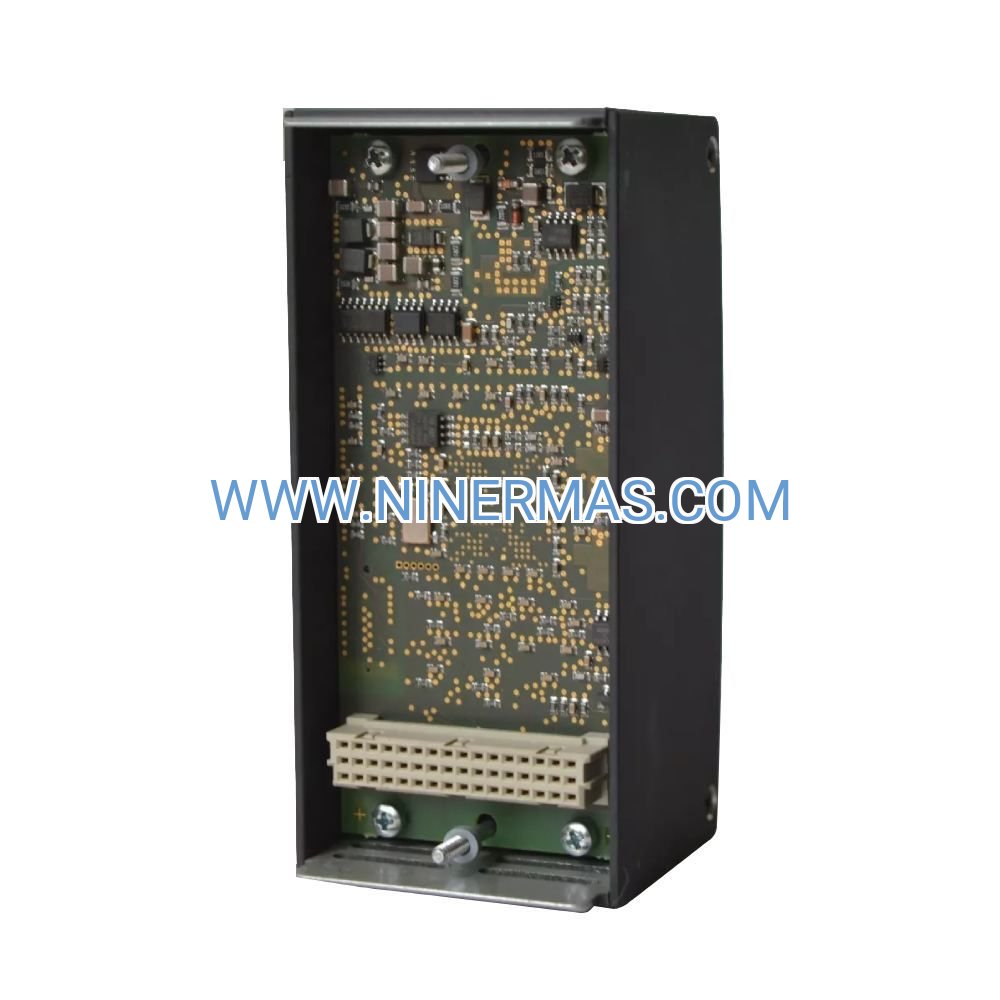
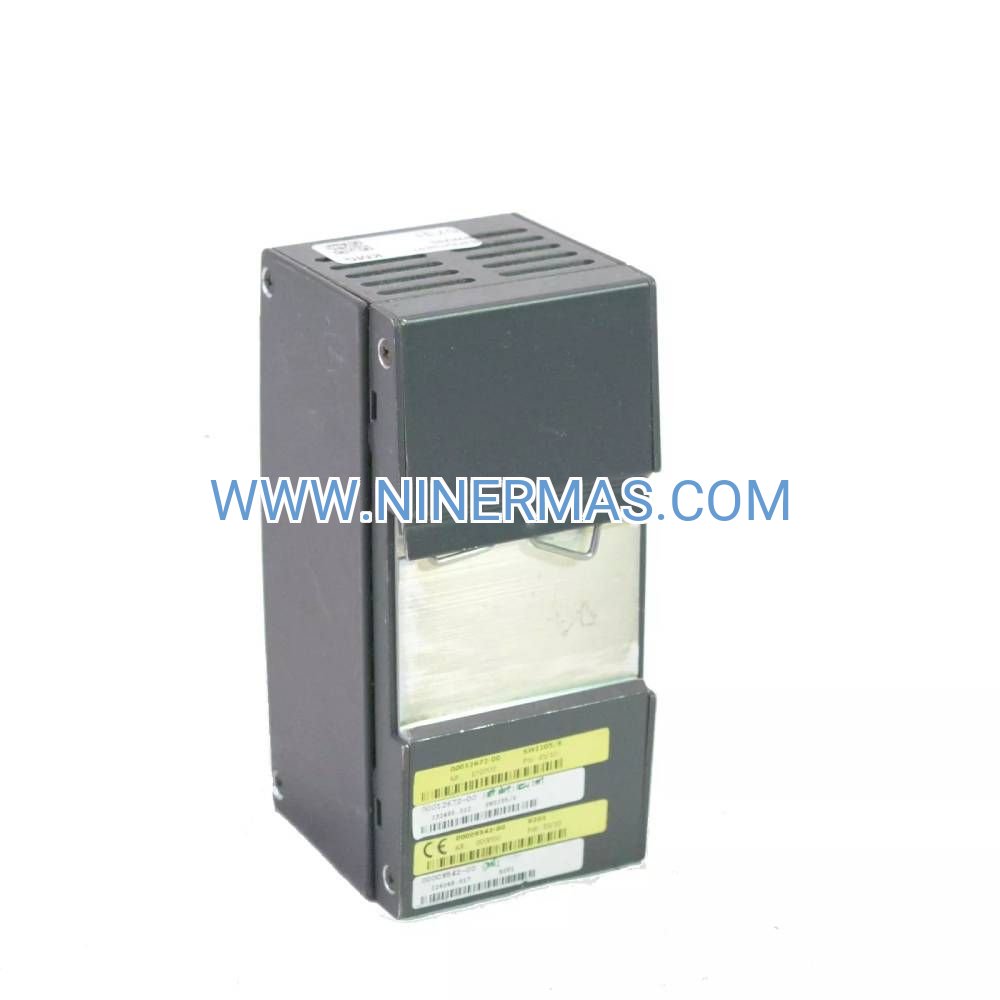
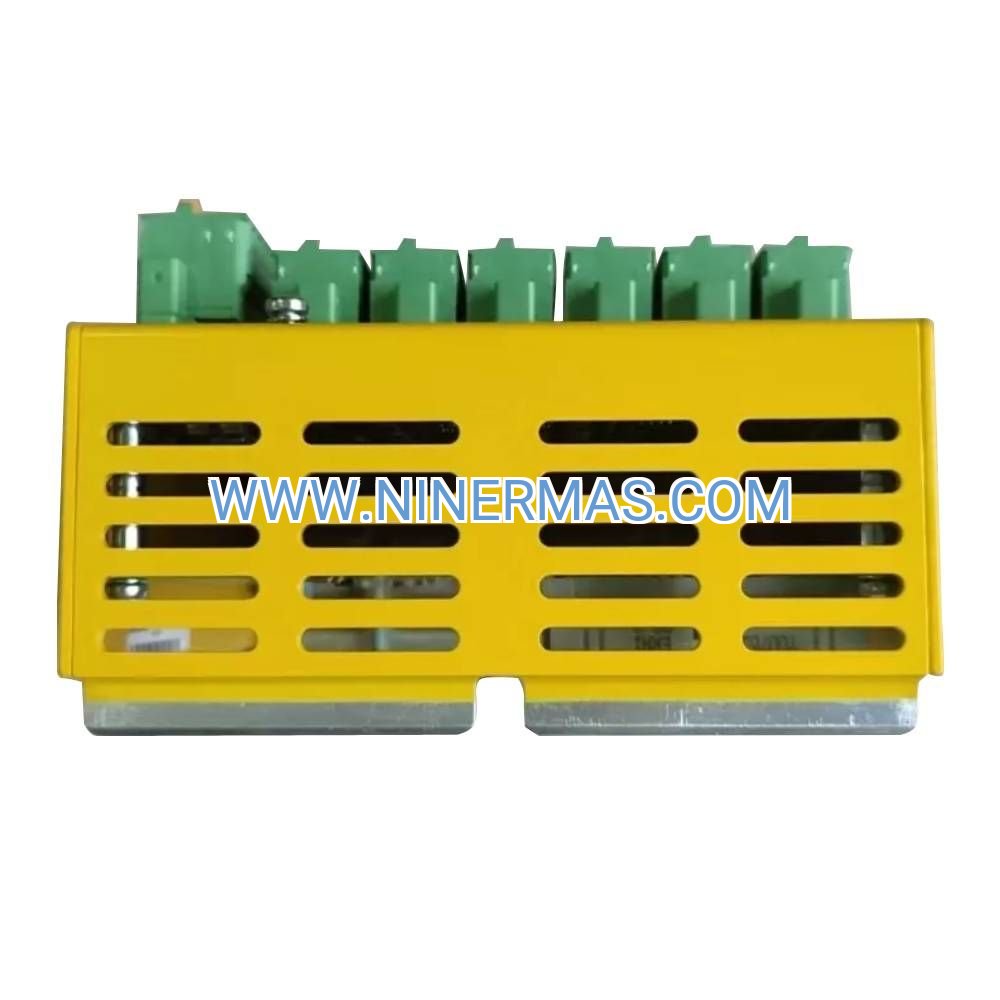
Woodward 8273-501 2301D (Industrial-Grade Multi-Generator Synchronization Controller)
The 8273-501 delivers precision load distribution and speed regulation for industrial power generation networks operating multiple engine-driven alternators in parallel configuration. Built on Woodward's proven 2301D digital platform, this controller combines adaptive PID algorithms with real-time load balancing to maintain stable power output across diesel, natural gas, and dual-fuel installations. Designed for mission-critical facilities—from offshore platforms to hospital emergency systems—where uninterrupted power delivery and fuel efficiency directly impact operational continuity and cost management.
Industrial operators face constant challenges: load imbalances that waste fuel, speed oscillations that stress mechanical components, and communication failures that compromise system reliability. The 8273-501 addresses these pain points through intelligent droop control, sub-second response times, and robust RS-485 networking that keeps up to 32 generator sets synchronized within ±5 electrical degrees. Whether you're managing a marine propulsion system, data center backup array, or cogeneration facility, this module provides the precision control foundation your operation demands.
Key differentiators include field-programmable parameters for application-specific tuning, integrated diagnostics that predict actuator failures before they occur, and environmental hardening to IP54 standards for deployment in harsh industrial environments. The result: reduced maintenance intervals, optimized fuel consumption, and the confidence that your parallel generation system will perform when grid power fails.
Performance Advantages & Technical Capabilities
→ Precision Load Distribution: Maintains ±1% load sharing accuracy across all paralleled units, eliminating the fuel waste and mechanical stress caused by unbalanced generator operation.
→ Adaptive Speed Regulation: Achieves ±0.25% isochronous speed control through self-tuning PID algorithms that automatically compensate for engine wear and fuel quality variations.
→ Multi-Engine Network Scalability: Supports up to 32 generator sets on a single RS-485 Modbus network with deterministic communication timing and automatic node addressing.
→ Universal Actuator Compatibility: Interfaces with electronic, hydraulic, and pneumatic actuators through auto-calibration routines that reduce commissioning time by 60% compared to manual setup.
→ Extreme Environment Operation: Functions reliably from -40°C to +70°C with IP54-rated enclosure protection against dust ingress and water spray in marine and offshore applications.
✓ Integrated Protection Suite: Monitors overspeed conditions, underspeed events, loss of speed signal, actuator position faults, and communication timeouts with configurable alarm thresholds and shutdown logic.
Industry Applications & Use Cases
Marine Propulsion & Auxiliary Power: Vessel operators deploy the 2301D to synchronize main and auxiliary diesel generators, ensuring smooth load transfers during maneuvering operations while meeting IMO emissions standards through optimized fuel delivery. The controller's vibration resistance and salt-fog tolerance make it ideal for engine room installations.
Offshore Oil & Gas Platforms: Remote drilling operations require absolute power reliability—the 8273-501 coordinates multiple gas turbine generators to maintain stable voltage and frequency during drilling, pumping, and accommodation loads. Its diagnostic capabilities enable predictive maintenance scheduling that reduces costly helicopter service visits.
Data Center Backup Systems: When utility power fails, the 2301D ensures seamless load acceptance across paralleled diesel generators, preventing the voltage sags and frequency deviations that can crash server infrastructure. Sub-second response times meet Tier III and Tier IV uptime requirements.
Hospital Emergency Generation: Healthcare facilities depend on the controller's isochronous mode to maintain surgical lighting stability and life-support equipment operation during extended grid outages. Automatic synchronization eliminates manual paralleling procedures during emergency conditions.
Industrial Cogeneration Plants: Combined heat and power installations use the 2301D to balance electrical load while maintaining optimal exhaust temperatures for steam production. The controller's droop scheduling maximizes overall system efficiency across varying thermal and electrical demand profiles.
Technical Specifications & Selection Criteria
| Control Architecture | Digital PID with gain scheduling and anti-windup compensation |
| Power Supply | 18-32 VDC nominal (12-40 VDC absolute range), 8W maximum consumption |
| Speed Input | Magnetic pickup, Hall effect, optical encoder (10-20,000 Hz frequency range) |
| Actuator Output | PWM 1 kHz, 0-5 VDC analog, 4-20 mA current loop (field-selectable) |
| Load Sharing Precision | ±1% of rated kW across network (±0.5% with advanced tuning) |
| Speed Regulation | ±0.25% isochronous, 2-10% droop (programmable in 0.1% increments) |
| Communication Protocol | RS-485 Modbus RTU, 9600-115200 baud, up to 32 nodes |
| Environmental Rating | -40°C to +70°C operation, IP54 ingress protection, 5-95% RH non-condensing |
| Mounting Options | 35mm DIN rail clip or four-point panel mount (cutout: 138 x 68 mm) |
| Certifications | CE, UL 508, DNV-GL marine approval, ATEX Zone 2 (optional) |
Selection Guidance: Choose the 8273-501 variant for applications requiring both load sharing and speed control in a single module. For installations with existing speed governors, consider the load-sharing-only 8273-140 model. Verify that your engine's actuator voltage and current requirements match the controller's output specifications—contact our engineering team for custom actuator interface solutions. Systems operating above 3000 RPM or below 500 RPM may require special speed sensor configurations.
Advanced Integration Features
The 2301D platform supports SCADA integration through its Modbus register map, providing real-time access to 200+ parameters including active power output, speed setpoint, actuator position, alarm status, and cumulative runtime hours. Operators can implement remote load ramping, synchronization sequencing, and emergency shutdown commands without field personnel intervention.
IoT-enabled installations can leverage the controller's data logging capabilities to track fuel consumption trends, identify underperforming units, and optimize maintenance schedules based on actual operating hours rather than calendar intervals. The module's firmware supports over-the-air updates for feature enhancements and security patches.
For complex installations requiring black-start capability, the 8273-501 coordinates with automatic transfer switches and circuit breakers to establish island mode operation, then seamlessly synchronize with returning utility power. Customization options include specialized droop curves for waste-heat recovery turbines and renewable energy hybrid systems.
Delivery Timeline & Service Commitments
Standard Lead Time: In-stock units ship within 2-3 business days via express courier with full tracking. Custom-configured modules with pre-programmed parameters require 5-7 business days for factory setup and testing.
Warranty Coverage: 12-month comprehensive warranty covering manufacturing defects, component failures, and firmware issues under normal operating conditions. Extended warranty programs available for critical infrastructure applications.
Technical Support: Access to application engineers for installation guidance, parameter optimization, and troubleshooting assistance via email, phone, and remote diagnostic sessions. Average response time: 4 hours during business hours.
Documentation Package: Each unit includes installation manual, wiring diagrams, Modbus register map, quick-start configuration guide, and calibration certificates. CAD drawings and 3D STEP files available for panel design integration.
Frequently Asked Questions
What fuel types are compatible with the 2301D load sharing controller?
The 8273-501 supports diesel, natural gas, propane, biogas, and dual-fuel engine configurations. Parameter sets can be customized for fuel-specific combustion characteristics, ensuring optimal governor response regardless of BTU content or cetane rating.
How many generator sets can operate on a single load sharing network?
The system architecture supports up to 32 paralleled units on one RS-485 bus. Larger installations can implement multiple networks with master-slave coordination. Typical response time for load redistribution after a unit trip: less than 200 milliseconds.
Does the module require external speed sensing hardware?
Yes—the controller accepts magnetic pickup sensors (most common), Hall effect probes, or optical encoders. The system auto-detects tooth count and signal polarity during initial setup. Sensor supply voltage and signal conditioning are integrated within the module.
Can I replace a failed controller without reprogramming the entire system?
Configuration parameters can be exported via Modbus and stored externally, then uploaded to replacement units in under 5 minutes. This hot-swap capability minimizes downtime during emergency service events. Network auto-discovery re-establishes communication with existing units automatically.
What installation requirements ensure optimal performance?
Mount the controller in a vibration-isolated panel location with ambient temperature below 55°C. Use shielded twisted-pair cable for speed sensor connections (maximum length: 100 meters). Maintain 300mm clearance from high-voltage switchgear to prevent EMI interference. Ground the module chassis to engine block potential.
Is remote monitoring and control capability included?
The RS-485 Modbus interface enables integration with PLCs, HMIs, and cloud-based monitoring platforms. All operational parameters—including real-time load percentage, frequency deviation, and alarm conditions—are accessible via standard Modbus function codes. Third-party SCADA systems require no proprietary software licenses.
Take the Next Step
Ready to optimize your parallel generation system? Contact our industrial power specialists to discuss your specific application requirements, receive customized parameter recommendations, and obtain project-specific pricing. For immediate technical questions, our engineering team is available via email at sale@ninermas.com or direct line +0086 187 5021 5667. Request a detailed integration guide or schedule a remote configuration consultation to ensure seamless deployment in your facility.
© 2026 NINERMAS COMPANY LIMITED. All rights reserved.
Original Source: https://ninermas.com
Contact: sale@ninermas.com | +0086 187 5021 5667

Contact Info
-
Address:22 / F, South Wo Hang building, 148 Wing Lok Street, Sheung Wan, Western District, Hong Kong
-
Phone:+8618750215667
-
Email:
