


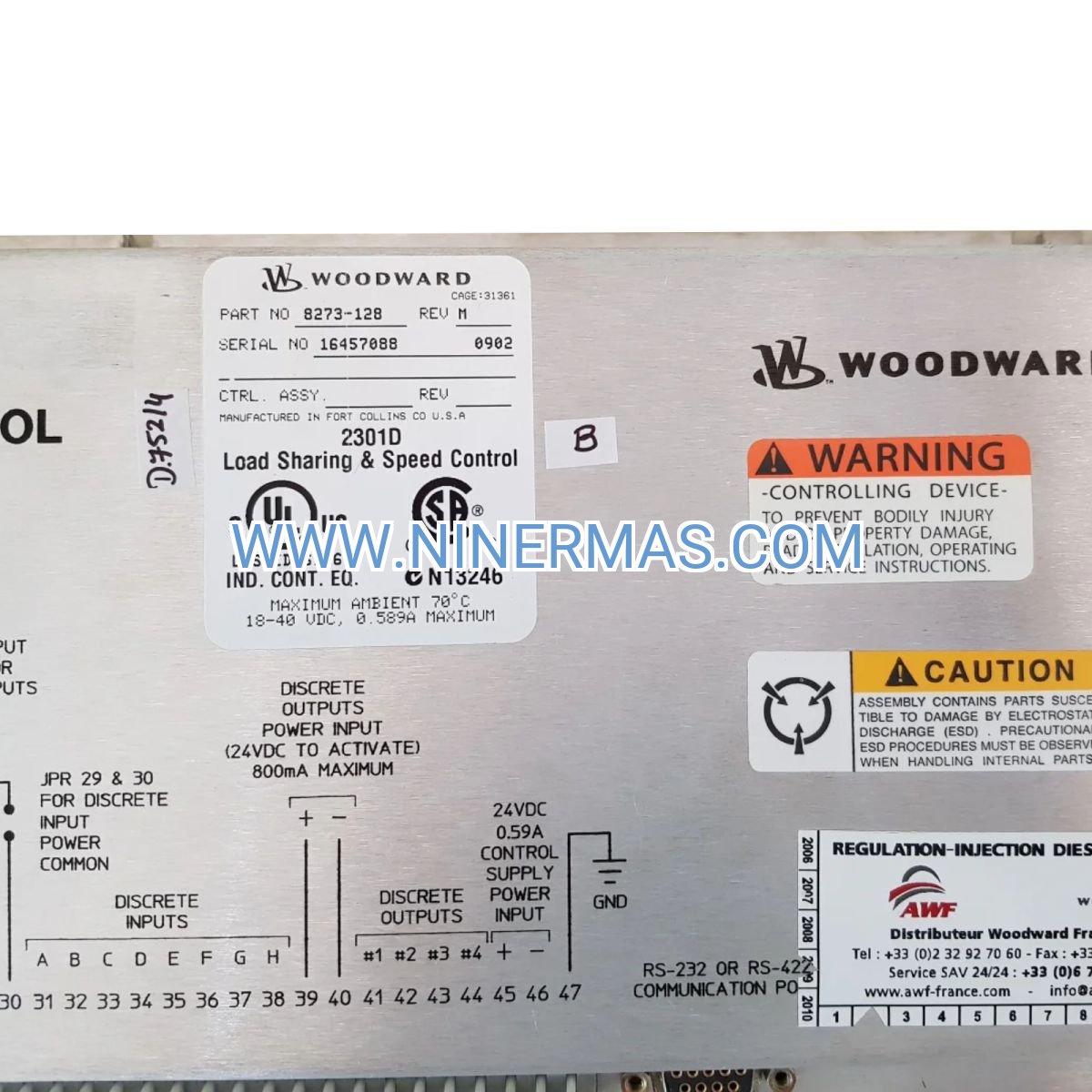
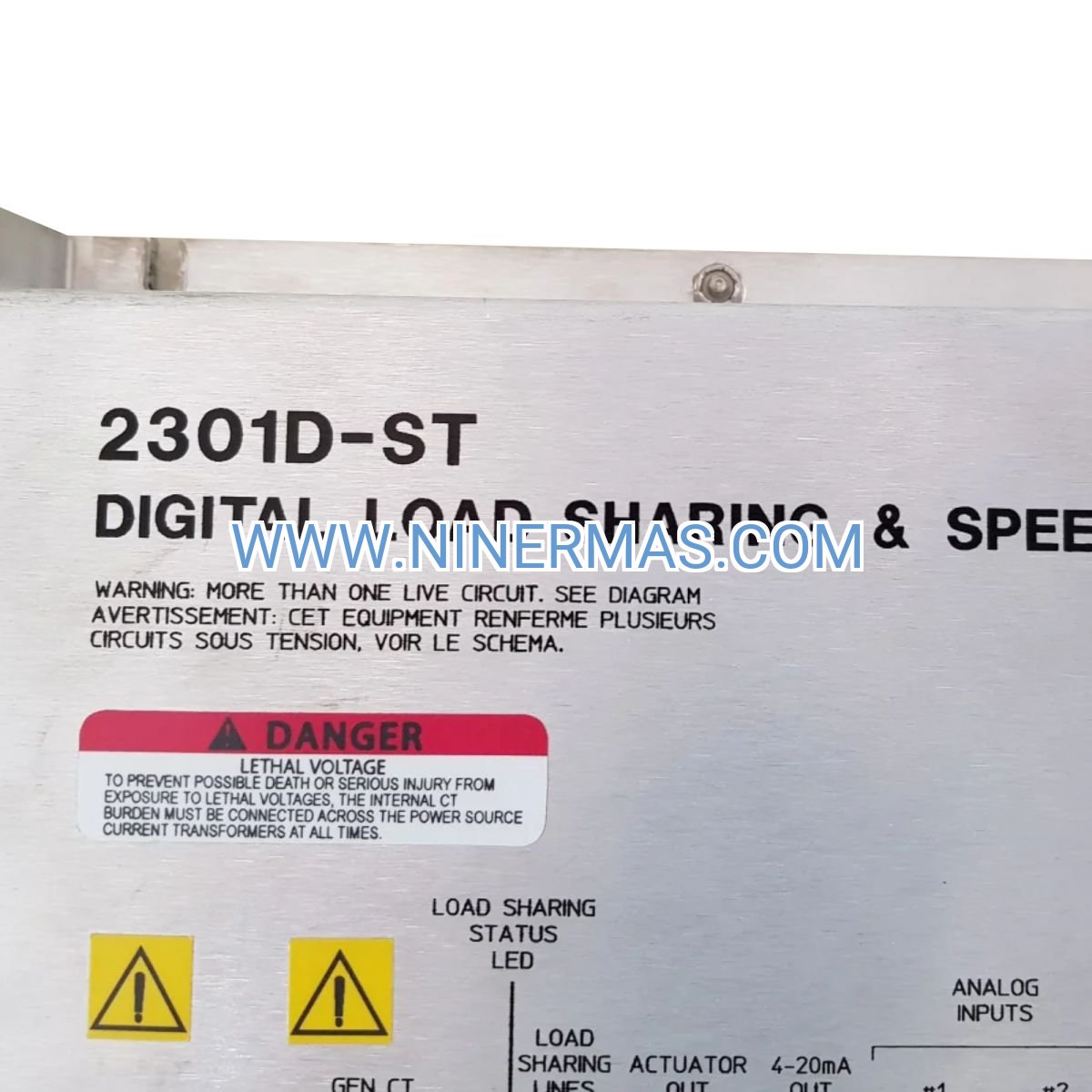


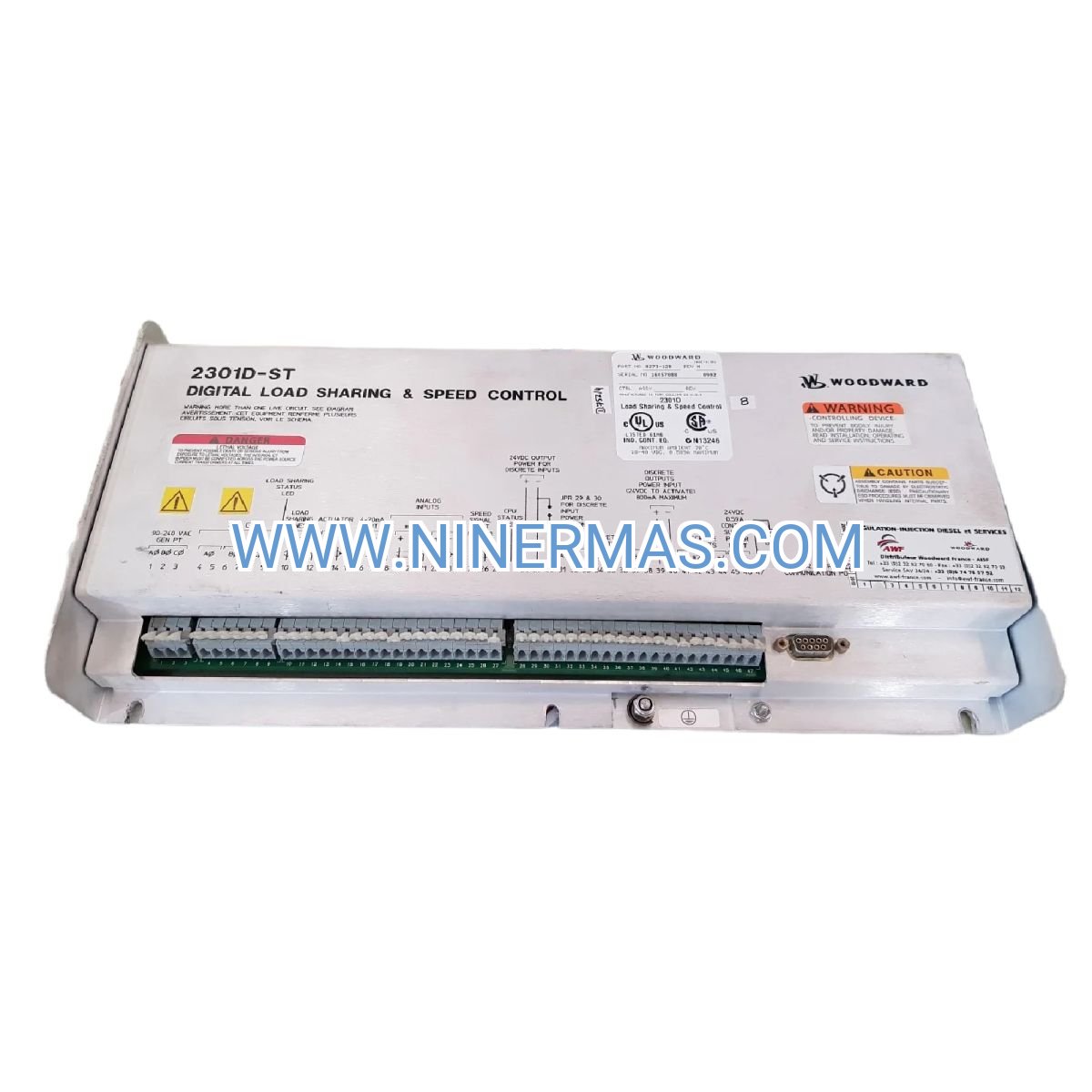
Woodward 5466-332 Analog I/O Module | 24-Input 8-Output MicroNet TMR Control System
Description
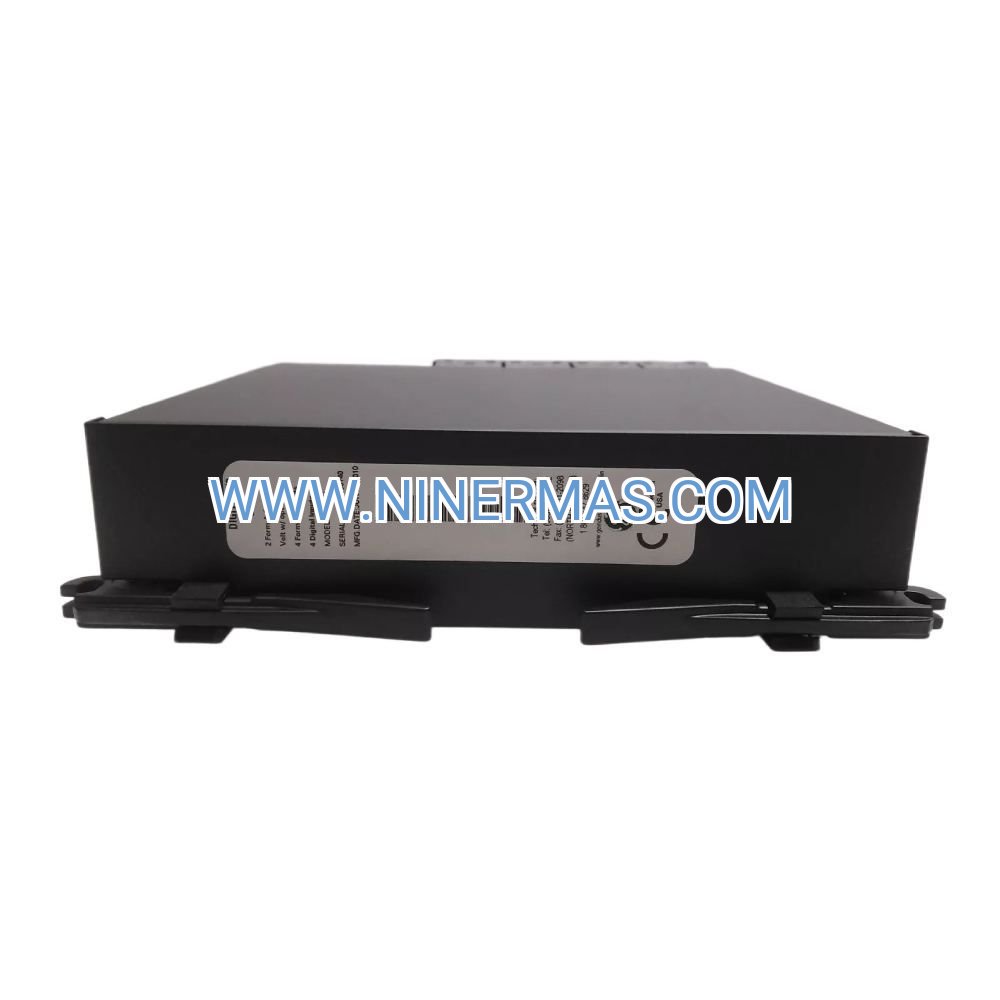
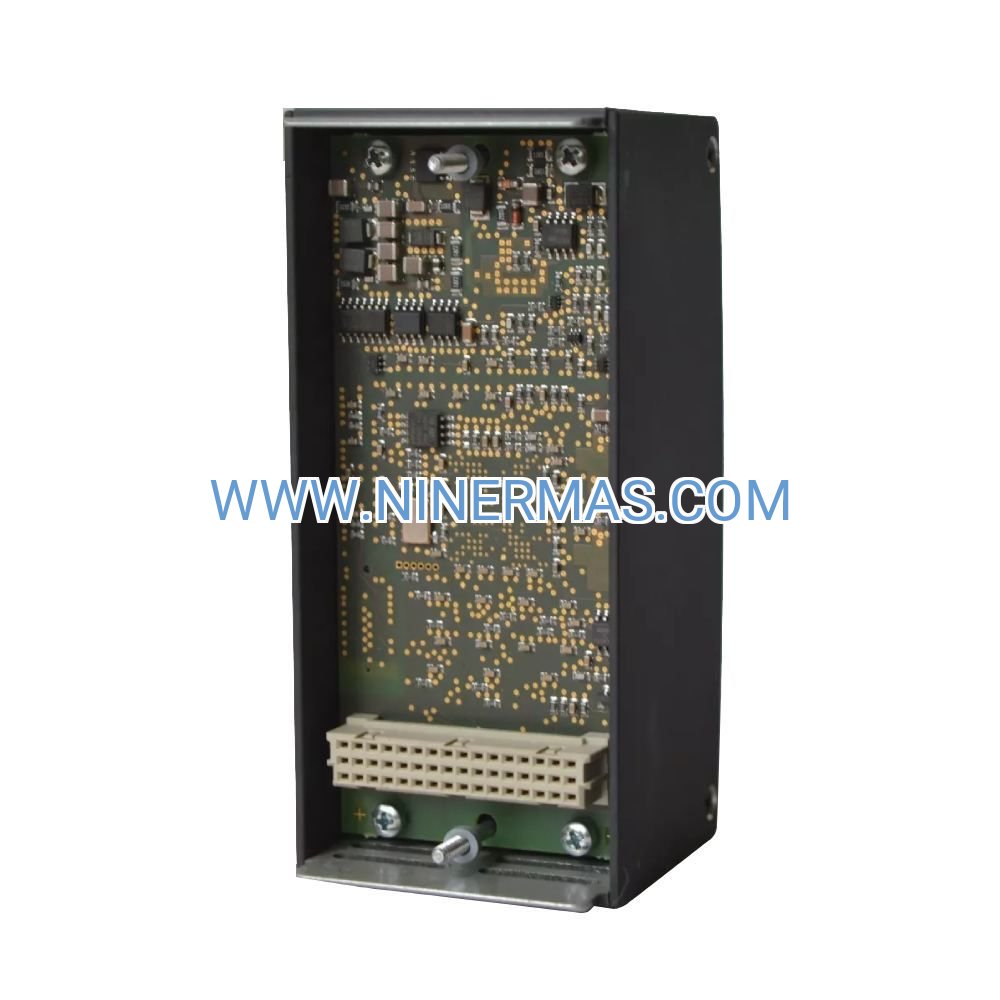
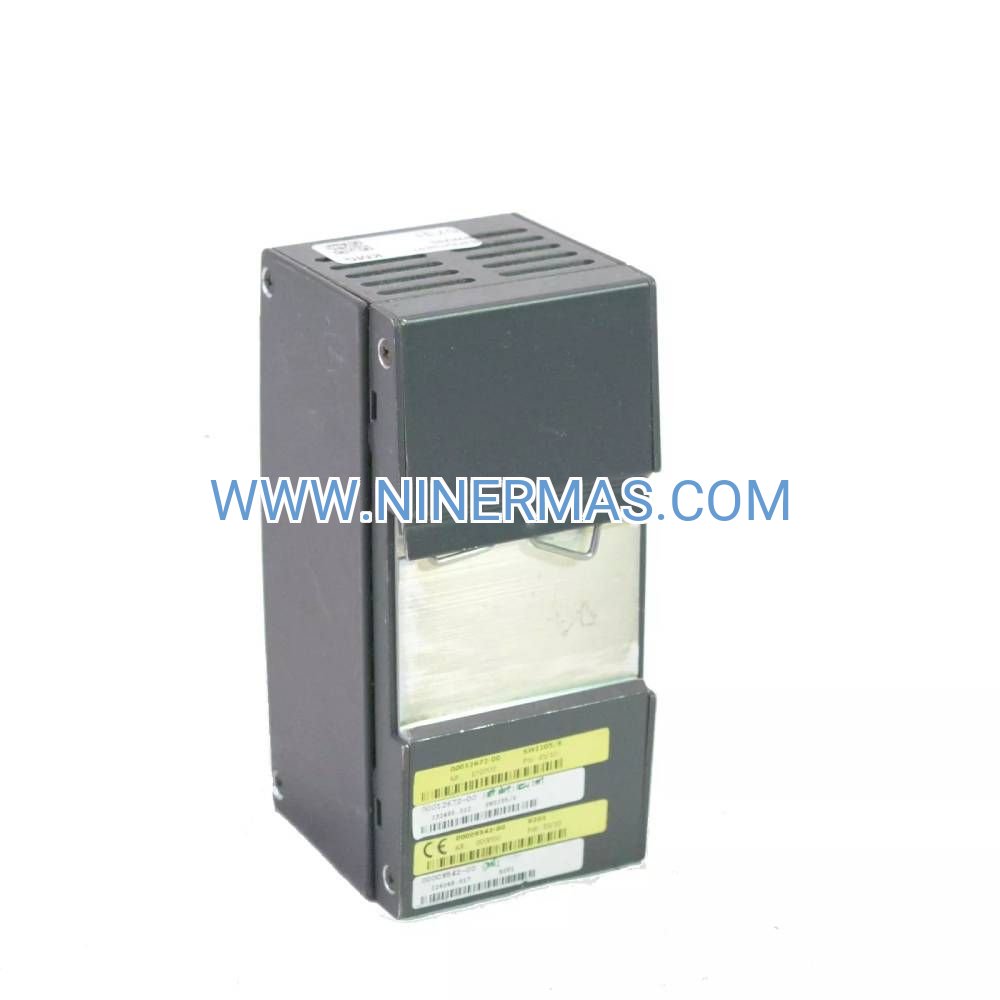
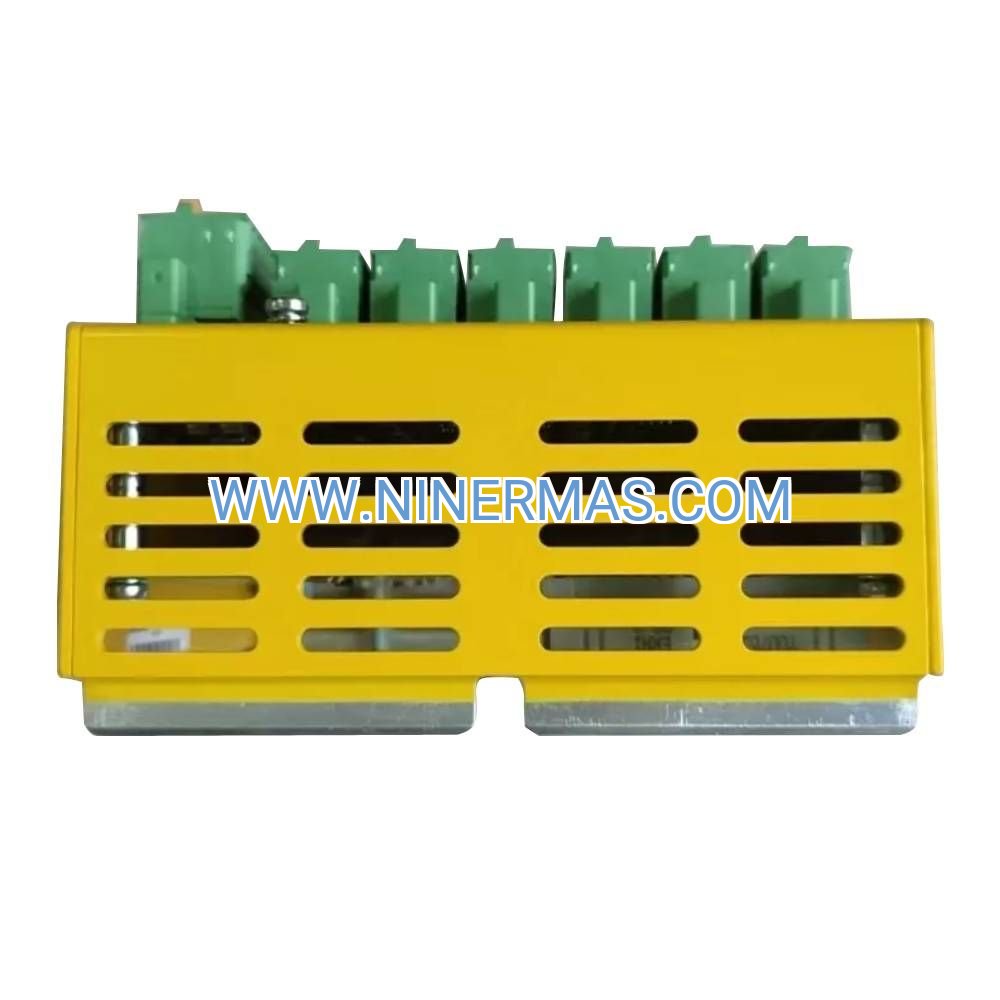
Woodward 5466-332 Analog I/O Module (Industrial-Grade MicroNet TMR Control System)
The Woodward 5466-332 is a high-density analog input/output module engineered for mission-critical MicroNet TMR (Triple Modular Redundant) control systems. Through advanced 16-bit resolution signal processing and triple-redundant architecture, it delivers precise analog signal acquisition and output control for turbine control, power generation, and industrial automation applications where continuous operation and safety integrity are paramount.
Designed for demanding environments including gas turbine control, steam turbine systems, hydroelectric power plants, and critical process control installations, this module addresses challenges such as signal accuracy degradation, system downtime during maintenance, single-point failures, and the need for SIL 3-rated safety compliance in high-consequence applications.
With standardized MicroNet TMR compatibility and field-proven reliability, the 5466-332 offers hot-swappable operation, comprehensive diagnostic capabilities, and seamless integration advantages. Ideal for control system integrators, power plant engineers, OEM turbine manufacturers, and facility maintenance teams requiring certified safety-rated I/O solutions. Contact our application engineers for system configuration assistance and technical specifications.
Core Functions & Advantages
- High-Density Analog I/O Capacity
Provides 24 analog input channels and 8 analog output channels in a single compact module, reducing cabinet space requirements while maintaining signal isolation and minimizing wiring complexity for multi-point measurement systems. - Triple Modular Redundancy (TMR) Architecture
Integrated TMR design with voting logic ensures continuous operation even during single-channel failures, achieving 99.99%+ availability for critical control loops in power generation and turbine protection systems. - Precision 16-Bit Signal Resolution
Delivers ±0.1% accuracy across 4-20mA, 0-10V, and thermocouple input ranges, enabling precise process variable monitoring for temperature, pressure, flow, and vibration measurements in industrial control applications. - Hot-Swappable Field Replacement
Supports online module replacement without system shutdown or process interruption, reducing mean time to repair (MTTR) by up to 75% and eliminating costly planned outages for maintenance activities. - SIL 3 Safety Certification
Certified to IEC 61508 SIL 3 standards with proven failure rates below 10⁻⁹ per hour, meeting stringent safety requirements for emergency shutdown systems, turbine overspeed protection, and critical process interlocks. - Comprehensive Diagnostic & Monitoring
Built-in self-diagnostics with channel-level fault detection, open-circuit detection, signal range alarms, and module health status reporting through MicroNet system interface, enabling predictive maintenance strategies. - Industrial Environmental Hardening
Operates reliably in -40°C to +70°C ambient temperatures with conformal coating protection against humidity, vibration resistance to 5g, and EMI/RFI immunity compliant with industrial electromagnetic compatibility standards.
Typical Application Scenarios
This module is engineered for applications demanding high signal integrity, continuous availability, and certified safety performance, particularly in:
- Gas & Steam Turbine Control Systems
Monitors critical parameters including bearing temperatures, vibration levels, fuel valve positions, and exhaust temperatures while controlling actuator positioning and fuel metering in combined-cycle power plants and cogeneration facilities. - Hydroelectric Power Generation
Processes governor control signals, wicket gate position feedback, generator excitation control, and penstock pressure monitoring in run-of-river and pumped-storage hydroelectric installations requiring SIL-rated protection systems. - Industrial Process Control & Safety Systems
Integrates with distributed control systems (DCS) for refinery process units, chemical reactor control, compressor anti-surge systems, and emergency shutdown (ESD) logic in oil & gas, petrochemical, and pharmaceutical manufacturing. - Marine & Offshore Power Systems
Provides redundant control for ship propulsion turbines, offshore platform power generation, FPSO (Floating Production Storage Offloading) systems, and dynamic positioning control where failure consequences are severe. - Critical Infrastructure & Utilities
Supports municipal power generation, district heating control, wastewater treatment SCADA systems, and grid-connected renewable energy installations requiring certified functional safety compliance.
Technical Parameters & Selection Guide
To facilitate engineering design and system integration, we provide detailed specifications for the Woodward 5466-332 module. Custom configurations and extended temperature variants are available for specialized applications.
| Parameter | Specification |
|---|---|
| Analog Input Channels | 24 differential inputs, individually configurable |
| Analog Output Channels | 8 isolated outputs, 4-20mA or 0-10V |
| Input Signal Types | 4-20mA, 0-10V, ±10V, thermocouples (J/K/T/E), RTD (Pt100/Pt1000) |
| Resolution | 16-bit (0.0015% of full scale) |
| Accuracy | ±0.1% of reading ±0.05% of range |
| Update Rate | 100ms per channel (configurable 50-500ms) |
| Isolation | 1500V channel-to-bus, 500V channel-to-channel |
| Power Supply | 24VDC ±20%, redundant inputs, 15W typical consumption |
| Operating Temperature | -40°C to +70°C (-40°F to +158°F) |
| Storage Temperature | -55°C to +85°C |
| Humidity | 5% to 95% RH non-condensing, conformal coated |
| Vibration Resistance | 5g, 10-500Hz per IEC 60068-2-6 |
| Safety Certification | SIL 3 per IEC 61508, TÜV certified |
| Communication Interface | MicroNet TMR backplane, Modbus RTU/TCP optional |
| Enclosure Rating | IP20 (for panel mounting), IP65 available |
| Dimensions (H×W×D) | 220mm × 45mm × 180mm (8.66" × 1.77" × 7.09") |
| Weight | 2.3 kg (5.07 lbs) |
| MTBF | >150,000 hours per MIL-HDBK-217F |
Selection Recommendations
When specifying the 5466-332 module, consider the following system parameters: total analog point count and signal types required, TMR system architecture (simplex/dual/triple redundancy level), environmental conditions including temperature extremes and vibration exposure, safety integrity level (SIL) requirements per application risk assessment, communication protocol compatibility with existing DCS/SCADA infrastructure, and available panel space for module installation.
For optimal system design, provide our engineering team with: process I/O list with signal types and ranges, control system architecture diagram, environmental classification (hazardous area rating if applicable), safety requirement specifications (SIL level, failure rate targets), and integration timeline. Our application engineers will recommend the appropriate module quantity, configuration settings, and complementary components.
Extended Capabilities
- Flexible Signal Conditioning: Software-configurable input ranges, linearization tables for non-standard sensors, and custom scaling without hardware changes
- Redundancy Options: Supports dual and triple redundant configurations with automatic failover and bumpless transfer for critical control loops
- Remote Monitoring: Integration with Woodward ToolKit software for real-time diagnostics, trending, and configuration management via Ethernet or serial connections
- Cybersecurity Features: Secure boot, encrypted configuration files, and role-based access control compliant with IEC 62443 industrial cybersecurity standards
- Calibration & Maintenance: Field-calibratable without special equipment, with calibration certificates traceable to national standards and 24-month recalibration intervals
Delivery, Service & Quality Assurance
Lead Time: Standard catalog units ship within 3-5 business days from stock; custom-configured modules with specialized firmware or extended testing require 2-3 weeks. Expedited processing available for emergency replacements.
Warranty Coverage: 24-month manufacturer warranty covering defects in materials and workmanship, with optional extended service agreements including advance replacement and on-site support available for critical installations.
Technical Support: Comprehensive support including pre-sales application engineering consultation, commissioning assistance (remote guidance or on-site service depending on location), and lifetime technical support via phone, email, and web portal access to knowledge base resources.
Documentation Package: Each module ships with complete technical documentation including installation manual, wiring diagrams with terminal assignments, configuration guide for ToolKit software, dimensional drawings for panel cutout planning, and certificate of conformity with test data. CAD files and 3D models available upon request.
Quality Certifications: Manufactured under ISO 9001:2015 quality management system, with SIL 3 certification per IEC 61508, CE marking for European compliance, UL/cUL listing for North American installations, and ATEX/IECEx certification available for hazardous location variants.
Frequently Asked Questions (FAQ)
Q: How does the Woodward 5466-332 analog I/O module integrate with existing MicroNet TMR control systems?
A: The 5466-332 connects directly to the MicroNet TMR backplane via a keyed connector interface, with automatic configuration recognition by the system controller. Integration requires ToolKit software version 8.5 or later for configuration, and the module is backward-compatible with MicroNet systems installed since 2010. Wiring terminates at removable screw-terminal blocks that remain in place during hot-swap operations, preserving field connections.
Q: What is the maximum number of 5466-332 modules supported in a single MicroNet chassis?
A: A standard MicroNet TMR chassis accommodates up to 12 I/O modules depending on chassis model and power budget. Each 5466-332 consumes approximately 15W, so power supply capacity should be verified during system design. For applications requiring more than 288 analog inputs (12 modules × 24 channels), multiple chassis can be networked via redundant Ethernet or serial communication links.
Q: What level of energy efficiency or operational cost savings can be achieved with this analog I/O module?
A: While the module itself is not an energy-saving device, its high-accuracy signal processing enables optimized control strategies that can reduce energy consumption in turbine and process control applications by 3-8% through improved setpoint control, reduced process variability, and elimination of conservative safety margins. The hot-swap capability also eliminates costs associated with planned shutdowns, which can exceed $50,000-$500,000 per event in power generation facilities.
Q: What are the installation environment requirements and protection rating for the 5466-332 module?
A: The standard module is rated IP20 for installation in climate-controlled control rooms or NEMA-rated enclosures, operating in -40°C to +70°C ambient temperature with 5-95% non-condensing humidity. For harsh environments, IP65-rated variants with sealed connectors are available. The module requires panel mounting in a vertical orientation with minimum 50mm clearance above and below for convection cooling; forced air cooling is not required under normal conditions.
Q: Does the 5466-332 support remote monitoring, data acquisition, and integration with SCADA systems?
A: Yes, the module integrates with Woodward ToolKit software for local and remote configuration, diagnostics, and real-time data trending via Ethernet TCP/IP connection to the MicroNet controller. The system supports standard industrial protocols including Modbus RTU/TCP, OPC UA, and DNP3 for SCADA integration. All analog channel data, diagnostic status, and alarm conditions are accessible through these interfaces with configurable update rates from 100ms to 10 seconds.
Q: What is the typical failure rate and how does SIL 3 certification affect system reliability?
A: The 5466-332 achieves a proven-in-use failure rate of <1×10⁻⁹ dangerous failures per hour, meeting SIL 3 requirements per IEC 61508. In TMR configuration with voting logic, the probability of failure on demand (PFD) is reduced to <1×10⁻⁴, enabling safety function availability exceeding 99.99%. The module's MTBF exceeds 150,000 hours (>17 years) under normal operating conditions, with diagnostic coverage >95% for automatic fault detection.
Request Technical Support & Quotation
To receive detailed system configuration recommendations, pricing quotations, or application engineering support, please provide the following project information: project name and application description, specific use case (turbine control, process automation, safety system), required I/O count with signal types and ranges, number of modules and redundancy level (simplex/dual/TMR), power supply specifications and environmental conditions, integration requirements (existing system model, communication protocols), and project timeline including commissioning date.
Our application engineers will respond within 24 hours with tailored recommendations, configuration guidance, and comprehensive quotations including modules, accessories, and support services.
© 2026 NINERMAS COMPANY LIMITED. All rights reserved.
Original Source: https://ninermas.com
Contact: sale@ninermas.com | +0086 187 5021 5667

Contact Info
-
Address:22 / F, South Wo Hang building, 148 Wing Lok Street, Sheung Wan, Western District, Hong Kong
-
Phone:+8618750215667
-
Email:
