Description
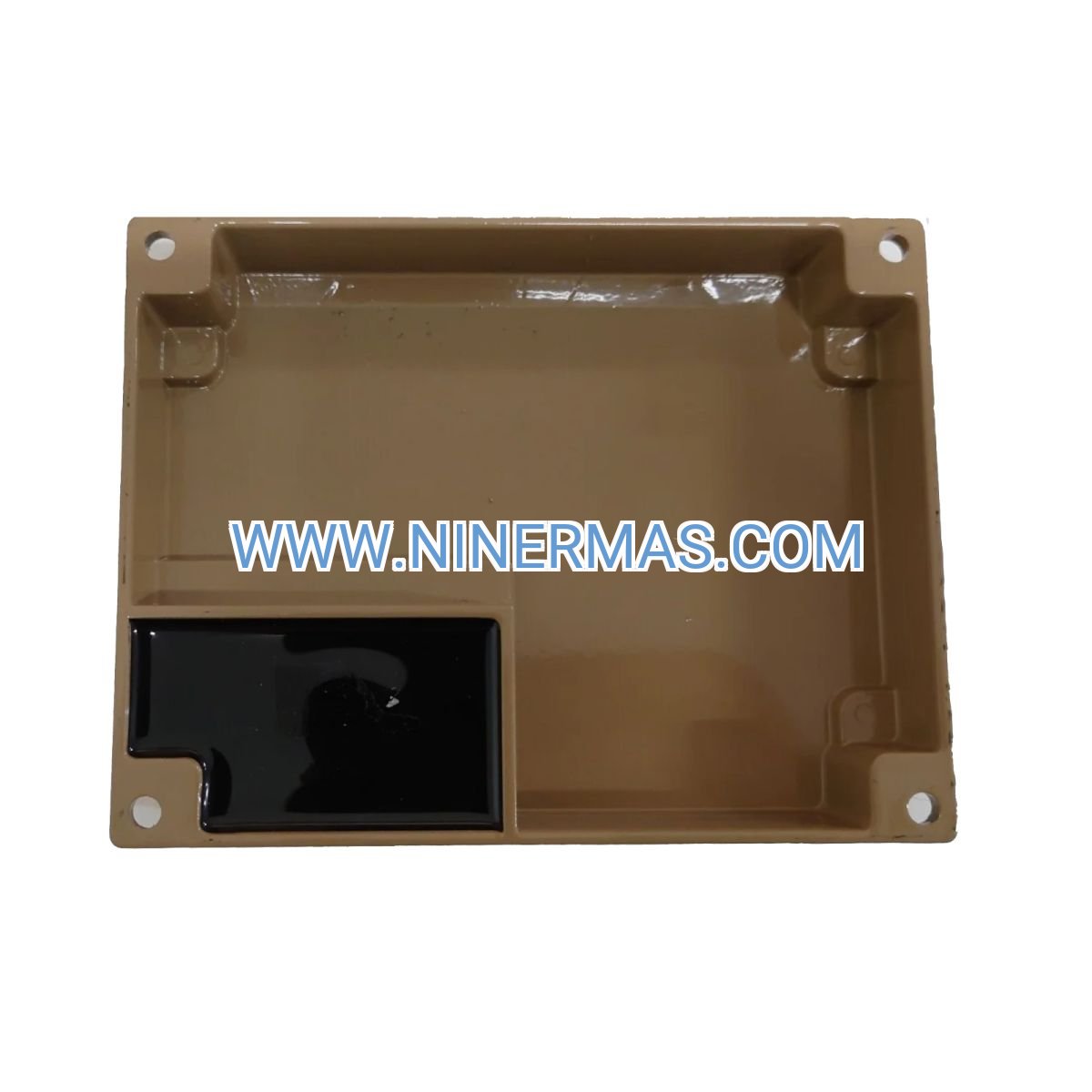
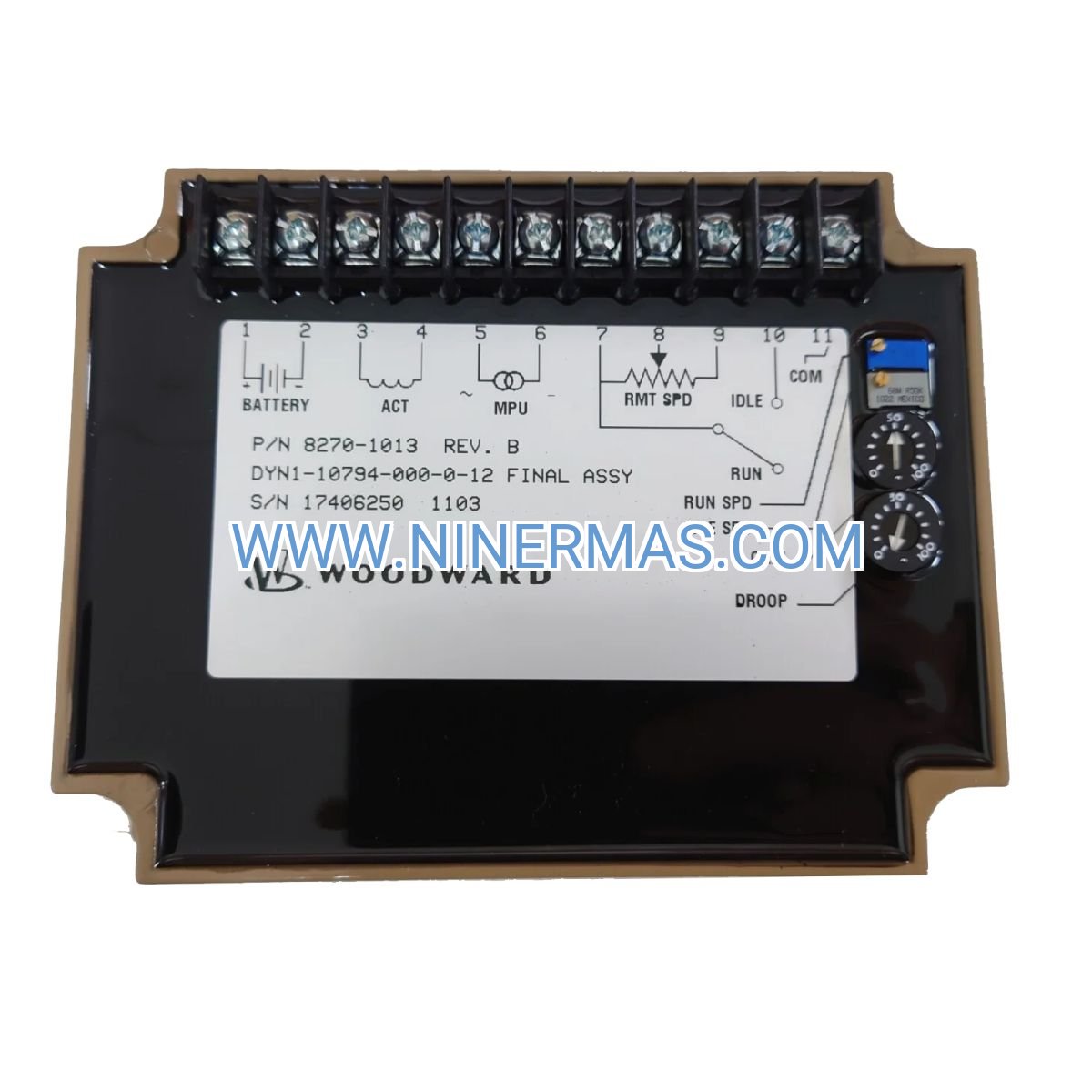
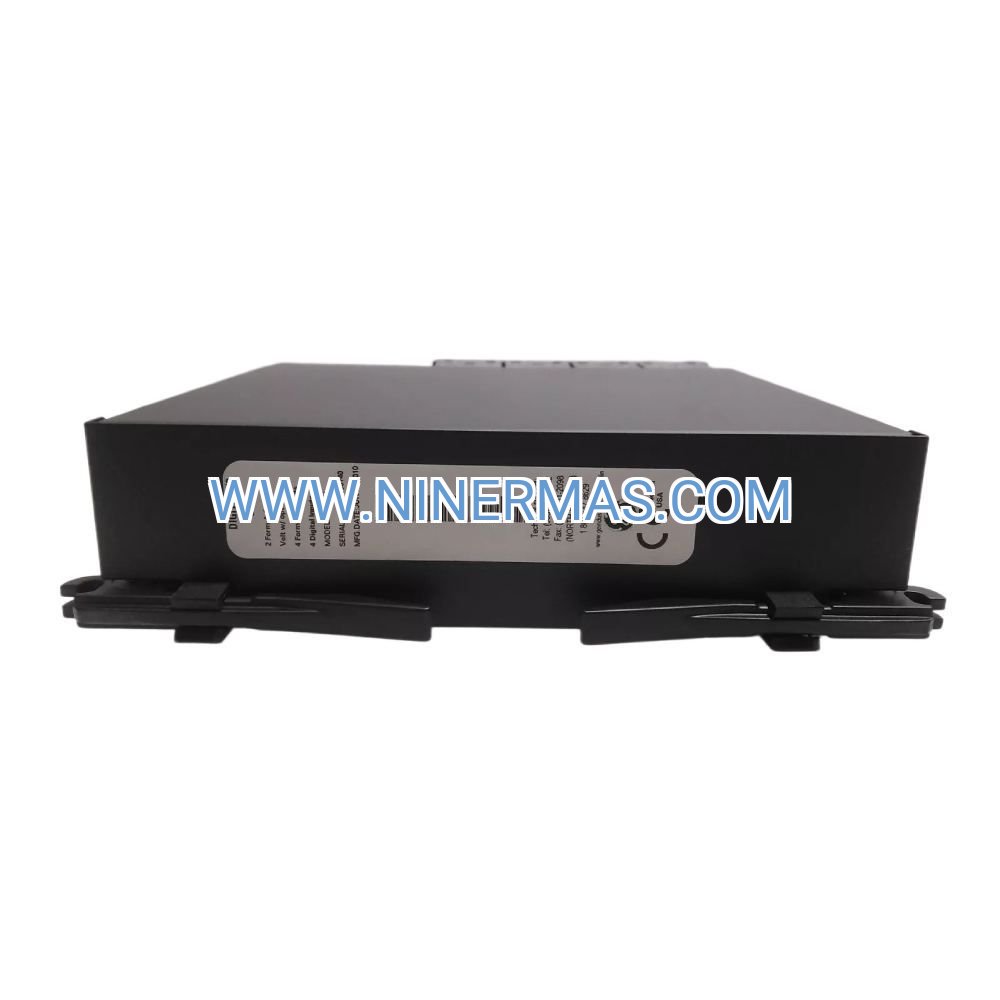
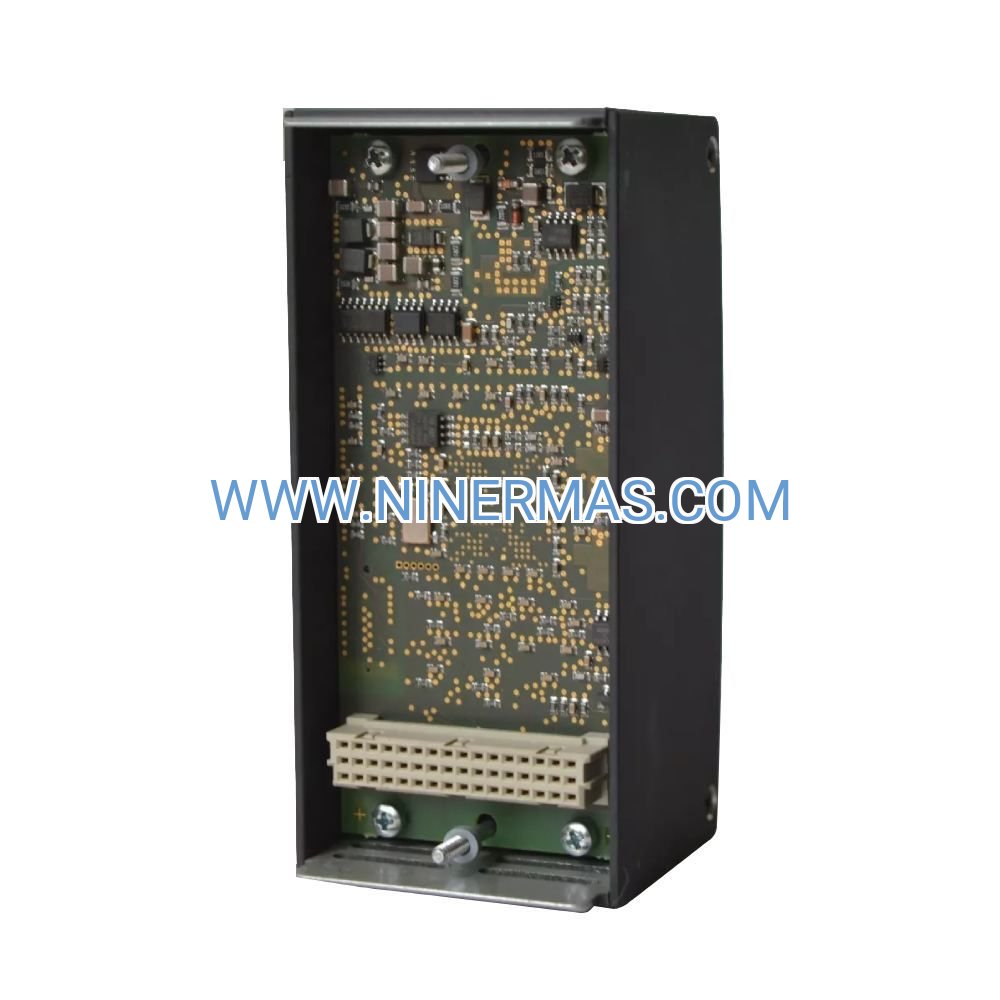
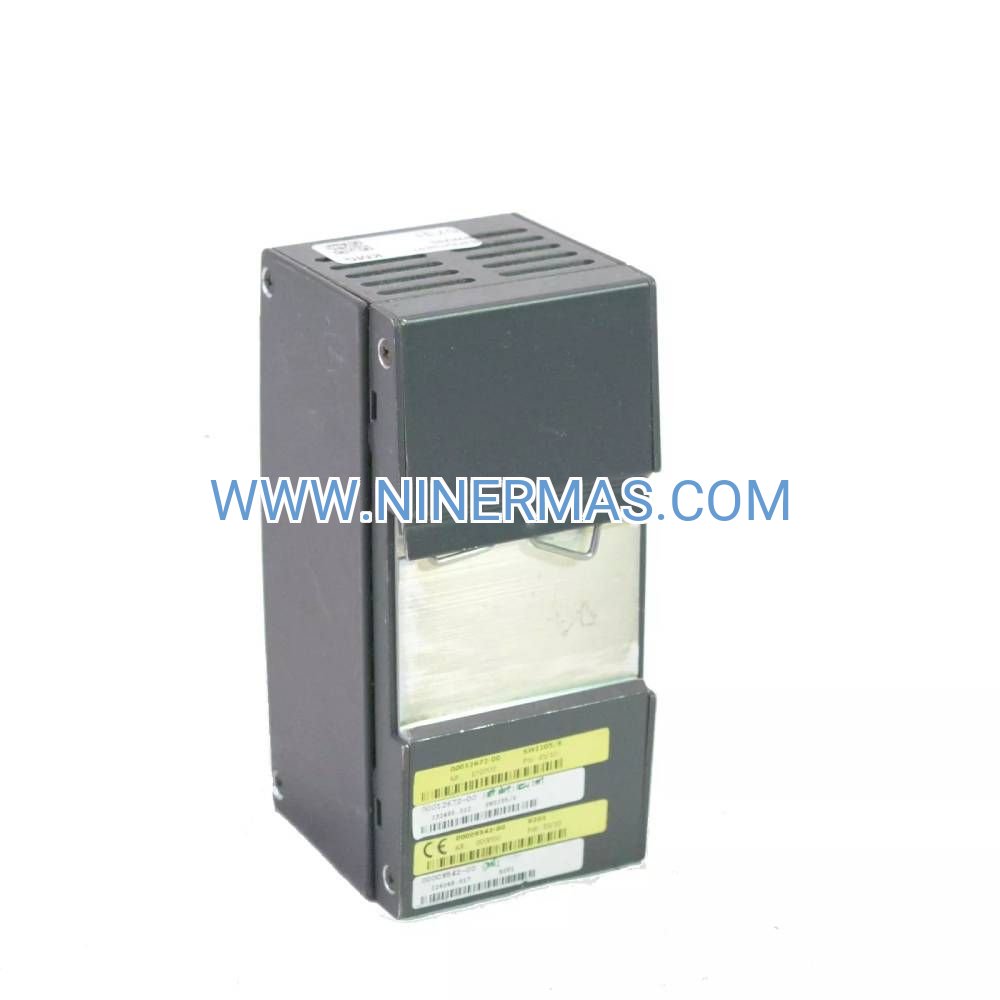
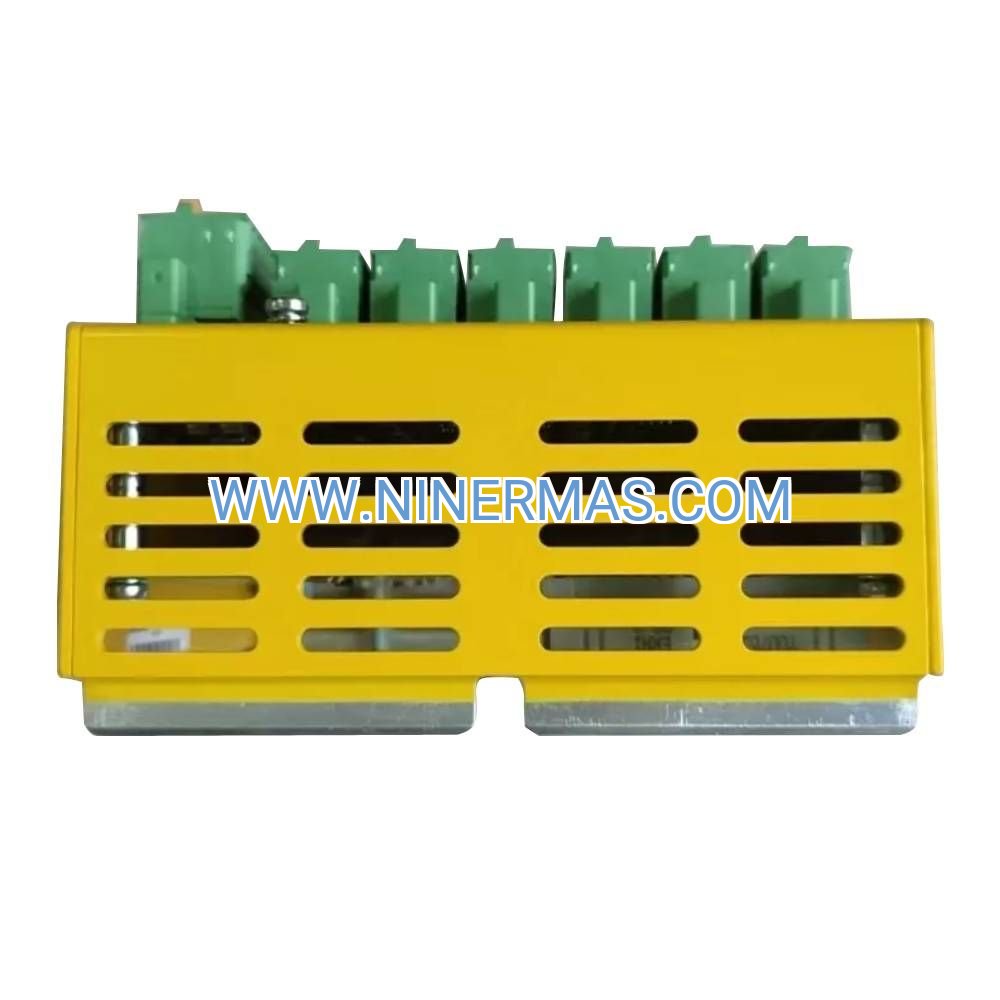
Woodward 8270-1013 Digital Governor (Industrial-Grade Speed Regulation)
The Woodward 8270-1013 represents a proven solution in the 723PLUS digital governor family, engineered to deliver precise rotational speed control for diesel engines, gas turbines, and mechanical drive systems. Built on advanced PID algorithms with real-time digital processing, this controller maintains isochronous accuracy within ±0.25% across variable load conditions—critical for power generation stability, marine propulsion reliability, and industrial process consistency.
Designed for harsh industrial environments, the 8270-1013 operates reliably from -40°C to +70°C while supporting both standalone and networked configurations through Modbus RTU and CANopen protocols. Whether managing a single genset or coordinating load sharing across parallel units, this governor adapts to your operational requirements with programmable control modes and flexible actuator compatibility.
From backup power installations requiring seamless grid synchronization to marine vessels demanding dynamic positioning precision, the 723PLUS platform provides the control foundation that keeps critical systems running. With comprehensive diagnostics, remote parameter access, and proven field reliability, this digital governor reduces downtime while optimizing fuel efficiency and emissions compliance.
Core Capabilities & Technical Advantages
→ Precision Speed Regulation: Maintains ±0.25% isochronous accuracy with sub-50ms processing cycles, ensuring stable frequency control for grid-tied generators and consistent shaft speed for mechanical drives.
→ Adaptive Load Management: Automatic gain scheduling adjusts control response to varying load conditions, preventing overshoot during transients while maintaining tight regulation during steady-state operation.
→ Multi-Engine Coordination: Built-in droop compensation and load-sharing inputs enable parallel operation of multiple prime movers with automatic load distribution—essential for scalable power systems.
→ Industrial Communication: Native Modbus RTU and CANopen support integrates with SCADA platforms, PLCs, and plant automation networks for centralized monitoring and remote parameter adjustment.
→ Environmental Resilience: Wide operating temperature range (-40°C to +70°C) and robust enclosure design withstand vibration, humidity, and electrical noise common in engine rooms and industrial facilities.
→ Flexible Installation: Panel-mount or DIN-rail options with standard 18-32 VDC power input simplify integration into existing control cabinets and retrofit applications.
Industry Applications & Problem-Solving
✓ Utility & Backup Power Generation
Challenge: Grid synchronization failures and load imbalance in multi-genset installations cause frequency instability and equipment stress.
Solution: The 8270-1013 provides isochronous/droop mode switching with automatic synchronization logic, enabling seamless paralleling and proportional load sharing across 2-16 generator sets.
✓ Marine Propulsion & Auxiliary Systems
Challenge: Variable sea conditions and rapid throttle changes demand responsive speed control without hunting or overshoot.
Solution: Adaptive PID tuning responds to propeller load variations while maintaining stable RPM during maneuvering, dynamic positioning, and fuel-efficient cruise operations.
✓ Oil & Gas Compression
Challenge: Compressor surge and process upsets occur when driver speed deviates from setpoint during pressure fluctuations.
Solution: Tight speed regulation (±0.25%) keeps compression ratios stable, preventing surge conditions and maintaining process efficiency across varying inlet/discharge pressures.
✓ Water Treatment & Pumping
Challenge: Flow rate inconsistencies from engine speed drift reduce treatment effectiveness and increase energy consumption.
Solution: Constant-speed operation ensures predictable pump performance curves, optimizing chemical dosing accuracy and hydraulic efficiency in municipal and industrial water systems.
✓ Manufacturing Process Drives
Challenge: Product quality defects result from variable shaft speeds in extruders, mixers, and conveyor systems.
Solution: Digital speed control eliminates mechanical governor drift, delivering repeatable rotational speeds critical for dimensional tolerances and batch consistency.
Technical Specifications & Selection Criteria
| Parameter | Specification |
|---|---|
| Model Designation | 8270-1013 |
| Control Platform | 723PLUS Digital Governor Series |
| Control Algorithm | Digital PID with Adaptive Gain Scheduling |
| Speed Range | 300-3600 RPM (field-configurable) |
| Regulation Accuracy | ±0.25% isochronous mode |
| Processing Cycle | <50 milliseconds |
| Input Power | 18-32 VDC (24 VDC nominal) |
| Operating Temperature | -40°C to +70°C |
| Communication Protocols | Modbus RTU, CANopen |
| Control Modes | Isochronous, Droop, Load Sharing |
| Mounting Options | Panel Mount, DIN Rail |
| Enclosure Rating | IP20 (panel-mounted configuration) |
Selection Guidelines: Choose the 8270-1013 when your application requires digital precision beyond mechanical governor capabilities, particularly for grid-parallel gensets, variable-load industrial drives, or marine installations demanding Modbus/CANopen integration. Verify actuator compatibility (electric EPG series, hydraulic, or proportional solenoid) based on fuel system requirements. For applications requiring redundant control or advanced sequencing logic, consider pairing with Woodward master control modules.
Advanced Integration & Connectivity
The 723PLUS architecture extends beyond basic speed control through comprehensive digital interfaces. Modbus RTU connectivity enables real-time data exchange with building management systems, energy management platforms, and remote monitoring services—providing visibility into governor setpoints, actual speed, load percentage, and diagnostic fault codes.
CANopen support facilitates integration with modern engine ECUs and distributed control networks, allowing coordinated control strategies across multiple subsystems. Programmable digital I/O handles start/stop sequencing, alarm outputs, and mode selection, while analog inputs accommodate external load-sharing signals and remote speed adjustment.
Event logging captures operational anomalies, parameter changes, and fault conditions with timestamps, supporting predictive maintenance programs and regulatory compliance documentation. Configuration via Woodward software tools allows field engineers to optimize PID gains, set speed limits, and customize control responses without hardware modifications.
Delivery, Warranty & Technical Support
Standard Lead Time: 3-5 business days for in-stock units; custom-configured governors ship within 10-15 business days.
Warranty Coverage: 12-month comprehensive warranty covering manufacturing defects and component failures under normal operating conditions. Extended warranty options available for critical infrastructure applications.
Technical Assistance: Application engineering support includes actuator selection guidance, PID tuning recommendations, and integration troubleshooting. Remote commissioning assistance available via video consultation.
Documentation Package: Each unit ships with installation manual, wiring diagrams, configuration software, and quick-start guide. CAD models and communication protocol specifications available for download.
Common Questions & Technical Clarifications
Q: What fuel types are compatible with the 8270-1013 digital governor?
A: The governor controls engine speed regardless of fuel type—diesel, natural gas, propane, biogas, or dual-fuel configurations work equally well when paired with appropriate fuel actuators and engine-specific parameter tuning.
Q: Can this governor retrofit older mechanical governor systems?
A: Yes, the 8270-1013 commonly replaces mechanical governors in modernization projects. Verify that existing actuators accept electronic control signals or plan for actuator replacement as part of the upgrade.
Q: How many engines can operate in parallel with load sharing?
A: The 723PLUS platform supports load sharing across 2-16 parallel units using droop compensation or dedicated load-sharing lines, depending on system architecture and communication topology.
Q: Does the governor require specialized programming tools?
A: Initial configuration uses Woodward's software suite (Windows-based), typically performed during commissioning. Once configured, routine operation requires no software access—all adjustments available via front panel or remote interface.
Q: What actuator response time is required for stable control?
A: Actuator bandwidth should exceed 2 Hz for optimal performance. Electric actuators (EPG series) typically provide 5-10 Hz response; hydraulic actuators vary by design but generally meet requirements when properly sized.
Q: Is the unit suitable for mobile equipment applications?
A: While designed primarily for stationary installations, the 8270-1013 handles vibration and temperature extremes common in mobile gensets, portable compressors, and marine auxiliary engines when properly mounted and protected.
Get Started with Precision Engine Control
Upgrade your engine control system with proven digital governor technology. Contact our application engineers to discuss actuator compatibility, system integration requirements, and configuration options tailored to your operational needs. Whether replacing aging mechanical governors or designing new installations, the Woodward 8270-1013 delivers the precision and reliability your critical systems demand.
Request a technical consultation: Share your engine specifications, load profile, and control objectives for personalized recommendations and integration support.
© 2026 NINERMAS COMPANY LIMITED. All rights reserved.
Original Source: https://ninermas.com
Contact: sale@ninermas.com | +0086 187 5021 5667

Contact Info
-
Address:22 / F, South Wo Hang building, 148 Wing Lok Street, Sheung Wan, Western District, Hong Kong
-
Phone:+8618750215667
-
Email: