Description
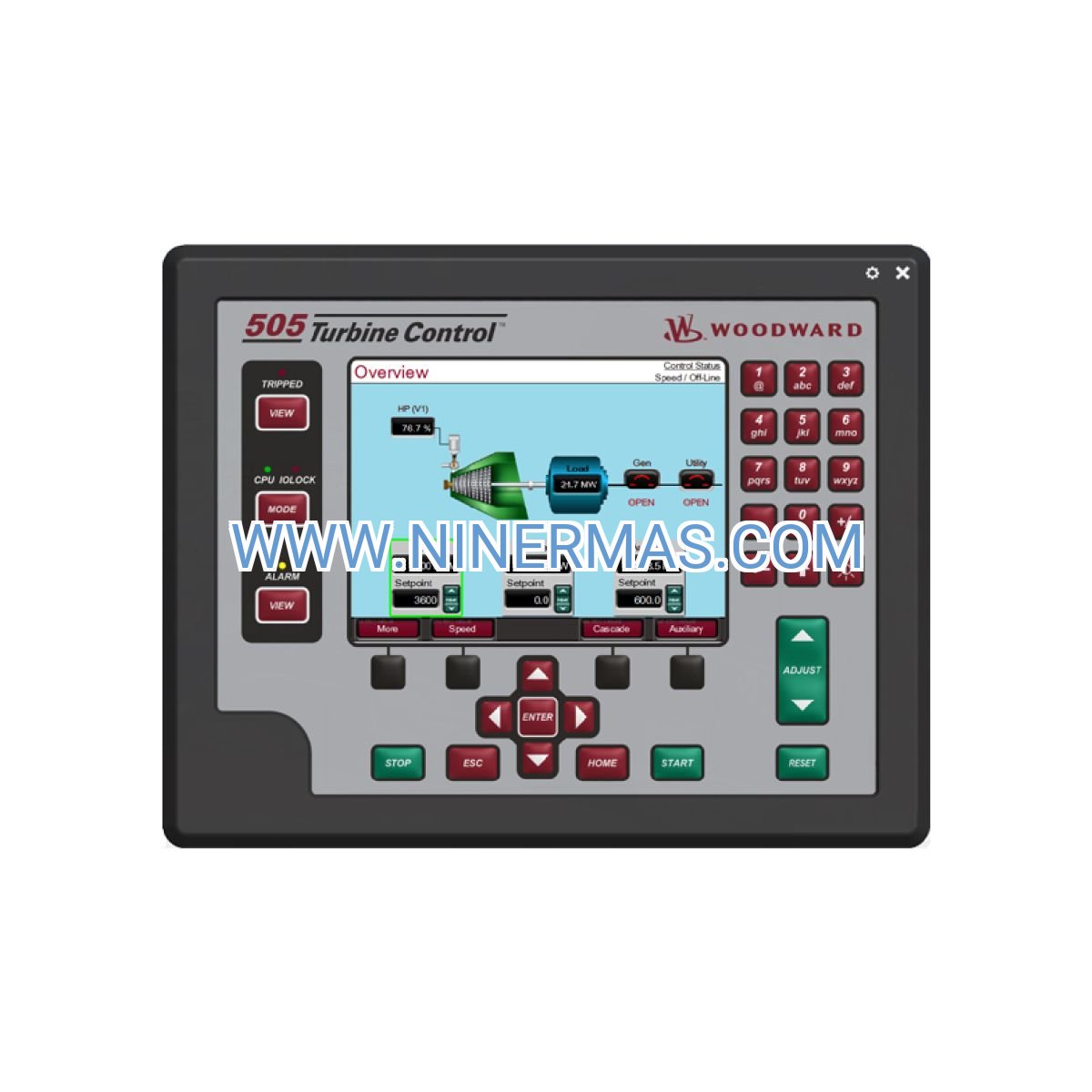
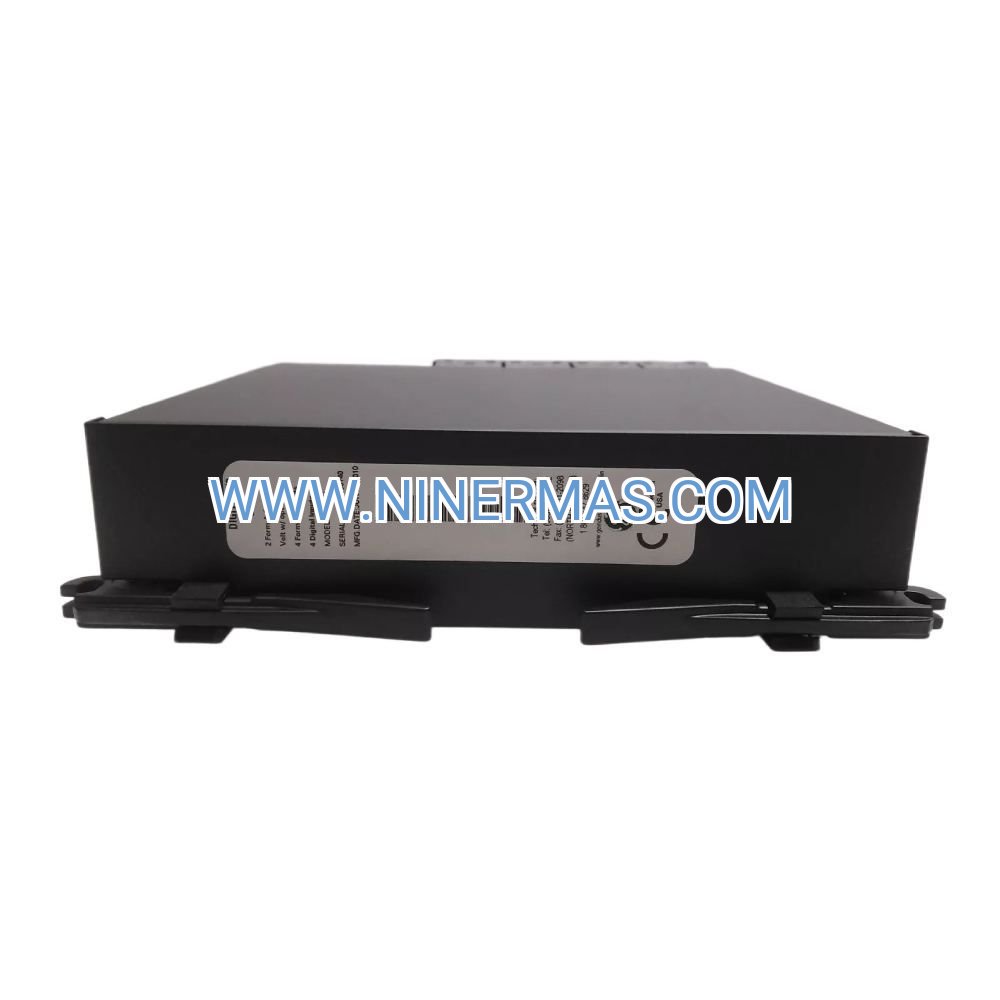
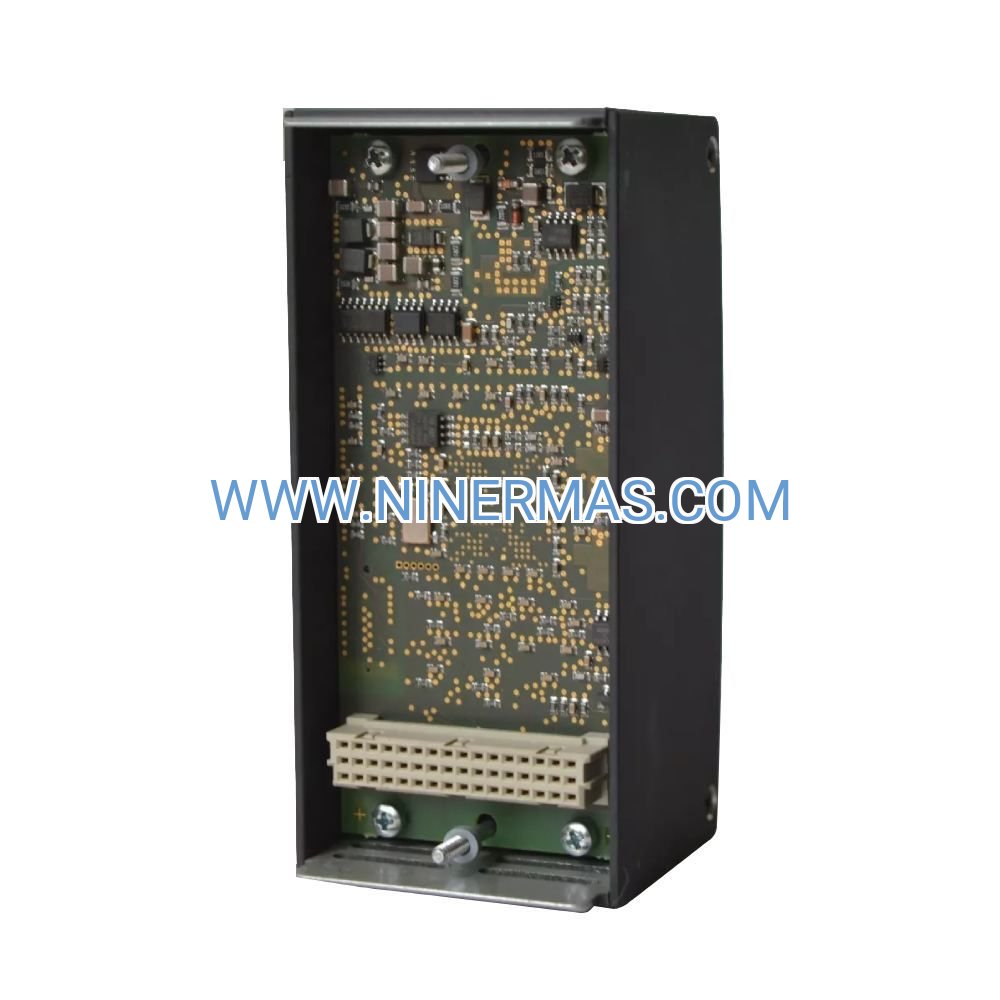
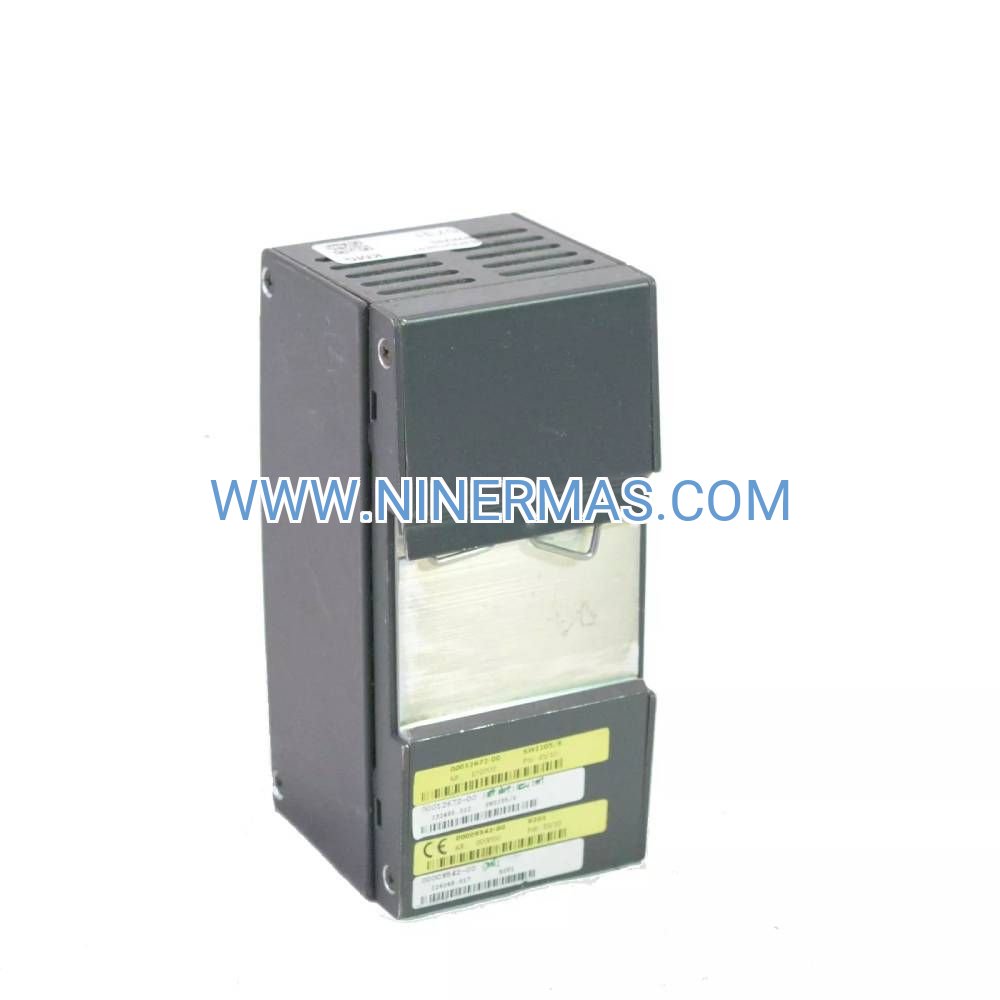
8200-1331 Digital Governor System (Industrial-Grade Turbine Speed Controller)
The Woodward 8200-1331 is a microprocessor-based speed and load control solution engineered for steam turbine installations where operational reliability directly impacts production continuity. Built on the proven 505D platform architecture, this controller delivers adaptive PID regulation with sub-50ms response times, making it the preferred choice for power generation facilities, cogeneration plants, and critical industrial drive systems that cannot tolerate frequency deviations or unplanned shutdowns.
Designed for plant engineers and automation specialists managing turbine-generator sets, the 8200-1331 addresses three fundamental challenges: maintaining grid-synchronous speed under fluctuating loads, preventing overspeed trips during load rejection events, and enabling seamless integration with modern SCADA infrastructure. Its dual-redundant architecture and comprehensive self-diagnostics reduce mean time to repair (MTTR) by up to 40% compared to legacy analog governors.
Key differentiators include field-proven stability algorithms tested across 10,000+ installations worldwide, native support for both Modbus RTU and Ethernet/IP protocols, and hot-swappable I/O modules that eliminate downtime during expansion or maintenance activities.
Core Capabilities & Business Value
→ Adaptive Speed Regulation: Maintains ±0.25% accuracy across 0-100% load range through real-time gain scheduling, reducing fuel consumption by 2-5% versus fixed-parameter controllers while extending turbine blade life through smoother transient responses.
→ Multi-Protocol Connectivity: Simultaneous RS-485 Modbus and Ethernet/IP communication enables integration with legacy DCS systems and modern cloud-based analytics platforms without protocol converters, cutting commissioning time by 30-50%.
→ Predictive Diagnostics Engine: Embedded algorithms track 50+ operational parameters to detect bearing wear, valve stiction, and sensor drift weeks before failure, transforming reactive maintenance into scheduled interventions that save $15,000-$50,000 per avoided outage.
✓ Fail-Safe Redundancy: Dual-channel architecture with automatic switchover in <200ms ensures continuous operation during controller faults, meeting SIL-2 safety requirements for critical infrastructure applications.
✓ Wide Environmental Range: -40°C to +70°C operating specification with conformal coating protection allows installation in harsh environments—offshore platforms, desert facilities, arctic installations—without climate-controlled enclosures.
✓ Scalable I/O Architecture: Base configuration supports 16 analog inputs and 8 relay outputs, expandable to 64 I/O points via plug-in modules for complex multi-valve turbines or integrated auxiliary system control.
Industrial Application Scenarios
1. Utility-Scale Power Generation
Combined-cycle plants operating 50-500 MW steam turbines require governors that maintain grid frequency within ±0.1 Hz during load swings. The 8200-1331's droop compensation and load-sharing algorithms enable parallel operation of multiple units while preventing hunting oscillations that degrade power quality and trigger protective relays.
2. Chemical & Petrochemical Manufacturing
Process facilities using steam turbines to drive compressors, pumps, and blowers face a critical challenge: speed variations directly impact product quality and yield. This governor's setpoint tracking accuracy prevents off-spec production batches caused by flow rate inconsistencies, with documented ROI of 6-12 months in ethylene and ammonia plants.
3. Cogeneration & District Energy Systems
CHP installations must balance electrical output with thermal demand—a complex optimization problem. The 8200-1331's programmable logic enables automatic mode switching between isochronous (grid-connected) and droop (islanded) operation, plus extraction pressure control for process steam delivery.
4. Marine Propulsion & Auxiliary Power
Shipboard turbine-generators experience rapid load changes during maneuvering and heavy weather. This controller's anti-windup algorithms and rate limiters prevent overshoot conditions that could trip breakers or damage reduction gears, while its shock-mounted design withstands 5G vibration per MIL-STD-167.
5. Biomass & Waste-to-Energy Facilities
Renewable energy plants burning variable-quality fuels struggle with steam pressure fluctuations that conventional governors cannot accommodate. The 8200-1331's feedforward compensation uses boiler pressure signals to preemptively adjust valve positions, maintaining stable speed despite ±15% BTU variations in fuel composition.
Technical Parameters & Selection Criteria
| Parameter | Specification | Selection Notes |
|---|---|---|
| Control Algorithm | Digital PID with adaptive gain | Choose for applications requiring <1% speed deviation |
| Power Supply | 24 VDC (18-32 VDC range) | Requires regulated DC source; UPS recommended |
| Speed Input | Magnetic pickup, proximity probe, or encoder | Verify sensor compatibility during specification |
| Actuator Output | 4-20 mA, 0-10 VDC, or PWM | Match to existing valve actuator type |
| Communication | RS-485 Modbus RTU, Ethernet/IP | Ethernet enables remote HMI access |
| Enclosure Rating | IP54 (NEMA 12 equivalent) | Upgrade to IP65 for washdown environments |
| Certifications | UL508, CE, ATEX Zone 2 (optional) | Verify regional compliance requirements |
Sizing Guidance: For turbines <5 MW with single control valve, base model suffices. Multi-valve configurations (5-50 MW) require expansion I/O. Turbines >50 MW typically deploy dual-redundant pairs with voting logic.
Advanced Integration Features
SCADA & HMI Connectivity: Built-in web server provides browser-based configuration and real-time trending without proprietary software. OPC UA server option enables direct connection to Ignition, Wonderware, and other modern HMI platforms.
Cybersecurity Hardening: Role-based access control, encrypted Ethernet communication, and audit logging meet NERC-CIP requirements for critical infrastructure protection. Firmware updates via digitally signed packages prevent unauthorized modifications.
Custom Logic Programming: IEC 61131-3 compliant ladder logic and function block editors allow implementation of plant-specific interlocks, sequencing routines, and auxiliary equipment control without external PLCs.
Delivery Timeline & Service Commitments
Standard Lead Time: 3-5 business days for stock configurations (24 VDC, Modbus RTU, standard I/O)
Custom Configurations: 10-15 business days for special voltage, ATEX certification, or extended I/O
Warranty Coverage: 18-month comprehensive warranty covering parts, labor, and firmware updates
Technical Support: Lifetime access to application engineers via phone/email; 4-hour response SLA for critical issues
Documentation Package: Installation manual, wiring diagrams, Modbus register map, configuration software (GAP v5.x), and sample ladder logic programs included
Frequently Asked Questions
Can the 8200-1331 governor replace older analog Woodward controllers without rewiring?
Yes, terminal assignments match legacy 505 series models for drop-in replacement. Adapter harnesses available for TG-series and 2301-series migrations. Typical retrofit requires 4-6 hours including calibration.
What is the maximum turbine speed this controller can regulate?
Standard configuration handles 0-15,000 RPM with magnetic pickup sensors. High-speed option extends range to 30,000 RPM using proximity probes. For turbines >30,000 RPM, consult factory for gear-tooth sensor solutions.
How does this system improve energy efficiency compared to mechanical governors?
Digital control eliminates mechanical hysteresis and friction losses, reducing speed droop from typical 4-6% (mechanical) to <1% (digital). Tighter regulation allows operation closer to optimal efficiency point, yielding 2-4% fuel savings in base-loaded applications.
Is remote monitoring and adjustment possible for distributed generation sites?
Ethernet/IP interface supports VPN-based remote access for parameter tuning, alarm acknowledgment, and trend analysis. Cellular gateway option enables monitoring from mobile devices without dedicated IT infrastructure.
What training is required for maintenance personnel?
Basic troubleshooting requires familiarity with multimeters and PID tuning concepts (2-day course available). Advanced programming and custom logic development recommended for instrumentation technicians with PLC experience (3-day course).
Can this governor control extraction steam pressure in addition to speed?
Yes, dual-mode operation allows simultaneous speed governing and extraction pressure control via independent PID loops. Requires pressure transmitter input and dual-actuator turbine configuration.
Take the Next Step
Upgrade your turbine control infrastructure with proven technology trusted by Fortune 500 energy producers and industrial manufacturers. Our application engineers are ready to review your system specifications, recommend optimal configurations, and provide budget pricing within 24 hours.
Request a technical consultation: Share your turbine nameplate data, current control challenges, and integration requirements to receive a customized solution proposal.
© 2026 NINERMAS COMPANY LIMITED. All rights reserved.
Original Source: https://ninermas.com
Contact: sale@ninermas.com | +0086 187 5021 5667

Contact Info
-
Address:22 / F, South Wo Hang building, 148 Wing Lok Street, Sheung Wan, Western District, Hong Kong
-
Phone:+8618750215667
-
Email: