Description
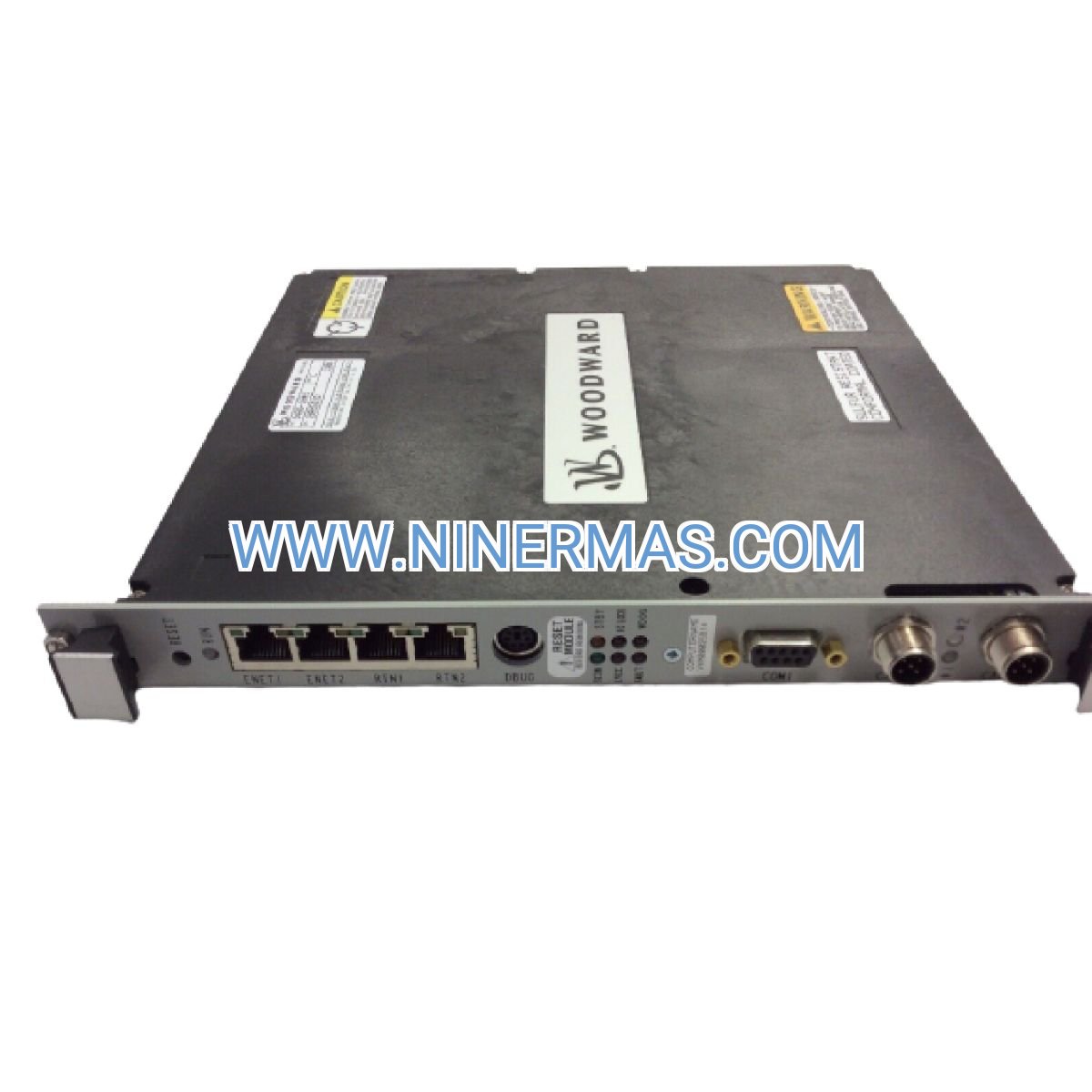
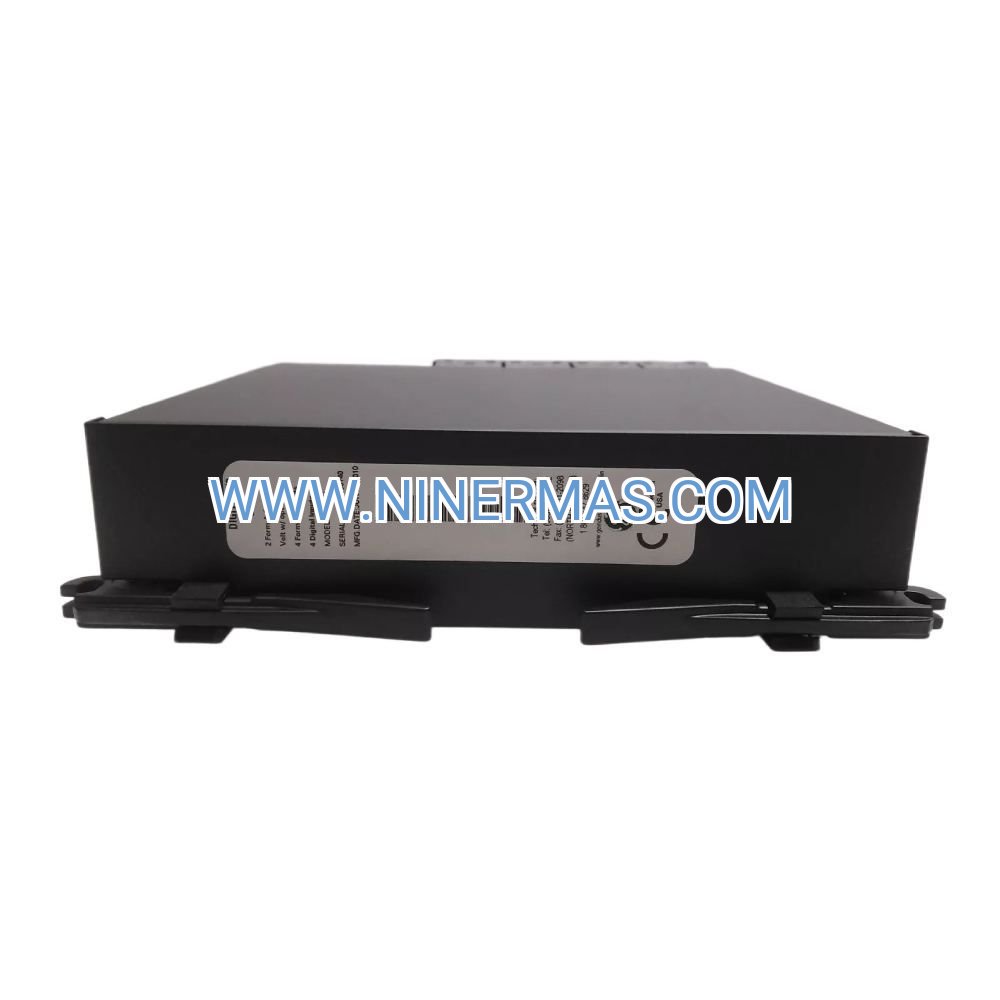
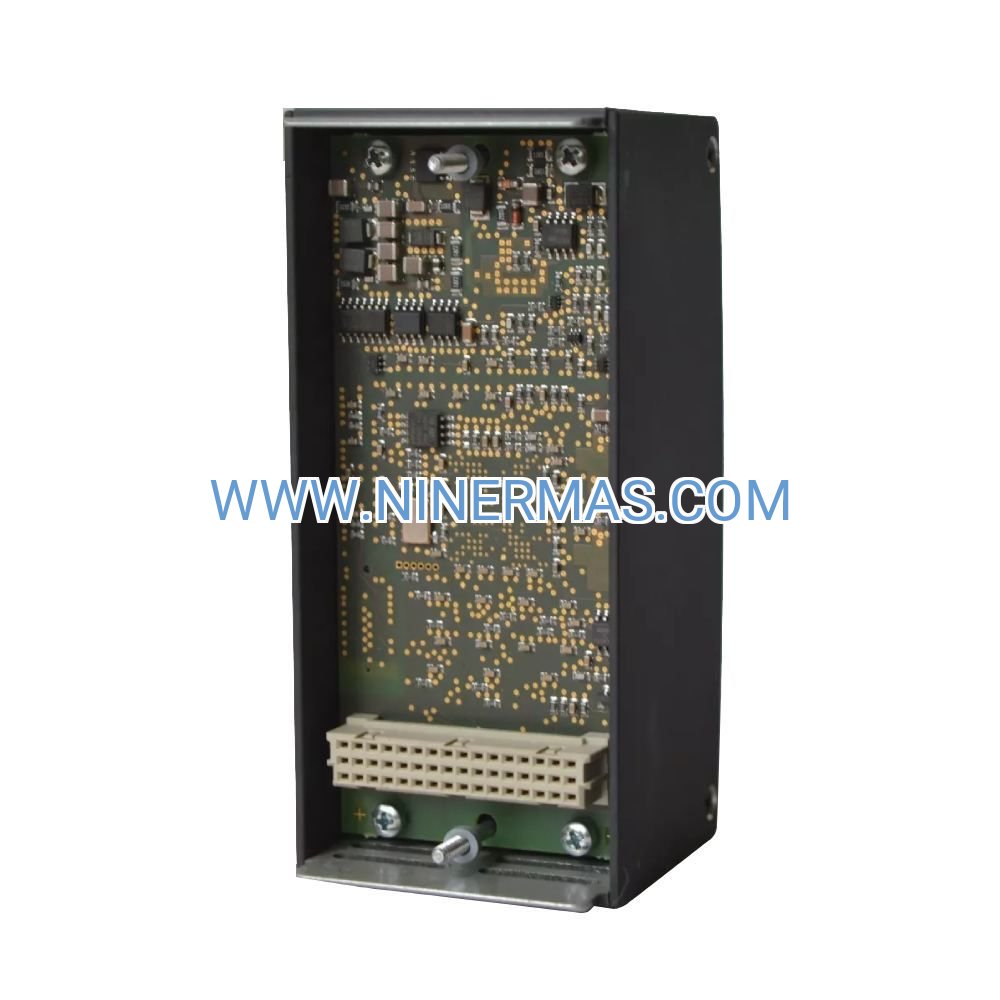
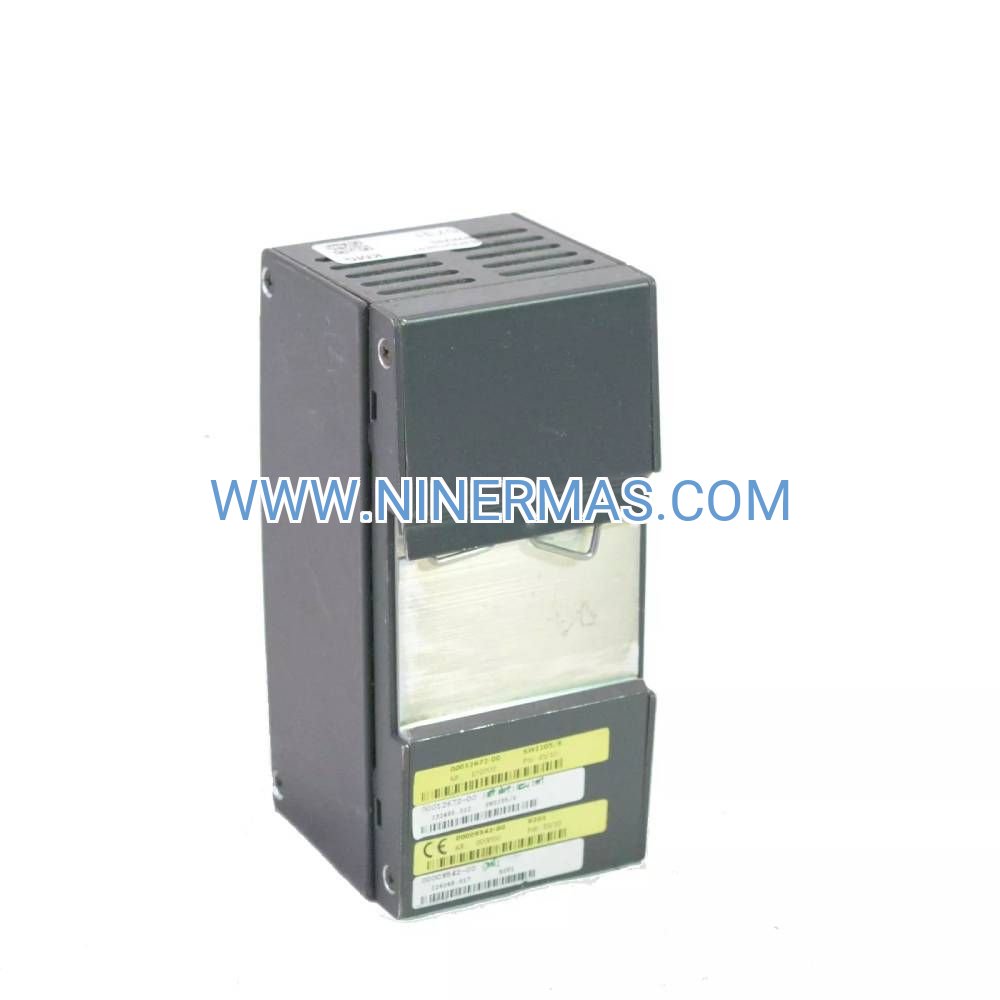
Woodward 5466-1245 TMR CPU5200 Enhanced Module (Industrial-Grade Triple Redundancy)
The Woodward 5466-1245 represents a breakthrough in mission-critical process control, delivering triple-modular redundant architecture that eliminates single points of failure in turbine governors, compressor anti-surge systems, and utility-scale power plants. Built on the CPU5200 Enhanced platform, this controller combines deterministic scan performance with automatic fault isolation—ensuring your operations never compromise on safety or uptime.
Designed for environments where control system failure translates to catastrophic losses, the 5466-1245 serves oil & gas facilities, marine propulsion systems, and combined-cycle power stations demanding 99.999% availability. Its three-way voting logic continuously validates outputs across independent processors, seamlessly bypassing faulty modules without operator intervention or process disruption.
Whether you're retrofitting legacy MicroNet installations or engineering greenfield projects, this enhanced CPU delivers expanded memory for complex algorithms, multi-protocol connectivity (Modbus/Ethernet IP), and field-proven reliability backed by 100,000+ hour MTBF ratings and comprehensive global support infrastructure.
Core Capabilities & Business Value
→ Automatic Fault Isolation: Three independent processors execute identical control logic simultaneously; voting circuitry detects discrepancies within microseconds and isolates defective modules without halting operations—eliminating unplanned shutdowns that cost $50,000+ per hour in lost production.
✓ Hot-Swappable Maintenance: Replace failed modules during live operation without breaking control loops or initiating safety shutdowns, reducing maintenance windows from 8-hour outages to 15-minute component swaps and cutting annual downtime costs by 70%.
→ Enhanced Computational Headroom: CPU5200 Enhanced architecture supports model predictive control (MPC), adaptive PID tuning, and real-time vibration analysis—advanced algorithms that optimize fuel efficiency by 3-5% and extend equipment lifespan through predictive load management.
✓ Backward-Compatible Integration: Seamlessly interfaces with existing MicroNet I/O racks, legacy HMI systems, and third-party SCADA platforms via standard protocols, enabling phased upgrades that preserve capital investments while modernizing control infrastructure.
→ Comprehensive Self-Diagnostics: Built-in health monitoring tracks processor load, memory utilization, I/O integrity, and communication status; predictive alerts flag degrading components 30-90 days before failure, transforming reactive maintenance into scheduled interventions.
✓ Extreme Environment Resilience: Operates reliably across -40°C to +70°C temperature ranges and withstands shock, vibration, and electromagnetic interference per IEC 61131-2 standards—proven in offshore platforms, desert installations, and arctic drilling operations.
Industry Applications & Problem-Solving
Gas & Steam Turbine Governing: Primary speed/load control for 50-500 MW turbines in combined-cycle plants and cogeneration facilities. Solves: Governor instability during load transients, manual failover delays during component failures. Delivers: Sub-0.1% speed regulation, automatic redundancy switching, compliance with NERC/FERC grid stability requirements.
Compressor Anti-Surge Protection: Real-time surge detection and valve modulation for centrifugal compressors in LNG liquefaction, pipeline boosting, and petrochemical processes. Solves: Surge-induced equipment damage ($2M+ repair costs), production losses during compressor trips. Delivers: 10-millisecond response times, coordinated recycle valve control, integration with variable-speed drives.
Marine Propulsion & Thruster Control: Coordinated engine governor and dynamic positioning systems for offshore support vessels, cruise ships, and naval platforms. Solves: Loss of station-keeping during control failures, manual engine synchronization errors. Delivers: Seamless failover during module faults, synchronized multi-engine operation, compliance with DNV-GL and ABS classifications.
Refinery Process Automation: Safety-instrumented control for fluid catalytic crackers, hydroprocessing units, and distillation columns handling hazardous materials. Solves: SIL-rated shutdown system complexity, integration gaps between DCS and safety PLCs. Delivers: SIL 3-capable architecture, certified functional safety libraries, unified control/safety platform reducing engineering costs by 40%.
Renewable Energy Hybrid Systems: Grid-forming control for wind-solar-battery microgrids and black-start capable generation assets. Solves: Islanding instability, renewable intermittency management, grid code compliance. Delivers: Fast frequency response, seamless grid synchronization, energy storage coordination algorithms.
Technical Parameters & Selection Guide
| Parameter | Specification |
|---|---|
| Model Designation | 5466-1245 (TMR CPU5200 Enhanced) |
| Processor Architecture | Triple Modular Redundant (3-way voting) |
| Scan Cycle Time | 5-50 ms (deterministic, configurable) |
| Program Memory | 4 MB (expandable via SD card) |
| Data Retention | Non-volatile FRAM, 10-year battery backup |
| Communication Ports | 2× Ethernet (RJ45), 2× RS-485, 1× USB service |
| Supported Protocols | Modbus TCP/RTU, Ethernet/IP, MicroNet proprietary |
| Operating Voltage | 24 VDC nominal (18-32 VDC tolerance) |
| Power Consumption | 18 W typical, 25 W maximum |
| Operating Temperature | -40°C to +70°C (-40°F to +158°F) |
| Humidity Range | 5-95% RH, non-condensing |
| Shock/Vibration | IEC 60068-2-6 (10g), IEC 60068-2-64 (2g continuous) |
| EMC Compliance | IEC 61000-6-2 (immunity), IEC 61000-6-4 (emissions) |
| Safety Certifications | UL 508, CE, ATEX Zone 2, IECEx |
| MTBF Rating | >100,000 hours (MIL-HDBK-217F) |
| Dimensions (H×W×D) | 220 mm × 180 mm × 95 mm |
| Weight | 1.2 kg (module only) |
Selection Criteria: Choose the 5466-1245 Enhanced over standard CPU5200 models when applications require (1) memory-intensive control strategies exceeding 2 MB program size, (2) simultaneous multi-protocol communication to DCS/SCADA/HMI systems, (3) advanced diagnostics with OPC UA data modeling, or (4) future-proofing for IIoT integration and cloud analytics connectivity. For basic TMR applications with <1 MB programs and single-protocol needs, consider the 5466-1002 standard CPU to optimize costs.
Extended Functionality & Integration
IIoT & Cloud Connectivity: Native OPC UA server enables secure data streaming to AWS IoT Core, Azure Industrial IoT, or on-premise historians—supporting predictive maintenance models, digital twin synchronization, and enterprise-wide performance dashboards without compromising control network security through DMZ gateway architectures.
Cybersecurity Hardening: Role-based access control (RBAC), encrypted Ethernet communication (TLS 1.3), and audit logging comply with IEC 62443-3-3 security level 2 requirements; firmware signing prevents unauthorized code injection, critical for NERC CIP compliance in utility applications.
Custom Algorithm Development: Supports IEC 61131-3 programming (ladder, FBD, ST, SFC) plus C-language function blocks for proprietary control strategies; integrated simulation environment validates logic before deployment, reducing commissioning time by 50%.
Modular I/O Expansion: Accommodates up to 64 MicroNet I/O modules per CPU (analog/digital/specialty cards) via redundant backplane; distributed I/O via Ethernet enables cabinet-free field installations, cutting wiring costs by $15-30 per I/O point in large systems.
Delivery Timeline & Service Commitments
Standard Lead Time: 3-5 business days for in-stock units; expedited same-day shipping available for critical outage scenarios (subject to inventory confirmation).
Custom Configuration: Factory-programmed modules with pre-loaded application code ship within 10-15 business days; includes FAT documentation and configuration backup files.
Warranty Coverage: 12-month comprehensive warranty covering manufacturing defects, component failures, and workmanship issues; extended 36-month plans available for mission-critical installations.
Technical Support: Lifetime access to application engineers for commissioning assistance, troubleshooting guidance, and firmware upgrade planning; 24/7 emergency hotline for Tier-1 support during unplanned outages.
Documentation Package: Includes installation manual, wiring diagrams, GAP programming examples, Modbus register maps, and cybersecurity hardening checklist—all materials provided in PDF and editable formats for integration into customer O&M procedures.
Frequently Asked Questions
How does triple modular redundancy differ from standard dual-redundant controllers in terms of fault tolerance?
Dual-redundant systems require manual switchover or bumpless transfer logic when the primary controller fails, introducing 50-500 ms transition delays that may violate process control requirements. TMR architecture uses three-way majority voting to detect and isolate faults in real-time (<10 ms), maintaining control integrity without operator action—critical for turbine overspeed protection and anti-surge systems where milliseconds determine equipment survival.
Can the 5466-1245 replace older MicroNet CPU models without rewiring existing I/O racks?
Yes, the module maintains pin-compatible backplane connectivity with legacy MicroNet chassis dating to 2005-era installations. Configuration software includes migration wizards that convert older GAP programs to enhanced CPU format, preserving I/O addressing and control logic while unlocking new diagnostic features—typical retrofit projects complete mechanical/electrical installation in 4-6 hours.
What programming tools and skill sets are required for application development?
Woodward GAP (General Application Programming) software supports graphical function block diagrams familiar to engineers experienced with Siemens PCS 7, Emerson DeltaV, or Honeywell Experion platforms. For advanced users, structured text (ST) programming enables complex mathematical algorithms; typical learning curve is 2-3 days for experienced PLC programmers, 1-2 weeks for process engineers new to industrial control programming.
How does the enhanced CPU justify its premium over standard CPU5200 modules?
Enhanced models deliver 2× program memory (4 MB vs. 2 MB), 40% faster scan times (5 ms vs. 8 ms minimum), dual Ethernet ports for network redundancy, and OPC UA server functionality—features that eliminate the need for separate communication gateways ($3,000-5,000 savings) and support 30-50% larger control strategies without performance degradation. ROI typically achieved within 18 months through reduced integration costs and eliminated gateway hardware.
What is the expected service life and when should modules be replaced?
Woodward designs MicroNet TMR modules for 20+ year operational lifespans in controlled environments; however, technology obsolescence typically drives upgrades every 10-15 years to access improved cybersecurity, IIoT connectivity, and diagnostic capabilities. Proactive replacement recommended when (1) spare parts availability declines, (2) firmware updates cease, or (3) insurance/regulatory requirements mandate current-generation technology—Woodward provides 15-year minimum spare parts commitments from product introduction.
Does the module support integration with third-party vibration monitoring or condition-based maintenance systems?
Yes, Modbus TCP and OPC UA interfaces enable real-time data exchange with Bently Nevada, SKF, or Emerson AMS vibration systems; the CPU can execute protective shutdown logic based on external vibration thresholds or bearing temperature inputs, creating unified machinery protection architectures that reduce sensor-to-action latency from 500 ms (via separate PLC) to <50 ms (direct CPU integration).
Take the Next Step
Eliminate control system vulnerabilities that threaten your uptime and safety margins. Contact our application engineers today for system architecture reviews, compatibility assessments, and customized quotations tailored to your redundancy requirements. Volume pricing available for multi-unit projects and OEM partnerships.
Request Technical Consultation: sale@ninermas.com | +0086 187 5021 5667
© 2026 NINERMAS COMPANY LIMITED. All rights reserved.
Original Source: https://ninermas.com
Contact: sale@ninermas.com | +0086 187 5021 5667

Contact Info
-
Address:22 / F, South Wo Hang building, 148 Wing Lok Street, Sheung Wan, Western District, Hong Kong
-
Phone:+8618750215667
-
Email: