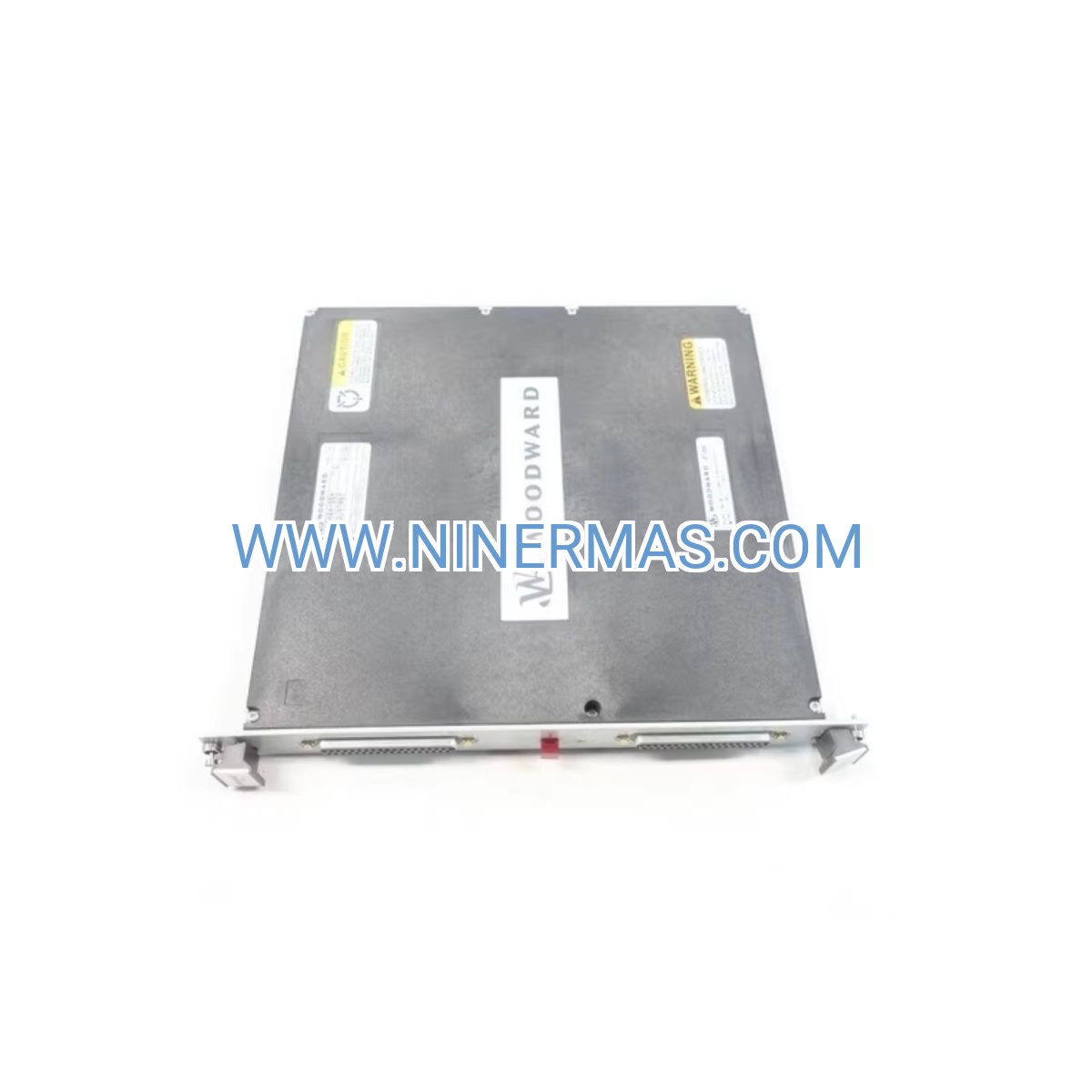
Description
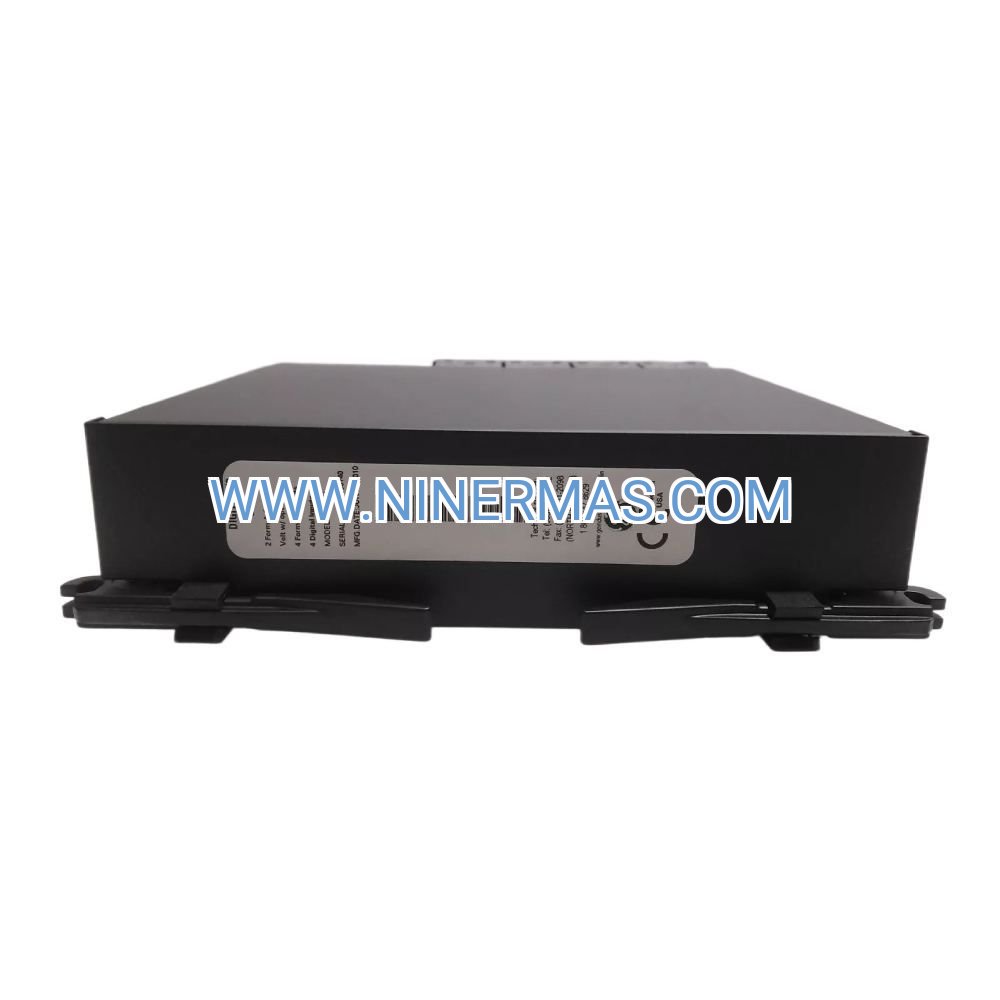
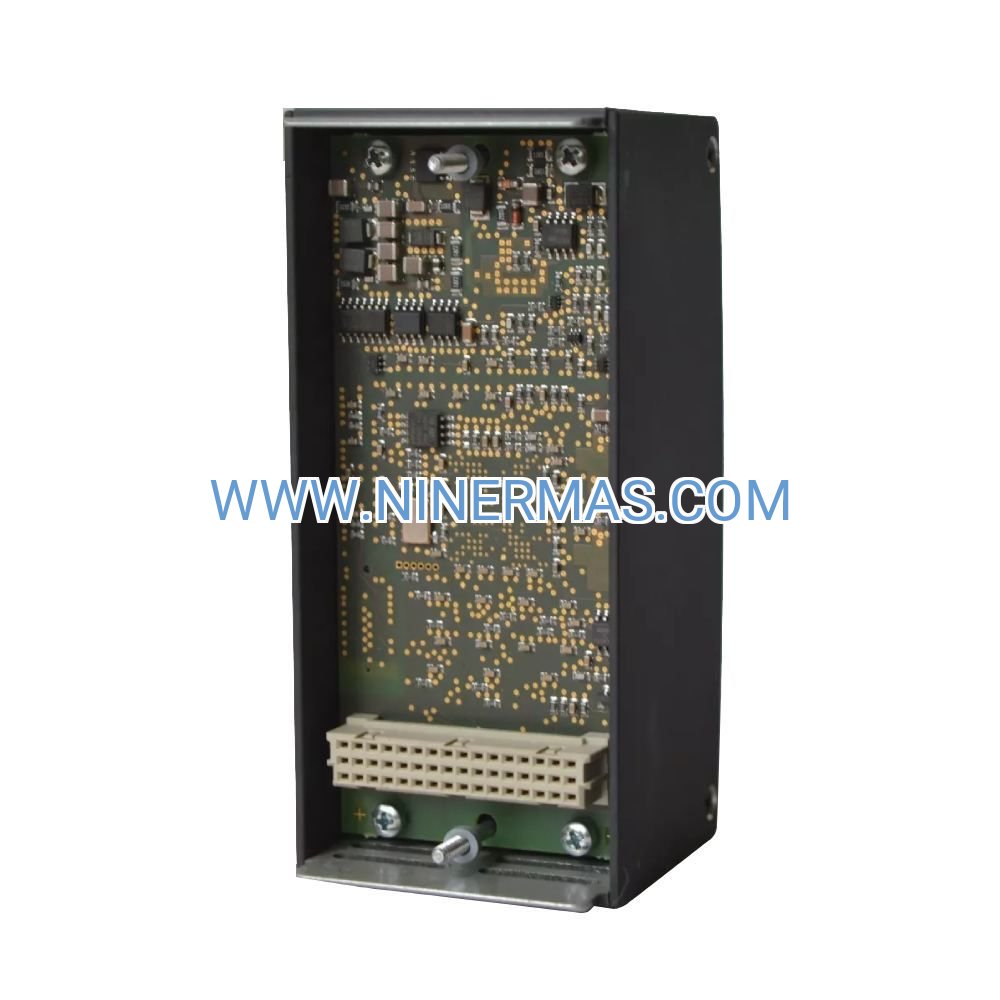
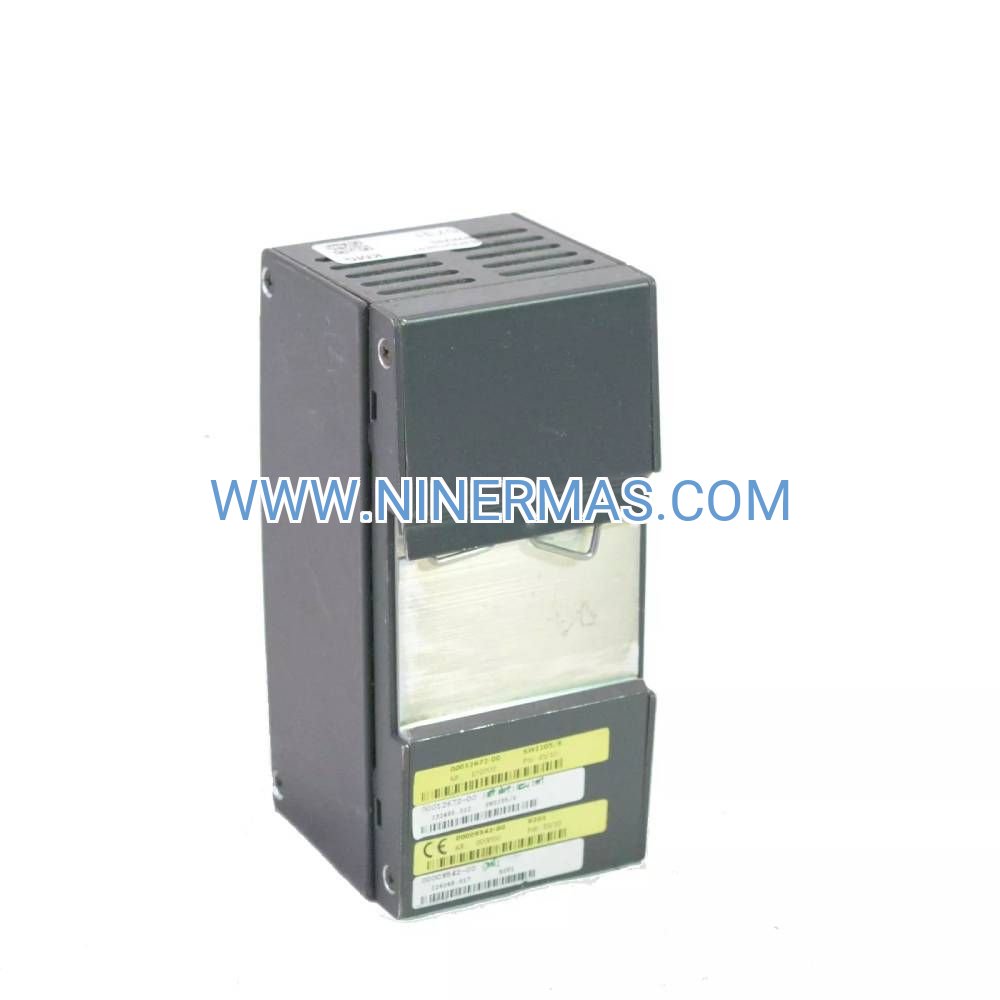
Woodward 5458-051 TMR Analog I/O Module (Industrial-Grade Fault-Tolerant Solution)
The Woodward 5458-051 represents a mission-critical interface between field instrumentation and turbine control processors in environments where unplanned downtime translates to millions in lost revenue. Engineered with triple modular redundancy, this analog I/O module delivers continuous signal processing even when individual channels fail, making it the backbone of power generation facilities, offshore platforms, and petrochemical plants worldwide.
Designed for operators managing gas turbines, steam turbines, and combined-cycle power systems, the 5458-051 eliminates the vulnerability of single-point failures inherent in conventional I/O architectures. Its 2-out-of-3 voting logic automatically isolates faulty channels while maintaining full operational capability on the remaining paths—a critical advantage during emergency shutdowns or load-following operations.
With 16 configurable analog inputs and 8 isolated outputs, this module handles diverse sensor types including RTDs, thermocouples, pressure transmitters, and valve positioners. The hot-swappable design allows maintenance teams to replace failed components during live operation, preserving process continuity and eliminating costly scheduled outages for routine repairs.
Core Features & Business Value
→ Triple Modular Redundancy (TMR) Architecture
Three independent processing channels with continuous cross-verification ensure that sensor failures or module faults never compromise control integrity. Automatic fault isolation maintains operation on two healthy channels while alerting maintenance teams to degraded conditions.
✓ 16-Bit Resolution Signal Processing
High-precision A/D and D/A converters deliver ±0.1% accuracy across the full measurement range, enabling tight PID loop control for critical parameters like turbine inlet temperature, compressor discharge pressure, and steam flow regulation.
→ 1500 VAC Galvanic Isolation
Channel-to-channel and channel-to-bus isolation protects against ground loops, electrical noise, and transient surges common in high-voltage switchyard environments. Reduces installation costs by eliminating external signal conditioners and isolation barriers.
✓ Hot-Swappable Field Replacement
Replace failed modules during operation without process interruption, controller restart, or loss of historical data. Reduces mean time to repair (MTTR) from hours to minutes compared to systems requiring shutdown for maintenance.
→ Deterministic 10ms Scan Cycle
Guaranteed update rates ensure predictable latency for fast-acting control loops such as anti-surge valves, fuel gas regulation, and steam bypass control. Meets real-time requirements for turbine protection systems.
✓ Extended Temperature Range (-40°C to +70°C)
Operates reliably in harsh industrial environments including outdoor enclosures, desert installations, and arctic facilities without supplemental cooling or heating systems.
Typical Application Scenarios
Power Generation – Combined-Cycle Plants
In HRSG (Heat Recovery Steam Generator) control systems, the 5458-051 processes temperature, pressure, and flow signals from economizers, evaporators, and superheaters. During rapid load changes, the module's deterministic scan cycle ensures steam parameters remain within safe operating limits, preventing tube failures and extending equipment lifespan by 15-20%.
Oil & Gas – Offshore Compression Platforms
Compressor anti-surge control systems rely on the 5458-051 to monitor suction pressure, discharge pressure, and flow transmitters with sub-20ms latency. The TMR architecture provides the fault tolerance required for SIL-2 rated safety instrumented systems, reducing unplanned shutdowns by 40% compared to simplex I/O configurations.
Petrochemical – Steam Turbine Drives
Refinery steam turbines driving compressors and pumps use the 5458-051 for governor control, vibration monitoring, and bearing temperature surveillance. The module's ability to maintain operation during single-channel failures prevents cascade trips that could shut down entire process units.
District Heating – Cogeneration Facilities
CHP (Combined Heat and Power) plants utilize the 5458-051 for coordinated control of gas turbines and heat recovery boilers. The module's wide temperature range allows installation in outdoor control cabinets, reducing building costs while maintaining year-round reliability in Nordic climates.
Marine Propulsion – LNG Carrier Turbines
Ship propulsion systems demand vibration-resistant, salt-fog tolerant I/O modules for main turbine control. The 5458-051's conformal coating and robust construction withstand marine environments while providing the redundancy required by classification societies for unrestricted ocean service.
Technical Parameters & Selection Guide
| Parameter | Specification |
|---|---|
| Model Number | 5458-051 |
| Architecture | Triple Modular Redundant (2oo3 voting) |
| Analog Inputs | 16 channels, configurable 4-20mA or 0-10VDC |
| Analog Outputs | 8 channels, 4-20mA isolated |
| Resolution | 16-bit A/D and D/A conversion |
| Accuracy | ±0.1% full scale @ 25°C |
| Isolation Voltage | 1500 VAC channel-to-channel, channel-to-bus |
| Scan Cycle | 10ms per channel (deterministic) |
| Operating Temperature | -40°C to +70°C (-40°F to +158°F) |
| Power Consumption | 12W typical (MicroNet backplane) |
| Communication Bus | MicroNet TMR redundant network |
| Diagnostics | Continuous self-test with fault annunciation |
| Dimensions | Standard MicroNet module form factor |
| Weight | 1.0 kg |
Selection Criteria: Choose the 5458-051 when your application requires SIL-2 or higher safety integrity, when process downtime costs exceed $50,000 per hour, or when regulatory requirements mandate fault-tolerant control systems. For non-critical applications with lower I/O density requirements, consider simplex alternatives like the 5466-332 to optimize capital costs.
Extended Functions
IoT Integration & Remote Diagnostics
When paired with Woodward's MicroNet Gateway modules, the 5458-051 enables secure remote access to diagnostic data, alarm histories, and performance trends via OPC UA or Modbus TCP protocols. Cloud-based analytics platforms can monitor module health metrics and predict failures 30-60 days in advance based on drift patterns in self-test results.
Advanced Calibration Features
Digital calibration coefficients stored in non-volatile EEPROM allow field technicians to perform zero and span adjustments via software configuration tools without physical potentiometer access. Calibration certificates with NIST-traceable data are available for applications requiring ISO 9001 or API 670 compliance.
Customization Options
Factory-configured variants support specialized sensor types including millivolt thermocouples (Type J, K, T), 3-wire RTDs (Pt100, Pt1000), and HART-enabled smart transmitters. Custom firmware loads can implement application-specific linearization curves or filtering algorithms for unique measurement challenges.
Delivery & Service Assurance
Lead Time: Standard configurations ship within 3-5 business days from regional distribution centers. Custom-configured modules require 2-3 weeks for factory programming and testing. Expedited delivery available for emergency outage support.
Warranty Coverage: 12-month manufacturer warranty against defects in materials and workmanship under normal operating conditions. Extended warranty programs available for up to 5 years with optional advance replacement service.
Technical Support: 24/7 phone and email support from Woodward-certified application engineers. On-site commissioning assistance and training programs available through authorized service partners. Average response time for critical issues: <4 hours.
Documentation Package: Each module ships with installation manual, configuration software, AutoCAD terminal block drawings, and sample ladder logic for common PLC integration scenarios. Firmware update utilities and release notes available via secure download portal.
Frequently Asked Questions
How does the TMR voting logic handle sensor calibration drift?
The 2oo3 voting algorithm continuously compares all three channel readings and flags deviations exceeding configurable tolerance bands (typically ±0.5% of span). When one channel drifts beyond limits, the system generates a maintenance alert but continues operating on the median value of the two remaining channels. This allows scheduled calibration during planned outages rather than forcing immediate shutdown.
Can I retrofit the 5458-051 into existing MicroNet Plus systems?
Yes, the module is mechanically and electrically compatible with legacy MicroNet Plus backplanes. However, full TMR functionality requires a TMR-capable CPU such as the 5466-1001 or 5466-1510. When installed in simplex systems, the module operates in non-redundant mode using only one of the three processing channels.
What is the maximum cable length for 4-20mA sensor connections?
With 24 AWG shielded twisted-pair cable, maximum recommended distance is 1000 meters (3280 feet) for 4-20mA loops. For voltage inputs (0-10VDC), limit cable runs to 100 meters to minimize noise pickup and voltage drop. Use barrier-type surge protectors for field wiring exceeding 50 meters in lightning-prone areas.
Does the module support HART communication over 4-20mA loops?
The 5458-051 hardware is HART-transparent, meaning the analog circuitry does not interfere with HART digital signals superimposed on the 4-20mA current loop. However, HART communication requires a separate HART modem or gateway module—the 5458-051 itself does not decode HART protocol data.
How do I verify module health without shutting down the process?
The module's built-in diagnostics continuously execute self-tests on A/D converters, D/A converters, voltage references, and communication paths. Diagnostic status is available via the MicroNet configuration software or mapped to discrete outputs for PLC/DCS integration. Monthly verification of diagnostic alarm functionality is recommended per ISA-84 guidelines.
What environmental certifications does the 5458-051 carry?
The module meets CE marking requirements for industrial environments (EN 61000-6-2, EN 61000-6-4), UL 508 listing for industrial control equipment, and DNV-GL type approval for marine applications. Conformal coating provides protection against salt fog (ASTM B117) and fungus growth (MIL-STD-810) in tropical climates.
Take the Next Step
Protect your critical turbine control systems with proven TMR technology trusted by over 5,000 power plants worldwide. Contact our application engineers to discuss your specific I/O requirements, receive custom configuration recommendations, and obtain project pricing for multi-module systems.
Request a technical consultation: Our team will review your P&ID drawings, sensor specifications, and control philosophy documents to ensure optimal module selection and system architecture.
© 2026 NINERMAS COMPANY LIMITED. All rights reserved.
Original Source: https://ninermas.com
Contact: sale@ninermas.com | +0086 187 5021 5667

Contact Info
-
Address:22 / F, South Wo Hang building, 148 Wing Lok Street, Sheung Wan, Western District, Hong Kong
-
Phone:+8618750215667
-
Email: