


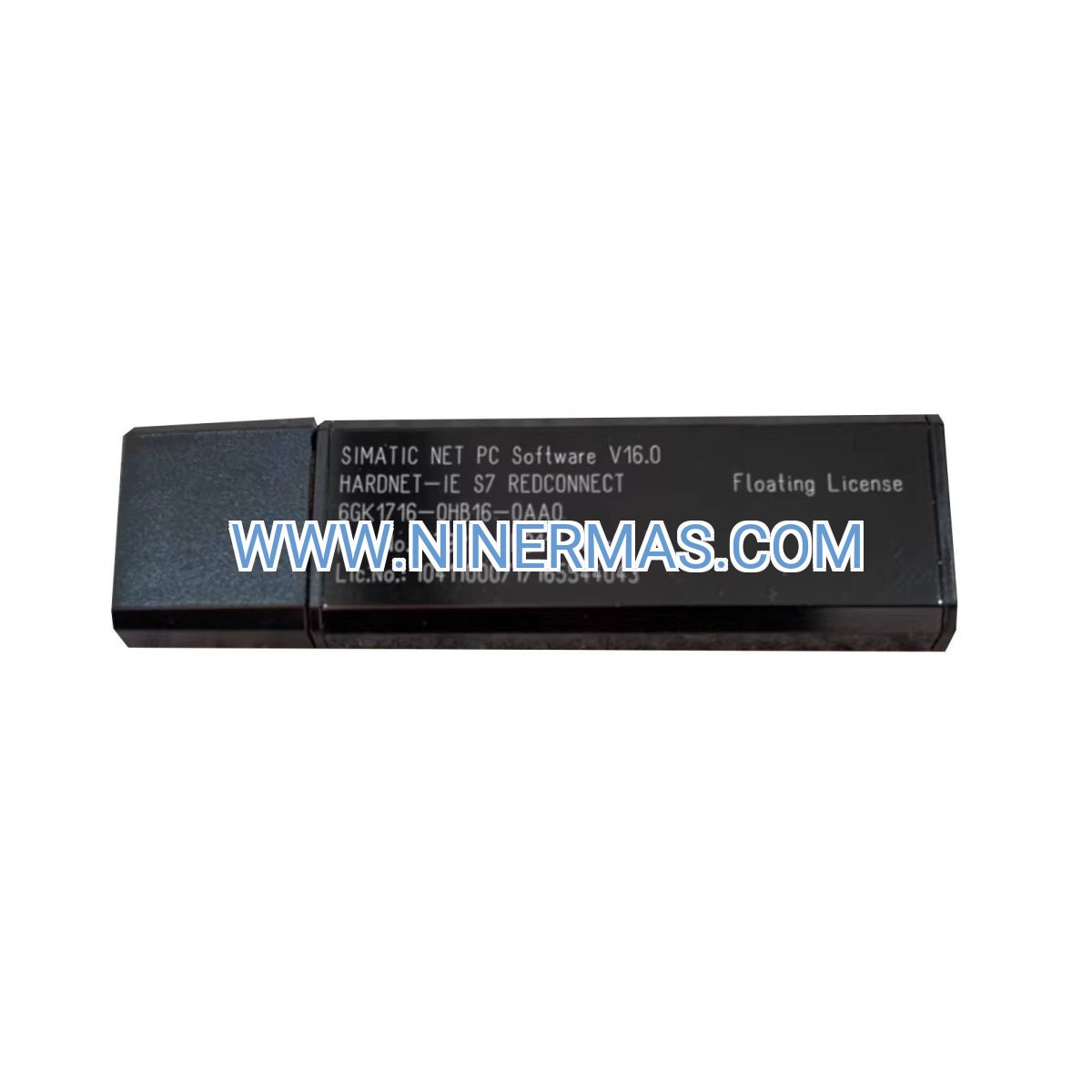
Siemens 6GK1704-1LW14-0AA0 Industrial Ethernet Software | SIMATIC NET PROFINET Configuration Tool
Description
Siemens 6GK1704-1LW14-0AA0 SIMATIC NET Industrial Ethernet Software (PROFINET Configuration & Diagnostics Tool)
The Siemens 6GK1704-1LW14-0AA0 SIMATIC NET Industrial Ethernet Software is a professional-grade network configuration and diagnostic solution designed for industrial automation systems. Through advanced PROFINET protocol support and seamless PLC integration capabilities, this software enables efficient network topology design, real-time device monitoring, and comprehensive fault diagnostics for manufacturing and process control environments.
Ideal for system integrators, automation engineers, plant maintenance teams, and OEM equipment manufacturers working with Siemens S7-300, S7-400, S7-1500 PLC families, as well as distributed I/O systems and HMI networks. This software addresses critical challenges including complex network commissioning, prolonged troubleshooting cycles, limited visibility into device status, protocol compatibility issues, and inefficient documentation workflows.
Built on standardized industrial communication protocols with flexible licensing options, this solution delivers rapid commissioning capabilities, enhanced system reliability, intuitive user interface, and broad device compatibility. Suitable for design institutes, system integrators, equipment manufacturers, and end-user facilities seeking professional-grade network management tools. Contact our application engineers for licensing guidance and technical quotations.
Core Features & Advantages
Comprehensive PROFINET Network Configuration
Provides graphical topology editor with drag-and-drop device placement, automated IP address assignment, and real-time network parameter validation. Reduces commissioning time by up to 40% compared to manual configuration methods while minimizing human error in complex multi-device installations.
Advanced Diagnostic & Monitoring Capabilities
Features live network scanning, packet analysis, device health monitoring, and alarm management with historical trend logging. Enables predictive maintenance strategies and reduces mean time to repair (MTTR) by providing instant visibility into communication errors, bandwidth utilization, and device performance metrics.
Multi-Protocol Support & Device Compatibility
Supports PROFINET IO, PROFINET CBA, Industrial Ethernet TCP/IP, and legacy PROFIBUS integration through gateway devices. Compatible with 500+ certified PROFINET devices from multiple vendors, ensuring seamless integration in heterogeneous automation environments.
Integrated Documentation & Version Control
Automatically generates network documentation including topology diagrams, device lists, IP address tables, and configuration reports in multiple formats (PDF, Excel, XML). Built-in version control tracks configuration changes with timestamp and user attribution for compliance and audit requirements.
User-Friendly Engineering Interface
Offers context-sensitive help, multi-language support (English, German, Chinese, Spanish, French), customizable workspace layouts, and project templates for common applications. Reduces training time for new engineers while maintaining professional-grade functionality for experienced users.
Robust Security & Access Control
Implements role-based access permissions, encrypted project files, and secure communication protocols. Protects intellectual property and prevents unauthorized network modifications in sensitive industrial environments.
Typical Application Scenarios
This software solution is specifically designed for industrial environments requiring reliable, high-performance network infrastructure with stringent uptime requirements, including:
Automotive Manufacturing & Assembly Lines
Manages complex PROFINET networks connecting robotic welding cells, conveyor systems, vision inspection stations, and quality control equipment. Supports real-time synchronization requirements for coordinated multi-axis motion control with cycle times under 10ms.
Process Industries & Continuous Production
Configures distributed control systems for chemical processing, pharmaceutical manufacturing, food & beverage production, and water treatment facilities. Enables integration of field instruments, analytical devices, and safety systems with centralized SCADA platforms.
Energy & Utilities Infrastructure
Deploys network architecture for power generation plants, substations, renewable energy installations, and smart grid applications. Facilitates IEC 61850 protocol mapping and redundant network topologies for mission-critical operations.
Material Handling & Logistics Automation
Designs communication networks for automated warehouses, sorting systems, AGV fleets, and packaging lines. Optimizes network segmentation and QoS parameters to ensure deterministic data delivery in high-traffic environments.
Machine Building & OEM Equipment Integration
Provides standardized network configuration templates for modular machine designs, enabling rapid deployment across multiple customer sites. Supports remote commissioning and diagnostics through secure VPN connections.
Technical Specifications & Selection Guide
To facilitate engineering design and product selection, we provide comprehensive technical parameters for various deployment scenarios. Custom configurations available based on project-specific requirements.
Key Technical Parameters:
- Supported PLC Families: SIMATIC S7-300, S7-400, S7-1200, S7-1500, ET 200 distributed I/O
- Network Protocols: PROFINET IO (RT/IRT), Industrial Ethernet TCP/IP, PROFIBUS DP (via gateway)
- Maximum Network Size: Up to 512 PROFINET devices per project, 256 devices per subnet
- Diagnostic Depth: Port-level statistics, device-level health monitoring, network-wide topology visualization
- Operating System: Windows 10/11 Professional (64-bit), Windows Server 2016/2019/2022
- Hardware Requirements: Intel Core i5 or equivalent, 8GB RAM minimum (16GB recommended), 10GB available disk space
- License Types: Single-user license, floating network license, site license (contact for enterprise options)
- Language Support: English, German, Chinese (Simplified/Traditional), Spanish, French, Italian, Japanese
- Documentation Formats: PDF, Microsoft Excel, XML, HTML, AutoCAD DXF (topology export)
- Integration Interfaces: TIA Portal integration, STEP 7 compatibility, OPC UA server functionality
Selection Recommendations:
When selecting the appropriate software package and licensing model, consider the following factors: number of concurrent engineering workstations, total device count across all projects, required diagnostic features (basic vs. advanced), integration with existing Siemens automation platforms, multi-site deployment requirements, and long-term scalability needs. For assistance with license selection and volume pricing, please provide your project scope including estimated device count, number of users, deployment timeline, and any specific integration requirements. Our application engineers will recommend the optimal configuration and provide detailed quotations.
Extended Functionality & Integration Options
TIA Portal Integration: Seamless project exchange with Siemens Totally Integrated Automation Portal for unified engineering workflow across PLC programming, HMI development, and network configuration.
Cloud Connectivity: Optional cloud-based project backup, remote collaboration features, and centralized license management for multi-site organizations.
Third-Party Device Support: Import GSD/GSDML device description files for non-Siemens PROFINET devices, ensuring vendor-neutral network design capabilities.
Simulation & Testing: Built-in network simulator for offline commissioning validation and training purposes without requiring physical hardware.
API & Scripting: Automation interface for batch configuration tasks, custom report generation, and integration with enterprise asset management systems.
Delivery, Service & Support
Delivery Timeline: Standard software licenses delivered electronically within 24-48 hours upon order confirmation. Physical media and documentation packages available with 5-7 business day shipping. Custom enterprise licensing agreements processed within 10-15 business days.
Warranty & Support: All software licenses include 12-month manufacturer warranty covering software defects and compatibility issues. Extended support contracts available with priority technical assistance, version upgrade rights, and dedicated application engineering support.
Technical Assistance: Remote installation guidance, configuration consulting, and troubleshooting support provided via email, phone, and online meeting platforms. On-site commissioning assistance and training services available in major industrial regions (pricing varies by location).
Documentation Package: Complete software installation guide, user manual, quick start guide, network configuration best practices document, and sample project templates provided in PDF format. Video tutorials and knowledge base articles accessible through customer portal.
Training & Certification: Optional instructor-led training courses available covering basic network configuration, advanced diagnostics, and integration with TIA Portal. Certification programs offered for system integrators and OEM partners.
Frequently Asked Questions (FAQ)
Q: How does the Siemens SIMATIC NET Industrial Ethernet software integrate with existing automation systems?
A: The software integrates seamlessly with Siemens TIA Portal and STEP 7 engineering environments through native project import/export functionality. For third-party systems, it supports standard GSDML device files and OPC UA communication. Integration typically requires verification of PLC firmware versions, network infrastructure compatibility (managed switches recommended), and proper PROFINET device certification. Our engineers can assess your existing system architecture and provide detailed integration roadmaps.
Q: What is the maximum number of PROFINET devices that can be managed in a single network project?
A: A single project supports up to 512 PROFINET devices across multiple subnets, with recommended maximum of 256 devices per subnet for optimal performance. For larger installations, we recommend network segmentation using industrial routers or implementing hierarchical network architectures. The software includes topology planning tools to optimize device distribution and minimize network load.
Q: What are the typical time and cost savings achieved with this network configuration software?
A: Based on customer feedback from industrial installations, commissioning time reductions of 30-50% are common compared to manual configuration methods. Diagnostic capabilities reduce troubleshooting time by approximately 40-60%, translating to significant labor cost savings. Actual savings depend on network complexity, engineer experience level, and project-specific requirements. ROI typically achieved within 2-3 major projects for system integrators.
Q: What are the environmental and installation requirements for running this software?
A: The software requires Windows 10/11 Professional (64-bit) or Windows Server operating systems, with minimum 8GB RAM (16GB recommended for large projects). Installation footprint is approximately 10GB. Network interface requirements include standard Ethernet adapter for device communication. The software operates in standard office environments; no special cooling or power conditioning required. Compatible with virtualized environments (VMware, Hyper-V) for centralized deployment scenarios.
Q: Does the software support remote monitoring and cloud-based diagnostics?
A: Yes, the software includes optional remote access capabilities through secure VPN connections, enabling off-site commissioning and diagnostics. Cloud-based project backup and collaboration features available with enterprise licensing. Supports standard industrial communication protocols including OPC UA, MQTT, and HTTPS for integration with cloud-based SCADA and MES platforms. Data security features include encrypted communication, role-based access control, and audit logging to meet industrial cybersecurity requirements.
Q: What training and technical support resources are available for new users?
A: Comprehensive support includes detailed user manuals, video tutorials, sample projects, and online knowledge base. Technical support available via email and phone during business hours (extended support with premium service contracts). Optional instructor-led training courses offered covering basic configuration, advanced diagnostics, and system integration. Typical learning curve for engineers with PLC programming experience is 2-3 days for basic proficiency, 1-2 weeks for advanced features.
Request Technical Consultation & Quotation
To receive detailed product selection recommendations, pricing quotations, or technical support, please provide the following information to our engineering team:
- Project name and application industry
- Automation system architecture (PLC models, device count, network topology)
- Number of engineering workstations requiring software licenses
- Specific diagnostic and integration requirements
- Deployment timeline and training needs
- Existing Siemens automation platform versions (TIA Portal, STEP 7)
Our application engineers will provide personalized configuration recommendations, licensing options, and comprehensive technical proposals within 24-48 hours.
© 2026 NINERMAS COMPANY LIMITED. All rights reserved. Original Source: https://ninermas.com Contact: sale@ninermas.com | +0086 187 5021 5667

Contact Info
-
Address:22 / F, South Wo Hang building, 148 Wing Lok Street, Sheung Wan, Western District, Hong Kong
-
Phone:+8618750215667
-
Email:
