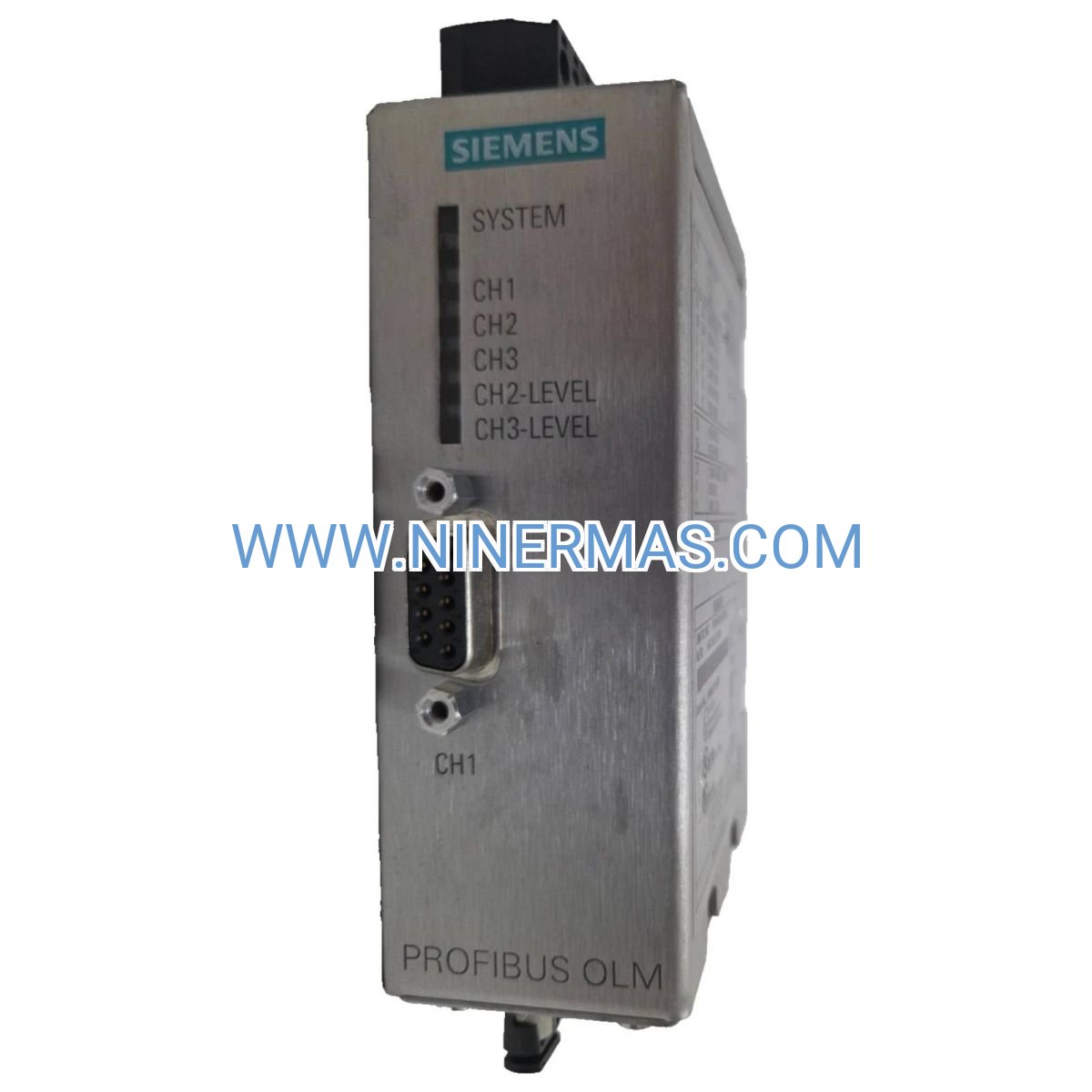
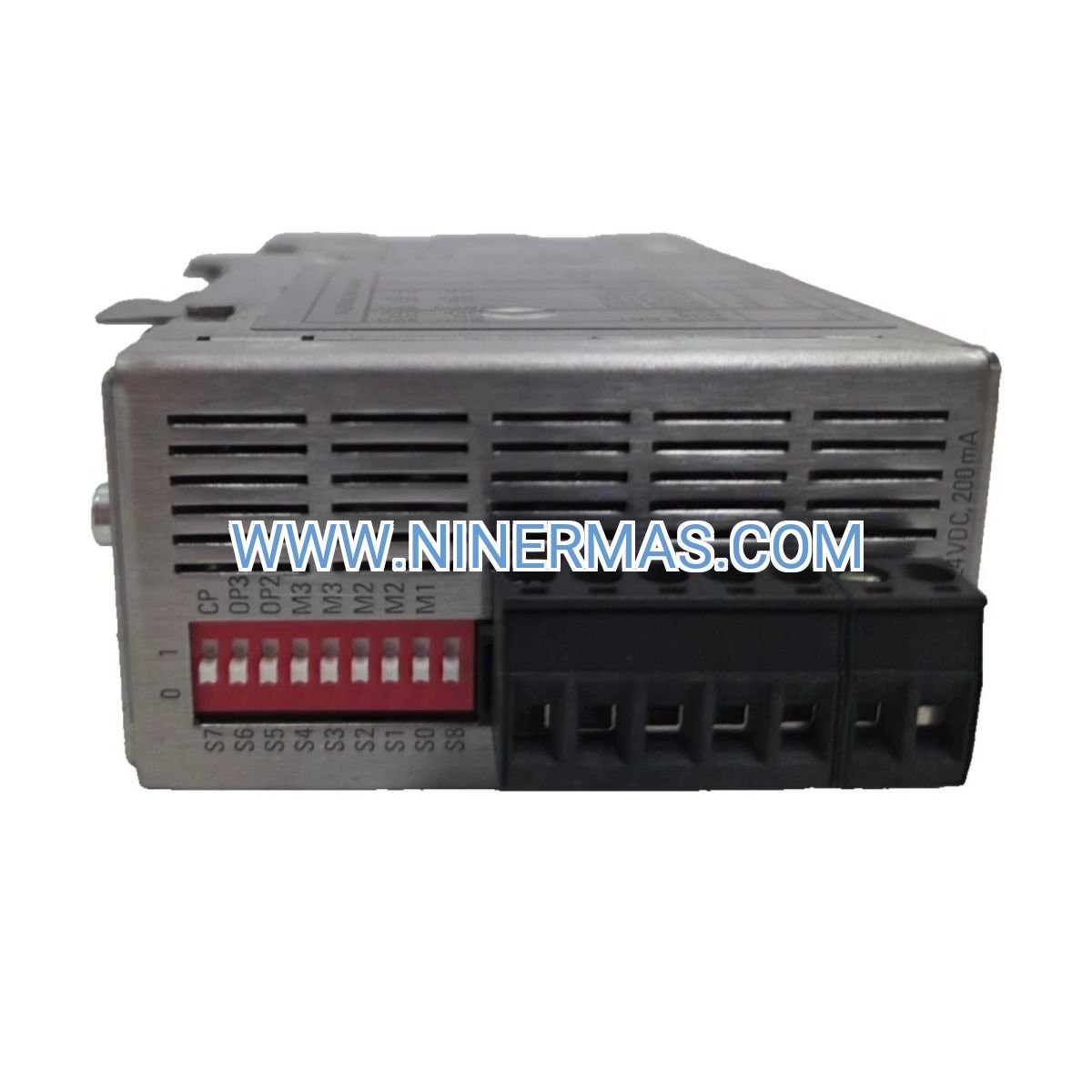
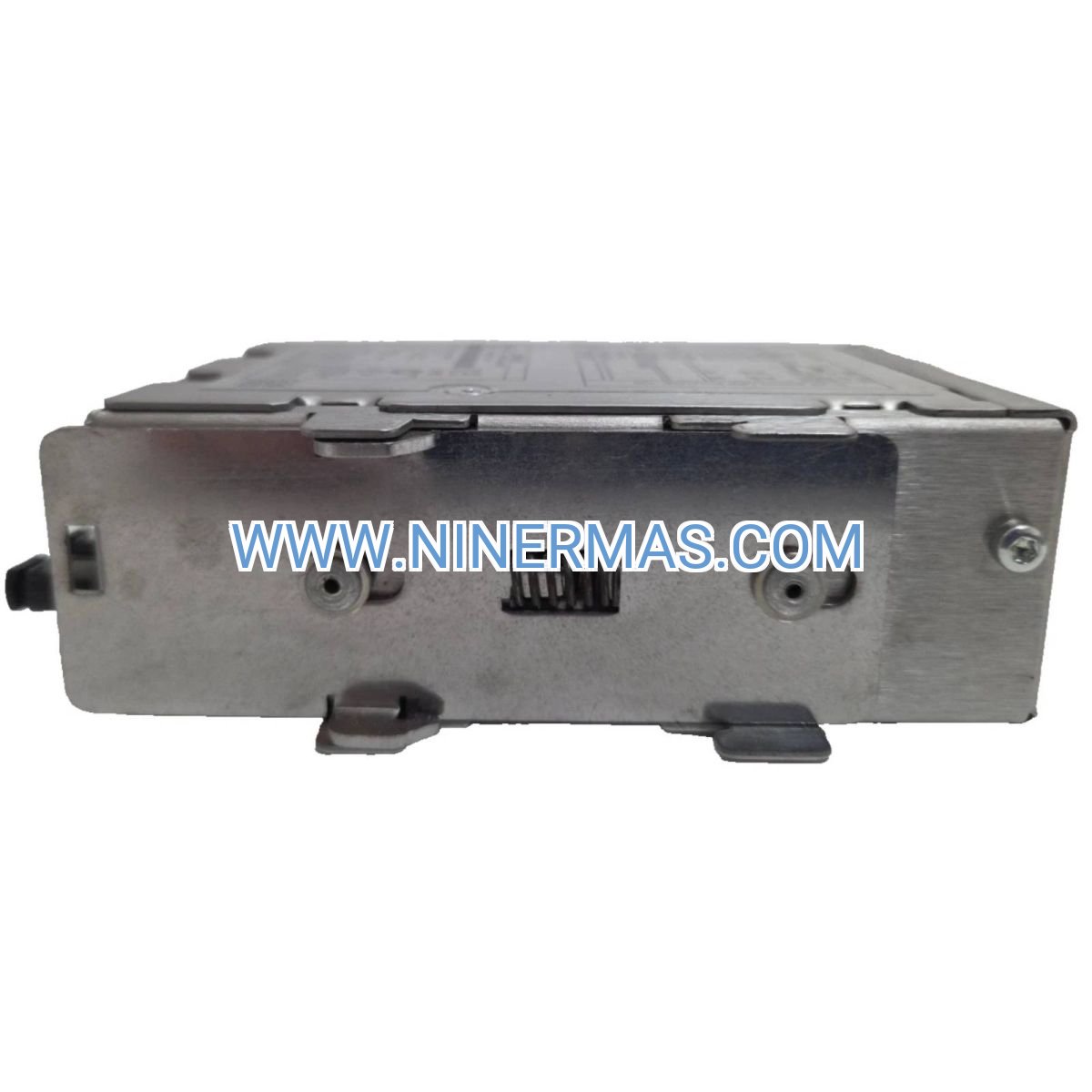
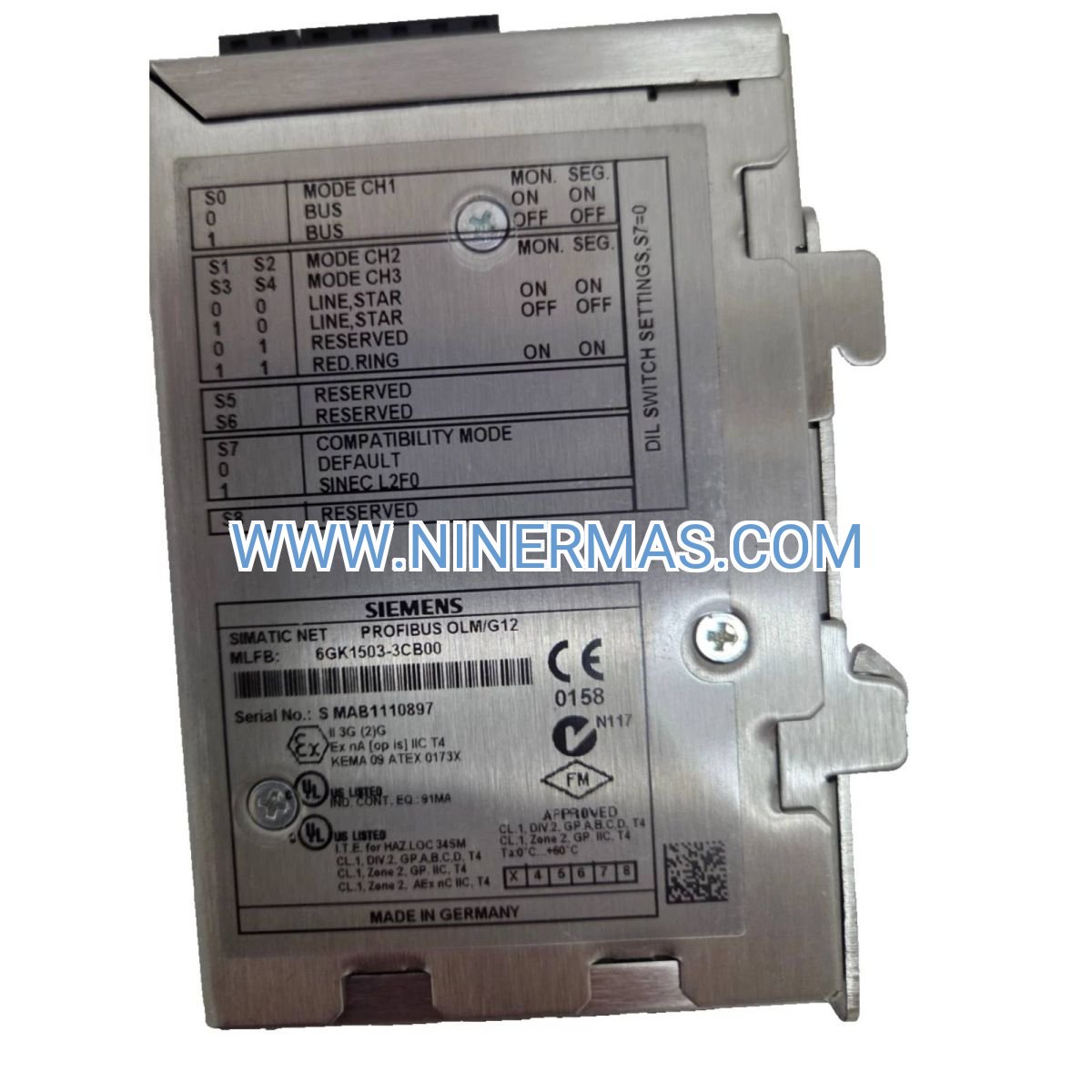
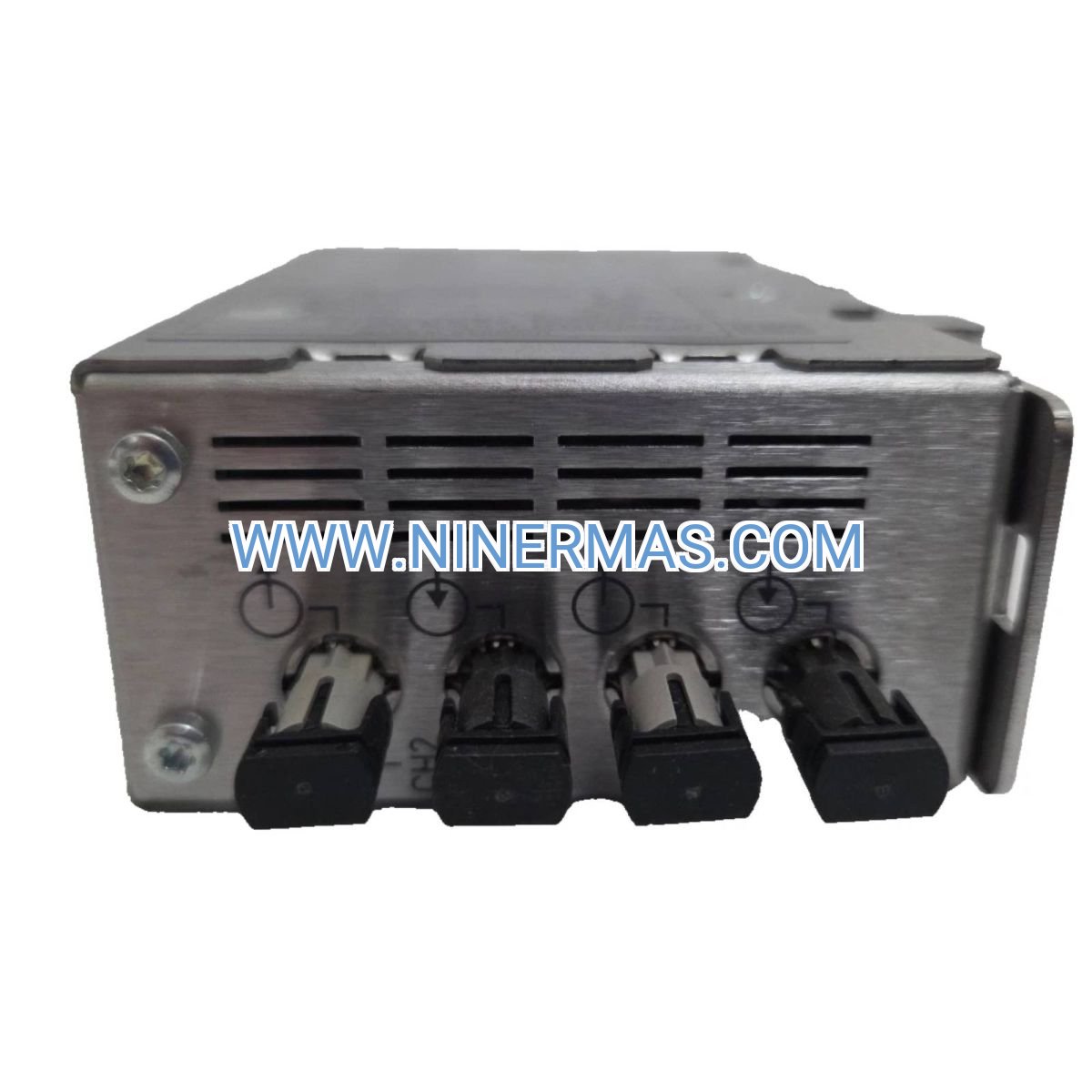
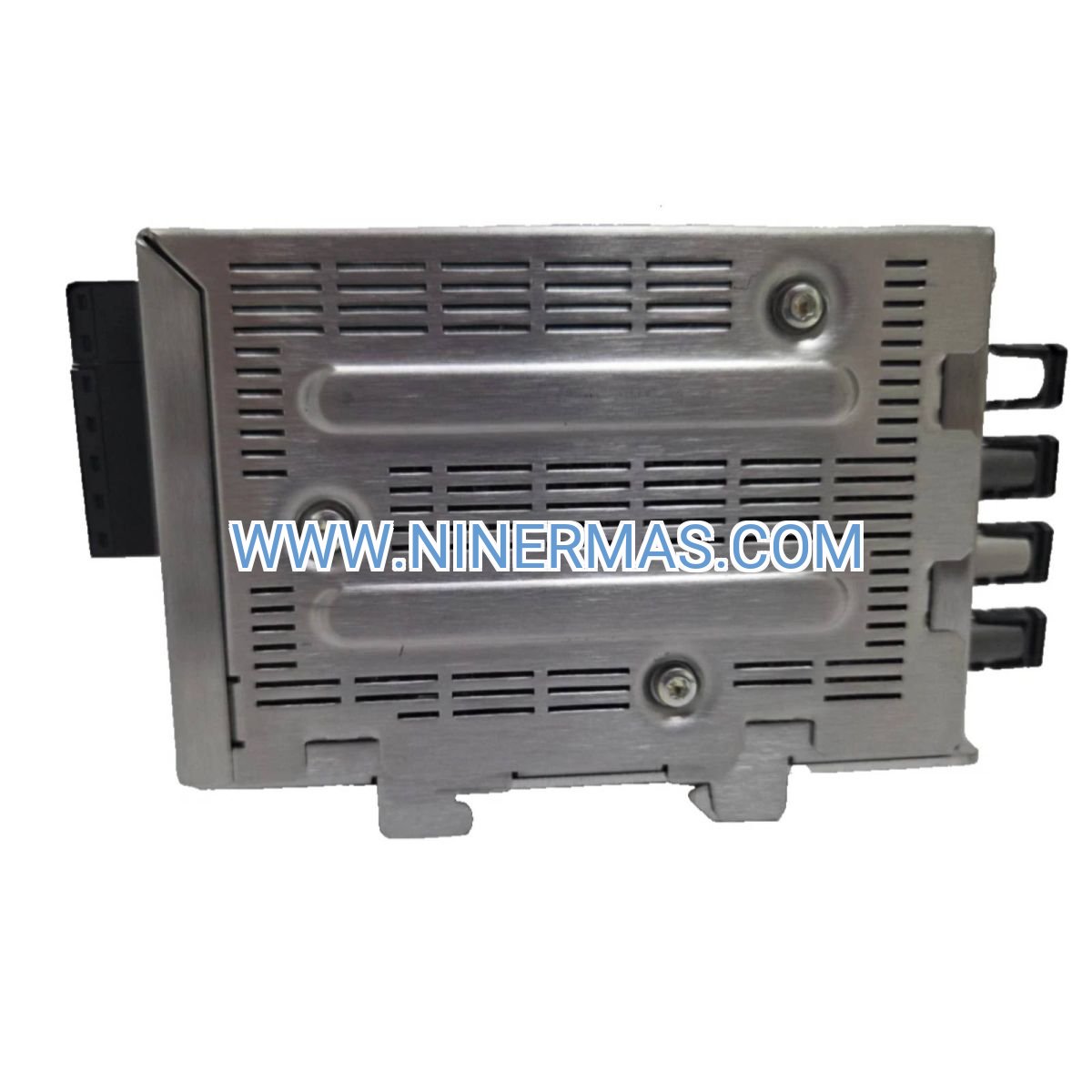
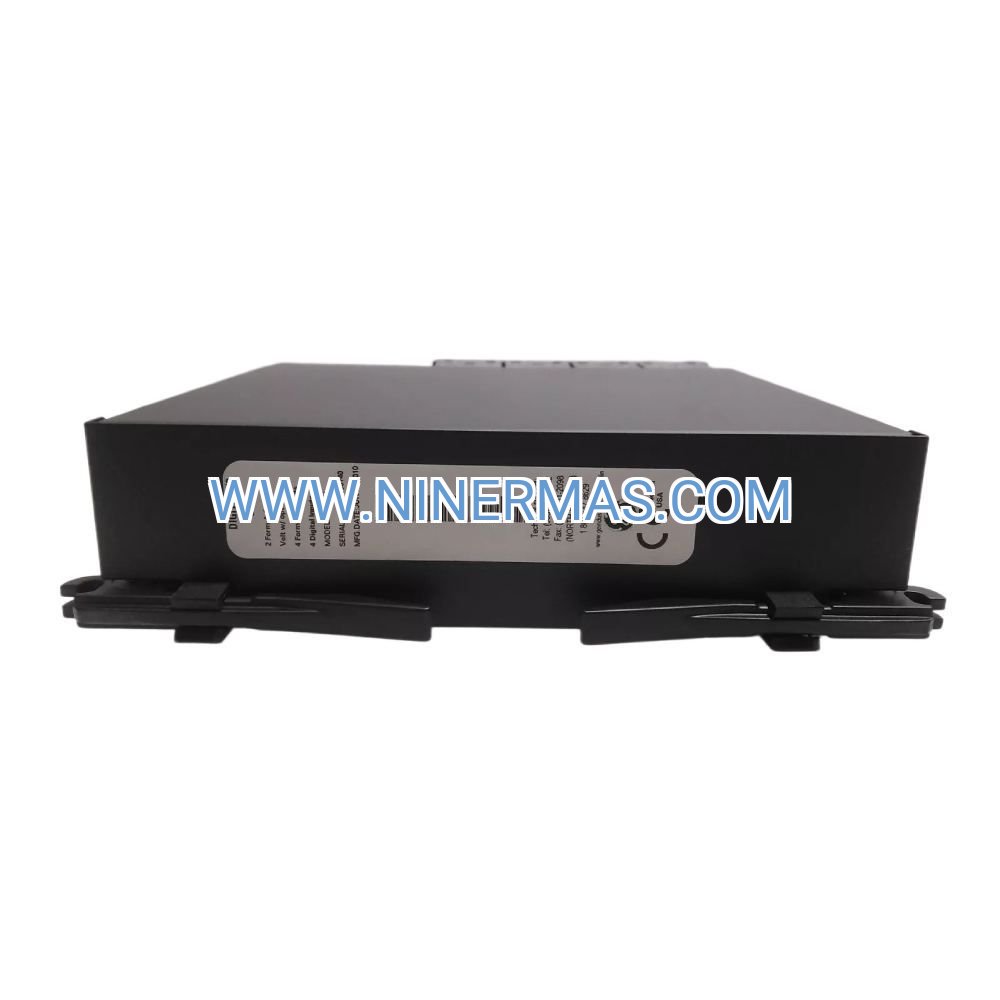
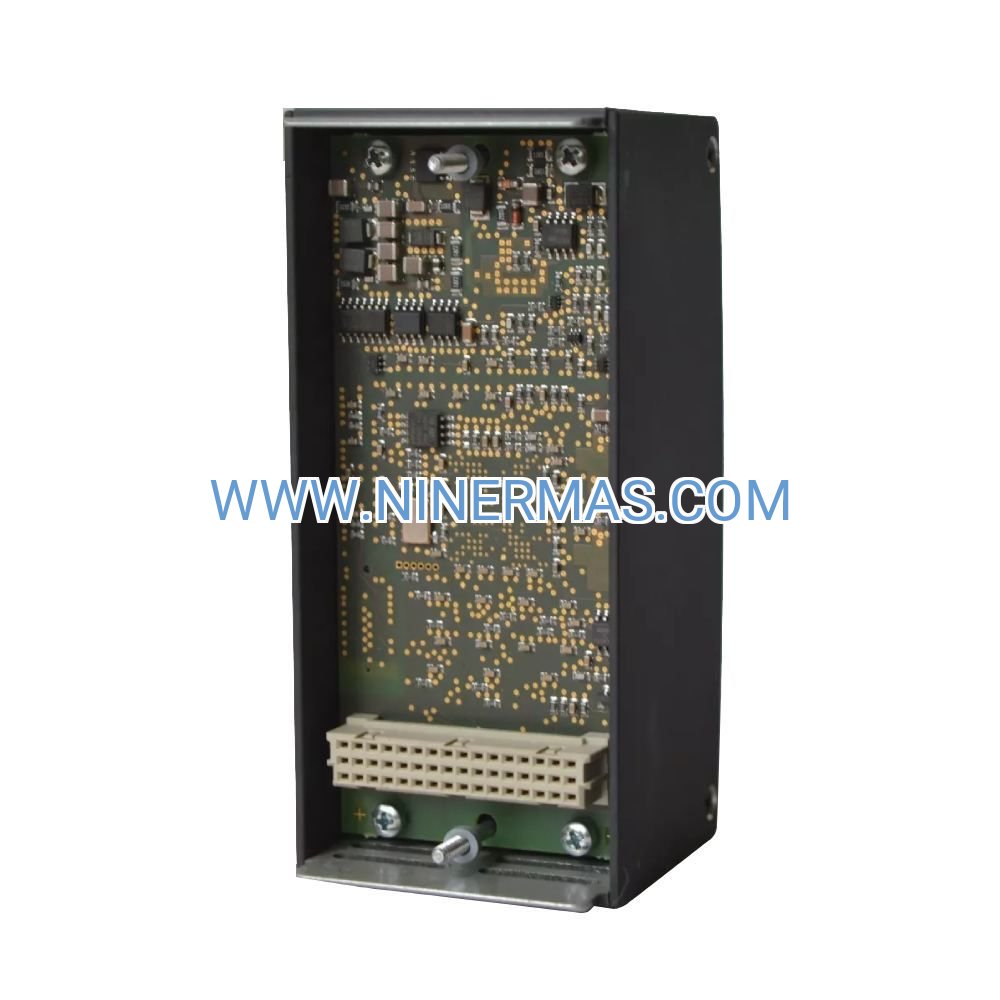
Siemens 6GK1503-2CC00 PROFIBUS Optical Link Module | Industrial Fiber Optic Communication
Description
Siemens 6GK1503-2CC00 PROFIBUS Optical Link Module (Industrial-Grade Fiber Optic Communication System)
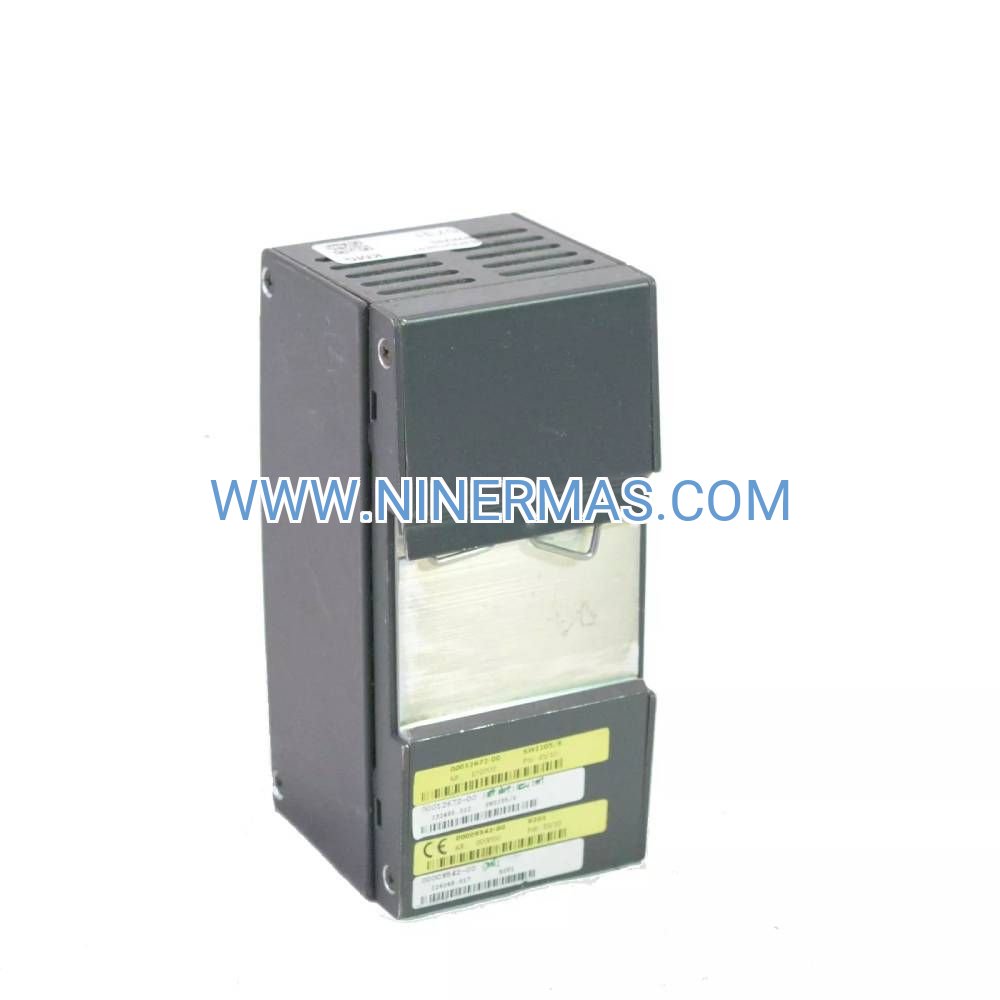
The Siemens 6GK1503-2CC00 SIMATIC DP PROFIBUS Optical Link Module is an industrial-grade communication device designed for electromagnetic interference (EMI)-free data transmission in PROFIBUS networks. Through fiber optic technology and PROFIBUS DP protocol support, it enables reliable, high-speed communication over extended distances up to 3 kilometers, ensuring stable operation in electrically noisy industrial environments.
This module is specifically engineered for manufacturing facilities, process automation systems, power generation plants, and heavy industrial applications where electrical isolation, lightning protection, and immunity to electromagnetic interference are critical requirements. It addresses common challenges including signal degradation in long-distance copper cabling, ground loop issues, electrical noise interference, and the need for galvanic isolation between network segments.
Featuring standardized design with flexible configuration options, this optical link module delivers exceptional reliability, simplified installation procedures, minimal maintenance requirements, and broad compatibility with existing PROFIBUS infrastructure. It serves design engineers, system integrators, automation contractors, and plant maintenance teams seeking robust communication solutions. Contact our technical specialists for application-specific configuration guidance and quotation assistance.
Core Features & Technical Advantages
- EMI-Free Fiber Optic Transmission
Utilizes glass or plastic optical fiber instead of copper cabling, completely eliminating electromagnetic interference, radio frequency interference, and ground loop problems common in industrial environments with heavy machinery, VFDs, and high-voltage equipment. - Extended Communication Range
Supports point-to-point fiber optic links up to 3,000 meters (3 km) at full 12 Mbps data rate, significantly exceeding the 100-200 meter limitations of standard copper RS-485 PROFIBUS segments without requiring repeaters. - Galvanic Isolation & Lightning Protection
Provides complete electrical isolation between network segments, protecting sensitive PLC and control equipment from voltage surges, lightning strikes, and potential differences between grounded equipment in different buildings or areas. - High-Speed Data Transmission
Maintains PROFIBUS DP communication speeds up to 12 Mbps, ensuring real-time performance for time-critical automation applications including motion control, process monitoring, and distributed I/O systems. - Robust Industrial Construction
Built to withstand harsh factory conditions with wide operating temperature range, vibration resistance, and IP20 protection rating suitable for control cabinet mounting in demanding industrial environments. - Plug-and-Play Integration
Seamlessly integrates with existing SIMATIC S7 PLCs, PROFIBUS DP networks, and third-party PROFIBUS devices through standard 9-pin D-sub connectors and fiber optic interfaces, minimizing configuration complexity and commissioning time.
Typical Application Scenarios
The 6GK1503-2CC00 optical link module is ideal for industrial automation systems requiring reliable communication in electrically challenging environments, particularly:
- Multi-Building Manufacturing Facilities
Connects PROFIBUS networks between separate production buildings, warehouses, or utility areas where long cable runs and potential ground differences make copper cabling unreliable or unsafe. - High-Voltage & Power Generation Environments
Provides safe communication in substations, power plants, and electrical distribution facilities where high-voltage equipment creates severe electromagnetic fields that would disrupt copper-based networks. - Process Industries with Hazardous Areas
Enables communication across zone boundaries in chemical plants, refineries, and pharmaceutical facilities where electrical isolation is required for safety and regulatory compliance. - Metal Processing & Heavy Industry
Ensures reliable data transmission in steel mills, foundries, and metal fabrication plants where arc welding, induction heating, and large motor drives generate extreme electrical noise. - Outdoor & Exposed Installations
Supports communication infrastructure in mining operations, water treatment plants, and outdoor material handling systems where lightning protection and weather resistance are essential.
Technical Specifications & Selection Guide
To facilitate system design and component selection, we provide key technical parameters for the 6GK1503-2CC00 optical link module. Custom configurations and application-specific recommendations are available upon request.
| Parameter | Specification |
|---|---|
| Product Code | 6GK1503-2CC00 |
| Protocol Support | PROFIBUS DP |
| Transmission Medium | Fiber Optic (Glass/Plastic) |
| Maximum Distance | Up to 3,000 meters (3 km) |
| Data Rate | 9.6 kbps to 12 Mbps |
| Electrical Interface | 9-pin D-sub connector (RS-485) |
| Optical Interface | ST, SC, or BFOC connector (model dependent) |
| Power Supply | 24V DC (typical) |
| Operating Temperature | 0°C to +60°C |
| Protection Rating | IP20 |
| Mounting | DIN rail or panel mount |
| Dimensions | Compact modular housing |
Selection Considerations: When specifying optical link modules, evaluate the following factors: maximum communication distance required, existing PROFIBUS baud rate settings, fiber optic cable type availability (multimode/singlemode), connector type compatibility, environmental conditions (temperature, vibration, humidity), power supply availability, and cabinet space constraints. For assistance with system architecture design or product selection, please provide your application parameters including network topology, distance requirements, and environmental conditions. Our engineering team will recommend the optimal configuration and provide technical documentation.
System Integration & Compatibility
- SIMATIC S7 PLC Integration: Direct compatibility with S7-300, S7-400, and S7-1500 series controllers via PROFIBUS DP interface
- Distributed I/O Support: Works with ET200 series remote I/O stations and third-party PROFIBUS DP slaves
- Network Topology: Supports linear, tree, and ring topologies when combined with appropriate fiber optic infrastructure
- Redundancy Options: Can be configured in redundant communication architectures for high-availability applications
- Diagnostic Capabilities: Provides LED status indicators and diagnostic data accessible through STEP 7 engineering software
Delivery, Service & Quality Assurance
Standard catalog items are typically available from stock with delivery within 3-7 business days for common configurations. Custom-configured systems or large project quantities may require 2-4 weeks lead time depending on specifications and order volume.
All products are backed by a comprehensive 12-month warranty covering manufacturing defects and material failures. Technical support includes remote troubleshooting assistance, configuration guidance, and on-site commissioning services available in select regions. Complete technical documentation is provided with each order, including product datasheet, wiring diagrams, PROFIBUS configuration files (GSD), installation instructions, and maintenance guidelines to facilitate smooth integration and ongoing operation.
Our products are sourced through authorized distribution channels and comply with relevant international standards including CE marking, UL/cUL certifications where applicable, and RoHS environmental compliance.
Frequently Asked Questions (FAQ)
Q: How does the PROFIBUS optical link module connect to existing copper-based PROFIBUS networks?
A: The 6GK1503-2CC00 features standard 9-pin D-sub RS-485 connectors on the electrical side, allowing direct connection to conventional PROFIBUS DP copper segments. The module acts as a media converter, transparently bridging between copper and fiber optic segments. Installation requires mounting the module at each end of the fiber link, connecting the copper PROFIBUS cables to the electrical ports, and connecting the fiber optic cable between the optical ports. No special programming or configuration is typically required beyond standard PROFIBUS network setup.
Q: What is the maximum number of optical link modules that can be used in a single PROFIBUS network?
A: Multiple optical link segments can be incorporated into a PROFIBUS DP network, subject to the overall network limitations of 126 devices (addresses) and total network propagation delay constraints. Each fiber optic segment counts toward the total network topology. For complex multi-segment networks, careful planning of baud rates, segment lengths, and repeater placement is recommended. Consult PROFIBUS network design guidelines or contact our engineering team for multi-segment network architecture assistance.
Q: What type of fiber optic cable is required, and can existing fiber infrastructure be used?
A: The 6GK1503-2CC00 typically supports multimode fiber optic cable (50/125 μm or 62.5/125 μm) with ST, SC, or BFOC connectors depending on the specific model variant. If your facility has existing fiber optic infrastructure installed for other purposes (Ethernet, telephone, etc.), it may be compatible provided the fiber type, connector style, and optical loss budget meet the module specifications. We can assist with compatibility assessment and provide fiber optic cable recommendations or sourcing if needed.
Q: What are the actual energy savings or operational cost benefits of using fiber optic communication?
A: While the optical link module itself does not directly reduce energy consumption, it delivers significant operational cost benefits by eliminating communication failures, reducing troubleshooting time, preventing equipment damage from electrical surges, and extending the lifespan of connected devices through galvanic isolation. In electrically noisy environments, fiber optic communication can reduce network downtime by 70-90% compared to copper cabling, translating to substantial productivity improvements and maintenance cost savings. The return on investment is typically realized within 6-18 months in challenging industrial applications.
Q: What environmental conditions or installation requirements must be considered?
A: The module is designed for indoor control cabinet installation with IP20 protection rating, requiring mounting in an enclosure that protects against dust and accidental contact. Operating temperature range is 0°C to +60°C, suitable for climate-controlled industrial environments. Adequate ventilation should be provided to prevent heat buildup in densely populated cabinets. The fiber optic cable itself should be protected from sharp bends (minimum bend radius typically 10-20x cable diameter), crushing, and excessive pulling force during installation. Proper cable management and strain relief are essential for long-term reliability.
Q: Does the module support remote monitoring, diagnostics, or integration with SCADA systems?
A: Yes, the optical link module provides diagnostic information accessible through the PROFIBUS DP network using STEP 7 engineering software or compatible HMI/SCADA systems. Diagnostic data includes link status, signal quality indicators, and fault conditions. LED indicators on the module housing provide local visual status for quick troubleshooting. For advanced monitoring applications, the diagnostic data can be integrated into plant-wide monitoring systems via OPC servers or other industrial communication protocols supported by your SIMATIC PLC.
Request Technical Support & Quotation
To receive detailed application engineering support, product selection recommendations, or pricing quotation, please provide the following information: project name and description, application environment and industry, required communication distance and network topology, number of PROFIBUS devices and addresses, existing PLC and automation platform, electrical power supply specifications, environmental conditions (temperature, humidity, vibration), and any special requirements or certifications needed.
Our technical specialists will respond with customized recommendations, configuration guidance, technical documentation, and competitive pricing tailored to your specific application requirements.
© 2026 NINERMAS COMPANY LIMITED. All rights reserved.
Original Source: https://ninermas.com
Contact: sale@ninermas.com | +0086 187 5021 5667

Contact Info
-
Address:22 / F, South Wo Hang building, 148 Wing Lok Street, Sheung Wan, Western District, Hong Kong
-
Phone:+8618750215667
-
Email: