


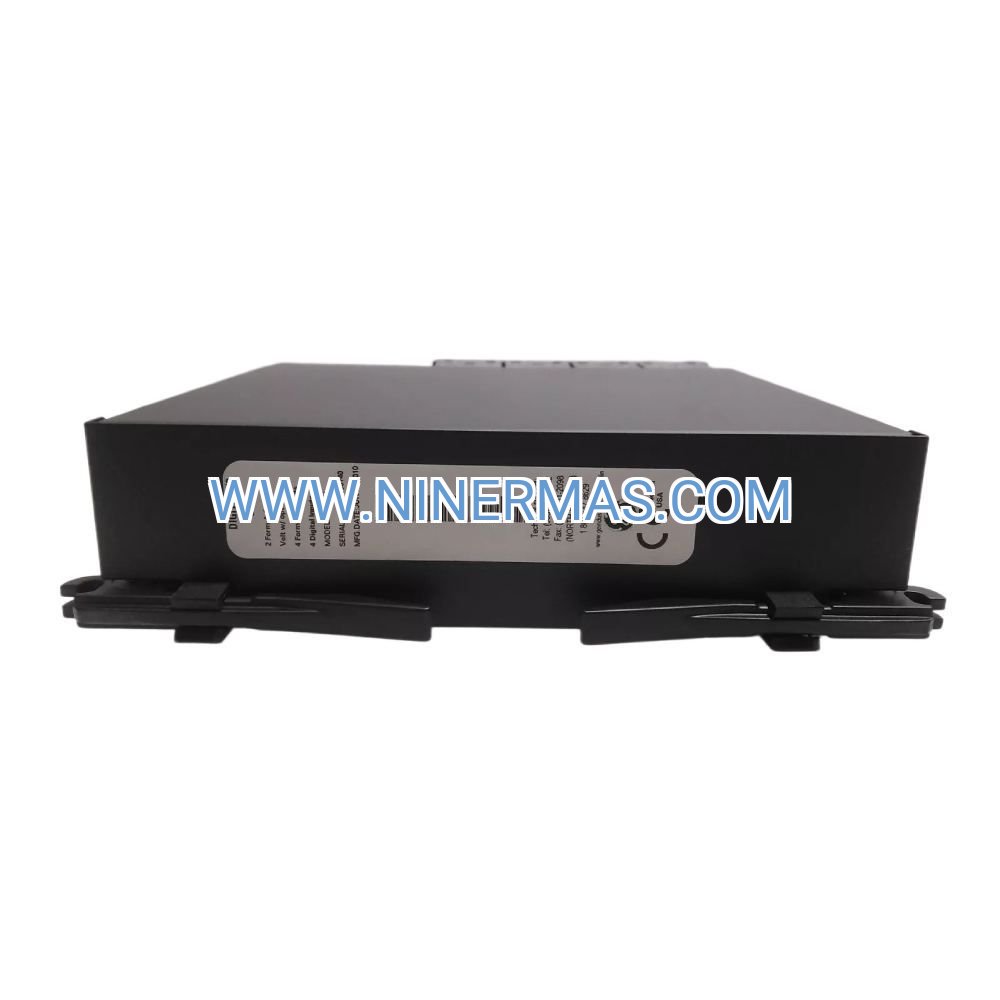
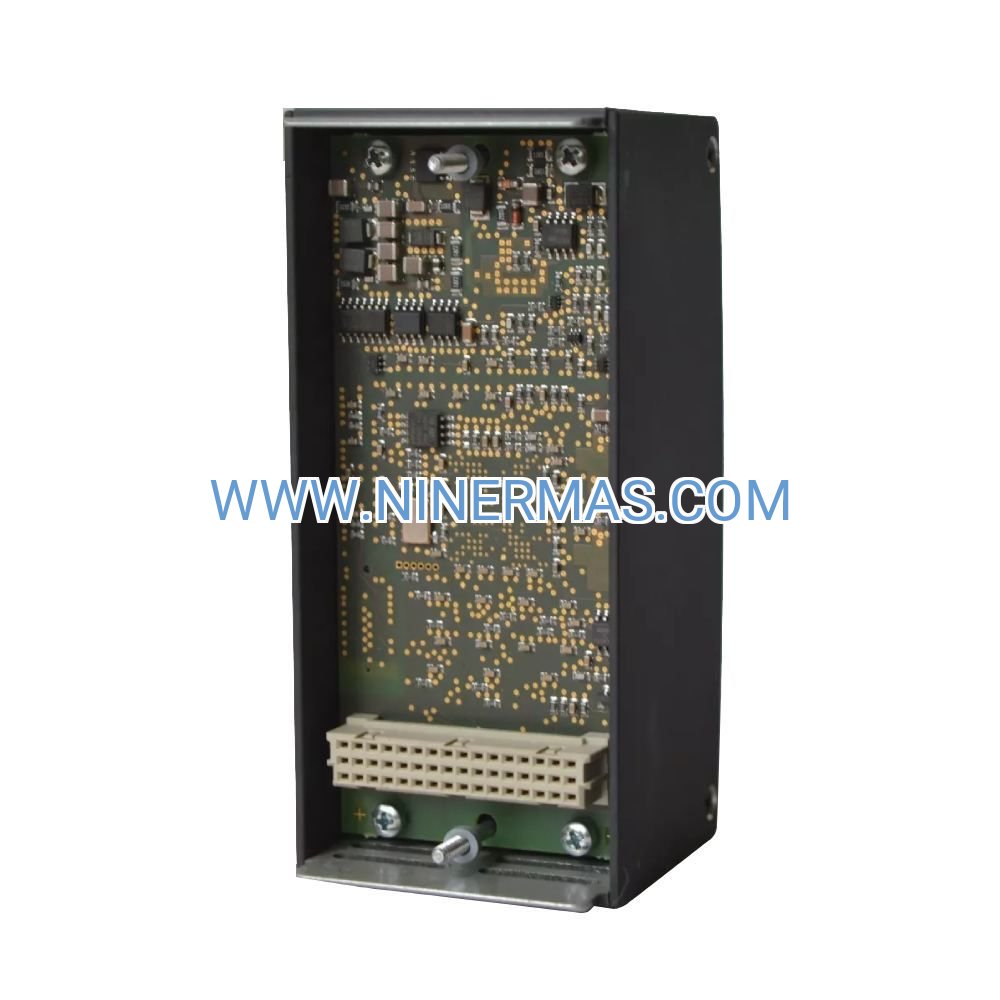
Siemens S7-400H Redundancy Module 6ES7870-1AA01-0YA1 | Fault-Tolerant PLC Accessory
Description
Siemens S7-400H Redundancy Module (Industrial Fault-Tolerant Control Solution)
The Siemens 6ES7870-1AA01-0YA1 is an industrial-grade redundancy accessory module designed for SIMATIC S7-400H fault-tolerant automation systems. Through dual-CPU architecture and real-time synchronization technology, it ensures seamless failover and continuous operation, delivering zero-downtime control for mission-critical processes.
Ideal for high-availability applications including petrochemical plants, power generation facilities, water treatment systems, pharmaceutical production lines, and continuous manufacturing processes. It addresses challenges such as unplanned downtime, production loss from single-point failures, safety risks in critical control loops, and costly manual intervention during system faults.
With standardized design and flexible configuration options, this module offers rapid fault detection (< 100ms), automatic switchover capability, hot-swap maintenance support, and compatibility with existing S7-400 infrastructure. Suitable for design institutes, system integrators, EPC contractors, and end-user industrial facilities. Contact our engineers for application-specific selection and quotation.
Core Functions & Advantages
Automatic Redundancy Switching
Dual-CPU hot-standby configuration with continuous synchronization ensures automatic failover within milliseconds when primary controller fails, eliminating process interruption and maintaining control integrity.
Enhanced System Availability
Achieves up to 99.99% uptime through redundant architecture, significantly reducing production losses caused by controller failures. Proven reliability in 24/7 continuous operation environments.
Hot-Swap Maintenance Capability
Supports online replacement of faulty modules without system shutdown, enabling maintenance during operation and minimizing planned downtime for critical production lines.
Comprehensive Diagnostic Protection
Built-in monitoring for CPU synchronization status, communication health, power supply integrity, and module faults. Real-time diagnostics via STEP 7 software reduce troubleshooting time and prevent cascading failures.
Seamless Integration
Fully compatible with SIMATIC S7-400H controller family, standard PROFIBUS DP/PA networks, and existing automation infrastructure. Simplifies retrofit projects and system expansion with minimal engineering effort.
Intuitive Configuration Interface
Configured through STEP 7 engineering software with clear redundancy parameter settings, synchronization status visualization, and fault event logging. Supports multi-language interface for global deployment.
Typical Application Scenarios
This module is specifically designed for processes requiring high availability, continuous operation, and zero-tolerance for control system failures, including:
Petrochemical & Refining Operations
Ensures uninterrupted control of distillation columns, reactor systems, and pipeline networks where process interruption could lead to safety hazards, product quality issues, or environmental incidents.
Power Generation & Distribution
Maintains reliable control for turbine systems, boiler management, substation automation, and grid synchronization where downtime directly impacts power supply stability and revenue.
Water & Wastewater Treatment
Provides fail-safe operation for municipal water supply, sewage treatment plants, and industrial effluent systems where control failure affects public health and environmental compliance.
Pharmaceutical & Biotech Manufacturing
Supports GMP-compliant production with validated redundancy for batch reactors, fermentation systems, and cleanroom environmental controls where process deviation causes batch rejection.
Continuous Process Industries
Applicable to steel rolling mills, paper machines, cement kilns, and food processing lines where production continuity directly determines operational efficiency and cost structure.
Technical Parameters & Selection Guide
To facilitate engineering design and system selection, we provide standard technical specifications. Custom configurations available based on project requirements.
Key Specifications:
- Module Type: Redundancy Accessory for S7-400H Controllers
- Compatible Systems: SIMATIC S7-400H Fault-Tolerant PLCs
- Synchronization Method: Fiber-optic or electrical redundancy link
- Switchover Time: Typically < 100 milliseconds (bumpless transfer)
- Power Supply: 24V DC (via backplane bus)
- Operating Temperature: 0°C to +60°C (horizontal installation)
- Protection Rating: IP20 (for control cabinet installation)
- Certifications: CE, UL, cULus, ATEX (zone 2), IECEx
- Dimensions: Standard S7-400 module format
- MTBF: > 10 years under rated conditions
Selection Recommendations:
When selecting redundancy configuration, consider: required system availability level (e.g., 99.9% vs 99.99%), process criticality and safety classification, existing S7-400H CPU models and firmware versions, communication network architecture (PROFIBUS/PROFINET), installation environment conditions, and maintenance strategy (online vs offline). For assistance, please provide process description, I/O scale, network topology, and availability requirements. Our application engineers will recommend optimal configuration and provide budget quotation.
Extended Capabilities
Remote Monitoring Integration
Supports SCADA/HMI connectivity via PROFIBUS DP, PROFINET, or Industrial Ethernet for centralized monitoring. Redundancy status, synchronization health, and fault events can be visualized on operator stations or integrated into plant-wide MES/DCS systems.
Cybersecurity Features
Compatible with Siemens Industrial Security architecture including access control, encrypted communication (where supported by network infrastructure), and audit trail logging to meet IEC 62443 requirements for critical infrastructure protection.
Scalable Architecture
Modular design allows expansion from basic redundant CPU pairs to complex multi-rack configurations with distributed I/O, redundant communication networks, and geographically separated controller locations for disaster recovery scenarios.
Delivery, Service & Quality Assurance
Lead Time: Standard catalog items typically ship within 5-10 business days; custom-configured systems require 15-25 days depending on complexity and component availability.
Warranty: 12-month manufacturer warranty covering material defects and workmanship. Extended warranty and preventive maintenance contracts available.
Technical Support: Pre-sales application consulting, configuration file review, commissioning guidance (remote or on-site depending on location), and post-sales troubleshooting support. Emergency hotline available for critical installations.
Documentation Package: Complete technical documentation including hardware installation manual, redundancy configuration guide, wiring diagrams, STEP 7 sample programs, and maintenance procedures provided with each shipment. Multi-language versions available.
Certifications: All modules supplied with original Siemens factory certification, CE declaration of conformity, and traceability documentation for quality assurance and regulatory compliance.
Frequently Asked Questions (FAQ)
Q: How does the S7-400H redundancy module integrate with existing S7-400 standard systems?
A: The redundancy module requires S7-400H series CPUs (not compatible with standard S7-400 CPUs). Integration involves installing redundant CPU pairs, connecting synchronization cables (fiber or electrical), configuring redundancy parameters in STEP 7, and downloading synchronized programs to both controllers. Existing I/O modules and communication networks can typically be reused with appropriate configuration updates.
Q: What is the maximum number of I/O points supported in a redundant S7-400H configuration?
A: Depending on CPU model (e.g., CPU 412H, 414H, 417H), the system supports from 4,096 to 65,536 digital I/O points and proportional analog channels. Distributed I/O via PROFIBUS DP or PROFINET can extend capacity further. Consult CPU datasheet for specific limits.
Q: What level of energy savings or efficiency improvement can redundancy provide?
A: Redundancy primarily improves availability rather than energy efficiency. However, by preventing unplanned shutdowns and enabling optimized process control during maintenance, it indirectly reduces energy waste from startup/shutdown cycles and off-spec production. Typical availability improvement: from 98-99% (non-redundant) to 99.9-99.99% (redundant).
Q: What are the environmental requirements for installing redundancy modules?
A: Modules require IP20-rated control cabinet installation, ambient temperature 0-60°C (horizontal mounting), relative humidity 5-95% non-condensing, pollution degree 2 per IEC 61131-2. Adequate ventilation and dust-free environment recommended. For harsh environments, consider climate-controlled enclosures.
Q: Can the system support remote monitoring and data acquisition? Which protocols are supported?
A: Yes, S7-400H supports multiple industrial protocols including PROFIBUS DP/PA, PROFINET IO, Industrial Ethernet (TCP/IP), Modbus TCP (via communication processors), and OPC UA (with appropriate gateways). Remote access possible via secure VPN connections following cybersecurity best practices.
Q: Is hot-swap replacement possible during operation, and what precautions are needed?
A: Yes, redundant architecture allows hot-swap of faulty CPU or communication modules while the partner controller maintains process control. Precautions: verify synchronization status before removal, follow ESD protection procedures, ensure replacement module has matching firmware version, and confirm automatic resynchronization after insertion. Detailed procedure in maintenance manual.
Contact & Technical Consultation
For detailed application engineering, system configuration, quotation, or technical support, please provide the following information: project name and industry sector, process description and criticality level, required I/O count and signal types, existing automation infrastructure (if retrofit), preferred communication networks, environmental conditions, and availability target (e.g., 99.9%, 99.99%). Our application engineers will provide one-on-one selection guidance, configuration recommendations, and competitive pricing.
© 2026 NINERMAS COMPANY LIMITED. All rights reserved. Original Source: https://ninermas.com Contact: sale@ninermas.com | +0086 187 5021 5667

Contact Info
-
Address:22 / F, South Wo Hang building, 148 Wing Lok Street, Sheung Wan, Western District, Hong Kong
-
Phone:+8618750215667
-
Email:
