


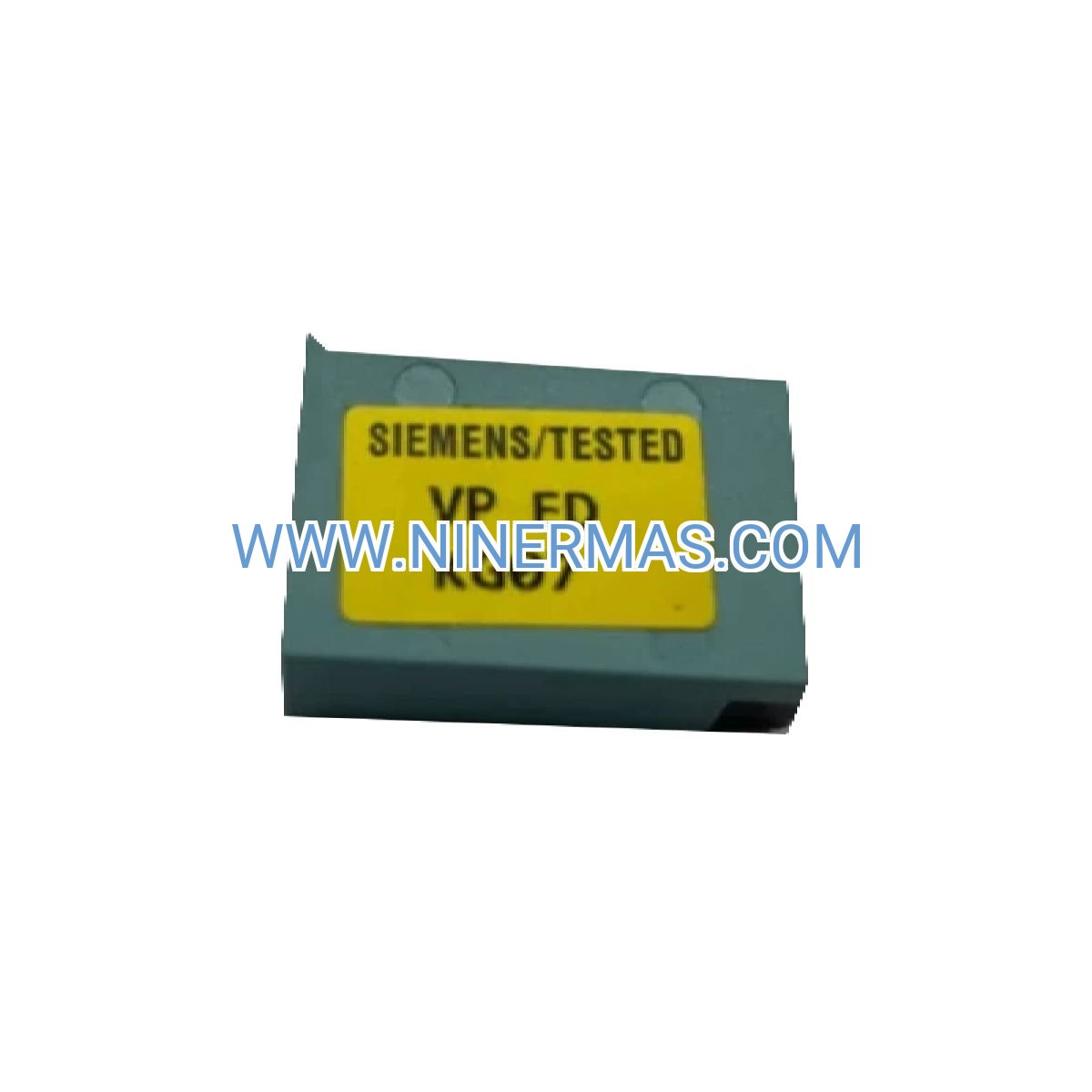
Siemens S7-400H Redundancy Module 6ES7870-1AA01-0YA1 | Fault-Tolerant PLC System
Description
Siemens S7-400H Redundancy Module (Industrial Fault-Tolerant Control Solution)
The Siemens 6ES7870-1AA01-0YA1 SIMATIC S7-400H Redundancy Accessory Module is an industrial-grade control component designed for mission-critical automation systems requiring continuous operation. Through dual-CPU architecture and real-time synchronization technology, it achieves automatic failover within milliseconds, ensuring zero downtime for process control, safeguarding production continuity and system reliability.
Ideal for petrochemical plants, power generation facilities, pharmaceutical manufacturing, water treatment systems, and continuous production lines where unplanned shutdowns can result in significant safety risks or economic losses. This module addresses challenges including single-point controller failures, insufficient system availability, extended recovery times, and lack of real-time fault diagnostics.
Featuring standardized design with flexible configuration options, this redundancy module offers seamless integration, hot-swappable capability, comprehensive diagnostics, and proven reliability. Suitable for design institutes, system integrators, EPC contractors, and end-user facilities. Contact our automation engineers for application-specific selection guidance and technical quotations.
Core Functions & Advantages
High-Availability Redundant Architecture
Dual S7-400H CPUs operate in synchronized mode with continuous cross-checking. Upon primary controller failure, the standby unit assumes control within 10-100ms, maintaining process stability without interruption or data loss.
Zero-Downtime Maintenance Capability
Supports online replacement of faulty modules, power supplies, and I/O cards without system shutdown. Reduces maintenance windows by up to 85% compared to non-redundant systems, maximizing production uptime.
Comprehensive Fault Detection & Diagnostics
Equipped with multi-level monitoring including CPU health checks, communication link supervision, power supply status, and I/O integrity verification. Provides early warning alerts and detailed fault logs for predictive maintenance.
Seamless Integration with Existing Infrastructure
Compatible with standard S7-400 I/O modules, communication processors, and engineering tools (TIA Portal, STEP 7). Supports PROFIBUS DP, PROFINET IO, and industrial Ethernet protocols for flexible network topology.
Proven Industrial Reliability
Operates reliably in harsh environments: -25°C to +60°C ambient temperature, IP20 protection rating, resistance to vibration and electromagnetic interference. Backed by Siemens quality standards and global service network.
Intuitive Engineering & Commissioning
Simplified configuration through TIA Portal with built-in redundancy templates. Automatic synchronization of program code, data blocks, and configuration parameters between redundant controllers reduces engineering time by 40%.
Typical Application Scenarios
This redundancy module is engineered for industries and processes demanding maximum availability, particularly in:
Petrochemical & Refining Operations
Ensures continuous control of distillation columns, reactor systems, and pipeline networks where unplanned shutdowns pose safety hazards and environmental risks. Meets SIL 2/3 safety integrity requirements for critical loops.
Power Generation & Distribution
Maintains stable operation of turbine control systems, boiler management, and substation automation. Prevents costly grid disruptions and equipment damage caused by control system failures in thermal, hydro, and renewable energy plants.
Pharmaceutical & Biotech Manufacturing
Guarantees uninterrupted control of fermentation processes, clean room HVAC systems, and batch production lines. Supports FDA 21 CFR Part 11 compliance with audit trail and electronic signature capabilities.
Water & Wastewater Treatment
Provides reliable control for municipal water supply pumping stations, treatment chemical dosing, and SCADA systems. Ensures regulatory compliance and prevents service interruptions affecting public health and safety.
Continuous Process Industries
Supports 24/7 operations in steel mills, cement plants, paper production, and food processing where production line stoppages result in material waste, equipment damage, and revenue loss exceeding $50,000 per hour.
Technical Parameters & Selection Guide
To facilitate system design and component selection, we provide key specifications for the 6ES7870-1AA01-0YA1 redundancy module. Custom configurations available based on project-specific requirements.
Core Specifications:
- Module Type: S7-400H Redundancy Accessory
- Compatible CPUs: S7-400H series (CPU 412H, 414H, 416H, 417H)
- Synchronization Interface: Fiber optic or electrical (project-dependent)
- Power Supply: 24V DC (redundant power recommended)
- Operating Temperature: -25°C to +60°C
- Protection Rating: IP20 (for control cabinet installation)
- Certifications: CE, UL, cULus, ATEX (zone 2), IECEx
- MTBF: >500,000 hours (calculated per SN 29500)
- Dimensions: Standard S7-400 module format (compatible with UR1/UR2 racks)
Selection Considerations:
When specifying redundancy solutions, evaluate: process criticality level (availability target 99.9% vs 99.99%), required failover time (<100ms for critical loops), I/O point count and distribution, communication protocol requirements (PROFIBUS/PROFINET), environmental conditions, and existing installed base compatibility. For assistance, provide process description, I/O list, network topology, and availability objectives—our engineers will recommend optimized architecture and component selection.
System Architecture & Integration
Redundant Controller Configuration
Each S7-400H system comprises two identical CPUs connected via the redundancy module, operating in hot-standby mode. Both controllers execute the same program simultaneously, with continuous data synchronization ensuring bumpless transfer during switchover events.
I/O Redundancy Options
Supports both switched I/O (single I/O modules with automatic reassignment) and redundant I/O (dual modules for critical signals). Flexible topology accommodates centralized, distributed (PROFIBUS DP), and remote I/O (PROFINET) configurations based on application needs.
Communication Redundancy
Integrates with redundant communication processors (CP 443-1, CP 443-5) for fault-tolerant connections to SCADA systems, MES platforms, and peer controllers. Supports media redundancy protocol (MRP) and S2 system redundancy for industrial Ethernet networks.
Engineering & Diagnostics Tools
Programmed and maintained through Siemens TIA Portal or STEP 7 Classic. Built-in web server provides real-time system status, diagnostic buffers, and performance metrics accessible via standard browsers. OPC UA server enables seamless integration with third-party HMI and analytics platforms.
Delivery, Service & Quality Assurance
Lead Time: Standard catalog items ship within 3-5 business days; configured systems with custom I/O and communication modules typically deliver in 2-3 weeks. Expedited service available for urgent projects.
Warranty & Support: All modules include 12-month manufacturer warranty covering defects in materials and workmanship. Extended warranty and preventive maintenance contracts available. Technical support includes remote diagnostics, on-site commissioning assistance (region-dependent), and 24/7 hotline access.
Documentation Package: Each delivery includes electrical schematics, I/O wiring diagrams, configuration files, operation manuals (English/Chinese), and compliance certificates. Custom documentation for project-specific applications provided upon request.
Quality Certifications: Manufactured under ISO 9001 quality management system. Products comply with IEC 61131, IEC 61508 (functional safety), and regional standards (CE, UL, CCC). Factory acceptance testing (FAT) and site acceptance testing (SAT) protocols available for critical projects.
Frequently Asked Questions (FAQ)
Q: How does the S7-400H redundancy module integrate with existing non-redundant S7-400 systems?
A: The module enables migration from standard S7-400 to fault-tolerant S7-400H architecture. Existing I/O modules, communication processors, and application programs can be reused with minimal modifications. Requires compatible H-series CPUs and redundancy-capable power supplies. Our engineers provide detailed migration roadmaps including hardware compatibility checks, program conversion guidelines, and commissioning procedures.
Q: What is the typical failover time when the primary controller fails?
A: Switchover occurs within 10-100 milliseconds depending on system configuration and I/O architecture. For critical analog control loops, bumpless transfer maintains output values within ±0.5% of setpoint. Digital outputs experience no state changes during failover. Actual performance validated during factory acceptance testing.
Q: Can the redundancy module support both PROFIBUS and PROFINET I/O simultaneously?
A: Yes, S7-400H systems support mixed I/O networks. You can connect PROFIBUS DP slaves via redundant DP master modules and PROFINET devices through redundant communication processors on the same controller pair. Maximum I/O capacity: 65,536 digital points and 4,096 analog channels per redundant system.
Q: What environmental conditions are required for installation?
A: The module operates reliably in industrial environments: -25°C to +60°C ambient temperature (derate above 40°C), 5-95% relative humidity (non-condensing), IP20 protection rating (requires enclosed control cabinet). Avoid direct exposure to corrosive gases, excessive vibration (>2g), or strong electromagnetic fields. Adequate ventilation required—minimum 100mm clearance above/below modules.
Q: Does the system support remote monitoring and predictive maintenance?
A: Yes, through integrated diagnostics and communication capabilities. The redundancy module continuously monitors CPU health, synchronization status, battery condition, and I/O integrity. Diagnostic data accessible via SCADA systems, web server, or Siemens cloud-based monitoring platforms (MindSphere). Supports OPC UA, SNMP, and email/SMS alarm notifications for proactive maintenance scheduling.
Q: What is the maximum distance between redundant CPUs and distributed I/O?
A: For fiber optic PROFIBUS DP: up to 15km between controller and remote I/O. For PROFINET over fiber: up to 100km with appropriate media converters. Redundant CPU synchronization cables: electrical up to 10m, fiber optic up to 10km. Actual distances depend on cable type, network topology, and communication load—consult engineering guidelines for specific applications.
Request Selection Support & Quotation
To receive customized system recommendations, technical specifications, and pricing, please provide the following project information: application description and industry sector, required system availability target (e.g., 99.95%), total I/O point count (digital inputs/outputs, analog signals), communication protocol requirements (PROFIBUS/PROFINET/Ethernet), environmental conditions and installation location, existing automation infrastructure (if migration project). Our automation engineers will deliver tailored proposals within 24-48 hours including architecture diagrams, bill of materials, and budget estimates.
© 2026 NINERMAS COMPANY LIMITED. All rights reserved. Original Source: https://ninermas.com Contact: sale@ninermas.com | +0086 187 5021 5667

Contact Info
-
Address:22 / F, South Wo Hang building, 148 Wing Lok Street, Sheung Wan, Western District, Hong Kong
-
Phone:+8618750215667
-
Email:
