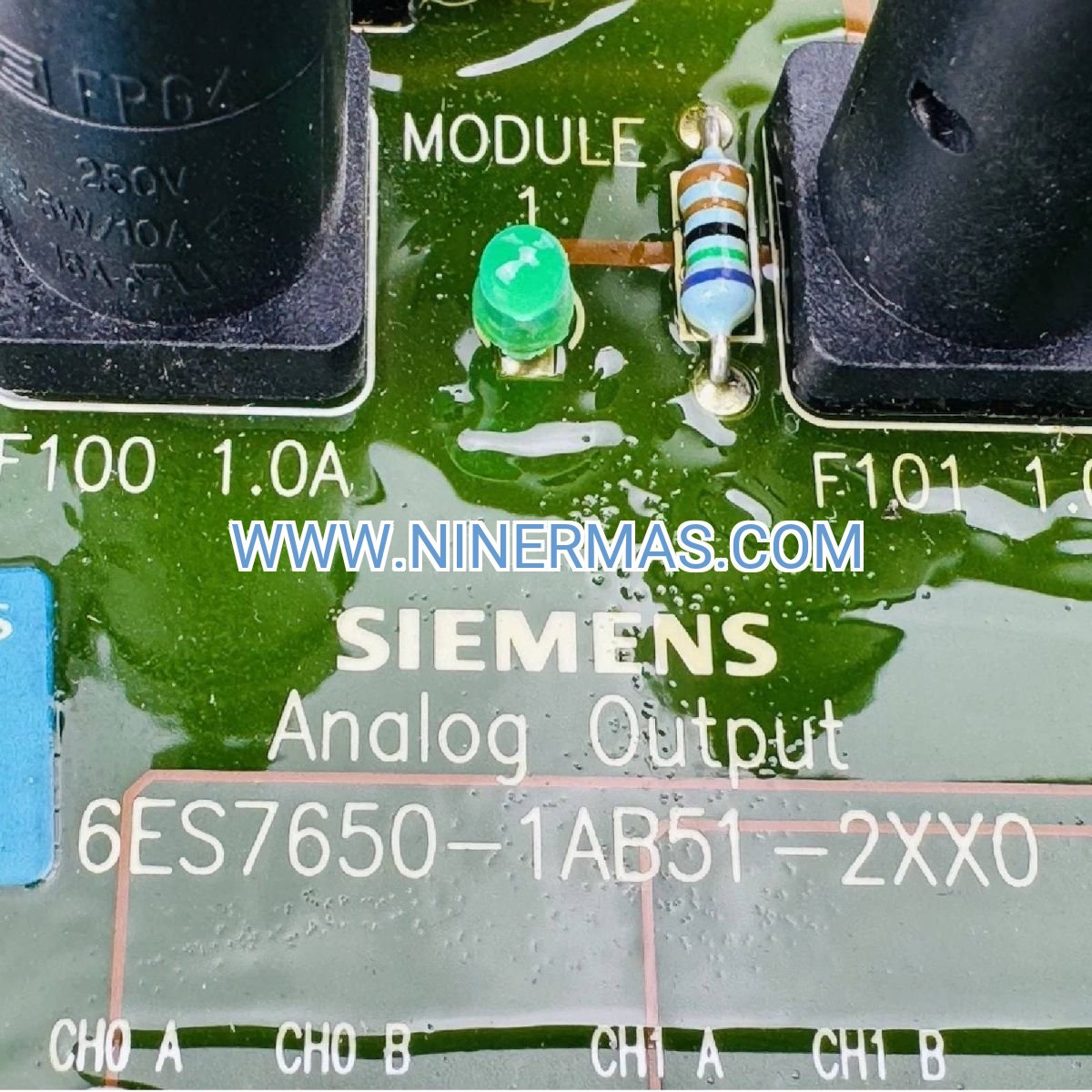
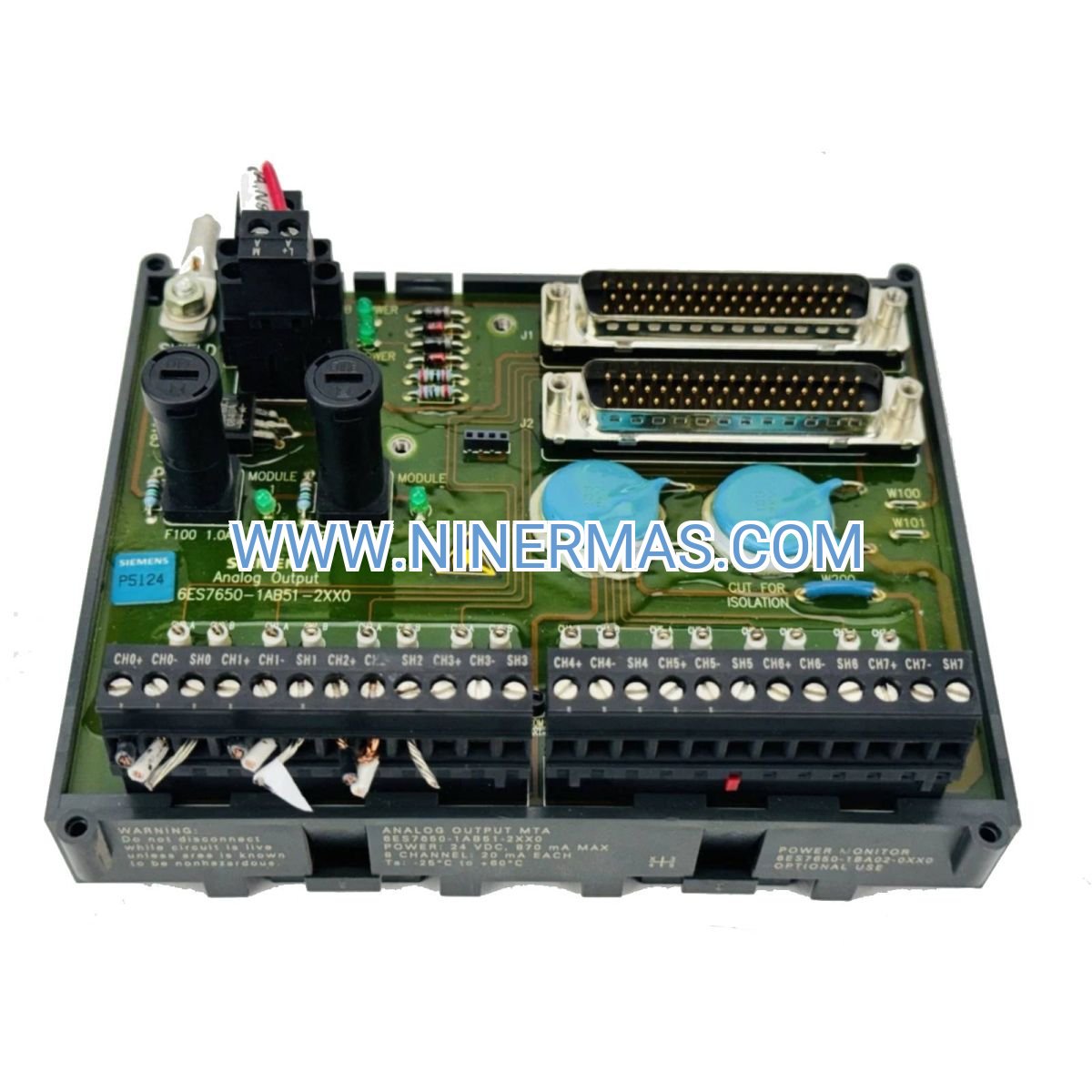
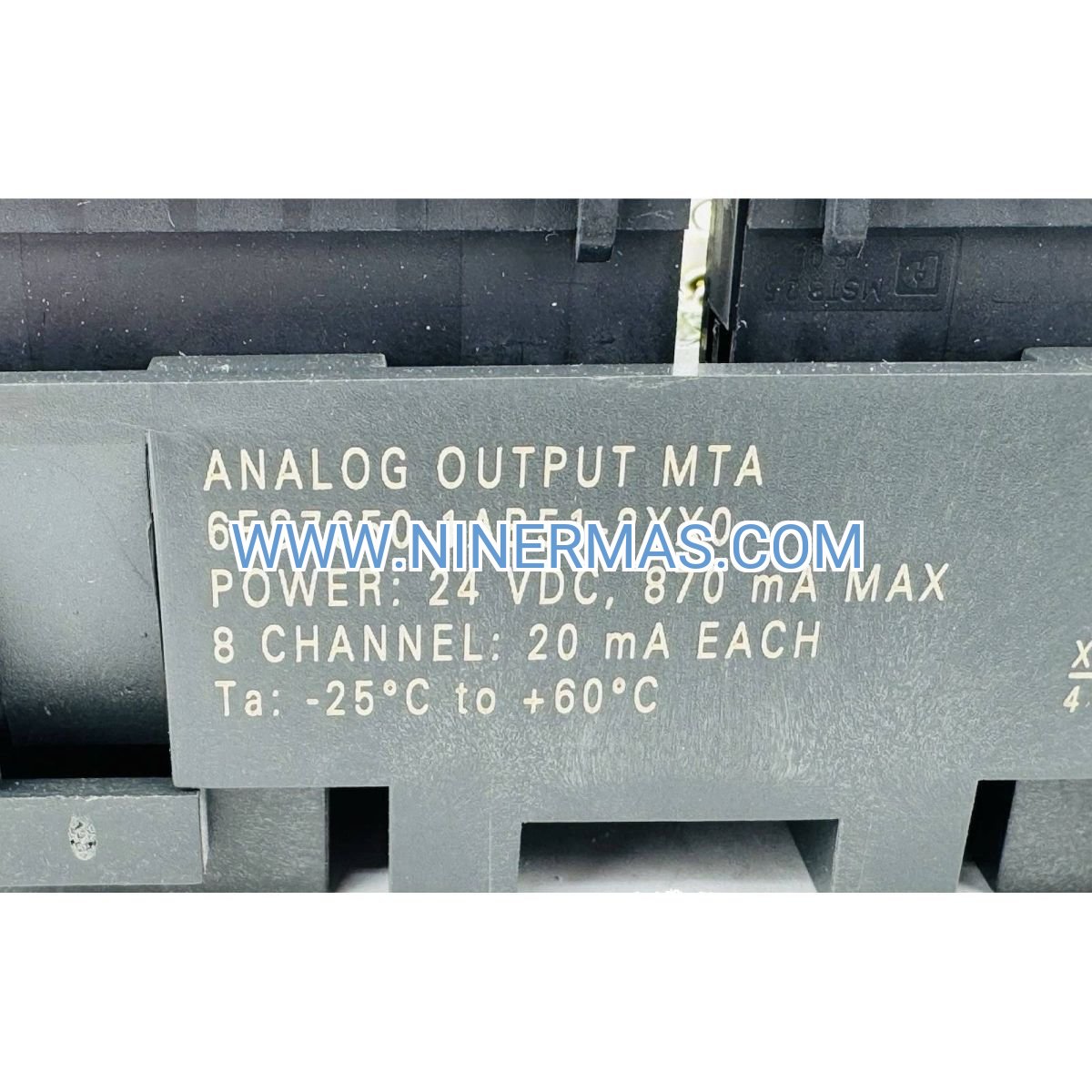
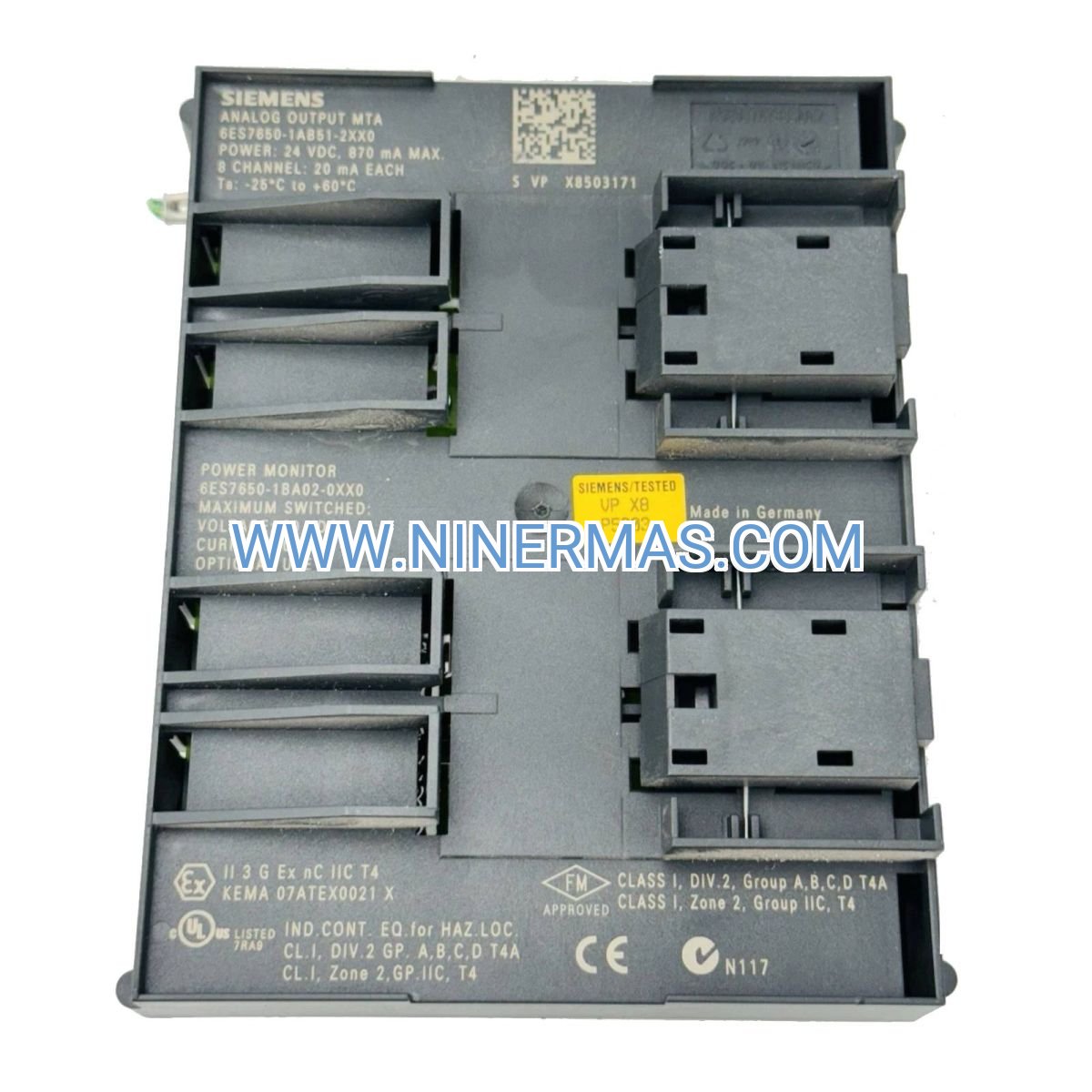
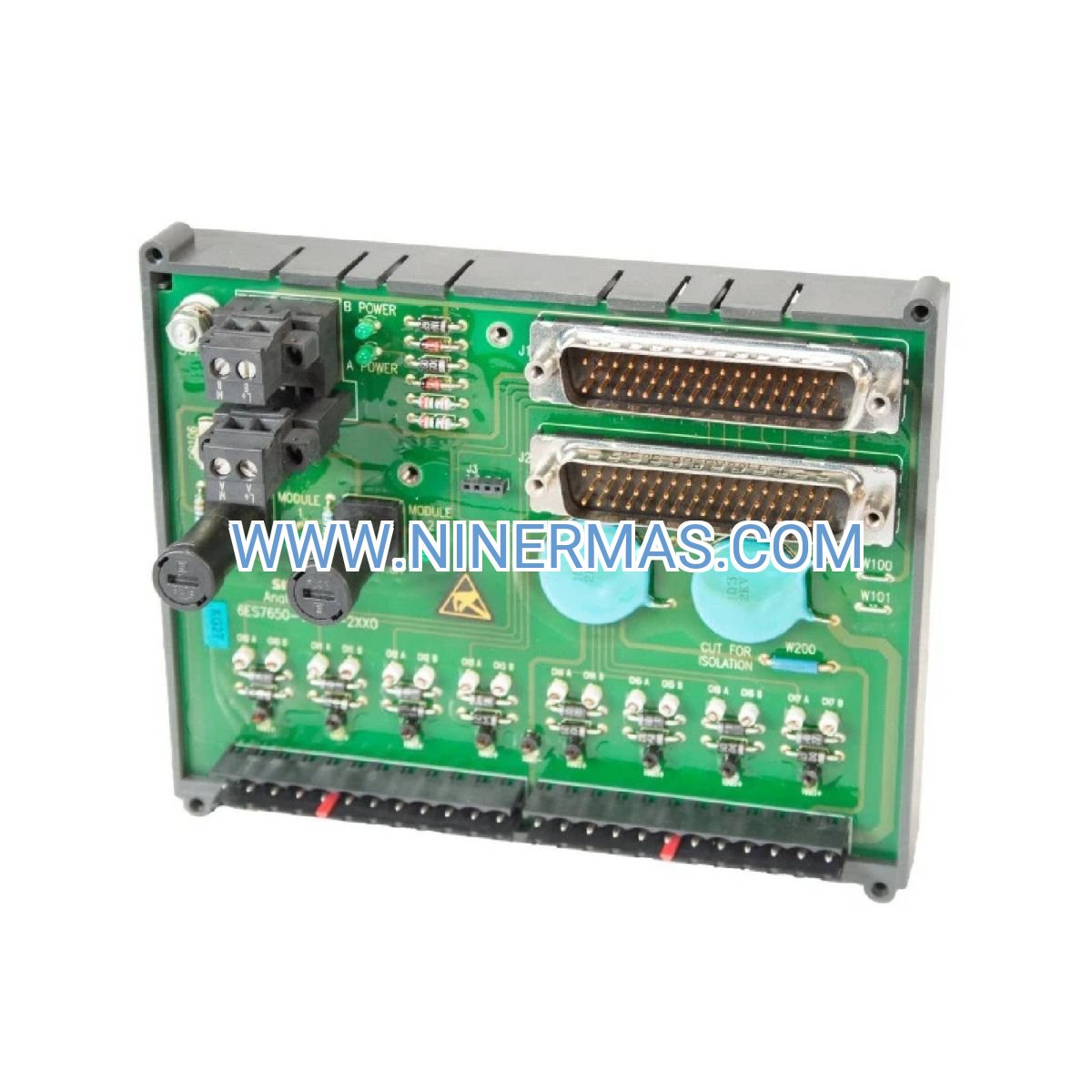
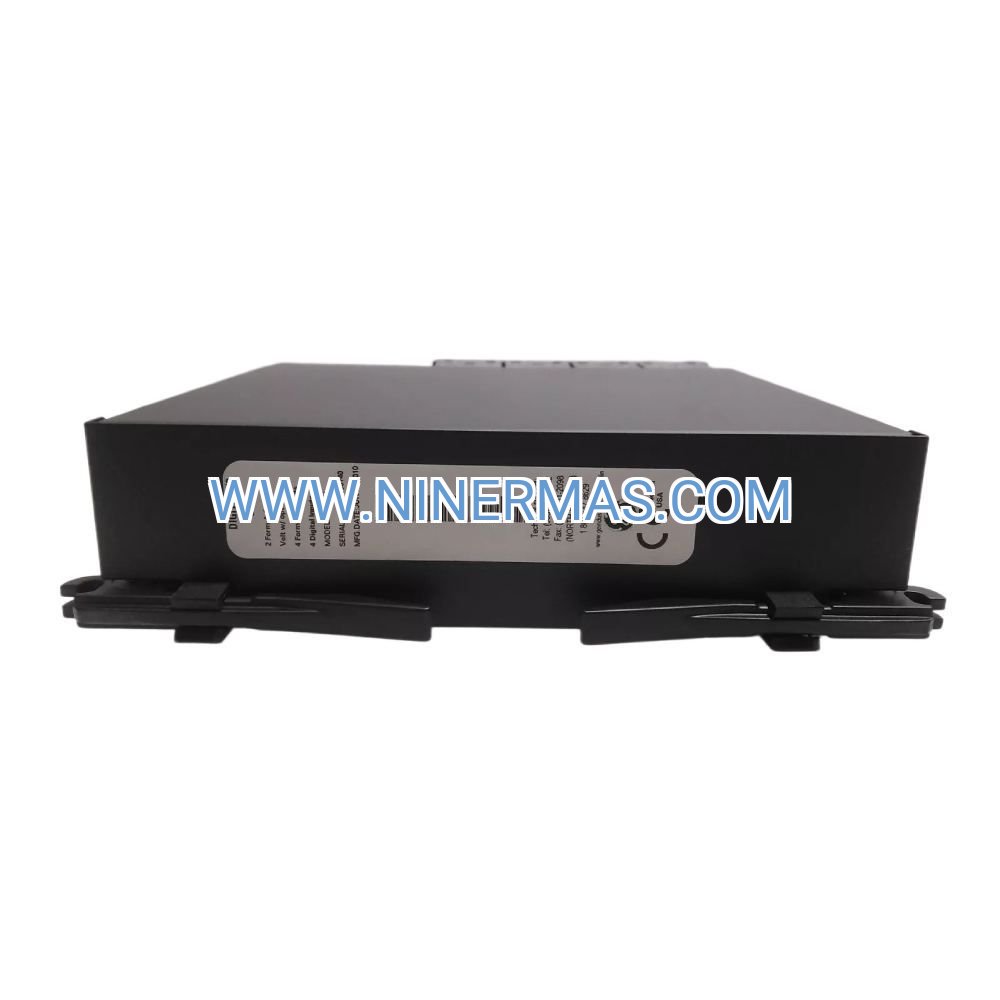
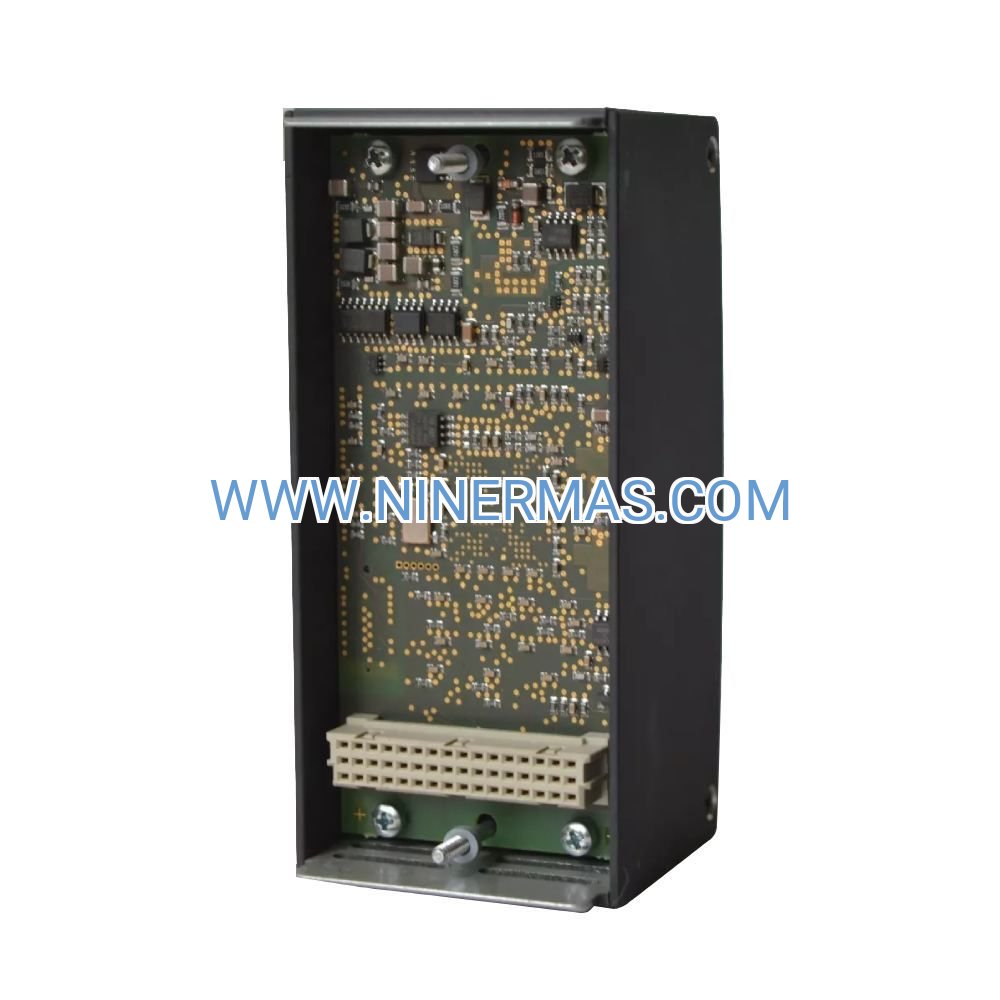
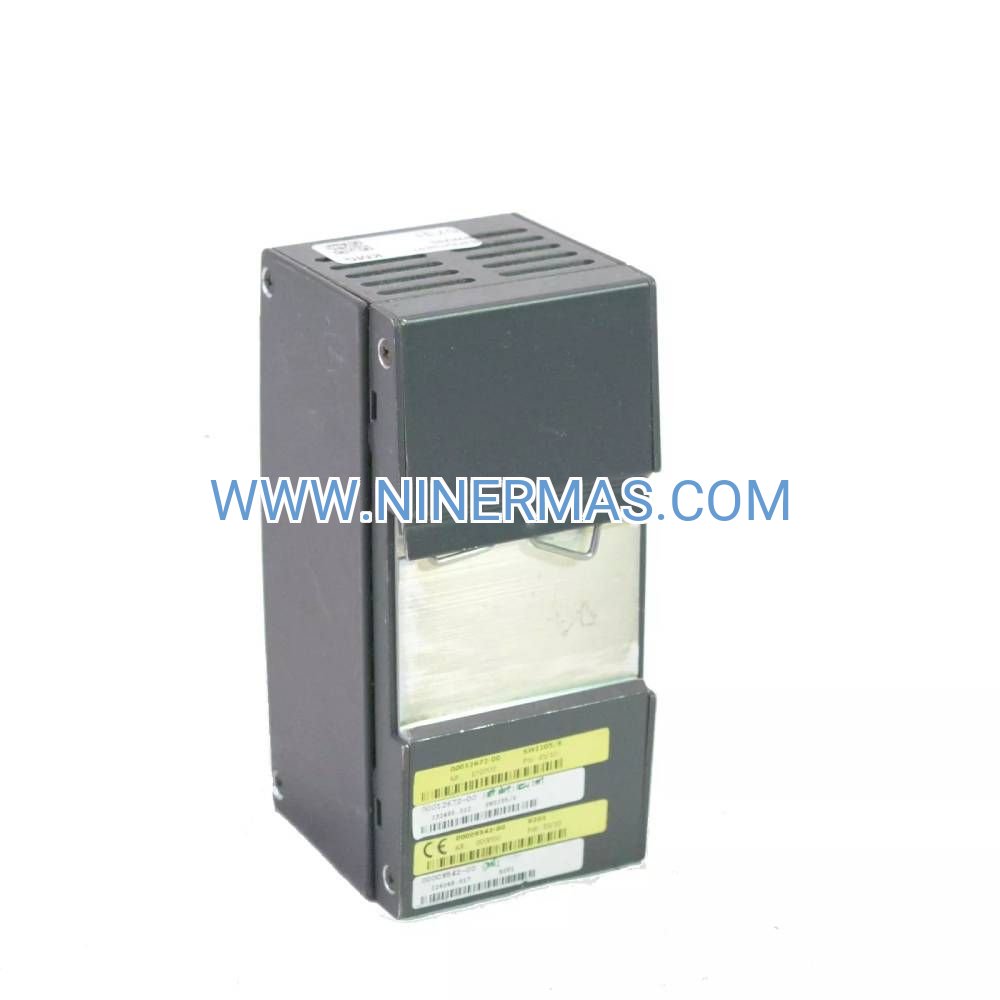
Siemens SIMATIC PCS 7 DCS Bundle 6ES7650-1AA61-2XX0 | Industrial Process Control System | Automation Solution
Description
Siemens SIMATIC PCS 7 Distributed Control System (Industrial-Grade Process Automation)
The Siemens 6ES7650-1AA61-2XX0 SIMATIC PCS 7 is an enterprise-level distributed control system (DCS) designed for continuous process automation across chemical, pharmaceutical, oil & gas, and manufacturing industries. Through integrated PLC control, redundant architecture, and advanced SCADA visualization (WinCC), it delivers real-time process monitoring, precise control loops, and comprehensive safety integration—ensuring operational continuity and regulatory compliance.
Ideal for greenfield projects and brownfield upgrades in refineries, chemical plants, water treatment facilities, and power generation sites, this system addresses critical challenges including: process instability, limited scalability, fragmented control architectures, delayed fault detection, and insufficient data traceability for audit requirements.
With standardized engineering tools and modular expansion capability, the SIMATIC PCS 7 bundle offers seamless integration with existing Siemens ecosystems, third-party field devices (HART, PROFIBUS, PROFINET), and enterprise MES/ERP systems. Suitable for design institutes, EPC contractors, system integrators, and end-user plant operators. Contact our automation engineers for customized configuration, licensing guidance, and project quotations.
Core Features & Advantages
- Unified Engineering Environment
Single platform for controller programming, HMI configuration, and asset management reduces engineering time by up to 40%, minimizes version conflicts, and simplifies lifecycle maintenance across distributed sites. - High-Availability Redundancy
Supports redundant controllers, communication networks, and operator stations with automatic failover (bumpless transfer), ensuring 99.9%+ uptime for mission-critical processes and eliminating single points of failure. - Integrated Safety & Security
Native support for Safety Instrumented Systems (SIS) per IEC 61511, combined with defense-in-depth cybersecurity (firewall modules, user authentication, audit trails) to meet industry standards like NAMUR, FDA 21 CFR Part 11, and IEC 62443. - Scalable Architecture
Modular design accommodates 10 to 60,000+ I/O points, multi-site distributed control, and phased expansion without major re-engineering—ideal for growing plants and multi-unit facilities. - Advanced Process Visualization
WinCC SCADA with faceplates, trend analysis, alarm management (NAMUR compliant), and mobile access enables operators to respond faster, reduce downtime, and optimize process parameters in real time. - Comprehensive Diagnostics & Maintenance
Built-in asset monitoring, predictive maintenance alerts, and remote diagnostics reduce unplanned shutdowns, extend equipment lifespan, and lower total cost of ownership (TCO) by 20–30% over 10-year lifecycle.
Typical Application Scenarios
This DCS bundle is engineered for industries demanding high process stability, regulatory compliance, and long-term reliability:
- Chemical & Petrochemical Plants
Manages complex batch and continuous processes (reactors, distillation columns, blending units), ensures recipe accuracy, and provides full batch traceability per ISA-88 standards. - Oil & Gas Upstream/Midstream
Controls wellhead automation, pipeline SCADA, gas processing units, and custody transfer metering with redundant communication and explosion-proof I/O for hazardous area compliance (ATEX, IECEx). - Pharmaceutical & Life Sciences
Supports GMP-compliant manufacturing with electronic batch records (EBR), 21 CFR Part 11 audit trails, clean-in-place (CIP) automation, and validated change management workflows. - Water & Wastewater Treatment
Automates filtration, dosing, aeration, and sludge handling processes, integrates with remote telemetry units (RTUs), and provides regulatory reporting for environmental compliance. - Power Generation & Utilities
Coordinates boiler control, turbine sequencing, emissions monitoring, and grid synchronization with deterministic real-time performance and IEC 61850 substation integration.
Technical Specifications & Selection Guide
To facilitate engineering design and procurement, we provide key system parameters below. Custom configurations available based on project I/O count, redundancy level, and site-specific requirements.
| Parameter | Specification |
|---|---|
| Controller Platform | SIMATIC S7-400 / AS 410 (redundant option available) |
| I/O Capacity | Up to 60,000+ process points per system |
| Communication Protocols | PROFIBUS DP, PROFINET IO, Industrial Ethernet, OPC UA |
| Operator Stations | WinCC SCADA (single/redundant servers, thin clients supported) |
| Engineering Software | PCS 7 Engineering System (CFC, SFC, APL libraries included) |
| Safety Integration | SIMATIC Safety Integrated (SIL 2/3 per IEC 61508/61511) |
| Power Supply | 24 VDC (redundant PS modules recommended) |
| Operating Temperature | 0°C to +60°C (extended range with climate control) |
| Protection Rating | IP20 (cabinet-mounted); IP65/66 field I/O available |
| Compliance Standards | CE, UL, ATEX, IECEx, NAMUR, FDA 21 CFR Part 11 |
Selection Recommendations: When specifying your DCS configuration, consider: total I/O count (analog/digital/HART), required redundancy level (controller/network/HMI), safety integrity level (SIL), communication distance, environmental conditions (temperature/humidity/hazardous area classification), and integration with existing DCS/PLC/SCADA infrastructure. Our application engineers can review your P&ID, I/O list, and functional specifications to recommend optimal hardware/software licensing.
Extended Capabilities
- Advanced Process Control (APC): Optional modules for model predictive control (MPC), fuzzy logic, and neural network optimization to improve yield and reduce variability.
- Asset Performance Management (APM): Integration with SIMATIC PCS 7 APL and third-party APM platforms for condition monitoring, vibration analysis, and predictive maintenance.
- Batch Management: ISA-88 compliant batch control with recipe management, electronic signatures, and genealogy tracking for pharmaceutical/food industries.
- Remote Access & Cloud Connectivity: Secure VPN/cloud gateway for remote diagnostics, performance dashboards, and mobile operator interfaces (iOS/Android apps).
- Historian & Reporting: Long-term data archiving (Process Historian), customizable KPI dashboards, and automated regulatory/compliance reporting (e.g., EPA, ISO 50001).
Delivery, Service & Quality Assurance
Lead Time: Standard bundle configurations ship within 4–6 weeks; customized systems (specific I/O mix, redundancy, licensing) require 8–12 weeks for factory integration testing (FAT) and documentation.
Warranty: 12-month manufacturer warranty covering hardware defects and software licensing issues; extended service contracts available for 24/7 technical support and spare parts management.
Installation & Commissioning: On-site installation supervision, loop checking, FAT/SAT support, and operator training available (regional availability varies). Remote commissioning assistance included for standard configurations.
Technical Documentation: Complete package includes electrical schematics, I/O wiring diagrams, network topology, software backups, operation manuals (English/Chinese), and maintenance procedures—ensuring smooth handover to plant maintenance teams.
Certifications: Factory-tested per IEC standards; compliance certificates (CE, UL, ATEX) and material traceability documents provided upon request for project documentation and regulatory submissions.
Frequently Asked Questions (FAQ)
Q: How does the SIMATIC PCS 7 DCS integrate with existing Siemens S7-300/400 PLCs or third-party controllers?
A: PCS 7 natively supports SIMATIC S7 controllers via PROFIBUS/PROFINET and can interface with third-party systems (ABB, Emerson, Honeywell) through OPC UA, Modbus TCP, or hardwired I/O. Migration tools available for legacy TI/Teleperm systems.
Q: What is the maximum number of operator stations and remote clients supported per system?
A: A single PCS 7 system supports up to 32 WinCC servers and hundreds of thin clients. For larger multi-site deployments, distributed server architecture with central asset management is recommended.
Q: What are typical energy savings or efficiency improvements with PCS 7 compared to relay-based or older DCS systems?
A: Customers report 15–30% reduction in energy consumption through optimized control loops, real-time process adjustments, and elimination of manual interventions. Actual savings depend on process type and baseline efficiency.
Q: What environmental and installation conditions are required? Is the system suitable for hazardous area (Ex) installations?
A: Control cabinets are IP20-rated for climate-controlled rooms (0–60°C). Field I/O modules available in ATEX/IECEx Zone 1/2 and Division 1/2 ratings for hazardous locations. Humidity and vibration specs detailed in technical datasheet.
Q: Can the system be monitored remotely and support cloud-based data analytics or IIoT integration?
A: Yes. Secure remote access via SINEMA Remote Connect, cloud connectivity through MindSphere (Siemens IIoT platform), and support for MQTT, OPC UA Pub/Sub for edge-to-cloud data pipelines and AI/ML analytics.
Q: What software licensing model applies, and are there annual fees for updates and support?
A: PCS 7 uses perpetual licensing (one-time purchase) with optional Software Update Service (SUS) for version upgrades and technical support. Licensing based on I/O count, engineering seats, and operator stations—detailed quote provided upon request.
Request a Customized Solution
To receive a tailored system configuration, technical proposal, and pricing quotation, please provide the following project details: project name, application industry, design I/O count (AI/AO/DI/DO), required redundancy level, number of operator stations, communication protocols, hazardous area classification, power supply specifications, and timeline. Our certified automation engineers will deliver a comprehensive selection guide and support your engineering team throughout design, procurement, and commissioning phases.
© 2026 NINERMAS COMPANY LIMITED. All rights reserved.
Original Source: https://ninermas.com
Contact: sale@ninermas.com | +0086 187 5021 5667

Contact Info
-
Address:22 / F, South Wo Hang building, 148 Wing Lok Street, Sheung Wan, Western District, Hong Kong
-
Phone:+8618750215667
-
Email: