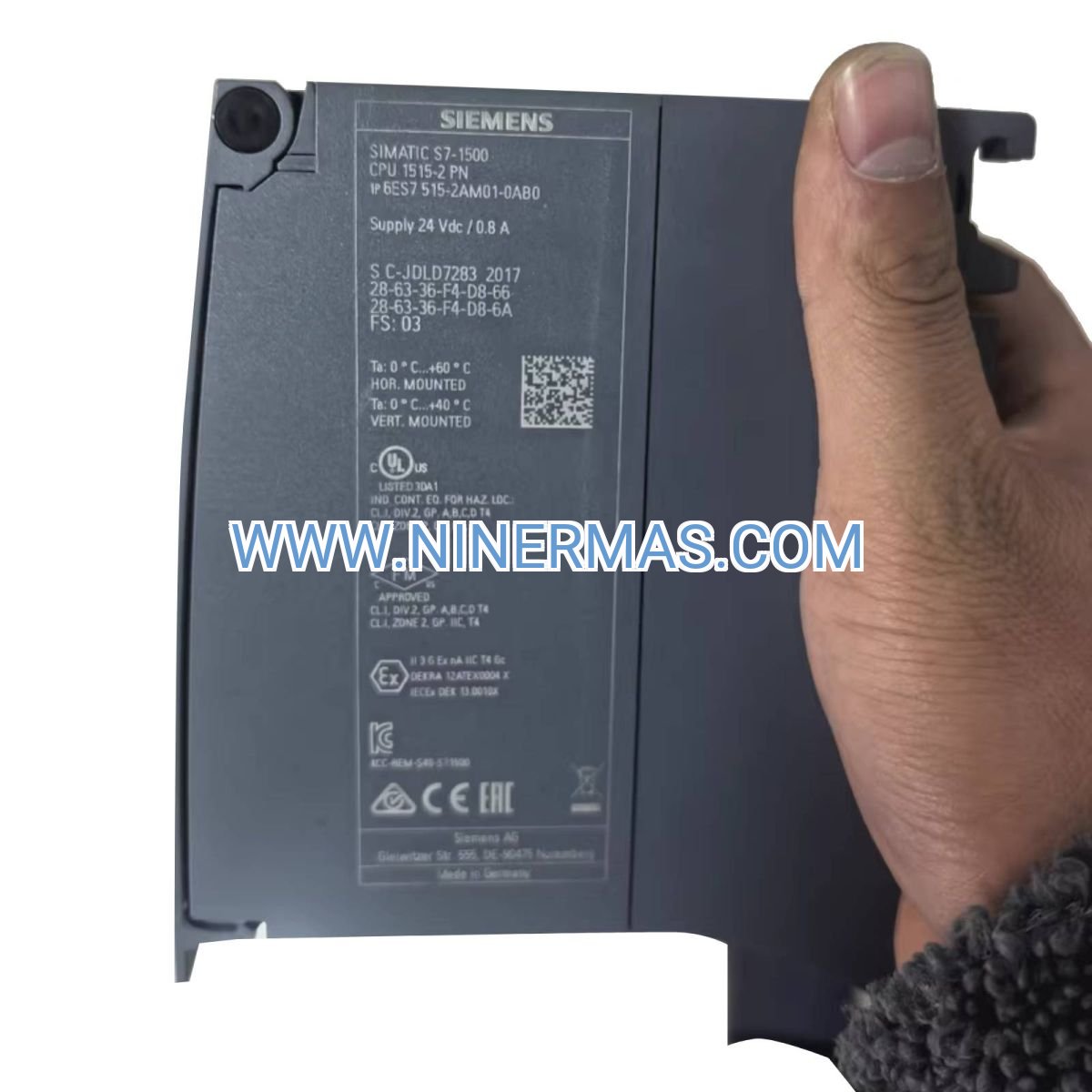
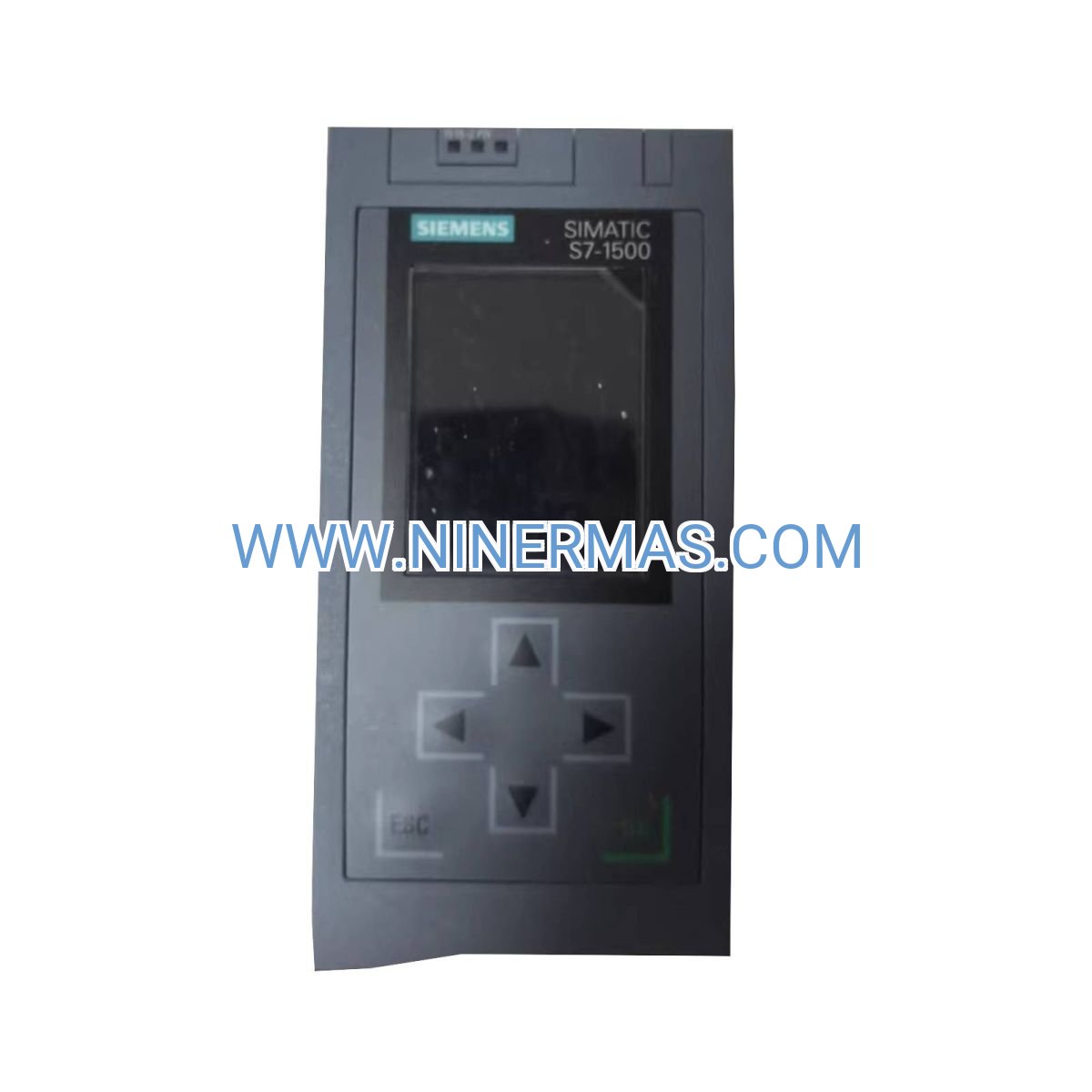
Siemens CPU 1513R-1 PN Redundant Controller | 6ES7513-1RL00-0AB0 S7-1500R PLC Module
Description
Siemens CPU 1513R-1 PN Redundant Controller (Industrial-Grade Failsafe Control System)
The Siemens CPU 1513R-1 PN (6ES7513-1RL00-0AB0) is an industrial redundant controller designed for S7-1500R automation systems, delivering continuous process control through dual-CPU failover architecture. By integrating PROFINET communication and advanced diagnostics, it ensures uninterrupted operation in mission-critical applications where downtime translates to significant production losses.
Engineered for high-availability environments including chemical processing, power generation, water treatment facilities, and pharmaceutical manufacturing, this controller addresses challenges such as single-point-of-failure risks, process interruptions during maintenance, and the need for seamless switchover during component failures.
Through standardized design and flexible configuration options, the CPU 1513R-1 PN offers rapid fault detection (typically <100ms switchover time), comprehensive system diagnostics, and compatibility with TIA Portal engineering software. Ideal for system integrators, control panel builders, and plant engineers requiring certified redundancy solutions. Contact our automation specialists for application-specific configuration guidance and technical documentation.
Core Functions & Advantages
- True Redundant Architecture
Dual-CPU hot-standby configuration with automatic failover ensures continuous process control. When the primary CPU encounters a fault, the backup CPU assumes control within milliseconds, eliminating production interruptions and maintaining process integrity. - Enhanced System Availability
Achieves availability rates exceeding 99.9% through redundant power supplies, communication paths, and I/O modules. Reduces unplanned downtime by up to 95% compared to non-redundant systems, directly impacting operational efficiency and maintenance costs. - Integrated PROFINET Interface
Built-in PROFINET IO controller with dual-port switch enables ring topology for network redundancy. Supports IRT (Isochronous Real-Time) communication for motion control and high-speed I/O applications with deterministic cycle times. - Comprehensive Diagnostic Capabilities
Real-time monitoring of CPU status, communication health, I/O module conditions, and system synchronization. Web-based diagnostics and TIA Portal integration provide immediate fault identification, reducing troubleshooting time by 60-70%. - Flexible Memory Configuration
1.5 MB work memory supports complex control programs, data logging, and recipe management. Expandable through SIMATIC memory cards for program storage, firmware updates, and data retention during power loss. - Multi-Layer Protection Functions
Incorporates overcurrent protection, watchdog timers, memory integrity checks, and secure communication protocols. Complies with IEC 61508 SIL 2 requirements for safety-related applications, minimizing risk in hazardous process environments.
Typical Application Scenarios
This redundant controller is specifically designed for processes demanding continuous operation and high reliability, particularly in:
- Chemical & Petrochemical Processing
Maintains stable control of reactors, distillation columns, and blending systems where process interruptions can cause product quality issues, safety hazards, or equipment damage. Ensures regulatory compliance for continuous emission monitoring systems. - Power Generation & Distribution
Controls turbine management systems, boiler controls, and substation automation where grid stability depends on uninterrupted controller operation. Supports load balancing and emergency shutdown sequences with guaranteed execution. - Water & Wastewater Treatment
Manages pumping stations, filtration processes, and chemical dosing systems serving municipal infrastructure. Prevents service disruptions affecting public health and environmental compliance, especially during maintenance windows. - Pharmaceutical & Biotechnology Manufacturing
Ensures batch process integrity, cleanroom environmental controls, and critical utility systems (HVAC, purified water) where FDA/GMP validation requires documented system availability and change control. - Oil & Gas Production Facilities
Operates wellhead controls, pipeline monitoring, and separation processes in remote locations where technician access is limited. Redundancy reduces emergency callouts and extends maintenance intervals.
Technical Parameters & Selection Guide
To facilitate engineering design and system specification, we provide standardized technical parameters. Custom configurations are available based on project-specific requirements.
| Parameter | Specification |
|---|---|
| Product Code | 6ES7513-1RL00-0AB0 |
| Work Memory | 1.5 MB (program + data) |
| Load Memory | Expandable via SIMATIC Memory Card |
| PROFINET Interfaces | 2 × RJ45 (10/100/1000 Mbit/s) |
| I/O Addressing | Up to 32,768 bytes input / 32,768 bytes output |
| Execution Speed | Bit operations: 10 ns typical |
| Operating Voltage | 24 VDC (via redundant power modules) |
| Operating Temperature | 0°C to +60°C (horizontal installation) |
| Protection Rating | IP20 (for control cabinet mounting) |
| Certifications | CE, UL, cULus, ATEX, IECEx |
| Dimensions (W×H×D) | 35 mm × 147 mm × 129 mm |
Selection Considerations:
When specifying this controller, evaluate: total I/O point count, required communication protocols (PROFINET, PROFIBUS, Modbus TCP), program complexity, cycle time requirements, environmental conditions, and existing S7-1500R infrastructure. For new installations, consider pairing with redundant power supply modules (6ES7507-0RA00-0AB0) and redundant I/O modules. Our application engineers can review your P&ID drawings and functional specifications to recommend optimal system architecture.
Extended Functionality
- TIA Portal Integration: Full compatibility with STEP 7 Professional V13 and later for unified programming, diagnostics, and asset management across Siemens automation portfolio.
- OPC UA Server: Native OPC UA interface enables secure data exchange with MES/SCADA systems, supporting Industry 4.0 initiatives and cloud connectivity.
- Motion Control: Supports PROFIdrive for coordinated multi-axis motion applications when combined with SINAMICS drives.
- Cybersecurity Features: Access protection levels, encrypted communication (TLS), and audit logging comply with IEC 62443 industrial security standards.
- Firmware Updates: Field-upgradable firmware via TIA Portal or memory card ensures long-term supportability and feature enhancements.
Delivery, Service & Quality Assurance
Lead Time: Standard OEM-sealed units typically ship within 3-5 business days from our regional distribution centers. Custom-configured systems (pre-programmed, panel-mounted, or FAT-tested) require 10-15 business days depending on scope.
Warranty: All controllers include a 12-month manufacturer's warranty covering defects in materials and workmanship. Extended warranty and advance replacement programs are available for critical applications.
Technical Support: Our certified Siemens specialists provide remote commissioning assistance, TIA Portal configuration review, and troubleshooting support via phone/email. On-site startup services and training can be arranged for complex installations (subject to location and project scope).
Documentation Package: Each unit ships with complete technical documentation including hardware installation manual, PROFINET configuration guide, dimensional drawings, terminal assignment diagrams, and sample TIA Portal project files. All documents are available in PDF format for integration into project documentation systems.
Quality Standards: Products are sourced through authorized Siemens distribution channels, ensuring full traceability, genuine firmware, and eligibility for manufacturer technical support. Each unit undergoes incoming inspection and functional testing before shipment.
Frequently Asked Questions (FAQ)
Q: How does the Siemens CPU 1513R-1 PN redundant controller integrate with existing S7-1500 systems?
A: The CPU 1513R-1 PN requires a dedicated S7-1500R rack system with redundant backplane and power modules. It cannot be used in standard S7-1500 racks. Migration from non-redundant S7-1500 systems involves hardware replacement but TIA Portal programs can be adapted with minimal modifications. Consult the S7-1500R system manual (6ES7513-1RL00-0AB0 datasheet) for detailed compatibility matrices.
Q: What is the maximum number of I/O modules supported in a redundant configuration?
A: Each CPU 1513R-1 PN supports up to 32 local I/O modules per rack and up to 256 distributed I/O devices via PROFINET. In redundant configurations, I/O modules must be installed in matched pairs across both racks. Total addressing capacity is 32,768 bytes input and 32,768 bytes output.
Q: What level of energy savings can be achieved with redundant PLC systems?
A: While redundant systems inherently consume more power than simplex configurations (due to dual CPUs and power supplies), optimized programming and sleep modes for non-critical I/O can reduce overall system power consumption by 15-20% compared to legacy redundant platforms. The primary value is in preventing costly downtime rather than direct energy savings.
Q: What are the environmental requirements for installing this redundant controller?
A: The CPU 1513R-1 PN requires IP20-rated control cabinet installation with ambient temperature range of 0-60°C (horizontal mounting) or 0-40°C (vertical mounting). Ensure adequate ventilation (minimum 25mm clearance above/below), humidity control (5-95% RH non-condensing), and vibration isolation per IEC 60068-2-6 standards. Avoid installation near high-EMI sources.
Q: Can this controller support remote monitoring and SCADA integration?
A: Yes, the CPU 1513R-1 PN includes native OPC UA server functionality and supports Modbus TCP, PROFINET, and S7 communication protocols. Integration with Siemens WinCC SCADA, third-party HMI systems, or cloud platforms (AWS IoT, Azure IoT) is achievable through standard industrial protocols. Secure VPN access for remote diagnostics is supported via CP 1543-1 communication processor.
Q: What is the typical switchover time during a CPU failure event?
A: Automatic failover from primary to backup CPU typically occurs within 50-100 milliseconds, depending on program complexity and I/O configuration. This bumpless transfer ensures process continuity without triggering alarms or safety shutdowns in most applications. Switchover events are logged in the diagnostic buffer for maintenance analysis.
Request Technical Support & Quotation
To receive detailed system configuration recommendations, pricing, or application engineering support, please provide the following information to our specialists:
- Project name and application type (e.g., water treatment, chemical processing)
- Total I/O point count (digital inputs/outputs, analog channels)
- Required communication protocols and network topology
- Environmental conditions (temperature range, hazardous area classification if applicable)
- Delivery timeline and installation location
- Existing automation infrastructure (if retrofit/expansion project)
Our application engineers will provide one-on-one consultation including system architecture diagrams, bill of materials, and budget pricing within 24-48 hours.
© 2026 NINERMAS COMPANY LIMITED. All rights reserved.
Original Source: https://ninermas.com
Contact: sale@ninermas.com | +0086 187 5021 5667

Contact Info
-
Address:22 / F, South Wo Hang building, 148 Wing Lok Street, Sheung Wan, Western District, Hong Kong
-
Phone:+8618750215667
-
Email: