


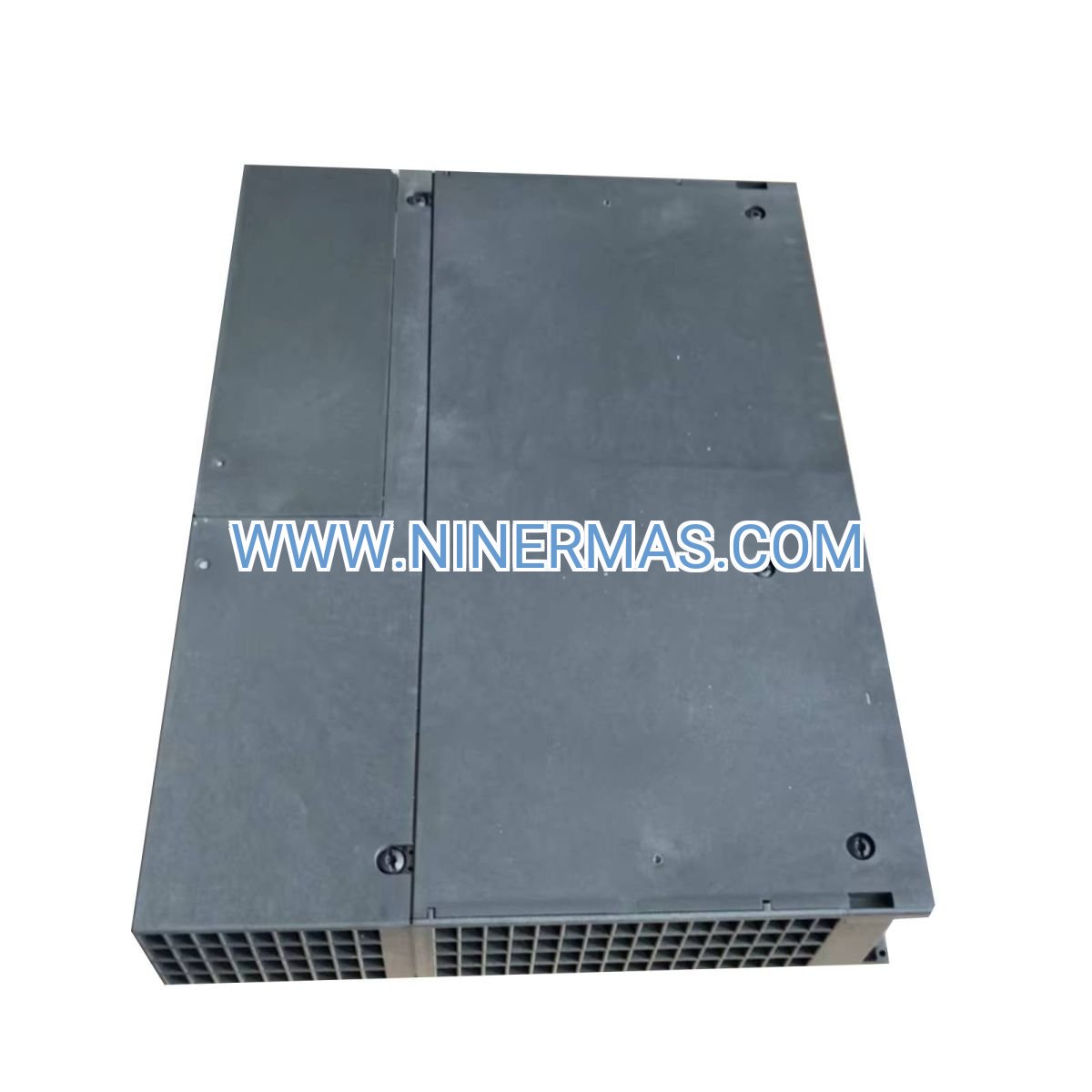
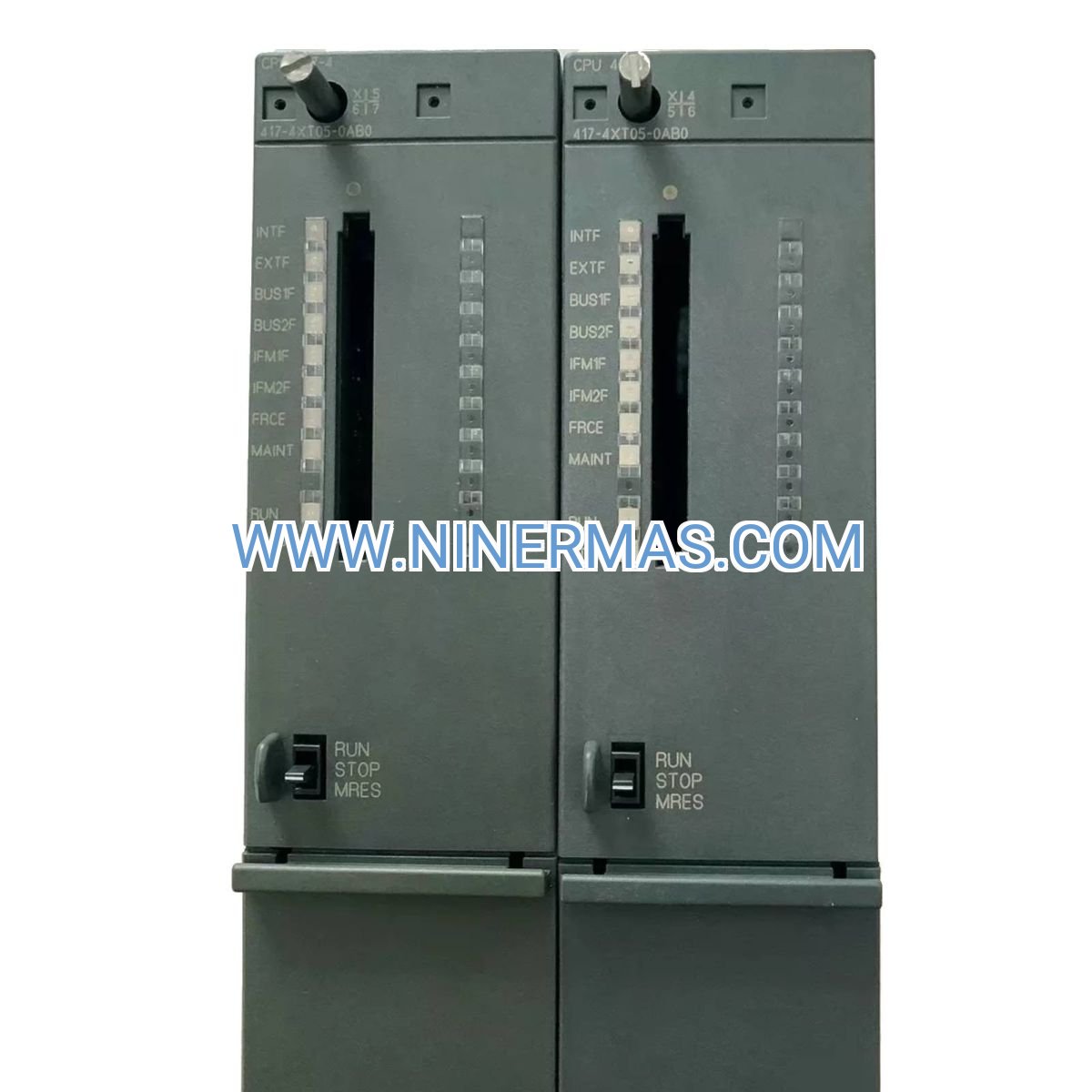
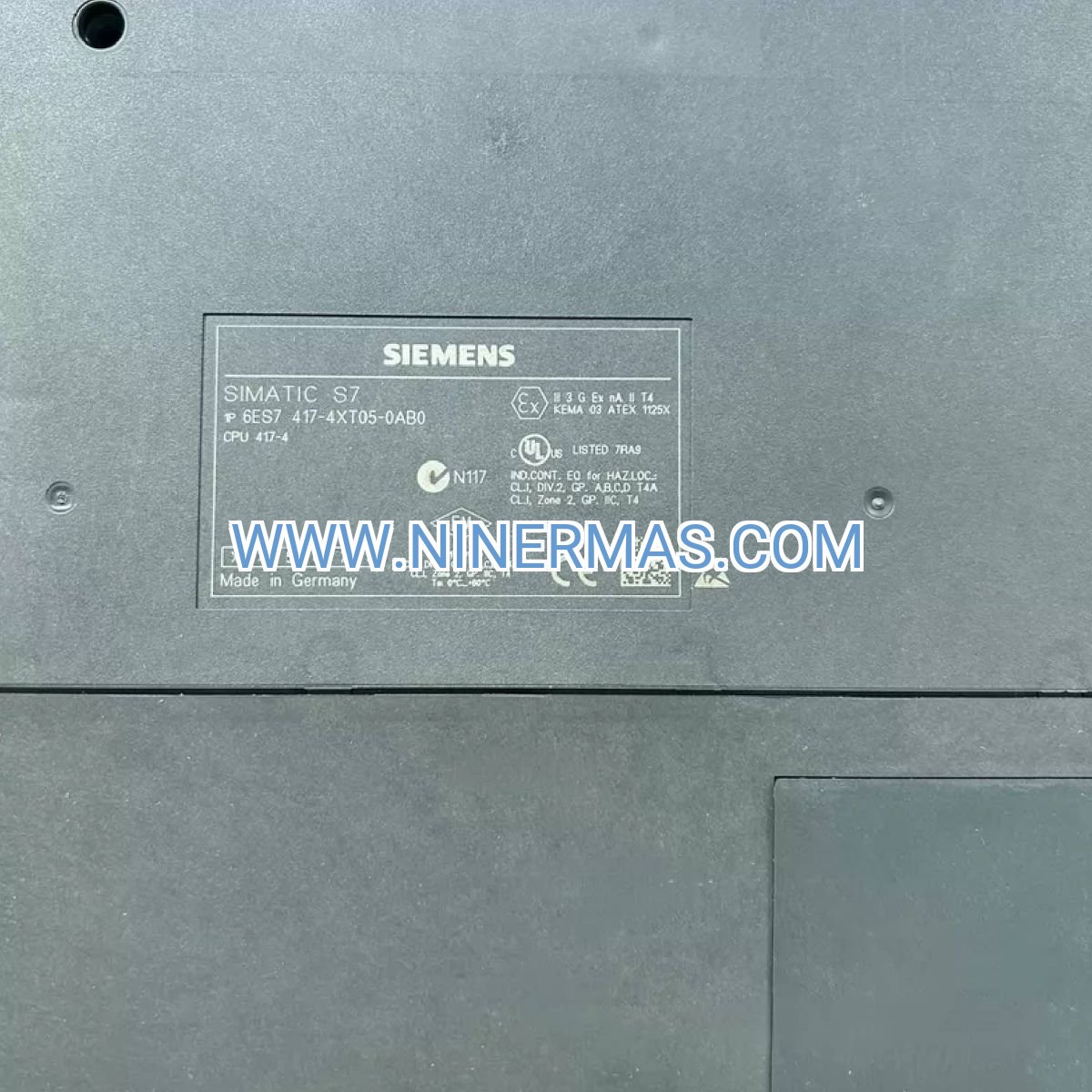
Siemens CPU 417H 6ES7417-4HT14-0AB0 | S7-400H High-Availability PLC | Industrial Automation
Description
Siemens CPU 417H 6ES7417-4HT14-0AB0 – Industrial High-Availability PLC Controller
The Siemens CPU 417H (6ES7417-4HT14-0AB0) is a premium central processing unit engineered for S7-400H fault-tolerant automation systems. Through redundant architecture and hot-standby capability, it delivers uninterrupted process control for mission-critical industrial applications where downtime is not an option.
Designed for continuous operation in demanding environments including petrochemical plants, power generation facilities, pharmaceutical manufacturing, and water treatment infrastructure, this controller addresses challenges such as single-point-of-failure risks, production interruptions, safety-critical process control, and costly unplanned shutdowns.
With standardized configuration and flexible system integration, the CPU 417H offers seamless redundancy switching, comprehensive diagnostic capabilities, proven reliability in harsh conditions, and broad compatibility with SIMATIC ecosystem components. Ideal for system integrators, automation engineers, plant operators, and OEM equipment manufacturers requiring certified high-availability solutions. Contact our engineering team for application-specific configuration guidance and quotation.
Core Functions & Technical Advantages
- Redundant Hot-Standby Architecture
Dual-CPU configuration with automatic switchover ensures zero process interruption during controller failure or maintenance, maintaining continuous operation through synchronized state replication and bumpless transfer mechanisms. - High-Performance Processing Capacity
Equipped with 30MB work memory and optimized instruction execution, handles complex control algorithms, data logging, and communication tasks simultaneously while maintaining deterministic scan cycles for time-critical processes. - Integrated PROFIBUS DP/MPI Communication
Native support for PROFIBUS DP fieldbus and MPI multi-point interface enables seamless integration with distributed I/O, drives, HMI panels, and engineering stations without additional communication processors. - Comprehensive System Diagnostics
Built-in fault detection, event logging, and status monitoring provide real-time visibility into controller health, synchronization status, and I/O module conditions, reducing troubleshooting time and preventing unexpected failures. - Industrial-Grade Environmental Resistance
Designed to IEC 61131 standards with extended temperature tolerance, EMC immunity, and vibration resistance, ensuring reliable operation in electrically noisy industrial environments with temperature fluctuations and mechanical stress. - Flexible Programming & Configuration
Fully compatible with STEP 7 engineering software supporting LAD, FBD, STL, SCL, and GRAPH programming languages, allowing engineers to implement control logic using familiar development tools and reusable function blocks.
Typical Application Scenarios
This controller is engineered for industrial processes demanding maximum uptime, safety integrity, and regulatory compliance, particularly in:
- Oil & Gas Processing and Pipeline Control
Ensures continuous monitoring and control of refining units, compressor stations, and pipeline networks where process interruptions can lead to safety hazards, environmental incidents, and significant production losses. - Power Generation & Distribution Systems
Maintains reliable operation of turbine control, boiler management, and substation automation where grid stability and regulatory compliance require fault-tolerant control architectures with proven MTBF ratings. - Chemical & Pharmaceutical Manufacturing
Supports batch process control, reactor management, and clean-room automation where product quality, process validation, and safety instrumented systems demand redundant controllers with full audit trail capabilities. - Water & Wastewater Treatment Infrastructure
Provides uninterrupted control for pumping stations, filtration systems, and SCADA networks serving municipal utilities where service continuity directly impacts public health and environmental protection. - Metal Processing & Continuous Production Lines
Delivers reliable control for rolling mills, furnace operations, and automated assembly systems where equipment damage from control failures can result in costly repairs and extended production downtime.
Technical Specifications & Selection Guide
To facilitate engineering design and system configuration, we provide key technical parameters for the CPU 417H controller. Custom configurations available based on project-specific requirements.
| Parameter | Specification |
|---|---|
| Order Number | 6ES7417-4HT14-0AB0 |
| Product Family | SIMATIC S7-400H |
| Work Memory | 30 MB (integrated) |
| Load Memory | Requires external memory card |
| Processing Speed | Bit operations: 0.01 μs typical |
| I/O Capacity | Up to 65,536 digital / 8,192 analog points |
| Communication Interfaces | PROFIBUS DP, MPI (integrated) |
| Redundancy Type | Hot-standby with automatic switchover |
| Power Supply | DC 24V (via backplane) |
| Operating Temperature | 0°C to +60°C (horizontal installation) |
| Protection Rating | IP20 (for control cabinet mounting) |
| Certifications | CE, UL, cULus, FM, ATEX (zone 2) |
| Programming Software | STEP 7 V5.5 or TIA Portal (with compatibility package) |
Selection Recommendations: When specifying this controller, consider maximum I/O point count, required communication protocols (PROFINET, Industrial Ethernet), environmental conditions (temperature, humidity, vibration), safety integrity level (SIL) requirements, and existing automation infrastructure. For application engineering support, please provide process description, I/O list, network topology, and environmental specifications. Our technical team will recommend optimal system architecture and component selection.
Extended Capabilities & Integration Options
- Industrial Ethernet & PROFINET Integration: Expandable with CP 443-1 communication processors for plant-wide Ethernet/IP networks and PROFINET IO real-time fieldbus connectivity
- Safety-Integrated Control: Compatible with F-modules and Safety Matrix for implementing SIL 2/3 safety functions within the same controller platform
- Remote Access & Diagnostics: Supports secure VPN connectivity for remote monitoring, program updates, and technical support via TeleService adapters
- SCADA & MES Connectivity: Standard OPC UA/DA servers enable seamless data exchange with WinCC SCADA, historian databases, and manufacturing execution systems
- Redundant Communication Paths: Dual-channel network configuration ensures communication availability even during network failures or maintenance activities
Delivery, Service & Quality Assurance
Lead Time: Standard catalog items typically ship within 3-5 business days; custom-configured systems require 10-15 business days for factory testing and documentation preparation.
Warranty Coverage: All units include minimum 12-month manufacturer warranty covering defects in materials and workmanship, with optional extended service agreements available for critical applications.
Technical Support: Comprehensive support includes pre-sales application engineering, commissioning assistance (remote or on-site depending on location), and post-sales troubleshooting via phone, email, and remote desktop sessions.
Documentation Package: Each shipment includes complete electrical schematics, terminal connection diagrams, configuration files, operation manual, and quick-start guide in PDF format, facilitating installation and maintenance activities.
Quality Certifications: Products sourced through authorized distribution channels with full traceability, genuine Siemens factory seals, and compliance certificates for regulated industries.
Frequently Asked Questions (FAQ)
Q: How does the CPU 417H redundant controller integrate with existing S7-400 single-controller systems?
A: The S7-400H system requires specific H-rated components including redundant power supplies, H-sync modules, and compatible I/O modules. Migration from standard S7-400 involves hardware upgrades and program adaptation using STEP 7 redundancy configuration tools. Our engineering team can assess your current system and provide detailed migration roadmap including component list and estimated conversion effort.
Q: What is the maximum number of I/O modules supported in a redundant S7-400H configuration?
A: The CPU 417H supports up to 21 racks (including central and expansion racks) with maximum 300 modules per redundant controller pair. Actual capacity depends on module types, communication load, and scan cycle requirements. For large distributed systems, PROFIBUS DP remote I/O or PROFINET IO devices provide virtually unlimited expansion.
Q: What level of energy savings or efficiency improvement can be expected with redundant control systems?
A: While redundant controllers themselves don't directly reduce energy consumption, they prevent costly production interruptions that waste raw materials, energy, and labor during unplanned shutdowns. In continuous processes, avoiding a single 4-hour outage can save thousands in energy costs and lost production. The business case focuses on availability improvement (typically 99.9%+ uptime) rather than energy metrics.
Q: What are the environmental and installation requirements for the CPU 417H controller?
A: The controller requires IP20-rated control cabinet installation with ambient temperature 0-60°C (horizontal mounting) or 0-40°C (vertical mounting), relative humidity 5-95% non-condensing, and pollution degree 2 environment. Adequate ventilation or forced cooling may be required in high-density rack configurations. The unit mounts on standard S7-400 profile rails with redundant power supply modules.
Q: Does the CPU 417H support remote monitoring, data acquisition, and integration with cloud platforms?
A: Yes, through communication processors (CP 443-1 Advanced) the system supports OPC UA, MQTT, and secure VPN connectivity enabling integration with cloud-based analytics platforms, remote HMI access, and Industrial IoT applications. Standard protocols include Modbus TCP, PROFINET, and Industrial Ethernet ensuring compatibility with third-party SCADA and MES systems.
Q: What programming and commissioning training is recommended for engineering teams?
A: Siemens offers certified training courses covering S7-400H system configuration, redundancy programming, fault diagnostics, and maintenance procedures. Typical learning path includes STEP 7 fundamentals (3-5 days), S7-400H configuration workshop (3 days), and hands-on commissioning practicum. We can recommend qualified training providers or provide project-specific knowledge transfer during commissioning phase.
Request Technical Consultation & Quotation
For detailed system design assistance, competitive pricing, or technical clarification, please provide the following project information: application description and process overview, estimated I/O point count (digital/analog inputs and outputs), required communication protocols and network architecture, environmental conditions and installation constraints, safety integrity level (SIL) requirements if applicable, and preferred delivery timeline.
Our application engineers will respond within one business day with tailored system recommendations, component selection guidance, and formal quotation including delivery terms.
© 2026 NINERMAS COMPANY LIMITED. All rights reserved.
Original Source: https://ninermas.com
Contact: sale@ninermas.com | +0086 187 5021 5667

Contact Info
-
Address:22 / F, South Wo Hang building, 148 Wing Lok Street, Sheung Wan, Western District, Hong Kong
-
Phone:+8618750215667
-
Email:
