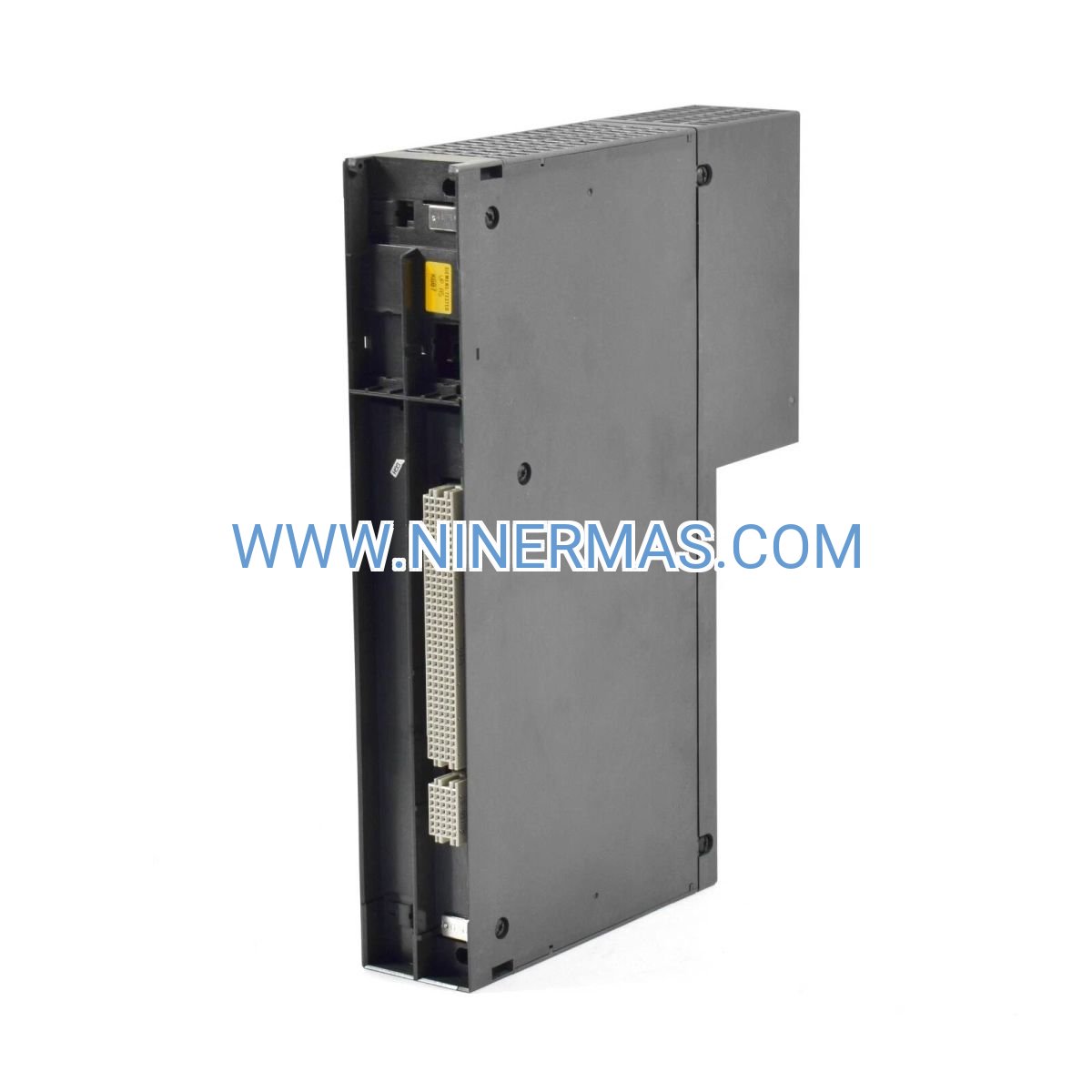
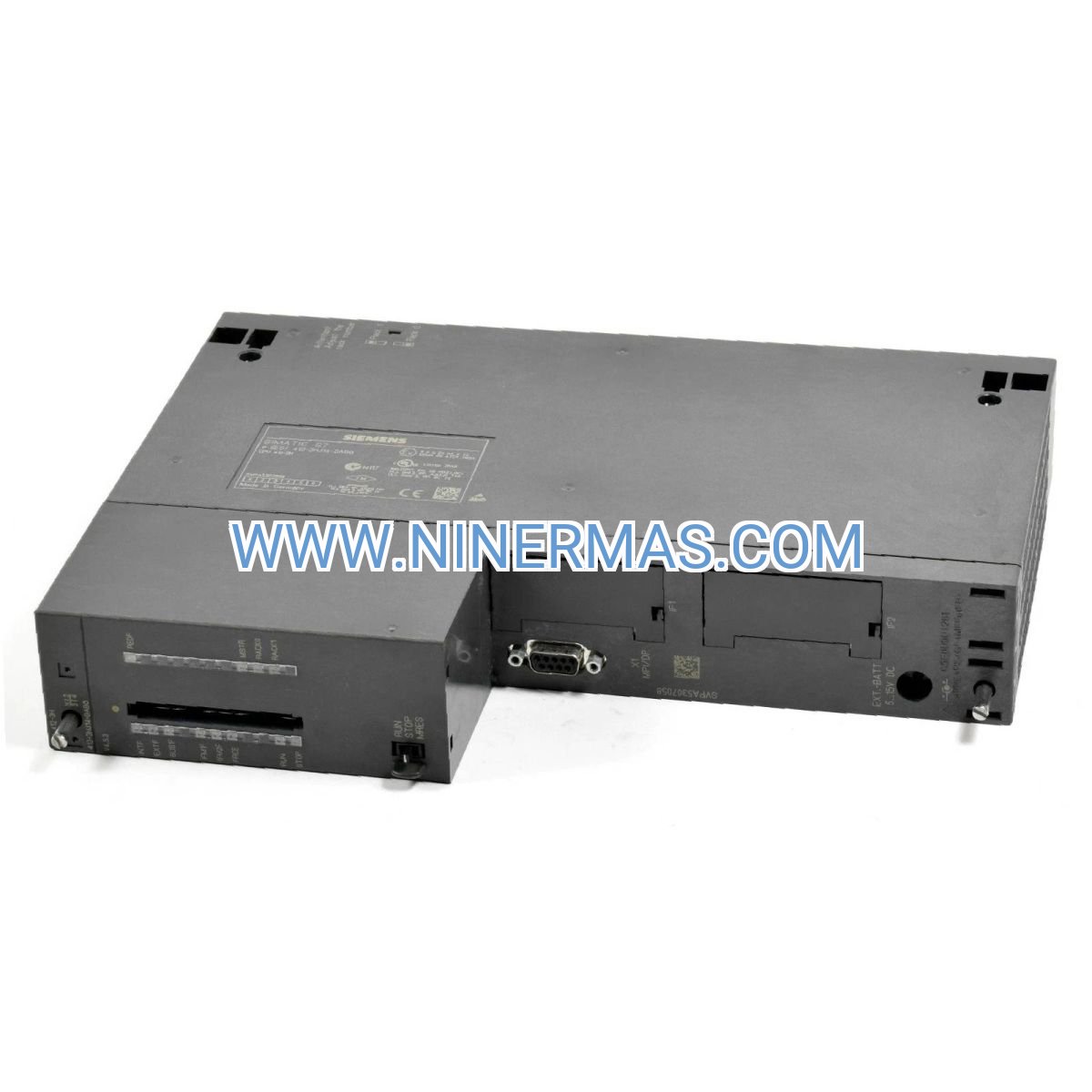
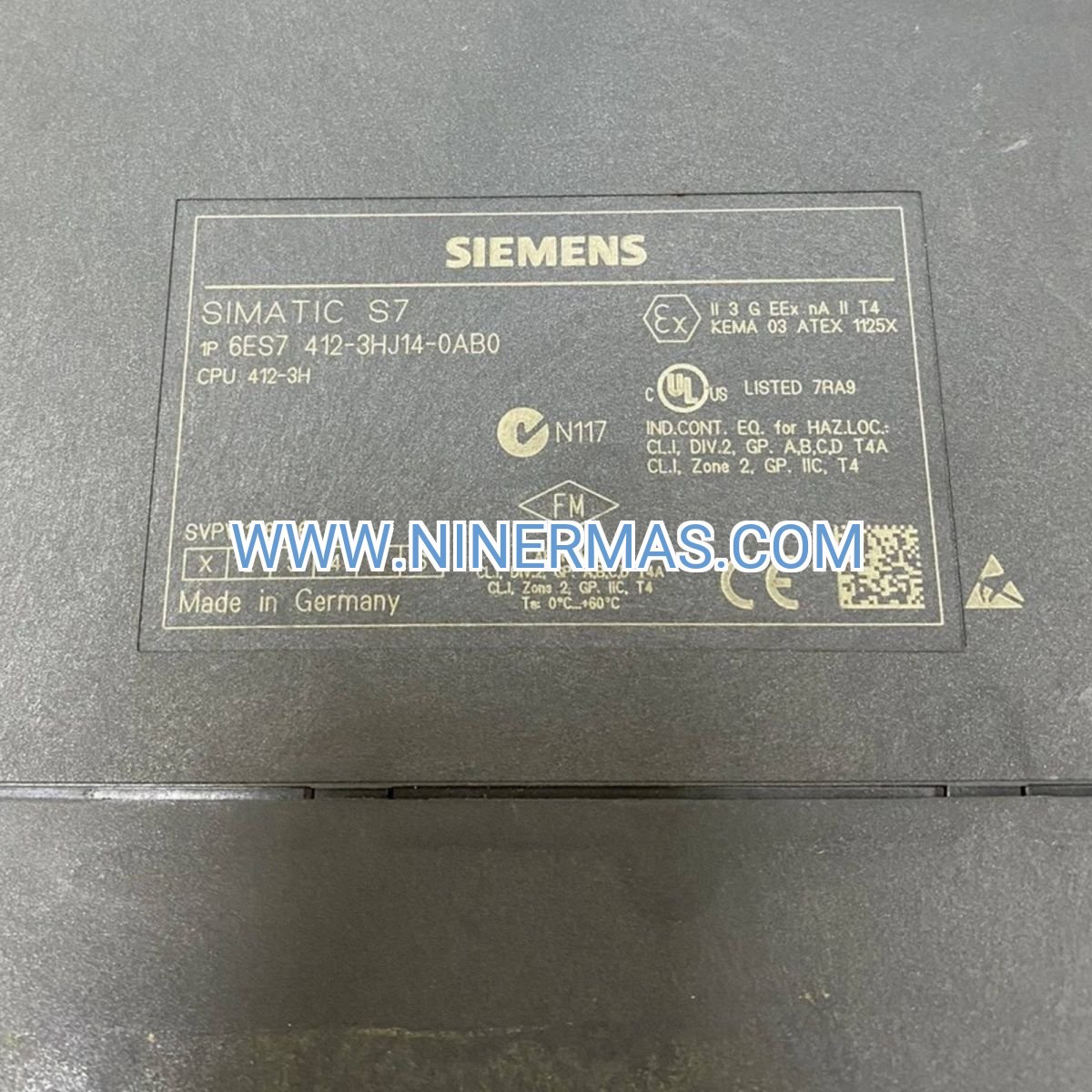
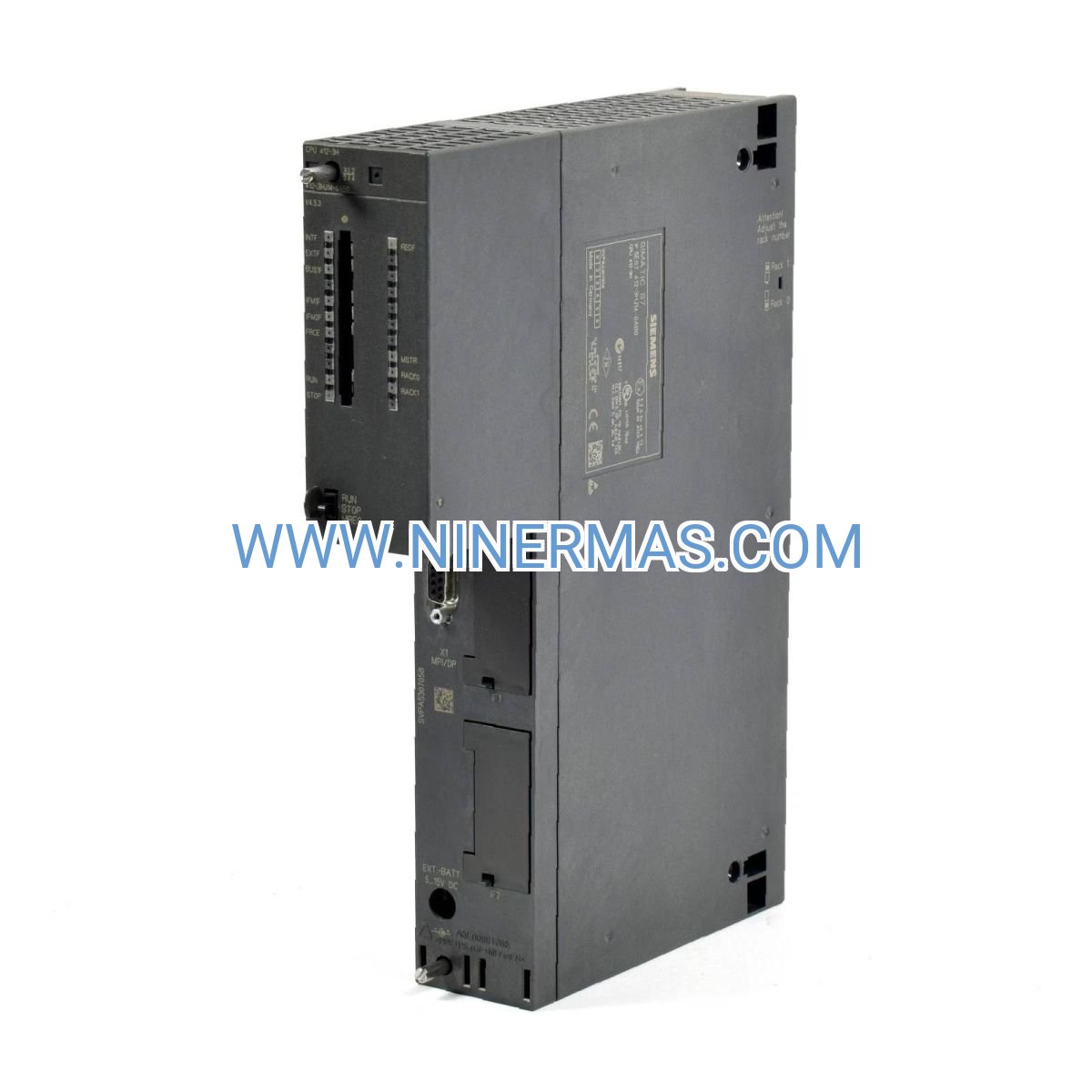
Siemens 6ES7412-2XK07-0AB0 CPU 412-5H | S7-400 Redundant Controller | Industrial Automation
Description
Siemens CPU 412-5H (Industrial-Grade Redundant Control System)
The Siemens 6ES7412-2XK07-0AB0 CPU 412-5H is a high-availability central processing unit designed for S7-400 H-systems, delivering hot-standby redundancy through dual-CPU architecture with automatic failover capability. This controller ensures continuous process operation by maintaining synchronized operation states between primary and backup CPUs, eliminating single points of failure in mission-critical applications.
Engineered for industries where downtime translates to significant production losses or safety risks—including petrochemical refineries, power generation facilities, pharmaceutical manufacturing, and continuous process industries—this CPU provides SIL 3-certified safety integrity and deterministic control performance. It addresses challenges such as unplanned shutdowns, process interruptions during maintenance, and the need for zero-downtime system upgrades.
With standardized programming via STEP 7 and flexible I/O expansion capabilities, the CPU 412-5H offers seamless integration into existing automation architectures while supporting customizable redundancy configurations. Ideal for design engineers, system integrators, plant automation teams, and OEM manufacturers requiring proven reliability. Contact our automation specialists for application-specific configuration guidance and technical quotations.
Core Functions & Advantages
Hot-Standby Redundancy Architecture
Dual-CPU configuration with continuous synchronization ensures automatic switchover within milliseconds upon primary CPU failure, maintaining process continuity without operator intervention or data loss.
SIL 3 Safety Integrity Level
Certified for safety-related applications per IEC 61508, suitable for emergency shutdown systems (ESD), fire & gas detection, and critical interlock functions in hazardous environments.
High-Performance Processing Capacity
512 KB work memory with optimized instruction execution supports complex control algorithms, data logging, and communication tasks simultaneously, handling up to 16,384 I/O points per redundant system.
Comprehensive Diagnostic & Fault Management
Integrated diagnostics monitor CPU health, synchronization status, and I/O module integrity in real-time, with detailed fault buffers and event logging to minimize troubleshooting time and prevent recurring failures.
Flexible Communication Interfaces
Native support for PROFIBUS DP, Industrial Ethernet (PROFINET), and MPI protocols enables seamless integration with HMI systems, SCADA platforms, distributed I/O, and third-party devices using open standards.
Modular Expansion & Scalability
Compatible with the full range of S7-400 signal modules, function modules, and communication processors, allowing system expansion from small to large-scale applications without architecture redesign.
Typical Application Scenarios
This CPU is engineered for environments demanding maximum uptime, precise control, and regulatory compliance, particularly in:
Oil & Gas Production and Refining
Controls critical processes such as distillation columns, compressor stations, and pipeline monitoring where unplanned shutdowns result in production losses exceeding hundreds of thousands per hour. Redundancy ensures continuous operation during maintenance windows and component failures.
Power Generation & Distribution
Manages turbine control systems, boiler automation, and substation protection relays in thermal, combined-cycle, and renewable energy plants. Hot-standby capability meets grid reliability standards and prevents cascading failures.
Chemical & Pharmaceutical Manufacturing
Ensures batch process integrity, reactor temperature control, and clean-room environmental management in GMP-regulated facilities. SIL 3 certification supports validation requirements for safety instrumented systems (SIS).
Water Treatment & Municipal Infrastructure
Operates pumping stations, filtration systems, and SCADA networks for drinking water and wastewater facilities where service interruptions impact public health and regulatory compliance.
Metals & Mining Processing
Controls continuous casting lines, grinding mills, and material handling systems in steel plants and mineral processing facilities where equipment damage from control failures can exceed millions in repair costs.
Technical Parameters & Selection Guide
To facilitate engineering design and system specification, we provide key technical data for the CPU 412-5H. Custom configurations are available based on project-specific I/O requirements, communication protocols, and environmental conditions.
Core Specifications:
- Work Memory: 512 KB (expandable via memory cards)
- Load Memory: Integrated + optional SIMATIC Micro Memory Card
- Processing Speed: Bit operations 0.06 μs, word operations 0.12 μs
- I/O Capacity: Up to 16,384 digital I/O, 2,048 analog I/O per redundant pair
- Power Supply: 24 VDC (via redundant PS 407 power modules)
- Operating Temperature: 0°C to +60°C (horizontal installation)
- Protection Rating: IP20 (suitable for control cabinet mounting)
- Communication Interfaces: MPI/DP, PROFIBUS DP, optional CP modules for PROFINET/Ethernet
- Redundancy Switching Time: < 100 ms (configurable based on application)
- Certifications: CE, UL, cULus, ATEX Zone 2, SIL 3 per IEC 61508
Selection Considerations:
When specifying this CPU, evaluate: total I/O point count (digital + analog), required scan cycle time, communication protocol requirements (PROFIBUS vs. PROFINET), environmental conditions (temperature, vibration, EMI), and safety integrity level (SIL 1-3). For applications requiring fiber-optic redundancy links or extended temperature ranges, consult with our engineering team to identify compatible modules and configuration options.
System Integration & Customization Options
The CPU 412-5H supports extensive customization to match specific automation architectures:
Redundancy Topologies: Configure as 1:1 hot-standby, 1:N backup for multiple systems, or integrate with redundant I/O for complete fault tolerance from field devices to control layer.
Communication Networks: Deploy with redundant PROFIBUS DP rings, Industrial Ethernet with media redundancy protocol (MRP), or wireless communication via SCALANCE W modules for remote sites.
Safety Integration: Combine with ET 200M distributed I/O and F-modules to create integrated safety systems meeting SIL 3 requirements without separate safety PLCs.
SCADA Connectivity: Native OPC UA server functionality and third-party driver support (Wonderware, Ignition, FactoryTalk) enable seamless data exchange with plant-wide monitoring systems.
Cybersecurity Features: Implement access protection, encrypted communication (TLS), and user authentication to comply with IEC 62443 industrial cybersecurity standards.
Delivery, Service & Quality Assurance
Lead Time: Standard configurations ship within 3-5 business days from stock; custom-configured systems with specific module combinations require 10-15 business days for assembly and factory testing.
Warranty Coverage: All units include a 24-month manufacturer warranty covering defects in materials and workmanship, with optional extended service agreements available for critical applications.
Technical Support: Our automation engineers provide pre-sales application consulting, system architecture review, and post-installation commissioning assistance. Remote diagnostic support and on-site service available based on geographic location and service contract level.
Documentation Package: Each shipment includes complete electrical schematics, I/O wiring diagrams, STEP 7 hardware configuration files (GSD), operation manuals in English, and certificate of conformity. Custom documentation for project-specific configurations provided upon request.
Genuine Siemens Product: All CPUs are sourced directly from authorized Siemens distribution channels with full traceability, ensuring authentic firmware, compliance with regional safety standards, and eligibility for manufacturer technical support.
Frequently Asked Questions (FAQ)
Q: How does the CPU 412-5H redundant system synchronize with existing S7-400 installations?
A: The CPU 412-5H integrates into S7-400 H-systems via dedicated fiber-optic synchronization modules (6ES7960-1AA06-0XA0). Both CPUs execute identical programs simultaneously, with synchronization occurring every scan cycle. Integration requires STEP 7 V5.5 or TIA Portal with H-system configuration package. Existing single-CPU S7-400 racks can be upgraded by adding a second rack, redundant power supplies, and synchronization links.
Q: What is the maximum number of I/O modules supported in a redundant configuration?
A: A single CPU 412-5H pair supports up to 16,384 digital I/O points and 2,048 analog channels across multiple distributed ET 200M stations. Practical limits depend on communication bandwidth (PROFIBUS DP supports ~120 slaves per segment) and required scan cycle time. For applications exceeding 8,000 I/O points, we recommend network segmentation and load distribution analysis.
Q: What energy savings or efficiency improvements does redundancy provide?
A: Redundancy primarily enhances availability rather than energy efficiency. However, by preventing unplanned shutdowns—which often require energy-intensive restart sequences in process industries—the system indirectly reduces energy waste. For a refinery distillation unit, avoiding a single unplanned shutdown can save 500+ MWh in restart energy and prevent product quality losses.
Q: What are the environmental and installation requirements for the CPU 412-5H?
A: The CPU operates in 0°C to +60°C ambient temperature (horizontal mounting; derate to +40°C for vertical). IP20 protection rating requires installation in enclosed control cabinets with adequate ventilation (minimum 100mm clearance above/below). Avoid locations with sustained vibration >0.5g or corrosive atmospheres. For harsh environments (offshore platforms, mining), specify SIPLUS extreme versions rated to -25°C to +70°C.
Q: Can the system support remote monitoring and data acquisition via cloud platforms?
A: Yes, via Siemens Industrial Edge or third-party IoT gateways. The CPU 412-5H communicates with edge devices using PROFINET or OPC UA, which then securely transmit data to cloud platforms (AWS, Azure, MindSphere) for analytics and remote diagnostics. Protocols supported include MQTT, REST API, and Siemens S7 communication. Cybersecurity measures (firewall, VPN, certificate-based authentication) are mandatory for internet-connected systems.
Q: Is the CPU 412-5H compatible with legacy S7-400 systems installed 10+ years ago?
A: Yes, with considerations. The CPU 412-5H maintains backward compatibility with S7-400 signal modules and communication processors from previous generations. However, firmware updates may be required for optimal performance, and older STEP 7 versions (pre-V5.5) may lack full H-system configuration features. We recommend a compatibility audit before retrofitting redundancy into legacy systems to identify any obsolete modules requiring replacement.
Request Technical Consultation & Quotation
To receive a detailed system configuration proposal, pricing, and application-specific recommendations, please provide the following project information: application type (continuous process, batch, safety system), total I/O count (digital inputs/outputs, analog channels), required scan cycle time, communication protocol preferences (PROFIBUS/PROFINET), environmental conditions, and any regulatory compliance requirements (SIL, ATEX, FM). Our automation engineers will respond within 24 hours with a tailored solution and technical documentation.
© 2026 NINERMAS COMPANY LIMITED. All rights reserved.
Original Source: https://ninermas.com
Contact: sale@ninermas.com | +0086 187 5021 5667

Contact Info
-
Address:22 / F, South Wo Hang building, 148 Wing Lok Street, Sheung Wan, Western District, Hong Kong
-
Phone:+8618750215667
-
Email: