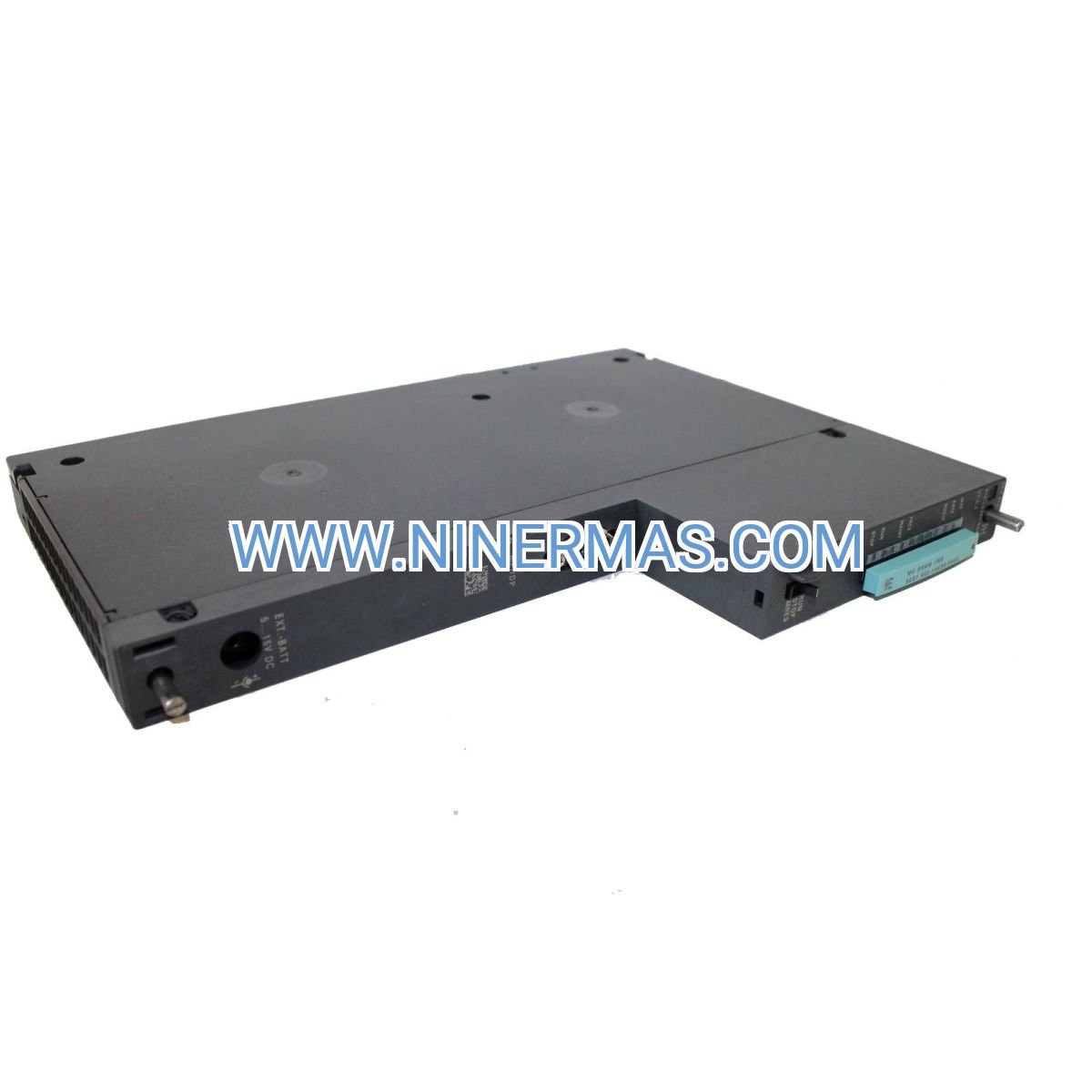
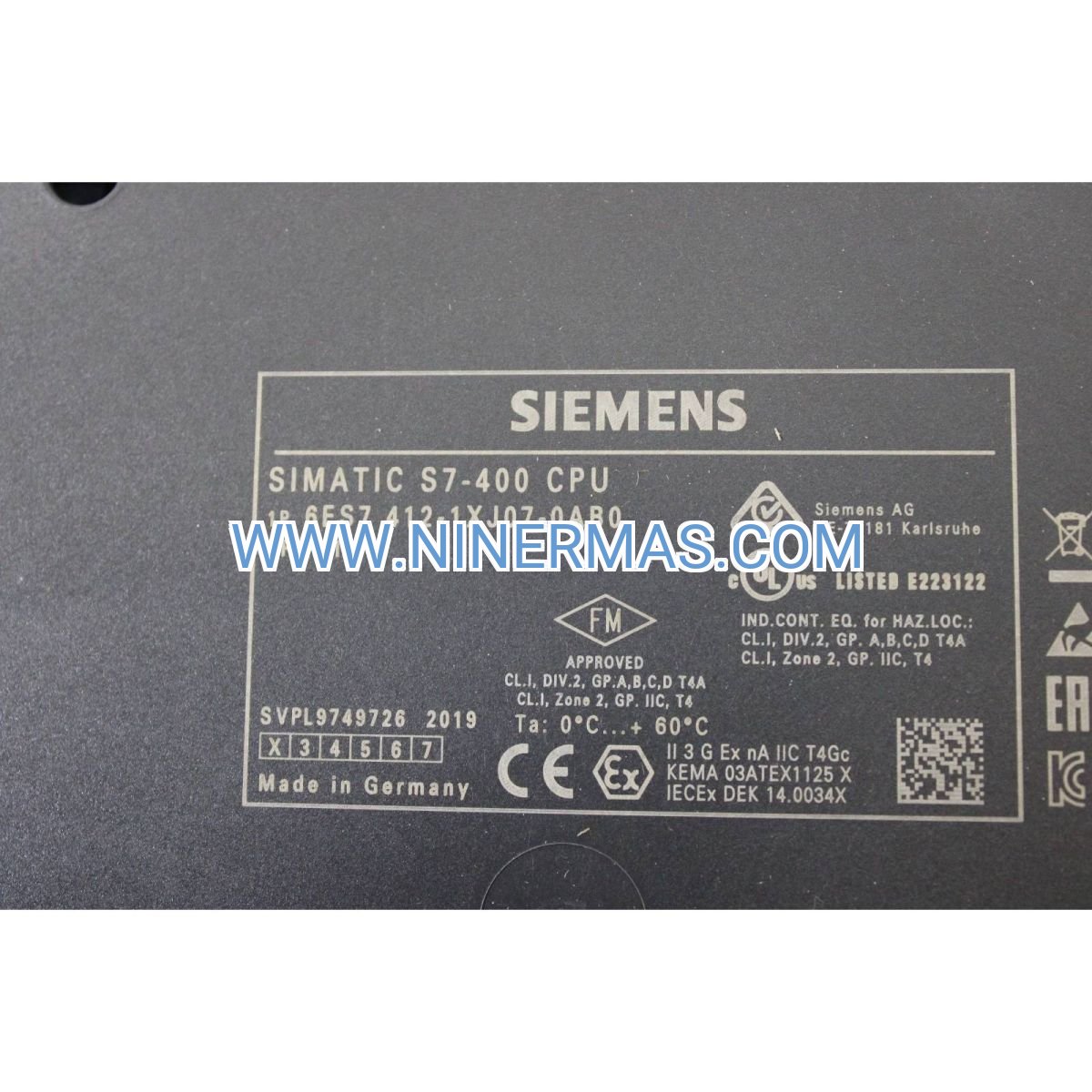
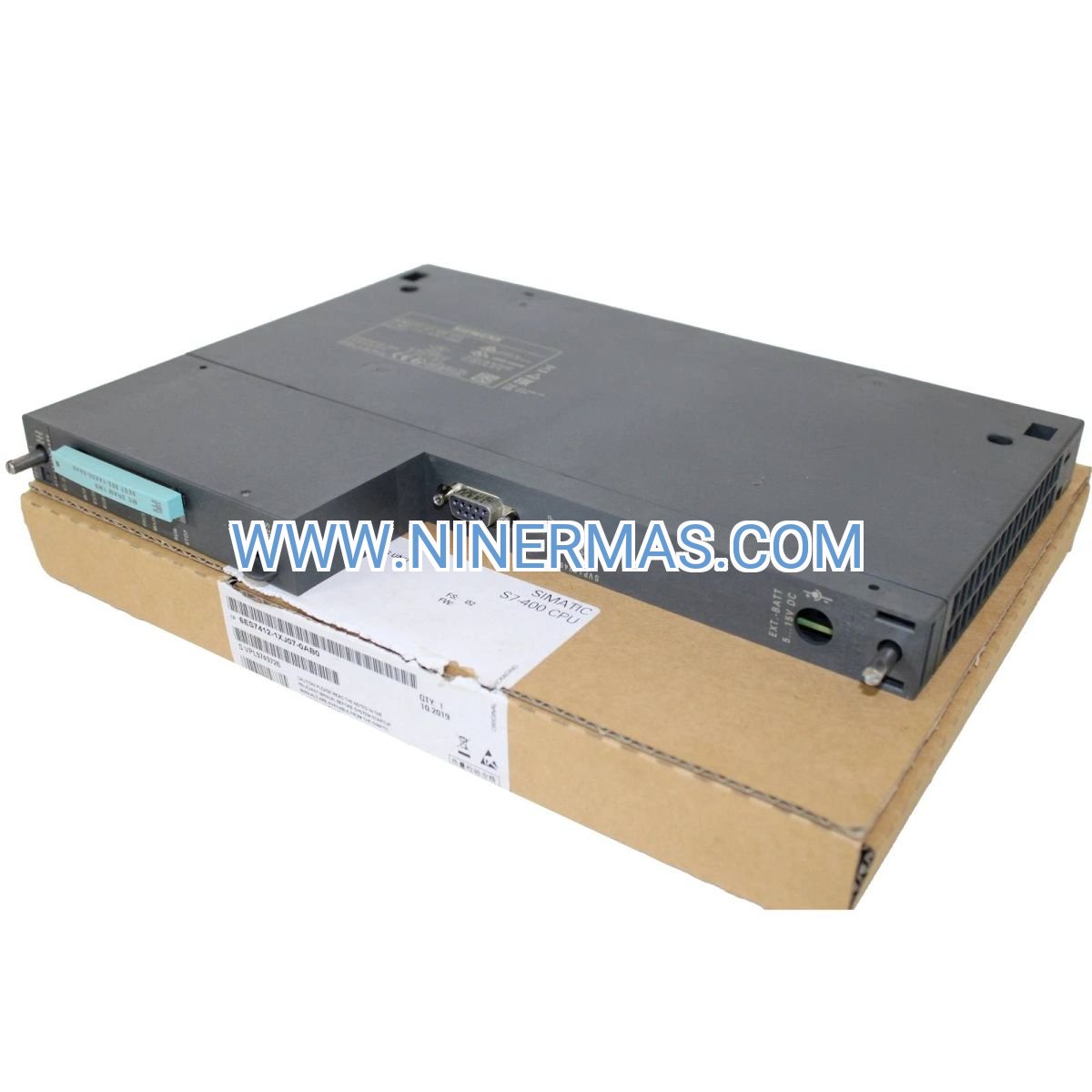
Siemens CPU 412-3H 6ES7412-1XJ05-0AB0 | S7-400H Redundant PLC Controller with Hot-Standby Failover
Description
Siemens CPU 412-3H Redundant PLC Controller (Industrial-Grade Hot-Standby System)
The Siemens CPU 412-3H (6ES7412-1XJ05-0AB0) is a high-availability redundant controller designed for mission-critical industrial automation systems. Through advanced hot-standby architecture and seamless failover technology (switchover time <100ms), it ensures continuous process control and eliminates single points of failure in demanding applications.
Ideal for industries requiring 24/7 uptime—including petrochemical plants, power generation facilities, pharmaceutical manufacturing, water treatment systems, and large-scale process automation—this controller addresses challenges such as unexpected downtime, production loss, safety risks, and insufficient fault tolerance in conventional single-CPU configurations.
Leveraging standardized S7-400H platform compatibility and flexible configuration options, the CPU 412-3H delivers SIL 3 safety integrity, robust diagnostics, and seamless integration with existing Siemens ecosystems. Suitable for design engineers, system integrators, plant operators, and OEM manufacturers seeking reliable redundancy solutions. Contact our automation specialists for application-specific configuration guidance and technical quotations.
Core Features & Technical Advantages
- True Hot-Standby Redundancy
Dual-CPU architecture with automatic synchronization and bumpless switchover (<100ms) ensures zero interruption during primary controller failure, maintaining process stability and protecting critical operations. - High-Performance Processing Capability
Equipped with 512KB work memory and optimized instruction execution speed, supporting complex logic control, data processing, and communication tasks for large-scale automation projects. - SIL 3 Safety Certification
Compliant with IEC 61508 functional safety standards, suitable for safety-instrumented systems (SIS) in hazardous process industries, reducing risk exposure and regulatory compliance burden. - Comprehensive Diagnostic & Monitoring
Built-in self-diagnostics, real-time status monitoring, and event logging enable proactive maintenance, rapid fault localization, and reduced mean time to repair (MTTR). - Seamless S7-400H Ecosystem Integration
Fully compatible with Siemens STEP 7 programming environment, PROFIBUS/PROFINET communication, and distributed I/O systems, simplifying engineering workflow and minimizing learning curves. - Industrial-Grade Reliability
Designed for harsh environments with wide operating temperature range (-40°C to +70°C), EMC immunity, and conformal coating options, ensuring long-term stability in demanding field conditions.
Typical Application Scenarios
The CPU 412-3H is engineered for applications where process continuity, safety, and reliability are paramount:
- Petrochemical & Refining Plants
Controls critical distillation columns, reactor systems, and pipeline networks where unplanned shutdowns result in significant production loss, safety hazards, and environmental risks. - Power Generation & Distribution
Manages turbine control systems, boiler automation, and substation protection where high availability directly impacts grid stability and energy supply continuity. - Pharmaceutical & Biotech Manufacturing
Ensures batch process integrity, cleanroom environmental control, and regulatory compliance (FDA 21 CFR Part 11) in sterile production environments requiring validated automation systems. - Water & Wastewater Treatment
Operates pumping stations, filtration systems, and chemical dosing controls for municipal infrastructure where service interruption affects public health and environmental compliance. - Automotive & Discrete Manufacturing
Coordinates assembly lines, material handling, and quality inspection systems where downtime translates to production bottlenecks and delivery delays.
Technical Specifications & Selection Guide
To facilitate system design and component selection, key technical parameters are outlined below. Custom configurations available based on project-specific requirements.
| Parameter | Specification |
|---|---|
| Product Code | 6ES7412-1XJ05-0AB0 |
| CPU Type | CPU 412-3H (Redundant) |
| Work Memory | 512 KB |
| Load Memory | Expandable via Memory Card |
| Redundancy Mode | Hot-Standby (1:1) |
| Switchover Time | <100 ms (bumpless) |
| Safety Rating | SIL 3 (IEC 61508) |
| Communication Interfaces | PROFIBUS DP, MPI, Sync Module |
| Operating Temperature | 0°C to +60°C (extended: -40°C to +70°C) |
| Power Supply | DC 24V (redundant PS recommended) |
| Mounting | S7-400 Standard Rail |
| Protection Rating | IP20 (enclosure-dependent) |
Selection Considerations: When specifying the CPU 412-3H, evaluate factors including maximum I/O point count, communication protocol requirements (PROFIBUS/PROFINET), memory capacity for program complexity, environmental conditions (temperature/vibration/humidity), and integration with existing SCADA/HMI systems. Our application engineers can assist with system architecture design, redundancy configuration, and performance optimization based on your process requirements.
Advanced Configuration Options
- Redundant Communication Links: Dual PROFIBUS/PROFINET networks for fault-tolerant data exchange
- Distributed I/O Redundancy: Compatible with ET 200M redundant I/O stations
- Time Synchronization: GPS/NTP integration for precise event timestamping
- Remote Access: Secure VPN connectivity for remote diagnostics and programming
- Data Logging: Integration with Siemens WinCC or third-party historians
Delivery, Service & Quality Assurance
Lead Time: Standard factory-sealed units typically ship within 3-5 business days; custom-configured systems require 10-15 days depending on specifications.
Warranty: 12-month comprehensive warranty covering manufacturing defects and component failures; extended warranty plans available upon request.
Technical Support: Pre-sales application consulting, post-sales commissioning assistance, and remote troubleshooting support provided by certified Siemens automation engineers.
Documentation Package: Complete technical documentation including hardware installation manual, STEP 7 configuration guide, wiring diagrams, GSD files, and safety compliance certificates supplied with each unit.
Quality Certification: All products sourced through authorized Siemens distribution channels with full traceability, authenticity verification, and compliance with ISO 9001 quality management standards.
Frequently Asked Questions (FAQ)
Q: How does the CPU 412-3H redundant controller integrate with existing S7-400 systems?
A: The CPU 412-3H requires a matched pair configuration with synchronized programming and dedicated fiber-optic sync modules. It seamlessly integrates with standard S7-400 racks, I/O modules, and communication processors. Existing STEP 7 projects can be migrated with redundancy-specific configuration adjustments.
Q: What is the maximum I/O capacity supported by a CPU 412-3H redundant system?
A: The system supports up to 65,536 digital I/O points and 4,096 analog I/O channels when configured with distributed ET 200 I/O stations via PROFIBUS DP or PROFINET, providing scalability for large-scale process automation.
Q: What are the typical energy savings and reliability improvements compared to non-redundant systems?
A: While redundant systems consume approximately 1.8x power versus single-CPU configurations, they eliminate unplanned downtime costs (averaging $5,000-$50,000/hour in process industries). Mean time between failures (MTBF) increases by 300-500% through fault-tolerant architecture.
Q: What environmental conditions must be maintained for optimal CPU 412-3H operation?
A: Standard operating range: 0-60°C ambient, 5-95% RH (non-condensing), <2000m altitude. For harsh environments, specify extended temperature modules (-40 to +70°C) and conformal coating. IP20 enclosure minimum; IP54+ recommended for dusty/humid locations.
Q: Can the CPU 412-3H support remote monitoring and OPC UA connectivity?
A: Yes, through CP 443-1 Advanced communication processors supporting OPC UA server functionality, MQTT, and secure TLS encryption. Integration with cloud-based SCADA platforms (e.g., Siemens MindSphere) is achievable via industrial edge gateways.
Q: Is the CPU 412-3H compatible with legacy S7-400 components and older STEP 7 versions?
A: The CPU 412-3H requires STEP 7 V5.5 SP4 or higher for full redundancy configuration. It maintains backward compatibility with most S7-400 signal modules (SM), function modules (FM), and communication processors (CP) manufactured after 2005. Consult compatibility matrix for specific module verification.
Request Technical Consultation & Quotation
To receive a customized system configuration proposal, pricing quotation, or technical feasibility assessment, please provide the following project details:
- Application industry and process description
- Required I/O point count (digital/analog)
- Communication protocol requirements (PROFIBUS/PROFINET/Ethernet)
- Environmental conditions (temperature, humidity, hazardous area classification)
- Integration requirements (existing SCADA, HMI, or third-party systems)
- Project timeline and delivery location
Our automation specialists will respond within 24 hours with tailored recommendations, system architecture diagrams, and competitive pricing.
© 2026 NINERMAS COMPANY LIMITED. All rights reserved.
Original Source: https://ninermas.com
Contact: sale@ninermas.com | +0086 187 5021 5667

Contact Info
-
Address:22 / F, South Wo Hang building, 148 Wing Lok Street, Sheung Wan, Western District, Hong Kong
-
Phone:+8618750215667
-
Email: