


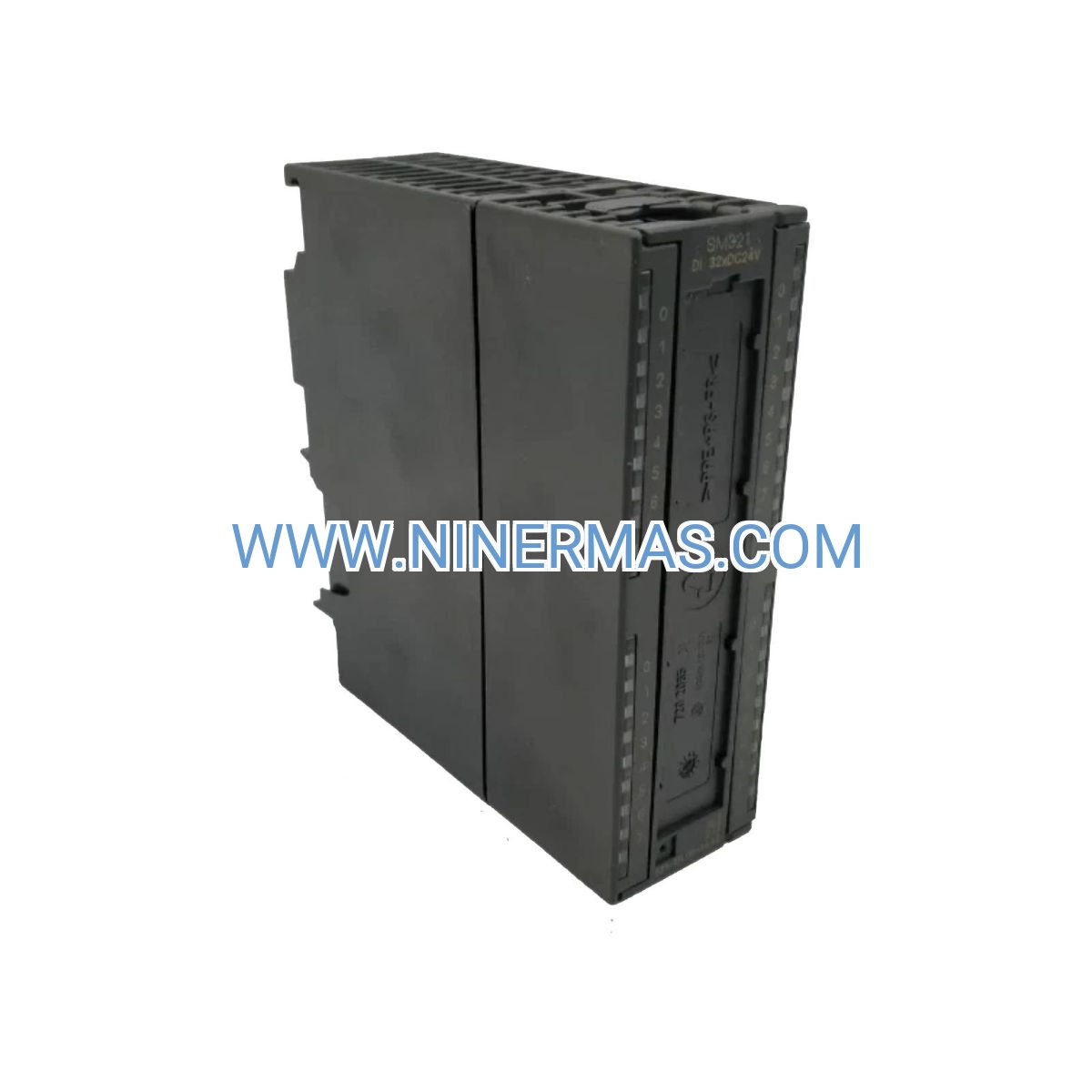


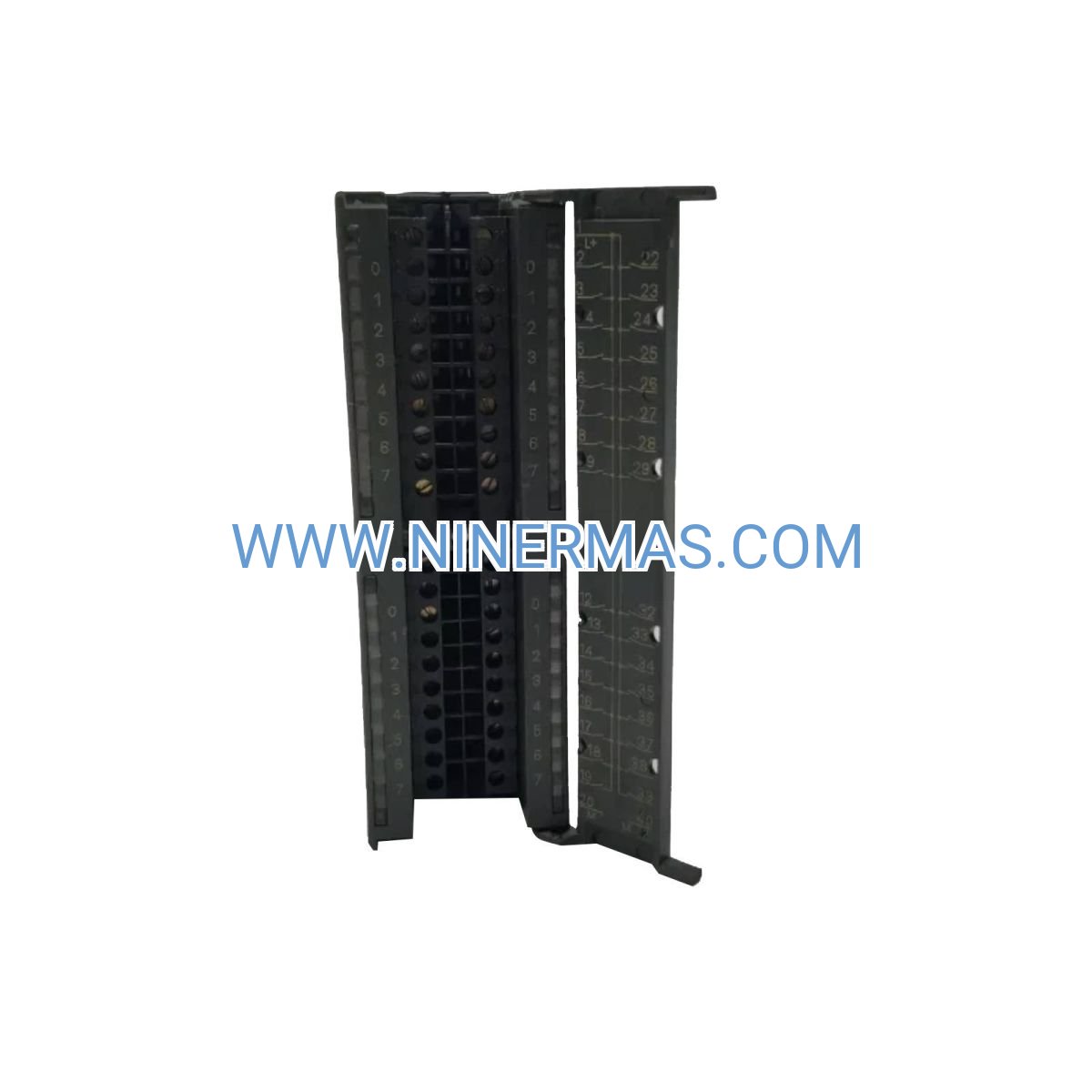
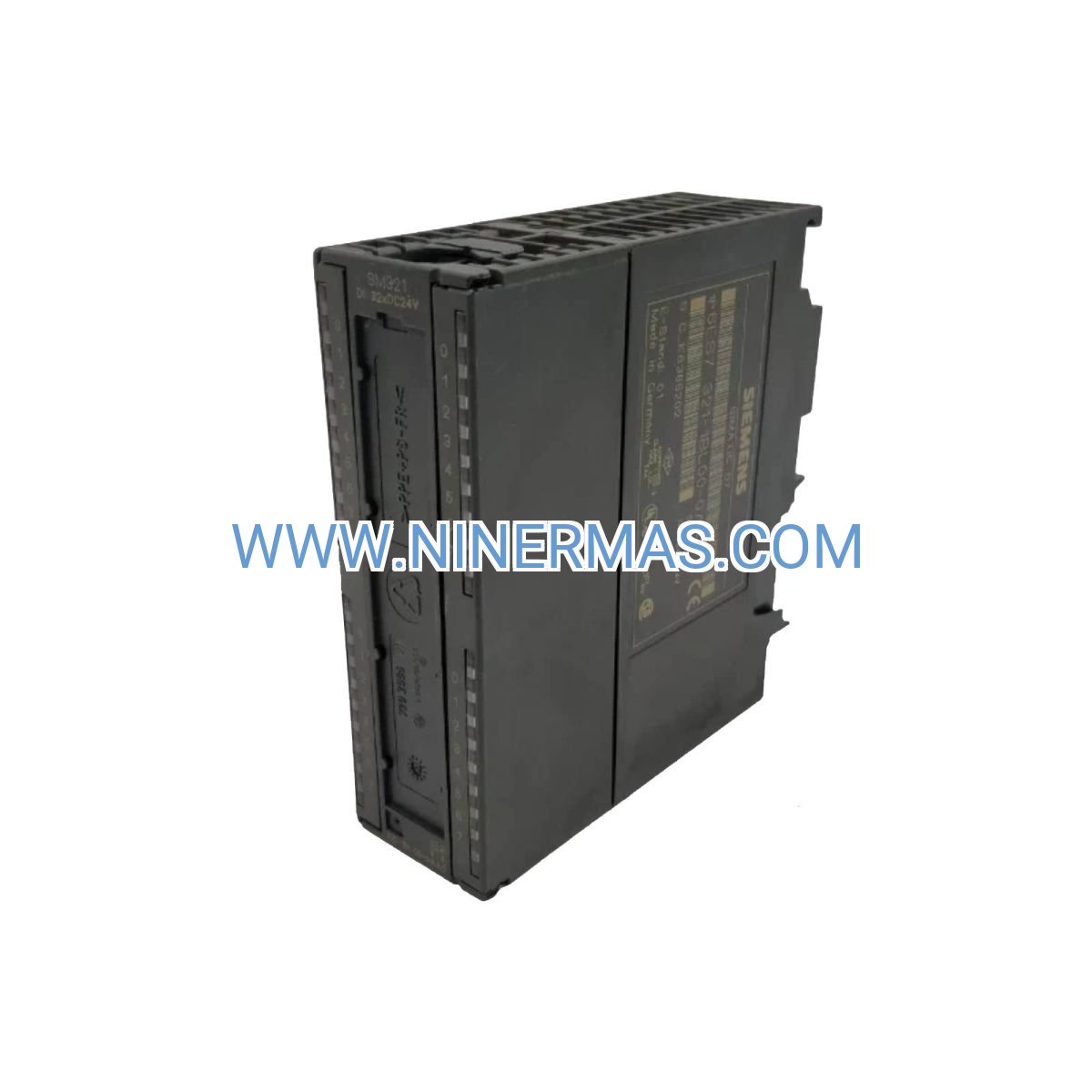
Siemens SM 321 Digital Input Module 6ES7321-1BH02-0AB0 | 16-Channel 24V DC High-Feature DI for S7-300 PLC
Description
Siemens SM 321 Digital Input Module – High-Feature 16-Channel 24V DC Solution for S7-300 PLC Systems
The Siemens SM 321 DI 16x24V DC (6ES7321-1BH02-0AB0) is a high-performance digital input module engineered for industrial automation and process control applications. Through advanced signal processing and robust galvanic isolation technology, this module delivers reliable 16-channel digital signal acquisition with exceptional noise immunity and diagnostic capabilities, ensuring stable operation in demanding industrial environments.
Designed for integration with Siemens S7-300 PLC systems, this module addresses critical challenges in manufacturing automation, process monitoring, and discrete control applications—including signal integrity issues in electrically noisy environments, diagnostic complexity in distributed I/O architectures, and the need for flexible input configurations across diverse sensor types (proximity switches, photoelectric sensors, limit switches, push buttons).
Leveraging standardized S7-300 architecture with field-proven reliability, the SM 321 module offers hot-swappable installation, comprehensive diagnostic functions, and flexible parameterization capabilities. Ideal for system integrators, control panel builders, OEM machine manufacturers, and plant maintenance teams requiring dependable digital input solutions with long-term availability and global technical support. Contact our automation engineers for application-specific configuration guidance and technical documentation.
Core Features & Technical Advantages
- 16-Channel High-Density Digital Input
Provides 16 independent 24V DC digital input channels in a compact single-slot module, optimizing cabinet space utilization while maintaining full electrical isolation between channels and backplane bus for enhanced system safety and EMC performance. - High-Feature Diagnostic Capability
Equipped with advanced channel-level diagnostics including wire-break detection, short-circuit monitoring, and supply voltage supervision. Real-time diagnostic data accessible via PLC program or engineering station reduces troubleshooting time by up to 60% compared to standard I/O modules. - Robust Industrial-Grade Design
Engineered to withstand harsh industrial conditions with operating temperature range -25°C to +60°C, vibration resistance per IEC 60068-2-6, and conformal coating options for corrosive atmospheres. MTBF exceeds 500,000 hours under typical operating conditions. - Flexible Input Configuration
Supports both sinking and sourcing input wiring configurations with selectable input delay filtering (0.1ms to 20ms) to eliminate contact bounce and electrical noise. Compatible with standard 2-wire and 3-wire proximity sensors, NAMUR sensors, and mechanical contacts. - Seamless S7-300 Integration
Hot-swappable installation without system shutdown, automatic hardware detection via STEP 7 engineering software, and consistent addressing scheme across entire S7-300 family. Supports distributed I/O via PROFIBUS DP and PROFINET IO when used with appropriate interface modules. - Comprehensive Protection Functions
Integrated protection against reverse polarity, overvoltage transients (up to 35V DC), electromagnetic interference per IEC 61000-6-2, and electrostatic discharge per IEC 61000-4-2. Each input channel features LED status indication for rapid visual diagnostics.
Typical Application Scenarios
The SM 321 digital input module excels in applications demanding high reliability, diagnostic transparency, and long-term system availability:
- Manufacturing Automation & Assembly Lines
Monitors position sensors, safety interlocks, and quality inspection stations in automotive assembly, electronics manufacturing, and packaging machinery. Diagnostic features enable predictive maintenance strategies and minimize unplanned downtime. - Process Industry Monitoring
Acquires discrete signals from level switches, flow indicators, valve position feedback, and alarm contacts in chemical processing, pharmaceutical production, water treatment, and food & beverage facilities. Suitable for SIL-rated safety applications when properly configured. - Building Automation & Infrastructure
Interfaces with HVAC system sensors, access control devices, fire alarm panels, and utility monitoring equipment in commercial buildings, data centers, and critical infrastructure installations requiring 24/7 operational reliability. - Material Handling & Logistics
Processes input signals from conveyor sensors, barcode scanners, sorting gates, and warehouse automation equipment. High-speed input response (≤3ms typical) supports demanding material tracking and sortation applications. - Energy & Utilities Control
Monitors switchgear status, breaker positions, transformer alarms, and substation equipment in power generation, distribution networks, and renewable energy installations. Proven reliability in mission-critical utility automation systems.
Technical Specifications & Selection Guide
To facilitate engineering design and module selection, key technical parameters are provided below. Custom configurations available for specialized applications.
| Parameter | Specification |
|---|---|
| Order Number | 6ES7321-1BH02-0AB0 |
| Input Channels | 16 x Digital Input (24V DC) |
| Input Type | IEC Type 1 (per IEC 61131-2) |
| Rated Input Voltage | 24V DC (18.5V to 30V DC operating range) |
| Input Current (per channel) | Typical 7 mA |
| Input Delay | Parameterizable: 0.1 / 0.5 / 3.0 / 15.0 ms |
| Electrical Isolation | 500V DC between channels and backplane |
| Diagnostic Functions | Wire-break detection, short-circuit, supply voltage monitoring |
| Power Consumption | Approx. 80 mA from S7-300 backplane (5V DC) |
| Dimensions (W x H x D) | 40 x 125 x 120 mm |
| Mounting | S7-300 standard rail (DIN rail compatible) |
| Operating Temperature | -25°C to +60°C (horizontal installation) |
| Protection Rating | IP20 (when installed in enclosure) |
| Certifications | CE, UL, cULus, FM, ATEX (Zone 2), IECEx |
Selection Considerations: When specifying this module, evaluate total input point requirements, sensor supply voltage compatibility (ensure 24V DC sensor power supply), required diagnostic depth, environmental conditions (temperature, vibration, EMI exposure), and cabinet space constraints. For applications requiring higher channel density, consider SM 321 variants with 32 inputs. For safety-related functions, consult Siemens safety I/O portfolio (F-modules). Our application engineers can assist with I/O point allocation, wiring diagrams, and system architecture optimization.
Advanced Integration Capabilities
- STEP 7 Engineering Integration: Full hardware catalog support in STEP 7 V5.x and TIA Portal, automatic GSD file recognition, graphical configuration of input parameters and diagnostics
- Distributed I/O Support: Compatible with ET 200M distributed I/O system via PROFIBUS DP or PROFINET IO interface modules, enabling remote installation up to 100m from CPU
- Redundancy Options: Supports S7-300H redundant controller configurations for high-availability applications in critical process control
- SCADA/HMI Connectivity: Diagnostic data accessible via OPC servers, SIMATIC WinCC, and third-party HMI platforms for centralized monitoring
- Firmware Updates: Field-upgradable firmware via STEP 7 for feature enhancements and security patches (consult release notes for compatibility)
Delivery, Documentation & Technical Support
Standard modules ship from stock within 3-5 business days to most global destinations. Factory-sealed packaging includes module, terminal block connector (20-pin), labeling strips, and quick-start installation guide. Comprehensive technical documentation package provided:
- Product manual with detailed specifications and wiring diagrams
- STEP 7 hardware configuration instructions
- Dimensional drawings and mounting templates (CAD format available)
- Electrical schematics and terminal assignment diagrams
- Diagnostic troubleshooting flowcharts
- Compliance certificates (CE, UL, ATEX as applicable)
Warranty & Support: All modules carry Siemens factory warranty (minimum 12 months from delivery). Extended warranty and service agreements available. Technical support includes remote diagnostic assistance, on-site commissioning services (region-dependent), and access to Siemens Industry Online Support portal. Replacement modules available with expedited shipping for critical applications.
Frequently Asked Questions (FAQ)
Q: How does the SM 321 High-Feature module integrate with existing S7-300 PLC systems?
A: The module installs directly onto the S7-300 DIN rail mounting system and connects via the backplane bus—no additional interface cards required. Simply insert the module into an available slot, secure the locking mechanism, connect field wiring to the 20-pin terminal block, and configure via STEP 7 software. The CPU automatically detects the module during startup. Verify power budget of your PS 307 power supply can support additional module current draw (approximately 80mA from 5V rail).
Q: What is the maximum number of SM 321 modules supported in a single S7-300 rack?
A: A standard S7-300 rack supports up to 8 signal modules (slots 4-11), allowing up to 8 SM 321 modules for a total of 128 digital inputs per rack. For larger systems, use IM 360/361 interface modules to add expansion racks (up to 4 expansion racks, total 32 modules). Distributed I/O via PROFIBUS DP or PROFINET provides virtually unlimited expansion capability.
Q: What diagnostic benefits does the High-Feature version provide compared to standard DI modules?
A: High-Feature diagnostics include channel-level wire-break detection (open circuit), short-circuit monitoring, and supply voltage supervision—all accessible in real-time via PLC program or HMI. Standard modules typically only provide group diagnostics. This granular diagnostic data enables faster fault isolation (reducing troubleshooting time by 50-70%), predictive maintenance strategies, and improved system availability in critical applications.
Q: What environmental protection rating does this module offer for harsh industrial installations?
A: The module is rated IP20 when properly installed in an enclosed control cabinet. For harsh environments (chemical exposure, high humidity, extreme temperatures), install in NEMA 4/4X or IP65-rated enclosures with appropriate climate control. Conformal coating options available for corrosive atmosphere protection. Operating temperature range is -25°C to +60°C (horizontal mounting); derate to +40°C for vertical mounting or ensure adequate ventilation.
Q: Can the SM 321 module support remote monitoring and Industry 4.0 connectivity?
A: Yes—when integrated with S7-300 CPUs featuring Ethernet communication (CPU 315-2 PN/DP or higher) or via CP 343-1 communication processors, diagnostic data and input status are accessible through PROFINET, OPC UA, or Ethernet/IP protocols. This enables integration with SCADA systems, cloud-based analytics platforms, and mobile monitoring applications. For legacy systems, PROFIBUS DP provides remote I/O connectivity to distributed control systems.
Q: What input delay settings are recommended for different sensor types?
A: Input delay filtering eliminates contact bounce and electrical noise. Recommended settings: 0.1ms for high-speed proximity sensors and encoders; 0.5ms for standard inductive/capacitive sensors; 3.0ms for mechanical switches and relay contacts; 15.0ms for extremely noisy environments or slow-acting sensors. Configure via STEP 7 hardware configuration—settings apply per 8-channel group. Consult sensor datasheets for response time specifications.
Request Technical Consultation & Quotation
For detailed application engineering support, custom configuration assistance, or project quotations, please provide the following information to our automation specialists:
- Project name and application overview (industry, process description)
- Total digital input point requirements and sensor types
- S7-300 CPU model and existing system configuration
- Environmental conditions (temperature range, enclosure type, hazardous area classification)
- Diagnostic and communication requirements (PROFIBUS, PROFINET, OPC connectivity)
- Delivery timeline and quantity requirements
Our certified Siemens solution partners will provide one-on-one engineering consultation, system architecture recommendations, and competitive pricing within 24-48 hours.
© 2026 NINERMAS COMPANY LIMITED. All rights reserved.
Original Source: https://ninermas.com
Contact: sale@ninermas.com | +0086 187 5021 5667

Contact Info
-
Address:22 / F, South Wo Hang building, 148 Wing Lok Street, Sheung Wan, Western District, Hong Kong
-
Phone:+8618750215667
-
Email:
