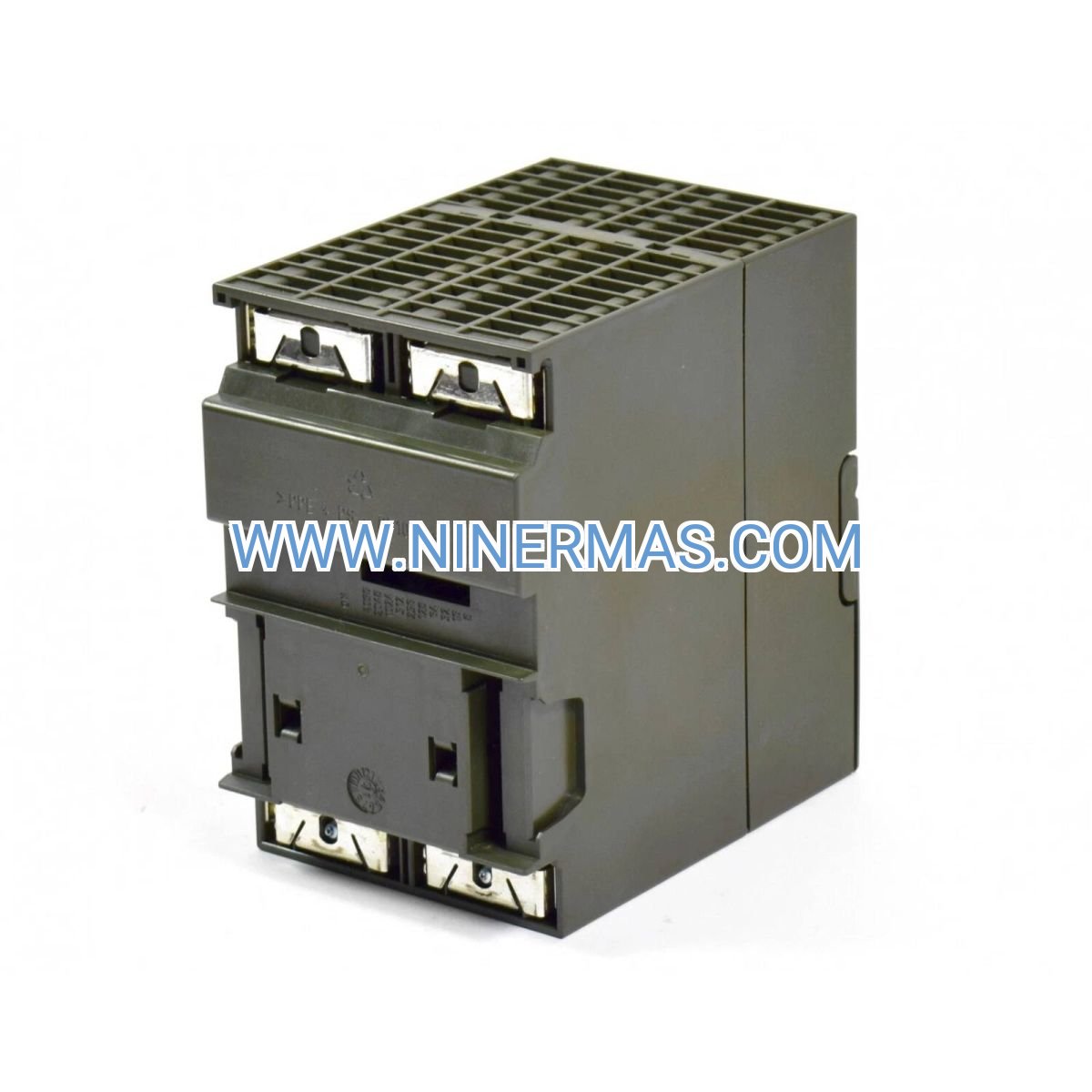
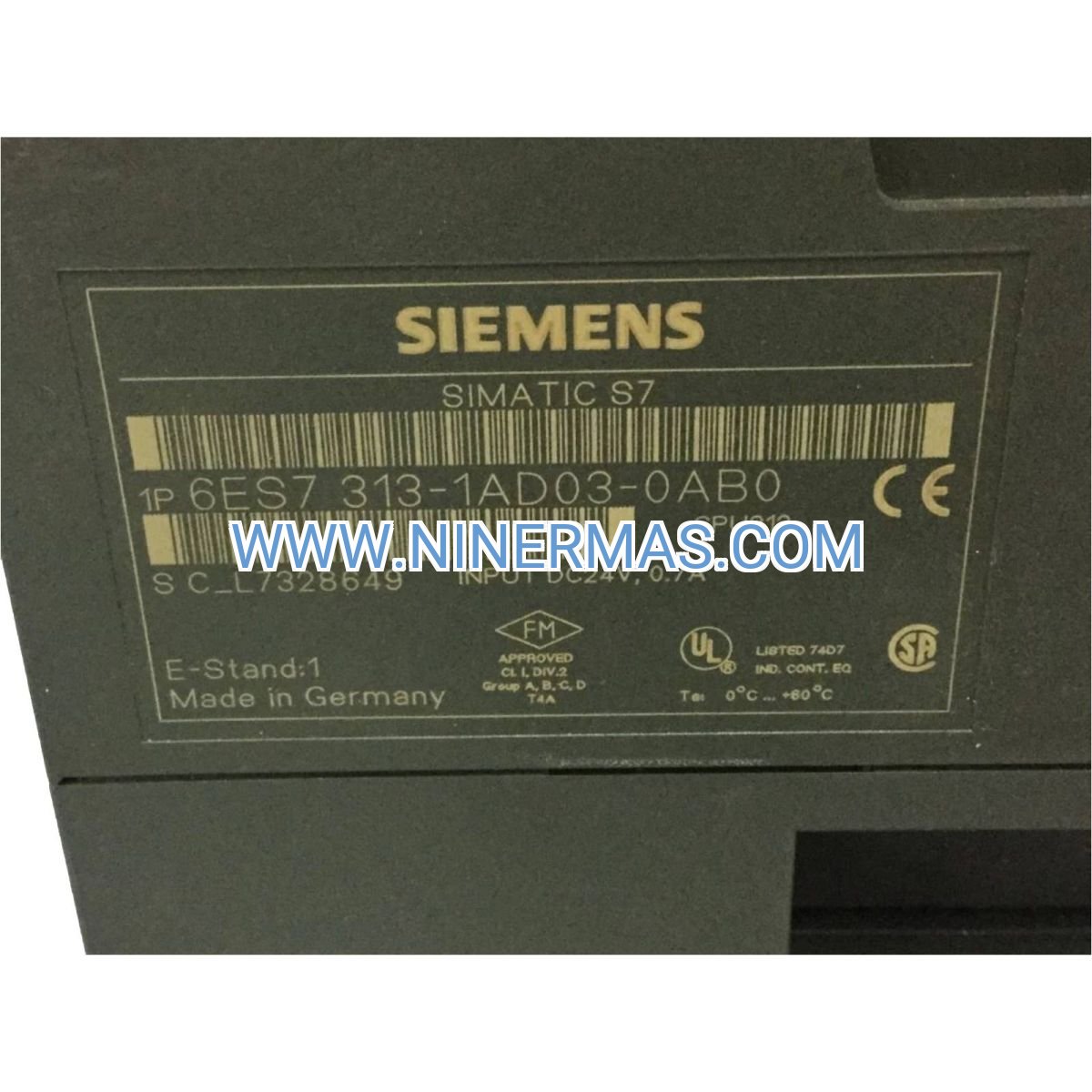
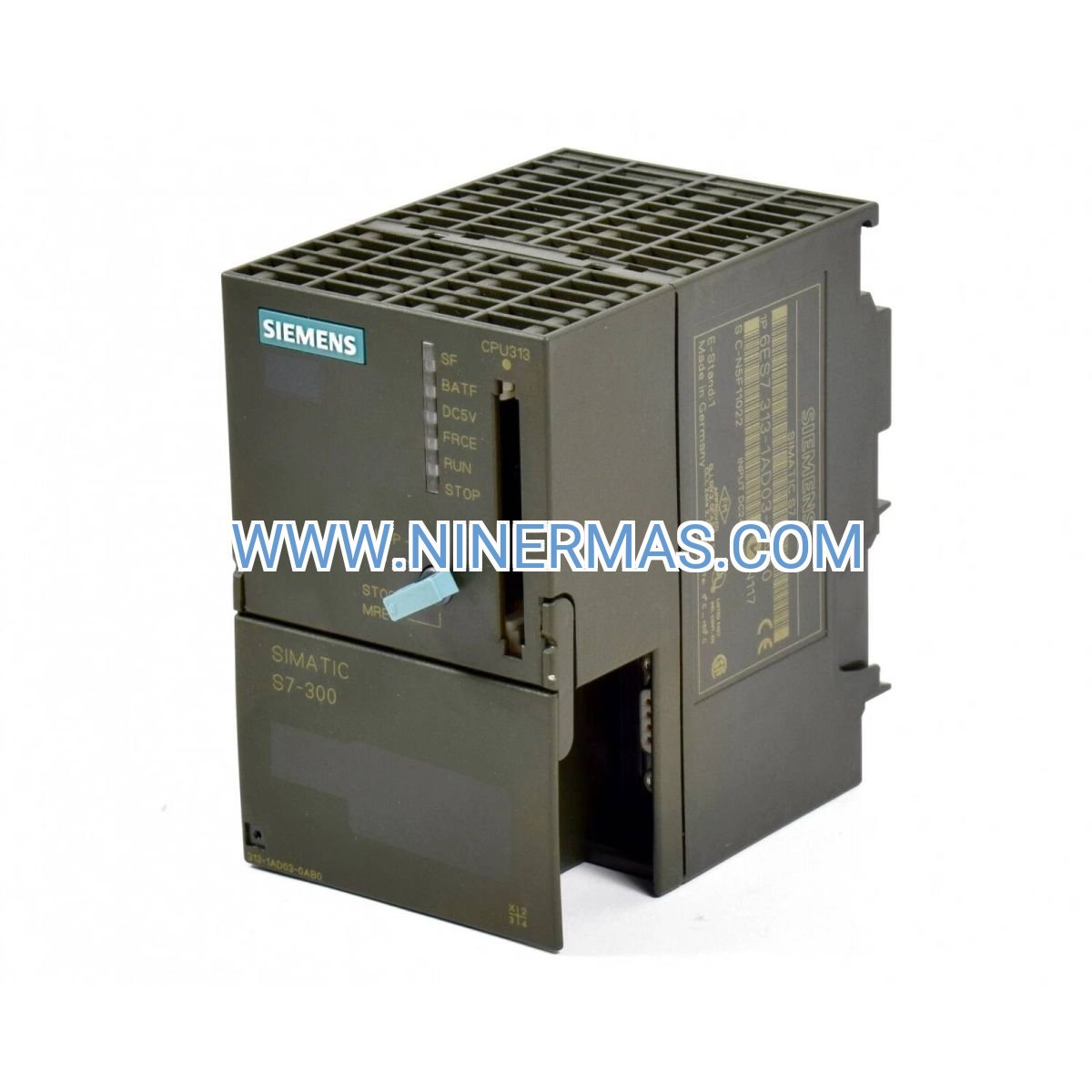
Siemens SIMATIC S7-300 CPU 312 | Industrial PLC Controller 6ES7312-1AE13-0AB0
Description
Siemens SIMATIC S7-300 CPU 312 (Industrial-Grade Programmable Logic Controller)
The Siemens SIMATIC S7-300 CPU 312 (Part No. 6ES7312-1AE13-0AB0) is a compact, high-performance central processing unit designed for industrial automation and control applications. Through advanced processing architecture and modular expansion capability, it delivers reliable program execution, real-time I/O control, and seamless integration with SIMATIC automation ecosystems.
Engineered for manufacturing plants, process industries, and machine builders who demand precision control with minimal footprint, this CPU addresses challenges such as complex logic processing, multi-device coordination, limited cabinet space, and the need for scalable automation solutions that grow with production demands.
With standardized programming via STEP 7 software and flexible configuration options, the CPU 312 offers fast scan times, robust communication protocols, proven reliability in harsh environments, and compatibility with a wide range of I/O modules—making it the preferred choice for system integrators, OEMs, plant engineers, and automation professionals. Contact our engineering team for application-specific configuration and technical support.
Core Features & Technical Advantages
- Compact High-Performance Processing
Equipped with 32KB program memory and 16KB data memory, the CPU 312 executes complex control logic with fast cycle times, ensuring responsive control for time-critical manufacturing and process applications. - Modular & Scalable Architecture
Supports up to 8 expansion modules on the S7-300 rail system, allowing seamless addition of digital I/O, analog modules, communication processors, and specialty function modules as your automation needs evolve. - Multi-Protocol Communication Capability
Features integrated MPI (Multi-Point Interface) for programming and HMI connection, with optional PROFIBUS-DP and Industrial Ethernet modules for plant-wide networking and SCADA integration. - Comprehensive Diagnostic & Monitoring
Built-in diagnostic LEDs and system status registers provide real-time visibility into CPU health, I/O faults, and communication errors, reducing troubleshooting time and minimizing unplanned downtime. - Industrial-Grade Reliability
Designed to IEC 61131 standards with wide operating temperature range (-25°C to +60°C), vibration resistance, and EMC immunity, ensuring stable operation in demanding factory floor environments. - Proven STEP 7 Programming Environment
Fully compatible with Siemens STEP 7 Classic and TIA Portal, supporting LAD, FBD, STL, and SCL programming languages for flexible development and easy maintenance by automation engineers worldwide.
Typical Application Scenarios
The SIMATIC S7-300 CPU 312 is ideal for automation systems requiring reliable control, real-time responsiveness, and long-term serviceability, especially in:
- Discrete Manufacturing & Assembly Lines
Controls conveyor systems, robotic pick-and-place, quality inspection stations, and packaging machines, coordinating multi-axis motion and sensor feedback for high-throughput production. - Process Industries & Batch Control
Manages mixing, heating, dosing, and reaction sequences in chemical, pharmaceutical, food & beverage, and water treatment plants, ensuring recipe accuracy and regulatory compliance. - Machine Automation & OEM Equipment
Embedded in CNC machines, injection molding presses, textile looms, and printing equipment, providing precise logic control, operator interface integration, and remote diagnostics capability. - Building Automation & Infrastructure
Coordinates HVAC systems, lighting control, access management, and energy monitoring in commercial buildings, data centers, and industrial facilities for optimized energy efficiency. - Material Handling & Warehousing
Drives automated storage/retrieval systems (AS/RS), sortation conveyors, and AGV coordination, improving logistics efficiency and inventory accuracy in distribution centers.
Technical Specifications & Selection Guide
To facilitate engineering design and system configuration, we provide key technical parameters for the SIMATIC S7-300 CPU 312. Custom configurations with specific I/O counts, communication modules, and redundancy options are available upon request.
| Parameter | Specification |
|---|---|
| Part Number | 6ES7312-1AE13-0AB0 |
| Program Memory | 32 KB (integrated) |
| Data Memory | 16 KB (integrated) |
| Execution Speed | 0.1 ms per 1000 binary instructions |
| I/O Expansion | Up to 8 modules (max 1024 I/O points) |
| Communication Interface | MPI (187.5 kbit/s), optional PROFIBUS-DP/Ethernet |
| Power Supply | 24V DC (via PS 307 power module) |
| Operating Temperature | -25°C to +60°C (horizontal installation) |
| Protection Rating | IP20 (for cabinet mounting) |
| Dimensions (W×H×D) | 40 × 125 × 130 mm |
| Programming Software | STEP 7 V5.x or TIA Portal (with compatibility package) |
Selection Considerations: When specifying the CPU 312, evaluate total I/O point count, required scan time, communication protocol needs (MPI/PROFIBUS/Ethernet), memory requirements for program complexity, and environmental conditions. For systems exceeding 1024 I/O points or requiring redundancy, consider CPU 314 or higher models. Our application engineers can assist with system sizing, module selection, and performance validation—please provide process description, I/O list, and cycle time requirements.
System Integration & Expansion Options
- I/O Module Compatibility: Supports full range of SM 321/322 digital, SM 331/332 analog, SM 335 analog I/O, and FM function modules (counting, positioning, PID control)
- Communication Processors: Add CP 342-5 (PROFIBUS-DP), CP 343-1 (Industrial Ethernet), or CP 340/341 (serial RS232/RS485) for multi-network connectivity
- HMI & SCADA Integration: Direct connection to SIMATIC HMI panels (TP/MP/OP series) via MPI, or plant-wide SCADA via OPC/Ethernet
- Safety Integration: Combine with F-modules and Safety Integrated software for SIL 2/3 safety functions in one controller platform
- Remote I/O: Distribute I/O via ET 200M, ET 200S, or ET 200eco stations over PROFIBUS-DP for flexible cabinet layout and reduced wiring costs
Delivery, Service & Technical Support
Lead Time: Standard CPU 312 units typically ship from stock within 3-5 business days; configured systems with I/O modules and custom panel assembly require 10-15 business days depending on complexity.
Warranty & Support: All SIMATIC S7-300 products include a minimum 12-month manufacturer warranty covering defects in materials and workmanship. Extended warranty and preventive maintenance contracts are available. We provide remote technical consultation, on-site commissioning assistance (region-dependent), and access to certified Siemens training resources.
Documentation Package: Each CPU ships with complete technical documentation including hardware installation manual, wiring diagrams, GSD files for PROFIBUS configuration, sample STEP 7 programs, and quick-start guide in English. Additional language versions and application examples available upon request.
Compliance & Certifications: CE marked, UL/cUL listed, compliant with IEC 61131-2, ATEX Zone 2 (with appropriate enclosure), and RoHS directive for global deployment.
Frequently Asked Questions (FAQ)
Q: How does the SIMATIC S7-300 CPU 312 integrate with existing automation systems?
A: The CPU 312 connects via MPI for local programming and HMI, and supports PROFIBUS-DP or Industrial Ethernet through optional communication processors (CP modules). It can exchange data with third-party PLCs, SCADA systems, and MES platforms using standard protocols like Modbus TCP, OPC DA/UA, and S7 communication. Verify your network architecture and protocol requirements; our engineers can recommend the appropriate CP module and configuration.
Q: What is the maximum I/O capacity for a single CPU 312 system?
A: The CPU 312 supports up to 8 expansion modules on the S7-300 rail, with a maximum addressing capacity of 1024 digital inputs, 1024 digital outputs, 128 analog inputs, and 128 analog outputs. Actual I/O count depends on the specific modules selected. For larger systems, consider CPU 314 or distributed I/O via PROFIBUS-DP.
Q: Can I program the CPU 312 with TIA Portal or only STEP 7 Classic?
A: The CPU 312 is natively supported in STEP 7 V5.x (Classic). It can also be programmed in TIA Portal V13 SP1 and later versions using the S7-300/400 compatibility package. For new projects, TIA Portal offers a modern interface and integrated diagnostics; for legacy systems, STEP 7 Classic ensures full backward compatibility.
Q: What are the environmental and installation requirements for the CPU 312?
A: The CPU requires a 24V DC power supply (via PS 307 series power module), IP20-rated control cabinet with adequate ventilation, and horizontal DIN rail mounting. Operating temperature range is -25°C to +60°C (derate above 40°C per manual). Ensure cabinet is free from conductive dust, corrosive gases, and excessive vibration. Maintain minimum clearance of 25mm above and below the module for airflow.
Q: Does the CPU 312 support remote monitoring and data logging?
A: Yes, when equipped with a CP 343-1 Ethernet module or connected via PROFIBUS to a gateway, the CPU 312 can transmit process data to SCADA/HMI systems, cloud platforms (via edge gateways), and support remote diagnostics through Siemens TeleService. Native data logging requires an external data recorder or SCADA system; the CPU itself does not have onboard SD card storage.
Q: What is the typical program scan time and how does it affect control performance?
A: The CPU 312 executes approximately 10,000 binary instructions per millisecond (0.1 ms/1K instructions). Typical scan times range from 5-50 ms depending on program complexity, I/O count, and communication load. For high-speed applications (e.g., motion control, fast counting), use interrupt-driven organization blocks (OB) and dedicated function modules (FM) to achieve sub-millisecond response times.
Request a Custom Configuration or Technical Consultation
To receive a tailored system proposal, detailed quotation, or application engineering support, please provide the following information: project name, application type (discrete/process/hybrid), required I/O count (DI/DO/AI/AO), communication protocols, environmental conditions, and any special functional requirements (motion, safety, redundancy). Our certified automation engineers will respond within 24 hours with a comprehensive solution including hardware BOM, wiring diagrams, and estimated lead time.
© 2026 NINERMAS COMPANY LIMITED. All rights reserved.
Original Source: https://ninermas.com
Contact: sale@ninermas.com | +0086 187 5021 5667

Contact Info
-
Address:22 / F, South Wo Hang building, 148 Wing Lok Street, Sheung Wan, Western District, Hong Kong
-
Phone:+8618750215667
-
Email: