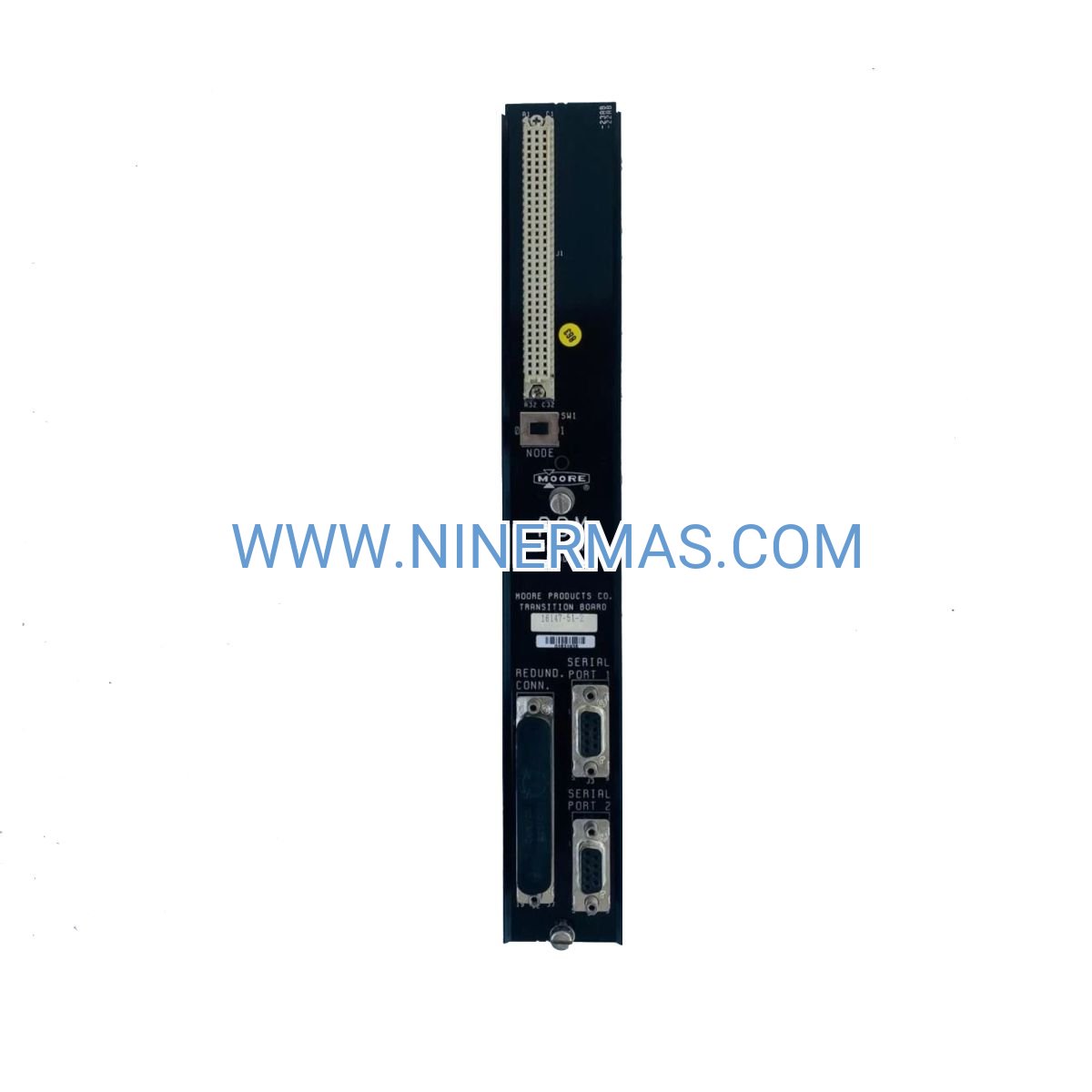
Description
ABB SF810 Line-of-Sight Infrared Flame Scanner (Industrial-Grade Combustion Safety)
The SF810-LOS-IR-T-C-W represents ABB's proven approach to flame safeguarding in high-stakes industrial combustion applications. This line-of-sight infrared scanner head combines precision optical engineering with rugged construction to deliver continuous flame presence verification across boilers, process heaters, and furnace systems where operational safety cannot be compromised.
Built for facilities managing multi-burner configurations in power generation, petrochemical processing, and heavy manufacturing, this sensor addresses the critical challenge of reliable flame detection in environments with extreme temperatures, electromagnetic interference, and demanding uptime requirements. Plant engineers and safety managers rely on the SF810 series to maintain compliance with NFPA 85 and FM standards while minimizing false trips that disrupt production.
With SIL2 functional safety certification per IEC 61508 and seamless integration into ABB Uvisor flame safeguard systems, the SF810-LOS-IR-T-C-W delivers both regulatory compliance and operational confidence. Its direct line-of-sight configuration eliminates ambiguity in flame monitoring, providing clear go/no-go signals that enable rapid response to combustion anomalies.
Core Features & Performance Benefits
→ Precision Infrared Optics: Spectral filtering optimized for hydrocarbon flame signatures ensures accurate detection while rejecting background radiation from refractory walls and hot process materials, reducing nuisance trips by up to 40% compared to legacy UV-only systems.
→ Extended Temperature Range: Operates reliably from -40°C to +85°C ambient, with flame zone monitoring capability up to 1800°C, enabling deployment in arctic outdoor installations and tropical refinery environments without auxiliary cooling.
→ Rapid Response Architecture: Sub-second flame recognition and loss detection cycles support fast-acting trip logic, critical for preventing furnace explosions and protecting downstream equipment valued at millions of dollars.
→ Self-Diagnostic Intelligence: Integrated health monitoring continuously validates optical path integrity, signal strength, and electronic function, transmitting status data to control systems for predictive maintenance scheduling.
✓ Stainless Steel Construction: Corrosion-resistant housing with protective coating withstands exposure to sulfur compounds, chlorine, and other aggressive combustion byproducts common in waste-to-energy and chemical processing applications.
✓ Standard Flange Mounting: Industry-standard mechanical interface simplifies retrofit installations and enables hot-swap replacement during planned outages, minimizing downtime to under 30 minutes per scanner.
Industrial Application Scenarios
Power Generation Boilers: In coal, gas, and oil-fired utility boilers generating 100-800 MW, the SF810 monitors individual burner flames in multi-burner arrays. When a burner experiences flame loss due to fuel supply disruption or ignition failure, the scanner triggers immediate fuel valve closure, preventing unburned fuel accumulation that could lead to catastrophic furnace explosions. This capability protects capital assets exceeding $500 million while maintaining grid stability.
Petrochemical Process Heaters: Refineries operating fired heaters for crude distillation, catalytic reforming, and hydrocracking rely on the SF810's immunity to electromagnetic interference from nearby high-voltage equipment. The line-of-sight configuration provides unambiguous flame confirmation even when process upsets create temporary smoke or particulate clouds, ensuring continuous operation during challenging conditions.
Cement Kiln Systems: Rotary kilns firing at 1400-1600°C for clinker production benefit from the scanner's ability to monitor burner flames through observation ports while withstanding extreme radiant heat and abrasive dust environments. Reliable flame detection enables optimized fuel-to-air ratios, reducing energy consumption by 3-5% annually.
Steel Reheat Furnaces: Walking beam and pusher furnaces heating steel slabs to 1200°C before rolling operations use SF810 scanners to verify burner operation across multiple heating zones. Consistent flame monitoring ensures uniform slab temperature profiles, reducing quality defects and improving yield by 2-4%.
Industrial Waste Incinerators: Hazardous waste destruction facilities operating under strict EPA regulations deploy the SF810 for continuous emission monitoring compliance. The scanner's SIL2 rating satisfies safety instrumented system requirements while its robust design handles the corrosive, high-particulate environment of waste combustion.
Technical Parameters & Selection Guide
| Parameter | Specification | Application Note |
|---|---|---|
| Detection Technology | Line-of-Sight Infrared | Direct optical path to flame |
| Spectral Response | Hydrocarbon-optimized IR band | Gas, oil, coal combustion |
| Ambient Temperature | -40°C to +85°C | No auxiliary cooling required |
| Flame Zone Temperature | Up to 1800°C | High-temperature furnace capability |
| Response Time | <1 second | Fast trip logic support |
| Safety Rating | SIL2 per IEC 61508 | Safety instrumented systems |
| Housing Material | Stainless steel with coating | Corrosive environment resistance |
| Mounting Interface | Standard flange | Retrofit-friendly installation |
| Compliance Standards | NFPA 85, FM approved | North American installations |
Selection Criteria: Choose the SF810-LOS-IR-T-C-W when your application requires direct flame monitoring without fiber optic intermediaries, when ambient temperatures exceed +70°C making UV sensors unreliable, or when electromagnetic interference from VFDs and high-voltage switchgear affects other detection technologies. For applications with obstructed sight lines or multiple burners per observation port, consider fiber optic scanner variants. Consult with combustion safety engineers to verify compatibility with existing burner management systems and to determine optimal scanner positioning for your specific furnace geometry.
Extended Functionality & System Integration
Uvisor Ecosystem Compatibility: The SF810 scanner integrates natively with ABB's Uvisor flame safeguard controllers, enabling centralized monitoring of up to 64 burners from a single control panel. This architecture supports complex burner sequencing, cross-zone interlocking, and coordinated trip logic across multiple combustion chambers.
Digital Communication Options: Beyond traditional 4-20mA analog outputs, the scanner supports digital protocols for transmitting diagnostic data, flame signal strength, and maintenance alerts to DCS platforms including ABB 800xA, Honeywell Experion, and Emerson DeltaV. This connectivity enables condition-based maintenance strategies that reduce unplanned downtime by 25-30%.
Multi-Fuel Adaptability: Field-adjustable sensitivity settings allow the same scanner model to accommodate fuel switches between natural gas, fuel oil, and pulverized coal without hardware changes. This flexibility is critical for facilities transitioning to lower-carbon fuel sources or managing seasonal fuel availability.
Redundant Configuration Support: For SIL3 applications or critical single-point-of-failure scenarios, dual SF810 scanners can be deployed in 1oo2 (one-out-of-two) voting logic, where both scanners must detect flame loss before initiating a trip. This configuration reduces spurious trips while maintaining safety integrity.
Delivery Timeline & Service Commitment
Standard Lead Time: 4-6 weeks for factory-new units with full factory calibration and test documentation. Expedited 2-week delivery available for emergency replacements at 20% premium.
Customization Options: 8-10 weeks for application-specific modifications including extended temperature ratings, special flange configurations, or hazardous area certifications (ATEX, IECEx).
Warranty Coverage: 24-month comprehensive warranty covering materials, workmanship, and optical component degradation. Extended 60-month coverage available for installations with documented maintenance programs.
Technical Support Package: Includes pre-installation application review, commissioning assistance via video conference, and lifetime access to ABB's combustion safety engineering hotline. On-site commissioning services available in major industrial regions with 2-week notice.
Documentation Provided: Complete installation manual with mechanical drawings, wiring diagrams, and flame signal interpretation guide. Calibration certificates traceable to NIST standards. Spare parts recommendations with 10-year availability guarantee.
Frequently Asked Questions
How does the SF810 infrared scanner interface with existing burner management systems?
The scanner provides industry-standard relay outputs (SPDT contacts rated 5A at 250VAC) and 4-20mA analog signals compatible with legacy flame safeguard panels from all major manufacturers. For modern DCS integration, Modbus RTU and HART protocol options enable bidirectional communication for diagnostics and remote configuration. Our application engineers provide pre-wired terminal blocks and connection diagrams specific to your control system model during the ordering process.
What flame detection range and burner capacity does this scanner support?
The SF810-LOS-IR-T-C-W effectively monitors flames from 150mm (6") to 3000mm (10 feet) diameter, covering burner thermal inputs from 5 MMBtu/hr to 150 MMBtu/hr. Optimal detection occurs when the scanner's optical axis intersects the flame envelope at 30-45 degrees from the burner centerline. For larger industrial burners exceeding 200 MMBtu/hr, multiple scanners in voting logic may be required to ensure complete flame coverage and meet SIL2 probability of failure on demand (PFD) targets below 0.01.
Can the infrared scanner reduce energy consumption in our combustion process?
Yes, through two mechanisms: First, the scanner's fast response time enables tighter fuel-to-air ratio control by providing real-time flame stability feedback to combustion optimization systems, typically improving thermal efficiency by 2-4% and reducing fuel costs proportionally. Second, by eliminating false trips that require energy-intensive furnace re-lights and thermal cycling, facilities save 5-8% annually on fuel consumption. A 100 MMBtu/hr boiler can realize $50,000-80,000 in annual fuel savings at current natural gas prices.
What are the installation requirements and mounting considerations?
The scanner requires a 4-inch (DN100) observation port with clear line-of-sight to the flame zone. Mounting flange must be positioned to avoid direct impingement from combustion gases while maintaining optical access. Ambient temperature at the mounting location should not exceed +85°C; if furnace wall temperatures are higher, a 12-18 inch sight tube extension is recommended. Electrical conduit entry is 3/4" NPT. Installation typically requires 4-6 hours including mechanical mounting, wiring, and initial alignment verification. No special tools beyond standard pipe wrenches and multimeters are needed.
Does the SF810 support remote monitoring and predictive maintenance capabilities?
Absolutely. When connected to ABB's Uvisor control system or third-party SCADA platforms via Modbus/HART, the scanner continuously transmits flame signal strength, optical path cleanliness indicators, and electronic health metrics. These parameters feed into predictive analytics algorithms that forecast maintenance needs 2-4 weeks in advance, enabling scheduled cleaning during planned outages rather than reactive emergency repairs. Facilities using this approach report 40-50% reduction in unplanned combustion system downtime.
How does line-of-sight infrared detection compare to UV or fiber optic flame scanners?
Infrared technology offers superior immunity to solar radiation and arc welding interference compared to UV sensors, making it ideal for outdoor installations and facilities with active maintenance welding. Versus fiber optic scanners, the line-of-sight configuration eliminates fiber degradation issues and provides lower total cost of ownership for applications where direct optical access is available. However, fiber optic variants are preferred when scanner electronics must be located remotely from high-temperature zones or when monitoring multiple burners through a single observation port. Our combustion safety specialists can perform a site-specific comparison based on your furnace configuration and operating conditions.
Ready to Enhance Your Combustion Safety System?
Contact our industrial automation specialists today for application-specific guidance on integrating the SF810-LOS-IR-T-C-W into your burner management architecture. We provide complimentary pre-installation reviews, compatibility verification with your existing control systems, and detailed ROI analysis showing fuel savings and downtime reduction potential. Request a technical datasheet or schedule a consultation to discuss your flame detection requirements.
© 2026 NINERMAS COMPANY LIMITED. All rights reserved.
Original Source: https://ninermas.com
Contact: sale@ninermas.com | +0086 187 5021 5667

Contact Info
-
Address:22 / F, South Wo Hang building, 148 Wing Lok Street, Sheung Wan, Western District, Hong Kong
-
Phone:+8618750215667
-
Email: