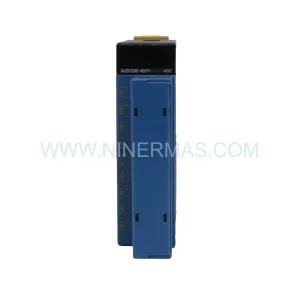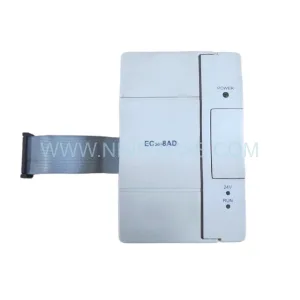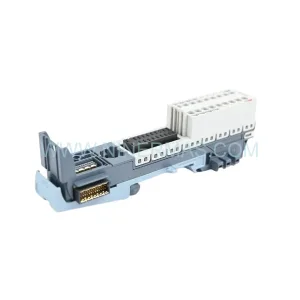
Original Industrial Spare Part
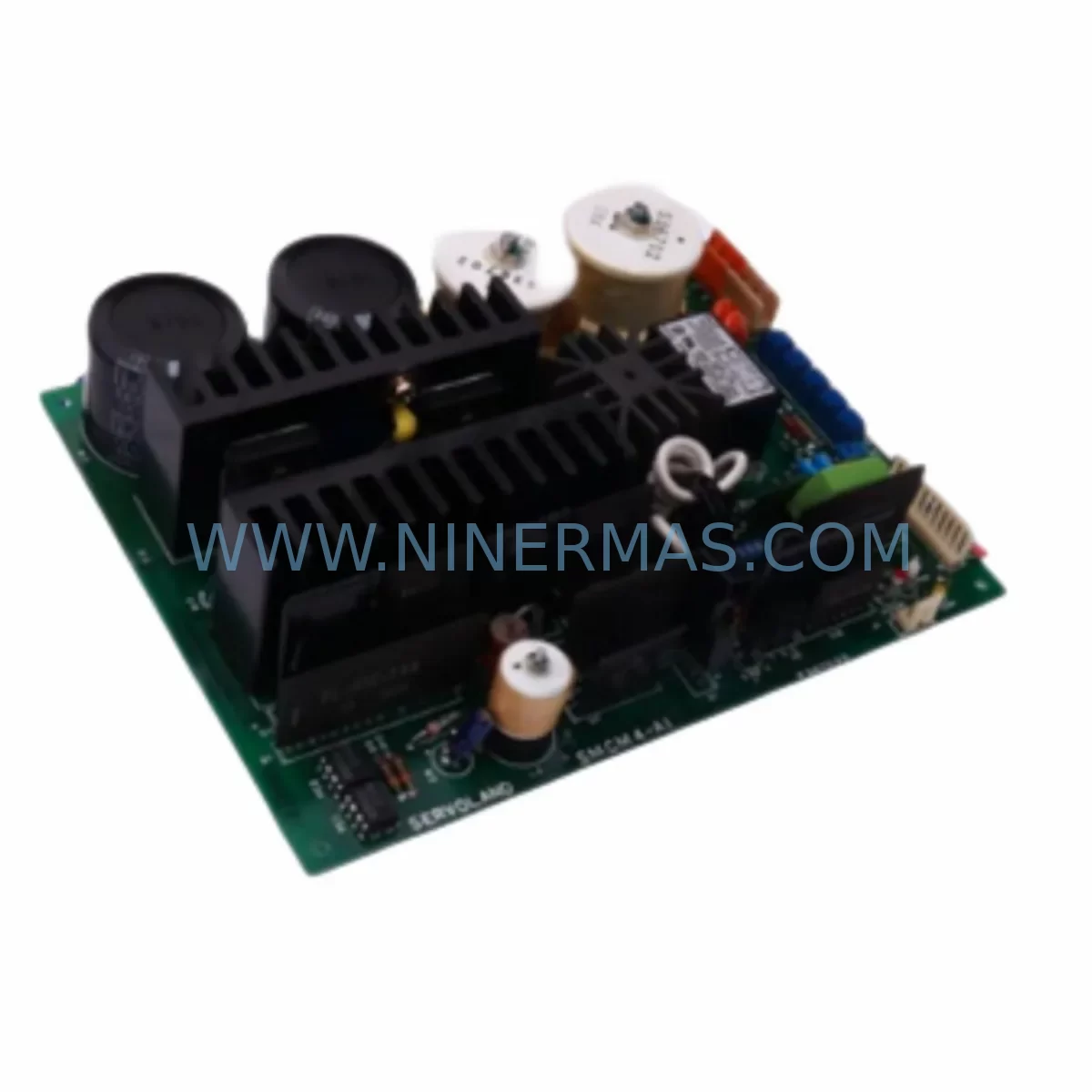
SERVOLAND SMCM4-AI DC Servo Drive Retrofit for Legacy Systems
Verify the part, confirm the platform family, and move straight into quotation with the right commercial details.
RFQ Ready
- SKUSMCM4-AI
- CategoryPLC & Industrial Automation Modules
- BrandSERVOLAND
- SupportAvailability, lead time, condition, and shipping coordination
How Buyers Usually Use This Page
- Confirm the exact part number and platform family before sending the quote request.
- Use direct email when quantity, condition, and destination are already defined internally.
- Switch to the broader brand or category archive when you need alternates nearby.
Series Navigation
Move through the most common platform families behind this part.
Product RFQ
Send this part directly for quotation.
Include quantity, required condition, destination country, and target delivery timing. Current reference: SERVOLAND SMCM4-AI DC Servo Drive Retrofit for Legacy Systems with SKU SMCM4-AI.
SERVOLAND SMCM4-AI DC Servo Drive Retrofit for Legacy Systems
The SERVOLAND SMCM4-AI is a DC servo drive module designed for retrofit-compatible integration into aging SMCM series automation platforms. As legacy servo systems approach end-of-life and OEM support is discontinued, the SMCM4-AI provides a reliable, drop-in-compatible replacement path that preserves existing wiring infrastructure, control logic, and mechanical mounting arrangements. For maintenance engineers managing critical production lines, this unit eliminates the need for full-system redesign while restoring full servo loop performance.
The SMCM4-AI operates as an analog-input DC servo amplifier, accepting ±10V command signals from upstream motion controllers or CNC systems. Its compatibility with standard SMCM series rack and backplane configurations means that field engineers can complete a swap-out without modifying terminal blocks, signal cables, or PLC I/O assignments. Before installation, engineers should verify DC bus voltage capacity, confirm armature current ratings against the existing motor nameplate, and validate that the host controller’s encoder feedback interface matches the SMCM4-AI’s differential encoder input specification.
When integrating the SMCM4-AI into an existing control cabinet, attention must be paid to available rack slot width and depth clearance. The SMCM series backplane uses a proprietary edge connector, and engineers should inspect the backplane for pin corrosion or mechanical damage before seating the replacement module. If the original SMCM4 (non-AI variant) was previously installed, the analog input gain and offset parameters will need to be re-tuned via the front-panel potentiometers or, where applicable, through the host CNC’s servo parameter table.
Upgrade Compatibility Table
| Parameter | SMCM4-AI (This Unit) | Retrofit Notes |
|---|---|---|
| Command Input | Analog ±10V DC | Compatible with standard CNC analog output; verify signal ground isolation |
| Encoder Feedback | Differential A/B/Z incremental | Confirm encoder line count matches host controller setting |
| DC Bus Input | SMCM series backplane DC bus | Verify bus voltage and current capacity before installation |
| Backplane Interface | SMCM series proprietary edge connector | Inspect backplane pins; clean or replace if corroded |
| Mounting | SMCM series rack slot | Confirm slot width and depth; no panel modification required |
| Communication | Analog command (no fieldbus) | No protocol migration required for analog-command systems |
| Replacement Target | SMCM4, SMCM4-A legacy variants | Re-tune gain/offset after swap; verify motor current limit |
| Commissioning | Front-panel potentiometer / host parameter table | Run no-load test before connecting motor load |
| Warranty | 12 Months | Covers manufacturing defects; pre-shipment functional test included |
Retrofit Planning for Existing Automation Systems
Successful integration of the SMCM4-AI into a legacy servo system requires a structured pre-retrofit audit. Begin by documenting the existing control cabinet layout, including the positions of the SMCM series power supply module, the rack backplane, and any adjacent I/O expansion modules. In multi-axis systems, the SMCM4-AI will typically share a common DC bus with other servo axes; the total bus current draw must be recalculated to confirm that the existing SMCM series power supply module can support the replacement unit under peak load conditions.
Terminal wiring for the motor armature, encoder feedback, and analog command signal should be labeled and photographed before disconnection. In installations where the original servo drive interfaced with a legacy CNC controller or a dedicated motion controller card, engineers should retrieve the original servo parameter file and confirm that axis gain, velocity feedforward, and current limit values are documented before the swap. If the host system uses a SERVOLAND SMCM series programming interface or a compatible PC-based commissioning tool, parameter backup should be completed prior to removing the old module.
For systems that also include SMCM series digital I/O modules, relay output modules, or analog input expansion cards mounted in the same rack, these adjacent modules should be powered down and isolated during the drive replacement to prevent accidental signal injection. After the SMCM4-AI is seated and secured, restore power to the rack incrementally: energize the control power supply first, confirm that the drive’s status indicators show a healthy ready state, then apply the DC bus voltage. Only after confirming no fault codes should the motor armature connection be re-established.
In retrofit projects involving older CNC machine tools, the SMCM4-AI is frequently installed alongside replacement spindle drive modules, updated operator panel interface units, and refreshed encoder cables. Where the original machine used a serial communication link between the CNC and a legacy drive controller, and the SMCM4-AI operates in pure analog command mode, no protocol migration is required — the analog ±10V interface remains the bridge between the digital motion planner and the physical servo loop. This simplicity is a key advantage when minimizing retrofit scope and controlling project cost.
Downtime Control During System Migration
Minimizing production downtime during a servo drive replacement is a primary concern for plant maintenance teams. The SMCM4-AI’s drop-in mechanical and electrical compatibility with the SMCM series rack means that the physical swap can typically be completed within a planned maintenance window of two to four hours, assuming all preparatory steps — parameter backup, wiring documentation, and spare parts staging — have been completed in advance.
To protect the original program logic and HMI screen configurations, engineers should ensure that the host CNC or PLC retains its ladder program, motion subroutines, and axis parameter tables in non-volatile memory before the drive is removed. In systems where the servo drive stores axis-specific tuning data locally, this data must be re-entered or re-uploaded after the SMCM4-AI is installed. A no-load servo tuning run — commanding slow, controlled axis movements without a connected mechanical load — should be performed to verify velocity loop stability before returning the machine to production.
Where the retrofit is part of a broader control system upgrade involving multiple axes or the replacement of an entire SMCM series rack assembly, a phased approach is recommended: replace and commission one axis at a time, verify performance, then proceed to the next. This approach maintains partial machine operability throughout the migration and reduces the risk of a full production stoppage caused by a commissioning issue on a single axis. Pre-shipment functional testing of the SMCM4-AI, conducted at our facility before dispatch, further reduces the risk of receiving a non-functional unit and extends the effective commissioning window available to field engineers.
Retrofit Support FAQ
Q1: Is the SMCM4-AI a direct drop-in replacement for the original SMCM4 or SMCM4-A?
The SMCM4-AI is designed for retrofit-compatible installation in SMCM series racks and uses the same backplane edge connector and DC bus interface as the SMCM4 family. After installation, analog input gain and current limit parameters will require re-tuning to match the specific motor and load characteristics of your application. We recommend a no-load commissioning run before returning the axis to production.
Q2: What pre-shipment testing is performed on the SMCM4-AI?
Each SMCM4-AI unit undergoes functional power-on testing and basic servo loop verification at our facility before dispatch. A test report is available upon request. The unit is covered by a 12-month warranty against manufacturing defects from the date of shipment.
Q3: Can the SMCM4-AI be used in a system that also has SMCM series digital I/O or communication modules in the same rack?
Yes. The SMCM4-AI occupies a standard servo drive slot in the SMCM series rack and does not interfere with adjacent digital I/O modules, relay output modules, or analog expansion cards. Ensure that all adjacent modules are powered down during the drive swap to prevent accidental signal injection.
Q4: What is the lead time and stock availability?
We maintain inventory of the SMCM4-AI to support urgent maintenance and retrofit requirements. Standard lead time is 3–7 business days for in-stock units, with expedited dispatch available for critical production situations. Contact our team at sale@ninermas.com or +0086 187 5021 5667 to confirm current stock and delivery schedule.
| Product Series | Legacy |
|---|
Catalog Continuation
Alternative parts within PLC & Industrial Automation Modules.
Stay inside the same system family when you need substitutes, adjacent modules, or a broader shortlist for procurement review.