Original Industrial Spare Part
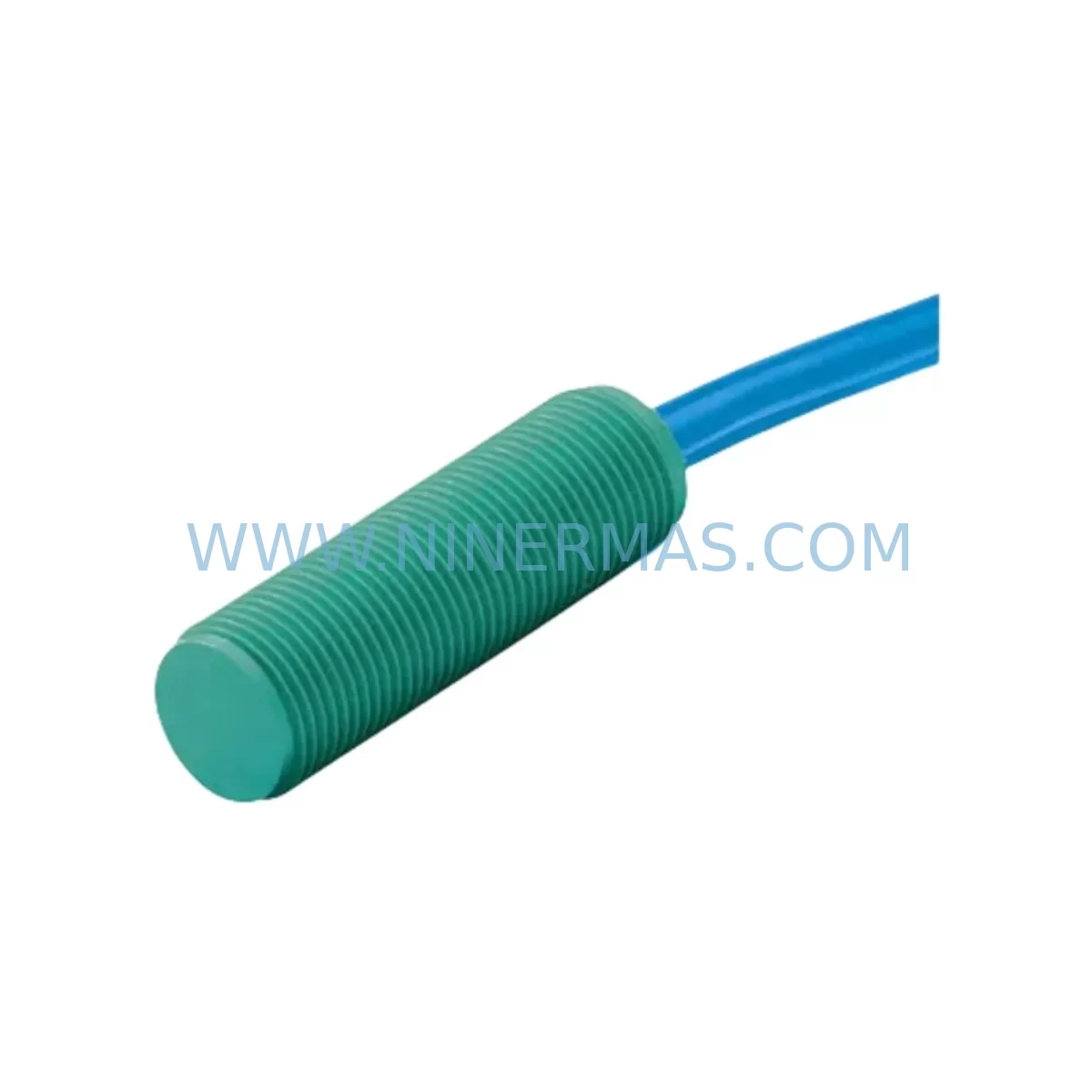
Pepperl+Fuchs CJ1-12GK-N Retrofit Inductive Proximity Sensor
Verify the part, confirm the platform family, and move straight into quotation with the right commercial details.
RFQ Ready
- SKUCJ1-12GK-N
- CategoryTSI & Rotating Machinery Monitoring
- BrandPepperl+Fuchs
- SupportAvailability, lead time, condition, and shipping coordination
How Buyers Usually Use This Page
- Confirm the exact part number and platform family before sending the quote request.
- Use direct email when quantity, condition, and destination are already defined internally.
- Switch to the broader brand or category archive when you need alternates nearby.
Series Navigation
Move through the most common platform families behind this part.
Product RFQ
Send this part directly for quotation.
Include quantity, required condition, destination country, and target delivery timing. Current reference: Pepperl+Fuchs CJ1-12GK-N Retrofit Inductive Proximity Sensor with SKU CJ1-12GK-N.
Pepperl+Fuchs CJ1-12GK-N Retrofit Inductive Proximity Sensor for Legacy System Modernization
The Pepperl+Fuchs CJ1-12GK-N is a compact M12-barrel inductive proximity sensor from the proven CJ1 series, engineered for reliable non-contact detection in demanding industrial environments. As legacy automation lines age and original spare parts become increasingly difficult to source, the CJ1-12GK-N has become a preferred retrofit-compatible replacement for discontinued proximity sensors across a wide range of PLC-controlled systems. Whether you are upgrading a Siemens S5 or S7-300 I/O rack, replacing worn sensors on a Mitsubishi MELSEC FX or Q-series line, or modernizing a legacy Allen-Bradley SLC 500 or MicroLogix installation, the CJ1-12GK-N delivers consistent switching performance with minimal rewiring effort.
With a standard M12 threaded barrel, PNP normally-open output, and a 4 mm sensing range, this sensor integrates directly into existing cable harnesses and terminal blocks without requiring adapter brackets or signal converters in most applications. Its 10–30 V DC operating range accommodates both 12 V and 24 V DC control panel power supplies, reducing compatibility concerns during panel upgrades. The IP67-rated housing withstands coolant splash, dust ingress, and vibration typical of machine tool, conveyor, and press line environments.
Upgrade Compatibility Table
| Parameter | CJ1-12GK-N Specification | Retrofit Notes |
|---|---|---|
| Housing / Thread | M12 × 1, cylindrical barrel | Direct fit for standard M12 sensor mounts; no adapter required |
| Output Type | PNP, Normally Open (NO) | Verify PLC digital input card sink/source configuration before installation |
| Sensing Range | 4 mm (standard target: Fe360) | Confirm target material; non-ferrous metals reduce effective range |
| Supply Voltage | 10–30 V DC | Compatible with 12 V and 24 V DC panel supplies; check voltage at terminal |
| Connection | M12 4-pin connector (standard) | Matches most existing M12 sensor cables; verify pin assignment (PNP wiring) |
| Protection Rating | IP67 | Suitable for washdown and coolant environments |
| Communication | Discrete digital output (non-fieldbus) | Connects to standard DI modules; no protocol configuration required |
| Installation Space | M12 barrel, flush/non-flush variants | Confirm flush or non-flush mounting requirement against original sensor datasheet |
| Replacement Scope | Drop-in for CJ1-series and equivalent M12 PNP sensors | Cross-reference OEM part number before ordering |
| Warranty | 12 Months | Covers manufacturing defects; pre-shipment functional test included |
Retrofit Planning for Existing Automation Systems
Integrating the CJ1-12GK-N into an existing automation system requires a structured approach to avoid unplanned downtime and signal errors. Begin by auditing the control cabinet wiring diagram to identify the terminal block row and DIN rail slot where the original sensor signal terminates. In systems using a Siemens ET 200S or ET 200M distributed I/O station, the sensor signal typically lands on a 2DI DC24V HF or 4DI DC24V input module. Confirm the module address in the hardware configuration (HW Config in STEP 7 or TIA Portal Device View) before disconnecting the old sensor, so the replacement can be verified against the same I/O address without modifying the PLC program.
For installations connected to a Mitsubishi MELSEC Q-series QX40 or QX41 digital input module, check the input filter time setting in GX Works2 or GX Developer. High-speed proximity sensors with fast switching frequencies may require filter time adjustment to avoid missed pulses on high-cycle conveyor or indexing applications. Similarly, on Allen-Bradley 1756-IB16 or 1734-IB4 POINT I/O modules, verify the input delay configuration in RSLogix 5000 or Studio 5000 to match the sensor’s response time.
When the legacy system uses a Pepperl+Fuchs KFD2-SR2-Ex1.W signal conditioner or a KFD2-GT2-Ex1 isolating switching amplifier for intrinsically safe zone separation, confirm that the CJ1-12GK-N’s output current and voltage levels remain within the barrier’s input specification. In non-Ex applications, direct connection to the PLC input card is standard, but always verify the input card’s maximum input current to avoid overloading the sensor output stage.
Backplane and rack considerations are relevant when the proximity sensor feeds a Siemens S7-300 SM 321 digital input module installed in a standard S7-300 rail. The sensor cable routing should be separated from power cables to minimize inductive interference, particularly in cabinets also housing Siemens SINAMICS G120 or Danfoss VLT variable frequency drives. Use shielded M12 sensor cables and ground the shield at one end only — typically at the control cabinet entry gland — to suppress common-mode noise.
For systems migrating from relay-logic panels to PLC-based control, the CJ1-12GK-N can replace mechanical limit switches on conveyor end-stops and part-present detection fixtures. In these cases, the installer must confirm the mechanical mounting bracket dimensions, as M12 barrel sensors require a 12.5 mm through-hole or a standard M12 sensor bracket. Existing cable conduit and cable length should also be verified, as the M12 connector body adds approximately 35–40 mm to the overall sensor length compared to some older barrel-style sensors with flying leads.
Where the original system used a Pepperl+Fuchs NBB2-12GM50-E2 or similar legacy CJ-series sensor, the CJ1-12GK-N is a functionally equivalent replacement in most standard detection applications. Always perform a bench test using a steel target at the rated sensing distance before final installation to confirm switching behavior and output voltage levels match the PLC input card’s threshold requirements.
Downtime Control During System Migration
Minimizing production downtime during a proximity sensor replacement requires preparation before the maintenance window begins. The recommended approach is to pre-wire and bench-test the CJ1-12GK-N on a spare terminal block or test rig, confirming output switching at the correct sensing distance and verifying the output voltage level against the PLC input card specification. This eliminates on-machine troubleshooting time and reduces the replacement window to a simple swap-and-verify sequence.
Before entering the maintenance window, back up the current PLC program — including all I/O force tables, data block values, and HMI tag configurations — to a secure offline location. For Siemens S7 systems, use STEP 7 or TIA Portal’s “Upload from Device” function to capture the live program state. For Mitsubishi MELSEC systems, use GX Works2’s “Read from PLC” function. This ensures that if any I/O address conflict or wiring error occurs during the sensor swap, the original program logic can be restored without re-engineering.
During the physical replacement, label the original sensor cable with the terminal block address and I/O module channel number before disconnecting. Photograph the original wiring before removal. Reconnect the CJ1-12GK-N to the same terminals, observing PNP wiring polarity: Brown (+V), Blue (0V), Black (signal output). After reconnection, power up the control cabinet and use the PLC’s online diagnostic view — such as Siemens TIA Portal’s “Monitor” mode or Allen-Bradley Studio 5000’s “Online” mode — to verify the input bit toggles correctly as a metal target is presented and removed from the sensor face.
For HMI systems using Siemens SIMATIC TP700 or KTP900 panels, or Mitsubishi GOT2000 series displays, no HMI screen modification is required if the I/O address is unchanged. The sensor replacement is transparent to the HMI layer as long as the PLC tag mapping remains consistent. If the sensor is part of a safety circuit monitored by a Pilz PNOZ or Siemens SIRIUS 3SK safety relay, the safety function must be re-validated and documented after any sensor replacement, in accordance with the machine’s safety plan.
Retrofit Support FAQ
Q1: Is the CJ1-12GK-N a direct replacement for my existing M12 PNP proximity sensor?
In most cases, yes. The CJ1-12GK-N uses a standard M12 × 1 threaded barrel, PNP normally-open output, and M12 4-pin connector, which matches the majority of M12 PNP sensors used in industrial automation. Verify the sensing range, flush/non-flush mounting type, and output wiring polarity against your original sensor datasheet before installation. If your original sensor used an NPN output, a wiring adaptation or PLC input card reconfiguration will be required.
Q2: What pre-shipment testing is performed on the CJ1-12GK-N?
Each unit undergoes a functional pre-shipment test covering output switching verification at rated sensing distance, supply voltage range check, and output current measurement. Test results confirm the sensor meets Pepperl+Fuchs CJ1-series performance specifications before dispatch. A 12-month warranty covers manufacturing defects from the date of shipment.
Q3: How do I confirm wiring compatibility with my PLC digital input module?
The CJ1-12GK-N uses standard PNP wiring: Brown wire to +24 V DC, Blue wire to 0 V (common), Black wire to the PLC digital input channel. Confirm that your PLC input module is configured for PNP (sourcing) input signals. Siemens SM 321, Mitsubishi QX40, and Allen-Bradley 1756-IB16 modules all support PNP input wiring in their standard configuration. If your module is wired for NPN (sinking) inputs, consult the module datasheet for reconfiguration options or contact your system integrator.
Q4: What is the lead time and stock availability?
The CJ1-12GK-N is maintained as a stocked spare part to support urgent retrofit and breakdown replacement requirements. Standard orders are dispatched within 1–3 business days. For volume orders or scheduled maintenance programs requiring multiple units, contact our sales team to confirm batch availability and lead time. All units are supplied with a 12-month warranty and pre-shipment test confirmation.
| Product Series | Other series |
|---|---|
| Country of Origin | DE |
Catalog Continuation
More Pepperl+Fuchs modules in the catalog.
Use the brand lane to compare nearby part numbers, platform-adjacent modules, and other inquiry-ready listings before sending your final RFQ.
SKU: KCD2-SCD-EX1 KCD2-STC-EX1
Pepperl+Fuchs KCD2-SCD-EX1 Service-Ready Industrial Spare Part
SKU: 0200X-ZE24-1011 80-S09/S10, 0190-18154 ABX-X302 722A11TGA3FC
P+F VAT-0200X-ZE24-1011-80-S09/S10 Safety-Reliable Valve Sensor
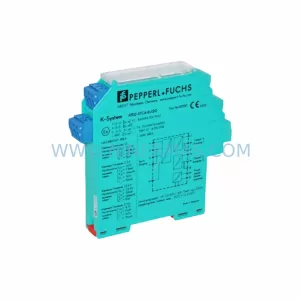
SKU: KFD2-STC4-EX1.2O
PEPPERL+FUCHS KFD2-STC4-EX1.2O Retrofit SMART Transmitter Power Supply
Catalog Continuation
Alternative parts within TSI & Rotating Machinery Monitoring.
Stay inside the same system family when you need substitutes, adjacent modules, or a broader shortlist for procurement review.
SKU: 21000-28-05-20-044-04-02
Bently Nevada 21000-28-05-20-044-04-02 Retrofit-Compatible Proximitor for Legacy Systems
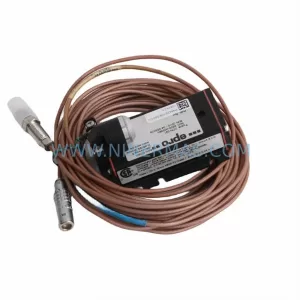
SKU: PR6423/10R-010-CN CON021
EPRO PR6423/10R-010-CN CON021 Safety-Reliable Proximity Transducer