Original Industrial Spare Part
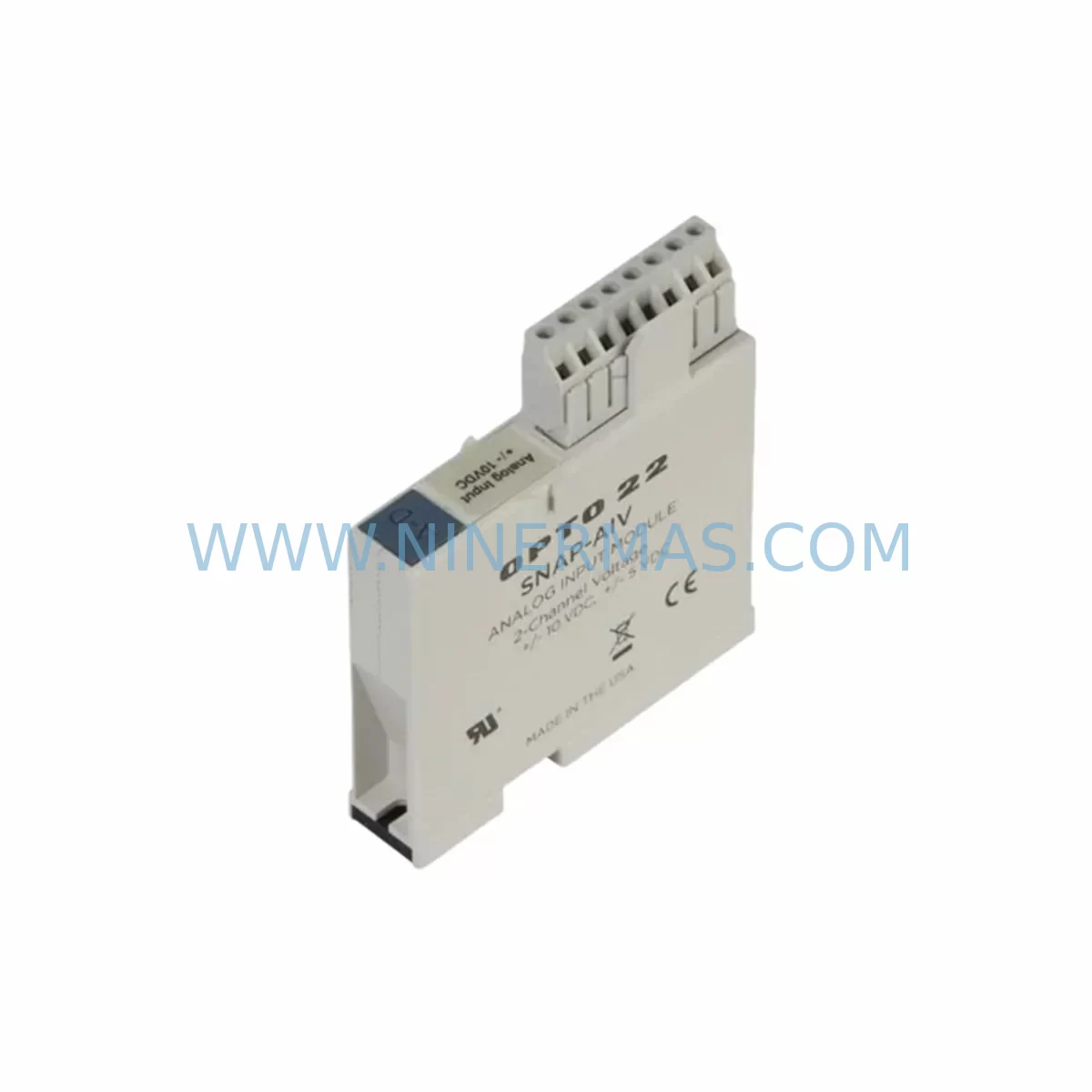
OPTO 22 SNAP-AIV Retrofit-Compatible Analog Input Module
Verify the part, confirm the platform family, and move straight into quotation with the right commercial details.
RFQ Ready
- SKUSNAP-AIV
- CategoryPLC & Industrial Automation Modules
- BrandOPTO 22
- SupportAvailability, lead time, condition, and shipping coordination
How Buyers Usually Use This Page
- Confirm the exact part number and platform family before sending the quote request.
- Use direct email when quantity, condition, and destination are already defined internally.
- Switch to the broader brand or category archive when you need alternates nearby.
Series Navigation
Move through the most common platform families behind this part.
Product RFQ
Send this part directly for quotation.
Include quantity, required condition, destination country, and target delivery timing. Current reference: OPTO 22 SNAP-AIV Retrofit-Compatible Analog Input Module with SKU SNAP-AIV.
OPTO 22 SNAP-AIV Retrofit-Compatible Analog Input Module: Legacy System Compatibility and Smooth Upgrade Path
The OPTO 22 SNAP-AIV is a voltage-type analog input module designed for use within the SNAP PAC and legacy SNAP I/O control platforms. As aging distributed control systems reach end-of-life and original spare parts become increasingly difficult to source, the SNAP-AIV remains a critical component for facilities that depend on continuous analog signal acquisition from field instruments, transmitters, and sensors. NINERMAS supplies retrofit-compatible SNAP-AIV modules with full pre-shipment functional testing and a 12-month warranty, supporting maintenance engineers and system integrators who need reliable, verified replacements without committing to a full platform migration.
The SNAP-AIV accepts voltage input signals and mounts directly onto SNAP PAC mounting racks, including the SNAP-B3, SNAP-B6, SNAP-B10, and SNAP-B16 brain boards and associated backplanes. Its compatibility with the SNAP PAC R-series and S-series controllers — such as the SNAP-PAC-R1, SNAP-PAC-R2, and SNAP-PAC-S1 — means that facilities running legacy OPTO 22 architectures can replace failed or degraded analog input modules without reprogramming the controller logic or reconfiguring the PAC Control strategy. This is a significant operational advantage in process environments where downtime is measured in production losses per hour.
Upgrade Compatibility Table
| Parameter | SNAP-AIV Specification | Retrofit / Replacement Notes |
|---|---|---|
| Module Type | Analog Input – Voltage | Direct replacement for failed SNAP-AIV units on existing racks |
| Compatible Racks | SNAP-B3, SNAP-B6, SNAP-B10, SNAP-B16 | No rack modification required; slot-in replacement |
| Compatible Controllers | SNAP-PAC-R1, SNAP-PAC-R2, SNAP-PAC-S1, SNAP-LCE | Existing PAC Control strategy remains unchanged |
| Communication Interface | SNAP backplane bus | No protocol migration required; backplane-compatible |
| Terminal Wiring | Module-side screw terminals | Verify existing field wiring polarity and signal range before swap |
| Module Address | Assigned by rack position | Maintain same rack slot to preserve address mapping in controller |
| HMI Compatibility | Compatible with PAC Display and third-party SCADA via OPC | No HMI screen reconfiguration required for like-for-like swap |
| Installation Space | Standard SNAP module footprint | No panel or DIN rail modification needed |
| Pre-Shipment Testing | Full functional test performed | Verified analog signal acquisition before dispatch |
| Warranty | 12 Months | Covers manufacturing defects and functional failure |
Retrofit Planning for Existing Automation Systems
When planning a retrofit around the SNAP-AIV, the first step is a thorough audit of the existing SNAP rack configuration. Facilities typically operate mixed racks containing a combination of analog input modules such as the SNAP-AIV and SNAP-AIMA, analog output modules such as the SNAP-AOA, digital input and output modules, and specialty signal conditioning modules. Understanding which slots are occupied and which module types are installed is essential before ordering replacement units, as the SNAP-AIV is specifically a voltage input module and must not be confused with current-input variants like the SNAP-AIMA-i.
Power budget verification is a critical pre-retrofit step. The SNAP rack draws power from a dedicated SNAP power supply — commonly the SNAP-PS5 or SNAP-PS24 — and each analog module contributes to the total rack current draw. Before inserting a replacement SNAP-AIV, confirm that the existing power supply has sufficient headroom, particularly in high-density racks where multiple analog and digital modules share the same backplane bus. Overloaded power supplies are a common cause of intermittent analog signal errors that are frequently misdiagnosed as module failures.
Terminal wiring adaptation is another area requiring careful attention. The SNAP-AIV uses module-side screw terminals, and field wiring from transmitters, potentiometers, or other voltage-output devices must be reconnected with correct polarity. In older installations, wiring documentation may be incomplete or inaccurate, so on-site verification with a calibrated multimeter before powering the replacement module is strongly recommended. Where signal isolation is required between field devices and the controller backplane, a signal isolator or signal conditioner should be inserted in the wiring path to protect both the new module and the controller.
For facilities considering a broader control system upgrade beyond a single module replacement, the SNAP-PAC platform supports incremental migration. Controllers such as the SNAP-PAC-R2 can be retained while individual I/O modules are replaced or expanded. Where communication protocol migration is required — for example, transitioning from legacy serial Optomux to Ethernet-based SNAP PAC — the SNAP-PAC-EB1 or SNAP-PAC-EB2 Ethernet brain boards can be introduced alongside existing serial brain boards during a phased cutover, minimising disruption to live production processes.
Programming cable access and controller backup should be completed before any module swap. PAC Control strategies should be archived using PAC Manager prior to the retrofit, ensuring that the existing program logic, I/O point configuration, and PID loop parameters are preserved. If the SNAP-AIV is being replaced as part of a broader rack upgrade that includes new SNAP-PAC-R1 or SNAP-PAC-S1 controllers, the archived strategy can be reloaded directly after hardware commissioning, significantly reducing re-commissioning time.
Downtime Control During System Migration
Minimising unplanned downtime during a SNAP-AIV replacement or broader SNAP PAC retrofit requires a structured approach to change management. The most effective strategy is to complete all preparatory work — wiring documentation review, power budget calculation, spare module verification, and PAC Control strategy backup — before the maintenance window begins. A well-prepared team can complete a single SNAP-AIV module swap in under 30 minutes, including signal verification and controller re-scan.
For multi-module replacements or rack-level upgrades, a phased approach is recommended. Replace and verify one module at a time, confirming that analog signal values in PAC Display or the connected SCADA system return to expected ranges before proceeding to the next module. This approach isolates any wiring or configuration issues to a single module and prevents cascading faults that can extend the maintenance window significantly.
Where the process cannot tolerate any interruption, a hot-standby strategy using a parallel SNAP rack with pre-configured SNAP-AIV modules can be employed. The standby rack is wired in parallel with the live rack, and the controller cutover is executed during a brief, controlled process hold. This approach is particularly relevant in continuous process industries such as chemical, oil and gas, and power generation, where even a 15-minute unplanned outage carries significant financial and safety consequences.
NINERMAS maintains stock of SNAP-AIV modules and related SNAP PAC components to support urgent replacement requirements. Orders placed with confirmed shipping details are typically dispatched within 1–3 business days, with express freight options available for critical breakdowns. All modules are pre-tested before dispatch, and a test report is available upon request to support site acceptance procedures.
Retrofit Support FAQ
Q1: Is the SNAP-AIV a direct drop-in replacement for a failed unit on my existing SNAP PAC rack?
Yes. The SNAP-AIV is a slot-compatible replacement for existing SNAP-AIV units on any standard SNAP mounting rack. No rack modification, controller reprogramming, or HMI reconfiguration is required for a like-for-like module swap. Confirm the rack slot position is maintained to preserve the module address mapping in the PAC Control strategy.
Q2: What wiring checks should I perform before installing the replacement SNAP-AIV?
Verify field wiring polarity, confirm the signal voltage range is within the module’s rated input specification, and check that the existing terminal connections are secure and free from corrosion. If the original wiring documentation is unavailable, use a calibrated multimeter to measure the field signal before connecting to the new module. Where signal isolation is required, insert an appropriate signal conditioner between the field device and the module terminals.
Q3: Has the SNAP-AIV been tested before shipment, and what warranty is provided?
All SNAP-AIV modules supplied by NINERMAS undergo full functional pre-shipment testing to verify analog signal acquisition performance. A 12-month warranty is provided from the date of shipment, covering manufacturing defects and functional failure under normal operating conditions. A test report is available upon request to support site acceptance and commissioning documentation.
Q4: Can NINERMAS supply other SNAP PAC components needed for a broader retrofit project?
Yes. NINERMAS stocks a range of SNAP PAC components including analog output modules, digital I/O modules, power supplies, brain boards, and mounting racks to support complete retrofit and upgrade projects. Contact our technical sales team with your full bill of materials for availability confirmation and lead time. Bulk order pricing and long-term spare parts program arrangements are available for facilities with ongoing maintenance requirements.
| Product Series | Other series |
|---|
Catalog Continuation
More OPTO 22 modules in the catalog.
Use the brand lane to compare nearby part numbers, platform-adjacent modules, and other inquiry-ready listings before sending your final RFQ.
Catalog Continuation
Alternative parts within PLC & Industrial Automation Modules.
Stay inside the same system family when you need substitutes, adjacent modules, or a broader shortlist for procurement review.
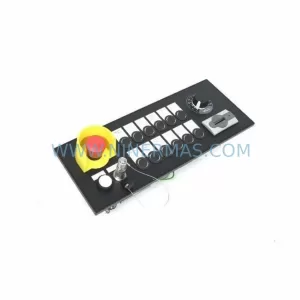
SKU: MPP1500D 6FC5303-1AF30-0AA0
Siemens MPP1500D 6FC5303-1AF30-0AA0 Retrofit Operator Panel
SKU: 6SL3224-0BE31-5UA0
Siemens 6SL3224-0BE31-5UA0 Service-Ready Spare Part