Original Industrial Spare Part
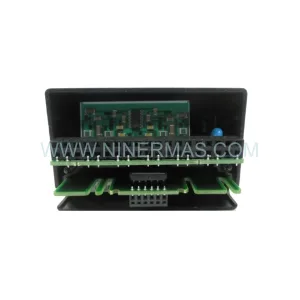
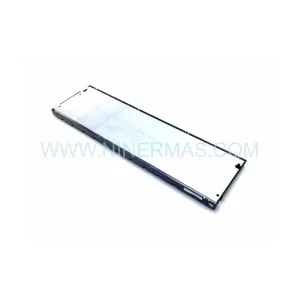
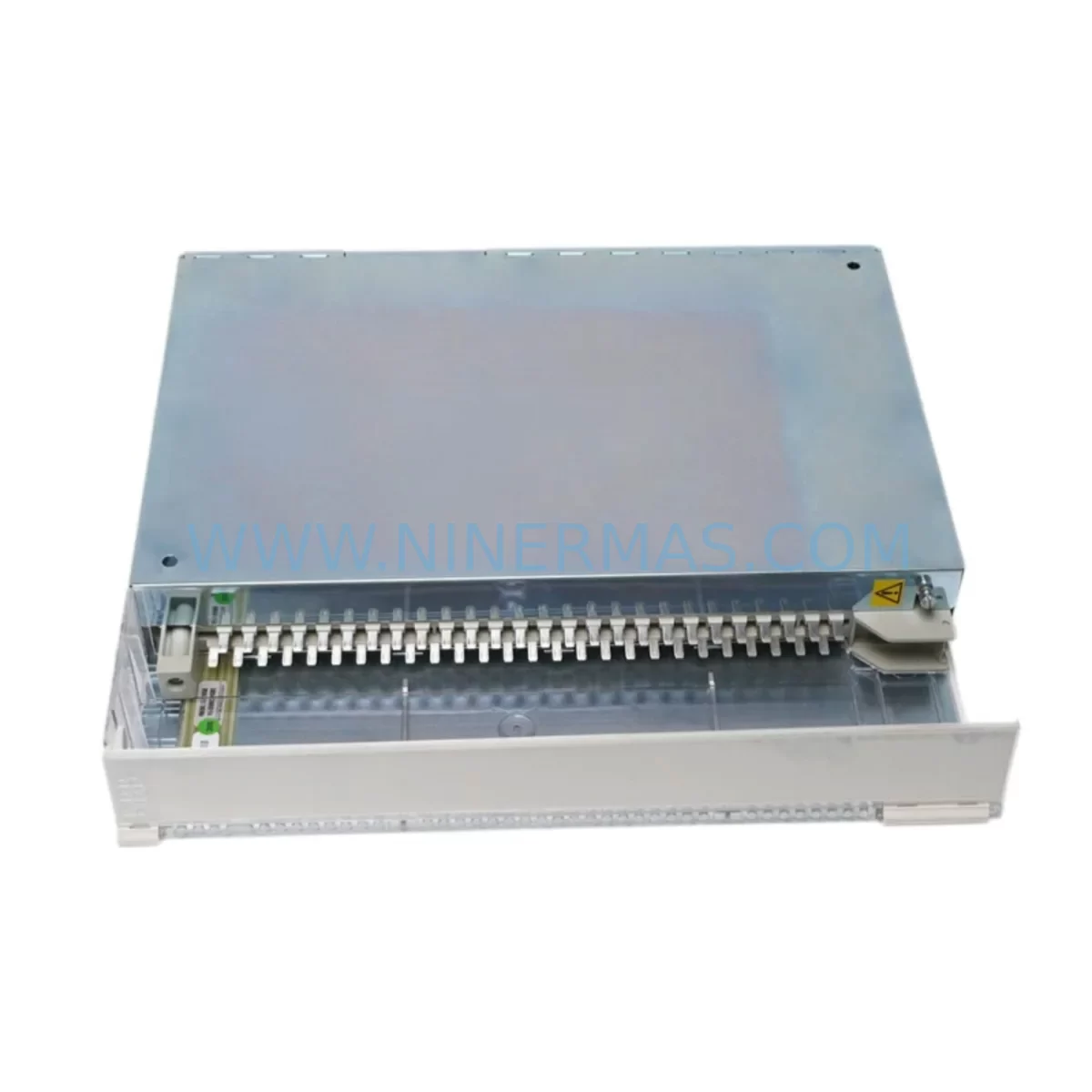
LEE LASER AOQS211-4022-4 Retrofit-Compatible Q-Switch Driver
Verify the part, confirm the platform family, and move straight into quotation with the right commercial details.
RFQ Ready
- SKUAOQS211-4022-4
- CategoryPLC & Industrial Automation Modules
- BrandLEE LASER
- SupportAvailability, lead time, condition, and shipping coordination
How Buyers Usually Use This Page
- Confirm the exact part number and platform family before sending the quote request.
- Use direct email when quantity, condition, and destination are already defined internally.
- Switch to the broader brand or category archive when you need alternates nearby.
Series Navigation
Move through the most common platform families behind this part.
Product RFQ
Send this part directly for quotation.
Include quantity, required condition, destination country, and target delivery timing. Current reference: LEE LASER AOQS211-4022-4 Retrofit-Compatible Q-Switch Driver with SKU AOQS211-4022-4.
LEE LASER AOQS211-4022-4 Retrofit-Compatible Q-Switch Driver for Legacy Laser Systems
The LEE LASER AOQS211-4022-4 is a precision Q-Switch driver module engineered for industrial laser systems operating within the AOQS211 series platform. As legacy laser control architectures age and original OEM support diminishes, the AOQS211-4022-4 has become a critical retrofit and replacement component for facilities running discontinued Q-Switch configurations in marking, cutting, welding, and material processing applications. NINERMAS maintains verified stock of this module to support planned upgrades, emergency replacements, and long-cycle maintenance programs across global industrial sites.
Whether your facility is executing a controlled migration from an end-of-life laser controller or responding to an unplanned module failure, the AOQS211-4022-4 provides a reliable, tested path to system restoration with minimal disruption to production continuity. Each unit shipped by NINERMAS undergoes pre-shipment functional verification and is backed by a 12-month warranty.
Upgrade Compatibility Table
| Parameter | Details |
|---|---|
| SKU / Part Number | AOQS211-4022-4 |
| Brand / OEM | LEE LASER |
| Series | AOQS211 Q-Switch Series |
| Module Function | Acousto-Optic Q-Switch Driver |
| Typical Application | Industrial laser marking, engraving, cutting, and material processing systems |
| Interface Compatibility | Compatible with AOQS211-series laser head assemblies and associated RF driver boards |
| Installation Requirement | Confirm mounting footprint, connector pinout, and RF output impedance before installation |
| Communication / Signal | TTL trigger input; verify pulse width and repetition rate compatibility with host controller |
| Replacement Recommendation | Direct replacement for discontinued AOQS211-4022-4; verify firmware version on host laser controller |
| Commissioning Focus | RF power calibration, pulse timing alignment, beam quality verification post-installation |
| Warranty | 12 months from date of shipment — NINERMAS standard warranty |
Retrofit Planning for Existing Automation Systems
Integrating the AOQS211-4022-4 into an existing laser production line requires a structured retrofit approach that accounts for both the laser subsystem and the broader automation environment in which it operates. In many facilities, the Q-Switch driver does not operate in isolation — it is part of a tightly coupled system that includes the laser power supply unit, the beam delivery assembly, the motion controller, and the supervisory HMI interface.
Before commencing replacement, engineers should audit the existing wiring harness connecting the Q-Switch driver to the laser head. Confirm that the RF coaxial cable type, connector standard (typically SMA or BNC), and cable length are preserved or upgraded to equivalent specification. Impedance mismatch at the RF output — commonly 50Ω — can result in reflected power damage to the new module if not properly verified.
In systems where the AOQS211-4022-4 interfaces with a LEE LASER laser power supply module or an associated RF amplifier board, the power rail voltage and current draw must be confirmed against the replacement unit’s specification sheet. Many legacy installations use a dedicated 24VDC or 28VDC supply rail for the Q-Switch driver circuit; verify that the existing DIN-rail mounted power supply or internal laser cabinet PSU can sustain the required current headroom under full duty-cycle operation.
For systems that incorporate a programmable laser controller or a DSP-based laser control board as the pulse source, the TTL trigger signal timing must be re-validated after module swap. Pulse width, repetition rate, and gate delay parameters stored in the controller’s configuration memory should be documented before removal of the original module and restored precisely after installation of the AOQS211-4022-4. In some AOQS211-series platforms, these parameters are stored on the laser controller main board rather than the Q-Switch driver itself, which simplifies the migration process.
Where the laser system is integrated with a PC-based or PLC-based motion control platform — for example, a galvo scanner controller or a gantry motion card — the interlock and enable signal chain must be verified end-to-end. Confirm that the Q-Switch enable output from the motion controller correctly activates the AOQS211-4022-4 within the expected timing window. Any signal isolation relay module or optocoupler interface board in the interlock chain should be inspected and replaced if degraded, as intermittent interlock faults are a common source of post-retrofit commissioning delays.
If the facility’s laser system uses an HMI touch panel for operator control of laser parameters — pulse energy, frequency, and Q-Switch delay — verify that the HMI screen logic and parameter mapping remain valid after the module replacement. In some legacy configurations, the HMI communicates laser parameters to the controller via RS-232 or RS-485 serial protocol; confirm that the baud rate, data format, and command set are unchanged. Where the original system used a proprietary laser parameter configuration cable or USB programming dongle, retain these tools for post-installation parameter verification.
For facilities undertaking a broader control cabinet upgrade alongside the Q-Switch driver replacement, consider the physical installation space within the laser cabinet. The AOQS211-4022-4 module dimensions and mounting arrangement should be confirmed against the available bay space, particularly in compact OEM laser enclosures where clearance for airflow and cable routing is limited. If the cabinet also houses a chiller control interface board or a laser safety interlock relay assembly, ensure that these adjacent components are not disturbed during the retrofit procedure.
Downtime Control During System Migration
Unplanned downtime during a Q-Switch driver replacement is one of the most significant risks in laser system maintenance. A structured migration plan for the AOQS211-4022-4 should prioritize three objectives: protecting the original program logic and parameter set, maintaining production schedule continuity, and minimizing the window during which the laser system is offline.
Begin by scheduling the replacement during a planned maintenance window rather than responding reactively to a module failure. If the AOQS211-4022-4 is showing signs of degraded RF output power, increased pulse jitter, or intermittent trigger response, treat these as early warning indicators and initiate a controlled replacement before full failure occurs. NINERMAS maintains available stock of the AOQS211-4022-4 to support rapid dispatch for both planned and emergency procurement scenarios.
Prior to module removal, capture a full backup of the laser controller configuration, including Q-Switch timing parameters, pulse energy calibration tables, and any interlock threshold settings. Where the laser system is connected to a factory network or SCADA system via Ethernet or fieldbus interface, document the network node address and communication settings to ensure seamless reconnection after the retrofit.
During the physical swap, follow a strict electrostatic discharge (ESD) protocol when handling the AOQS211-4022-4, as RF driver circuitry is sensitive to static damage. Power down the laser system completely, discharge the high-voltage capacitor bank in the laser power supply if applicable, and allow adequate cooling time before accessing internal components.
After installation, perform a systematic commissioning sequence: restore controller parameters, verify interlock chain continuity, apply power in stages, and conduct a low-power beam quality test before returning the system to full production power. Document the post-installation RF output power reading and pulse timing measurements as a baseline for future maintenance reference. With proper preparation, the total downtime for an AOQS211-4022-4 replacement can typically be contained within a single production shift.
Retrofit Support FAQ
Q1: Is the AOQS211-4022-4 a direct drop-in replacement for the original LEE LASER module?
The AOQS211-4022-4 supplied by NINERMAS is sourced to match the original LEE LASER specification. However, customers are advised to confirm the connector type, RF output impedance, trigger input voltage level, and physical mounting dimensions against their installed system before finalizing the order. Minor revision differences may exist between production batches; our technical team can assist with compatibility verification based on your system’s serial number or existing module markings.
Q2: What commissioning steps are required after installing the AOQS211-4022-4?
After physical installation, the following commissioning steps are recommended: (1) restore all Q-Switch timing and pulse parameters from your pre-removal backup; (2) verify TTL trigger signal integrity at the module input using an oscilloscope; (3) confirm RF output power level at the specified operating frequency; (4) perform a low-power beam test to validate pulse shape and repetition rate; (5) check interlock signal chain continuity before returning to full production power. NINERMAS can provide technical guidance throughout this process.
Q3: Does NINERMAS provide pre-shipment testing for the AOQS211-4022-4?
Yes. Every AOQS211-4022-4 unit dispatched by NINERMAS undergoes functional verification prior to shipment. Test records are available upon request. All units are covered by a 12-month warranty from the date of shipment, covering manufacturing defects and functional failures under normal operating conditions.
Q4: What is the typical lead time and stock availability for the AOQS211-4022-4?
NINERMAS maintains stock of the AOQS211-4022-4 to support both planned procurement and emergency replacement requirements. Standard in-stock orders are typically dispatched within 1–3 business days. For urgent requirements, please contact our sales team directly to confirm current availability and expedited shipping options.
| Product Series | Other series |
|---|
Catalog Continuation
More LEE LASER modules in the catalog.
Use the brand lane to compare nearby part numbers, platform-adjacent modules, and other inquiry-ready listings before sending your final RFQ.
Catalog Continuation
Alternative parts within PLC & Industrial Automation Modules.
Stay inside the same system family when you need substitutes, adjacent modules, or a broader shortlist for procurement review.