Description
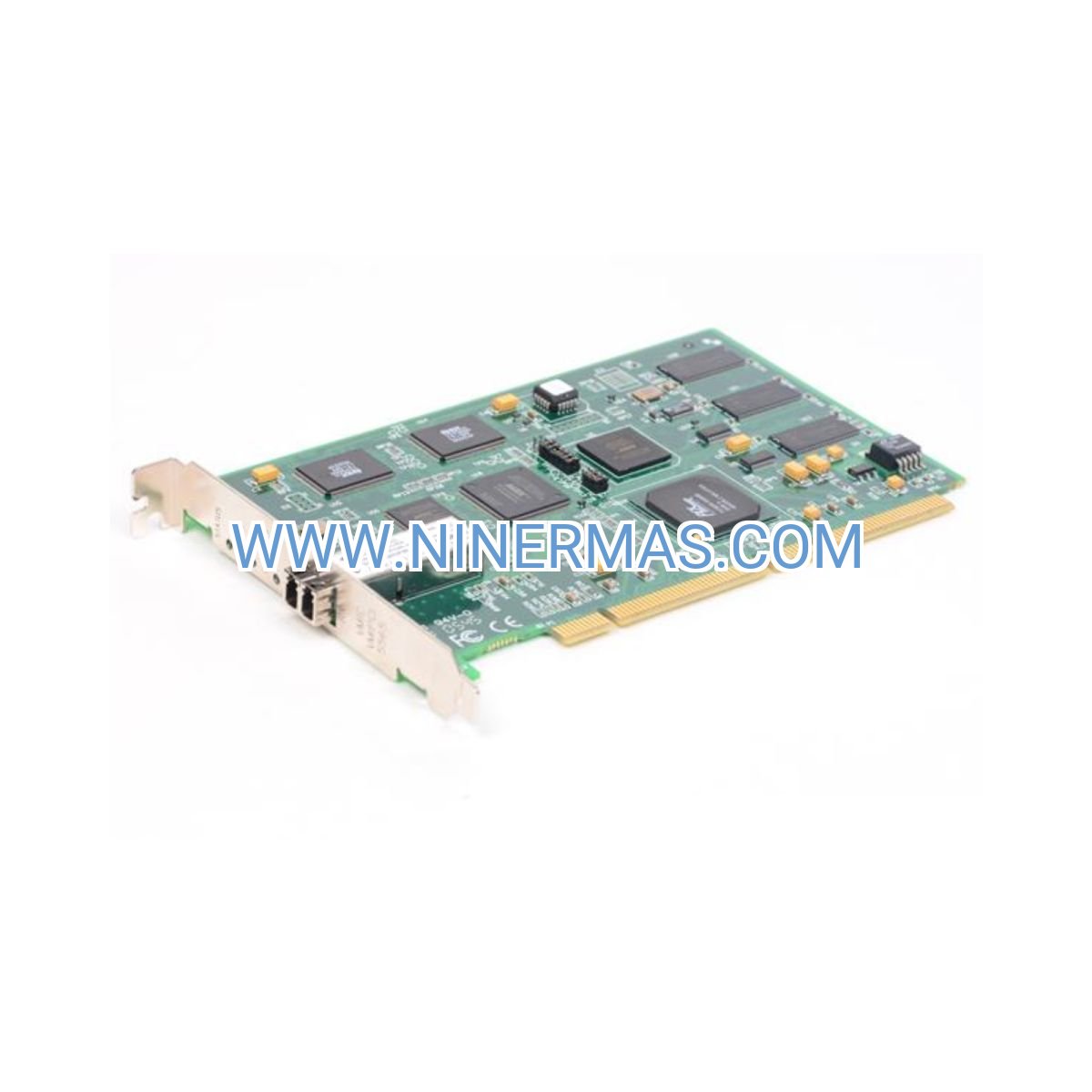
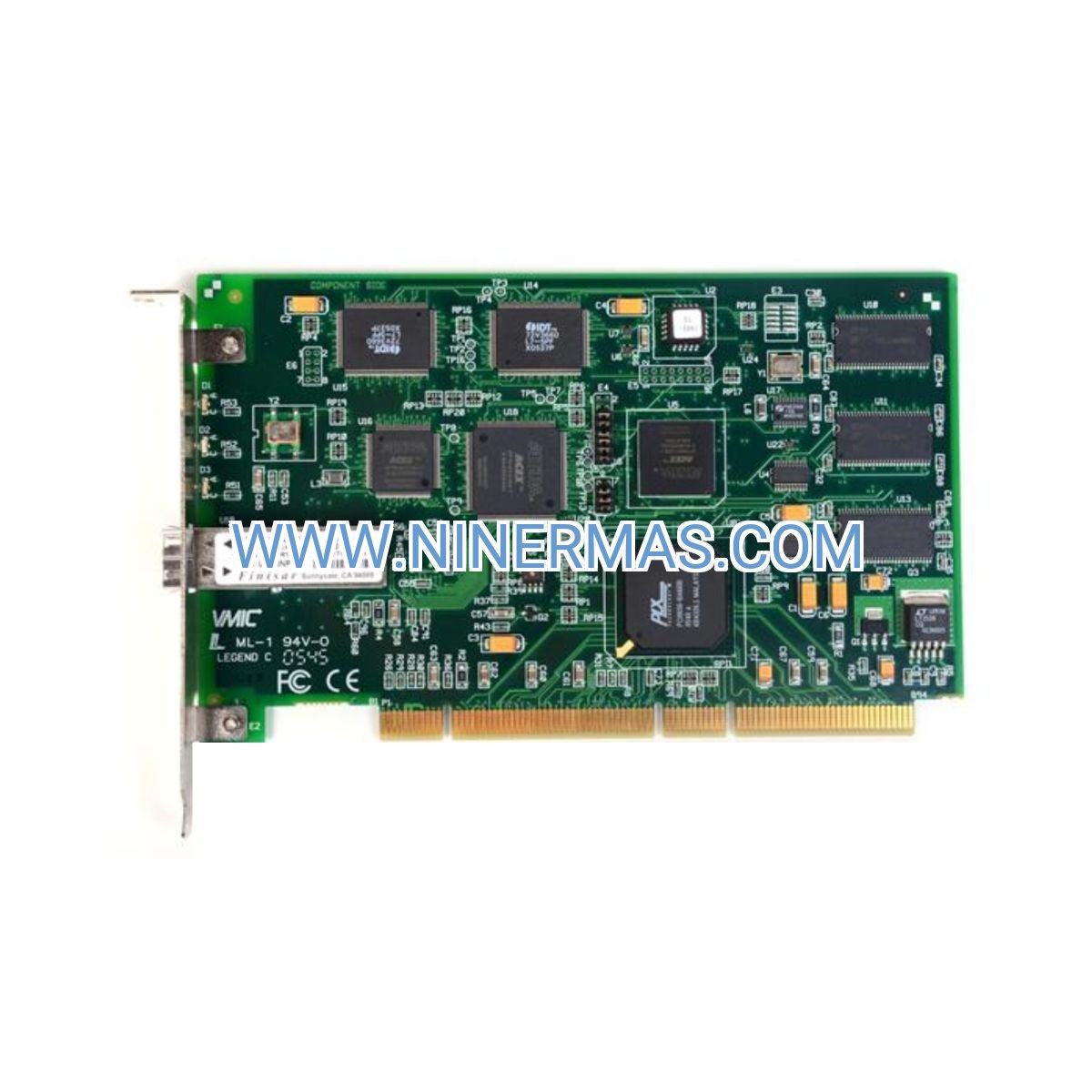
VMICLB-5565 Reflective Memory Module – Industrial-Grade Real-Time Data Synchronization
The VMICLB-5565 represents a breakthrough in deterministic data sharing technology for mission-critical industrial environments. This VME-based reflective memory interface delivers hardware-accelerated synchronization across distributed control architectures, eliminating software protocol overhead while maintaining microsecond-level precision. Designed for turbine control systems, process automation networks, and safety-critical applications where timing predictability is non-negotiable.
Unlike conventional Ethernet-based communication that introduces variable latency and packet loss risks, the VMICLB-5565 employs dedicated fiber optic ring topology to guarantee consistent performance under all operating conditions. Each memory write operation propagates automatically to all connected nodes without CPU intervention, freeing processing resources for control logic execution.
Engineered to GE's industrial standards, this module integrates seamlessly into existing VMEbus infrastructures while supporting up to 256 independent systems in a single reflective memory network. Whether coordinating multi-unit turbine farms, synchronizing redundant safety controllers, or building hardware-in-the-loop simulation environments, the VMICLB-5565 delivers the reliability and performance demanded by modern industrial automation.
Core Capabilities & Technical Advantages
→ Hardware-Based Memory Replication
Automatic data propagation occurs at the silicon level without software stack involvement. Every write to local memory instantly replicates across the entire network, achieving true zero-copy data sharing that eliminates CPU overhead and ensures deterministic behavior regardless of system load.
→ Ultra-Low Latency Architecture
Typical propagation delay remains below 4 microseconds from write initiation to remote node availability. This predictable timing enables closed-loop control applications requiring sub-millisecond response cycles, critical for turbine protection systems and high-speed process control.
→ Massive Scalability Without Performance Degradation
Connect up to 256 nodes while maintaining full 174 MB/s throughput per node. The ring topology ensures consistent performance regardless of network size, with each module capable of accessing up to 128 MB of shared memory space for complex data structures.
→ Built-In Fault Tolerance Mechanisms
Dual-ring redundancy support enables automatic failover within microseconds when primary fiber paths fail. Hot-swap capability allows module replacement during operation, while automatic bypass circuitry maintains network integrity even when individual nodes are offline.
→ Multi-Platform Driver Support
Comprehensive software libraries for VxWorks, Windows, Linux, and QNX operating systems provide memory-mapped I/O access. Simple API design allows developers to treat reflective memory as standard local RAM, accelerating application development and reducing integration complexity.
✓ VMEbus 32-bit interface with DMA support
✓ Fiber optic connectivity for EMI immunity
✓ CE, UL, CSA certified for global deployment
✓ Industrial temperature range: 0°C to 60°C
✓ Low power consumption: 15W typical
Industrial Application Scenarios
Gas & Steam Turbine Coordination
In combined-cycle power plants operating multiple turbine units, the VMICLB-5565 synchronizes control data between individual turbine controllers, master supervisory systems, and plant-wide DCS networks. Real-time sharing of vibration data, temperature profiles, and load commands enables coordinated startup sequences and optimized load distribution. Integration with GE Mark V/VI turbine control platforms provides seamless data exchange for comprehensive fleet management.
Redundant Safety System Architecture
Safety-instrumented systems (SIS) demand absolute reliability through redundant controller configurations. Reflective memory enables voting logic between triple-modular redundant (TMR) safety PLCs without introducing communication delays that could compromise emergency shutdown timing. The VMICLB-5565's deterministic performance ensures all redundant processors maintain identical state information within microseconds, critical for SIL 3 certification requirements.
Distributed Process Control Networks
Chemical processing facilities with control cabinets distributed across large plant areas benefit from reflective memory's ability to share analog input data, setpoint values, and alarm states without traditional network protocol overhead. The module eliminates the need for complex data mapping and polling cycles, reducing engineering effort while improving control loop response times by orders of magnitude.
Hardware-in-the-Loop Testing Environments
Development teams building complex control systems use reflective memory to create real-time simulation networks where physical controllers interact with virtual plant models. The VMICLB-5565's low latency ensures simulation accuracy, while its scalability supports testing scenarios involving dozens of interconnected control nodes simultaneously.
Multi-Site SCADA Synchronization
Utility companies managing geographically distributed substations or pipeline networks employ reflective memory to maintain synchronized operational data across control centers. Fiber optic connections spanning up to 10 kilometers enable real-time coordination between sites while maintaining the deterministic performance required for protective relay coordination.
Technical Specifications & Selection Criteria
| Specification | Value | Selection Consideration |
|---|---|---|
| Part Number | VMICLB-5565 | Verify compatibility with existing VME chassis |
| Data Throughput | 174 MB/s (1392 Mbps) | Sufficient for most control applications; consider dual modules for bandwidth-intensive scenarios |
| Network Capacity | 256 nodes maximum | Plan for future expansion; reserve node capacity for system growth |
| Shared Memory | Up to 128 MB | Allocate memory regions based on data structure size and update frequency |
| Propagation Latency | <4 μs typical | Verify compatibility with control loop timing requirements |
| Bus Architecture | VMEbus 32-bit | Requires VME chassis with available slot; check backplane compatibility |
| Physical Interface | Fiber optic LC connectors | Plan fiber routing; multimode or single-mode based on distance requirements |
| Operating Environment | 0°C to 60°C ambient | Ensure adequate cabinet cooling in high-temperature industrial settings |
| Power Requirements | 15W from VME backplane | Verify chassis power budget supports total module count |
| Certifications | CE, UL, CSA | Confirm compliance with regional installation codes |
Selection Guidelines: Choose the VMICLB-5565 when your application requires deterministic data sharing with guaranteed latency performance. For systems where occasional communication delays are acceptable, traditional Ethernet solutions may offer lower cost. However, for turbine control, safety systems, or any application where timing predictability is critical, reflective memory's hardware-based approach provides unmatched reliability.
Advanced Integration & Customization Options
IoT Gateway Connectivity: While the VMICLB-5565 operates within VME-based control systems, modern installations often require cloud connectivity for remote monitoring and predictive maintenance. Pair with industrial IoT gateways that can read reflective memory data and publish to MQTT brokers or OPC UA servers, enabling Industry 4.0 integration without compromising real-time control performance.
Custom Memory Mapping Services: Our engineering team provides memory map design services to optimize data structure layout for your specific application. Proper memory organization minimizes cache conflicts and maximizes throughput, particularly important in systems with high update rates or complex data relationships.
Redundancy Configuration Support: Dual-ring configurations require careful planning of fiber routing and failover logic. We offer system design consultation to ensure your redundant architecture meets availability targets while maintaining deterministic performance during switchover events.
Delivery Timeline & Service Commitments
Standard Delivery: In-stock VMICLB-5565 modules ship within 2-3 business days via express courier. All units undergo functional verification testing before dispatch, including memory test patterns and fiber optic link quality assessment.
Custom Configuration: Modules requiring specific firmware versions or pre-configured memory maps ship within 5-7 business days. Our technical team coordinates with your engineering staff to ensure configuration matches system requirements.
Warranty Coverage: Comprehensive 12-month warranty covers manufacturing defects, component failures, and workmanship issues. Warranty includes advance replacement service to minimize downtime in critical applications.
Technical Support: Lifetime technical support includes installation guidance, driver configuration assistance, and troubleshooting support. Our engineers have extensive experience with GE automation platforms and can provide system-level integration advice.
Documentation Package: Each module ships with installation manual, driver CD, quick-start guide, and fiber optic connection diagrams. Additional resources include memory mapping templates and sample application code for common operating systems.
Common Implementation Questions
What fiber optic cable specifications are required for reliable operation?
The VMICLB-5565 supports both multimode (50/125μm or 62.5/125μm) and single-mode (9/125μm) fiber. For distances under 2 kilometers, multimode fiber provides cost-effective connectivity. Single-mode fiber extends range up to 10 kilometers while maintaining full throughput. Use LC-to-LC duplex fiber assemblies with insertion loss below 2.5 dB for optimal performance.
How does reflective memory performance compare to industrial Ethernet protocols like PROFINET or EtherNet/IP?
Reflective memory delivers deterministic latency under 4 microseconds regardless of network load, while Ethernet-based protocols introduce variable delays ranging from hundreds of microseconds to several milliseconds depending on traffic conditions. For applications requiring guaranteed response times, reflective memory's hardware-based approach eliminates the uncertainty inherent in software protocol stacks.
Can the VMICLB-5565 interface with Allen-Bradley or Siemens control systems?
Yes, the module uses industry-standard VMEbus architecture compatible with any VME chassis regardless of manufacturer. However, you'll need a VME-based CPU module from your preferred vendor. Many integrators use the VMICLB-5565 to bridge between different control platforms, enabling GE turbine controllers to share data with Siemens DCS systems, for example.
What happens to network performance when adding or removing nodes during operation?
The ring topology automatically reconfigures when nodes join or leave the network. During hot-swap operations, the automatic bypass circuitry maintains connectivity for remaining nodes with no performance impact. Network reconfiguration completes within milliseconds, and data integrity is preserved through built-in error detection and correction mechanisms.
Is special training required for maintenance personnel?
Basic VME system familiarity is sufficient for routine maintenance. The module's LED indicators provide clear status information for fiber link quality, memory errors, and network activity. Our technical documentation includes troubleshooting flowcharts for common issues, and our support team offers remote diagnostic assistance when needed.
How do I size the shared memory allocation for my application?
Analyze your data structures to determine total memory requirements. A typical turbine control application sharing 500 analog values, 1000 digital states, and 50 alarm messages requires approximately 10-15 MB. Add 50% margin for future expansion. The VMICLB-5565's 128 MB capacity accommodates most industrial applications with room for growth.
Start Your Real-Time Integration Project
Ready to eliminate communication bottlenecks in your distributed control architecture? Contact our automation specialists to discuss your reflective memory network design. We'll help you determine optimal node placement, memory mapping strategy, and redundancy configuration to meet your performance and reliability objectives.
Request a technical consultation: Our engineering team provides pre-sales system design support at no charge. Share your application requirements, and we'll recommend the optimal reflective memory configuration including fiber routing, chassis selection, and driver integration approach.
© 2026 NINERMAS COMPANY LIMITED. All rights reserved.
Original Source: https://ninermas.com
Contact: sale@ninermas.com | +0086 187 5021 5667

Contact Info
-
Address:22 / F, South Wo Hang building, 148 Wing Lok Street, Sheung Wan, Western District, Hong Kong
-
Phone:+8618750215667
-
Email: