Description
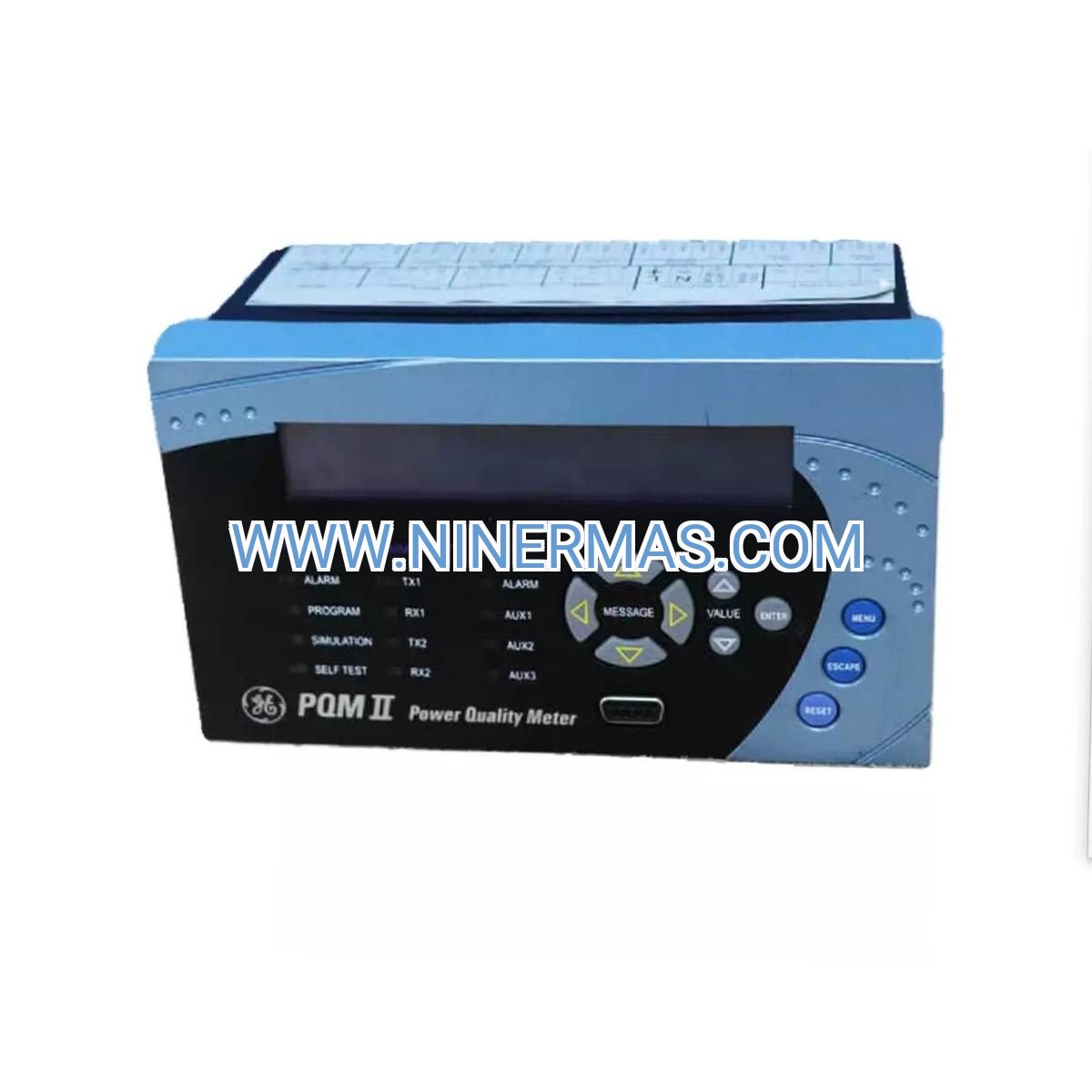
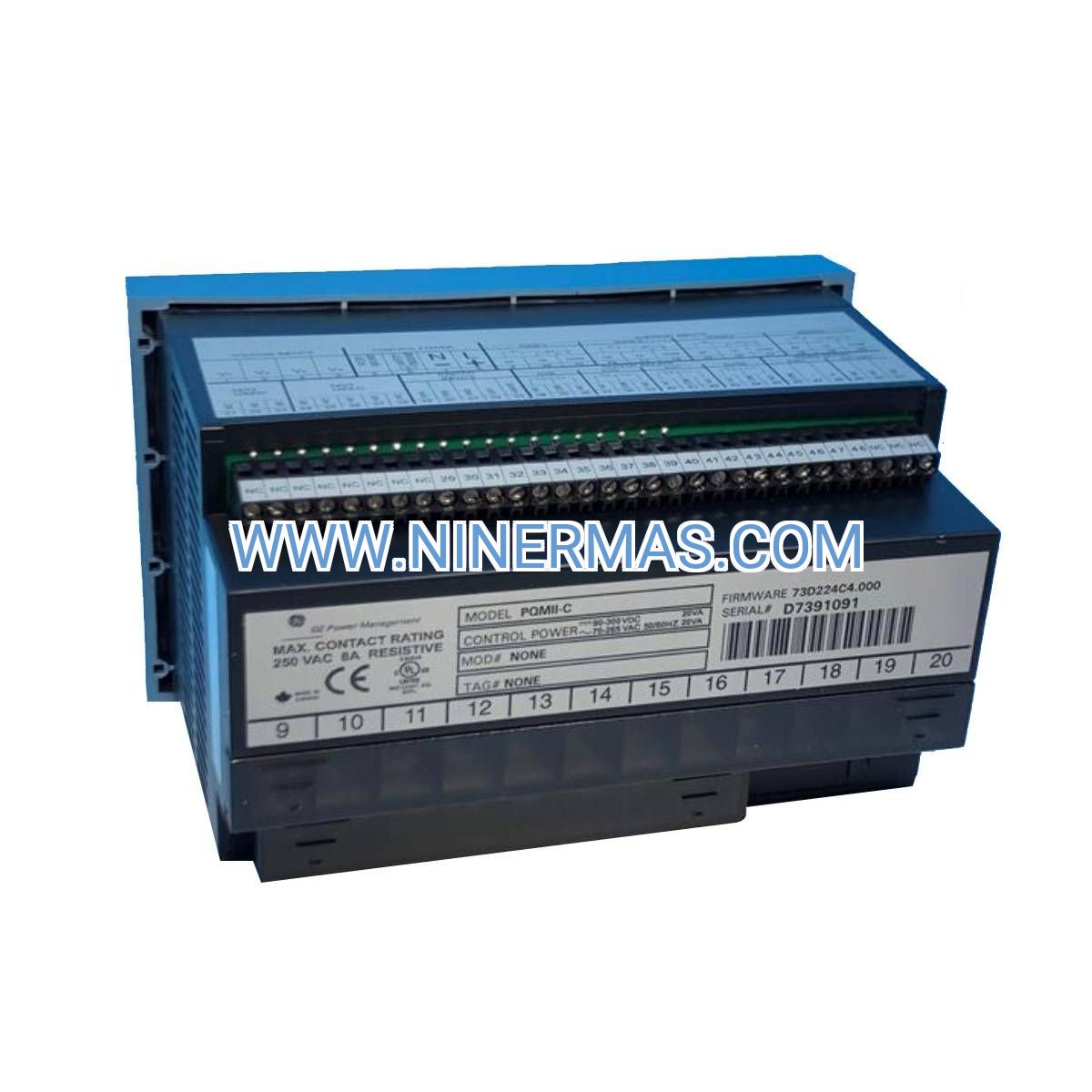
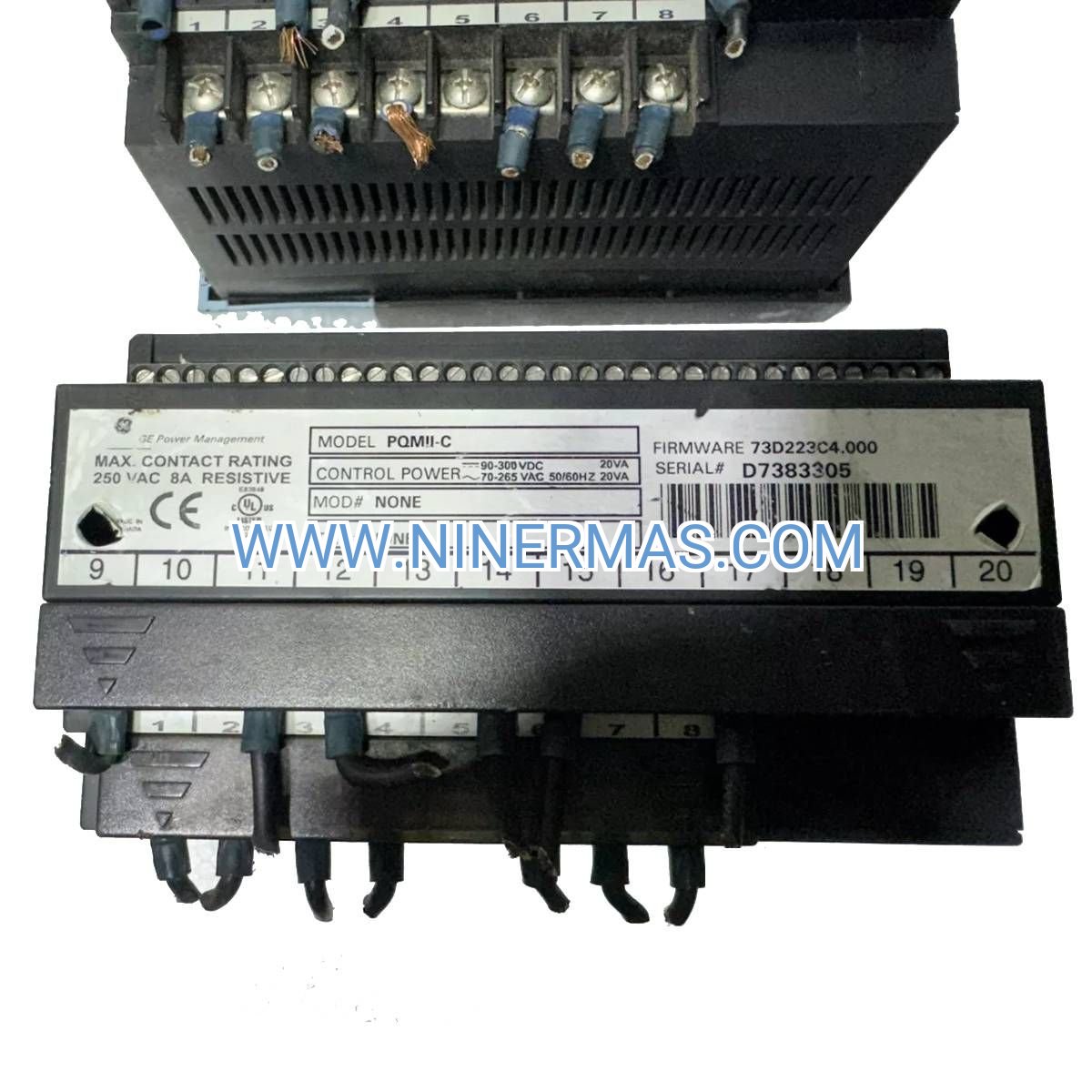
PQMII-C Power Quality Analyzer (Industrial-Grade Three-Phase Monitoring)
The PQMII-C represents GE Multilin's advanced approach to electrical system diagnostics, combining precision measurement with intelligent event detection. This industrial-grade analyzer captures voltage disturbances, harmonic distortion, and energy consumption patterns across three-phase networks, delivering actionable intelligence for facility managers, electrical engineers, and maintenance teams who demand reliability in mission-critical environments.
Built for substations, manufacturing plants, and commercial infrastructure, the PQMII-C transforms raw electrical data into strategic insights. Whether you're troubleshooting power quality issues, validating utility service agreements, or optimizing energy efficiency programs, this analyzer provides the forensic-level detail required for confident decision-making in complex electrical systems.
With IEC 61000-4-30 Class A certification and multi-protocol communication capabilities, the PQMII-C integrates seamlessly into existing automation architectures while maintaining the measurement accuracy demanded by regulatory compliance and revenue-grade applications.
Core Features & Benefits
→ Comprehensive Harmonic Intelligence
Track individual harmonics up to the 63rd order with THD calculation, enabling precise identification of non-linear load impacts and power quality degradation sources. This depth of analysis supports proactive equipment protection and compliance with IEEE 519 harmonic limits.
→ Event Capture with Waveform Recording
Automatically log voltage sags, swells, interruptions, and transients with timestamp precision and waveform snapshots. Store up to 512 events internally for post-incident analysis, eliminating guesswork when investigating equipment failures or process disruptions.
✓ Multi-Protocol SCADA Connectivity
Native support for Modbus RTU, DNP3.0, and IEC 61850 ensures plug-and-play integration with legacy and modern automation platforms. Eliminate protocol conversion headaches while maintaining cybersecurity best practices through isolated communication channels.
✓ Demand Tracking & Load Profiling
Monitor peak demand intervals and load patterns to optimize utility rate structures and identify energy waste. Interval data logging supports demand response programs and provides evidence for utility billing disputes.
• Wide Operating Range Flexibility
Dual power supply options (85-264V AC/DC or 20-60V DC) and extended temperature rating (-40°C to +70°C) enable deployment in harsh industrial environments without auxiliary conditioning equipment. Panel mount or DIN rail installation adapts to existing enclosure configurations.
• Configurable Alarm Architecture
Program voltage, current, frequency, and power factor thresholds to trigger relay outputs or communication alerts. Proactive notification prevents equipment damage and reduces unplanned downtime through early warning of abnormal conditions.
Application Scenarios
Manufacturing & Process Industries
In production environments where motor drives, welding equipment, and automated machinery create harmonic pollution, the PQMII-C identifies distortion sources before they cause nuisance tripping or premature equipment failure. Continuous monitoring validates power conditioning investments and supports root cause analysis during quality incidents. Integration with PLC systems enables automated load shedding during power quality events.
Critical Infrastructure & Data Centers
For facilities where power interruptions translate directly to revenue loss, the PQMII-C provides the early warning system necessary to maintain uptime SLAs. Voltage sag detection triggers UPS systems, while harmonic monitoring ensures generator compatibility during utility transfer events. Detailed event logs support insurance claims and vendor accountability discussions.
Utility Substations & Distribution Networks
Electric utilities deploy the PQMII-C at interconnection points to verify service quality compliance and resolve customer power quality complaints with objective data. Bidirectional power flow measurement supports distributed generation integration, while IEC 61850 compatibility streamlines substation automation projects.
Commercial Real Estate & Campus Facilities
Building managers use the PQMII-C for tenant sub-metering, energy allocation, and verification of LEED energy performance targets. Load profiling identifies opportunities for demand charge reduction, while power factor monitoring justifies capacitor bank investments. Multi-meter networking enables centralized monitoring across distributed facilities.
Renewable Energy Integration Points
Solar and wind installations require continuous power quality monitoring to maintain utility interconnection agreements. The PQMII-C validates voltage regulation, frequency stability, and harmonic injection limits at the point of common coupling, providing the documentation required for utility compliance audits and performance bond requirements.
Technical Parameters & Selection Guide
| Measurement Category | Range & Accuracy |
|---|---|
| Voltage (Line-Neutral) | 0-600V AC, ±0.2% accuracy |
| Voltage (Line-Line) | 0-1000V AC, ±0.2% accuracy |
| Current Input | 1A or 5A nominal via CT, ±0.2% accuracy |
| Frequency Measurement | 45-65 Hz, ±0.01 Hz resolution |
| Power Measurement | Active, Reactive, Apparent (kW, kVAR, kVA) |
| Harmonic Analysis | 2nd through 63rd order, THD calculation |
| Energy Metering | Bidirectional kWh, kVARh with demand tracking |
| Communication Ports | RS-485 (Modbus RTU, DNP3.0), Ethernet (IEC 61850) |
| Display Interface | Backlit LCD, multi-page parameter navigation |
| Auxiliary Power | 85-264V AC/DC or 20-60V DC options |
| Environmental Rating | -40°C to +70°C, 5-95% RH non-condensing |
| Compliance Standards | IEC 61000-4-30 Class A, IEEE 1159, UL/cUL, CE |
Selection Criteria: Choose the PQMII-C when your application requires IEC 61000-4-30 Class A compliance, advanced harmonic analysis beyond basic THD, or multi-protocol communication flexibility. For applications requiring revenue-grade metering with fiscal certification, consider pairing with certified CT/PT combinations. Installations with extreme temperature exposure benefit from the extended operating range, while space-constrained panels leverage the compact DIN rail mounting option.
Extended Functions
Advanced Data Logging: Internal memory stores continuous trend data for voltage, current, power, and power factor parameters with configurable sampling intervals. Export historical data via communication protocols for long-term analysis in energy management software platforms.
Customizable Display Pages: Configure the LCD interface to prioritize the parameters most relevant to your operation—from basic voltage/current readings to detailed harmonic spectra. User-defined display sequences streamline operator training and routine inspections.
Remote Configuration Capability: Modify meter settings, alarm thresholds, and communication parameters remotely through SCADA systems, eliminating the need for site visits during commissioning or operational adjustments. Password protection prevents unauthorized configuration changes.
Expansion Module Compatibility: Integrate with GE Multilin relay platforms and I/O expansion modules to create comprehensive substation automation solutions with unified communication architecture and centralized management interfaces.
Delivery & Service Assurance
Standard Delivery: In-stock units ship within 3-5 business days via expedited carrier services. International shipments include complete export documentation and customs support to minimize border delays.
Custom Configuration: Factory-programmed units with pre-configured communication settings, alarm thresholds, and display preferences available with 10-15 business day lead time. Provide application specifications during order placement for turnkey deployment.
Warranty Coverage: 12-month manufacturer warranty covers defects in materials and workmanship under normal operating conditions. Extended warranty programs available for critical infrastructure applications requiring long-term protection.
Technical Support: Access to application engineering team for installation guidance, communication protocol troubleshooting, and performance optimization. Phone and email support included with purchase, with on-site commissioning services available upon request.
Documentation Package: Each unit includes installation manual, quick start guide, communication protocol reference, and Modbus register map. Firmware update procedures and configuration software available for download from manufacturer support portal.
Frequently Asked Questions
How does the PQMII-C handle voltage measurement in delta-connected systems?
The analyzer automatically calculates line-to-line voltages in delta configurations while maintaining full harmonic analysis capability. Configure the meter for delta or wye connection during initial setup to ensure accurate power calculations and phase relationships.
What CT ratios are compatible with the current inputs?
The PQMII-C accepts standard 1A or 5A secondary CTs with ratios from 5:5 to 6000:5. Program the primary CT ratio during configuration to display actual system currents rather than secondary values. Accuracy is maintained across the full CT range when properly configured.
Can the meter detect and classify different types of voltage sags?
Yes, the analyzer categorizes sags by magnitude and duration according to IEEE 1159 and IEC 61000-4-30 standards. Event records include RMS voltage profiles, phase angle information, and waveform captures to support detailed root cause analysis of sensitive equipment trips.
Is remote firmware updating supported over the communication network?
Firmware updates require local access via the front panel interface or dedicated service port. This design prevents unauthorized remote modifications and maintains cybersecurity integrity in critical infrastructure applications. Update files and procedures are available from GE Multilin technical support.
What is the maximum communication network distance for Modbus RTU?
RS-485 networks support up to 4,000 feet (1,200 meters) with proper cable specification and termination. For longer distances, use Ethernet communication with IEC 61850 protocol or install RS-485 repeaters at appropriate intervals to maintain signal integrity.
Does the analyzer require external CT/PT power supplies?
No, the PQMII-C operates from its auxiliary power input and does not require CT/PT burden power. This simplifies installation and reduces panel space requirements compared to legacy meters requiring multiple power sources.
Ready to Enhance Your Power Quality Monitoring?
Contact our technical sales team to discuss your specific application requirements and receive a detailed quotation. We provide application engineering support to ensure proper meter selection, CT/PT sizing, and communication architecture design for your facility.
For immediate technical questions or to request product datasheets and configuration software, reach out via the contact information below. Our team responds to all inquiries within one business day.
© 2026 NINERMAS COMPANY LIMITED. All rights reserved.
Original Source: https://ninermas.com
Contact: sale@ninermas.com | +0086 187 5021 5667

Contact Info
-
Address:22 / F, South Wo Hang building, 148 Wing Lok Street, Sheung Wan, Western District, Hong Kong
-
Phone:+8618750215667
-
Email: