

Description
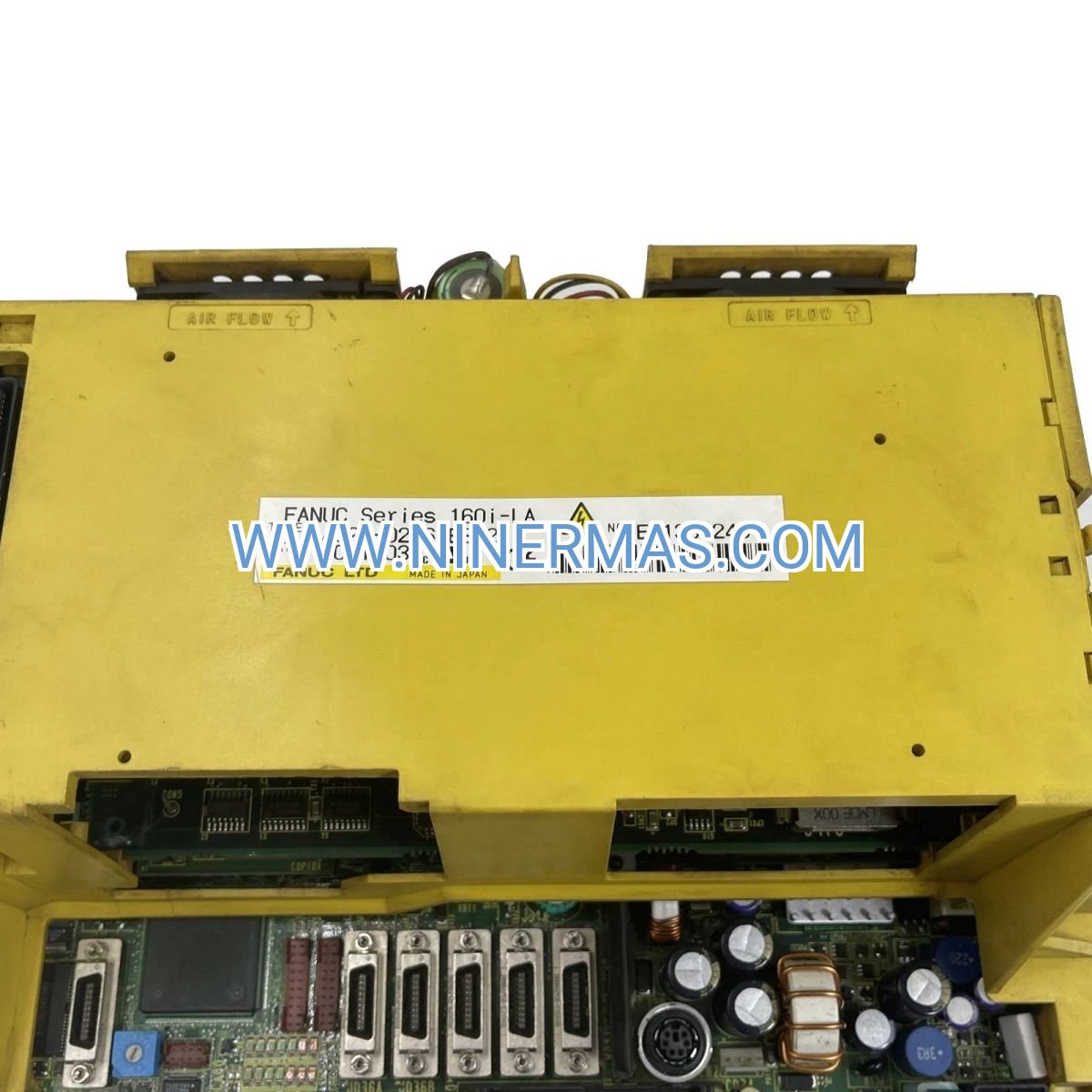
A02B-0236-B802 CNC Control Unit (PC-Integrated Real-Time Controller for Fanuc 160i/180i/210i)
The A02B-0236-B802 is a high-performance CNC control unit designed for Fanuc Series 160i, 180i, and 210i machining systems. By integrating PC-based computing with real-time motion control, it delivers micron-level precision, rapid cycle times, and advanced diagnostics—eliminating the need for external programming terminals while maintaining industrial-grade reliability in demanding production environments.
Ideal for precision machining centers, automated production lines, and tool & die manufacturing, this control unit addresses common challenges including slow response times, limited expandability, complex programming workflows, and insufficient diagnostic visibility. Through standardized interfaces and modular architecture, it suits design institutes, system integrators, OEM machine builders, and end-user manufacturing facilities requiring scalable, future-proof CNC solutions.
With proven compatibility across multiple Fanuc series, robust EMI/RFI shielding, and comprehensive I/O expansion capabilities, the A02B-0236-B802 combines operational stability with flexible customization. Engineering teams can obtain tailored configuration recommendations, technical documentation, and competitive quotations by providing application details such as machine type, axis count, spindle specifications, and communication protocol requirements.
Core Functions & Advantages
PC-Integrated Architecture
Built-in PC functionality enables on-board program editing, simulation, and diagnostics without external computers. Operators can modify G-code, verify toolpaths, and troubleshoot alarms directly at the machine interface, reducing downtime and simplifying workflow.
Real-Time Multi-Axis Control
High-speed processing engine executes complex motion profiles with sub-millisecond response times. Supports simultaneous control of up to 8 axes with coordinated interpolation, ensuring smooth surface finishes and tight dimensional tolerances in 3D contouring applications.
Cross-Series Compatibility
Seamlessly integrates with Fanuc 160i, 180i, and 210i platforms through standardized mounting, power, and communication interfaces. Facilitates equipment upgrades, spare parts consolidation, and multi-generation machine fleet management without extensive re-engineering.
Comprehensive Protection & Diagnostics
Incorporates overvoltage, overcurrent, thermal overload, and emergency stop interlocks to safeguard both controller and connected machinery. Real-time alarm logging, parameter backup/restore, and maintenance scheduling features minimize unplanned downtime and extend equipment lifespan.
Modular Expansion Capability
Supports addition of discrete I/O modules, analog control cards, network communication interfaces, and servo drive links. Enables system scaling from basic 2-axis lathes to complex 5-axis machining centers as production requirements evolve.
Intuitive Human-Machine Interface
Features multi-language LCD display with soft-key navigation, jog controls, and graphical program visualization. Reduces operator training time, minimizes programming errors, and improves production efficiency through user-friendly interaction design.
Typical Application Scenarios
This control unit is engineered for applications demanding high precision, continuous operation, and flexible automation integration:
Precision Machining Centers
Drives multi-axis milling and turning operations in aerospace component production, medical device manufacturing, and mold/die fabrication where tolerances of ±0.005mm or tighter are required. Coordinates spindle speed, feed rate, and tool compensation in real time to maintain consistent part quality across production runs.
Automated Production Lines
Integrates with robotic loading systems, pallet changers, and conveyor networks through standard industrial protocols (Ethernet/IP, Profinet, Modbus TCP). Synchronizes machine cycles with upstream/downstream processes to maximize throughput in lights-out manufacturing environments.
Tool & Die Manufacturing
Executes complex 3D surface machining with simultaneous 5-axis interpolation for injection molds, stamping dies, and forming tools. Advanced look-ahead algorithms optimize acceleration/deceleration profiles to prevent tool breakage and surface finish defects on hardened materials.
High-Mix Low-Volume Production
Facilitates rapid program changeover and setup reduction through quick parameter loading and tool offset management. Supports job shops and contract manufacturers serving automotive, electronics, and industrial equipment sectors with frequent product transitions.
Retrofit & Modernization Projects
Replaces obsolete control systems on legacy machine tools while preserving mechanical components and operator familiarity. Provides pathway to Industry 4.0 connectivity, predictive maintenance, and production data analytics without complete equipment replacement.
Technical Parameters & Selection Guide
To facilitate engineering design and procurement, key specifications are summarized below. Custom configurations are available to match specific machine tool requirements and production objectives.
| Parameter | Specification |
|---|---|
| Model Designation | A02B-0236-B802 |
| Compatible CNC Series | Fanuc 160i / 180i / 210i |
| Control Architecture | PC-integrated real-time controller |
| Maximum Controlled Axes | Up to 8 axes (configuration dependent) |
| Processing Cycle Time | Sub-millisecond interpolation cycle |
| Programming Languages | ISO G-code, M-code, Fanuc macro B, ladder logic |
| Communication Interfaces | RS-232, Ethernet, HSSB (High-Speed Serial Bus) |
| Power Supply Requirements | 24V DC ±10%, industrial regulated source |
| Operating Temperature Range | 0°C to 45°C (32°F to 113°F) |
| Storage Temperature Range | -20°C to 60°C (-4°F to 140°F) |
| Relative Humidity | 20% to 90% non-condensing |
| Protection Rating | IP20 (panel-mounted enclosure) |
| Mounting Configuration | Panel mount / 19-inch rack compatible |
| Dimensions (W×H×D) | Consult technical datasheet for specific variant |
| Weight (Approximate) | 1.0 kg (2.2 lbs) excluding cables |
Selection Recommendations
When specifying the A02B-0236-B802 for your application, consider the following factors: machine tool type (lathe, mill, machining center), number of controlled axes, spindle power and speed range, required I/O point count, communication protocol compatibility with existing factory networks, ambient temperature and contamination levels in the installation environment, and availability of 24V DC regulated power supply. For assistance with configuration selection, provide our engineering team with machine specifications, application drawings, and production volume targets to receive optimized system recommendations and budgetary pricing.
Extended Capabilities & System Integration
Network Connectivity & Data Exchange
Ethernet interface enables DNC (Direct Numerical Control) program transfer, remote monitoring via FOCAS (Fanuc Open CNC API Specification), and integration with MES (Manufacturing Execution Systems) for real-time production tracking and OEE (Overall Equipment Effectiveness) analysis.
Servo Drive & Spindle Integration
Native compatibility with Fanuc αi series servo amplifiers and βi series spindle drives ensures optimized tuning, regenerative braking, and fault coordination. Supports third-party servo systems via analog ±10V command signals and pulse-train interfaces for retrofit applications.
Safety Function Integration
Provides dedicated inputs for emergency stop circuits, safety door interlocks, and axis limit switches compliant with ISO 13849 / IEC 62061 safety standards. Supports safe torque-off (STO) and safely limited speed (SLS) functions when paired with certified safety relay modules.
Tool Management & Compensation
Manages tool offset tables for up to 200 tools with automatic wear compensation, tool life monitoring, and broken tool detection. Interfaces with automatic tool changers (ATC) and tool presetting systems to minimize setup time and scrap rates.
Custom Macro Programming
Fanuc macro B language enables creation of parametric programs for part families, adaptive machining cycles, and in-process measurement routines. Reduces programming effort for high-mix production and facilitates integration of probing systems for automated quality control.
Delivery, Service & Quality Assurance
Lead Time & Availability
Standard A02B-0236-B802 units typically ship within 5-7 business days from stock. Custom-configured systems with specific I/O modules, communication cards, or software options require 10-15 business days for assembly and testing. Expedited delivery options are available for urgent production requirements.
Warranty Coverage
All units include a comprehensive 12-month warranty covering manufacturing defects, component failures, and workmanship issues. Warranty service includes rapid replacement, technical troubleshooting support, and return shipping within the coverage period. Extended warranty plans and preventive maintenance contracts are available for mission-critical installations.
Technical Support & Documentation
Each controller ships with complete electrical schematics, wiring diagrams, parameter lists, programming manuals, and maintenance procedures in PDF format. Our technical support team provides remote assistance for installation, parameter configuration, network setup, and troubleshooting via phone, email, and video conferencing. On-site commissioning services are available in select regions.
Training & Knowledge Transfer
Operator training programs cover basic operation, program editing, alarm response, and routine maintenance procedures. Advanced courses for maintenance technicians include parameter backup/restore, servo tuning, network configuration, and diagnostic techniques. Training can be conducted at customer facilities or our technical center.
Compliance & Certifications
Manufactured to ISO 9001 quality standards with CE marking for European markets. RoHS compliant for hazardous substance restrictions. UL/cUL recognition available for North American installations. All units undergo functional testing, burn-in cycles, and quality inspection prior to shipment.
Frequently Asked Questions (FAQ)
Q: Can the A02B-0236-B802 CNC control unit replace controllers on older Fanuc 15i or 18i systems?
A: While the A02B-0236-B802 is optimized for 160i/180i/210i series, retrofitting to 15i or 18i platforms may require interface adapters, firmware updates, or I/O module changes. Contact our technical team with your existing machine model, serial number, and current controller part number for compatibility assessment and migration planning.
Q: What programming languages and formats does this control unit support?
A: The controller supports standard ISO G-code (RS-274D), Fanuc M-code extensions, Fanuc macro B parametric programming, and ladder logic for PLC functions. Program input accepts RS-232 serial transfer, Ethernet DNC, USB memory stick, and manual MDI (Manual Data Input) entry. Compatible with CAM post-processors from major software vendors.
Q: How many I/O points can be connected, and what expansion options are available?
A: Base configuration provides 16 digital inputs and 16 digital outputs. Expansion via I/O Link modules supports up to 256 I/O points total. Analog I/O cards add ±10V voltage or 4-20mA current interfaces for spindle override, feed rate control, and sensor integration. Consult system configuration guide for specific module compatibility.
Q: Is the A02B-0236-B802 compatible with third-party servo drives and motors?
A: Yes, the controller provides analog velocity command (±10V) and pulse/direction outputs compatible with most industrial servo amplifiers. Native Fanuc αi servo integration offers optimized performance, but third-party drives from manufacturers like Yaskawa, Mitsubishi, and Siemens can be interfaced with appropriate parameter configuration and signal conditioning.
Q: What diagnostic and troubleshooting capabilities are included?
A: Built-in diagnostics include real-time alarm display with context-sensitive help text, historical alarm log with timestamps, servo load monitoring, spindle vibration analysis, parameter comparison tools, and automatic backup/restore functions. Maintenance screens track power-on hours, cycle counts, and component life for predictive maintenance scheduling.
Q: Can this controller integrate with factory network systems for Industry 4.0 applications?
A: Yes, Ethernet connectivity supports FOCAS API for real-time data collection, MTConnect protocol for machine monitoring, and OPC UA for MES/ERP integration. Enables remote program management, production dashboards, predictive maintenance analytics, and digital twin applications when paired with appropriate middleware software.
Q: What installation environment requirements must be met?
A: Install in clean, climate-controlled electrical enclosures with IP20 minimum protection. Maintain ambient temperature 0-45°C, relative humidity 20-90% non-condensing, and adequate ventilation to prevent heat buildup. Avoid exposure to metal dust, coolant mist, corrosive gases, and electromagnetic interference sources. Provide isolated 24V DC power supply with <5% ripple and proper grounding per NEC/IEC standards.
Contact & Ordering Information
To obtain detailed configuration recommendations, technical datasheets, competitive quotations, or application-specific engineering support, please provide the following information to our sales engineering team:
- Project name and application overview
- Machine tool type and manufacturer
- Number of controlled axes and spindles
- Required I/O point count (digital/analog)
- Communication protocol requirements
- Existing equipment integration needs
- Installation environment conditions
- Quantity requirements and delivery timeline
Our engineering team will respond within 24 business hours with tailored system recommendations, configuration drawings, and pricing information to support your project planning and procurement processes.
© 2026 NINERMAS COMPANY LIMITED. All rights reserved.
Original Source: https://ninermas.com
Contact: sale@ninermas.com | +0086 187 5021 5667

Contact Info
-
Address:22 / F, South Wo Hang building, 148 Wing Lok Street, Sheung Wan, Western District, Hong Kong
-
Phone:+8618750215667
-
Email: