


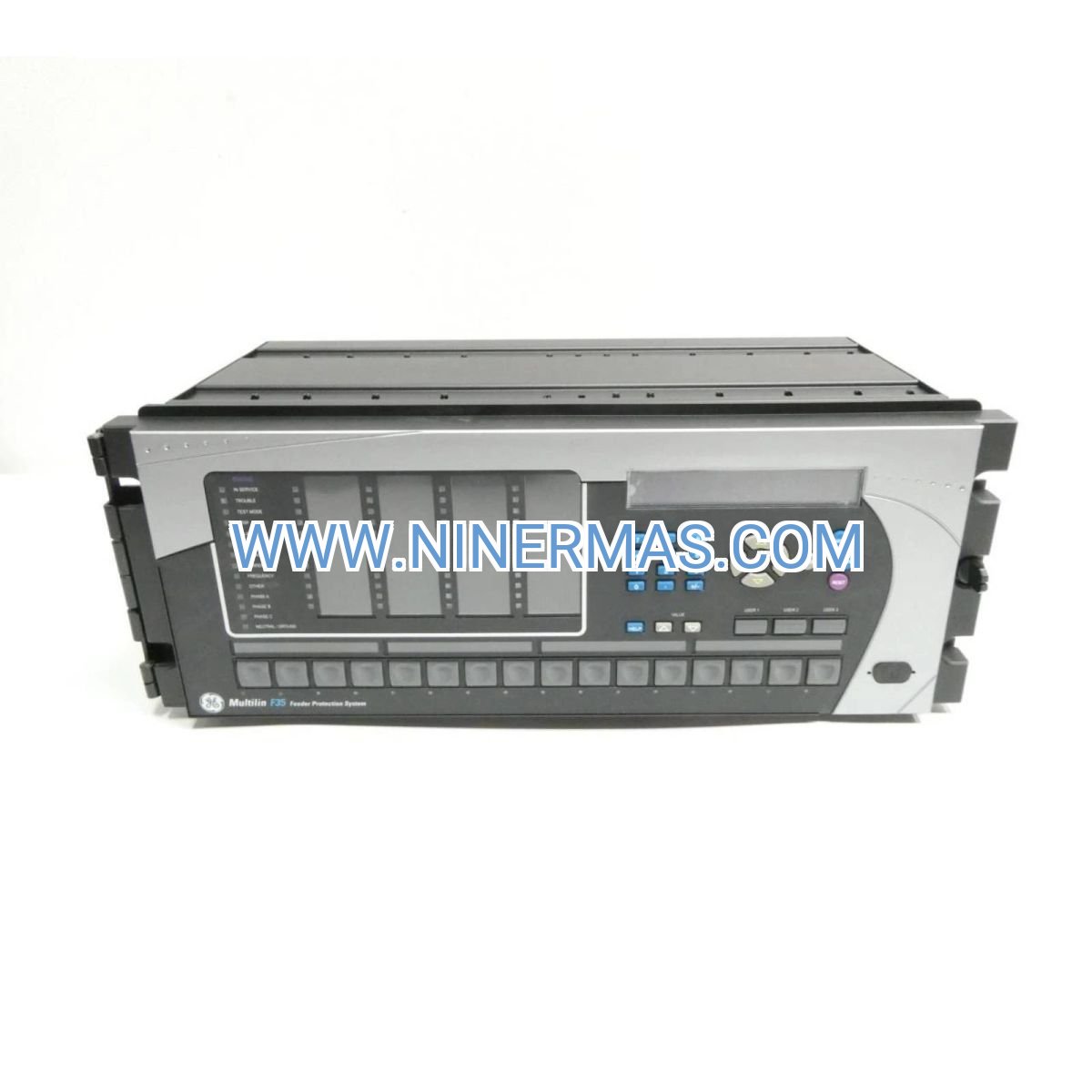


GE F135 Turbofan Engine | Naval Configuration F35N00HKHF8LH6NM6CPXXUXXWXX | Military-Grade Propulsion
Description
GE F135 Turbofan Engine – Military-Grade Naval Propulsion System
The GE F135 turbofan engine (Model: F35N00HKHF8LH6NM6CPXXUXXWXX) is an advanced military propulsion system specifically engineered for naval aviation applications. Through cutting-edge turbofan technology, adaptive cycle architecture, and integrated thrust vectoring control, this engine delivers exceptional thrust-to-weight ratio, operational reliability, and mission readiness for carrier-based fighter aircraft.
Designed for the demanding environments of naval operations—including saltwater exposure, deck launch/recovery cycles, and extended maritime missions—this engine addresses critical challenges such as corrosion resistance, rapid throttle response, fuel efficiency under variable combat loads, and maintainability in shipboard conditions.
Leveraging proven GE Aviation engineering standards and modular design philosophy, the F135 naval variant offers superior performance, extended service intervals, comprehensive diagnostics integration, and global OEM support. Ideal for defense contractors, naval aviation maintenance facilities, aircraft OEMs, and military logistics providers. Contact our aerospace engineering team for configuration specifications, integration support, and procurement guidance.
Core Capabilities & Performance Advantages
- Advanced Thrust Vectoring Control
Integrated 3-bearing swivel nozzle enables pitch/yaw vectoring for enhanced maneuverability during carrier approach, short takeoff operations, and combat engagement scenarios. - Exceptional Thrust-to-Weight Ratio
Delivers over 40,000 lbf thrust class with optimized specific fuel consumption, enabling superior acceleration, sustained supersonic cruise, and vertical lift capability for STOVL variants. - Corrosion-Resistant Naval Design
Features specialized coatings, saltwater-resistant materials, and sealed bearing assemblies to withstand prolonged exposure to maritime environments and reduce maintenance intervals by up to 25%. - Adaptive Cycle Architecture
Employs variable bypass ratio technology to optimize performance across subsonic cruise, supersonic dash, and loiter phases, improving fuel efficiency by approximately 15-20% compared to fixed-cycle engines. - Comprehensive Health Monitoring
Equipped with integrated vehicle health management (IVHM) sensors for real-time monitoring of temperature, vibration, pressure, and component wear—enabling predictive maintenance and reducing unscheduled downtime. - Modular Maintenance Design
Line-replaceable units (LRUs) and on-wing maintenance capability reduce mean time to repair (MTTR), supporting rapid turnaround for carrier air wing operations.
Typical Application Scenarios
This propulsion system is engineered for high-demand naval aviation platforms requiring superior performance, reliability, and operational flexibility:
- Carrier-Based Multi-Role Fighters
Powers F-35C Lightning II and similar naval strike fighters, providing the thrust authority required for catapult-assisted takeoff, arrested landing, and sustained combat air patrol missions. - Short Takeoff & Vertical Landing (STOVL) Aircraft
Supports F-35B variants with integrated lift fan system, enabling operations from amphibious assault ships, forward operating bases, and austere airfields without conventional runways. - Maritime Strike & Reconnaissance Platforms
Delivers reliable propulsion for long-range anti-ship, air-to-ground, and intelligence/surveillance/reconnaissance (ISR) missions over extended oceanic transit routes. - Naval Aviation Training & Test Programs
Utilized in flight test centers, naval air stations, and pilot training squadrons to validate performance envelopes, weapons integration, and operational tactics.
Technical Parameters & Configuration Overview
To support integration planning and procurement decisions, we provide key performance and dimensional specifications. Custom configurations are available to meet specific platform requirements, mission profiles, and regulatory compliance standards.
| Parameter | Specification |
|---|---|
| Engine Model | F35N00HKHF8LH6NM6CPXXUXXWXX (Naval Variant) |
| Thrust Class | 40,000+ lbf (178+ kN) with afterburner |
| Bypass Ratio | Variable (0.57 typical) |
| Overall Pressure Ratio | 28:1 (approximate) |
| Turbine Inlet Temperature | 3,600°F (1,982°C) class |
| Fuel Type | JP-5, JP-8, Jet A-1 compatible |
| Length | ~220 inches (5.59 m) |
| Diameter | ~46 inches (1.17 m) |
| Dry Weight | ~4,000 lbs (1,814 kg) |
| Control Interface | FADEC (Full Authority Digital Engine Control) |
| Environmental Rating | MIL-STD-810 (salt fog, humidity, thermal shock) |
| MTBF (Mean Time Between Failures) | Classified / OEM-specified |
Configuration Guidance: Selection should be based on aircraft platform specifications, mission profile (air superiority, strike, ISR), carrier compatibility (CATOBAR vs. STOBAR vs. STOVL), fuel infrastructure, maintenance facility capabilities, and lifecycle cost projections. Our aerospace engineers can provide tailored recommendations upon receipt of platform integration requirements and operational parameters.
Extended Integration & Support Features
- FADEC Integration: Full Authority Digital Engine Control with dual-channel redundancy, automatic thrust management, and fault-tolerant operation
- Prognostic Health Management: Real-time data streaming to shipboard maintenance systems via MIL-STD-1553 or Ethernet interfaces
- Weapons Bay Compatibility: Optimized inlet/exhaust geometry to minimize radar cross-section and support stealth platform integration
- Cold Weather & Hot Day Performance: Proven operation from -40°F to +120°F ambient, with anti-icing systems and high-altitude restart capability
- Noise Signature Reduction: Chevron nozzle design and acoustic liner technology to meet naval air station noise abatement requirements
Delivery, Service & Quality Assurance
Lead Time: Standard OEM procurement lead time is 18-36 months depending on production slot availability and configuration complexity. Expedited delivery may be available for urgent operational requirements subject to GE Aviation approval.
Warranty & Support: Engines are delivered with OEM warranty coverage (terms vary by contract). Comprehensive technical support includes installation guidance, ground test procedures, flight test support, and access to GE Aviation's global service network.
Documentation Package: Each engine ships with complete technical data package including engine build specification, wiring diagrams, maintenance manuals (organizational/intermediate/depot level), illustrated parts catalog, and airworthiness certification documentation.
Quality Standards: Manufactured under AS9100D aerospace quality management system, with full traceability, material certifications, and compliance to MIL-E-5007 (Aircraft Turbine Engines, General Specification for).
Frequently Asked Questions (FAQ)
Q: How does the GE F135 naval variant differ from the conventional takeoff version?
A: The naval variant (F35N00HKHF8LH6NM6CPXXUXXWXX) incorporates enhanced corrosion protection, reinforced mounting structures for catapult/arresting loads, modified inlet geometry for low-speed carrier approach, and saltwater-resistant coatings throughout hot and cold sections. It also features optimized throttle response for bolter/wave-off scenarios.
Q: What is the expected service life and overhaul interval for this engine?
A: Typical on-wing service life is 2,000-4,000 flight hours depending on mission profile severity (combat vs. training). First major overhaul interval is approximately 2,500 hours, with component-level inspections at 500-1,000 hour increments. Actual intervals are determined by engine health monitoring data and operational tempo.
Q: Can this engine be integrated with legacy avionics and fuel systems?
A: The F135 requires FADEC-compatible digital engine control interface (MIL-STD-1553B or equivalent) and is optimized for JP-5/JP-8 fuel systems. Integration with legacy platforms requires interface adapter modules and may necessitate airframe modifications. Our engineering team can assess compatibility and provide integration roadmap.
Q: What environmental and operational certifications does this engine hold?
A: The F135 is qualified to MIL-STD-810 (environmental), MIL-E-5007 (turbine engine specification), and holds FAA/EASA type certification for applicable civil variants. It meets NAVAIR airworthiness standards for carrier suitability including deck handling, jet blast deflector exposure, and electromagnetic interference (EMI) requirements.
Q: Is remote diagnostics and condition-based maintenance supported?
A: Yes. The engine's IVHM system streams real-time performance data to shipboard maintenance computers and can interface with GE Aviation's remote monitoring centers via SATCOM or shore-based networks. This enables predictive maintenance, trend analysis, and proactive parts ordering to minimize aircraft-on-ground (AOG) events.
Q: What is the fuel consumption profile and range impact?
A: Specific fuel consumption (SFC) varies by flight regime: approximately 0.7-0.9 lb/lbf/hr in dry thrust, 1.9-2.1 lb/lbf/hr with afterburner. The adaptive cycle design reduces cruise SFC by 15-20% versus fixed-cycle engines, extending combat radius by 200-300 nautical miles depending on mission profile and payload.
Request Configuration Consultation & Quotation
To receive a detailed integration assessment, performance analysis, or procurement quotation, please provide the following information to our aerospace engineering team:
- Platform designation and airframe configuration
- Mission profile (air superiority, strike, ISR, training)
- Operating environment (carrier type, geographic region, climate)
- Required delivery timeline and quantity
- Maintenance infrastructure and support capabilities
- Regulatory and certification requirements (ITAR, export control, etc.)
Our specialists will provide one-on-one consultation, configuration recommendations, lifecycle cost modeling, and technical integration support tailored to your operational requirements.
© 2026 NINERMAS COMPANY LIMITED. All rights reserved.
Original Source: https://ninermas.com
Contact: sale@ninermas.com | +0086 187 5021 5667

Contact Info
-
Address:22 / F, South Wo Hang building, 148 Wing Lok Street, Sheung Wan, Western District, Hong Kong
-
Phone:+8618750215667
-
Email:
