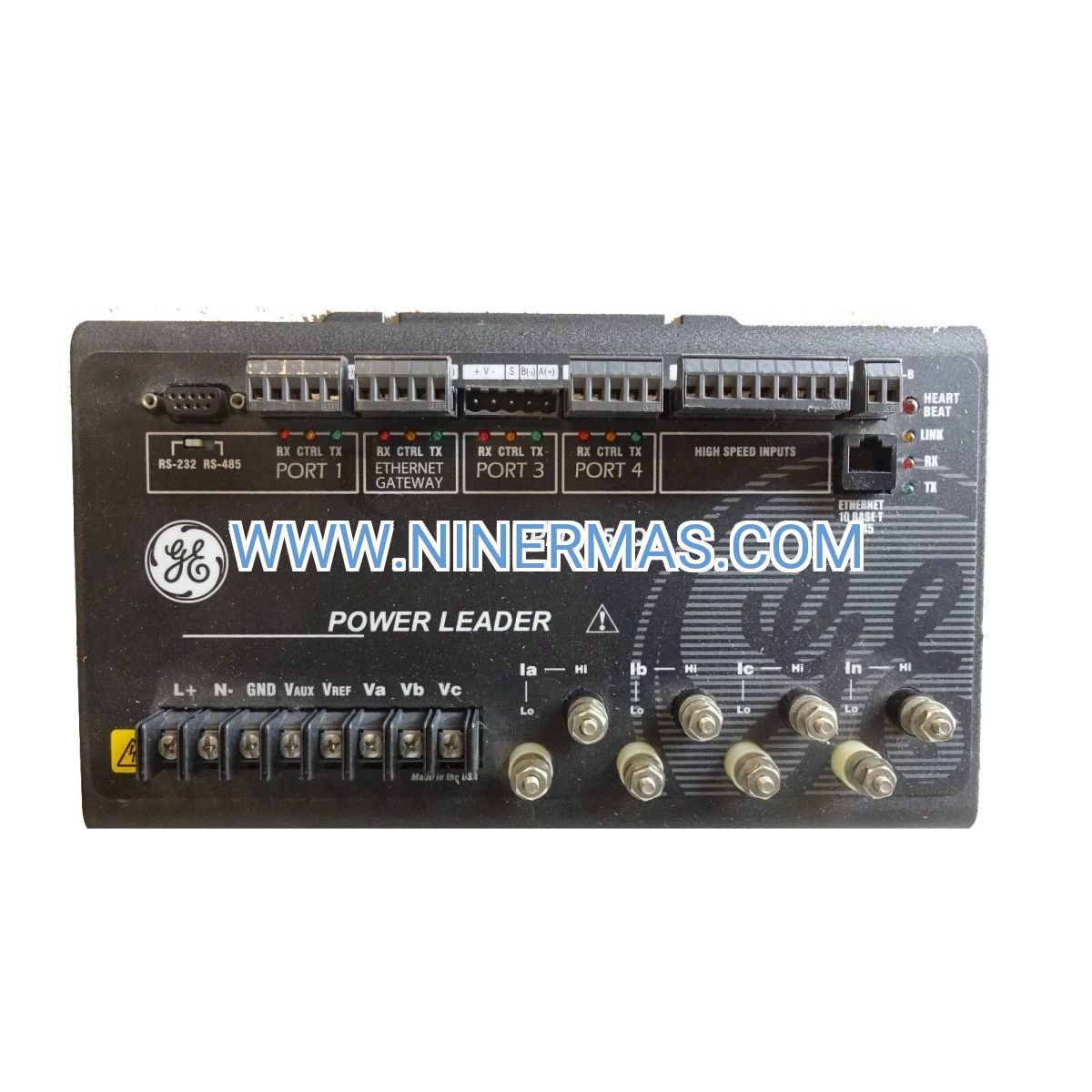
GE EPM 9650Q Power Quality Meter | Revenue-Grade Energy Monitoring for Industrial Facilities
Description
GE EPM 9650Q Power Quality Meter (Revenue-Grade Energy Monitoring System)
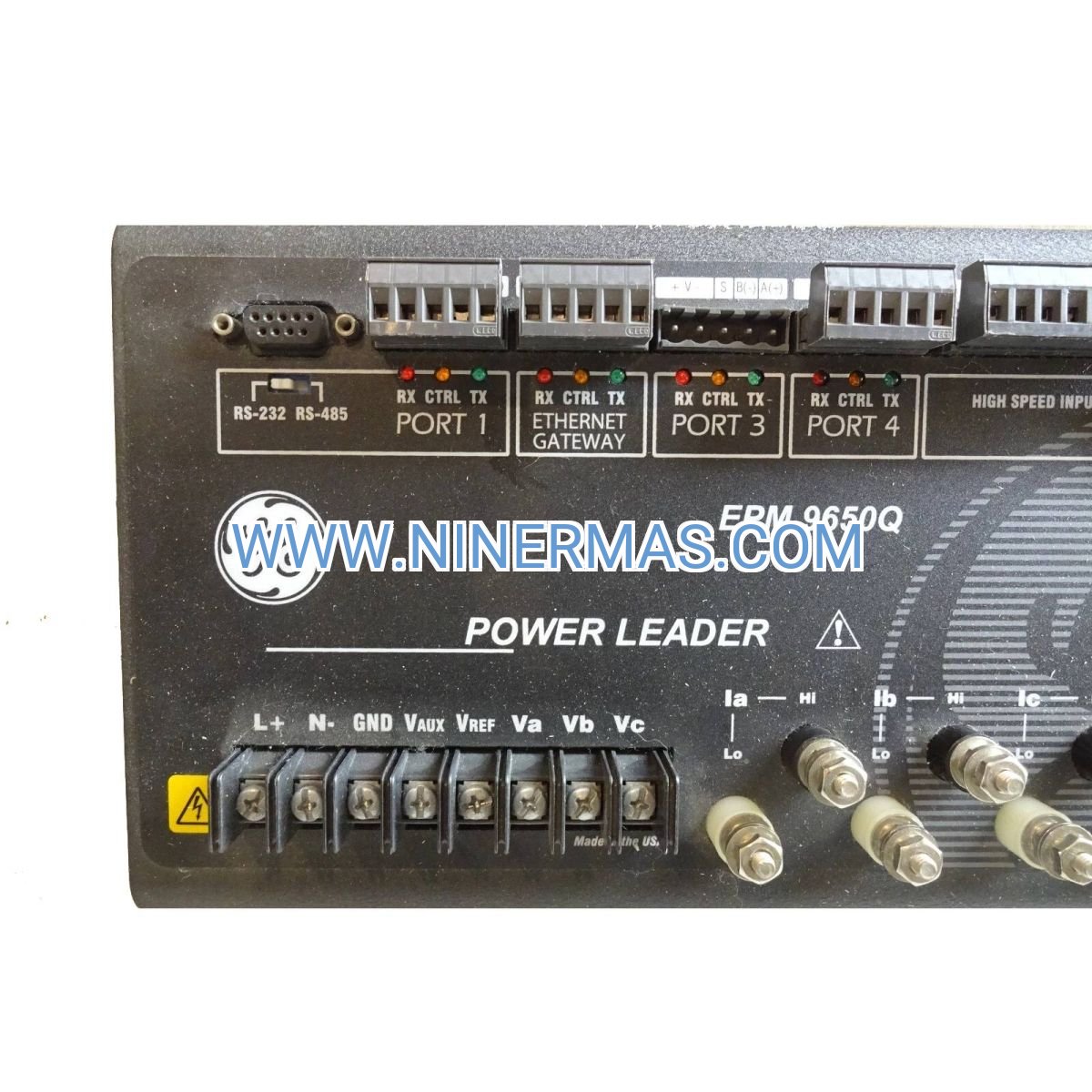
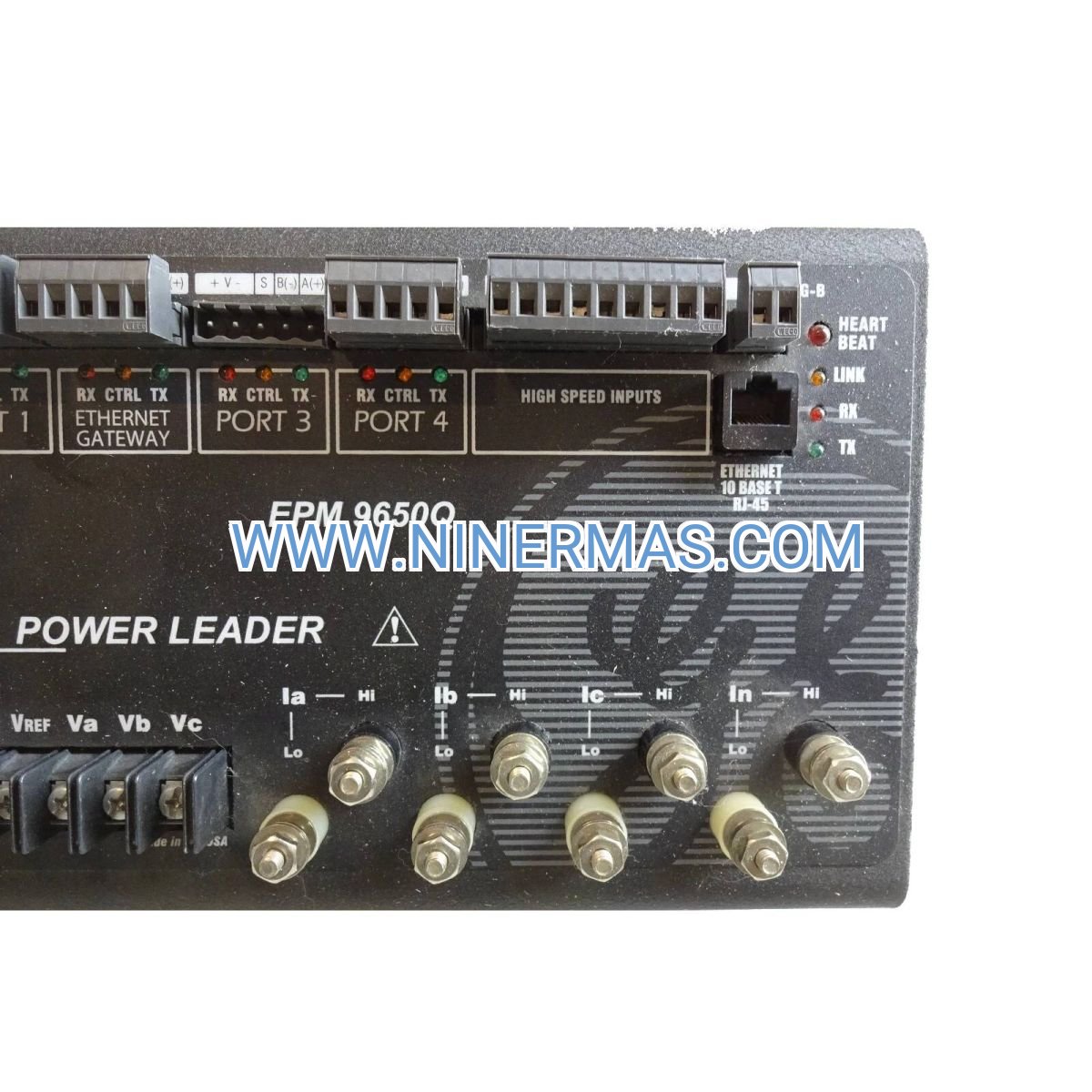
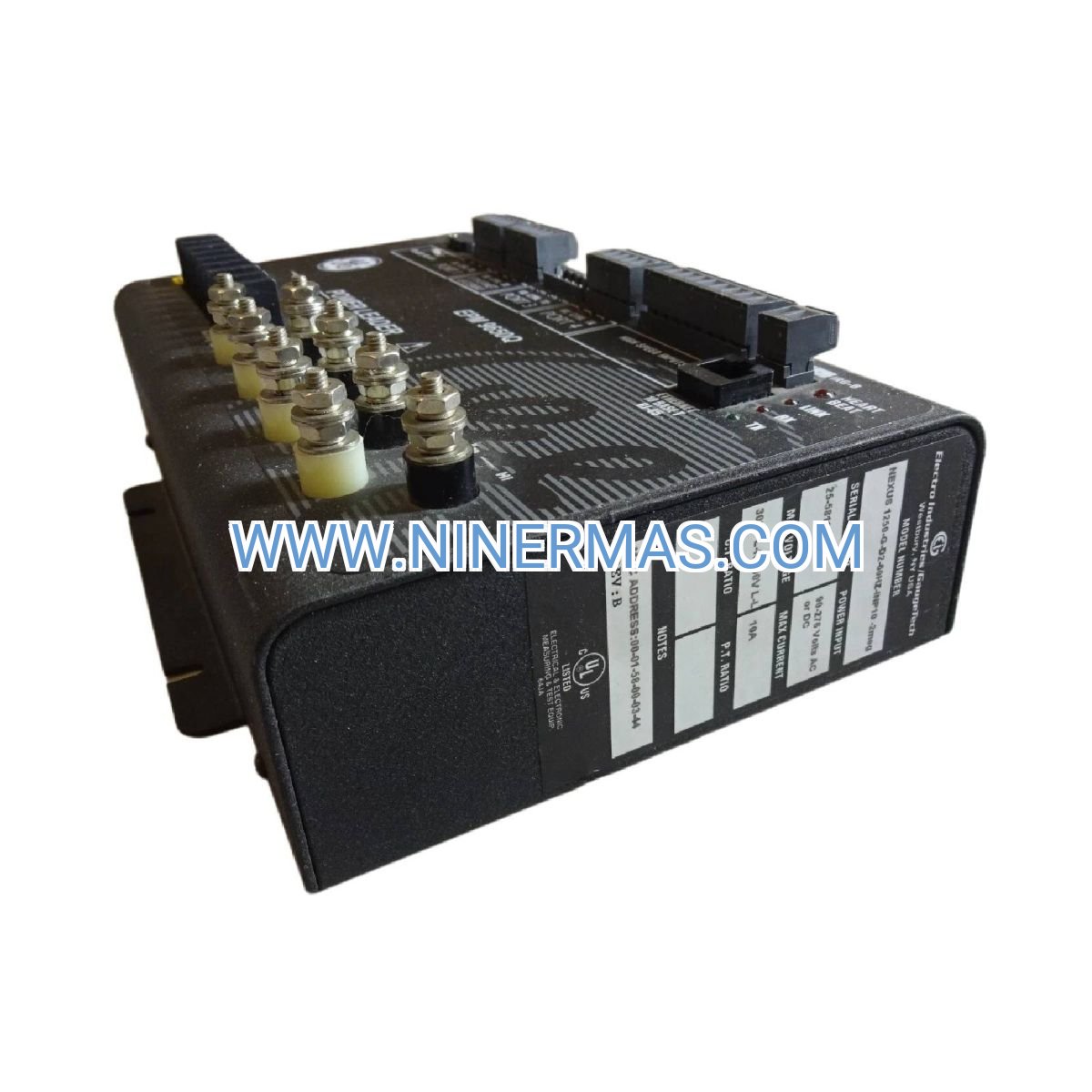
The GE EPM 9650Q is a high-precision power quality meter designed for industrial energy monitoring, revenue-grade metering, and comprehensive power system diagnostics. Utilizing advanced digital signal processing and multi-channel sampling technology, it delivers real-time measurement of voltage, current, power, harmonics, and transient events—ensuring optimal power reliability and cost control.
Ideal for substations, data centers, manufacturing facilities, commercial buildings, and renewable energy installations, the EPM 9650Q addresses critical challenges including power quality disturbances, billing accuracy disputes, harmonic distortion issues, equipment malfunction diagnostics, and compliance with grid codes and energy standards.
Through modular design and flexible configuration options, this meter offers revenue-grade accuracy (IEC 62053-22 Class 0.2S), comprehensive event logging, multi-protocol communication support, and intuitive web-based interface—making it the preferred choice for consulting engineers, system integrators, facility managers, and utility operators. Contact our application engineers for customized metering solutions and technical specifications.
Core Features & Advantages
- Revenue-Grade Accuracy: Compliant with IEC 62053-22 Class 0.2S and ANSI C12.20 standards, the EPM 9650Q ensures billing-grade precision for energy transactions, reducing revenue loss and supporting regulatory compliance in utility and commercial applications.
- Comprehensive Power Quality Analysis: Monitors voltage sags/swells, harmonics up to the 63rd order, flicker, unbalance, and transient waveforms per IEC 61000-4-30 Class A—enabling proactive identification of power disturbances before they impact critical processes.
- High-Speed Waveform Capture: Built-in oscillography function records voltage and current waveforms at microsecond resolution during fault events, facilitating root-cause analysis and reducing downtime in industrial operations.
- Flexible Communication Protocols: Supports Modbus RTU/TCP, DNP3, IEC 61850, and BACnet, ensuring seamless integration with SCADA systems, building management platforms, and energy management software for centralized monitoring and control.
- Advanced Data Logging & Trending: Stores up to 12 months of interval data (configurable from 1-minute to 60-minute intervals), with trend analysis tools for load profiling, demand forecasting, and energy optimization strategies.
- User-Friendly Interface: Features a high-resolution color display with multi-language support (English/Chinese/Spanish), web server for remote access, and intuitive navigation—reducing training time and simplifying commissioning for field technicians.
Typical Application Scenarios
The GE EPM 9650Q is engineered for environments demanding high accuracy, continuous monitoring, and regulatory compliance, including:
- Electrical Substations & Switchgear: Provides feeder-level metering and power quality surveillance in medium-voltage (MV) and low-voltage (LV) distribution networks, supporting predictive maintenance and grid stability analysis for utilities and industrial campuses.
- Data Centers & Mission-Critical Facilities: Ensures power integrity for IT infrastructure by detecting harmonics from UPS systems and non-linear loads, minimizing risk of equipment failure and optimizing power factor correction strategies.
- Manufacturing & Process Industries: Monitors power consumption and quality at production lines, identifies energy waste from motor drives and welding equipment, and supports ISO 50001 energy management certification in automotive, chemical, and food processing sectors.
- Commercial Buildings & Campuses: Enables tenant sub-metering, demand response participation, and LEED/BREEAM energy reporting, helping facility managers reduce operating costs and achieve sustainability targets.
- Renewable Energy & Microgrids: Tracks generation output from solar PV and wind turbines, verifies grid interconnection compliance (IEEE 1547), and supports hybrid energy storage system integration for off-grid and islanded operations.
Technical Specifications & Selection Guide
To ensure optimal performance and compatibility, the EPM 9650Q is available in multiple configurations tailored to specific voltage levels, current inputs, and communication requirements:
| Parameter | Specification |
|---|---|
| Voltage Measurement Range | 57.7–693 V L-N / 100–1200 V L-L (configurable) |
| Current Input Options | 1 A / 5 A secondary (via external CT), 333 mV Rogowski coil compatible |
| Accuracy Class | IEC 62053-22 Class 0.2S, ANSI C12.20 Class 0.2 |
| Power Quality Compliance | IEC 61000-4-30 Class A, EN 50160 |
| Communication Interfaces | RS-485 (Modbus RTU), Ethernet (Modbus TCP, DNP3, IEC 61850, web server) |
| Data Logging Capacity | Up to 12 months (interval configurable: 1/5/10/15/30/60 min) |
| Operating Temperature | -40°C to +70°C (-40°F to +158°F) |
| Enclosure Rating | IP51 (front panel), suitable for panel mounting in NEMA 1 / IP20 enclosures |
| Display | 4.3-inch color TFT LCD, multi-language support |
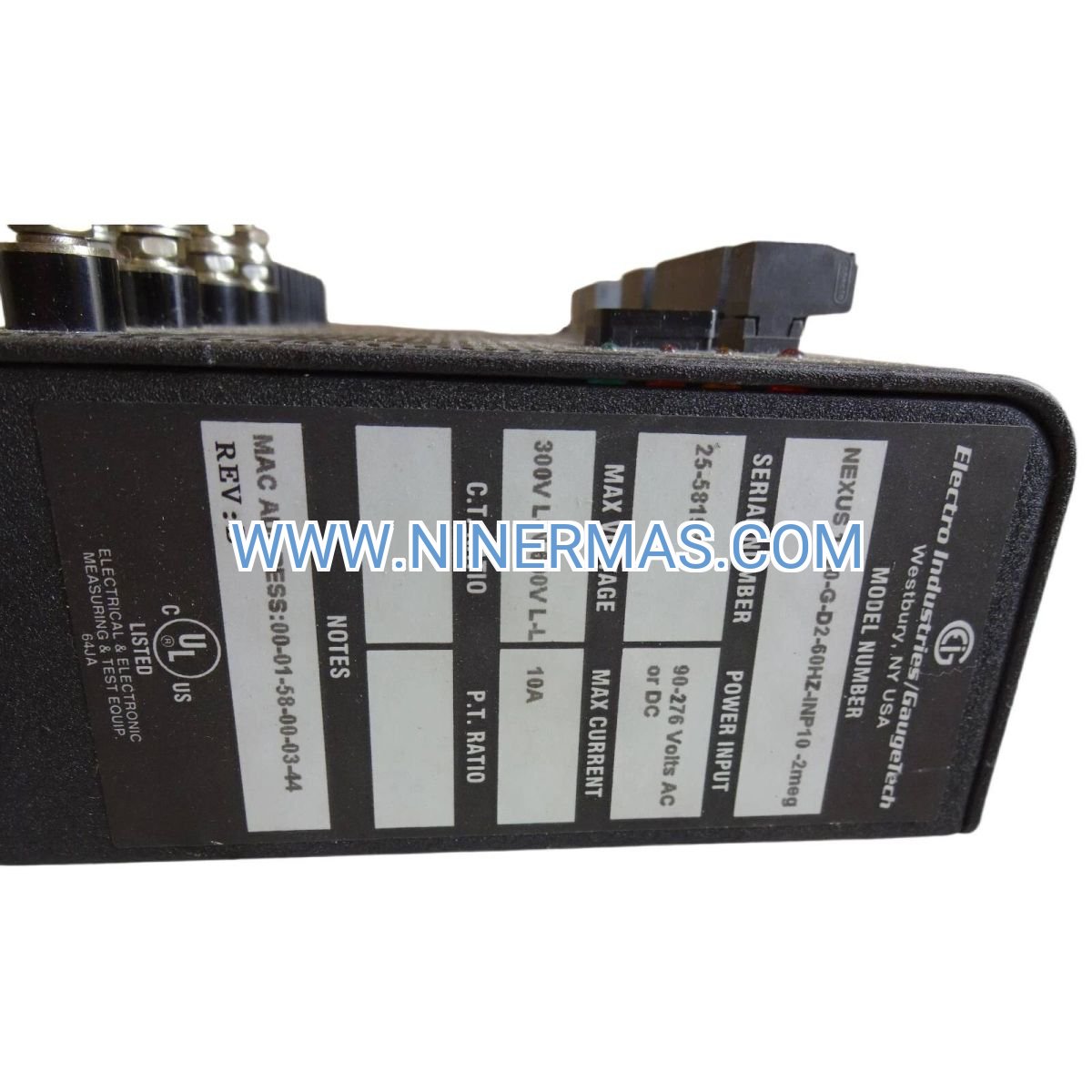
| Power Supply | 85–265 V AC/DC (universal input), optional 18–60 V DC |
| Mounting Dimensions | 96 mm × 96 mm panel cutout (DIN 43700 compliant) |
Selection Recommendations: When specifying the EPM 9650Q, consider the following project parameters: nominal system voltage and phase configuration (single-phase, three-phase 3-wire, or three-phase 4-wire), CT ratio and accuracy class, required communication protocols for integration with existing SCADA/BMS, environmental conditions (temperature, humidity, vibration), and compliance requirements (utility metering standards, power quality norms). Our application engineers can provide customized configuration worksheets and one-line diagram reviews to ensure proper meter selection and installation design.
Extended Capabilities
- Demand & Load Profiling: Configurable demand intervals (5/15/30/60 min) with predictive demand calculation, supporting time-of-use (TOU) tariff analysis and peak demand management strategies.
- Alarm & Event Management: Programmable thresholds for voltage, current, power factor, THD, and frequency deviations, with time-stamped event logs and digital output relays for automated load shedding or alarm annunciation.
- Cybersecurity Features: Role-based access control, HTTPS encryption, and audit trail logging to meet NERC CIP and IEC 62351 security standards for critical infrastructure applications.
- Third-Party Software Integration: Compatible with GE's EnergyInsight platform, Schneider Electric's PowerLogic, Siemens' SICAM, and open-source tools like Node-RED for custom dashboards and analytics workflows.
Delivery, Service & Quality Assurance
Lead Time: Standard configurations ship within 3–5 business days from stock; custom-configured units (specific CT ratios, firmware versions, or factory calibration certificates) require 10–15 business days.
Warranty: 3-year manufacturer warranty covering defects in materials and workmanship; extended warranty and calibration service contracts available upon request.
Technical Support: Comprehensive support includes remote commissioning assistance via web interface, on-site installation guidance (subject to regional availability), and access to firmware updates and configuration tools through GE's customer portal.
Documentation Package: Each meter ships with detailed installation manual, electrical connection diagrams, Modbus/DNP3 register maps, IEC 61850 ICD files, quick-start guide, and factory test report—ensuring smooth integration and compliance with project documentation requirements.
Frequently Asked Questions (FAQ)
Q: How does the GE EPM 9650Q power quality meter integrate with existing SCADA or energy management systems?
A: The EPM 9650Q supports multiple industrial protocols including Modbus RTU/TCP, DNP3, IEC 61850 MMS, and BACnet IP. Integration typically involves configuring the meter's IP address and protocol settings via the front panel or web interface, then mapping the desired data points (voltage, current, power, harmonics) in your SCADA software using the provided register maps or ICD files. For legacy systems, RS-485 serial communication is available with automatic baud rate detection.
Q: What is the maximum number of power quality events the EPM 9650Q can log, and how are they retrieved?
A: The meter can store up to 1,000 time-stamped power quality events (sags, swells, interruptions, transients) with associated waveform captures. Events are retrievable via Ethernet using FTP, web browser download, or through SCADA polling. The internal memory is non-volatile, ensuring data retention during power outages.
Q: Can the EPM 9650Q achieve energy savings, and under what conditions?
A: While the meter itself is a monitoring device, it enables energy savings by identifying inefficiencies such as poor power factor (recommending capacitor bank sizing), excessive harmonic distortion (indicating need for active filters), and off-peak load shifting opportunities. Typical energy cost reductions of 5–15% are achievable when meter data is used to optimize demand charges, correct power factor penalties, and implement targeted equipment upgrades.
Q: What are the environmental and installation requirements for the EPM 9650Q?
A: The meter operates reliably in ambient temperatures from -40°C to +70°C and is rated IP51 for the front panel, making it suitable for indoor switchgear and control panel installations. It requires a 96 mm × 96 mm panel cutout and minimum 150 mm depth behind the panel. For outdoor or harsh environments, install within a NEMA 4X or IP65-rated enclosure. Ensure adequate ventilation if multiple meters are mounted in close proximity.
Q: Does the EPM 9650Q support remote monitoring and data export for compliance reporting?
A: Yes, the built-in web server allows secure remote access via standard browsers (HTTPS supported), enabling real-time dashboards, historical trend viewing, and CSV/XML data export for regulatory compliance (ISO 50001, ESOS, LEED). Additionally, automated data push to cloud platforms or FTP servers can be configured for continuous reporting and analytics integration.
Q: Is factory calibration certification available, and what standards does it reference?
A: All EPM 9650Q meters undergo factory calibration traceable to NIST or equivalent national standards, with test reports provided. For revenue metering applications requiring third-party verification, accredited calibration certificates (ISO/IEC 17025) can be requested at time of order, ensuring compliance with utility billing regulations and audit requirements.
Request a Custom Solution
To receive a tailored metering solution, technical specification sheet, or project quotation, please provide the following details: project name and location, application type (substation/building/industrial), system voltage and phase configuration, CT primary/secondary ratios, required communication protocols, quantity and delivery timeline, and any specific compliance or certification needs. Our engineering team will respond within 24 hours with a comprehensive selection guide and pricing proposal.
© 2026 NINERMAS COMPANY LIMITED. All rights reserved. Original Source: https://ninermas.com | Contact: sale@ninermas.com | +0086 187 5021 5667

Contact Info
-
Address:22 / F, South Wo Hang building, 148 Wing Lok Street, Sheung Wan, Western District, Hong Kong
-
Phone:+8618750215667
-
Email: