Original Industrial Spare Part
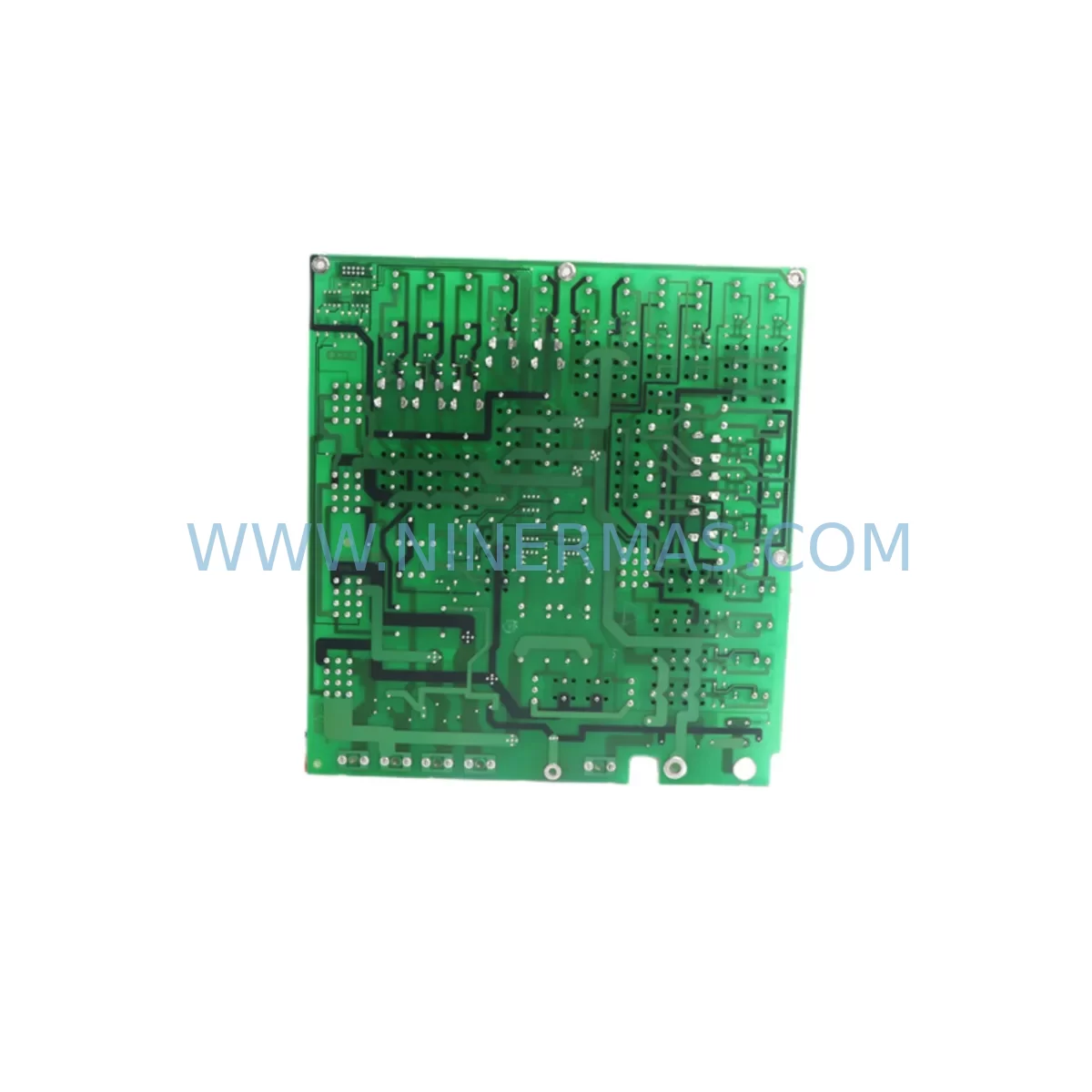
GE DS200TCEAG28TF Retrofit-Compatible TCE Board for Legacy Systems
Verify the part, confirm the platform family, and move straight into quotation with the right commercial details.
RFQ Ready
- SKUDS200TCEAG28TF
- CategoryPLC & Industrial Automation Modules
- BrandGE
- SupportAvailability, lead time, condition, and shipping coordination
How Buyers Usually Use This Page
- Confirm the exact part number and platform family before sending the quote request.
- Use direct email when quantity, condition, and destination are already defined internally.
- Switch to the broader brand or category archive when you need alternates nearby.
Series Navigation
Move through the most common platform families behind this part.
Product RFQ
Send this part directly for quotation.
Include quantity, required condition, destination country, and target delivery timing. Current reference: GE DS200TCEAG28TF Retrofit-Compatible TCE Board for Legacy Systems with SKU DS200TCEAG28TF.
GE DS200TCEAG28TF Retrofit-Compatible TCE Board for Legacy Systems
The GE DS200TCEAG28TF is a Turbine Control Electronics (TCE) board designed for the GE Speedtronic Mark V turbine control platform — one of the most widely deployed gas and steam turbine control systems in power generation, oil & gas, and industrial process facilities worldwide. As the Mark V series reaches end-of-life and OEM support is discontinued, the DS200TCEAG28TF has become a critical spare part for operators seeking to extend the operational life of their existing control infrastructure without committing to a full system replacement.
NINERMAS maintains verified stock of the DS200TCEAG28TF, fully tested and backed by a 12-month warranty. Each unit undergoes pre-shipment functional verification to confirm board-level integrity, I/O signal response, and communication link readiness before dispatch. Our inventory program is specifically structured to support long-term procurement planning for facilities running legacy Mark V panels, where sourcing lead times from alternative channels can stretch to 12–24 weeks or longer.
Upgrade Compatibility Table
| Parameter | DS200TCEAG28TF Specification | Retrofit Notes |
|---|---|---|
| Platform | GE Speedtronic Mark V | Verify panel generation (Mark V vs Mark VIe) before ordering |
| Board Function | Turbine Control Electronics (TCE) | Confirm slot assignment in the rack; TCE occupies a dedicated backplane slot |
| Backplane Interface | Mark V VME-style backplane | Not compatible with Mark VIe VCMI/VCRC backplane architecture |
| Communication Protocol | Proprietary GE ARCNET / serial links | Verify ARCNET node addressing and baud rate settings match existing configuration |
| Power Supply Requirement | +5 VDC, ±15 VDC via backplane | Confirm DS200PCCAG1A or equivalent power supply output levels before installation |
| Terminal Wiring | Per original Mark V I/O terminal block layout | Cross-reference existing wiring diagrams; no re-termination required for like-for-like swap |
| Installation Space | Standard Mark V panel card slot | Confirm physical card slot clearance and adjacent board spacing |
| Firmware / Software | Compatible with existing Mark V CIMPLICITY / Toolbox ST configuration | No software re-flash required for direct replacement; verify revision level if upgrading |
| Replacement Path | Direct drop-in for same revision TCE boards | Cross-revision swaps require engineering review of I/O map and address settings |
| Warranty | 12-Month Warranty — all units pre-tested before shipment | |
Retrofit Planning for Existing Automation Systems
Replacing the DS200TCEAG28TF within an operational Mark V turbine control panel requires a structured approach that accounts for the interdependencies between the TCE board and the broader control architecture. The TCE board communicates directly with the DS200SDCIG2A speed detector card and the DS200TCQAG1A I/O terminal board, both of which must be confirmed operational before a board swap is initiated. If either of these companion boards shows signs of degradation — intermittent signal loss, erratic speed feedback, or communication timeouts — they should be evaluated for concurrent replacement to avoid repeat outages.
Power supply integrity is a prerequisite for any TCE board replacement. The DS200PCCAG1A power conditioning card, which supplies regulated DC voltages to the Mark V backplane, should be load-tested prior to installation of the new DS200TCEAG28TF. Undervoltage conditions on the +5 VDC or ±15 VDC rails are a common root cause of premature board failure and can corrupt the replacement unit if not addressed beforehand.
For facilities undertaking a broader control cabinet upgrade — for example, migrating from a Mark V panel to a Mark VIe or a third-party DCS — the DS200TCEAG28TF serves as a bridge component that keeps the existing turbine running during the transition period. In this context, the board is often installed as a short-to-medium-term operational spare while the new control platform is engineered, commissioned, and validated in parallel. The DS200EXPSG1ADA I/O expansion board and DS200DSPCH1ADA digital signal processor card are frequently involved in these parallel-run configurations, providing additional I/O capacity and signal processing headroom during the cutover window.
Terminal wiring compatibility should be verified against the original Mark V wiring schematics before removal of the existing board. The DS200TCEAG28TF uses the same terminal block layout as its predecessor revisions, meaning that for a like-for-like swap, no re-termination is required. However, if the installation involves a cross-revision replacement or a panel that has been field-modified, a point-to-point wiring check against the DS200TCQAG1A terminal board is recommended. Signal isolation requirements for thermocouple inputs and RTD circuits should also be reviewed, particularly if the facility has added signal isolators or conditioners downstream of the original Mark V I/O.
Communication link configuration is another critical checkpoint. The DS200TCEAG28TF operates on the GE ARCNET communication bus, which connects the TCE board to the Mark V operator interface, the DS200IIBDG1ADB inter-board communication module, and any connected HMI workstations running CIMPLICITY or equivalent supervisory software. ARCNET node addresses are typically set via hardware jumpers or DIP switches on the board itself; these must be configured to match the existing network topology before the panel is powered up. Failure to match node addresses will result in communication faults that prevent the turbine control system from achieving a ready state.
HMI screen validation is the final step before returning the turbine to service. After the DS200TCEAG28TF is installed and communication links are confirmed, the operator interface should be checked for correct display of all turbine parameters — speed, exhaust temperature, vibration, and fuel control signals. Any alarm or fault indications that were present before the board swap should be cleared and re-evaluated to confirm they were board-related rather than process-related.
Downtime Control During System Migration
Minimizing turbine downtime during a TCE board replacement is achievable with proper pre-staging and a disciplined execution sequence. The DS200TCEAG28TF should be bench-tested and fully configured — including ARCNET node address settings and any required jumper configurations — before the turbine is taken offline. This pre-staging step eliminates the most common source of extended outages: discovering configuration issues after the panel has already been de-energized.
The recommended sequence for a controlled board swap is: (1) capture a full backup of the existing Mark V application program using the GE Toolbox ST programming software or equivalent, (2) document all active alarm states and I/O signal values at the time of shutdown, (3) de-energize the panel following the site-specific lockout/tagout procedure, (4) remove the existing TCE board and install the DS200TCEAG28TF, (5) restore power and verify backplane voltages before enabling communication links, and (6) confirm ARCNET communication, I/O signal integrity, and HMI display accuracy before releasing the turbine for restart.
For facilities with redundant control paths — where a backup Mark V panel or a hot-standby controller is available — the board swap can often be performed with the turbine remaining in service on the redundant path, reducing planned downtime to zero. In single-panel installations, the typical board swap window is 2–4 hours for a prepared team with the replacement unit pre-configured and all documentation in hand.
Original program logic is preserved throughout this process, as the DS200TCEAG28TF does not store the application program locally — the Mark V program resides in the DS200DSPCH1ADA processor card and associated memory modules. This architecture means that a TCE board replacement does not require program re-loading or re-commissioning of control logic, significantly reducing the risk profile of the maintenance event.
Retrofit Support FAQ
Q1: Is the DS200TCEAG28TF a direct drop-in replacement for all Mark V TCE board revisions?
For same-revision replacements, the DS200TCEAG28TF is a direct drop-in with no wiring or software changes required. Cross-revision replacements — for example, substituting a G28TF suffix board for an earlier revision — require an engineering review of the I/O address map, jumper configuration, and any revision-specific firmware differences. NINERMAS can provide technical documentation to support this review upon request.
Q2: What pre-shipment testing is performed on each DS200TCEAG28TF unit?
Every DS200TCEAG28TF shipped by NINERMAS undergoes board-level functional testing that verifies power rail response, I/O signal integrity, and communication interface continuity. Units that do not pass all test criteria are quarantined and not offered for sale. A test report is available upon request for critical applications. All units are covered by a 12-month warranty from the date of shipment.
Q3: Can the DS200TCEAG28TF be used during a migration from Mark V to Mark VIe?
Yes — the DS200TCEAG28TF is commonly used as a bridge component during Mark V to Mark VIe migrations, keeping the existing turbine operational while the new platform is engineered and commissioned. It is not compatible with the Mark VIe backplane or VCMI architecture and cannot be installed in a Mark VIe panel. Its role in a migration project is to maintain Mark V panel reliability during the transition period.
Q4: What is the typical lead time and inventory availability?
NINERMAS maintains stock of the DS200TCEAG28TF for immediate dispatch. Standard lead time for in-stock units is 3–5 business days for international shipments, subject to export documentation requirements. For facilities with critical spare parts programs or long-term procurement commitments, NINERMAS offers reserved inventory arrangements to guarantee availability over a 12–24 month horizon. Contact our team to discuss stock commitment options for your site.
| Product Series | Mark V |
|---|---|
| Country of Origin | US |
Catalog Continuation
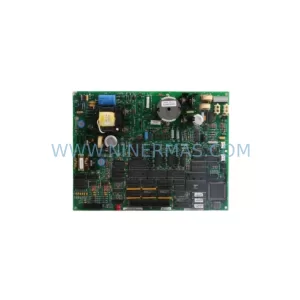
Nearby part numbers around DS200TCE.
Use this lane when the buyer is comparing adjacent model numbers, revision-near items, or closely related spare variants within the same brand family.
Catalog Continuation
More GE modules in the catalog.
Use the brand lane to compare nearby part numbers, platform-adjacent modules, and other inquiry-ready listings before sending your final RFQ.
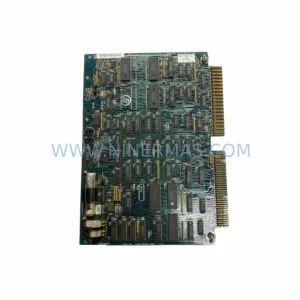
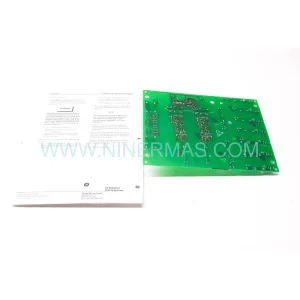
SKU: IC600LX648K IC600FP608K
GE IC600LX648K IC600FP608K Service-Ready Spare Part for Industrial Maintenance
Catalog Continuation
Alternative parts within PLC & Industrial Automation Modules.
Stay inside the same system family when you need substitutes, adjacent modules, or a broader shortlist for procurement review.
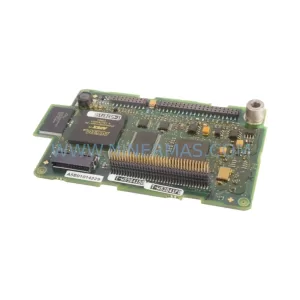
SKU: A5E01014229 G130 G150 S120
Siemens A5E01014229 Service-Ready Spare Part for Industrial Maintenance
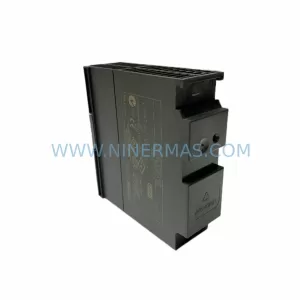
SKU: 6ES7307-1BA01-0AA0
Siemens 6ES7307-1BA01-0AA0 Retrofit Power Supply for Legacy Systems
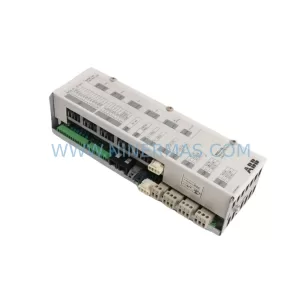
SKU: 3hna011195-001 3hac022978-001 DSQC639
ABB DSQC639 3HAC022978-001 Retrofit CPU for Legacy Systems