Description
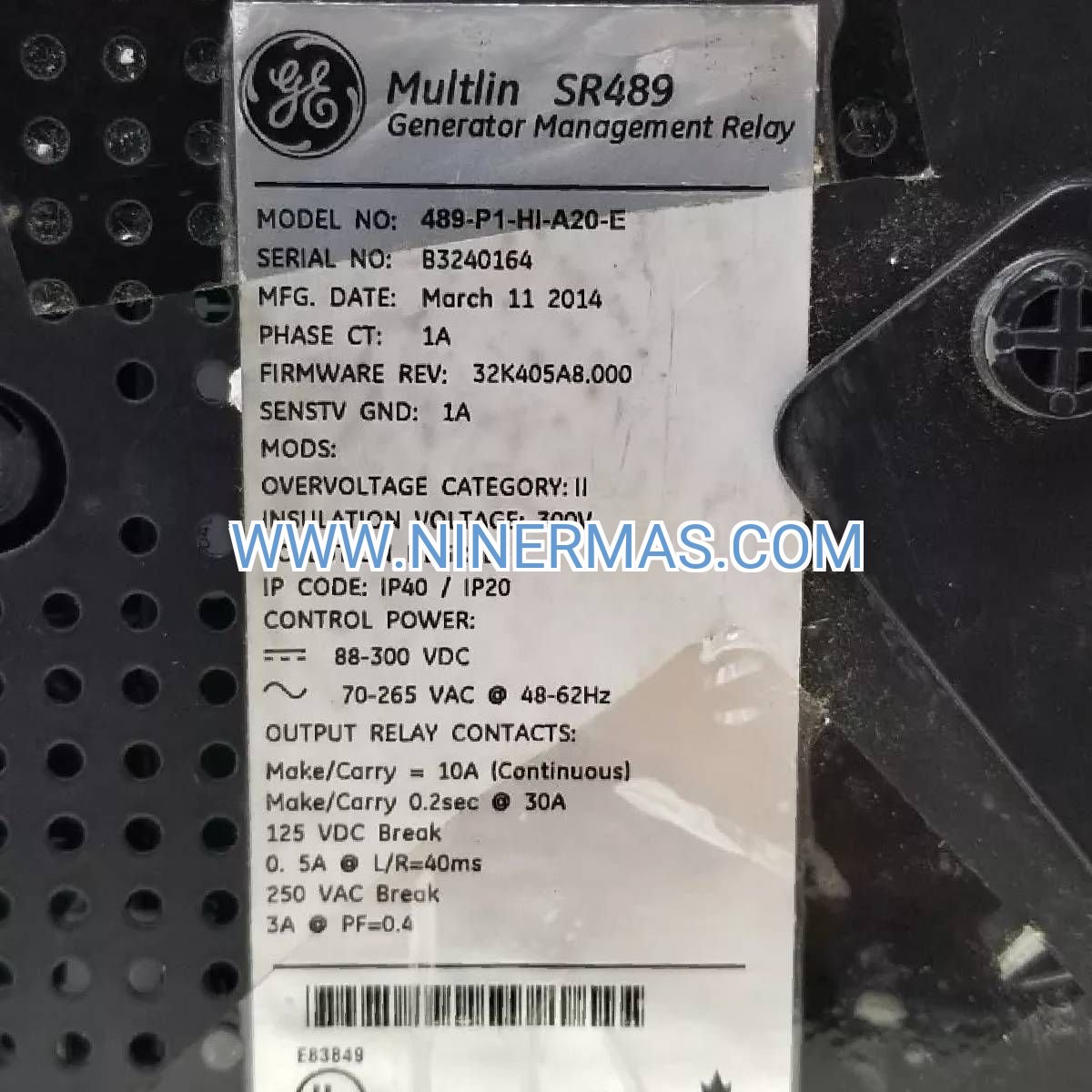
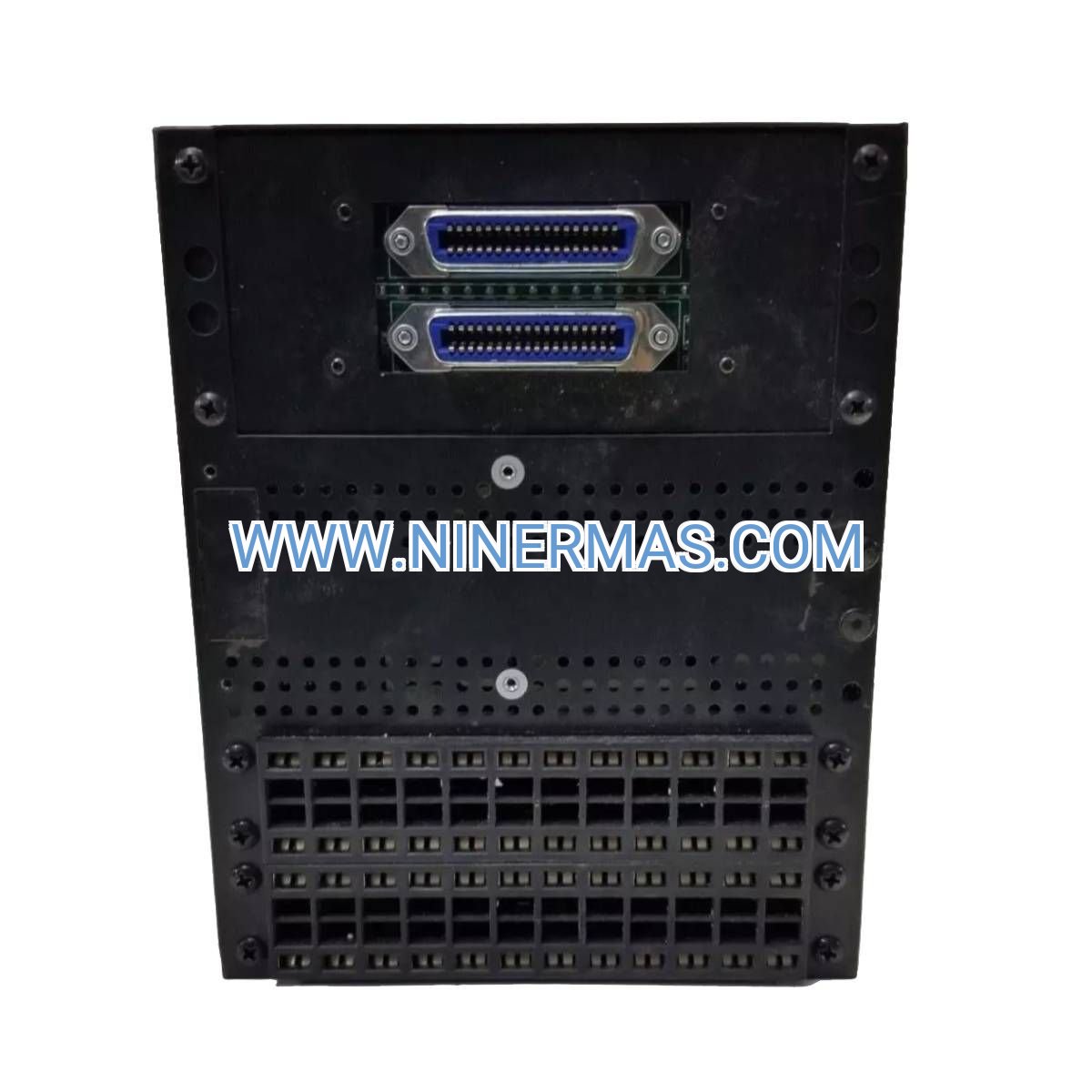
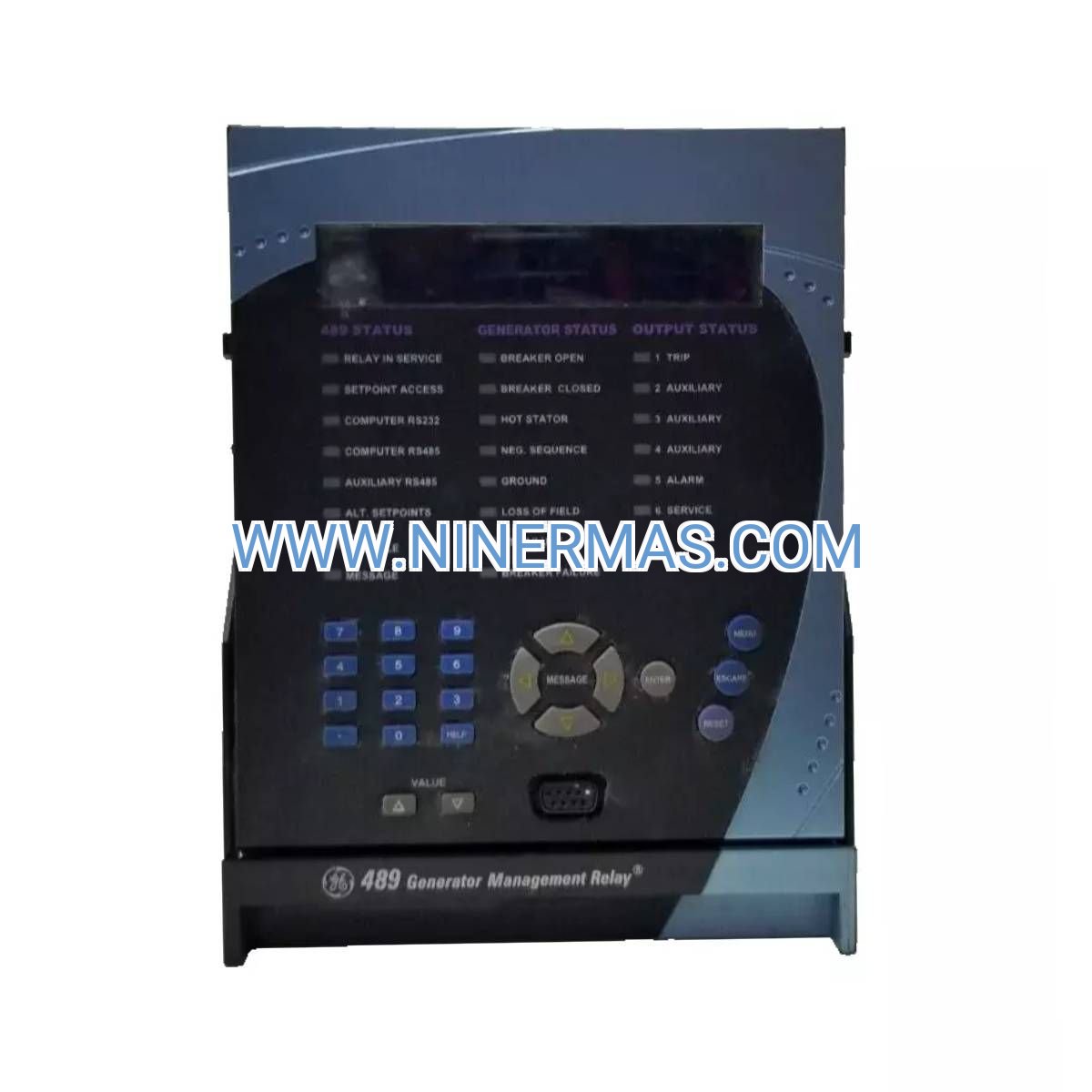
GE 489-P1-HI-A20-E Generator Protection Relay (Industrial-Grade Multilin Platform)
The GE 489-P1-HI-A20-E represents a mission-critical protection solution engineered for synchronous and induction generators across utility, industrial cogeneration, and renewable energy installations. Built on the proven Multilin architecture, this relay consolidates differential protection, multi-element overcurrent schemes, voltage/frequency monitoring, and thermal management into a unified platform—eliminating the complexity and failure points associated with discrete relay panels.
Designed for power generation environments where unplanned outages translate directly to revenue loss and grid instability, the 489-P1-HI-A20-E delivers deterministic protection response times under 20ms while maintaining continuous self-diagnostics. Plant operators gain real-time visibility into generator health through the enhanced HMI interface, while maintenance teams leverage comprehensive event recording and oscillography for root-cause analysis and predictive maintenance strategies.
Whether safeguarding a 5MW biomass generator in a remote facility or protecting a 200MW combined-cycle unit in a utility substation, the 489-P1-HI-A20-E adapts to your operational requirements through flexible I/O configuration, multi-protocol communication support (Modbus RTU, DNP 3.0, IEC 61850), and field-proven reliability across temperature extremes from -40°C to +85°C.
Protection Functions & Operational Benefits
→ Integrated Differential Protection (87G): High-impedance differential scheme detects internal stator faults with 99.7% sensitivity, isolating damaged windings before catastrophic failure propagates to the entire generator assembly—reducing repair costs by 60-80% compared to unprotected fault scenarios.
→ Multi-Stage Overcurrent Coordination: Configurable phase and ground overcurrent elements (50/51, 50N/51N) coordinate seamlessly with upstream breakers and downstream feeders, ensuring selective tripping that maintains power continuity to unaffected circuits during fault conditions.
→ Loss of Excitation Detection (40): Monitors field current and reactive power flow to identify excitation system failures before the generator pulls reactive power from the grid—preventing voltage collapse scenarios and avoiding costly utility penalties for power factor violations.
✓ Reverse Power Protection (32): Detects motoring conditions in prime mover failures, automatically tripping the generator before mechanical damage occurs to turbine blades or diesel engine components—critical for installations where turbine replacement costs exceed $500K.
✓ Comprehensive Voltage & Frequency Monitoring (27/59, 81O/U): Six independent voltage elements and dual frequency elements protect against grid disturbances, islanding events, and synchronization errors—ensuring compliance with IEEE 1547 and utility interconnection requirements.
✓ Thermal Overload Management (49): RTD-based thermal modeling tracks stator temperature rise in real-time, implementing staged alarms and automatic load shedding before insulation degradation occurs—extending generator service life by 15-25% through proactive thermal management.
Industrial Application Scenarios
Utility-Scale Power Generation: In central station power plants operating 100-500MW steam or gas turbine generators, the 489-P1-HI-A20-E serves as the primary protection relay, interfacing with excitation systems, turbine controls, and substation automation platforms. The relay's IEC 61850 GOOSE messaging enables high-speed peer-to-peer communication with transformer protection relays and breaker failure schemes, achieving total fault clearance times under 100ms to maintain grid stability during contingency events.
Industrial Cogeneration & CHP Facilities: Manufacturing plants and district energy systems rely on the 489-P1-HI-A20-E to protect 1-50MW generators operating in parallel with the utility grid or islanded mode. The relay's anti-islanding detection and synchronization check functions prevent equipment damage during grid transfer operations, while load-dependent protection curves adapt to varying steam or gas availability—critical for facilities where process steam demand fluctuates by 40-60% throughout production cycles.
Renewable Energy Integration: Biomass, biogas, and small hydro installations (500kW-10MW) leverage the 489-P1-HI-A20-E's flexible protection settings to accommodate variable-speed operation and power electronics interfaces. The relay's negative sequence protection and unbalanced load monitoring prevent inverter damage during grid asymmetry events, while comprehensive metering functions support renewable energy credit (REC) verification and utility billing reconciliation.
Emergency & Standby Power Systems: Mission-critical facilities including data centers, hospitals, and water treatment plants deploy the 489-P1-HI-A20-E to protect diesel and natural gas generators ranging from 250kW to 3MW. The relay's fast transfer schemes and load sequencing logic ensure seamless transition to backup power within 10 seconds of utility failure, while preventing generator overload during block loading scenarios that could trip protection and compromise facility operations.
Microgrid & Distributed Energy Resources: Campus microgrids and industrial parks utilize the 489-P1-HI-A20-E as the cornerstone of distributed generation protection, coordinating with battery energy storage systems (BESS) and solar PV inverters through DNP 3.0 and Modbus protocols. The relay's adaptive protection settings automatically adjust for grid-connected versus islanded operation, maintaining power quality and equipment protection across all operating modes.
Technical Parameters & Selection Criteria
| Specification Category | 489-P1-HI-A20-E Configuration | Selection Guidance |
|---|---|---|
| Generator Capacity Range | 100 kW – 500 MW | Suitable for industrial through utility-scale applications |
| Current Transformer Inputs | Phase (3), Neutral (1), Differential (6) | Verify CT ratios match generator nameplate ratings |
| Voltage Transformer Inputs | Three-phase + neutral reference | Supports wye or delta VT configurations |
| Digital Inputs | 16 configurable (P1 model) | Allocate for breaker status, turbine trips, exciter alarms |
| Output Relays | 12 Form-A + 4 Form-C contacts | Plan for trip, alarm, and auxiliary device control |
| Communication Ports | RS-485 (2), Ethernet (1) | IEC 61850 requires Ethernet; legacy systems use Modbus RTU |
| Power Supply Range | 90-300 VDC / 70-265 VAC | Dual supply inputs recommended for critical applications |
| Operating Environment | -40°C to +85°C, 5-95% RH | Suitable for outdoor enclosures and harsh industrial environments |
| Compliance Standards | IEC 60255, IEEE C37.90, ANSI C37.102 | Meets North American and international utility requirements |
| Dimensions & Mounting | 1/2 rack width (9.45" W × 7.87" H) | Standard 19" panel cutout; vertical or horizontal orientation |
Model Selection Logic: The P1 designation indicates standard I/O capacity suitable for 80% of generator protection applications. For installations requiring expanded digital inputs (>16) or additional output relays (>16 total), consider the P5 hardware variant. The HI suffix denotes enhanced HMI with graphical LCD and front-panel programming capability—essential for facilities without dedicated protection engineering staff. The A20 code specifies the communication module configuration; verify compatibility with your SCADA protocol requirements before ordering.
Advanced Integration Capabilities
The 489-P1-HI-A20-E functions as a data concentrator within modern substation automation architectures, publishing real-time measurements and protection status via IEC 61850 MMS and GOOSE protocols. Integration with SCADA platforms enables centralized monitoring of generator performance metrics including MW output, MVAR flow, power factor, and thermal capacity utilization—supporting predictive maintenance programs that reduce unplanned outages by 35-50%.
For multi-unit power plants, the relay's peer-to-peer communication capability coordinates protection schemes across parallel generators, implementing load-sharing algorithms and sequential tripping logic during system disturbances. Ethernet-based time synchronization (SNTP/IEEE 1588) ensures sub-millisecond accuracy for sequence-of-events recording, enabling forensic analysis of complex fault scenarios involving multiple protection devices.
The relay's embedded web server provides secure remote access for protection engineers, eliminating the need for site visits during commissioning and troubleshooting activities. Cybersecurity features including role-based access control, encrypted communications, and audit logging comply with NERC CIP requirements for critical infrastructure protection.
Delivery Timeline & Service Commitments
Standard Lead Time: 3-5 business days for in-stock units; expedited same-day shipping available for emergency replacements
Custom Configuration: 7-10 business days for factory programming of protection settings, logic schemes, and communication parameters per customer specifications
Warranty Coverage: Comprehensive 12-month warranty covering materials, workmanship, and firmware defects; extended warranty programs available for critical applications
Technical Support: Unlimited access to protection engineering specialists for commissioning assistance, settings calculations, and troubleshooting support via phone, email, and remote desktop sessions
Documentation Package: Complete instruction manual, settings calculation worksheets, AutoCAD panel drawings, and IEC 61850 ICD files provided with every relay shipment
Firmware Updates: Lifetime access to firmware revisions and feature enhancements through GE's online support portal; field-upgradeable via Ethernet connection without hardware modifications
Frequently Asked Questions
How does the 489-P1-HI-A20-E compare to legacy electromechanical relays for generator protection applications?
The 489-P1-HI-A20-E consolidates 15-20 discrete electromechanical relays into a single microprocessor-based platform, reducing panel space requirements by 70% while improving protection sensitivity and speed. Digital relays eliminate mechanical wear and contact degradation issues that plague electromechanical devices, achieving 99.9% availability over 15-year service life versus 95% for mechanical relay panels requiring annual maintenance.
What generator voltage classes are compatible with the 489-P1-HI-A20-E relay platform?
The relay accommodates generator voltages from 480V through 25kV through appropriate voltage transformer (VT) selection. Low-voltage generators (480-690V) typically use direct VT connections, while medium-voltage units (4.16kV-13.8kV) require VTs with secondary voltages of 120V or 69V. The relay's universal voltage inputs automatically scale measurements based on programmed VT ratios, simplifying commissioning across diverse generator configurations.
Can the relay protect generators operating in variable-speed or power electronics-coupled configurations?
Yes—the 489-P1-HI-A20-E includes specialized protection algorithms for generators interfaced through frequency converters or doubly-fed induction generator (DFIG) topologies common in wind turbines and adjustable-speed hydro units. Harmonic filtering and sequence component extraction ensure accurate fault detection despite distorted current and voltage waveforms, while frequency tracking algorithms maintain protection coordination across 40-70 Hz operating ranges.
What cybersecurity measures protect the relay from unauthorized access in networked environments?
The 489-P1-HI-A20-E implements multi-layer security including password-protected user accounts with configurable privilege levels, encrypted Ethernet communications (TLS 1.2), MAC address filtering, and comprehensive event logging of all configuration changes and access attempts. For NERC CIP compliance, the relay supports network segmentation through VLAN tagging and can operate in unidirectional communication mode where SCADA systems receive data without write access to protection settings.
How do I determine the correct CT ratios and VT ratios for my specific generator installation?
CT primary ratings should match or slightly exceed the generator's full-load current rating; for a 2000 kVA generator at 4160V, full-load current is approximately 278A, requiring 300:5 or 400:5 CTs. VT ratios depend on generator voltage—a 4160V generator typically uses 4200:120V VTs. The relay's settings software includes a configuration wizard that calculates optimal CT/VT ratios based on generator nameplate data, ensuring protection elements operate within their calibrated accuracy ranges.
What is the typical commissioning timeline for integrating the 489-P1-HI-A20-E into an existing generator control system?
Physical installation and wiring verification require 4-6 hours for experienced technicians. Protection settings calculation and relay programming add 2-4 hours depending on scheme complexity. Functional testing including primary injection of CTs and secondary injection testing of protection elements typically requires 6-8 hours. Total commissioning duration averages 2-3 days for standard installations, with an additional 1-2 days for IEC 61850 integration and SCADA point mapping in substation automation projects.
Optimize Your Generator Protection Strategy
The GE 489-P1-HI-A20-E delivers the protection reliability and operational intelligence that modern power generation demands. Whether you're upgrading aging electromechanical relay panels, commissioning new generation capacity, or enhancing existing protection schemes with advanced communication capabilities, this relay provides a future-proof platform that adapts to evolving grid codes and operational requirements.
Our protection engineering team stands ready to assist with settings calculations, panel design review, and commissioning support—ensuring your generator protection system achieves optimal performance from day one. Contact us today to discuss your specific application requirements and receive a customized protection scheme proposal tailored to your facility's operational profile.
Ready to enhance your generator protection reliability? Request a technical consultation or place your order now.
© 2026 NINERMAS COMPANY LIMITED. All rights reserved.
Original Source: https://ninermas.com
Contact: sale@ninermas.com | +0086 187 5021 5667

Contact Info
-
Address:22 / F, South Wo Hang building, 148 Wing Lok Street, Sheung Wan, Western District, Hong Kong
-
Phone:+8618750215667
-
Email: