Description
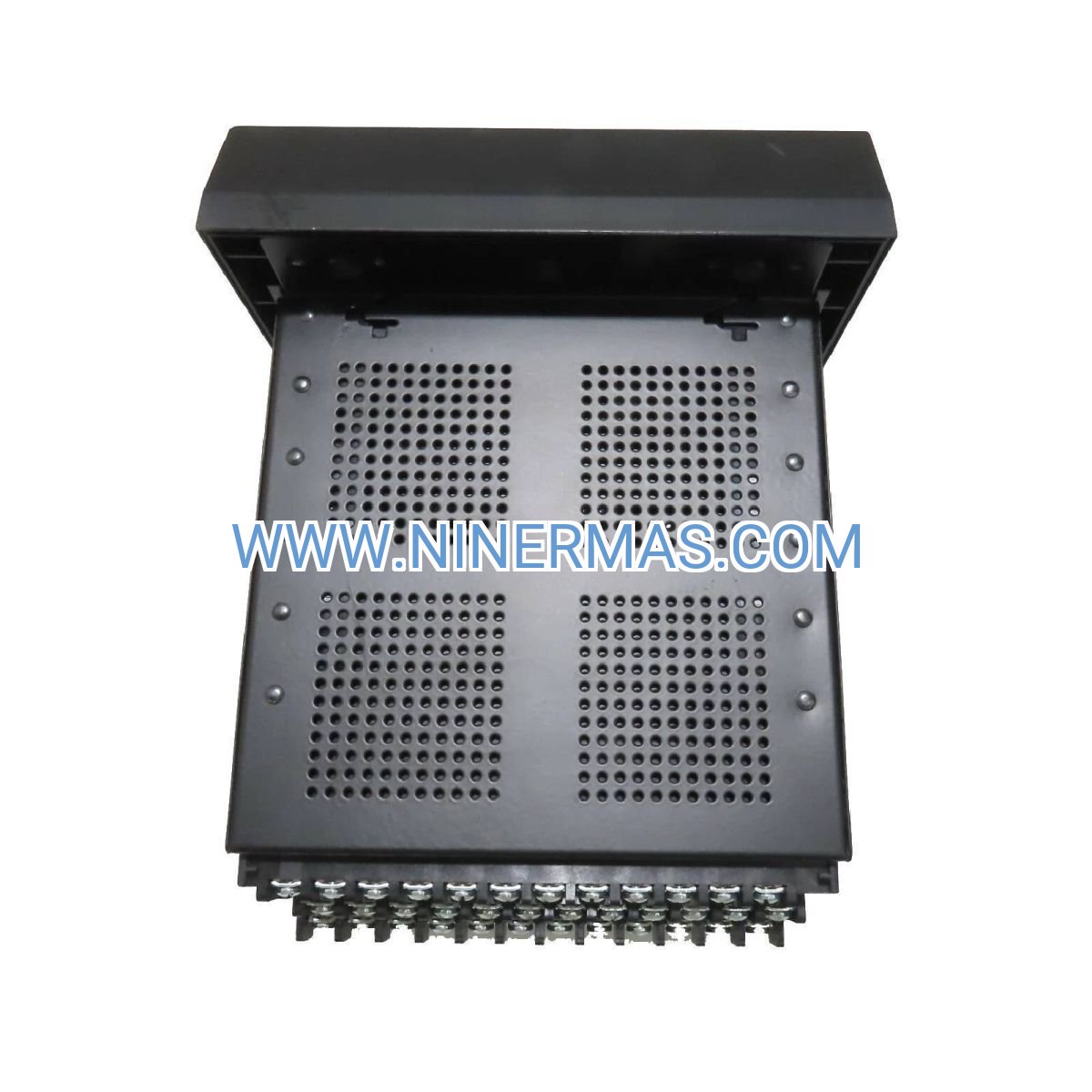
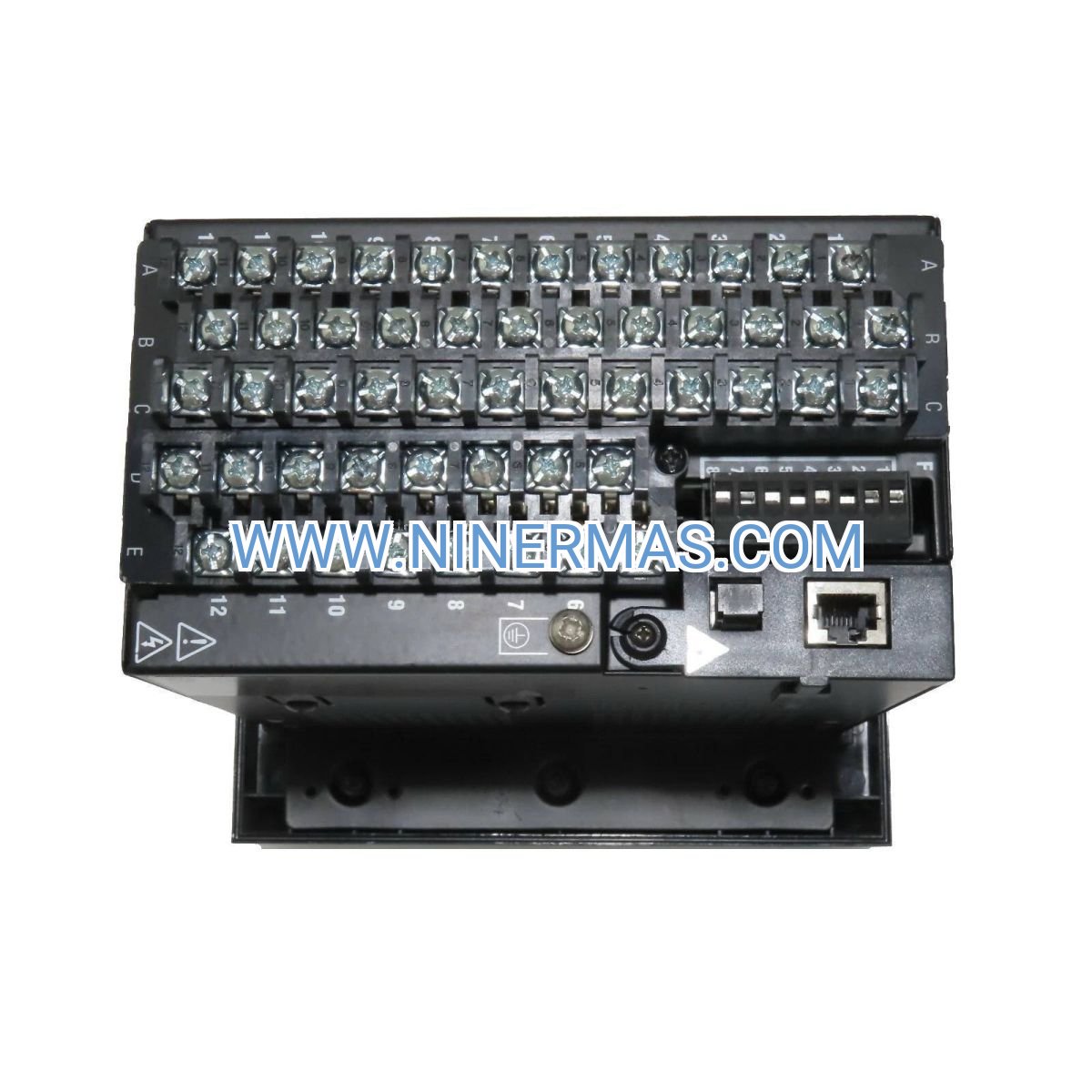
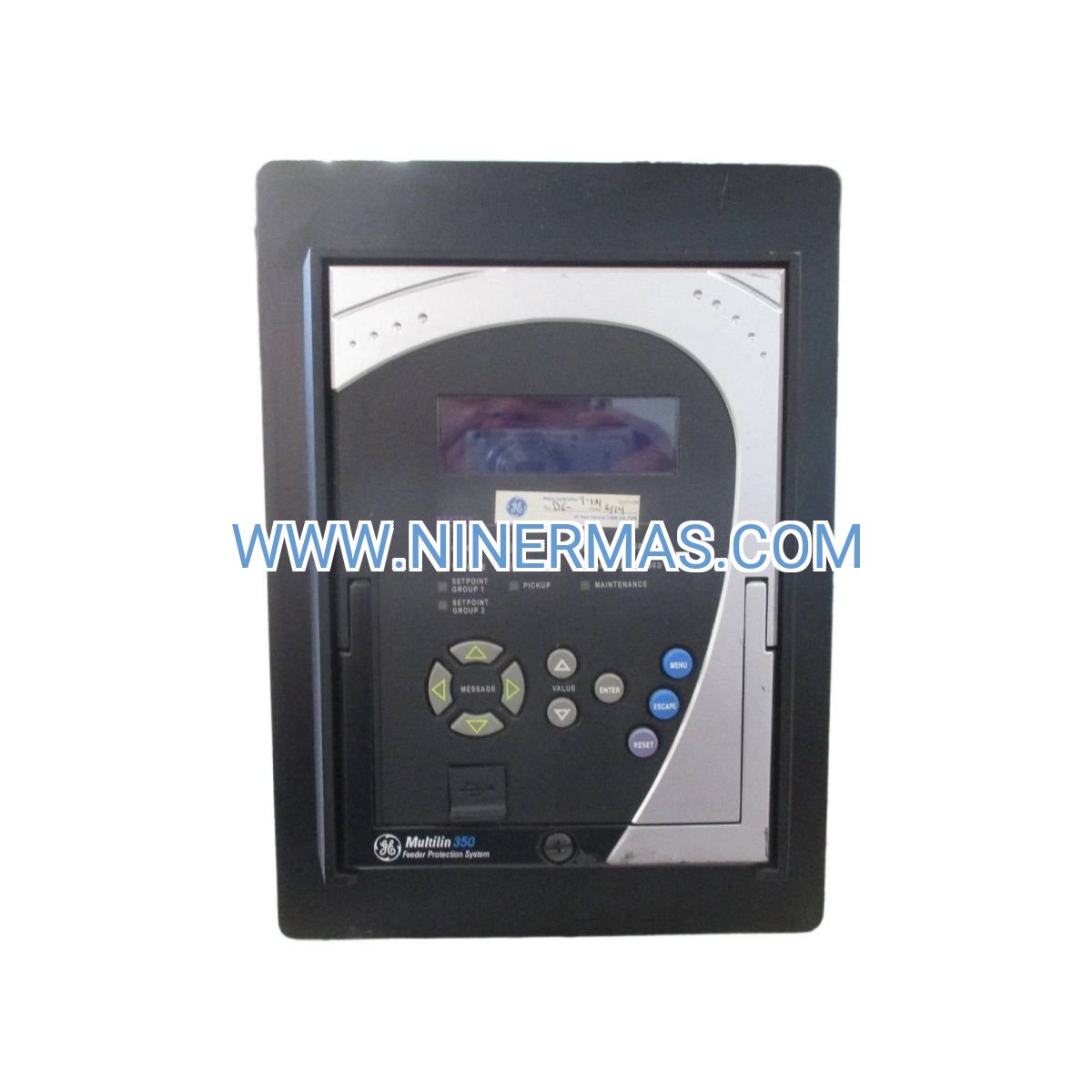
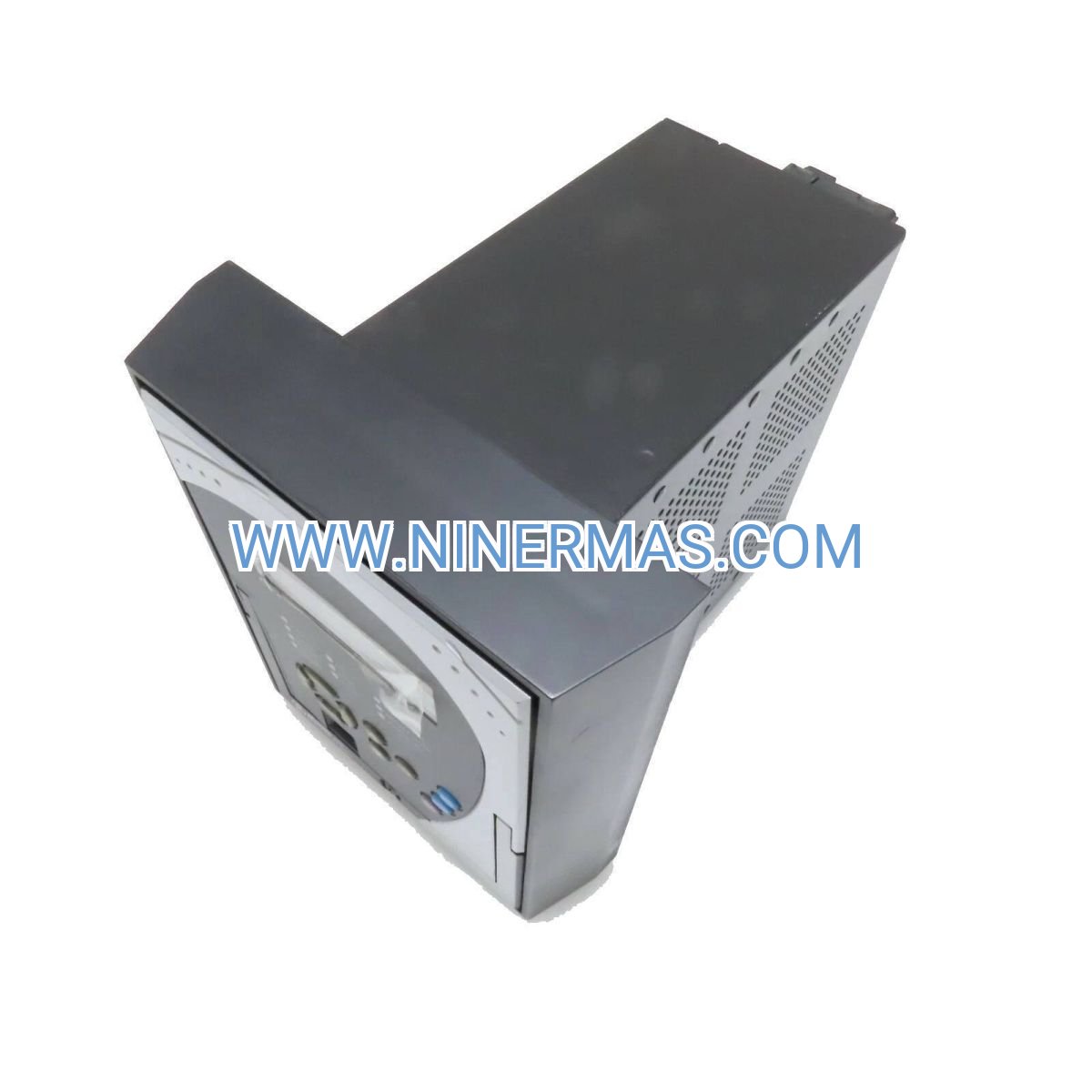
GE 350 Feeder Protection Relay (Industrial-Grade Distribution Control System)
The GE 350 Feeder Protection Relay is an industrial-grade microprocessor-based protection and control device designed for medium-voltage distribution feeders. Through advanced digital signal processing, multi-function protection algorithms, and real-time monitoring capabilities, it delivers comprehensive overcurrent protection, directional fault discrimination, voltage supervision, and intelligent reclosing control for critical power distribution infrastructure.
Engineered for utility substations, industrial power networks, renewable energy collector systems, and mission-critical commercial facilities, the GE 350 relay addresses common challenges including unpredictable fault currents, coordination complexity with upstream/downstream devices, inadequate ground fault sensitivity, communication protocol incompatibility, and insufficient event data for post-fault analysis.
Built on proven GE Multilin technology with standardized protection templates and field-customizable logic, this relay offers rapid fault detection (sub-cycle response), adaptive protection coordination, multi-protocol SCADA integration (IEC 61850/Modbus/DNP3), comprehensive power quality metering, and intuitive commissioning workflows. Ideal for protection engineers, system integrators, substation designers, and facility maintenance teams seeking reliable, standards-compliant feeder protection solutions. Contact our application engineers for protection coordination studies, relay setting calculations, and project-specific configurations.
Core Functions & Advantages
Comprehensive Multi-Function Protection
Integrates phase overcurrent (ANSI 50/51), ground fault (50N/51N), directional overcurrent (67/67N), under/over voltage (27/59), frequency deviation (81U/O), and breaker failure (50BF) protection in a single platform. Eliminates the need for multiple discrete relays, reducing panel space requirements by up to 40% and simplifying protection scheme design for radial, looped, and meshed distribution topologies.
Intelligent Adaptive Coordination
Features time-overcurrent curve libraries (IEC, IEEE, user-defined) with automatic coordination margin calculation. Dynamic setpoint adjustment based on system configuration changes ensures selective fault isolation while maintaining backup protection integrity. Reduces nuisance tripping incidents by 30-50% compared to fixed-setting electromechanical relays in dynamic load environments.
High-Speed Directional Discrimination
Utilizes negative-sequence and zero-sequence directional elements with configurable operating angles to distinguish forward/reverse faults within 15-25 milliseconds. Critical for bi-directional power flow scenarios in distributed generation networks, preventing false trips during reverse power conditions and enabling proper islanding detection for grid-tied solar/wind installations.
Advanced Communication & Integration
Dual Ethernet ports support IEC 61850 Edition 2 with GOOSE peer-to-peer messaging (2-4ms latency) and MMS client/server functions. Modbus TCP/RTU and DNP3 Level 2 protocols ensure compatibility with legacy SCADA systems. Embedded web server enables remote access for real-time monitoring, setpoint modification, and event retrieval without proprietary software, reducing commissioning time by 25-35%.
Precision Metering & Power Quality Analysis
Class 0.2S revenue-grade metering tracks voltage, current, active/reactive power, power factor, and energy consumption with 0.1% accuracy. Real-time harmonic analysis (up to 63rd order) identifies power quality disturbances. Trending functions capture min/max/average values over configurable intervals, supporting predictive maintenance programs and energy efficiency audits.
Robust Event Recording & Diagnostics
High-resolution oscillography captures 64 samples per cycle across all analog channels with 200ms pre-fault and 800ms post-fault windows. Stores 512 time-stamped sequence-of-events records with 1-millisecond resolution and 40 fault reports with complete protection element status. Facilitates root cause analysis, reduces troubleshooting time by 50-70%, and provides forensic evidence for insurance claims and regulatory compliance.
Typical Application Scenarios
The GE 350 Feeder Protection Relay is engineered for demanding applications requiring high reliability, precise selectivity, and comprehensive monitoring across diverse power distribution environments.
Utility Distribution Substations
Protects 11kV-33kV radial and ring-main feeders serving residential, commercial, and light industrial loads. Coordinates with upstream transformer differential relays and downstream recloser controls to achieve graded time-current characteristics. Directional ground fault elements detect high-impedance faults in compensated neutral systems, reducing outage duration by 40-60% through accurate fault location indication.
Industrial Manufacturing Facilities
Safeguards incoming utility feeders, bus-tie breakers, and critical process equipment feeders in petrochemical plants, steel mills, automotive assembly lines, and semiconductor fabs. Integrates with motor protection relays and variable frequency drives to create coordinated plant-wide protection architectures. Supports arc flash reduction schemes through high-speed zone-selective interlocking, lowering incident energy levels from 40+ cal/cm² to <8 cal/cm² in maintenance mode.
Renewable Energy Power Plants
Manages collector feeder protection in utility-scale solar farms (50MW-500MW) and wind parks, handling bi-directional power flow and rapid irradiance/wind speed variations. Anti-islanding detection complies with IEEE 1547 and grid code requirements across North America, Europe, and Asia-Pacific markets. Voltage ride-through functions maintain grid connection during transient disturbances, maximizing energy production and avoiding costly reconnection delays.
Mission-Critical Commercial Infrastructure
Ensures uninterrupted power delivery to data centers (Tier III/IV), hospitals, airports, and financial trading floors where downtime costs exceed $100,000 per hour. Automatic transfer scheme logic coordinates with standby generators and UPS systems. Predictive load shedding prevents cascading failures during utility supply degradation, maintaining service continuity for life-safety and business-critical systems.
Mining & Heavy Industry Operations
Withstands harsh environmental conditions in underground mines, open-pit operations, cement plants, and pulp/paper mills with extended temperature range (-40°C to +85°C) and enhanced EMI immunity. Ground fault protection sensitivity down to 5% of rated current detects insulation degradation before catastrophic failures, reducing unplanned downtime by 30-45% and extending equipment service life.
Technical Parameters & Selection Guide
To ensure optimal protection performance and system compatibility, the GE 350 relay offers flexible configuration options tailored to specific application requirements.
| Parameter Category | Specification Range | Selection Notes |
|---|---|---|
| Rated Control Voltage | 24-48V DC / 100-240V AC/DC | Specify based on station battery or auxiliary supply |
| CT Input Rating | 1A or 5A nominal (0.1-40× In) | Match primary CT secondary rating; 1A preferred for long cable runs |
| VT Input Configuration | Phase-phase (Vn: 69-240V) / Phase-neutral (Vn: 40-140V) | Align with system voltage level and VT connection type |
| Digital Inputs | 8-16 configurable (wet/dry contact, 24-250V) | Allocate for breaker status, remote trip, external alarms |
| Output Relays | 6-10 Form-C (10A @ 250V AC resistive) | Minimum 2 for trip, 1 for close, remainder for alarms/signaling |
| Communication Interfaces | Dual Ethernet (RJ45) + RS485 (Modbus/DNP3) | Ethernet for SCADA/IEC 61850; RS485 for local HMI/legacy systems |
| Protection Functions | 50/51, 50N/51N, 67/67N, 27/59, 81U/O, 79, 50BF, 25 | Enable only required functions to simplify commissioning |
| Operating Temperature | -40°C to +70°C (standard) / -40°C to +85°C (extended) | Extended range for outdoor kiosks or high-ambient environments |
| Enclosure Rating | IP20 (panel mount) / IP54 (wall mount with gasket kit) | IP54 required for dusty/humid locations without climate control |
| Compliance Standards | IEC 60255-27, IEEE C37.90, UL 508, CE, RCM | Verify regional certification requirements for utility interconnection |
Selection Recommendations: When specifying the GE 350 relay, consider the following critical parameters: maximum fault current magnitude (for CT ratio selection and relay withstand capability), system grounding method (solidly grounded, resistance grounded, or ungrounded—affects ground fault sensitivity settings), required protection speed (instantaneous vs. time-delayed coordination), communication protocol compatibility with existing SCADA infrastructure, and available panel space (depth clearance minimum 280mm for rear terminal access). For complex applications involving multiple voltage levels, parallel feeders, or generator interconnection, consult with protection coordination specialists to develop comprehensive relay setting files and verify selectivity through time-current curve analysis and short-circuit studies.
Advanced Configuration & Customization
Programmable Logic Controller (PLC) Functions
Embedded logic engine with 128 virtual inputs/outputs, 64 timers, and 32 counters enables custom protection schemes, interlocking sequences, and automatic control routines without external controllers. Applications include bus transfer automation, load shedding prioritization, generator synchronization permissives, and seasonal setpoint switching.
Adaptive Protection Schemes
Dynamic setpoint groups (up to 6 independent setting files) automatically activate based on system topology changes detected through breaker status inputs or SCADA commands. Optimizes protection sensitivity during maintenance outages, switching operations, or emergency configurations while maintaining coordination margins.
Cybersecurity Features
Role-based access control (RBAC) with password-protected user levels (Viewer/Operator/Engineer/Administrator), encrypted communication channels (TLS 1.2), audit logging of all configuration changes, and firmware authentication prevent unauthorized access and comply with NERC CIP standards for critical infrastructure protection.
Delivery, Service & Quality Assurance
Lead Time & Logistics: Standard catalog models ship within 5-7 business days from regional distribution centers (North America, Europe, Asia-Pacific). Custom-configured units with specialized I/O arrangements, extended temperature ratings, or factory-programmed settings require 3-4 weeks for engineering review, assembly, and factory acceptance testing. All shipments include anti-static packaging, shock-absorbing foam inserts, and desiccant packs to prevent moisture damage during transit.
Warranty Coverage: Comprehensive 24-month manufacturer warranty covers defects in materials, workmanship, and component failures under normal operating conditions. Warranty includes firmware bug fixes, technical support hotline access (24/7 for critical issues), and advance replacement service (RMA processed within 48 hours). Extended warranty plans available for up to 5 years with optional on-site calibration and preventive maintenance visits.
Technical Documentation Package: Each relay ships with complete documentation suite including quick start guide, detailed instruction manual (300+ pages), protection function application notes, communication protocol implementation guides, AutoCAD panel cutout drawings, terminal block wiring diagrams, and sample relay setting calculation spreadsheets. Digital copies accessible via secure customer portal for revision updates and multilingual translations.
Commissioning Support: Factory-trained field service engineers available for on-site commissioning assistance, protection coordination verification, secondary injection testing, SCADA integration troubleshooting, and operator training programs. Remote commissioning support via secure VPN connection reduces travel costs and accelerates project schedules for straightforward installations.
Compliance Certifications: All units undergo rigorous factory testing per IEC 60255-27 (EMC immunity), IEEE C37.90 (surge withstand), and UL 508 (industrial control equipment safety). Type test reports, calibration certificates (traceable to national standards), and material declarations (RoHS/REACH compliance) provided upon request for regulatory submissions and quality audits.
Frequently Asked Questions (FAQ)
Q: How does the GE 350 feeder protection relay integrate with existing substation automation systems?
A: The relay supports multiple communication protocols including IEC 61850 (MMS and GOOSE), Modbus TCP/RTU, and DNP3 Level 2, ensuring compatibility with virtually all SCADA platforms. IEC 61850 configuration files (ICD/CID) can be imported into system configurators like ABB PCM600, Siemens DIGSI, or GE EnerVista for seamless integration. Dual Ethernet ports enable network redundancy via PRP (Parallel Redundancy Protocol) or HSR (High-availability Seamless Redundancy) for mission-critical applications.
Q: What is the maximum number of feeders a single relay can protect in a multi-feeder application?
A: The GE 350 is designed as a single-feeder protection device with dedicated CT/VT inputs for one circuit. For multi-feeder substations, deploy one relay per feeder to maintain protection selectivity and isolation. However, the relay's programmable logic can coordinate with adjacent feeders through GOOSE messaging for bus protection backup or load transfer automation schemes.
Q: Can the relay achieve energy savings, and if so, how much?
A: While the relay itself is a protection device (not a direct energy-saving component), its precision metering and load profiling capabilities enable demand management strategies that reduce peak demand charges by 15-25%. Real-time power factor monitoring supports automatic capacitor bank switching to maintain PF >0.95, avoiding utility penalties. Harmonic analysis identifies inefficient loads for targeted replacement, yielding 10-20% energy reduction in industrial facilities.
Q: What are the environmental operating requirements for outdoor installations?
A: Standard models operate reliably in -40°C to +70°C ambient temperatures with 5-95% non-condensing humidity. For outdoor pad-mount switchgear or pole-mounted recloser controls, specify IP54-rated enclosures with conformal-coated PCBs and extended temperature range (-40°C to +85°C). Heater/thermostat kits maintain internal temperature above freezing in extreme cold climates. UV-resistant polycarbonate display covers prevent sunlight degradation in direct exposure applications.
Q: How long does commissioning typically take for a standard feeder protection application?
A: Experienced protection technicians complete basic commissioning (CT/VT ratio verification, protection setpoint entry, output contact testing, and communication verification) in 3-5 hours per relay. Complex schemes involving custom logic, multiple setting groups, or IEC 61850 GOOSE configuration may require 1-2 additional days. Pre-configured relay setting files and standardized test procedures reduce commissioning time by 40-50% compared to first-time installations.
Q: Is the GE 350 relay suitable for generator protection applications?
A: The relay provides basic generator protection functions (reverse power 32, over/under voltage 27/59, over/under frequency 81) suitable for small emergency generators (<500kW) or combined heat and power (CHP) units. For utility-scale generators or critical standby power systems, dedicated generator protection relays like the GE G60 or Schweitzer SEL-700G offer specialized functions including loss of excitation (40), volts-per-hertz (24), stator ground fault (64), and 100% stator fault protection that the 350 series does not provide.
Q: What cybersecurity measures protect the relay from unauthorized access?
A: Multi-layer security includes password-protected access levels (minimum 8-character alphanumeric with special characters), encrypted Ethernet communication (TLS 1.2/1.3), MAC address filtering, IP whitelisting, automatic session timeout (configurable 5-60 minutes), and comprehensive audit logging of all configuration changes with timestamp and user identification. Firmware updates require digital signature verification to prevent malicious code injection. For NERC CIP compliance, disable unused communication ports and implement network segmentation with industrial firewalls.
Request Technical Consultation & Quotation
To receive customized relay selection recommendations, protection coordination studies, and competitive project pricing, please provide the following information to our application engineering team:
- Project Overview: Facility type, location, and criticality level (utility/industrial/commercial)
- System Parameters: Nominal voltage (kV), maximum fault current (kA), system grounding method
- Feeder Configuration: Cable/overhead, length (km), load type (motor/resistive/mixed), normal/peak load (A)
- Protection Requirements: Required functions (overcurrent/directional/voltage), coordination with upstream/downstream devices
- Communication Needs: SCADA protocol (IEC 61850/Modbus/DNP3), network architecture (star/ring/redundant)
- Environmental Conditions: Indoor/outdoor installation, ambient temperature range, altitude (if >1000m)
- Quantity & Timeline: Number of relays required, desired delivery date, budget constraints
Our protection specialists will respond within 24 hours with preliminary recommendations, followed by detailed relay setting calculations, time-current coordination curves, and Bill of Materials (BOM) within 3-5 business days for standard applications.
© 2026 NINERMAS COMPANY LIMITED. All rights reserved.
Original Source: https://ninermas.com
Contact: sale@ninermas.com | +0086 187 5021 5667

Contact Info
-
Address:22 / F, South Wo Hang building, 148 Wing Lok Street, Sheung Wan, Western District, Hong Kong
-
Phone:+8618750215667
-
Email: