Description
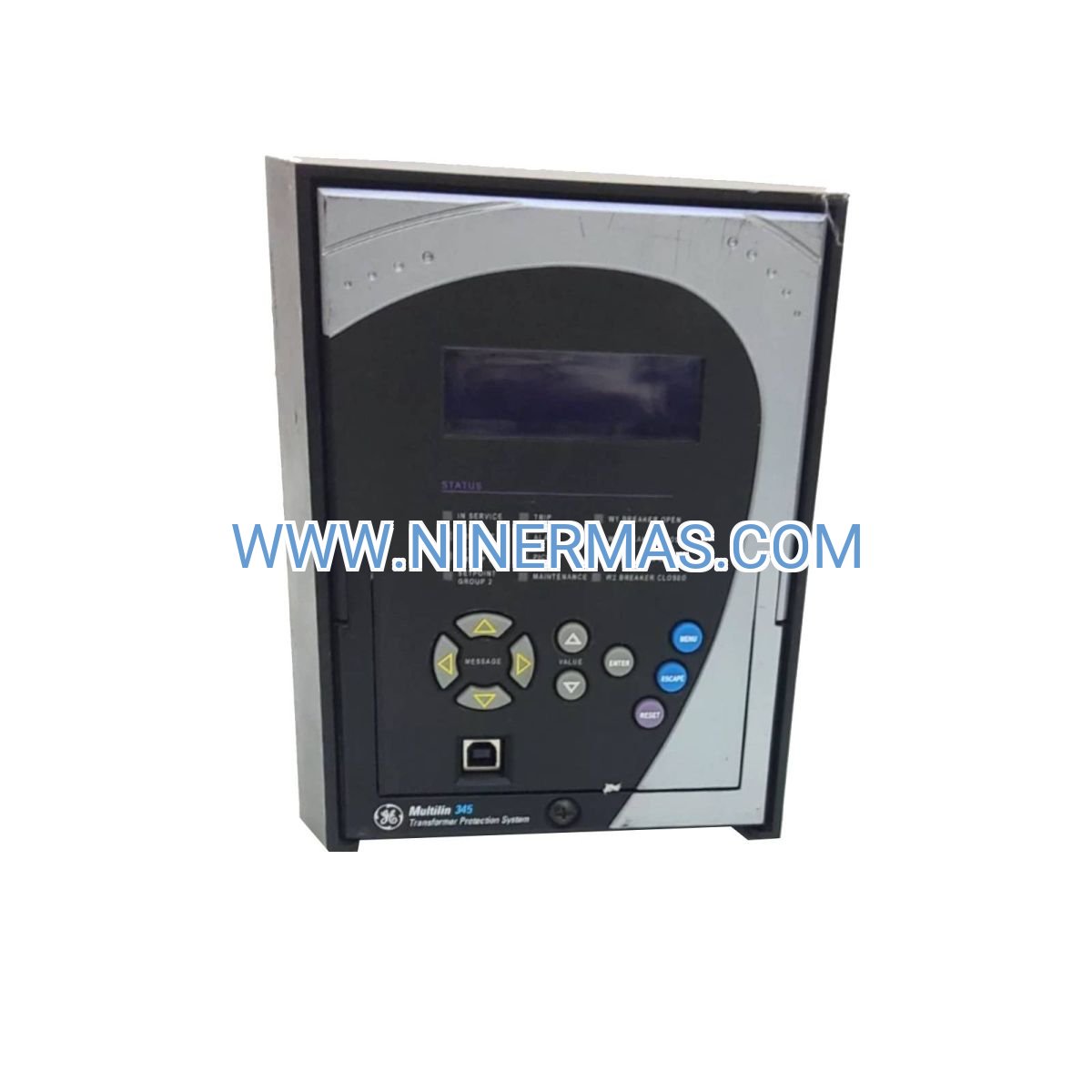
GE 345 Transformer Protection Relay (Industrial-Grade Digital Protection System)
The GE 345 Transformer Protection Relay is an industrial-grade digital protection device designed for comprehensive transformer asset management in utility substations, power generation facilities, and critical industrial power systems. Through advanced differential protection algorithms, multi-zone fault detection, and real-time monitoring capabilities, this relay delivers fast, accurate transformer protection while minimizing nuisance trips and equipment damage.
Engineered for high-voltage transformer applications up to 765kV, the GE 345 relay addresses critical challenges in power system reliability: slow fault response times, inadequate winding protection, communication protocol incompatibility, and limited diagnostic visibility. It serves utility engineers, substation designers, industrial facility managers, and system integrators who demand proven protection technology with flexible configuration options.
Built on GE Multilin's proven protection platform, this relay combines percentage differential protection, overcurrent backup, thermal overload monitoring, and comprehensive fault recording in a single compact unit. With support for IEC 61850, DNP3, and Modbus protocols, plus an intuitive graphical interface, the GE 345 simplifies commissioning, reduces maintenance overhead, and integrates seamlessly into modern SCADA environments. Contact our protection engineering team for application-specific configuration guidance and technical specifications.
Core Functions & Advantages
Multi-Zone Differential Protection
Provides high-speed percentage differential protection for two-winding and three-winding transformers with independent zone settings. Adaptive restraint characteristics distinguish between inrush currents and internal faults, preventing false trips during energization while maintaining sensitivity to turn-to-turn faults and winding failures.
Comprehensive Backup Protection Suite
Integrates time-overcurrent, instantaneous overcurrent, ground fault, and negative sequence protection as backup layers. This multi-tier approach ensures fault clearance even during CT saturation, communication loss, or primary protection failure, significantly improving system reliability and reducing outage duration.
Advanced Thermal Management
Real-time thermal modeling tracks transformer winding temperature based on load current, ambient conditions, and cooling system status. Programmable alarm stages and automatic load shedding prevent insulation degradation and extend transformer service life by 15-25% compared to conventional protection schemes.
Multi-Protocol Communication Architecture
Native support for IEC 61850 (MMS, GOOSE), DNP3.0 (serial and TCP/IP), and Modbus RTU/TCP enables seamless integration with legacy SCADA systems and modern substation automation platforms. Dual Ethernet ports support redundant network topologies for mission-critical applications requiring 99.99% communication availability.
Enhanced Diagnostic & Event Recording
High-resolution oscillography captures 64 samples per cycle across all current and voltage inputs, with pre-fault and post-fault recording windows. Sequential events recorder (SER) with 1-millisecond resolution and comprehensive fault reports accelerate root cause analysis, reducing troubleshooting time by 40-60% versus conventional relays.
Intuitive Configuration & Maintenance Interface
Color graphical LCD with context-sensitive menus and real-time phasor diagrams simplifies commissioning and routine checks. Front-panel USB port and Ethernet connectivity support remote configuration, firmware updates, and diagnostic data retrieval without service interruption, reducing site visit requirements and maintenance costs.
Typical Application Scenarios
The GE 345 relay is engineered for demanding power system protection applications where transformer reliability directly impacts operational continuity and safety:
Utility Transmission & Distribution Substations
Protects power transformers in 69kV to 765kV substations serving regional transmission networks and distribution grids. Handles complex transformer configurations including autotransformers, phase-shifting transformers, and multi-winding units. Coordinates with upstream transmission line protection and downstream feeder relays to maintain selective fault isolation across the entire substation.
Industrial Power Generation Facilities
Safeguards generator step-up transformers, auxiliary transformers, and unit transformers in combined-cycle plants, cogeneration facilities, and industrial captive power stations. Integrates with generator protection relays and excitation systems to provide coordinated unit protection, preventing cascading failures during grid disturbances or internal faults.
Renewable Energy Integration Points
Provides reliable protection for collector transformers and interconnection transformers in wind farms, solar parks, and battery energy storage systems. Adapts to bidirectional power flow, variable generation patterns, and rapid load changes characteristic of renewable installations, ensuring grid code compliance and asset protection during fault ride-through events.
Critical Infrastructure & Data Centers
Protects mission-critical transformers serving hospitals, data centers, financial institutions, and emergency services where power continuity is paramount. Fast fault clearing (8-16ms typical) and selective tripping minimize disruption to redundant power paths, supporting N+1 and 2N redundancy architectures required for Tier III/IV facilities.
Heavy Industrial Process Plants
Secures transformers in continuous process industries including petrochemical refineries, steel mills, pulp and paper plants, and mining operations. Withstands harsh electrical environments with high harmonic content, frequent motor starting transients, and arc furnace loads while maintaining protection accuracy and minimizing production interruptions.
Technical Parameters & Selection Guide
To facilitate engineering design and equipment selection, we provide standardized configuration options with flexibility for project-specific customization:
| Parameter | Specification |
|---|---|
| Model Designation | 345-E-P1-G1-H-E-M-N-N-3E-D-N |
| Voltage Class | Up to 765kV transformer applications |
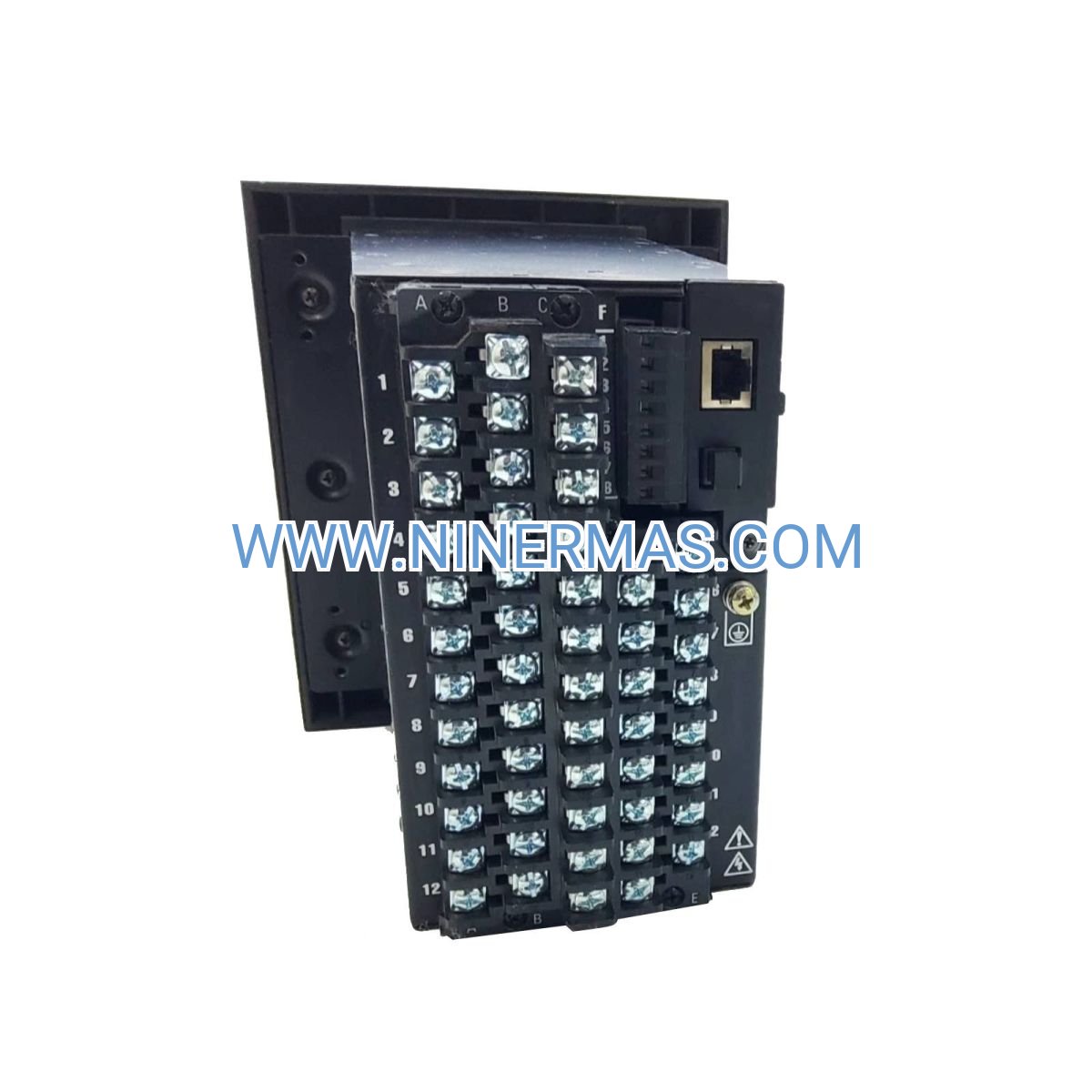
| Current Inputs | 12 CT inputs (configurable for 2 or 3-winding transformers) |
| Voltage Inputs | Optional VT inputs for voltage-based protection functions |
| Protection Functions | Differential (87T), Overcurrent (50/51), Ground Fault (50N/51N), Thermal (49), Restricted Earth Fault (REF) |
| Operating Speed | 8-16ms typical for differential protection |
| Communication Protocols | IEC 61850 (Ed. 1/2), DNP3.0, Modbus RTU/TCP |
| Network Interfaces | Dual 10/100 Mbps Ethernet, RS-232/RS-485 serial ports |
| Control Power Supply | 24-250V DC or 110-240V AC (universal input) |
| Operating Temperature | -40°C to +70°C (-40°F to +158°F) |
| Enclosure Rating | NEMA 1 / IP20 (panel mount); IP54 available for harsh environments |
| Display Type | Enhanced color graphical LCD with real-time metering |
| Mounting Dimensions | Standard 19" rack mount or vertical panel mount |
| Compliance Standards | IEEE C37.91, IEC 60255, ANSI C37.2, UL/CSA certified |
Selection Recommendations
When specifying the GE 345 relay, consider the following application parameters: transformer MVA rating and voltage class, winding configuration (two-winding, three-winding, autotransformer), CT ratios and accuracy class, required communication protocols for SCADA integration, environmental conditions (temperature, humidity, altitude), and available control power voltage. For transformers with on-load tap changers (OLTC), verify CT placement and ratio compensation requirements. Our protection engineering team can review single-line diagrams and transformer nameplates to recommend optimal relay configuration and settings—submit project details including transformer test reports, system fault levels, and coordination requirements for customized application support.
Extended Capabilities & System Integration
Substation Automation & IEC 61850 Integration
Fully compliant with IEC 61850 Edition 1 and Edition 2 standards, the relay supports GOOSE messaging for high-speed peer-to-peer communication (trip interlocking, breaker failure initiation) and MMS for SCADA data exchange. Pre-configured ICD files and SCL templates accelerate substation automation engineering, reducing commissioning time by 30-50% compared to legacy hardwired schemes.
Cybersecurity & Access Control
Implements role-based access control (RBAC) with password protection, audit logging, and encrypted communication options to meet NERC CIP compliance requirements. Supports secure protocols including TLS/SSL for Ethernet communication and digital certificates for authentication, protecting critical infrastructure from unauthorized access and cyber threats.
Adaptive Protection & Load Management
Programmable logic engine enables custom protection schemes including breaker failure protection, automatic transfer schemes, load shedding sequences, and adaptive settings groups that adjust protection characteristics based on system topology, generation dispatch, or seasonal loading patterns.
Predictive Maintenance & Asset Health Monitoring
Continuous monitoring of transformer loading, through-fault current accumulation, and thermal aging provides early warning of developing issues. Trend analysis and alarm escalation support condition-based maintenance strategies, optimizing inspection intervals and preventing unexpected failures.
Delivery, Service & Quality Assurance
Lead Time & Availability
Standard catalog configurations typically ship within 4-6 weeks from order confirmation. Custom-configured relays with specialized I/O arrangements, communication modules, or factory settings require 6-10 weeks. Expedited delivery options available for emergency replacements and critical project deadlines—consult with our order management team for current availability and fast-track scheduling.
Warranty & Technical Support
All GE 345 relays include a comprehensive 12-month manufacturer warranty covering defects in materials and workmanship. Extended warranty programs available for up to 5 years. Technical support includes pre-sales application engineering, commissioning assistance (remote and on-site options available by region), settings calculation verification, and lifetime access to firmware updates and technical bulletins.
Documentation & Training
Complete technical documentation package includes: detailed instruction manual with protection theory and settings guidelines, electrical connection diagrams and terminal layouts, IEC 61850 configuration files (ICD/CID), Modbus/DNP3 register maps, and quick-start commissioning checklist. On-site or virtual training sessions available covering relay operation, settings philosophy, troubleshooting procedures, and communication configuration.
Quality Certifications
Manufactured under ISO 9001:2015 quality management system with full traceability. Each relay undergoes factory acceptance testing including protection function verification, communication protocol testing, environmental stress screening, and calibration certification. Test reports and compliance certificates provided with shipment.
Frequently Asked Questions (FAQ)
Q: How does the GE 345 transformer protection relay integrate with existing SCADA systems?
A: The relay supports multiple communication protocols simultaneously—you can use IEC 61850 for modern substation automation while maintaining DNP3 or Modbus connectivity to legacy SCADA systems. Dual Ethernet ports allow connection to separate operational and engineering networks. Configuration is performed through the relay's built-in web server or GE's EnerVista software suite, with protocol-specific mapping tools to streamline integration.
Q: What is the maximum number of transformer windings this relay can protect?
A: The GE 345 protects two-winding and three-winding transformers with independent differential zones. For three-winding configurations, all 12 CT inputs are utilized to monitor primary, secondary, and tertiary windings. The relay automatically compensates for phase shifts, winding connections (delta, wye, zigzag), and tap changer positions to maintain accurate differential protection across all operating conditions.
Q: Can this relay be used in outdoor substation kiosks or does it require climate-controlled environments?
A: The standard relay is rated for -40°C to +70°C operation and can function in outdoor kiosks with basic weather protection (NEMA 3R or IP54 enclosures). However, for optimal reliability and display longevity, we recommend installation in climate-controlled relay houses or temperature-managed enclosures, especially in extreme climates. Conformal coating and extended temperature options are available for harsh environment applications.
Q: What is the typical fault detection and trip time for internal transformer faults?
A: For solid internal faults exceeding the differential pickup threshold, the relay operates in 8-16 milliseconds (approximately 0.5 to 1 cycle at 60Hz). This includes signal processing, protection algorithm execution, and output contact operation. Total fault clearing time depends on circuit breaker operating time—typical combined relay + breaker time is 3-5 cycles (50-83ms at 60Hz), significantly faster than backup overcurrent protection.
Q: Does the relay support remote monitoring, diagnostics, and firmware updates?
A: Yes, comprehensive remote capabilities are supported via Ethernet connectivity. You can access real-time metering, event logs, oscillography records, and relay health status through the built-in web server or SCADA protocols. Remote settings changes require appropriate security credentials and can be password-protected or disabled per cybersecurity policies. Firmware updates can be performed remotely via FTP or locally via front USB port, with automatic rollback protection in case of update failure.
Q: How do I select the correct CT ratios and ensure accurate differential protection?
A: CT selection should be based on maximum transformer through-fault current (typically 20-40x rated current) to avoid saturation during external faults. The relay's wide CT input range (1A or 5A nominal) and programmable CT ratios accommodate most standard ratios. For optimal performance, match CT ratios to transformer winding currents within 2:1 range—the relay's digital compensation handles minor ratio mismatches. Provide transformer nameplate data, system fault study results, and proposed CT specifications for engineering review and settings calculation support.
Contact & Technical Consultation
For detailed application engineering support, customized settings calculations, or project-specific quotations, please provide the following information to our protection systems team:
- Project name and application type (utility substation, industrial plant, renewable facility, etc.)
- Transformer specifications: MVA rating, voltage class, winding configuration, impedance
- System parameters: fault levels, CT ratios, VT ratios, grounding method
- Communication requirements: SCADA protocol, network architecture, cybersecurity standards
- Environmental conditions: installation location, temperature range, altitude, enclosure type
- Delivery timeline and quantity requirements
Our application engineers will provide comprehensive technical recommendations including relay configuration, protection settings coordination, communication setup guidance, and integration support to ensure optimal protection system performance.
© 2026 NINERMAS COMPANY LIMITED. All rights reserved.
Original Source: https://ninermas.com
Contact: sale@ninermas.com | +0086 187 5021 5667

Contact Info
-
Address:22 / F, South Wo Hang building, 148 Wing Lok Street, Sheung Wan, Western District, Hong Kong
-
Phone:+8618750215667
-
Email: