Original Industrial Spare Part
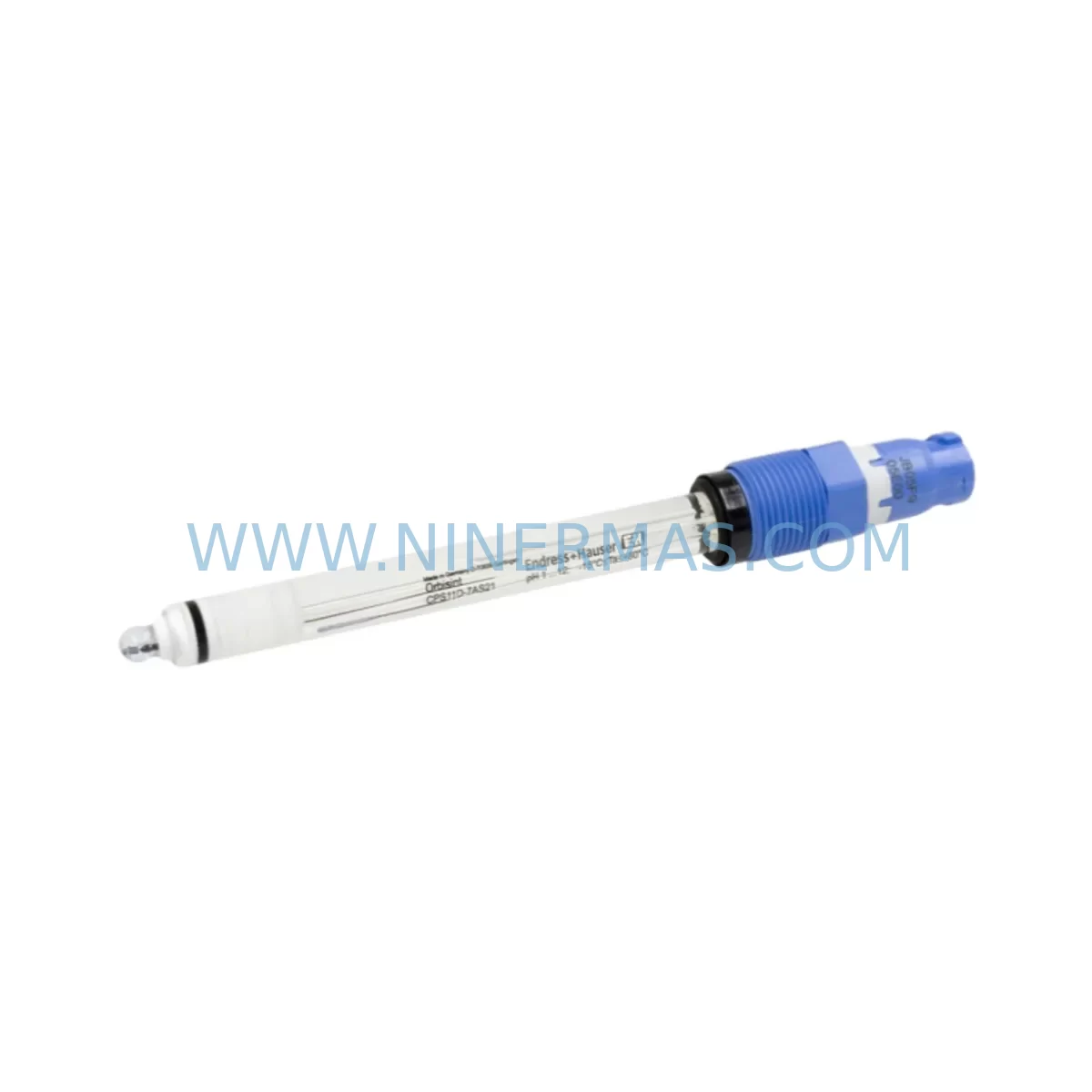
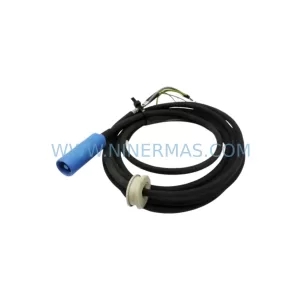
Endress+Hauser CPS11D-7BA21 Retrofit-Compatible Conductivity Sensor
Verify the part, confirm the platform family, and move straight into quotation with the right commercial details.
RFQ Ready
- SKUCPS11D-7BA21
- CategoryPLC & Industrial Automation Modules
- BrandEndress+Hauser
- SupportAvailability, lead time, condition, and shipping coordination
How Buyers Usually Use This Page
- Confirm the exact part number and platform family before sending the quote request.
- Use direct email when quantity, condition, and destination are already defined internally.
- Switch to the broader brand or category archive when you need alternates nearby.
Series Navigation
Move through the most common platform families behind this part.
Product RFQ
Send this part directly for quotation.
Include quantity, required condition, destination country, and target delivery timing. Current reference: Endress+Hauser CPS11D-7BA21 Retrofit-Compatible Conductivity Sensor with SKU CPS11D-7BA21.
Endress+Hauser CPS11D-7BA21 Retrofit-Compatible Conductivity Sensor: Legacy System Compatibility and Smooth Upgrade
The Endress+Hauser CPS11D-7BA21 is a ruggedized inline conductivity sensor engineered for demanding process environments. As legacy automation systems age and original equipment manufacturers discontinue support for older sensor generations, the CPS11D-7BA21 has become a critical retrofit solution for facilities operating Liquiline CM442, CM444, and CM448 transmitter platforms, as well as older Mycom CLM223 and CLM253 installations. Whether you are managing a chemical dosing line, a water treatment facility, or a pharmaceutical CIP circuit, this sensor delivers reliable conductivity measurement continuity without requiring a full system overhaul.
For plants still running first-generation Memosens protocol wiring or conventional analog 4–20 mA signal loops, the CPS11D-7BA21 supports both configurations, making it one of the most versatile drop-in replacements available for conductivity measurement in process automation. Its robust PEEK and titanium construction ensures long service life in aggressive media, reducing the frequency of unplanned shutdowns caused by sensor degradation in legacy installations.
Upgrade Compatibility Table
| Parameter | CPS11D-7BA21 (This Unit) | Legacy / Replaced Models |
|---|---|---|
| Signal Output | Memosens digital / 4–20 mA analog | CLM223, CLM253 analog output |
| Process Connection | G¾ / NPT ¾ threaded | Standard G¾ — direct fit |
| Transmitter Compatibility | CM442, CM444, CM448, CM14 | Mycom CLM223, CLM253 |
| Communication Protocol | Memosens 2.0 / analog | Analog 4–20 mA |
| Installation Space | Standard inline / retractable assembly | Identical footprint — no pipe modification |
| Calibration Transfer | Digital Memosens chip retains calibration data | Manual recalibration required on analog units |
| Commissioning | Plug-and-measure via Memosens; manual entry for analog | Manual parameter entry at transmitter |
| Warranty | 12 Months | N/A (discontinued) |
Retrofit Planning for Existing Automation Systems
Successful integration of the CPS11D-7BA21 into an existing control architecture begins with a thorough review of the transmitter currently installed in the field. Facilities running the Liquiline CM442 or CM444 can connect the CPS11D-7BA21 directly via the Memosens cable MCC cable assembly, eliminating the need for signal converters. For older installations using the Mycom CLM223 or CLM253, the sensor can be wired in conventional analog mode using the standard 4–20 mA terminal block, preserving the existing PLC input card configuration without requiring changes to the Siemens S7-300 or Allen-Bradley ControlLogix I/O modules already in the cabinet.
Before installation, engineers should verify the power supply capacity of the transmitter housing. The CM442 and CM444 units typically supply 24 VDC to the sensor head via the Memosens interface, while analog-mode installations draw power from the loop supply. Confirm that the existing DIN rail power supply — commonly a Phoenix Contact QUINT or Siemens SITOP unit — can sustain the additional sensor load without voltage drop on shared circuits.
Terminal wiring should be documented before disconnecting the old sensor. For Memosens installations, the two-wire shielded cable connects to the M12 connector on the CPS11D-7BA21; for analog installations, the positive and negative signal wires terminate at the transmitter’s standard screw terminals. If the existing cable run exceeds 50 metres, signal integrity should be verified using the transmitter’s diagnostic menu before closing the control cabinet.
Backplane and rack considerations are minimal for this sensor type, as the CPS11D-7BA21 is a field device rather than a rack-mounted module. However, if the transmitter itself is being upgraded alongside the sensor — for example, migrating from a CLM253 to a Liquiline CM448 — the new transmitter’s DIN rail footprint and terminal layout must be confirmed against the available space in the existing control panel. In such cases, the CM448’s modular I/O expansion slots allow the addition of relay output cards or HART communication modules without increasing the overall cabinet footprint significantly.
For facilities managing multiple measurement points, the CPS11D-7BA21 can be paired with the Memosens MCA cable and the Field Xpert SMT70 handheld device for pre-commissioning sensor verification and calibration data transfer before the unit is installed in the process line. This approach reduces on-site commissioning time and allows calibration records to be prepared in the workshop, shortening the overall retrofit window.
Downtime Control During System Migration
Minimising production interruption during a conductivity sensor retrofit requires careful sequencing of the replacement procedure. The recommended approach is to prepare the CPS11D-7BA21 fully — including calibration data entry and cable assembly — before the planned shutdown window begins. Where the process line permits, a bypass or isolation valve on the sensor fitting allows the old sensor to be removed and the new unit installed without draining the full pipe section.
For Memosens-equipped transmitters, the digital calibration data stored on the sensor chip is automatically read by the CM442 or CM444 upon connection, eliminating the need for manual parameter re-entry at the transmitter keypad. This feature is particularly valuable in facilities where the original calibration records for the legacy CLM223 installation are incomplete or unavailable.
PLC program logic does not require modification when replacing a like-for-like conductivity sensor, provided the transmitter output signal range and scaling remain unchanged. Engineers should confirm that the 4–20 mA output range configured in the transmitter matches the input scaling defined in the Siemens S7 or Rockwell PLC program before restarting the process. HMI screens displaying conductivity trend data should be reviewed after restart to confirm that the engineering unit display and alarm setpoints are reading correctly from the new sensor.
Communication link continuity — whether via PROFIBUS PA, HART, or Modbus RTU from the transmitter to the DCS or SCADA system — should be verified using the transmitter’s built-in communication diagnostics before the process line is returned to service. A brief functional test at reduced flow conditions is recommended to confirm stable measurement before full production load is resumed.
Retrofit Support FAQ
Q: Is the CPS11D-7BA21 a direct replacement for the Endress+Hauser CPS11-7BA21 and older CPS1 series sensors?
A: Yes. The CPS11D-7BA21 is the current production variant of the CPS11 series and is dimensionally and functionally compatible with earlier CPS11 and CPS1 series sensors using the same G¾ process connection. It supports both Memosens digital and conventional analog wiring, covering the full range of legacy transmitter installations.
Q: What commissioning steps are required when connecting to an existing Mycom CLM253 transmitter?
A: When wiring in analog mode to the CLM253, connect the sensor signal wires to the standard terminal block and confirm the transmitter’s cell constant setting matches the CPS11D-7BA21 specification (K = 0.1 cm⁻¹ for the 7BA21 variant). No firmware update is required on the CLM253 for analog-mode operation. Perform a two-point calibration using the transmitter’s calibration menu before returning the loop to service.
Q: Has this unit been tested before shipment, and what warranty is provided?
A: Every CPS11D-7BA21 unit supplied by NINERMAS undergoes pre-shipment functional verification. All units are covered by a 12-month warranty against manufacturing defects from the date of delivery. Replacement or repair is arranged promptly to minimise any impact on your production schedule.
Q: Can you confirm stock availability and lead time?
A: NINERMAS maintains inventory of the CPS11D-7BA21 to support urgent retrofit and breakdown replacement requirements. Current stock status and lead time can be confirmed by contacting our sales team directly. Orders placed before the daily cut-off are typically processed for same-day or next-business-day dispatch.
| Product Series | Other series |
|---|---|
| Country of Origin | CH |
Catalog Continuation
More Endress+Hauser modules in the catalog.
Use the brand lane to compare nearby part numbers, platform-adjacent modules, and other inquiry-ready listings before sending your final RFQ.
Catalog Continuation
Alternative parts within PLC & Industrial Automation Modules.
Stay inside the same system family when you need substitutes, adjacent modules, or a broader shortlist for procurement review.