


Description
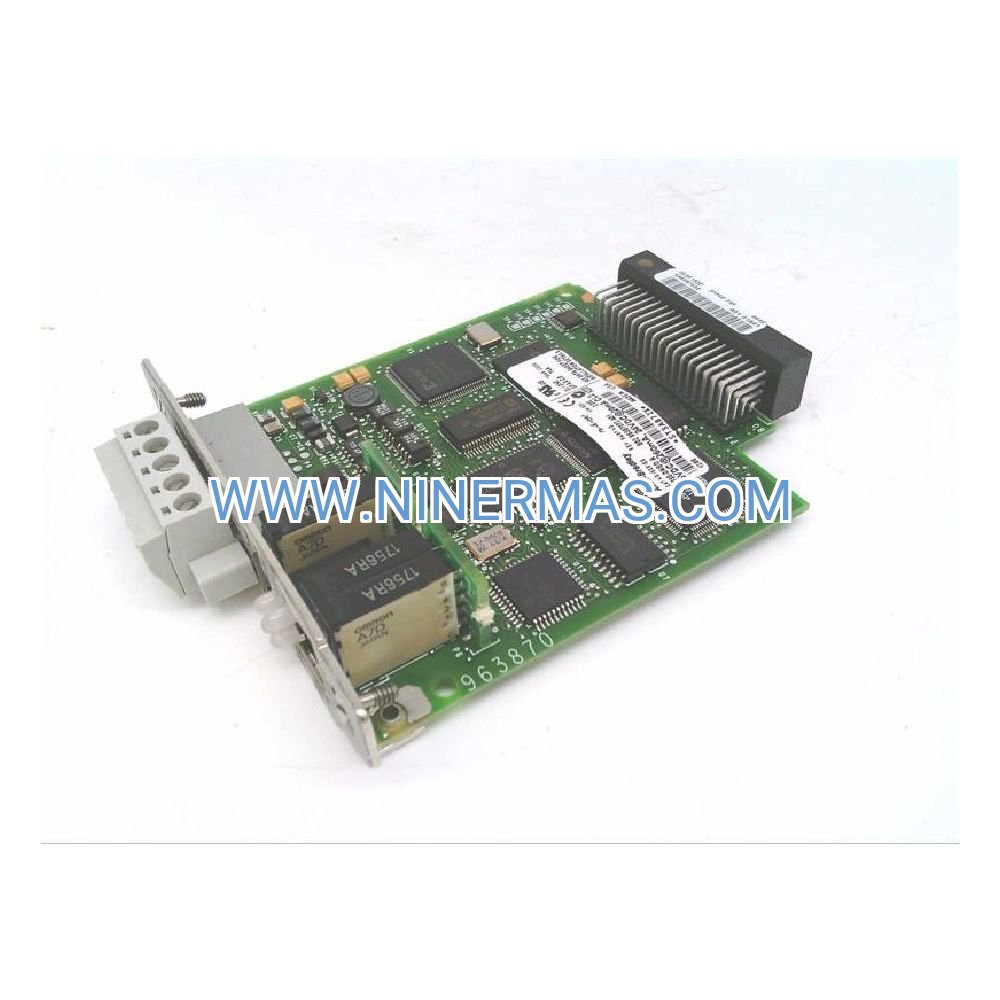
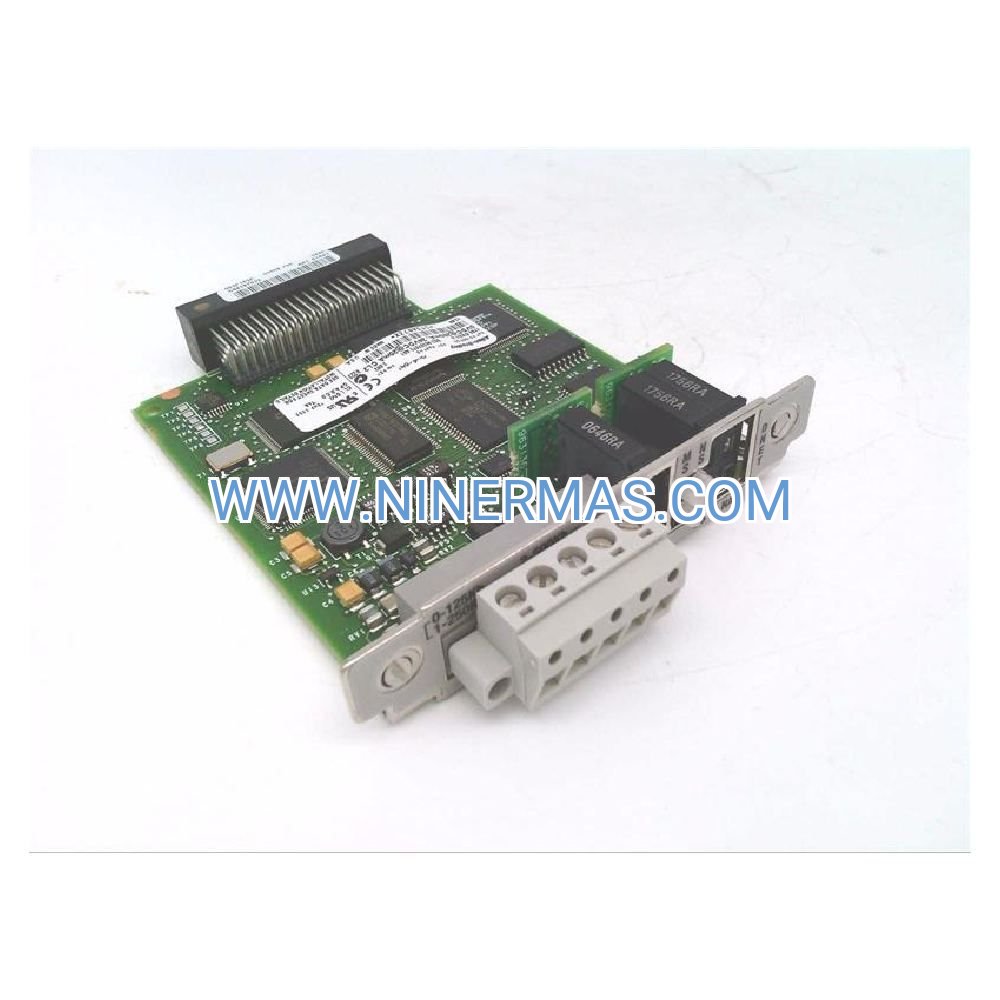
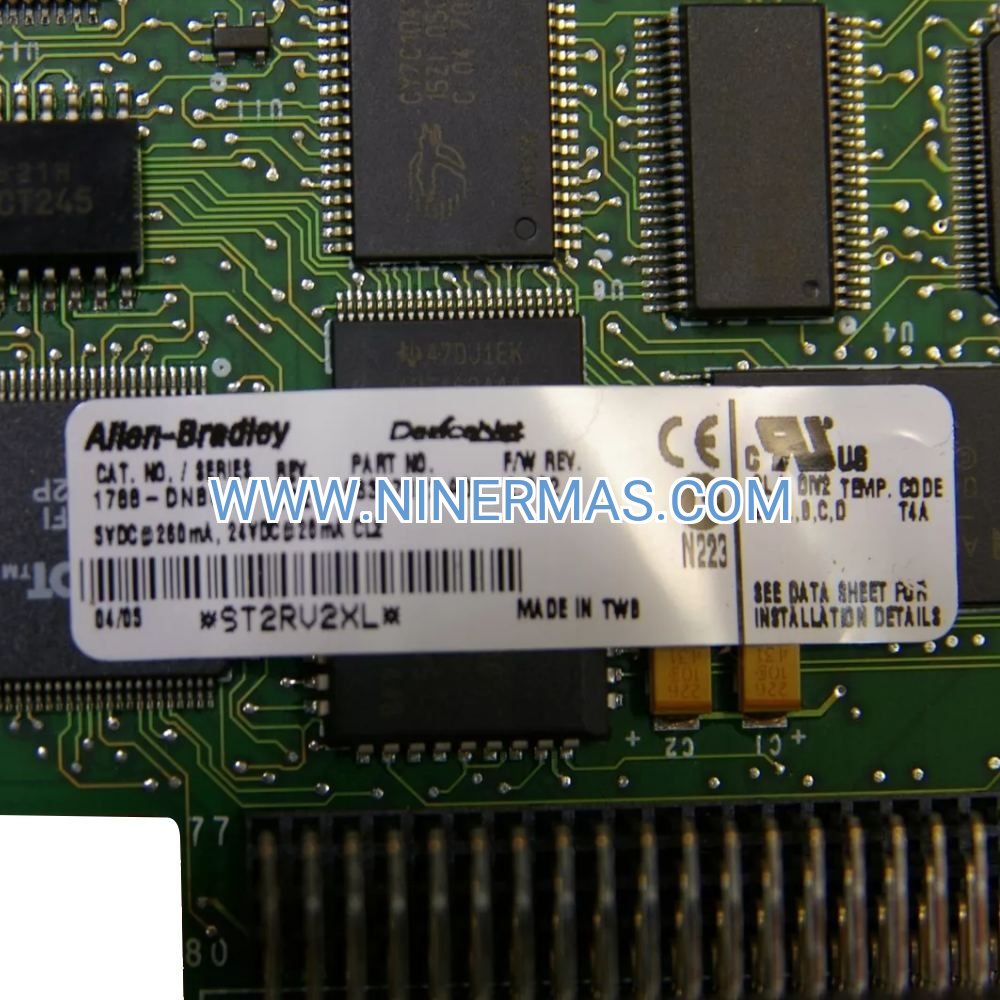
1788-DNBO DeviceNet Communication Interface (Industrial-Grade Network Module)
The 1788-DNBO represents a proven solution for industrial DeviceNet connectivity within FlexLogix control architectures. Designed for manufacturers requiring reliable, real-time communication between distributed automation components, this daughtercard module eliminates complex hardwiring while delivering deterministic data exchange across production networks. Whether you're upgrading legacy systems or deploying new automation infrastructure, the 1788-DNBO provides the network backbone for coordinated machine control.
Built to Allen-Bradley's rigorous quality standards, this communication interface serves process engineers, system integrators, and plant maintenance teams who demand uncompromising network performance in harsh industrial environments. From automotive assembly lines to packaging operations, the module's auto-configuration capabilities and diagnostic features reduce commissioning time while ensuring long-term operational reliability.
With support for up to 64 network nodes and flexible topology options, the 1788-DNBO scales seamlessly from standalone machines to plant-wide automation networks. Its proven track record in mission-critical applications makes it the preferred choice for engineers who cannot afford communication failures or extended downtime.
Core Features & Benefits
✓ Multi-Speed Network Operation
Automatic baud rate detection (125kbps/250kbps/500kbps) eliminates manual configuration errors and accelerates network commissioning. The module intelligently adapts to existing network infrastructure, reducing startup time by up to 50% compared to manually-configured systems.
✓ Dual-Mode Communication Architecture
Operates as master or slave node, providing architectural flexibility for complex control strategies. This versatility enables centralized coordination or peer-to-peer messaging depending on application requirements, maximizing system design options.
✓ Real-Time Cyclic I/O Exchange
Deterministic data transfer ensures predictable response times for time-critical control loops. Achieve sub-10ms update rates for distributed I/O, enabling precise synchronization across multiple automation zones.
→ Integrated Diagnostic Intelligence
Built-in LED indicators and network health monitoring provide instant visibility into communication status. Fault logging with timestamps accelerates troubleshooting, reducing mean time to repair (MTTR) by identifying root causes before they escalate into production stoppages.
→ Hot-Swap Configuration Capability
Online parameter editing allows network modifications without halting production. Adjust node addresses, messaging priorities, and device profiles while the controller continues executing control logic, minimizing planned downtime.
→ Universal Device Interoperability
Compliance with DeviceNet standard device profiles ensures seamless integration with sensors, drives, HMIs, and I/O modules from multiple vendors. Eliminate vendor lock-in while maintaining protocol consistency across your automation ecosystem.
Typical Application Scenarios
Automotive Manufacturing Lines
Coordinate robotic welding cells, conveyor systems, and quality inspection stations through a single DeviceNet trunk. The 1788-DNBO enables synchronized motion control and real-time status feedback across 30+ devices, reducing wiring costs by $15,000+ per production line while improving fault isolation capabilities.
Food & Beverage Packaging Operations
Integrate high-speed servo drives, vision systems, and barcode scanners for coordinated packaging sequences. Achieve 200+ packages per minute throughput with deterministic communication ensuring precise timing between filling, capping, and labeling operations.
Material Handling & Distribution Centers
Network automated guided vehicles (AGVs), sortation systems, and warehouse management interfaces for optimized logistics flow. The module's 500-meter cable reach at 125kbps supports large-scale facilities without requiring expensive repeaters or network segmentation.
Process Control & Batch Manufacturing
Connect distributed I/O blocks to centralized FlexLogix controllers for recipe-driven production. Real-time data exchange enables precise ingredient dosing, temperature control, and batch sequencing with full audit trail capabilities for regulatory compliance.
Machine Tool & CNC Integration
Link tool changers, spindle drives, and workpiece positioning systems for coordinated machining operations. The module's explicit messaging capabilities support parameter upload/download for rapid tool changeovers and program transfers.
Technical Parameters & Selection Guide
| Parameter | Specification | Engineering Notes |
|---|---|---|
| Power Supply | 5V DC ±5% | Supplied via FlexLogix backplane |
| Current Draw | 260mA typical | 1.78W power consumption |
| Network Speed | 125k/250k/500k baud | Auto-detection on startup |
| Node Capacity | 64 nodes maximum | Per network segment |
| Cable Distance | 100-500m (speed dependent) | 500m @ 125kbps, 100m @ 500kbps |
| Operating Temp | 0°C to 60°C | 32°F to 140°F |
| Humidity Range | 5-95% non-condensing | IEC 60068-2-30 compliant |
| Thermal Dissipation | 6.1 BTU/Hr | Passive cooling sufficient |
| Form Factor | Daughtercard module | Installs in 1788 chassis slot |
| Certifications | UL, CSA, CE | Global deployment approved |
Selection Criteria: Choose the 1788-DNBO when your FlexLogix application requires DeviceNet connectivity for distributed I/O, multi-vendor device integration, or legacy system compatibility. For Ethernet/IP networks, consider the 1788-ENBT alternative. For ControlNet applications, evaluate the 1788-CNCR module. Verify that your RSLogix 5000 or Studio 5000 software version supports DeviceNet configuration (v10.0 or later required).
Extended Functions
Advanced Messaging Capabilities
Beyond standard I/O exchange, the 1788-DNBO supports explicit messaging for device configuration, parameter uploads, and diagnostic data retrieval. This enables centralized device management and remote troubleshooting without physical access to field devices.
Network Topology Flexibility
Deploy trunk-line/drop-line, daisy-chain, star, or mixed topologies to match your facility layout. The module's support for multiple physical configurations reduces installation constraints and simplifies cable routing in space-limited environments.
Predictive Maintenance Integration
Network health monitoring tracks bus-off events, CRC errors, and duplicate MAC ID conflicts. Export diagnostic logs to SCADA or MES systems for trend analysis and predictive maintenance scheduling, preventing unexpected communication failures.
Custom Device Profile Support
Load vendor-specific Electronic Data Sheets (EDS files) to integrate specialized devices not covered by standard DeviceNet profiles. This extensibility ensures compatibility with emerging automation technologies and proprietary equipment.
Delivery & Service Assurance
Lead Time: Standard stock items ship within 1-3 business days. Custom configurations or bulk orders (10+ units) typically ship within 5-7 business days. Expedited shipping available for critical downtime situations.
Warranty Coverage: All 1788-DNBO modules include a 12-month manufacturer's warranty covering defects in materials and workmanship. Extended warranty options available for mission-critical applications requiring guaranteed uptime.
Technical Support: Access to certified automation engineers for configuration assistance, troubleshooting guidance, and network optimization recommendations. Support available via email, phone, and remote desktop sessions during business hours (GMT+8).
Documentation Package: Each module ships with installation quick-start guide, wiring diagrams, and EDS file download links. Complete technical manuals, application notes, and sample ladder logic available through our online resource library.
Frequently Asked Questions
Q: How do I configure the 1788-DNBO module's MAC address for DeviceNet communication?
A: The MAC address (node ID) can be configured via rotary switches on the module or through software using RSLogix 5000/Studio 5000. For software configuration, navigate to the module properties in your I/O configuration tree and assign a unique address between 0-63. Hardware switches provide backup addressing if software configuration is lost.
Q: What network cable specifications are required for reliable DeviceNet operation?
A: Use DeviceNet-certified thick or thin cable (Belden 3082A or equivalent). Thick cable supports longer distances and more drop connections, while thin cable offers flexibility for tight routing. Maintain proper trunk/drop cable ratios and use sealed connectors in harsh environments to prevent moisture ingress.
Q: Can the 1788-DNBO reduce energy consumption compared to traditional hardwired I/O systems?
A: Yes. By consolidating multiple discrete I/O wires into a single network cable, the module reduces copper usage by 60-70%. Additionally, network-based diagnostics enable targeted maintenance, preventing energy waste from malfunctioning devices. The module itself consumes only 1.78W, significantly less than equivalent relay-based systems.
Q: What installation requirements must be met before mounting the 1788-DNBO daughtercard?
A: Ensure your FlexLogix 1788 chassis has an available communication slot and adequate backplane power capacity (260mA @ 5V DC). Verify that your programming software (RSLogix 5000 v10.0+) includes DeviceNet configuration tools. Plan network topology and cable routing before installation to minimize commissioning delays.
Q: Does the module support remote monitoring and diagnostics through SCADA or HMI systems?
A: Yes. The 1788-DNBO exposes network status, device health, and communication statistics through controller tags that can be mapped to SCADA/HMI displays. Configure alarm triggers for bus-off conditions, timeout errors, or device offline events to enable proactive maintenance responses.
Q: How does the auto-baud detection feature work during network startup?
A: On power-up, the module monitors the DeviceNet trunk for existing traffic and automatically synchronizes to the detected baud rate (125k, 250k, or 500k). This process typically completes within 2-3 seconds. If no traffic is detected, the module defaults to the last configured speed or a user-defined fallback rate.
Take the Next Step
Ready to streamline your industrial network infrastructure? Contact our automation specialists to discuss your specific application requirements, receive custom configuration recommendations, or request a detailed quotation. For immediate technical inquiries or urgent replacement needs, reach out via email or phone—our team is standing by to ensure your production systems maintain peak performance.
© 2026 NINERMAS COMPANY LIMITED. All rights reserved.
Original Source: https://ninermas.com
Contact: sale@ninermas.com | +0086 187 5021 5667
PDF Specification
Download PDF file here:
Click to Download PDF

Contact Info
-
Address:22 / F, South Wo Hang building, 148 Wing Lok Street, Sheung Wan, Western District, Hong Kong
-
Phone:+8618750215667
-
Email:
