



Description
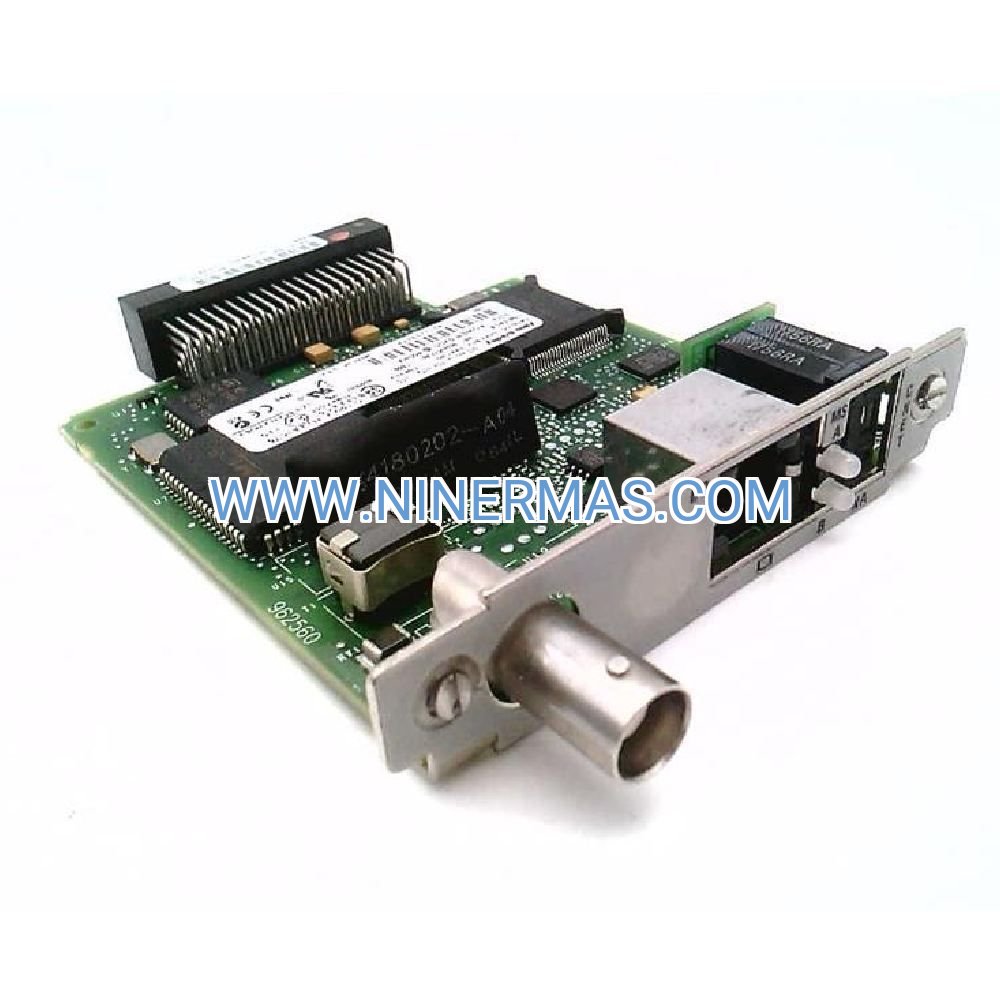
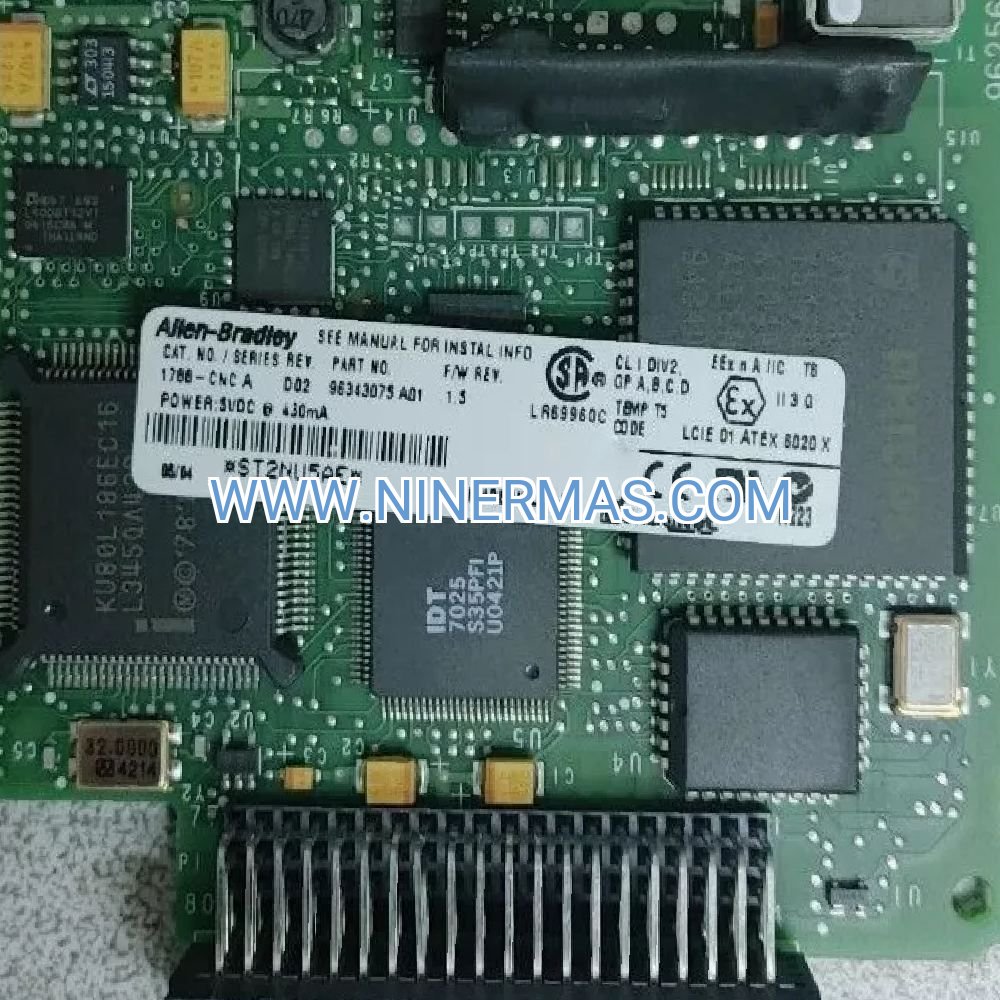
1788-CNC ControlNet Interface Module (Industrial-Grade Network Daughtercard)
The 1788-CNC represents Allen-Bradley's solution for integrating deterministic ControlNet communication into FlexLogix 1788 control platforms. Engineered for time-critical industrial environments, this daughtercard delivers scheduled, repeatable data exchange across distributed automation architectures where millisecond-level precision directly impacts production quality and operational safety.
Designed for manufacturers requiring guaranteed message delivery within predictable time windows, the 1788-CNC eliminates network congestion through scheduled bandwidth allocation. Its field-replaceable form factor and diagnostic LED array reduce maintenance downtime while supporting both coaxial and fiber optic media for flexible deployment across existing infrastructure.
Whether coordinating robotic assembly cells, synchronizing high-speed packaging lines, or managing multi-zone material handling systems, this communication module provides the deterministic performance foundation that modern industrial control systems demand. Compatible with RSNetWorx configuration tools and RSLogix 5000 programming environments for seamless integration into existing Rockwell Automation ecosystems.
Technical Specifications & Performance Characteristics
→ Catalog Designation: 1788-CNC (Allen-Bradley OEM part number)
→ Operating Voltage: 5V DC nominal input
→ Power Consumption: 1.75 watts (6.0 BTU/hour thermal output)
→ Communication Protocol: ControlNet deterministic scheduled messaging
→ Transfer Rate: 5 megabits per second over coax or fiber
→ Network Capacity: Supports up to 99 nodes per segment
→ Module Format: Daughtercard for direct FlexLogix backplane mounting
→ Media Options: RG-6 coaxial cable or fiber optic with appropriate adapters
→ Topology Support: Bus, tree, and star network configurations
→ Installation Method: Tool-free snap-in design for rapid field replacement
Key Functional Advantages & Business Value
✓ Guaranteed Delivery Windows: Deterministic scheduling ensures critical I/O data arrives within configured Network Update Time (NUT) intervals, eliminating unpredictable delays that compromise process control accuracy
✓ Dual-Channel Redundancy: Optional redundant media configuration provides automatic failover for applications requiring 99.99%+ network availability
✓ Hybrid Traffic Management: Simultaneous handling of time-critical scheduled messages and non-urgent unscheduled traffic without bandwidth conflicts
✓ Minimal Thermal Footprint: 1.75W power draw reduces heat generation in densely populated control cabinets, extending component lifespan
✓ Real-Time Diagnostics: Onboard LED indicators provide instant visual feedback on network status, module health, and communication errors
✓ Open Standard Compliance: ControlNet's vendor-neutral architecture enables integration with third-party automation equipment beyond Rockwell ecosystem
Industrial Deployment Scenarios
Automotive Assembly Operations: Coordinate robotic welding stations, vision inspection systems, and conveyor networks with microsecond-level synchronization across body-in-white production lines. The 1788-CNC's deterministic messaging prevents the communication jitter that causes weld quality defects in high-speed manufacturing.
Food & Beverage Packaging: Synchronize filling machines, capping equipment, labeling applicators, and case packers operating at speeds exceeding 600 units per minute. Scheduled bandwidth allocation ensures recipe changes and product changeovers execute without production interruptions.
Pharmaceutical Batch Processing: Maintain precise control over mixing, heating, and transfer operations where recipe compliance and audit trail integrity are regulatory requirements. The module's predictable performance supports 21 CFR Part 11 validation protocols.
Warehouse Automation: Integrate FlexLogix controllers with automated storage/retrieval systems (AS/RS), sortation conveyors, and AGV fleets. Deterministic communication prevents the inventory misplacements that occur when network delays disrupt barcode scanning and routing logic.
Municipal Water Treatment: Coordinate pump stations, valve actuators, and chemical dosing systems across geographically distributed facilities. Redundant media support ensures continuous operation during cable maintenance or accidental damage events.
Selection Criteria & System Planning
| Parameter | Specification | Selection Guidance |
|---|---|---|
| Network Update Time | 2-100 milliseconds | Configure based on fastest control loop requirement; typical values: 5ms (motion), 10ms (process), 20ms (discrete) |
| Scheduled Bandwidth | 0-90% of total capacity | Allocate 70-80% for time-critical I/O, reserve remainder for messaging and diagnostics |
| Media Type | Coax or fiber optic | Use coax for distances <1000m in electrically noisy environments; fiber for longer runs or high EMI areas |
| Redundancy | Single or dual channel | Implement dual media for applications requiring >99.9% uptime or safety-critical interlocks |
| Node Count | Up to 99 per segment | Plan for 20-30% growth capacity; segment networks exceeding 60 nodes for optimal performance |
Compatibility Requirements: The 1788-CNC requires FlexLogix 1788 controller chassis with available daughtercard slot. Verify backplane firmware revision supports ControlNet communication (consult publication 1788-UM001). Configuration requires RSNetWorx for ControlNet software (version 16.0 or later recommended) and RSLogix 5000 programming environment.
Advanced Integration Capabilities
Multi-Vendor Interoperability: ControlNet's ODVA-standardized protocol enables communication with drives, I/O blocks, HMIs, and process instruments from multiple manufacturers. The 1788-CNC supports Electronic Data Sheet (EDS) files for automatic device configuration and parameter management.
Remote Diagnostics: Network health metrics including bandwidth utilization, error counters, and node status are accessible via RSNetWorx software or third-party SCADA systems. Proactive monitoring identifies degraded cables or failing nodes before they cause production disruptions.
Firmware Serviceability: Module firmware updates deploy through standard ControlNet messaging without physical access to control cabinets. Centralized update management reduces maintenance labor costs in facilities with distributed control architectures.
Custom Messaging: Beyond standard I/O data exchange, the 1788-CNC supports explicit messaging for recipe downloads, alarm notifications, and production reporting. Message prioritization ensures critical communications preempt routine data transfers during abnormal operating conditions.
Delivery Timeline & Service Commitments
→ Standard Lead Time: 3-5 business days for in-stock units (subject to inventory availability)
→ Express Shipping: Next-day delivery available for critical spares requirements
→ Warranty Coverage: 12-month manufacturer defect protection from shipment date
→ Technical Support: Email and phone assistance for configuration, troubleshooting, and integration guidance
→ Documentation Package: Installation manual, wiring diagrams, EDS files, and sample RSLogix code included with shipment
Frequently Asked Questions
What installation tools are required for the 1788-CNC daughtercard?
No specialized tools needed. The module uses a tool-free snap-in design that mounts directly to FlexLogix backplane connectors. Installation typically completes in under 5 minutes. Ensure controller power is disconnected before inserting or removing the daughtercard to prevent backplane damage.
How does ControlNet bandwidth allocation affect system performance?
Scheduled bandwidth (configured in RSNetWorx) guarantees delivery of time-critical I/O data within the Network Update Time. Unscheduled bandwidth handles non-urgent messaging like HMI updates and program uploads. Optimal performance occurs when scheduled allocation matches actual I/O requirements plus 10-15% margin for future expansion.
Can the 1788-CNC operate in redundant media configurations?
Yes, when paired with redundant ControlNet infrastructure (dual coax or fiber paths). The module automatically switches to the backup channel if the primary media fails, maintaining communication without controller restart. Redundancy requires compatible network hardware and RSNetWorx configuration.
What diagnostic capabilities help troubleshoot network issues?
The daughtercard features LED indicators for module status, network activity, and communication errors. RSNetWorx software provides detailed diagnostics including bandwidth utilization graphs, error counters per node, and cable health metrics. Most network faults isolate to specific segments or devices within 2-3 minutes.
Is the 1788-CNC compatible with legacy ControlNet equipment?
Yes, ControlNet maintains backward compatibility across product generations. The 1788-CNC communicates with older 1788-CN2DN modules, 1756-series ControlLogix adapters, and third-party ControlNet devices. Firmware consistency across nodes optimizes performance but is not mandatory for basic operation.
What energy efficiency benefits does the low power consumption provide?
At 1.75 watts per module, the 1788-CNC generates minimal heat compared to alternative communication interfaces. In systems with 10+ network modules, reduced thermal load can eliminate the need for forced-air cooling, lowering cabinet costs by $200-400 and improving reliability in harsh environments.
Ready to Upgrade Your Control Network?
Contact our industrial automation specialists to discuss your FlexLogix system requirements, network architecture planning, or critical spares inventory management. We provide technical consultation, configuration assistance, and expedited shipping for time-sensitive projects.
© 2026 NINERMAS COMPANY LIMITED. All rights reserved.
Original Source: https://ninermas.com
Contact: sale@ninermas.com | +0086 187 5021 5667
PDF Specification
Download PDF file here:
Click to Download PDF

Contact Info
-
Address:22 / F, South Wo Hang building, 148 Wing Lok Street, Sheung Wan, Western District, Hong Kong
-
Phone:+8618750215667
-
Email:
