Description
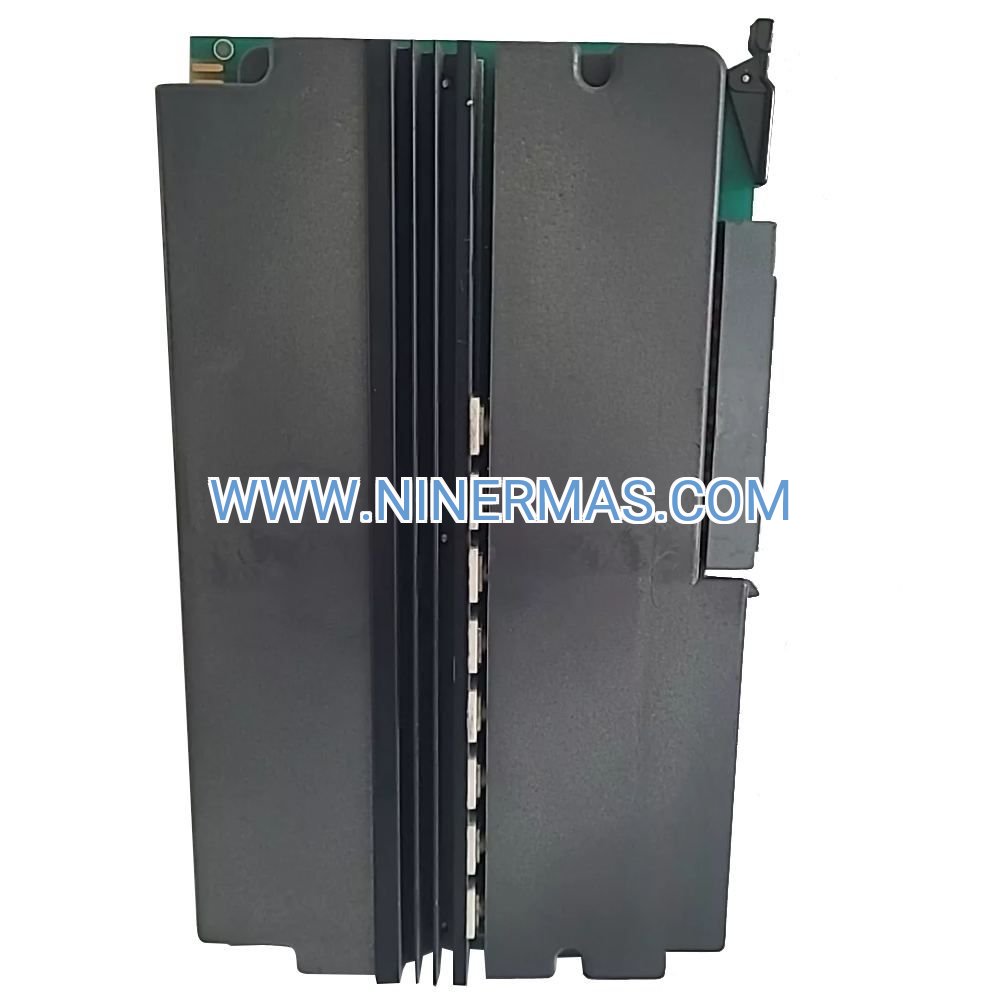
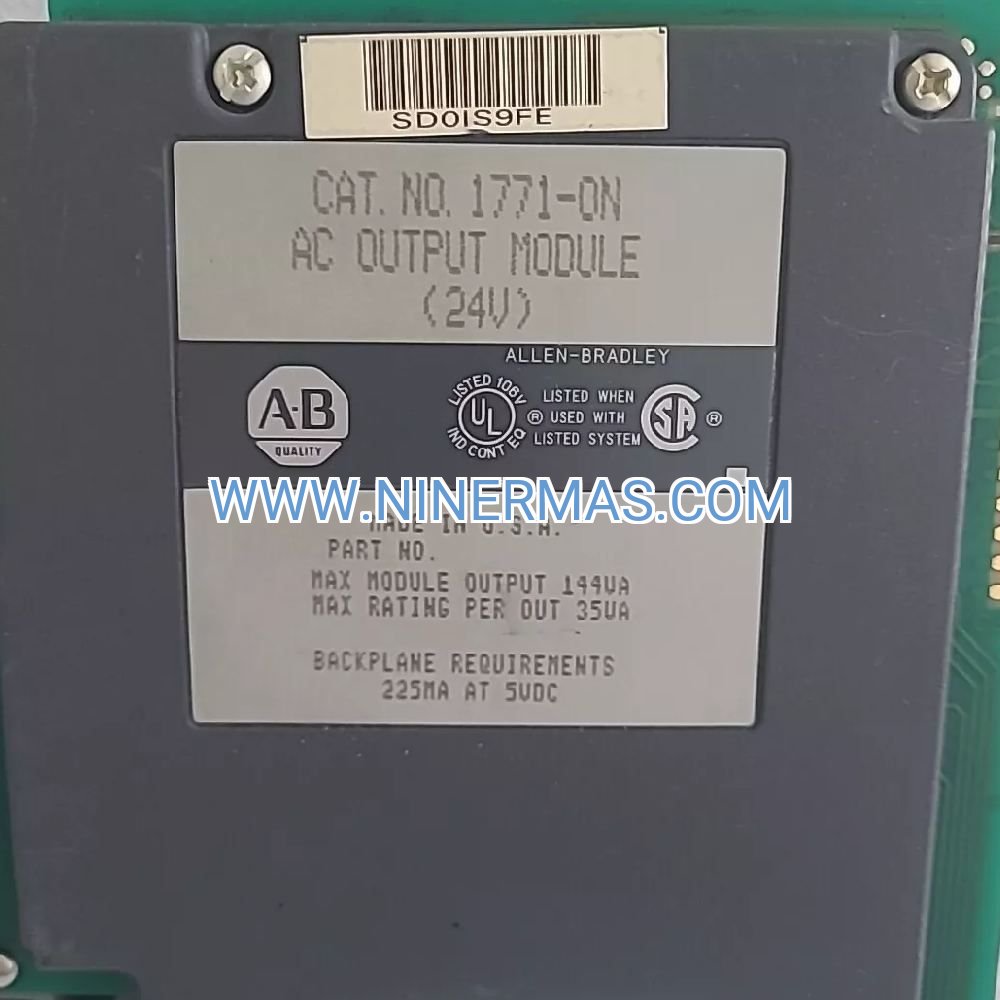
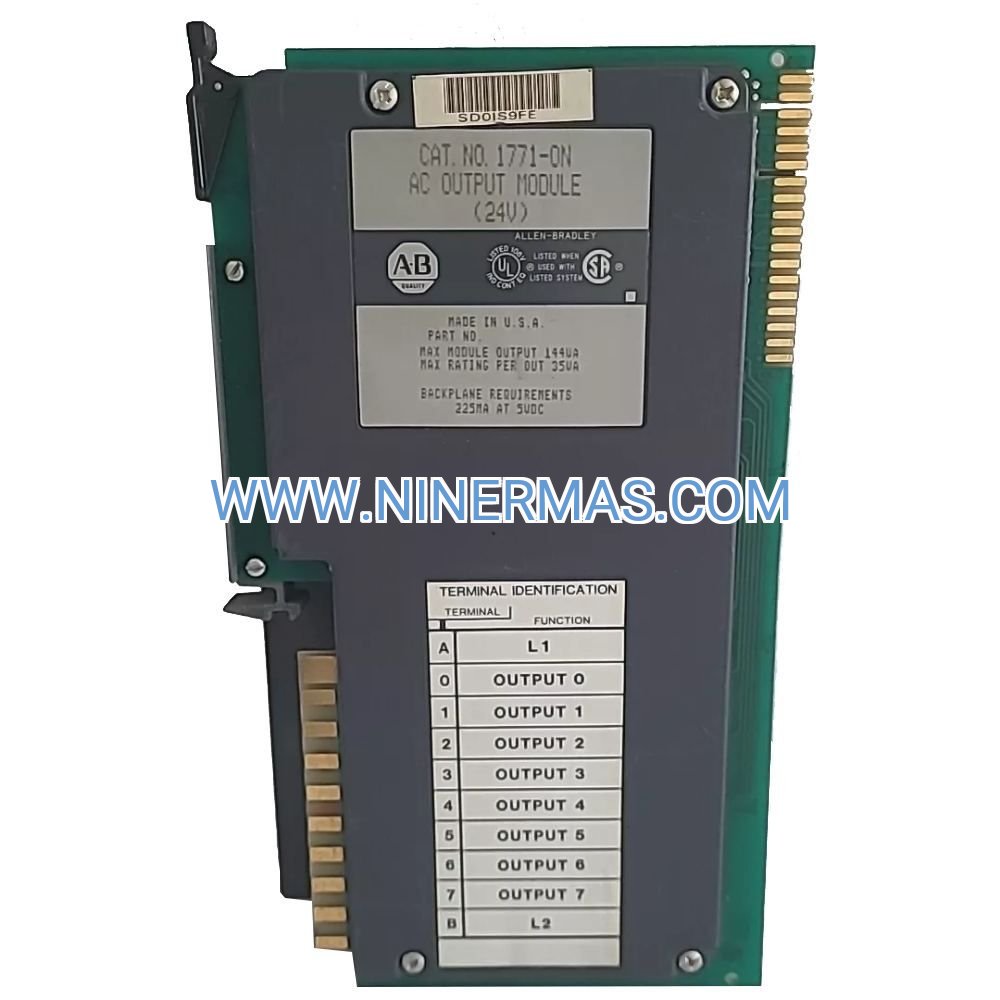
1771-ON AC Output Module (Industrial-Grade 16-Channel Control Solution)
The 1771-ON represents a proven AC output interface designed specifically for PLC-5 control architectures. This 16-channel module transforms logic-level signals into robust AC switching commands, enabling direct control of industrial loads including solenoid valves, motor contactors, indicator panels, and electromechanical actuators across manufacturing and process environments.
Built for mission-critical applications where downtime translates to revenue loss, this module addresses the fundamental challenge of bridging low-voltage control logic with field-level AC power devices. Target users include automation engineers upgrading legacy systems, maintenance teams managing existing PLC-5 installations, and system integrators designing hybrid control solutions that leverage proven 1771 I/O infrastructure.
Key advantages center on three pillars: electrical isolation protecting sensitive processors from field-side transients, hot-swappable architecture minimizing maintenance windows, and per-channel diagnostics accelerating fault resolution. The module's 1500V optical barrier and individual LED indicators deliver both protection and visibility that reduce troubleshooting time by up to 60% compared to non-diagnostic alternatives.
Core Features & Benefits
✓ 16 Isolated AC Outputs: Each channel features independent optical coupling, preventing ground loops and electrical noise propagation that can corrupt logic circuits in high-EMI environments.
✓ 1.5A Continuous Rating: Sufficient capacity for standard industrial solenoids and pilot relays, with 10A surge handling (8.3ms) accommodating inrush currents from inductive loads without nuisance trips.
✓ 24V AC Operation: Matches common control power standards (19.2-26.4V range), eliminating the need for additional power supplies in facilities already equipped with 24VAC distribution.
✓ Hot-Swap Capability: Replace failed modules without shutting down the entire chassis—critical for continuous process industries where unplanned stops cost $5,000-$20,000 per hour.
✓ Removable Terminal Blocks: Pre-wire replacement modules offline, then swap connectors in under 90 seconds, reducing mean-time-to-repair (MTTR) by 75% versus hardwired alternatives.
✓ Per-Channel Status LEDs: Instant visual confirmation of output state simplifies commissioning and troubleshooting—no multimeter required for basic diagnostics.
Application Scenarios
1. Automotive Assembly Lines: Control pneumatic clamps, part ejectors, and fixture locks across multi-station work cells. The module's fast response time (1ms turn-on) ensures precise synchronization with robotic pick-and-place sequences, while optical isolation prevents welding equipment EMI from causing false triggers.
2. Water Treatment Facilities: Operate chemical dosing pump contactors, valve actuators, and alarm annunciators in chlorination and filtration systems. The 0-60°C operating range handles both indoor control rooms and outdoor pump houses, while the sealed design withstands humid environments without corrosion-related failures.
3. Food Processing Plants: Manage conveyor diverters, packaging machine clutches, and CIP (clean-in-place) valve manifolds. UL and CE compliance meets sanitation authority requirements, and the module's resistance to vibration (per ISO 20816) ensures reliability on equipment platforms subject to mechanical shock.
4. Pharmaceutical Batch Systems: Coordinate reactor agitator drives, transfer pump starters, and vent valve solenoids in GMP-regulated production. The module's deterministic response time supports validated processes, while comprehensive diagnostic bits enable 21 CFR Part 11 audit trails through PLC data logging.
5. HVAC Control Networks: Switch damper actuators, fan contactors, and zone isolation valves in large commercial buildings. The 6A common rating allows grouping of multiple small loads (e.g., four 1.5A actuators per common), reducing wiring complexity and panel space by 40% versus individual relay solutions.
Technical Parameters & Selection Guide
| Parameter | Specification |
|---|---|
| Output Configuration | 16 points, isolated AC switching |
| Voltage Range | 19.2 to 26.4V AC (24V nominal) |
| Current per Point | 1.5A continuous, 10A surge (8.3ms) |
| Current per Common | 6A maximum (4 outputs share 1 common) |
| Isolation Voltage | 1500V AC (logic to output) |
| Turn-On Time | 1ms typical |
| Turn-Off Time | 8.3ms (half-cycle at 60Hz) |
| Operating Temperature | 0 to 60°C (32 to 140°F) |
| Chassis Compatibility | 1771 I/O chassis (all slot sizes) |
| Certifications | UL Listed, CE marked, ISO 20816 compliant |
Selection Criteria: Choose the 1771-ON when your application requires 24V AC control voltage and individual output currents remain below 1.5A. For 120V AC loads, specify the 1771-OA or 1771-OAN instead. If controlling DC loads, consider the 1771-OBD (24V DC) or 1771-OD (48V DC) variants. Verify that total current per common group (4 outputs) does not exceed 6A under worst-case simultaneous activation scenarios.
Extended Functions
Diagnostic Integration: Each output channel provides a status bit accessible via the PLC's I/O image table, enabling automated fault detection routines. Program your controller to log output state changes, detect stuck-on conditions (output commanded off but status bit remains high), or trigger alarms when critical outputs fail to energize.
Load Monitoring Compatibility: While the module itself does not measure load current, its predictable electrical characteristics allow pairing with external current transformers for energy monitoring applications. This supports predictive maintenance strategies by detecting gradual load degradation (e.g., solenoid coil resistance drift) before catastrophic failure.
Retrofit Flexibility: The 1771-ON's footprint and pinout match earlier-generation modules, simplifying upgrades in brownfield installations. Existing wiring harnesses and panel layouts typically require no modification, reducing retrofit costs by 30-50% compared to complete I/O system replacements.
Delivery & Service Assurance
Lead Time: Standard stock items ship within 2-3 business days. Custom-configured modules with factory programming or special labeling require 10-15 business days. Expedited processing available for critical outage situations (contact sales for emergency support).
Warranty Coverage: 12-month comprehensive warranty from date of shipment, covering material defects and workmanship failures. Warranty includes advance replacement service—receive a functional module before returning the defective unit, minimizing production interruptions.
Technical Support: Access to application engineers with PLC-5 expertise for configuration assistance, troubleshooting guidance, and integration planning. Support available via email (response within 4 hours during business days) and phone (direct line during critical outages).
Documentation Package: Each module ships with installation instructions, wiring diagrams, and dimensional drawings. Downloadable resources include sample ladder logic for common control scenarios, terminal block part numbers for spares, and compatibility matrices for chassis/controller combinations.
Frequently Asked Questions
Q: How do I calculate total power consumption for panel design?
A: The module draws approximately 150mA from the chassis backplane at 5V DC, plus the sum of all connected AC loads. For example, 16 outputs at 1.5A each would require a 24V AC supply rated for at least 24A (with 25% safety margin).
Q: What wire gauge should I use for field connections?
A: Terminal blocks accept 14-22 AWG wire. For 1.5A loads, 18 AWG is adequate for runs under 50 feet. Use 16 AWG for longer distances or when multiple outputs share a common return to minimize voltage drop below the 19.2V minimum threshold.
Q: Can this module control three-phase motor starters?
A: Yes, when used to energize the starter's control coil (typically 24V AC). The module cannot directly switch three-phase power conductors—it controls the contactor that performs the actual motor switching.
Q: Is firmware updating required for this module?
A: No, the 1771-ON uses fixed-function hardware logic with no user-programmable firmware. This eliminates cybersecurity vulnerabilities associated with network-connected I/O and ensures consistent behavior across production batches spanning decades.
Q: What is the expected service life in continuous operation?
A: Optical isolators and solid-state output devices typically exceed 100,000 operating hours (11+ years of continuous use) when operated within rated parameters. Mechanical components (terminal block springs) are rated for 50+ insertion cycles.
Q: How does this compare to newer ControlLogix I/O?
A: The 1771-ON offers lower initial cost and simpler integration for existing PLC-5 systems. ControlLogix modules (1756 series) provide advanced diagnostics and network-based configuration but require controller upgrades and different chassis infrastructure—typically justified only during complete system overhauls.
Take the Next Step
Ready to enhance your PLC-5 system's output capabilities? Contact our automation specialists to verify compatibility with your specific chassis and controller configuration. Request a detailed quotation including quantity discounts for multi-module projects, or ask about our system integration services for turnkey installations.
Email: sale@ninermas.com | Phone: +0086 187 5021 5667
© 2026 NINERMAS COMPANY LIMITED. All rights reserved.
Original Source: https://ninermas.com
Contact: sale@ninermas.com | +0086 187 5021 5667
PDF Specification
Download PDF file here:
Click to Download PDF

Contact Info
-
Address:22 / F, South Wo Hang building, 148 Wing Lok Street, Sheung Wan, Western District, Hong Kong
-
Phone:+8618750215667
-
Email: