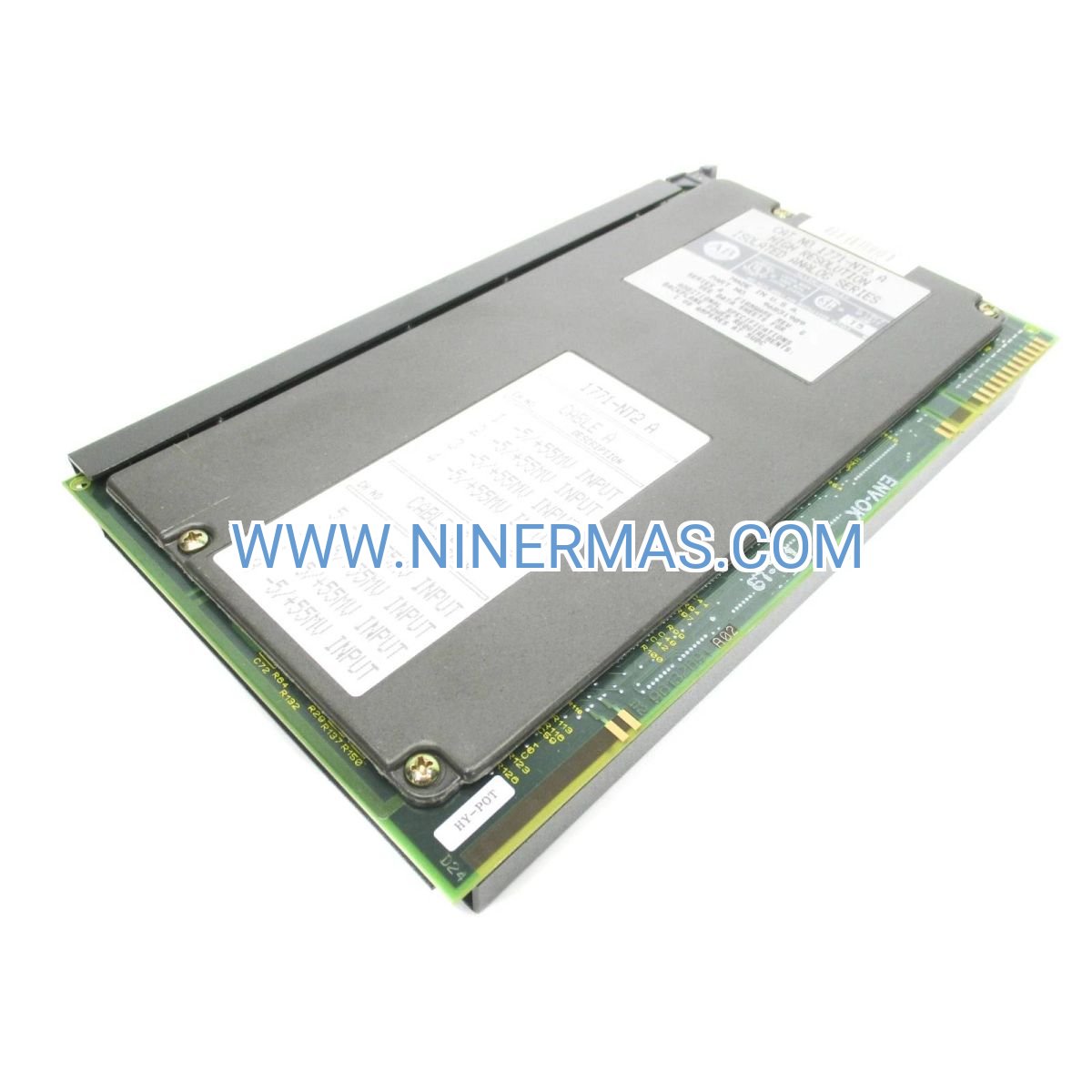
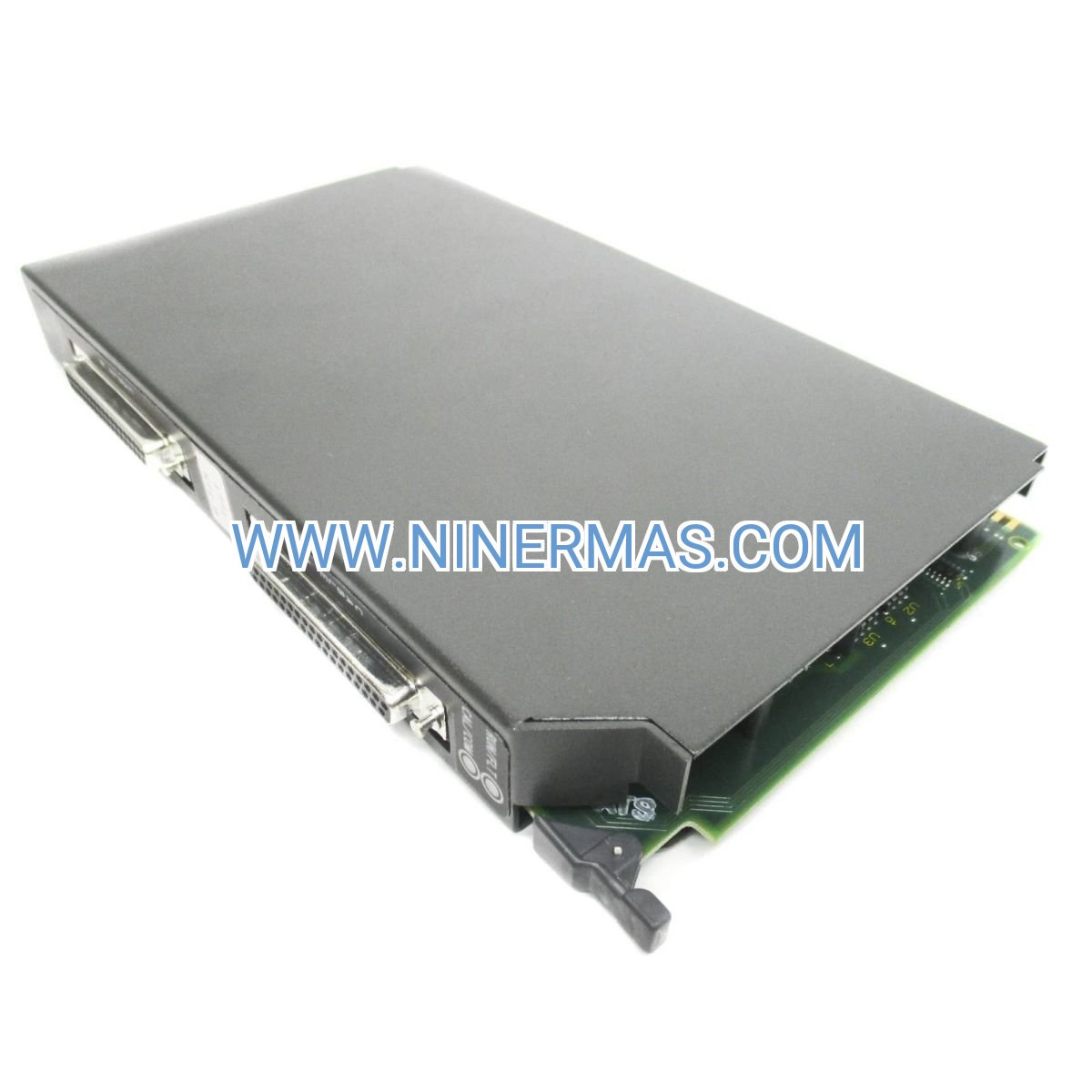
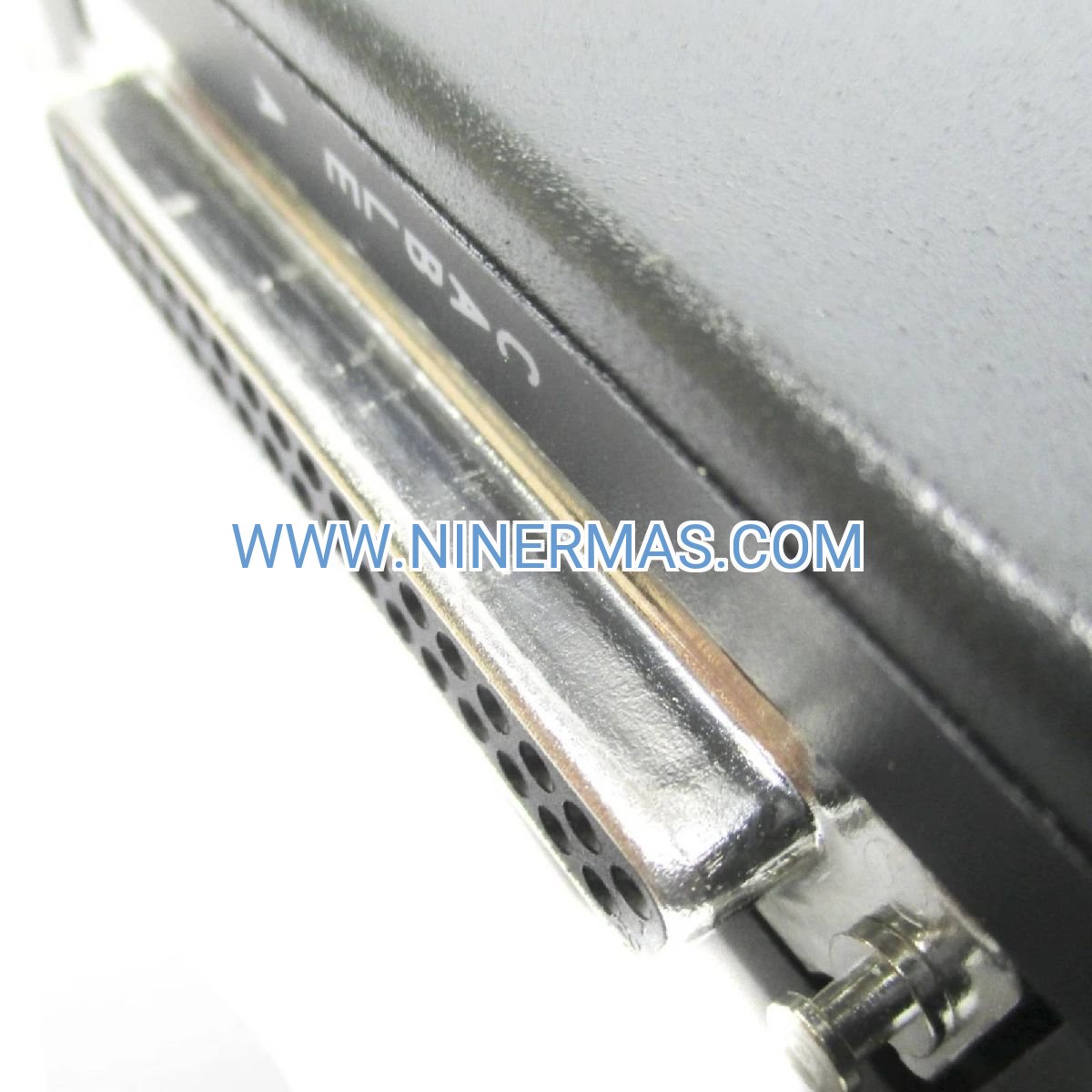
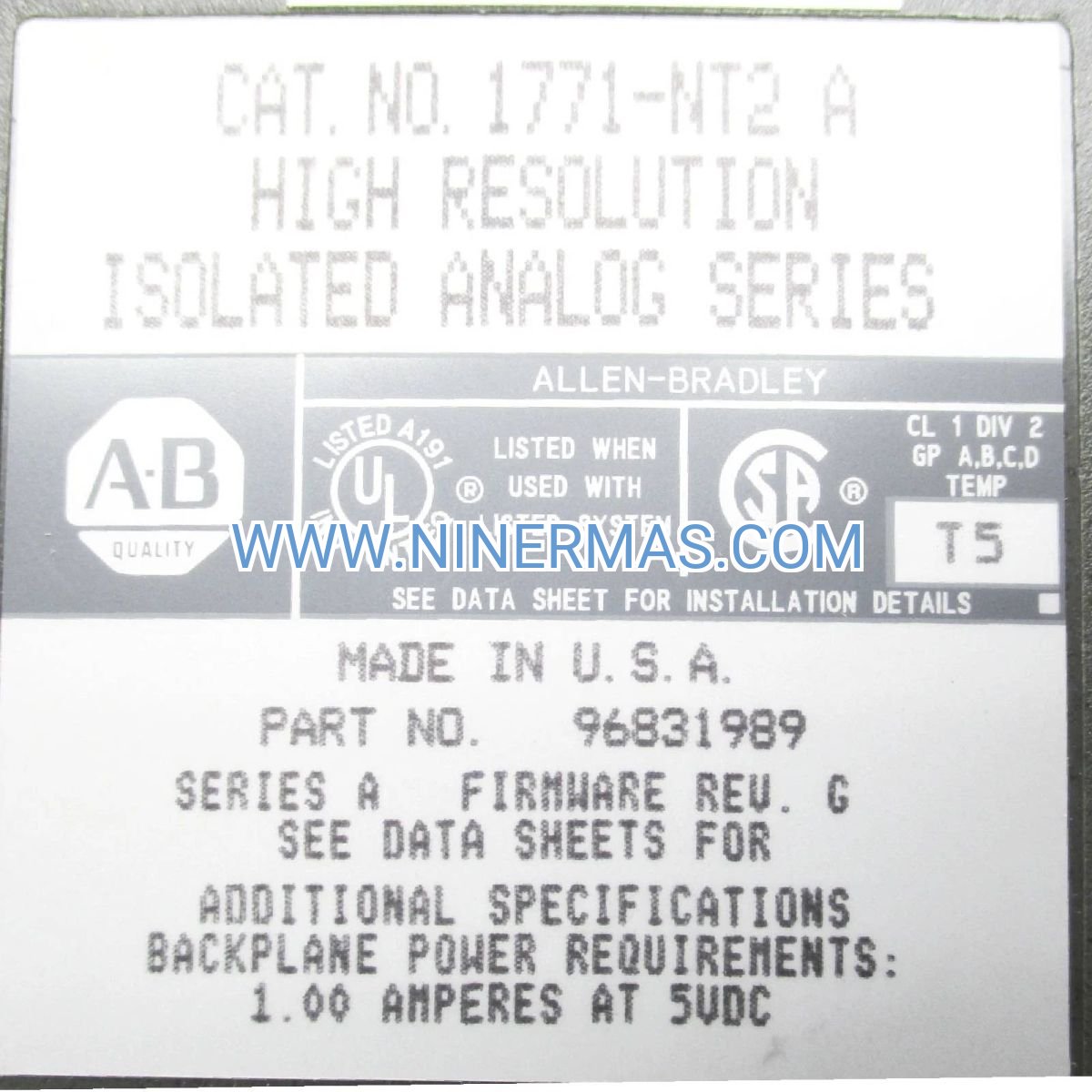
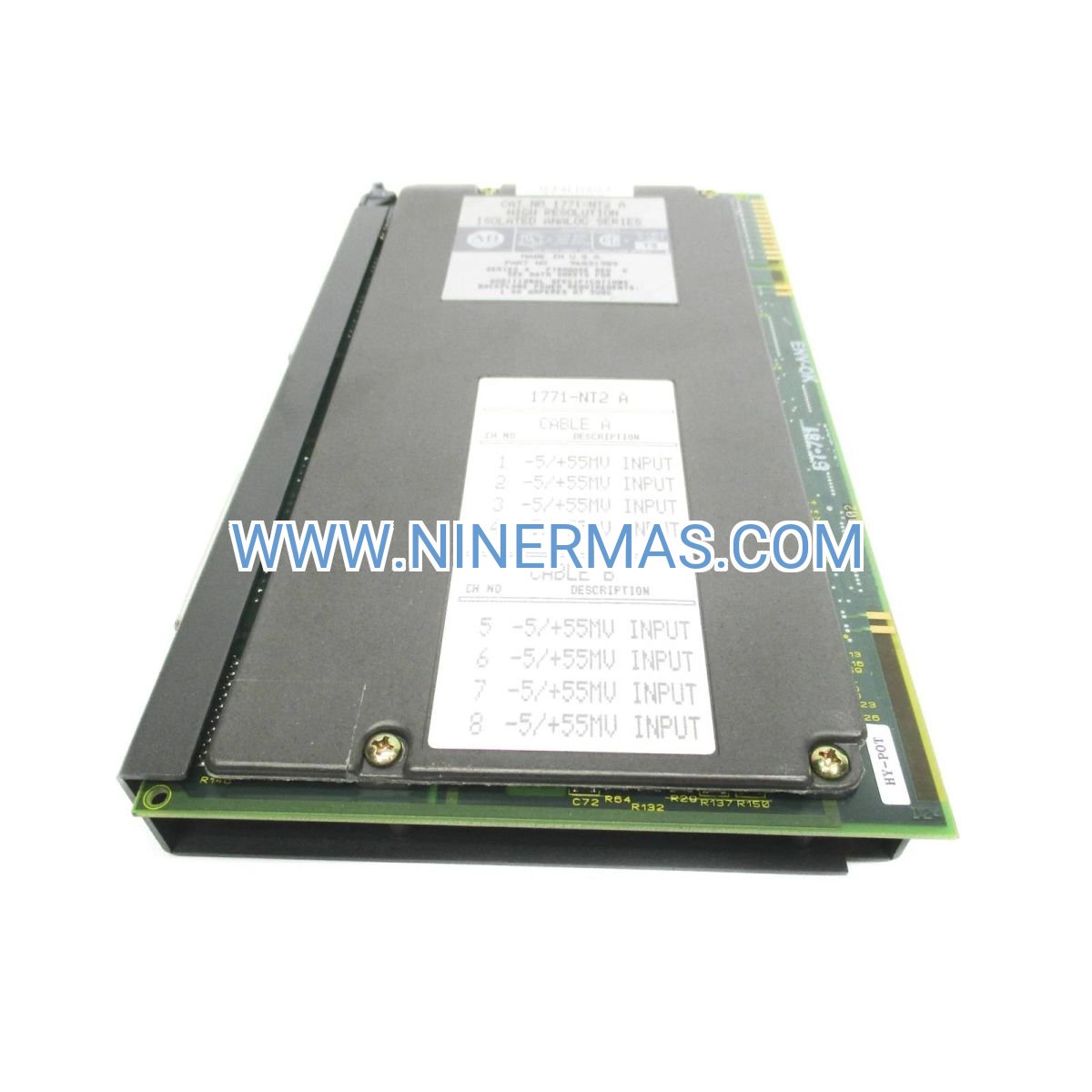
Allen-Bradley 1771-NT2 RTD Input Module | 8-Channel Temperature Interface for PLC-5 Systems
Description
Allen-Bradley 1771-NT2 RTD Analog Input Module (Industrial-Grade Temperature Monitoring Solution)
The Allen-Bradley 1771-NT2 is a high-precision RTD (Resistance Temperature Detector) analog input module designed for PLC-5 control systems. Through advanced 16-bit A/D conversion and multi-channel signal conditioning, it delivers accurate temperature measurement and real-time data acquisition for industrial process control applications.
Ideal for chemical processing plants, power generation facilities, HVAC systems, food & beverage production lines, and pharmaceutical manufacturing environments where precise temperature monitoring is critical. This module addresses common challenges including temperature drift, sensor compatibility issues, signal noise interference, and the need for multi-point monitoring across distributed processes.
With standardized 1771 I/O chassis compatibility and flexible configuration options, the 1771-NT2 offers reliable performance, simplified integration, easy maintenance, and broad RTD sensor compatibility. Suitable for control engineers, system integrators, OEM equipment manufacturers, and plant maintenance teams. Contact our application engineers for customized configuration guidance and technical quotations.
Core Features & Technical Advantages
8-Channel RTD Input Capability
Supports simultaneous monitoring of up to 8 independent RTD temperature sensors with individual channel configuration, enabling comprehensive thermal profiling across multiple process zones while reducing hardware footprint and system costs.
High-Resolution 16-Bit Conversion
Delivers exceptional measurement accuracy with 16-bit resolution, providing temperature precision within ±0.1°C for critical process control applications requiring tight thermal regulation and quality assurance.
Wide Temperature Measurement Range
Covers -200°C to +850°C (-328°F to +1562°F) operational range, accommodating diverse industrial applications from cryogenic processes to high-temperature furnace monitoring without requiring multiple module types.
Universal RTD Sensor Compatibility
Compatible with industry-standard 2-wire, 3-wire, and 4-wire RTD configurations including Pt100, Pt1000, Ni120, and Cu10 sensors, offering maximum flexibility for existing sensor infrastructure integration.
Robust Electrical Isolation
Features 1500V RMS channel-to-backplane isolation protection, minimizing ground loop interference, protecting sensitive control circuitry, and ensuring reliable operation in electrically noisy industrial environments.
Diagnostic & Fault Detection
Built-in open-circuit detection, short-circuit protection, and out-of-range alarm capabilities enable proactive maintenance scheduling and reduce unplanned downtime through early fault identification.
Typical Application Scenarios
The 1771-NT2 module is engineered for demanding industrial environments requiring stable, continuous temperature monitoring with high accuracy and reliability:
Chemical & Petrochemical Process Control
Monitors reactor temperatures, distillation column profiles, and heat exchanger performance in refineries and chemical plants where precise thermal control directly impacts product quality, safety margins, and process efficiency.
Power Generation & Energy Systems
Tracks turbine bearing temperatures, boiler feed water conditions, and generator winding thermal status in power plants, ensuring equipment protection and optimizing thermal efficiency across critical generation assets.
Food & Beverage Processing
Maintains pasteurization temperatures, fermentation vessel conditions, and cold chain monitoring in production facilities where regulatory compliance and product safety depend on accurate temperature documentation and control.
Pharmaceutical Manufacturing
Ensures GMP-compliant temperature monitoring for sterilization processes, clean room environmental control, and active ingredient synthesis where validated measurement systems are mandatory for regulatory approval.
HVAC & Building Automation
Controls chiller systems, boiler operations, and zone temperature distribution in commercial facilities, optimizing energy consumption while maintaining occupant comfort and equipment longevity.
Technical Specifications & Selection Guide
To facilitate engineering design and module selection, we provide comprehensive technical parameters for the 1771-NT2:
Key Technical Parameters:
- Input Channels: 8 differential RTD inputs
- RTD Types Supported: Pt100, Pt1000, Ni120, Cu10 (2/3/4-wire)
- Temperature Range: -200°C to +850°C (-328°F to +1562°F)
- Resolution: 16-bit (0.025°C per bit typical)
- Accuracy: ±0.1°C at 25°C ambient (±0.2°F)
- Update Rate: 165 ms per channel (all 8 channels)
- Isolation: 1500V RMS channel-to-backplane
- Power Consumption: 4.5W typical from backplane
- Operating Temperature: 0°C to +60°C (32°F to 140°F)
- Mounting: Standard 1771 I/O chassis slot
- Certifications: UL, CSA, CE compliant
Selection Considerations:
When specifying the 1771-NT2, consider: number of temperature measurement points required, RTD sensor type and wiring configuration, required measurement accuracy and response time, ambient operating conditions, available PLC-5 chassis slots, and integration with existing control architecture. For application-specific guidance, provide process parameters including temperature ranges, sensor specifications, environmental conditions, and control objectives to our engineering team for optimized module configuration recommendations.
System Integration & Configuration Options
PLC-5 Platform Compatibility
Seamlessly integrates with all PLC-5 processor families including PLC-5/11, 5/20, 5/30, 5/40, 5/60, and 5/80 controllers through standard 1771 I/O chassis backplane communication, supporting both local and remote I/O configurations via 1771-ASB remote I/O adapter modules.
Programming & Configuration Tools
Configured using RSLogix 5 or RSLogix 500 programming software with built-in module configuration screens, allowing engineers to set RTD type, temperature units (°C/°F), scaling parameters, alarm limits, and filter settings without external calibration tools.
Data Acquisition & SCADA Integration
Temperature data accessible via standard PLC-5 data table addressing, enabling integration with RSView, FactoryTalk View, Wonderware, and third-party SCADA systems for real-time monitoring, historical trending, and alarm management across enterprise networks.
Delivery, Service & Quality Assurance
Standard catalog modules ship from stock within 2-5 business days; custom-configured or tested assemblies require 7-14 days lead time. All 1771-NT2 modules include a minimum 12-month manufacturer warranty covering defects in materials and workmanship. Technical support includes remote configuration assistance, troubleshooting guidance, and on-site commissioning services (subject to location and project scope).
Each module ships with complete documentation package including: installation instructions, wiring diagrams, I/O configuration worksheets, RSLogix programming examples, and dimensional drawings for panel layout planning. All units undergo factory functional testing and calibration verification prior to shipment, with test certificates available upon request for quality-critical applications.
Frequently Asked Questions (FAQ)
Q: How do I connect the 1771-NT2 RTD input module to my existing PLC-5 system?
A: The module installs in any available slot of a 1771 I/O chassis connected to your PLC-5 processor. Connect RTD sensors to the front terminal block following the wiring diagram for 2-wire, 3-wire, or 4-wire configuration. Configure the module in RSLogix 5 software by specifying the I/O slot address, RTD type, and temperature range. Detailed connection diagrams are provided in the installation manual.
Q: What is the maximum number of RTD sensors one 1771-NT2 module can monitor?
A: Each module supports up to 8 independent RTD temperature sensors simultaneously. For applications requiring more than 8 measurement points, multiple 1771-NT2 modules can be installed in the same or different I/O chassis, limited only by available chassis slots and processor I/O capacity.
Q: What temperature measurement accuracy can I expect in real-world industrial conditions?
A: Under typical industrial conditions (0-60°C ambient), the module achieves ±0.1°C accuracy with proper RTD sensor selection and 3-wire or 4-wire connection to minimize lead resistance errors. Actual system accuracy depends on RTD sensor quality, cable length, electrical noise environment, and calibration practices. For critical applications, periodic calibration verification is recommended.
Q: What environmental protection rating does the 1771-NT2 module have?
A: The module is designed for installation inside NEMA-rated control enclosures and operates reliably in 0-60°C ambient temperature with 5-95% non-condensing humidity. When installed in appropriate IP54 or higher rated panels, the system is suitable for typical industrial plant environments. For harsh or outdoor installations, ensure the control cabinet provides adequate environmental protection.
Q: Can the 1771-NT2 communicate temperature data to remote monitoring systems or cloud platforms?
A: Yes, temperature data resides in the PLC-5 data table and can be accessed by SCADA systems, HMIs, or industrial gateways connected to the PLC-5 network. For cloud connectivity, use Ethernet-enabled PLC-5 processors or third-party protocol converters supporting Modbus TCP, OPC UA, or MQTT to bridge legacy PLC-5 systems with modern IIoT platforms and remote monitoring applications.
Q: Is the module compatible with non-Allen-Bradley RTD sensors and third-party temperature transmitters?
A: The 1771-NT2 accepts standard RTD sensors from any manufacturer that conform to IEC 60751 specifications (Pt100, Pt1000) or equivalent industry standards (Ni120, Cu10). It is designed for direct RTD connection and does not require external temperature transmitters, reducing system cost and complexity while maintaining measurement accuracy.
Request Technical Support & Custom Configuration
For detailed application engineering support, custom module configuration, technical quotations, or project-specific recommendations, please provide the following information: project name and application description, number of temperature measurement points required, RTD sensor types and wiring configuration, desired temperature range and accuracy requirements, PLC-5 processor model and I/O chassis configuration, environmental conditions and installation location. Our application engineers will provide one-on-one selection guidance, configuration worksheets, and competitive pricing within 24-48 hours.
© 2026 NINERMAS COMPANY LIMITED. All rights reserved.
Original Source: https://ninermas.com
Contact: sale@ninermas.com | +0086 187 5021 5667

Contact Info
-
Address:22 / F, South Wo Hang building, 148 Wing Lok Street, Sheung Wan, Western District, Hong Kong
-
Phone:+8618750215667
-
Email: