Original Industrial Spare Part
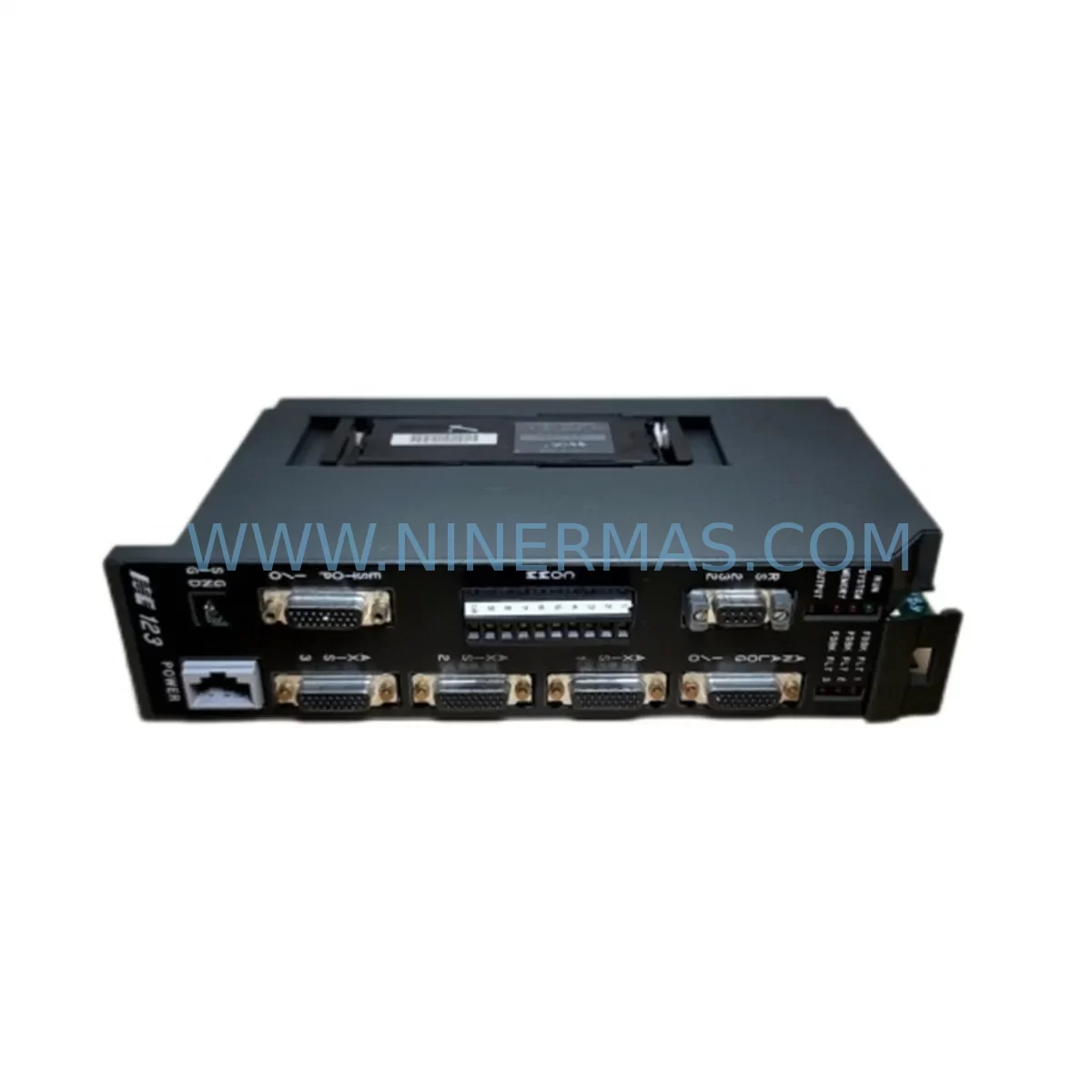
Allen-Bradley 1771-HS3A Retrofit-Compatible 3-Axis Servo for Legacy Systems
Verify the part, confirm the platform family, and move straight into quotation with the right commercial details.
RFQ Ready
- SKU1771-HS3A
- CategoryPLC & Industrial Automation Modules
- BrandAllen-Bradley
- SupportAvailability, lead time, condition, and shipping coordination
How Buyers Usually Use This Page
- Confirm the exact part number and platform family before sending the quote request.
- Use direct email when quantity, condition, and destination are already defined internally.
- Switch to the broader brand or category archive when you need alternates nearby.
Series Navigation
Move through the most common platform families behind this part.
Product RFQ
Send this part directly for quotation.
Include quantity, required condition, destination country, and target delivery timing. Current reference: Allen-Bradley 1771-HS3A Retrofit-Compatible 3-Axis Servo for Legacy Systems with SKU 1771-HS3A.
Allen-Bradley 1771-HS3A Retrofit-Compatible 3-Axis Servo Module for Legacy System Modernization
The Allen-Bradley 1771-HS3A is a high-performance 3-axis servo control module designed for the PLC-5 platform’s 1771 I/O chassis. As a direct retrofit-compatible replacement for the IMC-123 servo controller, the 1771-HS3A addresses one of the most pressing challenges in industrial automation today: keeping aging motion control systems operational while planning a structured migration path to modern platforms. Whether you are managing a legacy automotive assembly line, a packaging machine, or a precision CNC retrofit project, the 1771-HS3A provides the motion control continuity your operation demands.
NINERMAS maintains verified stock of the 1771-HS3A with full functional testing, 12-month warranty coverage, and same-week shipping capability — critical factors when unplanned downtime is not an option.
Upgrade Compatibility Table
| Parameter | 1771-HS3A (This Unit) | IMC-123 (Legacy) | Retrofit Notes |
|---|---|---|---|
| Axes Supported | 3-Axis | 3-Axis | Direct axis-count match; no re-engineering required |
| Chassis Compatibility | 1771 I/O Chassis (PLC-5) | 1771 I/O Chassis | Same backplane slot; verify slot addressing in processor |
| Communication Protocol | 1771 Backplane / DH+ | 1771 Backplane | DH+ network topology preserved; no gateway required |
| Power Requirements | +5 VDC / +24 VDC via backplane | +5 VDC / +24 VDC | Confirm 1771-P4S or 1771-P7 power supply capacity |
| Terminal Wiring | Standard 1771 I/O wiring arm | Standard 1771 wiring arm | Existing wiring arm reusable; inspect connector condition |
| Installation Slot Width | Single-slot module | Single-slot module | No chassis modification needed |
| Module Addressing | Configurable via processor | Fixed address | Re-address in RSLogix 5 or 6200 programming software |
| HMI Screen Compatibility | PanelView 550 / 900 / 1000 | PanelView series | Tag remapping may be required in PanelView application |
| Warranty | 12-Month Warranty — Covered by NINERMAS COMPANY LIMITED | ||
Retrofit Planning for Existing Automation Systems
Replacing the 1771-HS3A or its IMC-123 predecessor in a live production environment requires careful pre-engineering to avoid configuration errors and extended downtime. The retrofit process typically begins with a full audit of the existing 1771 I/O chassis — identifying the chassis model (such as the 1771-A1B, 1771-A2B, or 1771-A4B), the number of occupied slots, and the current power supply loading. The 1771-P4S or 1771-P7 power supply must have sufficient headroom to support the 1771-HS3A’s backplane current draw alongside co-resident modules such as the 1771-OBD discrete output module, 1771-IFE analog input module, and any 1771-SDN DeviceNet scanner cards already installed in the rack.
Before removing the legacy servo module, engineers should use RSLogix 5 or the older 6200 programming software to export and archive the complete processor program, including all motion instruction blocks, PID loop parameters, and axis configuration data stored in the PLC-5 processor — typically a 5/40, 5/60, or 5/80 model. This backup is non-negotiable: it protects the original control logic and provides the reference needed to verify program compatibility after the 1771-HS3A is seated and addressed.
Terminal wiring on the existing 1771 wiring arm should be photographed and documented before disconnection. The 1771-HS3A uses the same standard wiring arm interface, so in most cases the existing field wiring — servo drive enable signals, encoder feedback lines, and analog command outputs to drives such as the 1398-DDM-019 or 1398-DDM-075 — can be reconnected directly without modification. However, shielding integrity and cable routing should be inspected, particularly on encoder feedback cables, where signal degradation can cause axis faults during commissioning.
For systems that include a 1771-SN remote I/O scanner or a 1771-ASB adapter for distributed I/O drops, the module address map must be reviewed to confirm that the 1771-HS3A’s new slot assignment does not conflict with existing remote I/O rack addressing. In multi-rack configurations, this step is frequently overlooked and can result in I/O communication faults that are difficult to diagnose without the original system documentation.
HMI screens built on PanelView 550, PanelView 900, or PanelView 1000 terminals connected via DH+ will typically continue to function after the module swap, but any tag references tied to the servo module’s data file addresses should be verified in PanelView Builder before restarting production. If the site is also planning a broader migration toward ControlLogix or CompactLogix platforms, this retrofit provides an ideal opportunity to document all existing motion parameters for future re-use in Studio 5000 Logix Designer.
Downtime Control During System Migration
Minimizing production interruption during a 1771-HS3A swap requires a structured shutdown and restart sequence. The recommended approach is to schedule the physical module exchange during a planned maintenance window — ideally a shift changeover or scheduled preventive maintenance stop — rather than responding reactively to a module failure. Pre-staging the replacement 1771-HS3A with its slot address pre-configured and the wiring arm pre-labeled reduces the physical swap time to under 30 minutes in most installations.
Before powering down the chassis, the PLC-5 processor should be placed in Program mode to halt all motion commands and allow servo drives to decelerate to a safe stop. The 1771-P4S or 1771-P7 power supply should then be de-energized before the module is extracted. After seating the 1771-HS3A, the processor program should be downloaded fresh from the archived backup rather than relying on the processor’s battery-backed memory, which may have been affected by the fault condition that prompted the replacement.
During initial power-up, the 1771-HS3A’s status indicators should be observed for normal initialization. Any axis fault codes should be cross-referenced against the IMC-123 / 1771-HS3A user manual before attempting to run motion. A controlled jog test on each axis — at reduced speed and with personnel clear of moving machinery — is the standard commissioning step before returning the system to automatic production mode. NINERMAS performs a full functional test on every 1771-HS3A unit prior to shipment, including axis initialization verification, to reduce the risk of commissioning delays on-site.
Retrofit Support FAQ
Q1: Is the 1771-HS3A a direct drop-in replacement for the IMC-123 servo module?
A: Yes. The 1771-HS3A occupies the same single-slot position in the 1771 I/O chassis and uses the same backplane interface as the IMC-123. In most installations, the existing wiring arm and field wiring can be reused. Module addressing will need to be confirmed and set in the PLC-5 processor program using RSLogix 5 or 6200 software.
Q2: What commissioning steps are required after installing the 1771-HS3A?
A: After seating the module and reconnecting the wiring arm, download the archived processor program, verify axis address assignments, and perform a low-speed jog test on each axis before returning to automatic mode. Check encoder feedback signal quality and confirm servo drive enable logic is functioning correctly on all three axes.
Q3: Does NINERMAS test the 1771-HS3A before shipping?
A: Yes. Every unit undergoes functional testing including backplane communication verification and axis initialization checks before dispatch. Each 1771-HS3A is covered by a 12-month warranty from the date of shipment.
Q4: What if my 1771 chassis power supply cannot support the additional load?
A: If the existing 1771-P4S or 1771-P7 power supply is already near capacity, a power budget calculation should be performed before installation. In some cases, a higher-capacity power supply or a second chassis with a 1771-SN scanner may be required. Contact our technical team with your chassis slot configuration and we can assist with the power budget review prior to ordering.
| Product Series | PLC-5 |
|---|---|
| Country of Origin | US |
Catalog Continuation
More Allen-Bradley modules in the catalog.
Use the brand lane to compare nearby part numbers, platform-adjacent modules, and other inquiry-ready listings before sending your final RFQ.
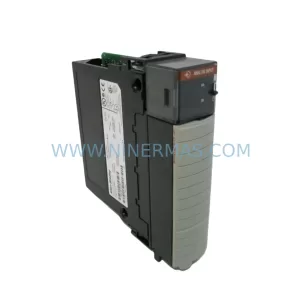
Catalog Continuation
Alternative parts within PLC & Industrial Automation Modules.
Stay inside the same system family when you need substitutes, adjacent modules, or a broader shortlist for procurement review.
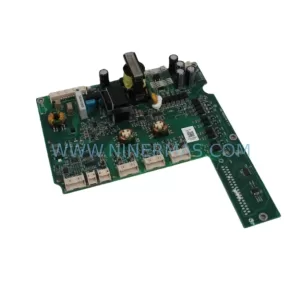
SKU: ZINT-541 3AUA00000658960
ABB ZINT-541 3AUA00000658960 Retrofit-Compatible Inverter Power Module
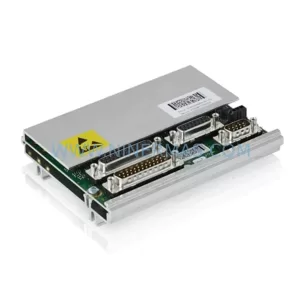
SKU: DSQC633 3HAC022286-001
ABB DSQC633 3HAC022286-001 Service-Ready Spare Part
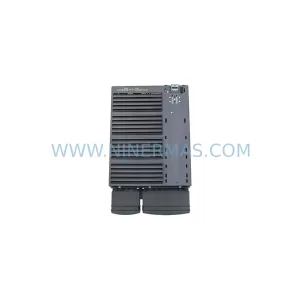
SKU: 6SL3224-0BE33-7UA0
Siemens 6SL3224-0BE33-7UA0 Service-Ready Spare Part
SKU: HENF331395R0001 P4LDA
ABB HENF331395R0001 Service-Ready Industrial Spare Part