Original Industrial Spare Part
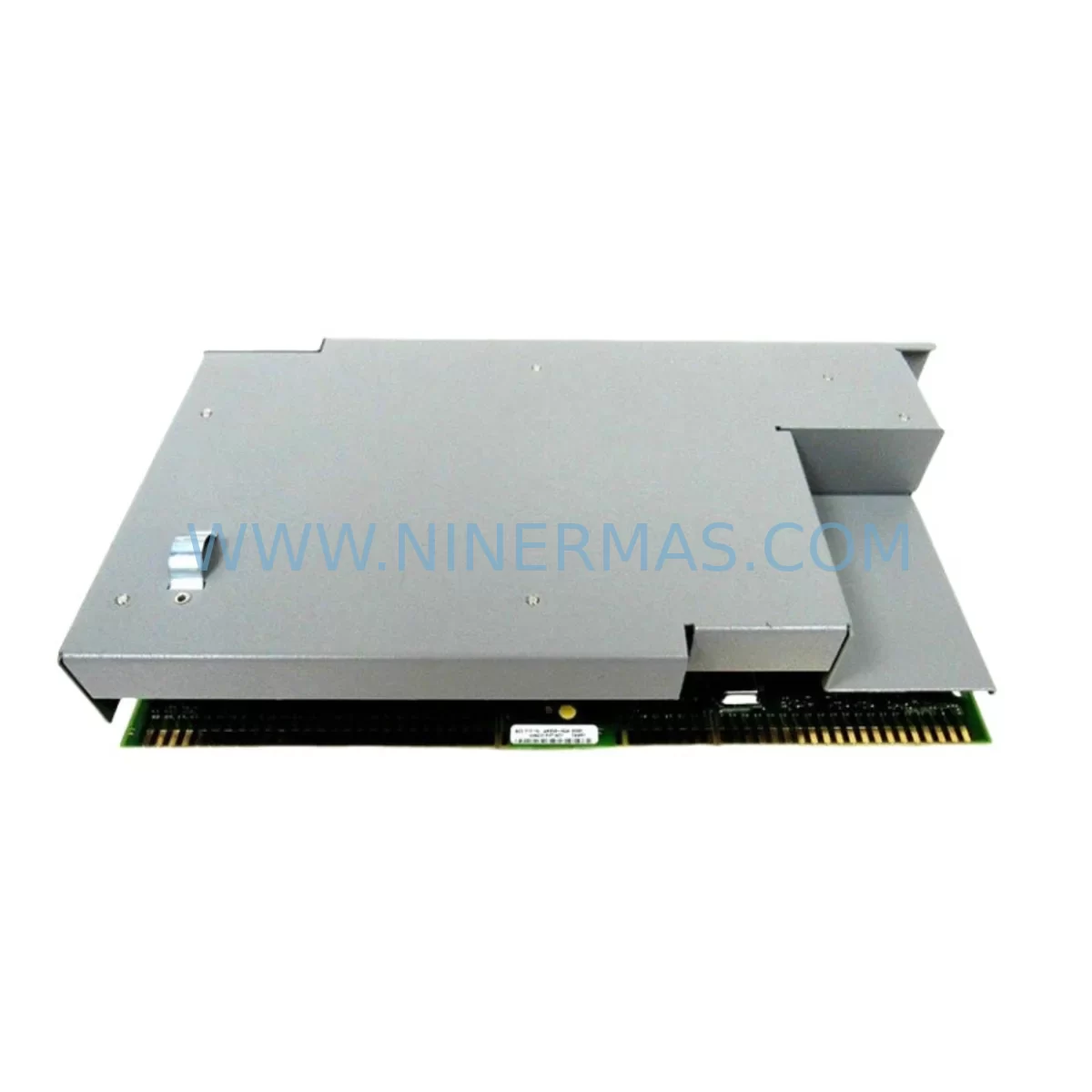
Allen-Bradley 1771-ACN Retrofit-Compatible Remote I/O Adapter
Verify the part, confirm the platform family, and move straight into quotation with the right commercial details.
RFQ Ready
- SKU1771-ACN
- CategoryPLC & Industrial Automation Modules
- BrandAllen-Bradley
- SupportAvailability, lead time, condition, and shipping coordination
How Buyers Usually Use This Page
- Confirm the exact part number and platform family before sending the quote request.
- Use direct email when quantity, condition, and destination are already defined internally.
- Switch to the broader brand or category archive when you need alternates nearby.
Series Navigation
Move through the most common platform families behind this part.
Product RFQ
Send this part directly for quotation.
Include quantity, required condition, destination country, and target delivery timing. Current reference: Allen-Bradley 1771-ACN Retrofit-Compatible Remote I/O Adapter with SKU 1771-ACN.
Allen-Bradley 1771-ACN Retrofit-Compatible Remote I/O Adapter for Legacy PLC-5 Systems
The Allen-Bradley 1771-ACN is a Remote I/O (RIO) Adapter Module designed for use within the 1771 I/O chassis platform, serving as a critical communication bridge between a PLC-5 programmable logic controller and distributed I/O racks across the plant floor. As Rockwell Automation has officially discontinued the PLC-5 product family, the 1771-ACN has become one of the most sought-after legacy components for facilities that are either extending the operational life of existing control systems or executing a phased migration toward ControlLogix or CompactLogix platforms. NINERMAS maintains verified inventory of the 1771-ACN to support both emergency replacement scenarios and planned retrofit projects, backed by a 12-month warranty on every unit shipped.
For automation engineers and maintenance teams managing aging PLC-5 installations, the 1771-ACN occupies a central role in the Remote I/O network topology. It mounts directly into a 1771 I/O chassis — typically a 1771-A1B, 1771-A2B, 1771-A3B, or 1771-A4B rack — and communicates with the PLC-5 processor over the RIO link using a dedicated coaxial or twisted-pair cable. Before replacing a failed or end-of-life 1771-ACN, engineers must verify the chassis slot assignment, the node address set on the module’s rotary switches, and the RIO baud rate configured in the PLC-5 program. Mismatched node addresses or baud rate settings are the most common causes of communication faults following a module swap, and these parameters must be confirmed against the original I/O configuration table before the replacement unit is installed.
Upgrade Compatibility Table
| Parameter | 1771-ACN (Original) | Retrofit / Replacement Notes |
|---|---|---|
| Module Type | Remote I/O Adapter | Direct replacement; same form factor and slot footprint |
| Compatible Chassis | 1771-A1B / A2B / A3B / A4B | Verify chassis backplane voltage (5 VDC) before installation |
| Communication Protocol | Allen-Bradley Remote I/O (RIO) | RIO link baud rate must match PLC-5 processor configuration |
| Node Address | Set via rotary switch (0–77 octal) | Confirm address against original I/O configuration table |
| Power Consumption | ~0.8 A @ 5 VDC (backplane) | Verify chassis power supply (e.g., 1771-P4S) capacity before adding modules |
| Migration Path | PLC-5 / 1771 platform | ControlLogix 1756-DHRIO or 1756-RIO bridge for protocol migration |
| Installation Space | Single-slot 1771 module | No physical modification required for like-for-like swap |
| Commissioning | RSLogix 5 / 6200 programming software | Backup PLC-5 program before any hardware change; verify I/O tree post-swap |
| Warranty | OEM warranty expired (discontinued) | 12-Month NINERMAS Warranty on all replacement units |
Retrofit Planning for Existing Automation Systems
A successful 1771-ACN retrofit begins well before the replacement unit arrives on site. The first step is a thorough audit of the existing RIO network: document every adapter node address, the number of I/O groups assigned to each adapter, and the cable routing between the PLC-5 processor rack and each remote chassis. In many legacy installations, the RIO cable runs through conduit shared with power wiring, and signal integrity issues — particularly at higher baud rates — can mimic adapter faults. Before condemning a 1771-ACN, it is worth verifying cable continuity and shield grounding at both ends of the RIO link.
When the 1771-ACN is confirmed faulty, the replacement procedure involves removing the module from the 1771 chassis, transferring the node address switch settings to the new unit, and reseating it in the same slot. The PLC-5 processor — whether a PLC-5/11, PLC-5/20, PLC-5/40, or PLC-5/80 — does not require a program download for a like-for-like adapter swap, provided the node address and I/O group configuration are preserved. However, if the replacement is part of a broader upgrade that also involves adding new 1771-IFE analog input modules or 1771-OFE analog output modules to the remote chassis, the PLC-5 program will need to be updated to reflect the new I/O map, and the HMI screens — typically running on a PanelView 550 or PanelView 900 — must be reviewed to ensure tag addresses remain valid.
For facilities planning a longer-term migration from the PLC-5 / 1771 platform to a ControlLogix architecture, the 1771-ACN can remain in service during the transition period. A 1756-RIO Remote I/O communication module installed in a ControlLogix chassis allows the new controller to communicate directly with existing 1771 remote I/O racks, preserving the installed base of 1771-IB16 digital input modules, 1771-OB16 digital output modules, and specialty modules without requiring immediate replacement. This bridge approach significantly reduces the capital expenditure and downtime associated with a full cutover, allowing engineering teams to migrate control logic incrementally using RSLogix 5000 while the plant continues to operate.
Power budget verification is a critical and often overlooked step in any 1771 chassis retrofit. Each chassis relies on a dedicated power supply — commonly the 1771-P4S or 1771-P7 — and the total current draw of all installed modules must not exceed the supply’s rated output. When adding modules to an existing chassis as part of an upgrade, calculate the combined 5 VDC and 24 VDC loads for all slots before powering up. Overloaded chassis power supplies are a leading cause of intermittent faults and premature module failures in legacy systems. If the existing supply is at or near capacity, a chassis power supply upgrade should be included in the retrofit scope.
Communication protocol migration is another key consideration for sites moving away from the proprietary Allen-Bradley RIO protocol. The 1756-DHRIO module provides a ControlLogix-based gateway for both Data Highway Plus (DH+) and Remote I/O networks, enabling the new controller to exchange data with legacy PLC-5 and SLC 500 systems during the transition. This is particularly valuable in multi-controller environments where a PLC-5/40 acts as a supervisory controller over several SLC 5/04 or SLC 5/05 satellite controllers connected via DH+. Maintaining the DH+ network during migration preserves peer-to-peer messaging and allows the new ControlLogix system to assume supervisory functions without disrupting the satellite controllers.
Downtime Control During System Migration
Minimizing unplanned downtime is the primary concern for any maintenance team managing a 1771-ACN replacement or broader PLC-5 retrofit. The most effective strategy is to treat every hardware change as a planned maintenance event: schedule the swap during a production window, prepare the replacement module in advance with the correct node address settings, and have a verified backup of the PLC-5 program stored on both the programming terminal and an offline archive before touching any hardware.
For a like-for-like 1771-ACN swap, the actual module exchange typically takes less than 15 minutes if the chassis is accessible and the node address settings are documented. The critical path is the post-swap verification: confirm that the PLC-5 processor re-establishes communication with the remote chassis, check the I/O status bits in the processor’s data table, and verify that all field devices connected to the remote I/O modules are responding correctly before returning the system to automatic mode. If the system uses a PanelView HMI, confirm that all I/O-linked display elements are updating correctly before releasing the line.
For more complex retrofits involving protocol migration or chassis consolidation, a parallel-run strategy is strongly recommended. Install the new ControlLogix hardware alongside the existing PLC-5 system, configure the 1756-RIO or 1756-DHRIO bridge, and validate the new control logic against the live process before executing the final cutover. This approach allows engineers to identify and resolve compatibility issues — such as differences in scan time, I/O update rates, or PID tuning parameters — without exposing the production process to unvalidated control logic. The cutover itself can then be reduced to a planned, brief interruption rather than an extended outage.
NINERMAS ships all 1771-ACN replacement units with pre-shipment functional testing documentation. Each unit is verified for backplane communication and RIO link integrity before dispatch, reducing the risk of receiving a non-functional module during a time-critical repair. Standard lead times from confirmed order to dispatch are 1–3 business days for in-stock units, with expedited options available for emergency requirements.
Retrofit Support FAQ
Q1: Is the NINERMAS 1771-ACN a direct drop-in replacement for the original Rockwell Automation module?
Yes. The 1771-ACN supplied by NINERMAS is form-fit-function compatible with the original Allen-Bradley module. It installs in the same 1771 chassis slot, uses the same rotary switch node addressing, and communicates over the same Remote I/O protocol. No program changes are required for a like-for-like swap, provided the node address and baud rate settings are preserved from the original module.
Q2: What pre-shipment testing is performed on each unit?
Every 1771-ACN unit dispatched by NINERMAS undergoes functional verification including backplane power-up testing and RIO communication link validation. A test report is included with each shipment. All units are covered by a 12-month warranty from the date of dispatch, covering defects in materials and workmanship under normal operating conditions.
Q3: Can the 1771-ACN be used during a phased migration to ControlLogix?
Yes. The 1771-ACN can remain in service in the existing 1771 remote chassis while a ControlLogix system is being commissioned in parallel. Using a 1756-RIO module in the new ControlLogix chassis, the new controller can communicate with the existing 1771 remote I/O racks, allowing a phased migration without requiring immediate replacement of all field wiring and I/O modules. This is the recommended approach for minimizing capital expenditure and production risk during platform transitions.
Q4: What information should I have ready when placing an order or requesting a compatibility check?
To confirm compatibility and availability, please have the following information ready: the full catalog number of the module being replaced (1771-ACN), the chassis model (e.g., 1771-A4B), the PLC-5 processor model, the current RIO baud rate setting, and the node address in use. For urgent requirements, contact NINERMAS directly with your application details and we will confirm stock availability and lead time within one business day.
| Product Series | PLC-5 |
|---|---|
| Country of Origin | US |
Catalog Continuation
More Allen-Bradley modules in the catalog.
Use the brand lane to compare nearby part numbers, platform-adjacent modules, and other inquiry-ready listings before sending your final RFQ.
Catalog Continuation
Alternative parts within PLC & Industrial Automation Modules.
Stay inside the same system family when you need substitutes, adjacent modules, or a broader shortlist for procurement review.
SKU: TRY/PRG/4-20MA/10-30DC
MOORE TRY/PRG/4-20MA/10-30DC Service-Ready Spare Part
SKU: 5085-404901-11 12INCH 2910-202413-12 404200XRMPD2H14 7-249717
TEL 5085-404901-11 Service-Ready Spare Part for Industrial Maintenance
SKU: DIP011 05-058-011
SIGMATEK DIP011 05-058-011 Service-Ready Spare Part