Description
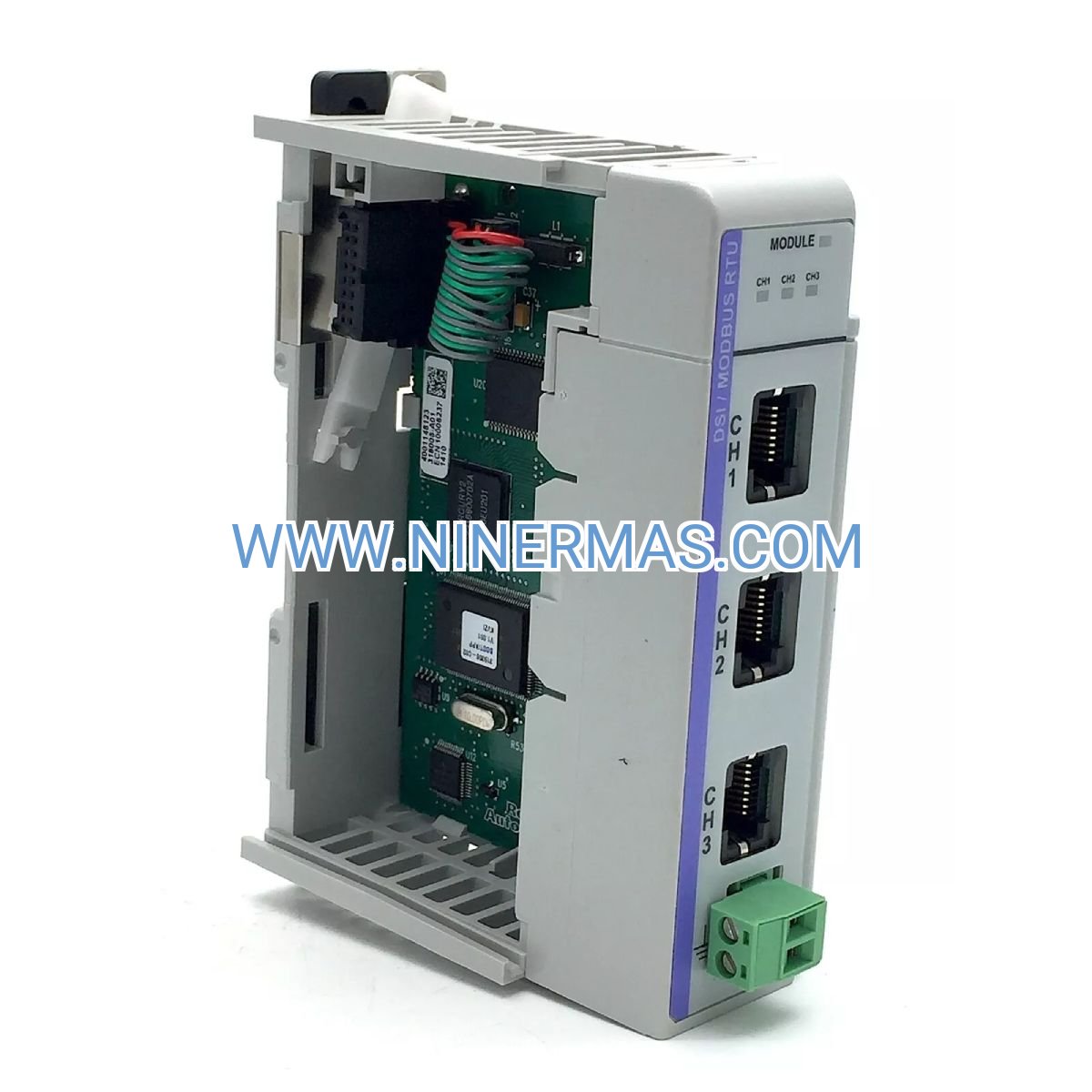
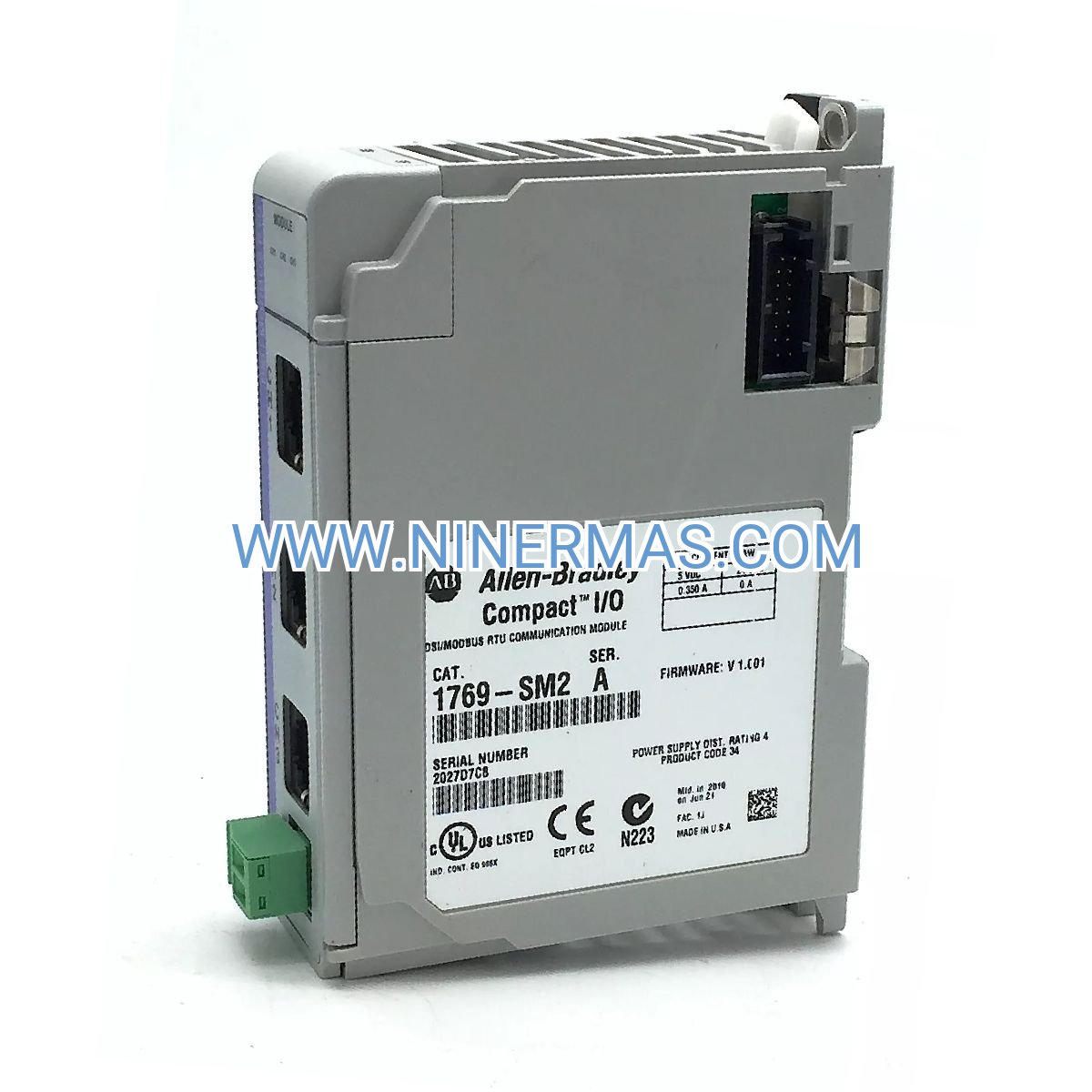
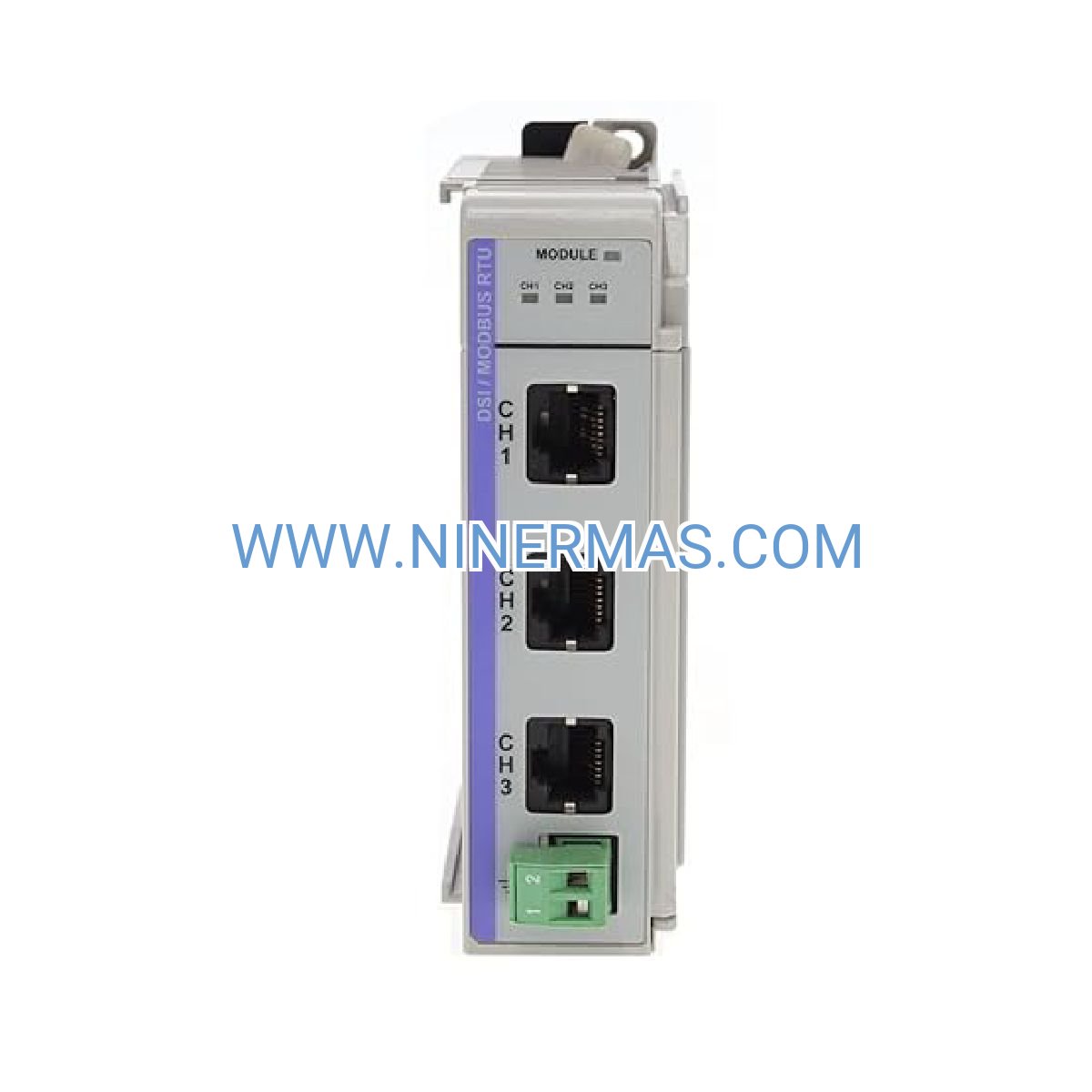
1769-SM2 DSI Communication Module (Industrial-Grade Serial Interface)
The 1769-SM2 represents a purpose-built serial communication gateway designed to bridge CompactLogix control platforms with DSI-enabled variable frequency drives and Modbus RTU field devices. Engineered for mission-critical industrial environments, this module delivers deterministic data exchange, simplified wiring architecture, and field-proven reliability across manufacturing, process control, and infrastructure applications.
Built on Rockwell Automation's CompactLogix ecosystem, the 1769-SM2 eliminates costly protocol converters while maintaining backward compatibility with legacy serial equipment. Whether you're retrofitting existing drive systems or deploying new automation projects, this communication module provides the performance and flexibility demanded by modern industrial operations.
With native Studio 5000 integration, diagnostic LED indicators, and hot-swap capability, the 1769-SM2 reduces commissioning time, simplifies troubleshooting, and minimizes unplanned downtime—delivering measurable ROI through lower total cost of ownership.
Core Features & Benefits
✓ Dual-Protocol Architecture
Supports both DSI (Drive Serial Interface) and Modbus RTU protocols on a single module, enabling communication with AC drives, servo systems, flow meters, and third-party instrumentation without additional hardware.
✓ Seamless CompactLogix Integration
Direct backplane connectivity with L1, L2, and L3 series controllers ensures low-latency data transfer and simplified system configuration through RSLogix 5000/Studio 5000 programming environments.
✓ Hot-Swappable Design
Field-replaceable without powering down the entire control system (controller-dependent), reducing maintenance windows and improving system availability in 24/7 production environments.
✓ Compact Footprint Optimization
Space-efficient form factor conserves valuable control panel real estate while maintaining full industrial-grade specifications for temperature, humidity, and vibration resistance.
✓ Real-Time Diagnostic Feedback
Multi-color LED status indicators provide instant visibility into module health, communication status, and fault conditions—accelerating troubleshooting and reducing mean time to repair (MTTR).
✓ Flexible Mounting Options
Supports both DIN rail and panel-mount installation methods, accommodating diverse cabinet layouts and retrofit scenarios without custom brackets or adapters.
Typical Application Scenarios
→ Variable Frequency Drive Control Systems
Challenge: Coordinating multiple AC drives in conveyor systems, pump stations, or HVAC applications requires reliable, low-latency communication.
Solution: The 1769-SM2 establishes direct DSI links to PowerFlex, Kinetix, and third-party VFDs, enabling precise speed control, torque monitoring, and fault diagnostics through a single CompactLogix program.
Value: Eliminates hardwired I/O for drive control, reduces panel wiring by up to 40%, and centralizes drive parameters for easier commissioning and maintenance.
→ Process Instrumentation Integration
Challenge: Water treatment facilities, chemical plants, and food processing operations rely on Modbus-enabled flow meters, pressure transmitters, and analytical instruments that must interface with Allen-Bradley PLCs.
Solution: Modbus RTU support allows the 1769-SM2 to poll up to 32 slave devices, mapping process variables directly into controller tags for real-time monitoring and closed-loop control.
Value: Reduces integration costs by 30-50% compared to Ethernet-based solutions while maintaining deterministic scan times for critical process control loops.
→ Legacy Equipment Modernization
Challenge: Manufacturing plants with aging serial-based equipment face obsolescence risks and limited connectivity to modern SCADA/MES systems.
Solution: The 1769-SM2 acts as a protocol bridge, preserving investments in existing drives and instruments while enabling data visibility through CompactLogix EtherNet/IP™ networks.
Value: Extends equipment lifespan by 5-10 years, avoids costly forklift upgrades, and enables predictive maintenance through centralized data collection.
→ Material Handling & Sortation Systems
Challenge: Distribution centers and parcel hubs require synchronized control of dozens of conveyor zones, diverters, and barcode scanners.
Solution: DSI communication provides deterministic control of zone motors while Modbus RTU interfaces with scanner arrays and RFID readers, all managed from a single CompactLogix controller.
Value: Improves throughput by 15-25% through tighter motion coordination and reduces wiring complexity in large-scale systems spanning 100+ I/O points.
→ Packaging Machinery Automation
Challenge: High-speed packaging lines demand precise synchronization between servo drives, pneumatic actuators, and vision systems.
Solution: The 1769-SM2 enables coordinated motion profiles by linking CompactLogix motion controllers to DSI-compatible servo amplifiers, while Modbus RTU handles auxiliary device communication.
Value: Achieves ±0.5mm positioning accuracy, reduces changeover time by 20%, and simplifies recipe management through unified controller programming.
Technical Parameters & Selection Guide
| Specification | Value |
|---|---|
| Catalog Number | 1769-SM2 |
| Product Family | CompactLogix 1769 I/O Series |
| Communication Protocols | DSI, Modbus RTU (RS-232/RS-485) |
| Baud Rate Range | 300 to 115,200 bps (configurable) |
| Maximum Cable Distance | 15m (DSI), 1200m (Modbus RS-485) |
| Operating Temperature | 0°C to 60°C (32°F to 140°F) |
| Storage Temperature | -40°C to 85°C (-40°F to 185°F) |
| Relative Humidity | 5% to 95% RH (non-condensing) |
| Shock Resistance | 30g operational, IEC 60068-2-27 |
| Vibration Resistance | 2g @ 10-500 Hz, IEC 60068-2-6 |
| Power Consumption | 2.5W @ 24V DC (backplane-powered) |
| Dimensions (H×W×D) | 87mm × 35mm × 118mm |
| Weight | 0.31 kg (0.68 lbs) |
| Certifications | UL Listed, CE, RoHS, C-Tick |
| MTBF (Mean Time Between Failures) | >500,000 hours @ 40°C |
Selection Criteria:
- Choose the 1769-SM2 when interfacing CompactLogix systems with DSI-compatible drives (PowerFlex 4, 40, 70, 700 series) or Modbus RTU devices
- For Modbus TCP/IP requirements, consider the 1769-L3x controllers with built-in Ethernet ports or add a 1769-AENTR communication adapter
- Verify controller firmware compatibility (RSLogix 5000 v16 or later; Studio 5000 v21 or later recommended)
- Ensure adequate backplane power budget: 1769-SM2 draws 2.5W; pair with 1769-PA2K (2A) or 1769-PA4 (4A) power supplies
- For applications requiring more than 2 serial ports, deploy multiple 1769-SM2 modules or upgrade to ControlLogix 1756-series platforms
Extended Functions
IoT & Industry 4.0 Integration
When paired with CompactLogix L3x controllers featuring EtherNet/IP™ connectivity, the 1769-SM2 enables serial device data to flow seamlessly into cloud-based analytics platforms, SCADA systems, and MES databases. This architecture supports predictive maintenance initiatives by streaming drive temperature, vibration, and load data to condition monitoring applications.
Advanced Diagnostic Capabilities
Studio 5000 Add-On Profiles (AOPs) unlock enhanced diagnostics including communication error counters, buffer overrun detection, and protocol-specific fault codes. These features accelerate root-cause analysis during commissioning and reduce troubleshooting time by up to 60%.
Custom Protocol Development
For specialized applications, the 1769-SM2 supports user-defined Modbus function codes and custom DSI parameter mapping through ladder logic or structured text programming, enabling integration with proprietary equipment without third-party gateways.
Delivery & Service Assurance
Lead Time:
→ Standard Stock Items: 3-5 business days (domestic shipping)
→ Custom Configurations: 10-15 business days
→ Express Service: Next-day delivery available for critical downtime situations
Warranty Coverage:
→ 12-month manufacturer warranty covering defects in materials and workmanship
→ Extended warranty options available (24/36-month terms)
→ Advance replacement program for mission-critical applications
Technical Support:
→ Pre-sales application engineering consultation
→ Post-sales configuration assistance via phone/email
→ On-site commissioning support (available in select regions)
→ Access to Studio 5000 sample code and wiring diagrams
Documentation Package:
Every 1769-SM2 module ships with:
• Installation quick-start guide
• Wiring terminal diagrams
• Studio 5000 Add-On Profile (AOP) installation files
• Compliance certificates (UL, CE, RoHS)
• Calibration test report
Frequently Asked Questions
How do I configure the 1769-SM2 for Modbus RTU communication in Studio 5000?
After installing the module in your CompactLogix chassis, add it to your I/O configuration tree in Studio 5000. Select the Modbus RTU protocol, configure baud rate (typically 9600 or 19200 bps), parity (even/odd/none), and slave device addresses. Use MSG instructions in your ladder logic to read/write Modbus registers. Detailed configuration examples are included in Rockwell Automation Publication 1769-UM011.
What is the maximum number of Modbus devices I can connect to a single 1769-SM2?
The module supports up to 32 Modbus RTU slave devices on a single RS-485 network. Actual device count may be limited by scan time requirements and network bandwidth. For optimal performance, limit polling cycles to 100ms or greater per device.
Can the 1769-SM2 replace an older 1747-KE interface module?
Yes, the 1769-SM2 provides equivalent DSI functionality with enhanced diagnostics and faster scan times. However, you'll need to migrate your SLC 500 program to a CompactLogix controller (L1/L2/L3 series) and reconfigure device mappings in Studio 5000. Contact our application engineers for migration planning assistance.
Does this module require external power, or is it backplane-powered?
The 1769-SM2 draws all operating power from the CompactLogix backplane (2.5W @ 24V DC). Ensure your 1769-PA series power supply has sufficient capacity for all installed modules. No external power connections are required.
What cable specifications are recommended for DSI connections?
Use shielded twisted-pair cable (Belden 9842 or equivalent) with 22 AWG conductors. Maximum cable length is 15 meters (50 feet) for DSI applications. For Modbus RS-485, use Belden 3105A or similar with 120-ohm termination resistors at both network ends.
Is the 1769-SM2 compatible with non-Rockwell drives and instruments?
Yes, the module supports industry-standard Modbus RTU protocol, enabling communication with devices from Schneider Electric, Siemens, ABB, Honeywell, and hundreds of other manufacturers. DSI protocol is specific to Rockwell Automation drives (PowerFlex, Kinetix series).
Ready to Optimize Your Control System?
The 1769-SM2 DSI Communication Module delivers proven reliability, simplified integration, and long-term value for industrial automation projects of any scale. Whether you're upgrading legacy equipment or designing new control architectures, our team provides expert guidance from specification through commissioning.
Contact our automation specialists today:
? Email: sale@ninermas.com
? Phone: +0086 187 5021 5667
? Technical Resources: https://ninermas.com
Request a quote, download technical documentation, or schedule a consultation with our application engineering team.
© 2026 NINERMAS COMPANY LIMITED. All rights reserved.
Original Source: https://ninermas.com
Contact: sale@ninermas.com | +0086 187 5021 5667
PDF Specification
Download PDF file here:
Click to Download PDF

Contact Info
-
Address:22 / F, South Wo Hang building, 148 Wing Lok Street, Sheung Wan, Western District, Hong Kong
-
Phone:+8618750215667
-
Email: