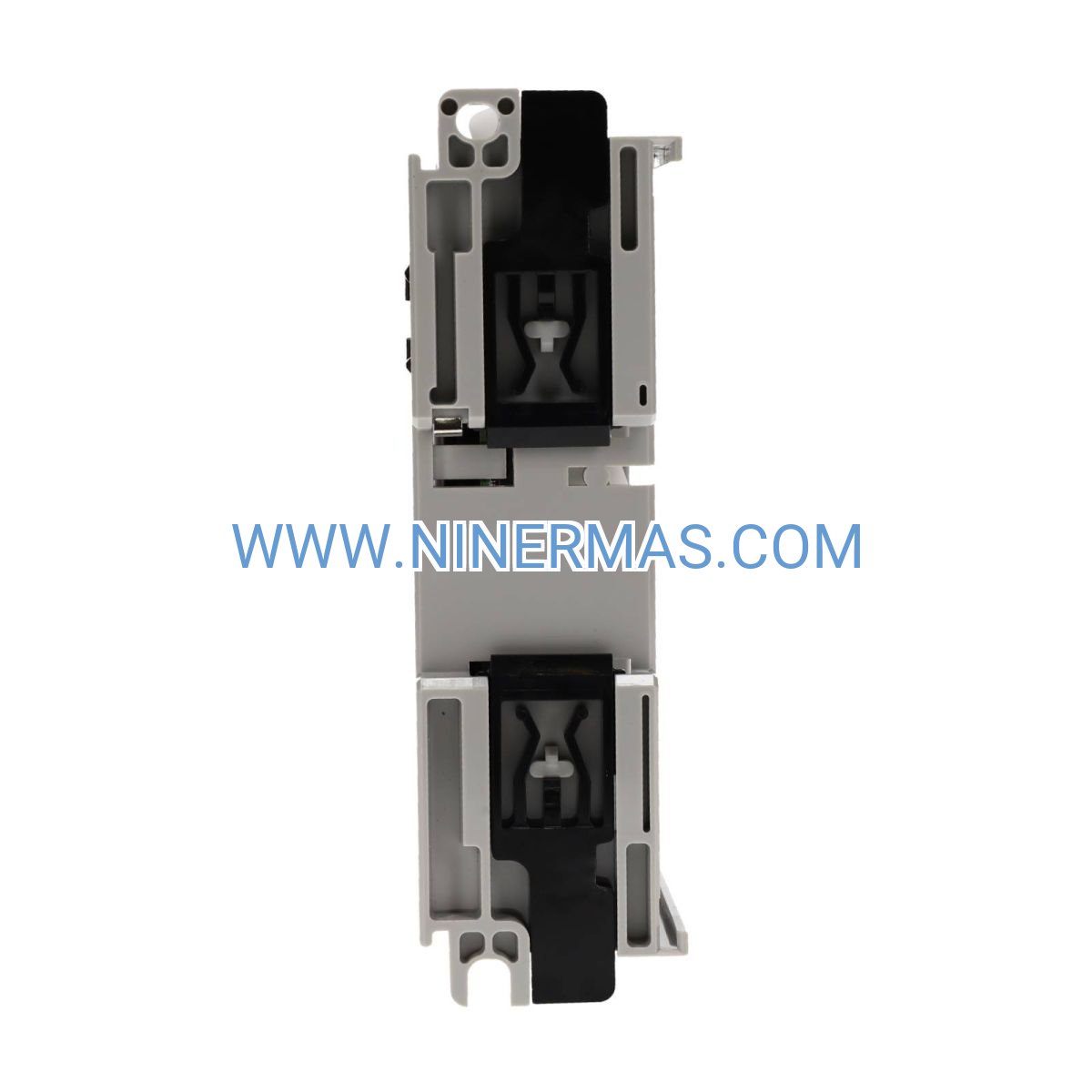
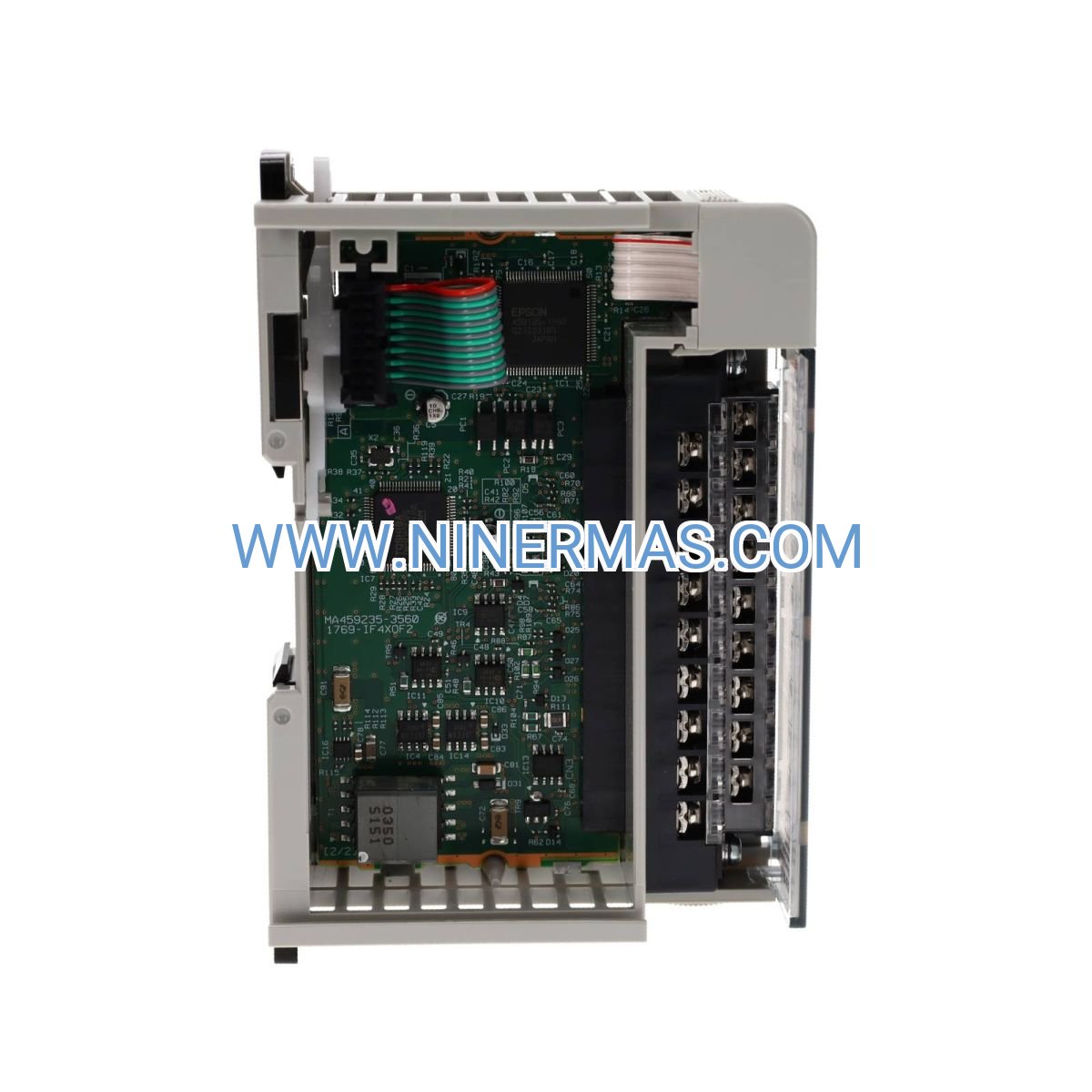
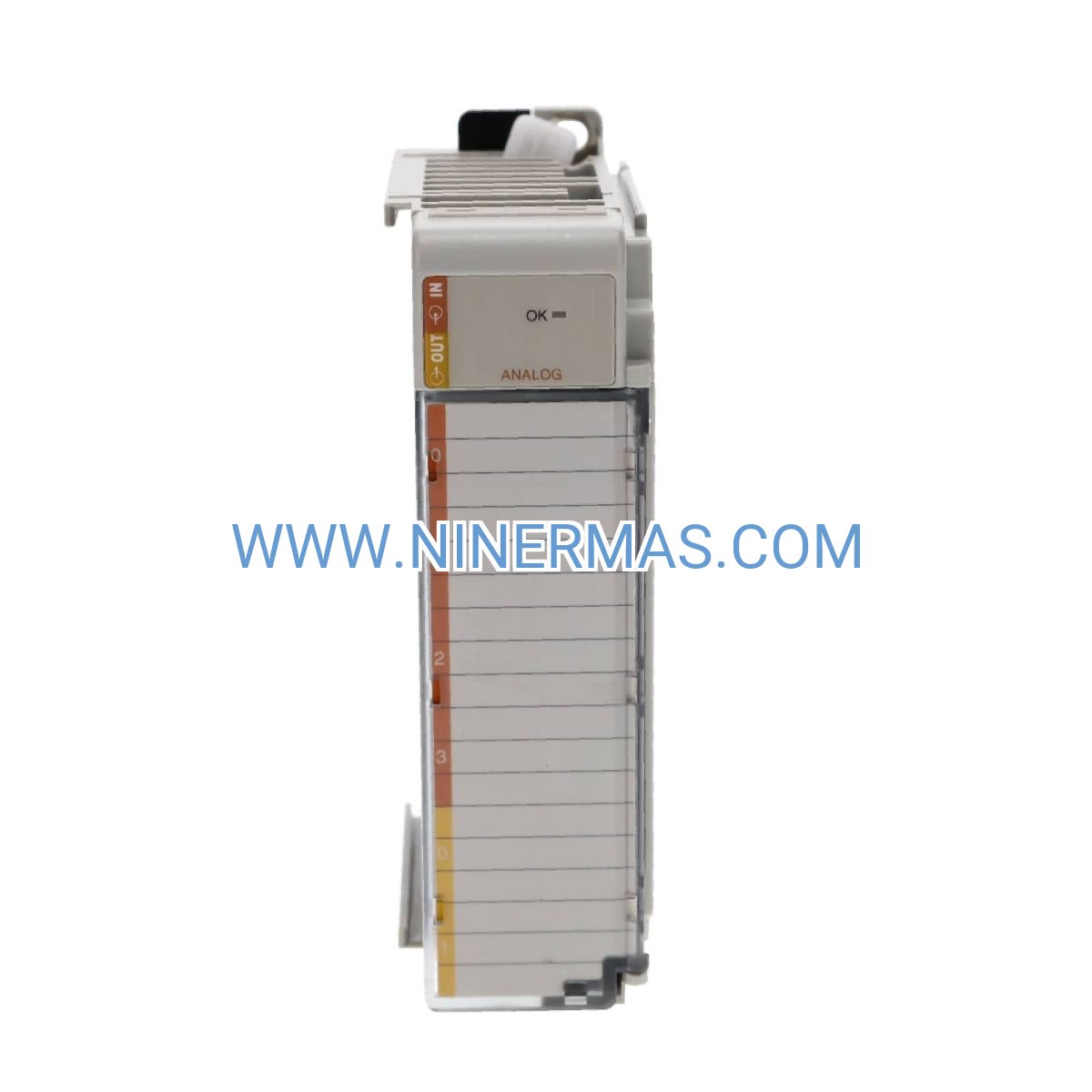
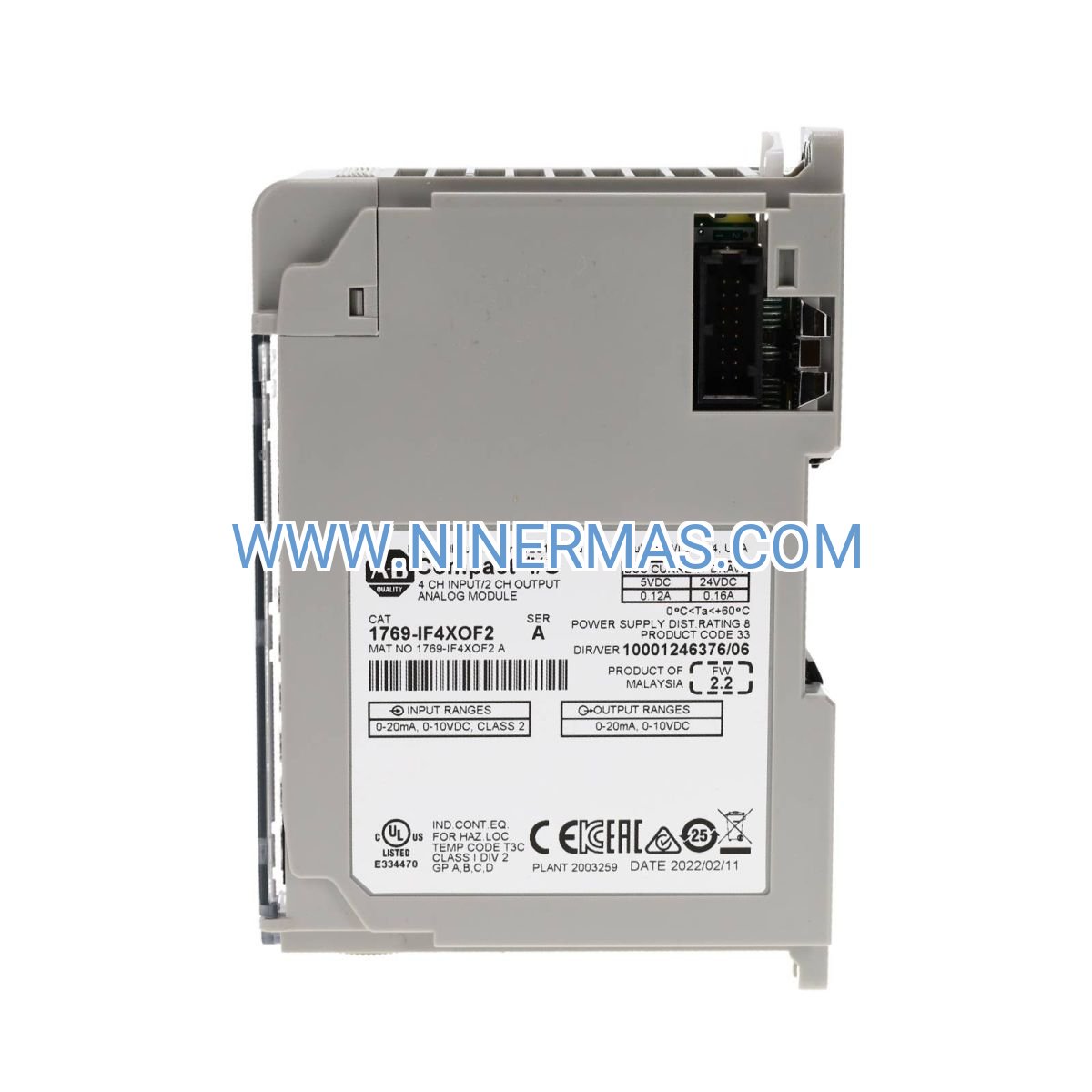
Allen-Bradley 1769-IF4X0F2 Analog I/O Module | 4-Input 2-Output CompactLogix Combo
Description
Allen-Bradley 1769-IF4X0F2 CompactLogix Analog Combo I/O Module (Industrial-Grade Process Control Solution)
The Allen-Bradley 1769-IF4X0F2 is a high-performance analog combination I/O module designed for CompactLogix control systems, delivering precise signal acquisition and output control through integrated 4-channel input and 2-channel output architecture. Utilizing 16-bit resolution conversion technology and configurable voltage/current signal ranges, this module enables accurate process variable monitoring and control signal generation for industrial automation applications.
Ideal for process control environments requiring multi-point analog measurement and actuation, including temperature monitoring systems, pressure regulation loops, flow control applications, and level management installations. This module addresses common challenges such as signal accuracy degradation, limited I/O density, complex wiring requirements, and insufficient diagnostic capabilities in distributed control architectures.
Through standardized CompactLogix platform integration and field-proven design, the 1769-IF4X0F2 offers rapid commissioning, flexible signal configuration, comprehensive diagnostics, and reliable long-term operation. Suitable for design engineers, system integrators, OEM equipment manufacturers, and plant maintenance teams requiring dependable analog I/O solutions. Contact our application engineers for configuration assistance, technical specifications, and project quotations.
Core Features & Technical Advantages
Combination I/O Architecture
Integrates 4 analog inputs and 2 analog outputs in a single compact module, reducing chassis slot consumption and simplifying system architecture while maintaining signal isolation and independent channel configuration for mixed-signal applications.
16-Bit Resolution Performance
Delivers high-precision signal conversion with 16-bit resolution across all channels, providing 0.0015% full-scale accuracy for critical process measurements and enabling detection of subtle process variations in demanding control applications.
Configurable Signal Ranges
Supports multiple industry-standard signal types including 0-10V, ±10V, 0-20mA, and 4-20mA with software-selectable ranges per channel, eliminating the need for external signal conditioning and enabling direct connection to diverse field instruments.
Advanced Diagnostic Capabilities
Features comprehensive channel-level diagnostics including open-circuit detection, over-range indication, under-range alerts, and module health monitoring, reducing troubleshooting time and enabling predictive maintenance strategies.
Removable Terminal Block Design
Equipped with removable screw-terminal blocks (RTBs) supporting hot-swappable module replacement without field wiring disconnection, minimizing system downtime during maintenance and simplifying spare parts management.
Seamless CompactLogix Integration
Provides native integration with RSLogix 5000/Studio 5000 programming environment, automatic I/O configuration via electronic keying, and real-time data exchange through the CompactLogix backplane for simplified programming and commissioning.
Typical Application Scenarios
This module is engineered for industrial environments demanding reliable analog signal processing with high accuracy and comprehensive diagnostics, particularly suited for:
Process Manufacturing & Chemical Plants
Monitors reactor temperatures, pressure transmitters, flow meters, and pH sensors while controlling valve positioners and variable frequency drives, ensuring precise process parameter regulation in batch and continuous production systems.
Water & Wastewater Treatment Facilities
Acquires level transmitter signals, turbidity measurements, dissolved oxygen readings, and chemical dosing feedback while generating control outputs for pump speed regulation and valve positioning in municipal and industrial treatment applications.
HVAC & Building Automation Systems
Interfaces with temperature sensors, humidity transmitters, pressure transducers, and damper position feedback while providing control signals for variable air volume boxes, chilled water valves, and fan speed controllers in commercial facilities.
Food & Beverage Production Lines
Connects to temperature probes, pressure sensors, weight scales, and concentration analyzers while controlling mixing valve positions, heating element outputs, and pump speeds in sanitary processing environments requiring precise recipe control.
Oil & Gas Pipeline Monitoring
Reads pressure transmitters, flow computers, temperature RTDs, and vibration sensors while generating control signals for pressure regulators, block valves, and compressor controls in remote pipeline monitoring and SCADA applications.
Technical Specifications & Selection Guide
To facilitate system design and module selection, key technical parameters are provided below:
Input Specifications: 4 single-ended analog inputs | 16-bit resolution | Voltage ranges: 0-10V, ±10V | Current ranges: 0-20mA, 4-20mA | Input impedance: 10MΩ (voltage), 250Ω (current) | Update rate: 10ms per channel | Accuracy: ±0.1% of full scale at 25°C
Output Specifications: 2 analog outputs | 16-bit resolution | Voltage output: 0-10V, ±10V | Current output: 0-20mA, 4-20mA | Output drive: 10mA max (voltage mode), 500Ω max load (current mode) | Update rate: 10ms per channel | Accuracy: ±0.2% of full scale at 25°C
Power & Environmental: Backplane power consumption: 175mA @ 5VDC, 3mA @ 24VDC | Operating temperature: 0°C to 60°C (32°F to 140°F) | Storage temperature: -40°C to 85°C (-40°F to 185°F) | Relative humidity: 5% to 95% non-condensing | Shock: 30g operational | Vibration: 5g @ 10-500Hz
Physical & Mounting: Module width: Single slot (35mm) | Removable terminal block: 20-position RTB | Wire gauge: 14-22 AWG (2.5-0.5mm²) | Mounting: DIN rail via 1769 chassis | Conformal coating: Available for harsh environments | Agency approvals: UL, cUL, CE, C-Tick
Selection Considerations: When specifying this module, evaluate maximum signal count requirements, required resolution and accuracy, field device signal types, environmental conditions, and chassis slot availability. For applications requiring higher channel density, isolated channels, or HART communication, consult our engineering team for alternative 1769 series modules or FLEX I/O solutions.
Configuration & Integration Support
Software Configuration: Module setup is performed through RSLogix 5000/Studio 5000 software with automatic device discovery via the CompactLogix backplane. Configuration includes channel enable/disable, signal range selection, scaling parameters, alarm limits, and diagnostic settings accessible through intuitive configuration dialogs.
Wiring & Installation: Field wiring connects to removable terminal blocks with clearly labeled terminals for each channel. Standard practice includes twisted-pair shielded cable for analog signals, proper cable grounding, separation from high-voltage wiring, and adherence to NEC/IEC wiring codes for industrial installations.
Calibration & Maintenance: Factory-calibrated modules typically require no field calibration. Periodic verification using precision signal sources is recommended annually or per plant maintenance schedules. Module diagnostics enable condition-based maintenance strategies and early fault detection.
Delivery, Service & Quality Assurance
Standard catalog modules ship from stock with typical lead times of 3-5 business days for North America, 5-7 days for international destinations. Custom configurations or large quantity orders may require 2-4 weeks depending on manufacturing schedules. All modules include minimum 12-month manufacturer warranty covering defects in materials and workmanship.
Technical support includes remote configuration assistance, troubleshooting guidance, and application engineering consultation. On-site commissioning services available for complex installations or system integration projects (regional availability applies). Complete documentation package includes installation instructions, wiring diagrams, configuration examples, and troubleshooting procedures provided in digital format.
All products sourced through authorized distribution channels with full traceability, genuine Allen-Bradley components, and compliance with RoHS, REACH, and conflict minerals regulations. Quality assurance includes incoming inspection, functional testing, and proper ESD handling throughout fulfillment process.
Frequently Asked Questions (FAQ)
Q: How does the 1769-IF4X0F2 analog combo module integrate with existing CompactLogix systems?
A: The module installs directly into any available slot on 1769 CompactLogix chassis and is automatically recognized by the controller upon power-up. Configuration is performed through RSLogix 5000/Studio 5000 software with electronic keying ensuring proper module identification. The backplane provides power and communication, requiring no external wiring for controller interface.
Q: What is the maximum number of analog I/O points achievable in a single CompactLogix system?
A: A standard 1769-L3x controller supports up to 30 local I/O modules. Using 1769-IF4X0F2 modules exclusively, this enables up to 120 analog inputs and 60 analog outputs in a single local chassis. Additional I/O capacity is available through distributed I/O via EtherNet/IP or ControlNet networks.
Q: Can voltage and current signals be mixed on the same module?
A: Yes, each input and output channel is independently configurable for either voltage or current mode through software configuration. This allows simultaneous connection of voltage-output sensors and current-loop transmitters to the same module without hardware modifications or jumper changes.
Q: What diagnostic capabilities help identify wiring or sensor faults?
A: The module provides channel-level diagnostics including open-circuit detection for current inputs, over-range and under-range indication for all channels, and module health status. These diagnostics are accessible through controller logic and HMI displays, enabling rapid fault identification and reducing troubleshooting time.
Q: Is the module suitable for hazardous area installations?
A: The standard 1769-IF4X0F2 is designed for general industrial environments (Class I Division 2 when properly installed). For Class I Division 1 or Zone 0/1 hazardous locations, intrinsically safe barriers or explosion-proof enclosures are required. Consult application engineers for hazardous area compliance solutions.
Q: How does module replacement work with the removable terminal block design?
A: The removable terminal block (RTB) allows module replacement without disconnecting field wiring. Simply remove the failed module while leaving the RTB and wiring in place, install the replacement module, reconnect the RTB, and download the configuration. This hot-swap capability significantly reduces maintenance downtime.
Request Technical Support & Quotation
For detailed selection assistance, custom configuration requirements, or project quotations, please provide the following information: project name and application description, required analog input/output quantities and signal types, environmental conditions and agency approvals needed, desired delivery schedule and quantity requirements, and existing control system architecture details.
Our application engineering team will provide personalized recommendations, configuration guidance, and competitive pricing within one business day for standard inquiries.
© 2026 NINERMAS COMPANY LIMITED. All rights reserved.
Original Source: https://ninermas.com
Contact: sale@ninermas.com | +0086 187 5021 5667

Contact Info
-
Address:22 / F, South Wo Hang building, 148 Wing Lok Street, Sheung Wan, Western District, Hong Kong
-
Phone:+8618750215667
-
Email: